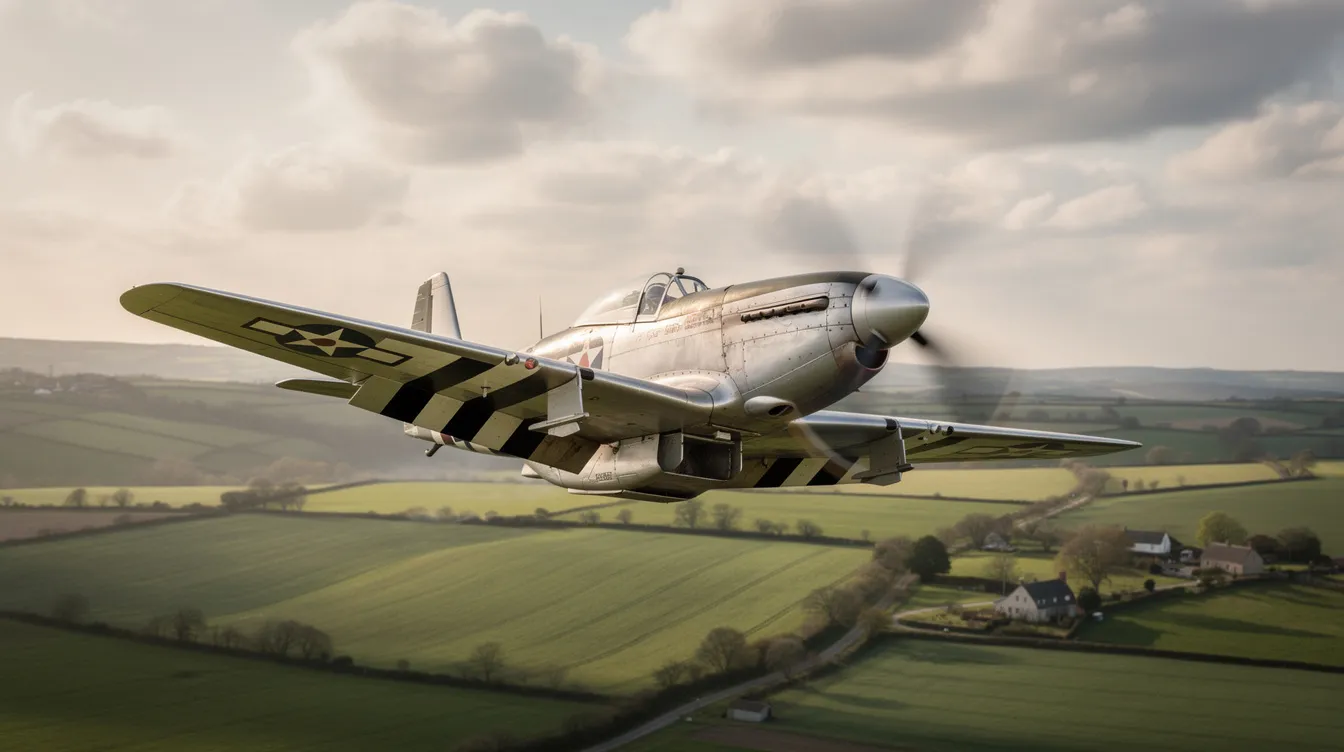
Whether you fly private weekly or simply dream of the skies, a well-chosen aircraft model transforms any room into a statement about precision, taste, and the enduring romance of aviation. This post covers the best model airplanes across every major category—commercial airliners, private jets, warbirds, and beginner kits—so you can build a collection worthy of the aircraft you admire and the spaces where you work and live.
Quick Answer: The Best Model Airplanes to Buy Right Now
If you want the short version, here are the airplane models that consistently earn the highest marks from aviation enthusiasts and serious collectors: the 1:72 Tamiya P-51D Mustang, the 1:200 GeminiJets Boeing 777-300ER, the 1:400 Gulfstream G650 diecast, the 1:72 Spitfire Mk IX, the 1:200 NG Models Airbus A321neo, and the 1:72 F-14 Tomcat. With nearly 200 aircraft replicas available for collectors across brands and scales, there is no shortage of quality options regardless of your aircraft type preference.
Here is how they break down by category:
Commercial airliners: The 1:200 Boeing 777-300ER from GeminiJets and the 1:200 Airbus A321neo from NG Models lead the line for accuracy and surface detail. Premium diecast 1:200 airliners often sit in the $120–$250 regular price range.
Private jet aircraft models: A mahogany Gulfstream G650 or Bombardier Global 7500 in 1:72 or 1:100 scale serves as an executive desk centerpiece. Expect to pay $250–$600+ for hand-finished pieces from a reputable brand.
Military and warbirds: The Tamiya 1:72 P-51D Mustang (~$16.50 MSRP) and the 1:72 Spitfire Mk IX offer fantastic detail at accessible prices. The F-14 Tomcat in diecast 1:72 is a favorite among Cold War-era collectors.
Beginner-friendly kits: Airfix and Academy produce snap-together models in 1:72 and 1:144 that run $20–$60—perfect for folks new to the hobby.
For display in an executive office, a single mahogany business jet on a polished wood stand delivers understated authority. For a home collection, a curated fleet of 1:400 diecast airliners and warbirds offers variety without overwhelming a shelf.
Why Model Airplanes Appeal to Private Aviation Clients and Aviation Enthusiasts
There is a reason high-net-worth leisure travelers who already value luxury in private aviation also gravitate toward scale models: these pieces are tangible extensions of an identity built around movement, access, and precision. For executives who fly private regularly, an aircraft model is more than décor—it is a conversation piece rooted in personal experience.
Aircraft models serve as physical representations of the cabin categories clients actually use: light jets for short hops, super-mids and large-cabin jets for transcontinental routes, and long-range aircraft for transatlantic itineraries.
Frequent travelers who prefer the convenience of prepaid jet time through Jet Card programs often display models of the exact aircraft type they charter most. A Gulfstream G650 on a credenza says something specific about how that person moves through the world.
Collectors pair models with framed route maps—New York to London, Los Angeles to Aspen—or logged flight hours on their favorite city pairs. It is fun to see an entire travel biography told through a few well-chosen planes.
Private travelers often seek jet charters for regional and international trips, and the models they choose tend to mirror those real aircraft preferences. BlackJet clients, for instance, frequently ask which aircraft types are accessible via their Jet Card membership, and then shop for corresponding models.
Key Types of Aircraft Models: From Airliners to Private Jets
Aircraft models are generally grouped into four categories: commercial airliners, business jets, military aircraft, and general aviation planes. Each appeals to a different slice of the aviation community, and many serious collectors build across all four to produce a complete representation of flight history.
Commercial airliners: Boeing 787-9, Airbus A350-900, Boeing 747-400 in 1:200 and 1:400 scales. These dominate the diecast market and are popular for airline brand promotion and personal collections.
Private jet models: Gulfstream G650, Bombardier Global 7500, Cessna Citation XLS+, Dassault Falcon 8X. These resonate with business travelers and are often purchased as display pieces for offices and boardrooms.
Turboprops and regional aircraft: Pilatus PC-12, Beechcraft King Air 350i. Don't forget these—many folks who fly regionally have a soft spot for these workhorses.
Iconic warbirds: F-4 Phantom II, F-16C Fighting Falcon, P-51D Mustang. The 1:72 scale is the dominant format here.
Helicopters: While this post focuses on fixed-wing aircraft, a helicopter model like a Sikorsky S-76 can round out a diverse collection.
Typical use cases extend from personal décor to corporate gifting, airline promotion, and curated office displays. BlackJet clients naturally gravitate more toward business jet and long-range aircraft models that replicate their real travel profiles, mirroring the real-world choices outlined in our guide to private jet sizes and categories.
Materials and Build Quality: Mahogany vs Diecast vs Plastic
Material choice determines how a model looks, feels, and lasts. A mahogany Gulfstream on a conference table conveys something entirely different from a lightweight plastic kit on a hobby shelf—and both have their place.
Mahogany Models
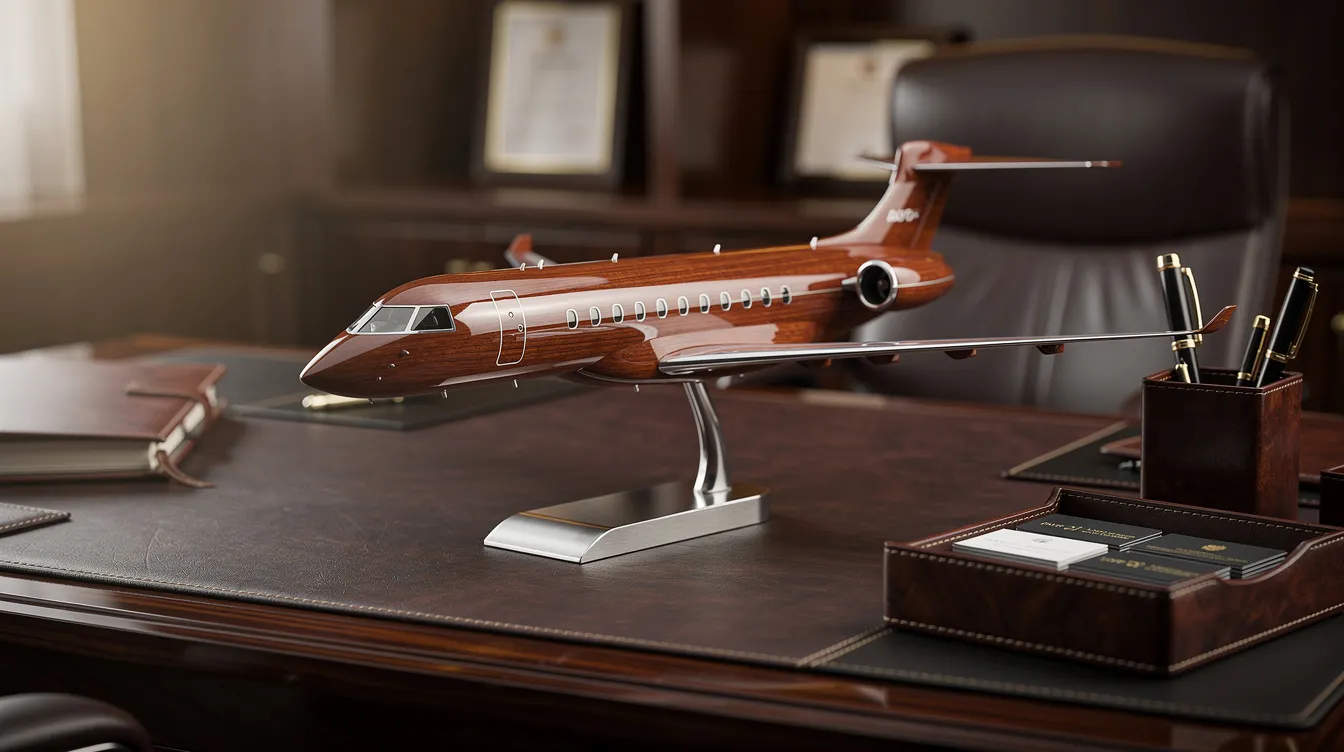
Hand-carved from solid hardwood, finished with multiple coats of lacquer, and hand-painted with accurate liveries, specialty makers can manufacture these display pieces to client specifications. Hand-carved mahogany models are popular for their durability and warmth. Prices typically range from $250–$600+ for detailed 1:32 or 1:48 pieces. Brands like High Flying Models produce pieces in the $249–$349 range for large display aircraft. Ideal for executive settings where excellence in craftsmanship matters.
Diecast Models
The fuselage and wings are metal (zinc or aluminum alloy), with smaller components sometimes in plastic. Premium aircraft models often feature moving components—retractable landing gear, rotating engine fans, adjustable flaps. GeminiJets, Inflight200, and NG Models are widely regarded as the leaders in diecast quality for commercial airliners. Compared to plastic, diecast offers weight, presence, and a satisfying heft that feels closer to the real thing.
Plastic Kits
More affordable and lighter, these are the backbone of the hobbyist world. A 1:72 Arma Hobby P-51D runs about €18–25. They require assembly and painting, offering customization that diecast cannot. These are not toys—modern plastic tooling from manufacturers like Tamiya produces surface detail that would have impressed modelers a generation ago.
For a BlackJet member outfitting a modern office, mahogany or larger diecast business jet models will always outperform lighter plastic options in visual impact and perceived value, just as premium BlackJet private jet services outperform standard commercial options in comfort and flexibility.
Best Scale Sizes for Display in Homes and Offices
Scale affects everything—visual impact, required shelf or desk space, and how much detail a manufacturer can pack into the model. Many premium models are larger in scale for better detail, but bigger is not always better if your display space is limited.
A 1:200 Boeing 747 has a wingspan of roughly 34 cm; the same plane in 1:400 is about 17 cm. The difference is dramatic when you see them side by side.
A 1:72 business jet like a Citation Latitude measures around 25–30 cm in length—roughly the width of a standard office desk.
Recommended Scales by Setting
Executive desks: 1:72 business jets or 1:200 airliners. These provide enough detail to be impressive without dominating the workspace.
Conference rooms: 1:100 widebody models or large wooden aircraft models on polished stands. These command attention and serve as natural conversation starters.
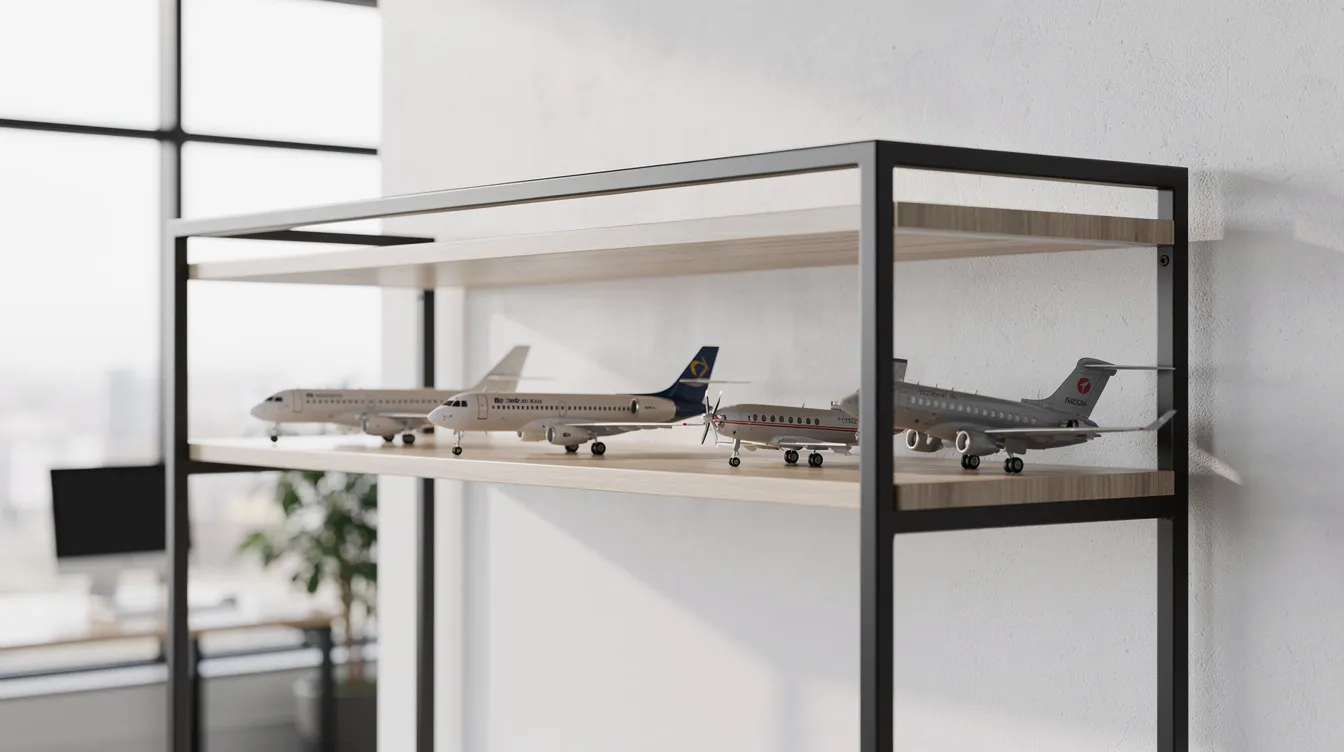
Home shelves and display cases: 1:400 fleets for collecting many liveries and types. You can fit a dozen airliners in the space a single 1:100 model occupies.
Mixed displays: One centerpiece model in a larger scale—say a 1:72 G650—surrounded by a fleet of smaller 1:400 aircraft models creates visual hierarchy and depth.
Scale choices can echo a traveler's typical mission profile. Someone who regularly flies short hops might prefer a 1:72 super-mid, while a transatlantic traveler might choose a 1:100 Global 7500 as their hero piece, inspired by the aircraft featured among the best private jets in the world.
Top Categories: Private Jet Models for Business Travelers
Private jet airplane models are especially popular among business leaders and Jet Card members because they mirror the aircraft these individuals actually fly. Jet Card programs allow booking across multiple cabin types, and the models below represent the class of jets most frequently requested, similar to those highlighted in our overview of the best jet cards for frequent flyers.
Gulfstream G650 / G700 in 1:72 or 1:100: The flagship of long-range, ultra-luxury travel. A G650 model in mahogany with a polished wood base is one of the most purchased private jet pieces on the market.
Bombardier Global 7500 or 6500 in 1:100: Intercontinental capability with four distinct cabin zones. These models look striking in a boardroom setting and echo the real aircraft showcased among the largest private jets for sale.
Dassault Falcon 7X / 8X in 1:72 or 1:100: Tri-jet sophistication that stands apart visually from competitors. The Falcon line's unique engine configuration makes for an immediately recognizable silhouette.
Super-mids like the Challenger 3500 or Citation Latitude in 1:72: These are the best business jets for regional and mid-range routes, and their models fit comfortably on a standard credenza.
Private aviation companies provide flexibility and privacy for clients, and the models that represent these aircraft carry the same aura. Finishes suited for an upscale office include polished wood bases, engraved plaques, and discrete branding or tail numbers that match a frequently chartered registration.
Iconic Airliner and Warbird Models Every Collection Should Have
Even collectors focused primarily on private jets benefit from owning a few historically significant aircraft models. These are the pieces that anchor any serious aviation collection and spark comments from everyone who visits your office or home.
Boeing 747-400 or 747-8 (1:200 or 1:400): The world's most recognizable airliner. No collection is complete without the Queen of the Skies.
Concorde (1:144 or 1:200): A symbol of speed and prestige. Supersonic air travel may return, but the original remains unmatched in cultural impact.
Airbus A380-800 (1:200) in a major global airline livery: The largest passenger aircraft ever built. A 1:200 version has a wingspan exceeding 40 cm.
Douglas DC-3 / C-47 (1:72): The plane that made commercial aviation viable. An early workhorse with deep history.
Supermarine Spitfire Mk IX (1:72): Britain's most celebrated fighter. Models from Tamiya offer exceptional detail and excellent fit.
North American P-51D Mustang (1:72): The aircraft that helped win air superiority in WWII. Tamiya's version at ~$16.50 is widely considered the best in class.
McDonnell Douglas F-4 Phantom II or F-14 Tomcat (1:72): Cold War icons. The F-14's variable-sweep wings make for a visually dynamic display piece.
These heritage aircraft pair well with wall art like air traffic charts, historic route maps, or framed itineraries from private jets with the longest range. Balancing modern private jet models with these warbirds and airliners creates a more accurate and engaging representation of aviation history, especially when you consider how long-range widebodies and VIP airliners serve as the best private jets for 20 passengers or appear among the largest private jets for sale in real-world fleets.
Price Ranges: From Entry-Level to Premium Collectibles
Regular price varies widely depending on scale, material, brand, and customization. Even affluent collectors should understand what each tier delivers—budget is less about constraint and more about knowing what you are paying for.
Entry-level plastic / snap-together airplane models: Roughly $20–$60. These are simpler kits with fewer parts and limited surface detail. Good for beginners or as gifts. You can browse options from Airfix and Academy at this tier.
Mid-tier diecast aircraft models (1:400, 1:200): Roughly $60–$250. Better paint finishes, accurate decals, landing gear, and often display stands. This is where most collectors start building a fleet. Availability across brands like GeminiJets and NG Models is strong.
Premium mahogany or large-scale diecast: Roughly $250–$800+. Includes hand-finished wood, polished bases, and larger surface area for finer detail. These are the pieces you see in corner offices and aviation museums, mirroring the premium tiers outlined in a typical private jet price list.
Fully custom corporate or museum-grade models: Often $1,000+ depending on size and detail. Custom aircraft models can be tailored to specific designs, and these are typically delivered with certificates of authenticity and bespoke packaging.
At higher tiers, expect moving parts, authenticated liveries, and display hardware included in the box. Regular price can also differ from limited-edition pricing for numbered runs, signed bases, or discontinued airline liveries—some of which sell on eBay for multiples of their original cost. Treat high-end aircraft models like long-term office décor investments rather than impulse purchases, and the stock in your collection will only appreciate.
Customization Options: Tail Numbers, Paint Scheme, Liveries, and Corporate Branding
Personalization is what transforms generic airplane models into meaningful aviation collectibles. A custom model tells a story—your story—in a way that off-the-shelf pieces simply cannot.
Tail Numbers
Many mahogany models can be customized to specific tail numbers. Premium models can also be customized to specific tail numbers that match a personally chartered aircraft. If you recently bought a share in a plane or have a registration you fly frequently, this is the detail that makes the model yours.
Liveries and Paint Schemes
A custom paint scheme for corporate, family, or club branding can be matched to a real aircraft's appearance by specialty producers. Over 50 aircraft manufacturers receive custom models from FDM alone, giving you access to virtually any airframe, similar to the bespoke finishes available on premium private jets for sale in the UK.
Working Features
Custom models can include working navigation lights and interior details—cabin layouts, cockpit instruments, even miniature seat configurations that replicate your preferred aircraft.
Engraved Plaques
Note routes ("New York – London, 2025"), logged flight hours, or company milestones. These are shipped with the model and mounted to the base, and can even commemorate major private charters for 100 passengers or other large-group journeys.
Size Flexibility
Custom aircraft models are available in any size, including full-scale. Most executive commissions, of course, stay in the 1:72 to 1:32 range, but factory capabilities extend far beyond that, just as real-world fleets scale up to private jets for 50 passengers for major events and roadshows.
Lead times for custom work typically run 4–12 weeks, so don't wait until the last minute if you need a model for a retirement, promotion, or company anniversary. Corporate gifting is a growing use case: models presented at deal signings, IPO celebrations, or Jet Card milestones produce something the recipient will keep on their desk for years—not something that gets filed away.
Safety, Sustainability, and Technology: What Models Reveal About Real Aircraft
Quality aircraft models do more than look good—they can replicate the engineering philosophy of the real aircraft they depict. For aviation enthusiasts who care about what goes on behind the paint, models offer a surprisingly effective way to understand modern aerospace priorities.
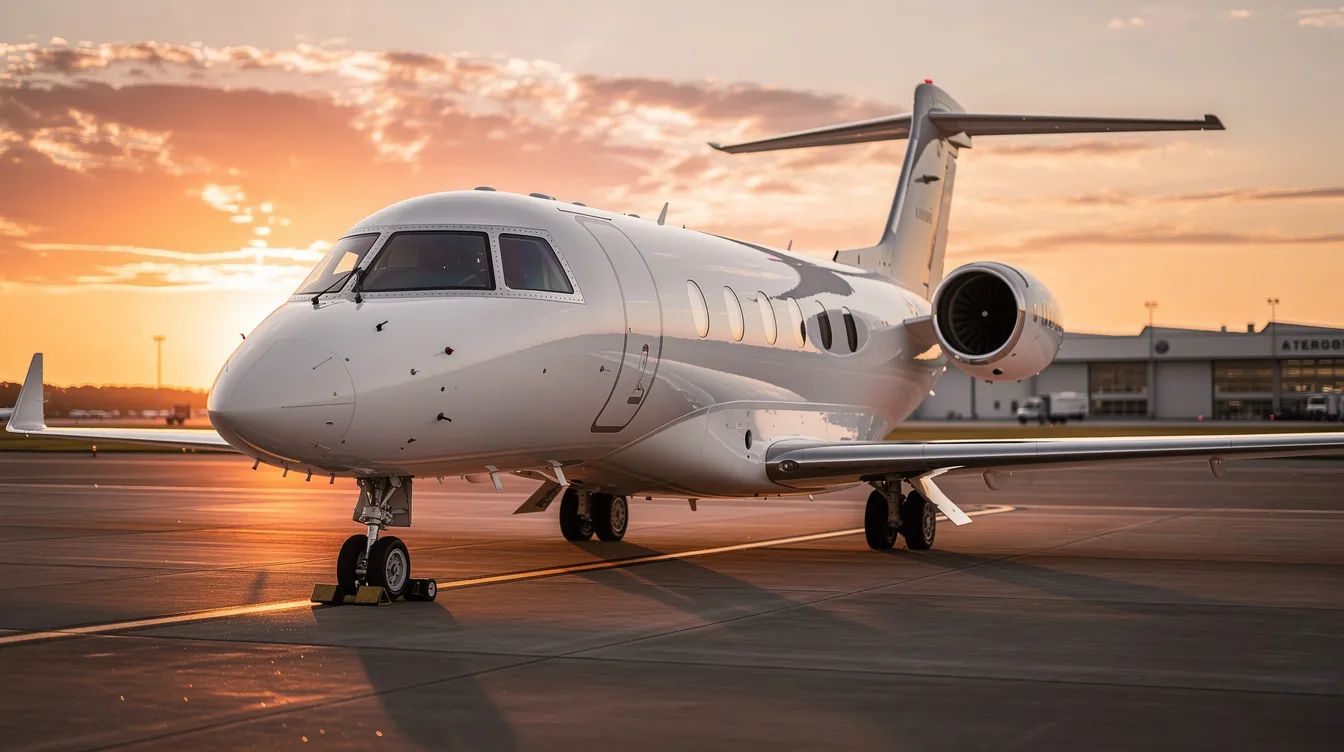
Safety design: Detailed cockpit windows, emergency exit markings, and accurate door placements on airliner models echo real-world safety certification standards. Private aviation prioritizes safety certification for flights, and the aircraft that meet those standards—newer Gulfstreams, Globals, Falcons—are the same ones most frequently modeled.
Aerodynamic efficiency: Winglets, blended winglets, and sharklets rendered on models illustrate how manufacturers reduce drag. These features are not cosmetic—they directly improve fuel burn in real operations.
Modern engines and sustainability: Depictions of current-generation engines hint at lower emissions and improved range. Carbon-neutral flights are an emerging trend in private aviation, and sustainable aviation practices include carbon offset initiatives that BlackJet builds into every journey at no extra cost, even on some of the cheapest private jet options. Eco-conscious folks might prefer models of newer-generation business jets or composite airliners known for improved efficiency.
Use your aircraft models as a visual tool to explain these concepts to colleagues or family members. A 1:200 A350 with its distinctive composite fuselage tells a sustainability story without a single slide deck.
How to Choose the Best Model Airplane for Your Space and Style
Choosing the right model comes down to four factors: purpose (décor versus active collecting), available space, budget, and connection to your personal travel history. If you have personally decided to invest in a high-end piece, taking a few minutes to think through these variables will save you from regret.
Measure available shelf or desk length and height before committing to a scale. A 1:100 widebody can be over 60 cm long—that may not fit where you hope it will.
Match aircraft type to personal identity. A frequent transatlantic traveler might choose a long-range business jet; someone who flies regional turboprops for weekend getaways might prefer a King Air 350i, while another traveler might see themselves in the nimble profiles highlighted in our guide to small private jet options.
Align model finish and base with your interior design. A mahogany model with a brass plaque suits a classic executive office; a matte-finish diecast on an acrylic stand fits a modern minimalist space. Personal preferences should drive every decision here.
Start with one "hero" aircraft that reflects your primary mission profile—say, a model of the jet you use for New York–Miami runs—then extend into complementary aircraft models over time, especially if you regularly buy a seat on a private jet through shared or semi-private services.
BlackJet advisors can help clients understand which real-world aircraft categories they typically fly, making it easier to pick representative models that carry genuine meaning.
Care, Display, and Preservation of Aircraft Models
Premium mahogany and diecast models are built to last, but careless display can degrade even the finest piece. A few simple habits will keep your collection looking sharp for decades.
Avoid Direct Sunlight
Avoid direct sunlight, which fades liveries and painted surfaces over time. UV-filtering display cases are a worthwhile investment for guys with south-facing offices.
Dusting and Cleaning
Dust gently with a soft microfiber cloth. Avoid harsh cleaners that can damage decals or strip lacquer finishes.
Secure Stands and Display Cases
Use secure stands or enclosed display cases, especially in offices with frequent visitors or children. A toppled 1:200 widebody can snap landing gear and antennae.
Keep Original Packaging
Keep original boxes and certificates for collectible or limited-edition aircraft models. These matter for resale value and provenance.
Optimal Placement
Position models at eye level or slightly below for optimal visual effect in offices and lounges. Photos and pics of your collection will also look better with this placement.
Well-maintained models can appreciate in value, particularly limited-run diecast aircraft or discontinued liveries. Don't underestimate the long-term return on a piece you purchased for $200 that a determined collector later values at three times that.
Frequently Asked Questions About Model Airplanes
This section covers the most helpful questions buyers ask before investing in premium airplane models.
What scale is best for a standard 160–180 cm office credenza? 1:200 for airliners or 1:72 for business jets. Both fit comfortably without overhanging the edges.
Are mahogany aircraft models more durable than diecast? Mahogany resists denting and is easier to refinish, but diecast handles minor impacts better. For high-traffic spaces, diecast with a secure stand wins.
Can I get a model that matches the aircraft I usually charter through a Jet Card program? Yes. Most specialty producers sell custom pieces by aircraft type, and many sites let you browse by manufacturer and airframe, just as you would when evaluating how much it costs to charter a small private plane. Visit a dedicated model shop or website to see what is in stock.
How long do custom liveries and tail number orders typically take? Typically 4–12 weeks depending on complexity. Plan ahead if the model is for an event.
What is the difference between an entry-level plastic model and a premium diecast piece? At a fraction of the cost, plastic kits offer lighter construction and require assembly. Diecast delivers weight, pre-finished surfaces, and often moving parts—a different class of object entirely.
How should I factor regular price versus collectible value? Limited editions and retired liveries appreciate over time. If availability is limited and the run is numbered, paying a premium now can be a sound investment, much like weighing whether chartering a private jet is worth it once you consider all costs and benefits. Check the competition on secondary markets before committing.
Where is the best place to find accurate models? Specialty retailers, brand-direct websites, and curated sellers on eBay. I would mention that reading community comments and reviews is the most reliable way to verify quality before you commit.
Is there anything commonly missing from entry-level models? Often, antenna detail, accurate engine interiors, and printed cabin windows. Moving up a tier addresses most of these gaps.
Align your aircraft models with the actual private travel experiences you enjoy—or the ones you aspire to. That connection is what turns a model from a decoration into something that matters.
Next Steps: Aligning Your Collection with Real Private Jet Access
The best model airplanes do more than sit on a shelf. They reflect who you are as a traveler—the routes you fly, the aircraft you trust, and the experiences you value. For BlackJet clients, a curated model collection becomes a physical archive of a lifestyle defined by access, precision, and freedom.
Select one to three aircraft that best represent your core travel profile: your typical routes, cabin preferences, and the aircraft type you find yourself requesting most.
Build a small, curated fleet rather than an unfocused collection. Three exceptional pieces produce far more impact than a dozen forgettable ones.
Consider pairing new models with an upgrade in real-world access. Jet Card programs offer prepaid access to private jets, and digital booking platforms facilitate the private jet charter process around the clock—private jet booking tools are available 24/7, with real-time support that enhances every step of the customer experience, whether you are comparing the top private jet companies globally or arranging bespoke private jet charters in Karachi.
BlackJet ensures that every flight is carbon neutral, every aircraft is safety-certified, and every booking is seamless. The aircraft on your desk should reflect the same standard of service you experience in the air.
Explore how BlackJet can match your favorite aircraft models with real private jet experiences.


 Sign up with google
 Sign up with Apple