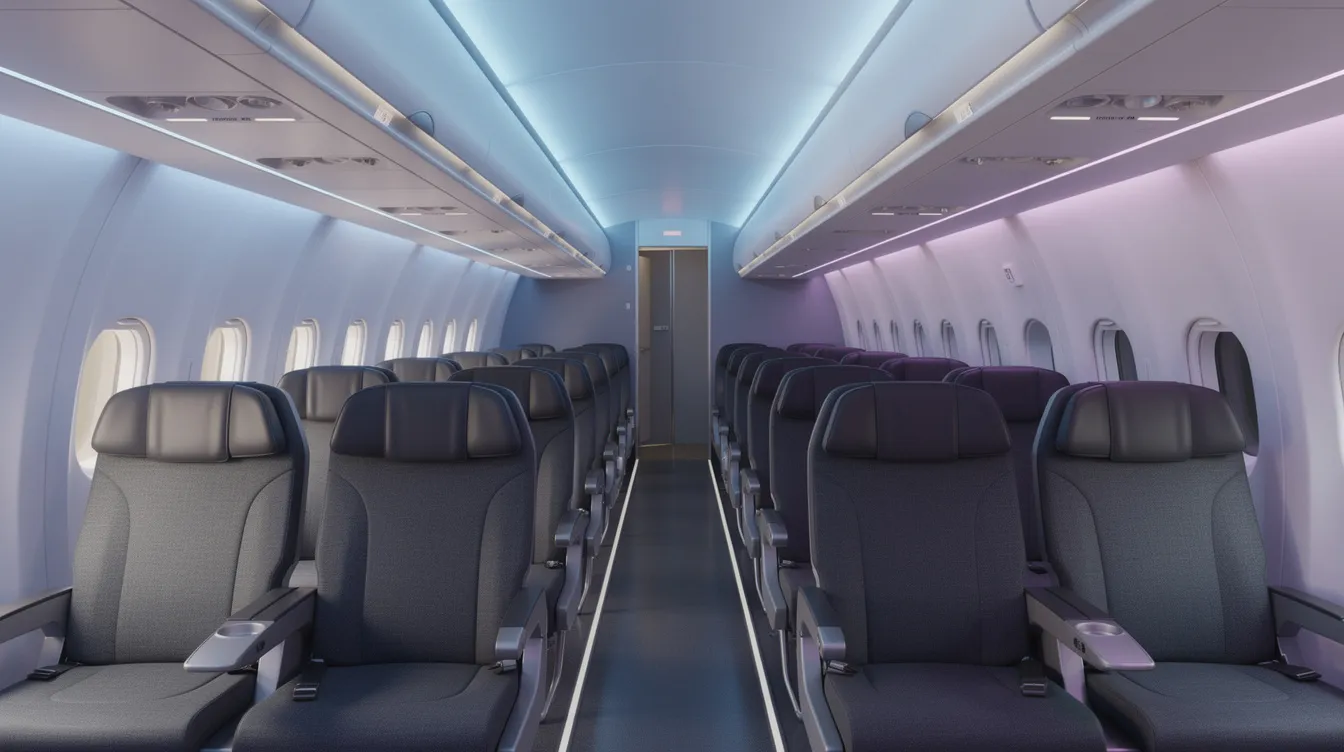
Introduction: Why the Boeing 737 Interior Matters for High-End Travelers
The Boeing 737 is a single-aisle narrow-body twin-engine jetliner that has carried more passengers than any other commercial aircraft in history. Whether you board one in New York, Dubai, or São Paulo, the Boeing 737 interior shapes the travel experience for hundreds of millions of customers each year. For premium travelers - executives, entrepreneurs, and frequent flyers who measure a trip's value in productivity and comfort - understanding exactly what happens inside that fuselage helps clarify when commercial still makes sense and when a private jet is the strategic upgrade.
The modern Boeing 737 design emphasizes enhanced interior space and passenger comfort, yet the cabin remains a single-aisle plane with six-abreast seating in economy (3-3 across) and an optional 2-2 forward premium cabin. In high-density configurations favored by budget carriers, seating capacity can exceed 180 passengers, compressing personal space to levels that test even the most patient travelers on longer flights.
Consider a concrete comparison. A CEO flying New York to Chicago on a commercial 737 faces 60 to 90 minutes of airport processing - security lines, boarding queues, gate delays - before settling into a seat with roughly 31 inches of pitch. That same executive, using a BlackJet Jet Card, arrives at a private terminal where boarding takes 10 to 15 minutes, steps into a cabin configured for four to eight people, and begins working immediately. The flight time is similar; the total door-to-door difference can be two hours or more.
Key concepts this article covers:
How the Boeing Sky Interior and 737 MAX updates have reshaped the passenger experience on commercial narrow-bodies
Concrete seat dimensions, seating capacity ranges, and cabin layout details across 737 generations
Fuel efficiency and aerodynamic improvements that influence cabin decisions
When a 737 premium cabin is genuinely sufficient - and when BlackJet private jets deliver measurable advantages in time, privacy, and comfort
Evolution of the Boeing 737 Cabin Across Generations
Boeing introduced the 737 family in the late 1960s, and four distinct generations have progressively reshaped the interior:
Original (737-100/-200, service entry ~1968): Inspired by the 707 and 727 airframes, these early cabins featured small overhead bins, narrow windows, and analog systems. Cabin layouts were relatively generous by today's standards, but materials and lighting were rudimentary.
Classic (737-300/-400/-500, from 1984): The extended fuselage on the -400 increased capacity, and incremental improvements to sidewalls and overhead bins appeared, though the basic interior architecture remained largely unchanged.
Next Generation series (737-600/-700/-800/-900, from 1997): Boeing drew on 757 and 777 cabin research to modernize the NG interior. Airlines gained more configuration flexibility, and the platform eventually received the Boeing Sky Interior starting in 2010.
737 MAX (MAX 7/8/9/10, from 2017): The latest generation made the Sky Interior standard, paired it with quieter LEAP-1B engines, and brought digital systems that influence reliability and pilot operations.
Throughout this evolution, rising fuel costs and airline profitability pressures pushed carriers to increase capacity. What was once a 130-seat aircraft became a 189-seat workhorse for low-cost operators, compressing legroom and recline with each reconfiguration. The passenger cabin layout effect varies by aircraft generation and airline configuration - a reality that premium travelers feel acutely on routes lasting more than a few hours.
Overview of the Standard Boeing 737 Cabin Layout
Most Boeing 737 variants share the same external fuselage cross-section, so core interior dimensions are fixed even as airlines customize everything else.
The cabin features one center aisle with three seats on each side - the classic 3-3 economy seating layout - extending from a forward galley near the cockpit to rear lavatories and a secondary galley.
Two main doors sit at the front, two overwing emergency exits serve the mid-cabin, and two rear doors complete the evacuation framework. On 737-800 and 737 MAX 8 aircraft, a cabin divider (bulkhead) typically separates a small premium section from economy around rows 4–6.
The Boeing 737's fuselage width is approximately 148 inches, creating a narrow cabin footprint. Interior cabin width measures roughly 11 feet 7 inches - enough for six-abreast seating but tight enough that seat width and armrest design matter enormously.
Modern 737 designs focus on efficient use of cabin space combined with passenger comfort, yet airlines ultimately choose pitch, seat width, and row count within that fixed envelope. The same airframe can carry 162 passengers in a comfortable two-class layout or squeeze in 200 in an all-economy configuration.
Forward Premium Cabin: Business and First Class on the 737
On many American Airlines, United Airlines, and international carriers operating the 737-800 or 737 MAX 8, the forward section is configured as a domestic first or regional business class. First class seating is typically configured in pairs in a 2-2 layout, separated from economy by a bulkhead and curtain.
Premium cabins offer wider seats, approximately 20 to 21 inches wide, paired with a seat pitch of roughly 37 to 39 inches - substantially more generous than what economy passengers receive. Recline is deeper, tray tables are large enough for a laptop and a drink simultaneously, and passengers benefit from priority boarding, dedicated service, and proximity to the quieter front of the aircraft.
Seat counts in this forward cabin range from 8 to 20 depending on the airline's priorities. For flights under three to four hours, this cabin space is adequate for focused productivity: emails answered, decks reviewed, calls prepared. Yet even the best domestic 737 premium seat cannot replicate the complete cabin privacy that a private jet provides for your party only. There are no lie-flat options, no meeting-friendly club seating, and no ability to hold a confidential conversation without neighbors overhearing.
Private jets offer 4 to 16 seats in lounge-style configurations - a fundamentally different experience that becomes the logical choice when privacy and flexibility outweigh schedule convenience, especially when you look at large-cabin 16-seat private jet options.
Main Economy Cabin and Seating Capacity
The main economy cabin on a Boeing 737 usually begins around row 7 to 10, just behind the forward premium bulkhead, and extends to the high twenties or low thirties depending on variant and airline.
The Boeing 737-800 typically accommodates 162 to 189 passengers, with seating capacity determined by cabin class split. A standard two-class 737-800 or MAX 8 carries roughly 160 to 170 seats, while all-economy, high-density layouts used by low-cost carriers push toward 189 to 200.
Standard economy seats are about 17 to 18 inches wide. Seat pitch in the 737-800 economy cabin ranges from 30 to 32 inches, though ultra-low-cost operators compress this to 28 to 29 inches - a configuration that becomes notably uncomfortable on flights exceeding three hours.
The 737-800 features a 3-3 economy seating layout with fewer passengers in the front cabin and the bulk of travelers packed into the main body.
For perspective, a private jet cabin accessed through a BlackJet Jet Card typically seats 4 to 16 passengers in configurations designed for comfort, conversation, or rest. The contrast in personal space is not subtle - it is the difference between sharing a cabin with 170 strangers and having an entire aircraft for your team.
Exit Rows, Bulkheads, and Best Seats on the Boeing 737
Overwing exit rows on the 737 - typically falling between rows 14 and 20 on a 737-800, depending on the airline's seat map - offer meaningfully more legroom, often 34 to 38 inches of pitch versus the standard 30 to 32 inches. The trade-off: limited or no recline due to safety regulations, sometimes no window shade control, and reduced under-seat storage because of emergency equipment.
Bulkhead seats at the front of economy provide extra knee room with no seat directly ahead. Downsides include no under-seat storage during takeoff and landing, fixed or movable armrests that reduce flexibility, and tray tables built into the armrest rather than the seat back. These seats work well for travelers who board early and want a desk-like surface.
The quietest zones sit ahead of the wing, where engine noise is lowest, and turbulence is least noticeable. Seats near rear lavatories and galleys see heavy foot traffic and service noise.
Always check the seat map for your specific aircraft registration. Airlines number rows similarly, but exact exit row positions and bulkhead locations shift between sub-variants and reconfigured cabins.
The Boeing 737 cabin offers various amenities that differ by airline, which makes seat selection research a high-return investment of five minutes before every booking; for some travelers, understanding how to buy a seat on a private jet becomes the next step in upgrading their experience.
The Boeing Sky Interior: Design, Lighting, and Space
The Boeing Sky Interior debuted on the 737 Next Generation series, with the first 737 with Sky Interior delivered in late 2010 to Flydubai. By the mid-2010s, it became standard on many NG deliveries and was carried directly into the 737 MAX family.
The Sky Interior features sculpted sidewalls and larger windows, creating a visual impression of width and openness that older 737 interiors never achieved. Larger window surrounds make the cabin feel less claustrophobic, and the sculpted ceiling panels draw the eye upward, adding perceived headroom even though the fuselage dimensions have not changed.
Pivoting overhead bins: These bins open upward and outward, modeled on Boeing's widebody designs. Sky Interior provides approximately 50% more overhead storage volume compared with older 737 bins - enough to hold four or more additional standard carry-on bags per bin section. Fewer gate-checked bags mean faster boarding and deplaning.
Customizable LED lighting: LED mood lighting enhances the cabin atmosphere in the Sky Interior, with programmable scenes that simulate sunrise, daylight, and sunset. 737 cabins often feature adjustable lighting to enhance the passenger experience during different phases of flight - boarding warmth, cruise neutrality, and pre-arrival brightness that eases circadian adjustment on early-morning and red-eye flights.
Noise performance: Sky Interior reduces cabin noise by 2 to 4 decibels through improved acoustic panels and insulation, a difference that is perceptible particularly on longer routes.
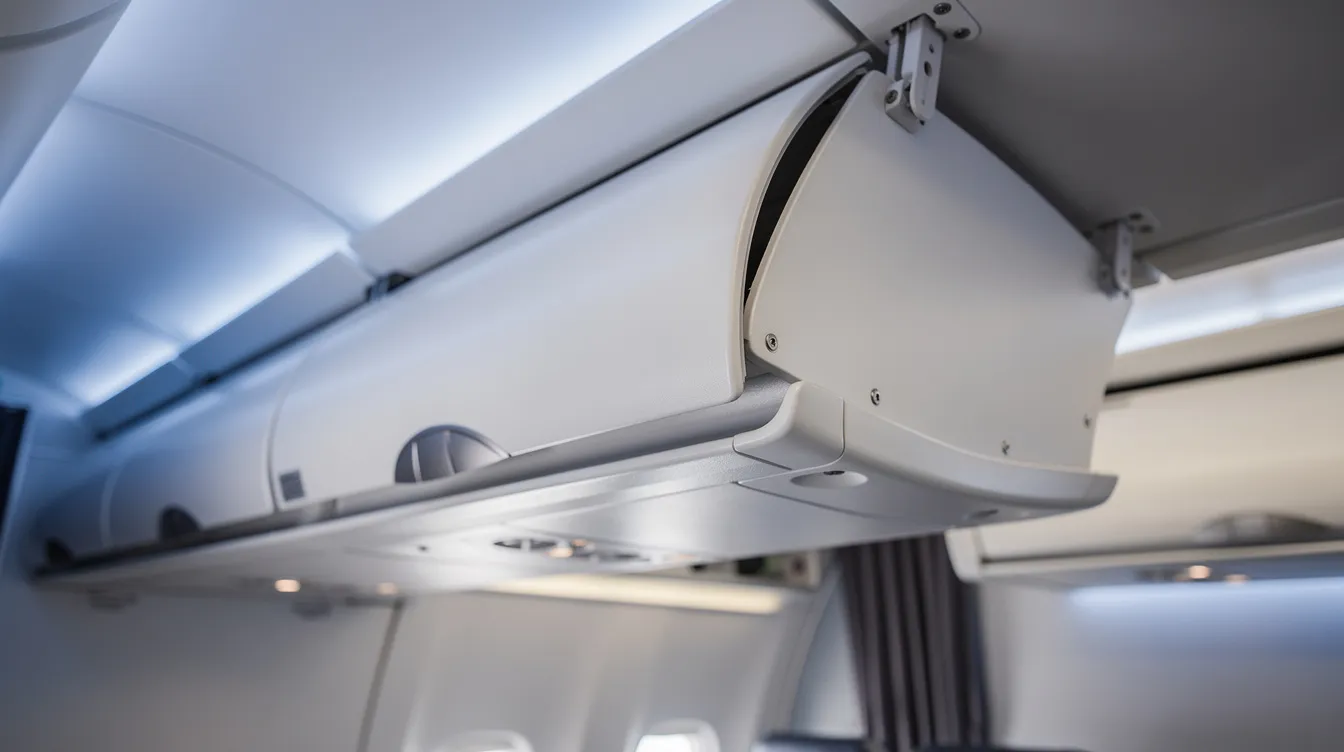
Some operators have reported occasional reliability issues with certain LED strips over time, but overall the Sky Interior represents a meaningful leap in narrow-body passenger comfort compared with the 737 Classic and early NG interiors.
Passenger Experience: Noise, Airflow, and Overall Comfort
Noise is one of the most underestimated factors in flight fatigue. Newer 737 NG and MAX interiors use upgraded insulation and acoustic panels to reduce engine noise by several decibels versus earlier 737 Classic cabins, with published estimates suggesting NG cabins average roughly 81 to 83 dB(A) at cruise and MAX cabins closer to 78 to 80 dB(A). Boeing 737 MAX designs aim for a quieter cabin atmosphere through sound-dampening materials integrated throughout the fuselage liner.
Individual overhead air vents - called gaspers - and personal reading lights give each passenger micro-control over their immediate environment. Modern 737 models often utilize HEPA filters to improve cabin air quality, cycling and filtering cabin air multiple times per hour.
Seating location matters: forward rows are quieter and experience less vibration. Over-wing rows feel the most stable in turbulence. Rear rows near the engines, lavatories, and galley are the noisiest and see the most foot traffic - an important consideration for pilots and crew commuting in jump seats, but a significant comfort penalty for paying passengers.
Private jets cruise at higher altitudes than commercial flights for better comfort and efficiency, resulting in lower cabin pressure, less turbulence, and dramatically quieter interiors. Through BlackJet's private flights, travelers can tailor cabin temperature, lighting scenes, and noise exposure to a small group - a level of environmental control that no commercial 737 can replicate regardless of seat assignment.
Onboard Amenities: Power Outlets, Wi-Fi, and In-Flight Entertainment
Many modern 737 cabins feature USB and AC power outlets for passenger use, though availability varies significantly by fleet age and airline investment. On newer MAX deliveries and retrofitted NG aircraft, USB ports are increasingly standard throughout economy, while full AC power outlets (110V/120V) tend to appear primarily in premium cabins.
Wi-Fi connectivity on North American fleets commonly offers gate-to-gate service via air-to-ground or satellite systems, sufficient for email, VPN access, and low-resolution streaming on a personal device. Over oceanic routes, coverage and speed remain inconsistent.
Entertainment has evolved from overhead screens on early 737 NGs to streaming-to-device portals where passengers connect their own tablets and phones. Seat-back screens appear on some international or premium-heavy operators but remain uncommon in U.S. domestic economy. Content libraries vary by airline and route.
Practical constraints persist: power outlets are occasionally shared between seats, Wi-Fi quality fluctuates with passenger load, and streaming content selection can disappoint. BlackJet's premium private jet services offer always-on connectivity, curated entertainment setups, and guaranteed power at every seat - removing the guesswork that commercial passengers navigate on every Boeing 737 flight.
Fuel Efficiency, Aerodynamic Improvements, and Cabin Impacts
The 737 platform has benefited from successive aerodynamic improvements that extend range and reduce operating costs - changes that indirectly shape what happens inside the cabin.
Blended winglets on the NG reduced drag and improved fuel economy, while split scimitar winglets and the MAX's Advanced Technology wingtips pushed aerodynamic efficiency further. These improvements at the wing translate directly into fuel capacity savings or extended range on longer routes.
The 737 MAX series aims for 10 to 12 percent better fuel efficiency compared with comparable NG models, driven by LEAP-1B engines and refined aerodynamics. The 737 MAX uses LEAP-1B engines for efficiency - higher bypass ratio, chevron nozzles, and lighter fan blades that collectively reduce fuel burn per seat.
These gains create a cabin trade-off: airlines often densify seating to maximize revenue per fuel-efficient flight, adding rows and trimming pitch. Carriers can use improved range to fly longer sectors that older 737s could not serve, but passengers in economy feel the squeeze. For travelers exploring ways to fly private more affordably, private operators like BlackJet leverage similar principles of fuel-efficient design while prioritizing fewer passengers and more space - cabin comfort over seat count.
The 737 MAX Interior: What Changed for Passengers
The 737 MAX builds on the Boeing Sky Interior foundation while adding features that passengers notice from the moment they step aboard.
Boeing 737 MAX models have larger windows than previous single-aisle generations - approximately 20 percent bigger than competing narrow-body aircraft. Combined with the LED mood lighting now standard on all MAX deliveries, the cabin atmosphere feels more open and less fatiguing on longer flights. Newer seats with modern materials, more consistent USB ports, and updated Wi-Fi portals round out the amenity improvements.
The MAX's LEAP-1B engines are not just more fuel-efficient- they are meaningfully quieter. Chevron trailing edges on the nacelles and improved acoustic insulation reduce perceived engine noise, particularly in rows ahead of and directly over the wing.
The 2019–2020 worldwide grounding of the 737 MAX after two accidents brought intense scrutiny to the platform. The FAA issued an Airworthiness Directive in 2019 for structural inspections, and the subsequent re-certification process involved extensive software corrections, enhanced pilot training requirements, and regulatory oversight changes. These safety-driven improvements, while focused on flight control systems rather than interior design, reassure passengers that every modern 737 MAX interior they enter has undergone one of the most thorough certification processes in commercial aviation history.
Comparing Boeing 737 Cabins with Boeing Business Jet (BBJ) Interiors
The Boeing Business Jet program takes the same 737 airframe and transforms it into something entirely different. BBJ variants - BBJ1 based on the 737-700, BBJ2 based on the 737-800, BBJ3 based on the 737-900ER - first entered service between 1998 and the late 2000s, with ranges exceeding 4,000 nautical miles thanks to auxiliary fuel tanks, placing them in the same mission category as many private jets configured for about 15 passengers.
Where an airline 737 interior packs 162 to 189 passengers into rows of slim seats, a BBJ removes all high-density seating to create:
Private lounges and conference rooms with club seating for executive meetings at altitude, similar in purpose to many 20-passenger private jet configurations
One or two private staterooms with full-size beds, equivalent to a private plane with beds
VIP lavatories, sometimes with showers
Bespoke catering galleys equipped for multi-course dining
Floor space of approximately 807 square feet on a BBJ1 - more usable cabin space than many Manhattan apartments
The BBJ3, a stretched version of the 737-900ER platform, offers roughly 35 percent more interior space and 89 percent more luggage room than the BBJ2.
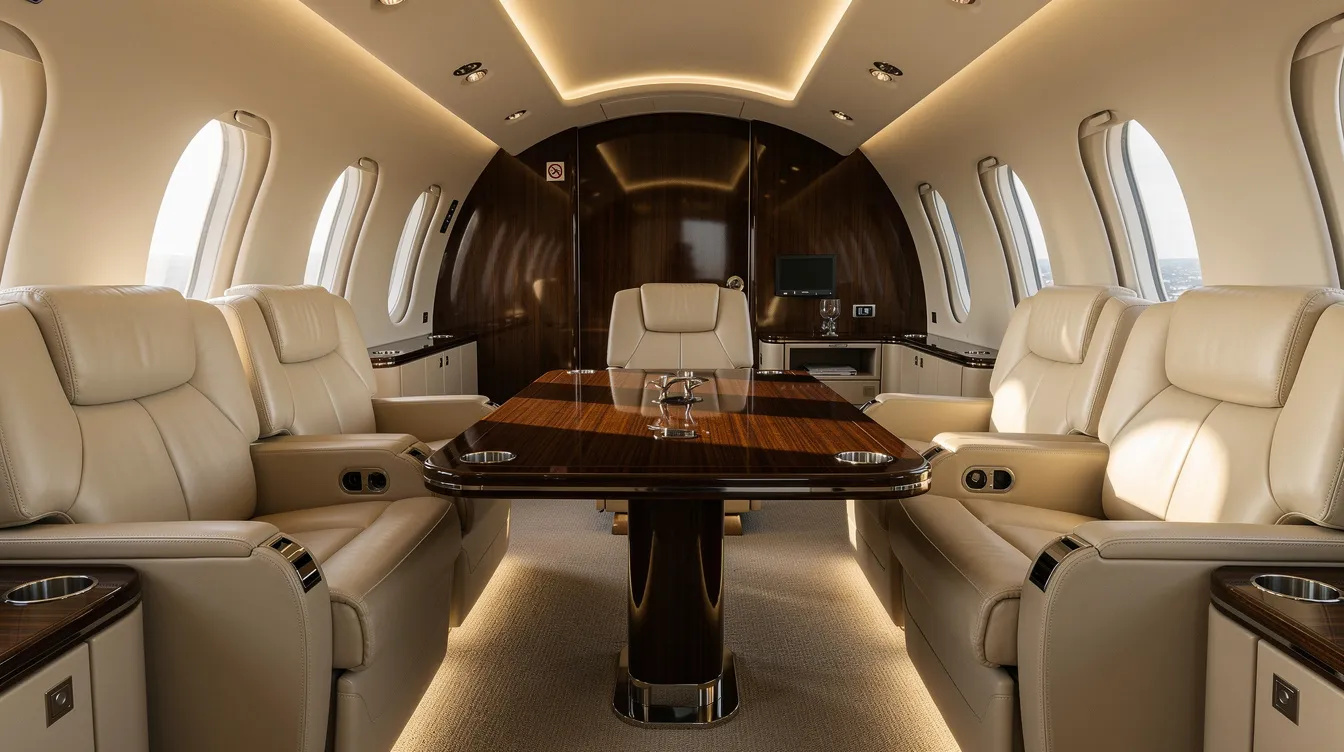
While BBJs deliver the ultimate Boeing 737 interior experience, access is generally limited to owners and full-charter clients. For comparison, private jets for up to 50 passengers show how group charters can replicate much of that VIP airliner feel. BlackJet offers analogous privacy and luxury through a diversified fleet of light to large cabin private jets - without ownership obligations or the operational complexity of managing a widebody-class aircraft.
Safety, Certification, and Cabin Design Considerations
Every Boeing 737 interior is certified by regulators including the FAA and EASA to meet stringent safety standards. These requirements shape physical cabin design: seat spacing around exits, floor-path lighting, emergency signage, fire-resistant materials, oxygen mask deployment systems, and crew-call panels are all mandated.
The 737-800 is subject to continuous FAA and EASA oversight. As of November 2023, the Boeing 737 family had recorded 529 accidents across its entire operational history - a figure that reflects the sheer scale of the fleet (over 11,000 aircraft delivered) rather than an inherent safety concern. The 737-800 has a hull loss rate of 0.17 per million departures, and the 737 series had 22 hull-loss accidents as of January 2020. In context, the 737 remains one of the most thoroughly studied and continuously improved commercial aircraft flying today.
Safety features inside the cabin have evolved across generations: improved floor-path lighting, clearer exit signage, enhanced oxygen systems, and ongoing crew training tailored to single-aisle high-passenger-count evacuations.
BlackJet only partners with operators that meet or exceed standards comparable to major airlines, including certifications under FAA Part 135 and third-party audits such as ARGUS and Wyvern. As broader research into private jet safety standards and risks shows, rigorous oversight is central to private aviation. Every cabin configuration used in BlackJet flights is evaluated for safe evacuation and in-flight operations, giving members the same regulatory assurance they expect from a commercial carrier - with the added control of a private cabin environment.
Sustainability: Fuel Efficiency, SAF, and Cabin Design
The 737 MAX's aerodynamic improvements and engine upgrades deliver meaningful per-seat emissions reductions, especially on high-load-factor routes where airlines spread fuel burn across 160 or more passengers.
Sustainable aviation fuel blends can reduce lifecycle carbon emissions significantly. The 737-800 can operate with up to 50 percent sustainable aviation fuel blends, and many carriers are integrating SAF into regular operations as supply scales. Boeing's ecoDemonstrator program tests sustainable aviation fuel and other efficiency innovations across its fleet, including 737 variants.
Cabin design contributes marginally: lighter seats, lighter bin mechanisms, and weight-optimized finishes reduce total aircraft weight and therefore fuel burn. Every kilogram saved in interior materials translates to measurable savings over thousands of flight cycles.
BlackJet complements these trends by making all private flights carbon-neutral through verified offset programs. For travelers weighing the most affordable private jet options, integrating sustainability into aircraft choice and routing is increasingly important. When a trunk-route commercial 737 segment combined with a BlackJet "last-mile" private leg can reduce both total emissions and door-to-door time, BlackJet advisors help members identify that hybrid approach - treating sustainability as a planning tool rather than a marketing gesture.
When a Boeing 737 Interior Is "Good Enough" vs. When to Go Private
The modern Boeing 737 interior - especially equipped with the Sky Interior on NG or MAX - is genuinely comfortable for the right trip profile:
Good enough: Hub-to-hub travel on daytime flights under three hours. Premium cabins with adequate seat width and pitch align with your schedule. Privacy is not critical, and cost efficiency matters.
Good enough: Routes served by major carriers with reliable Wi-Fi, power outlets, and premium boarding - think New York to Miami, Dallas to Denver, or London to Barcelona.
The calculus changes when any of the following apply:
Go private: Early-morning or late-night departures where airport processing time exceeds flight time. Multi-city itineraries - a CEO doing New York to Dallas to Austin and back in a single day saves three to four hours and eliminates two connections by flying privately, especially when supported by a well-structured jet card cost and membership strategy.
Go private: Meetings on board, confidential discussions, access to secondary airports that no 737 can serve (Geneva to a smaller Italian airfield to London, for example), or when total ground time - driving to the airport, security, boarding, deplaning, baggage - exceeds the air time itself; in these scenarios, understanding the best jet cards for frequent flyers can turn private aviation into a predictable tool rather than an ad hoc luxury.
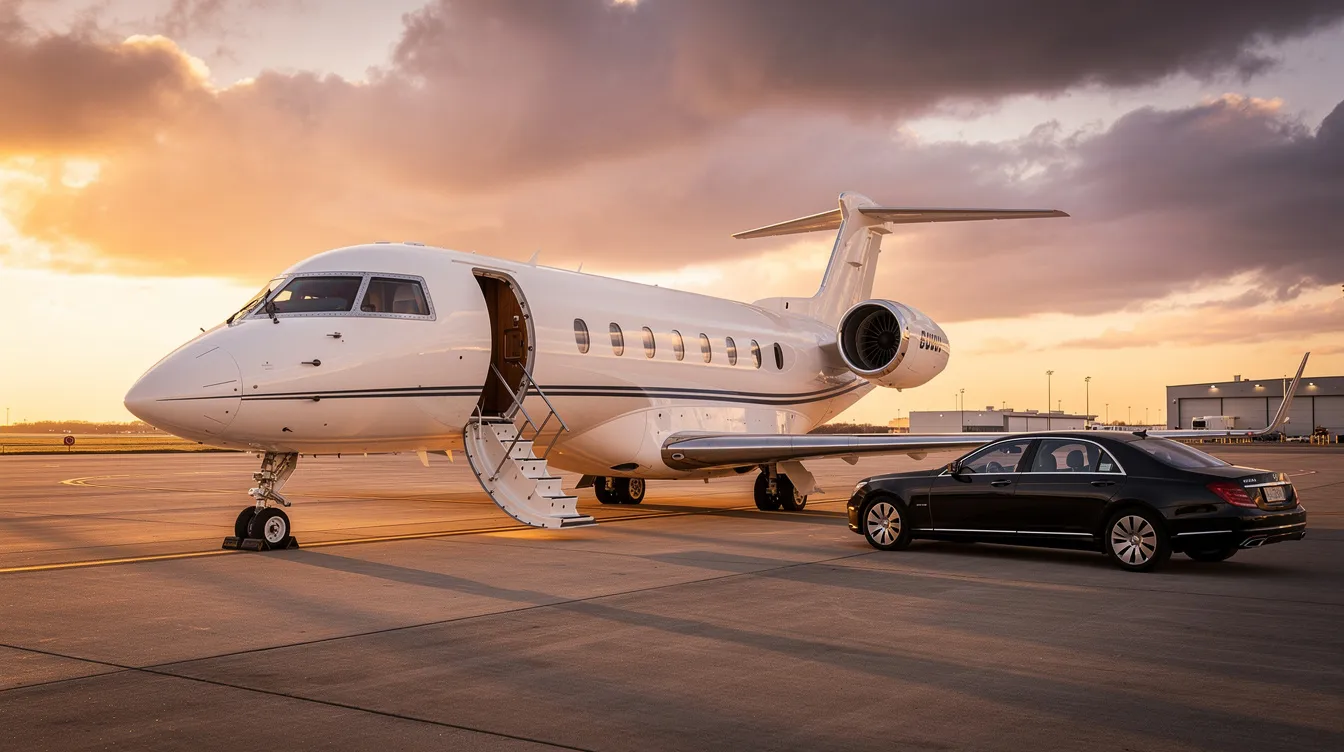
The decision framework is not about luxury versus frugality. It is about recognizing when a private jet charter delivers a measurable return on the hours you invest in travel.
BlackJet Jet Cards: Complementing Your Boeing 737 Travel
BlackJet Jet Cards - available in 25-hour and 50-hour programs - provide prepaid, fixed-rate access to multiple jet categories: light, midsize, super-midsize, and large cabin. Travelers can use a guide to private jet sizes to understand which aircraft category best fits each mission profile. They are designed for travelers who fly frequently enough to benefit from guaranteed availability but do not want the overhead of aircraft ownership.
Key advantages over relying solely on commercial 737 flights, especially when you consider the full spectrum of types of private jets available:
Guaranteed availability within defined notice periods (typically 12 to 24 hours), with the ability to depart from and arrive at airports far closer to your final destination
Tailored cabin layouts, curated catering, and complete privacy - features that no commercial flight can match regardless of fare class.
Digital booking tools and 24/7 real-time flight support through BlackJet's platform, with BlackJet Certified safety standards applied to every operator in the network
Carbon-neutral flights at no additional cost, with verified offsets and SAF options where available
Many BlackJet members combine commercial 737 segments with private legs for maximum efficiency - flying commercial on a predictable hub-to-hub route and using a Jet Card for the time-sensitive or logistically complex segment. For others, private jet rideshare options create an ideal bridge between economy cabins and full aircraft charter. This hybrid model treats private aviation as a strategic resource rather than an occasional indulgence.
Frequently Asked Questions About Boeing 737 Interiors and Private Jet Alternatives
Below are the most common questions from travelers evaluating their options between commercial 737 flights and private jet access.
What is the Boeing Sky Interior and how does it affect the passenger experience?
The Sky Interior features sculpted sidewalls, larger window surrounds, pivoting overhead bins with roughly 50 percent more carry-on capacity, and programmable LED mood lighting. Tangible impacts include more perceived headroom, fewer gate-checked bags, and a visually more spacious cabin. It debuted on the NG in late 2010 and is now standard on the 737 MAX, but the most advanced comfort comes from the world’s top luxury private jets that build on similar design principles at a different scale.
Do all Boeing 737s have power outlets and Wi-Fi?
No. Availability depends on generation, airline, and specific aircraft. Newer MAX deliveries and recently retrofitted NGs are more likely to have USB ports throughout economy and AC outlets in premium. Wi-Fi quality varies by carrier and route - North American domestic flights generally offer gate-to-gate connectivity, but oceanic coverage is inconsistent. Travelers departing from major hubs like New York or Dubai may also compare these amenities with those available on private jet charters from cities like Karachi.
How does a 737 MAX interior differ from an older 737-800?
The MAX makes the Sky Interior standard, pairs it with quieter LEAP-1B engines, offers larger windows (roughly 20 percent bigger than older competitors), and generally includes more consistent power and Wi-Fi. However, the base fuselage width and cross-section are identical - differences in seat pitch and width still depend heavily on airline configuration. For large groups, though, private jets for around 30 passengers offer an entirely different cabin architecture than any 737 configuration.
How does flying privately with BlackJet compare to sitting in a 737 premium cabin?
A 737 premium seat offers 20 to 21 inches of width and 37 to 39 inches of pitch with service shared among 8 to 20 passengers. A BlackJet private flight offers an entire cabin for your party, lounge-style seating, lie-flat options on larger aircraft, curated catering, and boarding in 10 to 15 minutes versus 60 to 90 minutes at a commercial terminal. For travelers concerned about motion, insights into turbulence on private jets versus airlines also highlight how routing and altitude choices shape comfort. The flexibility to choose departure time, airport, and cabin configuration creates a fundamentally different travel experience.
Is the Boeing 737 a safe aircraft, and how does BlackJet handle safety on private flights?
The 737 is one of the most heavily regulated and continuously improved commercial aircraft in service, subject to ongoing FAA and EASA oversight. Comparisons such as NetJets jet card cost and structure show how leading providers also build safety and reliability into their programs. BlackJet ensures equivalent rigor on private flights by partnering exclusively with operators holding FAA Part 135 certification and, where applicable, ARGUS or Wyvern accreditation. Every flight meets BlackJet's published safety standards.
Can 737s use SAF and how does BlackJet remain carbon-neutral?
Commercial 737s can operate with SAF blends up to 50 percent, and Boeing's ecoDemonstrator program actively tests sustainable fuel innovations. Because private jets often cruise higher than commercial airliners, optimizing routes and fuel types becomes another lever in managing total climate impact. BlackJet ensures all private flights are carbon-neutral through verified offset programs and by facilitating SAF use when available through partner operators.
Conclusion: Elevate Your Journey Beyond the Boeing 737 Interior
The Boeing 737 interior - refined through four generations of design, crowned by the Boeing Sky Interior, and further improved with 737 MAX updates - represents the pinnacle of modern single-aisle commercial aviation. It is an efficient, capable, and increasingly comfortable way to fly. Yet it remains a shared experience with 150 or more fellow passengers, fixed schedules, and compromises in privacy, noise, and personal space that no amount of cabin redesign can fully eliminate.
BlackJet exists for the moments when "efficient enough" is not enough:
Jet Cards that convert travel time from a cost center into productive, private hours
Safety certifications and carbon-neutral operations that meet the standards you expect - without compromise
A hybrid approach that pairs commercial 737 segments with private legs, optimizing every trip for time, comfort, and emissions
Digital tools and 24/7 support that make booking a private flight as seamless as selecting a seat on a commercial airline
Elevate your travel - effortlessly. With BlackJet, private flight is accessible on your terms through Jet Card programs built around rigorous safety, carbon-neutral performance, and unmatched flexibility. Explore BlackJet's Jet Card offerings and discover how refined, purposeful travel becomes your new standard.


 Sign up with google
 Sign up with Apple