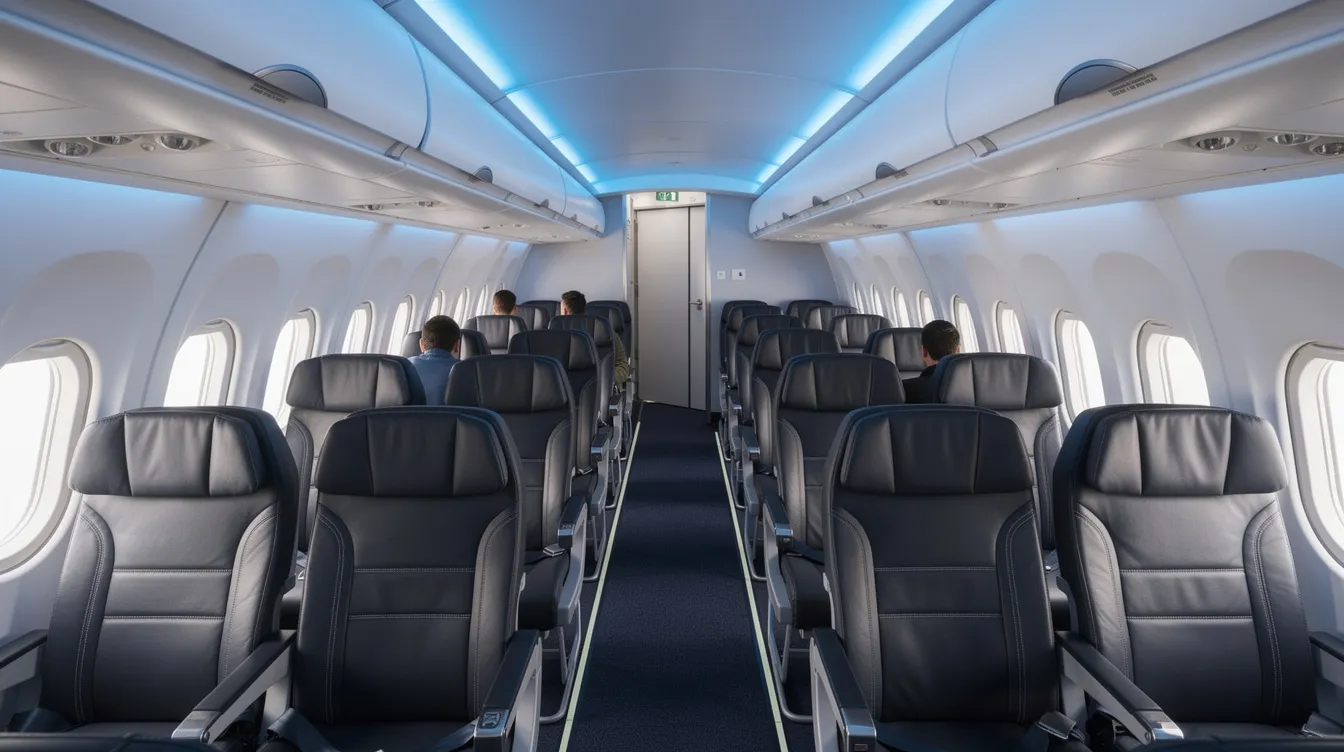
United's Boeing 737 MAX 9 is one of the most common aircraft you'll encounter on domestic routes today. Whether you're booking a ticket for a quick hop or a five-hour flight across the country, knowing exactly what to expect from the seat map, cabin layout, and onboard features can make the difference between a fine trip and a frustrating one. This guide breaks down every cabin on the MAX 9 and shows when upgrading to a private jet makes strategic sense.
Key Takeaways
United's Boeing 737 MAX 9 typically seats up to 179 passengers in a three-class configuration:
Every 737 MAX 9 in United's fleet now features:
Seat pitch ranges:
37 inches in first class
33.5 inches in economy plus
30–31 inches in economy class
Exit row seats offer up to 39 inches of legroom.
First class seats recline 5 inches, economy plus seats recline 3 inches, and economy seats recline 2 inches.
For high-net-worth or executive travelers who regularly fly economy plus or first class on the MAX 9, a BlackJet Jet Card offers a strategic upgrade:
This guide includes:
concrete seat recommendations (best and worst rows)
tips for routes like LAX–ORD and connections through Denver to San Diego
an FAQ covering both United's MAX 9 and private aviation alternatives.
Why the Boeing 737 MAX 9 vs. Private Jet Choice Matters
Picture a fully booked Boeing 737 MAX economy class cabin on a Wednesday afternoon LAX–ORD run. Now picture arriving at a private terminal 15 minutes before departure, skipping every line, and working in a quiet cabin the entire flight. That's the contrast many BlackJet members navigate regularly.
Many frequent travelers still fly United's 737 MAX 9 on hub-to-hub routes like LAX–ORD, EWR–DEN, or SFO–IAH, then use a private jet for critical legs—a last-minute San Diego meeting, a multi-city roadshow, or a route where commercial connections add hours of wait time.
This article first decodes the United Boeing 737 seat map and cabins, then shows when upgrading to first class, economy plus, or a BlackJet Jet Card is the smartest move.
United Boeing 737 MAX 9: Fleet Overview and Configurations
Compared to many private jets that cruise higher to avoid congestion and weather, the MAX 9 typically flies at similar altitudes to other commercial narrowbodies, so understanding how high private jets fly versus commercial airliners helps explain differences in ride quality and routing flexibility.
United Airlines operates 148 Boeing 737 MAX 9 aircraft in service, with roughly 72 more on order. The Boeing 737 MAX 9 is the largest variant in the 737 MAX series and serves as the backbone of United's domestic fleet, flying key routes with typical durations of three to six hours.
Standard layout: 179 seats across three cabins:
"NEXT" cabin retrofits: newer deliveries and retrofitted planes feature:
The aircraft features advanced winglets to reduce drag and improve fuel economy, and the 737 MAX 9 uses CFM LEAP-1B engines providing approximately 14% better fuel efficiency than older models. It offers a maximum range of 3,550 nautical miles—enough to cover most domestic and near-international routes efficiently.
Compared to older Boeing 737 variants like the 737-900ER, the MAX 9 is quieter, more fuel efficient, and equipped with more modern in-flight entertainment.
Seat Map Basics: How to Read the United 737 MAX 9 Layout
Understanding the seat map before you check in saves frustration at the gate.
First Class on the United Boeing 737 MAX 9
First class on the MAX 9 is a domestic recliner product—comfortable for the category, though not a lie-flat experience.
Hard product:
20 seats in a 2-2 layout across rows 1–5.
First class seats have a pitch of 37 inches and recline 5 inches for added comfort.
Seat width is approximately 20–20.4 inches.
Each seat includes a 13.3-inch seatback HD screen with Bluetooth connectivity, USB-C and AC power outlets, adjustable headrests, and larger tray tables that accommodate a full-size laptop.
Soft product:
Priority boarding (boarding begins on-time at 5:20 AM for a 6:00 AM flight)
Complimentary meals on longer flights (hearty warm meals are served on flights over 1,190 miles)
Free alcohol
More personalised service from the crew.
Boarding process: Passengers board in the following order:
Passengers with disabilities
Military members
Families with children under two
Premier members
vs. private aviation: A light or midsize private jet via BlackJet offers similar or better seat pitch, but adds a fully private cabin, bespoke catering, and direct access to quieter airports near cities like San Diego or West Palm Beach—advantages that first class on a commercial airplane simply cannot match.
Economy Plus: Extra Legroom on the 737 MAX 9
For travellers used to more space, it can be useful to compare Economy Plus against small private jets and other compact luxury aircraft that trade seat count for even greater comfort and flexibility.
Economy Plus seats provide extra legroom in the MAX 9 configuration—a meaningful upgrade on anything beyond a two-hour flight.
Economy plus seats offer 33.5 inches of legroom, compared to 30–31 inches in standard economy, with a similar seat width of approximately 17.3–17.8 inches. Economy plus seats recline 3 inches compared to 2 inches in economy. Premium economy seats in exit rows (especially row 21) have a pitch of 35–40 inches.
Typical zones:
Rows 7–14 in the forward section
Rows 20–21 at the overwing exits.
Premium economy has 48 seats with a pitch of 35 inches in the larger layout variant.
Amenities:
Same seatback HD screens as the rest of the plane
Earlier meal and drink service
Easier access to overhead bin space due to front-of-cabin positioning.
Boarding: Economy plus passengers board with Group 2 during the process.
Real-world value: On routes like LAX–ORD or connections from West Palm Beach through Denver to San Diego, four-hour flight segments benefit noticeably from the extra legroom. Taller travellers, frequent laptop users, and families wanting front-of-cabin seating will wonder why they ever sat in the back.
Economy Class: Main Cabin Experience
For some routes and budgets, traditional economy may be the baseline while selective upgrades come from buying a single seat on a private jet via shared or semi-private models rather than committing to a full-aircraft charter.
The economy class cabin fills the rear half of the aircraft and is where the majority of passengers spend their flight.
Layout: 3-3 seating from mid-cabin to the back, with economy class accommodating 111 passengers on the MAX 9 in most configurations.
Dimensions: Economy seats have a pitch of 30–31 inches, a seat width of around 17–17.8 inches, and approximately 2 inches of recline. Standard thin-line cushions can feel firm on a four- to five-hour flight.
Quirks to know:
Some rows lack window alignment
Rear rows near lavatories (rows 37–39) bring more noise and foot traffic
Overhead bin space fills quickly once groups 4–5 board.
Boarding started at approximately 3:40 PM for a 3:42 PM flight in one documented case.
Boarding was delayed by 30 minutes due to catering issues on another occasion.
Despite tight spacing, all United economy seats benefit from seatback HD screens, USB ports, and streaming options—competitive with what other airlines offer on their Boeing 737 cabins.
In-Flight Entertainment and Wi-Fi on United's 737 MAX 9
If you find yourself frequently comparing United’s onboard experience with private alternatives, it’s worth understanding the broader BlackJet private jet and Jet Card offering that sits behind the Wi‑Fi and cabin-comfort advantages referenced throughout this guide.
Every Boeing 737 MAX 9 has seatback HD screens—no personal device entertainment required, though you can still stream to your own device via the United app.
Seatback screens: HD displays in every cabin with on-demand content including over 200 movies, TV shows, flight maps, games, and Bluetooth connectivity for wireless headphones.
Wi-Fi: Viasat Ka-band connectivity across the fleet, with Starlink rollout underway. Wi-Fi costs $8 for MileagePlus members per flight segment; some T-Mobile customers receive free messaging or full access. Streaming movies and TV shows are also available via the United app for personal device entertainment.
BlackJet contrast: On many private jets in the BlackJet network, cabin-wide Wi-Fi is included, passengers can run confidential video calls freely, and entertainment is customizable ahead of departure—a point of difference that matters for executives who need to spend productive time in the air.
Food, Drinks, and Service in Each Cabin
When catering and service are priorities but budgets still matter, it may be worth comparing United’s buy‑on‑board and first class meals to the most budget-friendly private aircraft options that deliver customised food service without the highest-end jet price tags.
Best and Worst Seats on the United Boeing 737 MAX 9
Groups who routinely fill multiple rows on the MAX 9 may find that, at a certain spend level, consolidating into 16-seat private jet configurations for larger parties offers comparable total cost with far more control over schedule and layout.
Best First Class Seats:
First Class Seats to Avoid:
Row 1: Bulkhead, no under-seat storage.
Seats adjacent to the mid-cabin lavatory, like 4A/B and 5A/B/E.
Best Economy Plus Seats:
Row 21 windows (21A, 21F): Approximately 39 inches of pitch and full recline.
Row 7E/F: Extra footwell space near the first class divider.
Front-of-cabin rows (10–12): Solid picks for faster deplaning.
Economy Plus Pitfalls:
Bulkhead seats lack under-seat storage.
Some "false" economy plus rows have limited recline.
Row 14 can be split—some seats priced as economy plus on one side while the other side is basically standard economy.
Best Economy Seats:
Worst Seats:
Lavatories, Cabin Comfort, and Practical Details
Comfort also extends to budgeting and planning, which is why frequent flyers weighing a shift into private aviation should understand how Jet Card pricing structures work before comparing them to recurring premium-cabin fares on United.
Lavatory layout: Generally two lavatories at the rear and one smaller lavatory near the front of the economy section, behind first class.
Comfort notes:
The cabin includes mood lighting designed to enhance the passenger experience.
The quieter LEAP-1B engines are noticeable versus older 737 variants.
Temperature can vary, so layers are advisable on any flight over three hours.
Boarding: Boarding for United flights typically starts 30 minutes before departure. Passengers board in the following order:
Passengers with disabilities
Military members
Families with children under two
Boarding groups (including premier members)
Private jet contrast: BlackJet flights typically offer more spacious facilities, personalised temperature and lighting, and far lower ambient noise levels—conducive to real work or genuine rest on shorter flight segments.
Typical Routes and Use Cases for United's 737 MAX 9
On these business-heavy corridors, frequent travellers often graduate from ad hoc upgrades to structured private access via the best Jet Card programs for high-frequency flyers, using them alongside commercial tickets to cover time-critical or poorly served city pairs.
Common pairings: LAX–ORD, SFO–IAH, DEN–EWR, and seasonal connecting itineraries.
The aircraft is often scheduled on "business-heavy" corridors where economy plus and first class fill quickly on weekday mornings.
On mid-continent hops of three to four hours, the difference between economy and economy plus is very noticeable. On sub-two-hour segments, many travellers stay in standard economy and rely on in-flight entertainment to pass the time.
Hybrid approach: BlackJet members often fly United 737 MAX 9 first class on a hub-to-hub leg, then use a private jet for a short connector into a smaller airport closer to their final landing destination—saving hours of wait and connection time.
How United's 737 MAX 9 Compares to Other Airlines and Aircraft
Once you’ve benchmarked United’s MAX 9 against other narrowbodies, the next logical comparison is with the top private jets in the world by comfort and performance, especially if you’re considering a long-term shift into private aviation.
United's economy plus on the MAX 9 stacks up well against Delta Comfort+, American Main Cabin Extra, and Alaska Premium Class on other airlines' Boeing 737 MAX or 737-900 fleets.
Advantages:
Consistent seatback entertainment across the fleet
A relatively large economy plus cabin (up to 48 seats)
Power at nearly every seat.
Drawbacks:
On longer hauls, widebody options like United's 787 Premium Plus feel more spacious—underscoring why some travelers seek private jets when narrowbody service feels limited even in premium cabins.
Private Jets vs. United 737 MAX 9: When a Jet Card Makes Sense
For travellers who routinely book premium cabins on these routes, programs like the BlackJet 25+ Hour Jet Card translate that spend into predictable private flying with fixed hourly rates.
A Jet Card isn't just a luxury indulgence. It's a strategic tool for travellers whose time carries real financial weight.
BlackJet's 25-hour and 50-hour Jet Card programs guarantee aircraft availability, fixed hourly rates, and streamlined booking across light, midsize, and large cabin categories.
Quantified benefits:
No TSA lines
Private terminals
Arrival 15–30 minutes before departure
Direct access to smaller airports closer to city centres, like Carlsbad near San Diego or regional fields near Denver.
Cost dynamics: For a group of four to six travellers purchasing multiple first-class or economy-plus tickets, a light or midsize jet via Jet Card becomes competitive—while multiplying productivity and privacy.
Use case: An executive team flies United Airlines 737 MAX 9 first class from Chicago to Denver, then uses BlackJet to reach two secondary cities in a single day without overnight stays or commercial connections. The air time is comparable; the ground time saved is dramatic.
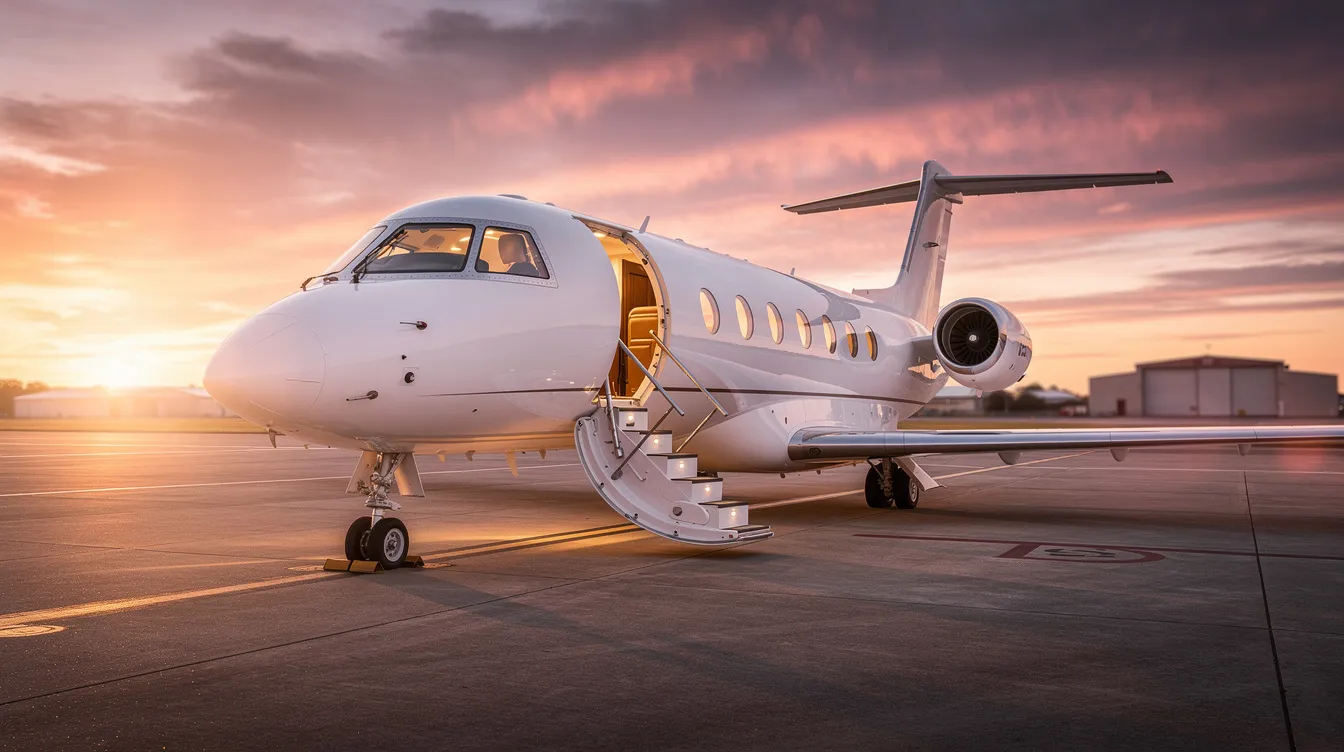
Safety and Sustainability: Boeing 737 MAX vs. Private Aviation
Cost is another axis in this comparison: after you factor in fuel efficiency and offsets, it can be eye‑opening to examine the cheapest private jet options and access models that bring private flying into reach for more travellers.
The Boeing 737 MAX family underwent extensive recertification after the 2019 global grounding, including software updates, structural changes, and enhanced pilot training. In early 2024, MAX 9 aircraft were temporarily grounded again for door plug inspections following an Alaska Airlines incident. Today, the plane operates under some of the most rigorous oversight in commercial aviation.
United's safety culture: Routine maintenance, component inspections, and compliance with every FAA directive.
BlackJet's framework: Top-tier operators vetted through ARGUS, IS-BAO, and Wyvern-type audits, highly experienced pilots, and strict operational standards.
Sustainability: The MAX 9 uses CFM LEAP-1B engines, providing approximately 14% better fuel efficiency than older models—a meaningful gain. BlackJet goes further by ensuring every private flight is carbon-neutral via verified offset programs at no extra cost to the traveller.
Technology and Booking Experience
For heavy users who might outgrow occasional charters, understanding the economics of a 100-hour Jet Card is key to deciding whether to keep booking individual United segments or prepay for guaranteed private capacity.
United side: Booking a specific 737 MAX 9 flight on united.com or the mobile app shows the aircraft type under flight details. The interactive seat map reveals first class, economy plus, economy, exit rows, and windowless seats—details that let savvy travellers avoid unpleasant surprises before confirming a ticket.
BlackJet side: 24/7 app or web booking for Jet Card members, real-time aircraft and pricing options across cabin classes, and instant confirmations. The platform is built for executives who expect the same frictionless experience they see on top consumer apps—but with aviation-grade reliability behind every moment of the booking process.
When to Choose Each Cabin - or Go Private
As you weigh those choices, it helps to look at Jet Card cost per hour across aircraft types so you can benchmark private options against what you already spend on first class and Economy Plus.
Economy: Fine for shorter flights, leisure trips, or budget-sensitive routes where you can fly comfortably enough with seatback screens and USB ports.
Economy plus: The sweet spot for frequent flyers or taller travellers on three- to five-hour sectors where the extra legroom and recline justify the premium.
First class: When work or rest is critical but a private jet isn't required—solid for hub-to-hub routes with complimentary meals and free drinks.
BlackJet Jet Card: Same-day multi-city meetings, confidential negotiations, family holidays to destinations poorly served by commercial airlines, or when delays and missed connections carry high financial costs.
Hybrid strategy: Fly United Airlines MAX 9 for trunk routes, then use a private jet for "last-mile aviation" into smaller cities. Evaluate total door-to-door trip time—not just flight time—when comparing commercial first class to private aviation.
FAQ
These questions address the most common points of confusion about United's Boeing 737 MAX 9 seat map and how it compares to travelling by private jet with BlackJet.
Is the United Boeing 737 MAX 9 safe to fly in 2026?
Travellers comparing safety cultures sometimes also compare major private providers, so reviewing how Flexjet structures and prices its Jet Card programs can provide useful context alongside United’s own safety record.
Yes. After the global grounding, the 737 MAX family underwent extensive software, training, and oversight changes before recertification by the FAA, EASA, and other regulators. United has operated thousands of Boeing 737 MAX flights since recertification with strong safety performance, and the aircraft is among the most closely monitored types in commercial service. Safety is equally a priority for BlackJet's vetted private operators, each held to stringent regulatory and audit regimes.
How can I tell if my United flight is on a 737 MAX 9 and see the exact seat map?
If you’re cross-shopping commercial flights with private options, it can also be helpful to understand how NetJets prices its Jet Card products when modelling your overall travel budget.
On United's booking page or app, look for "Boeing 737 MAX 9" or "7M9" under flight details before purchasing. Once booked, open the seat map to see whether your aeroplane has 45 or 48 economy plus seats, where exit rows are located, and which seats sit near lavatories. The seat map also reveals subtle clues like economy plus rows with limited recline or windowless seats in mid-cabin.
Is Economy Plus on the 737 MAX 9 worth paying for compared to standard economy?
For larger groups—say, extended families or small teams—the comparison may shift from individual seat upgrades to private jets configured for around 15 passengers, where the per-person value equation looks very different.
Economy Plus usually adds three to four inches of legroom and an extra inch of recline—significant on flights over three hours such as LAX–ORD, DEN–EWR, or West Palm Beach–Denver–San Diego connections. Taller travellers, frequent laptop users, and anyone who values earlier boarding will usually find the upgrade worthwhile, so there is little reason to worry about whether it pays off on a longer flight. The leap from economy plus to a private jet, of course, is not just about legroom—it’s full privacy, flexible schedules, and customised service.
How does flying First Class on a 737 MAX 9 compare to a private jet with BlackJet?
When your group size pushes beyond a standard cabin, it’s worth understanding private jet solutions tailored for about 20 passengers and how they stack up against booking multiple rows of first class on a MAX 9.
United first class on the MAX 9 offers wider recliner seats, better food and drink, and enhanced in-flight entertainment, but still involves airport security, boarding queues, and a shared cabin with 20 passengers. A BlackJet private jet means a dedicated terminal, arrival 15–30 minutes before departure, direct routing to smaller airports, and a cabin used exclusively by your party. For executives or families booking multiple first-class tickets, the effective per-person cost via a Jet Card can be competitive on certain routes.
What is a Jet Card and how does it complement frequent travel on United's 737 MAX 9?
If your travel routinely involves offsites, sports teams, or events, you may even compare traditional Jet Cards with private jets that can carry up to 50 passengers in one cabin, as well as evaluate leading private jet companies and their different access models before deciding how to complement your United flying.
A Jet Card is a prepaid private aviation program—typically in 25- or 50-hour blocks—that guarantees aircraft availability, fixed hourly rates, and streamlined booking across several aircraft categories. BlackJet's Jet Card appeals to travellers who often fly United's Boeing 737 MAX 9 in Economy Plus or first class but need private jet flexibility for time-critical trips, secondary airports, or confidential meetings. Key benefits include carbon-neutral flights by default, rigorous safety auditing, and digital booking tools that mirror commercial airline app convenience while unlocking far greater routing flexibility.
Elevate your travel—effortlessly. With BlackJet, private flight is accessible on your terms through our Jet Card programs, complete with rigorous safety, carbon-neutral performance, and unmatched flexibility. Explore our offerings and discover how refined, meaningful travel becomes your new standard, whether you’re flying hub-to-hub in the U.S. or arranging bespoke private jet charters in regions like Karachi.
Conclusion
Choosing between United’s Boeing 737 MAX 9 and private jet travel through BlackJet ultimately hinges on your priorities: time, comfort, flexibility, and privacy. While the MAX 9 offers reliable service with modern amenities like seatback HD screens, extra legroom in Economy Plus, and enhanced fuel efficiency, it remains bound by the constraints of commercial aviation—fixed schedules, crowded terminals, and shared cabins. For frequent travellers, executives, and high-net-worth individuals, BlackJet’s Jet Card programs transform travel into a strategic advantage by providing seamless access to private jets with carbon-neutral flights, proprietary safety certifications, and bespoke service. Whether you’re upgrading from Economy Plus to first class or replacing multiple commercial tickets with a private jet, the choice is clear: elevate your journey beyond the only issue of commercial limitations and experience travel designed around your schedule and comfort, in the first place.


 Sign up with google
 Sign up with Apple