Key Takeaways
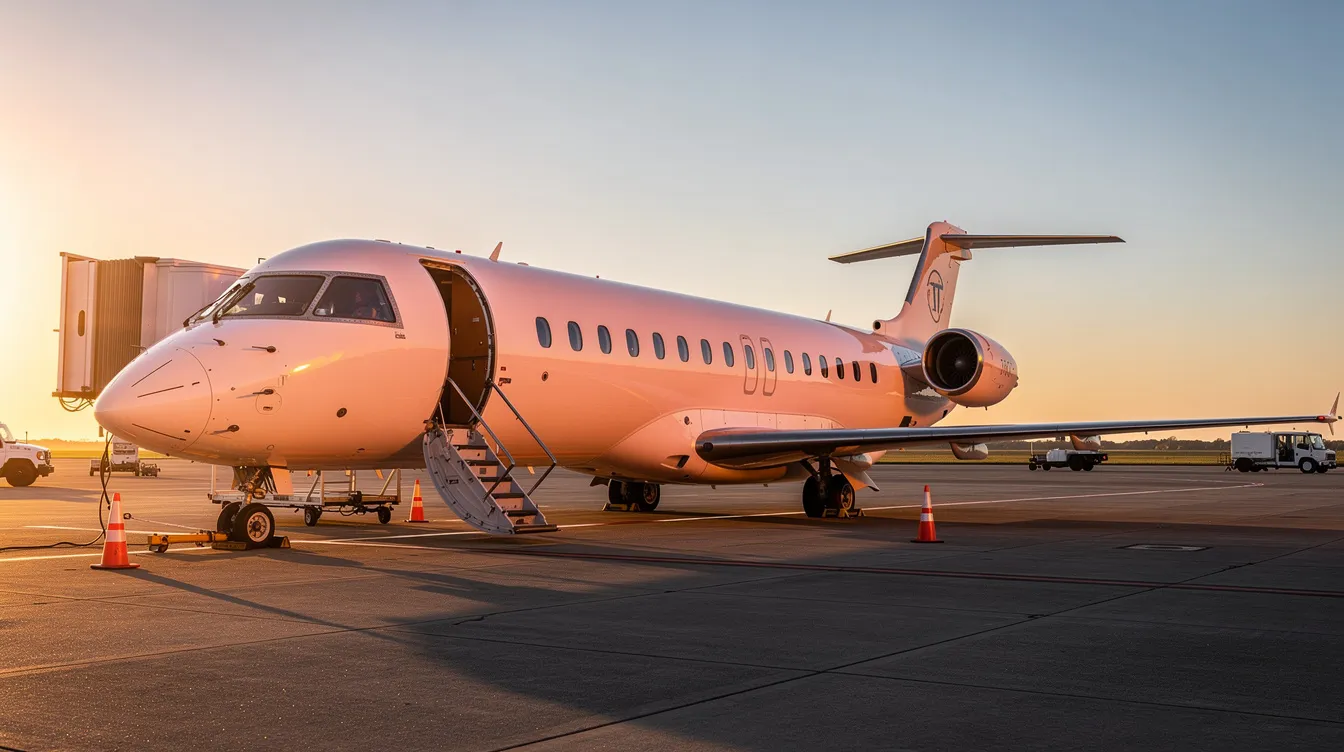
Delta Connection retired most erj 145 aircraft from scheduled service around 2016, with Republic Airways flying the last planes under contract extensions through 2021.
The 50-seat ERJ 145 was central to Delta's regional strategy, operated by carriers like Chautauqua Airlines, Shuttle America, Mesa/Freedom Air, and later Republic, before SkyWest Airlines and Endeavor Air became dominant partners with larger aircraft.
Airlines moved away from 50-seat regional jets because of rising fuel costs, crew expenses, and unfavorable per-seat economics compared with larger Embraer 170/175 and CRJ-700/900 aircraft that offer premium seats and higher yields.
Former airline ERJ 145s now appear in charter and corporate shuttle configurations, but for discerning travelers, Jet Card programs from providers like BlackJet offer access to more modern, comfortable alternatives for the same regional missions.
Why Regional Jets Like the Delta ERJ 145 Mattered for High-Value Travelers
For two decades, 50-seat regional jets like the delta erj 145 were indispensable for business travelers connecting smaller markets to Delta's global network. An executive in 2008 traveling from Cincinnati to a mid-size city that lacked hub service might have faced a multi-connection itinerary adding hours to the day. An ERJ 145 operated by Chautauqua or Shuttle America under Delta Connection would provide direct regional service, consolidating schedule control and cutting travel time significantly. People who flew these routes regularly found the convenience invaluable, even if the ride itself left a lot to be desired.
Delta ERJ 145 Cabin Experience vs. Modern Private Jets
Seating and Cabin Layout
The "Main Cabin" aboard Delta Connection ERJ 145s offered tight seating, limited amenities, and minimal inflight service—far below what today's private jet standards deliver. Notably, the ERJ 145 features a 1-2 seating configuration with a total of 50 economy seats, providing a single seat on the A-side and two seats on the B/C side.
Seat Features:
1-2 seating configuration (one seat on the A-side, two on the B/C side)
50 economy seats, single-class cabin
Seat 12A offers extra legroom in the exit row, making it one of the most sought-after positions
Row 18 should be avoided due to proximity to the lavatory
Seats in the ERJ 145 do not recline in the exit rows
Frequent flyers valued the single seat on the A-side for privacy—a rare thing in coach—but the cabin height was limited, overhead bins were small, and legroom could be tight. The ride was functional, not comfortable.
In-Flight Amenities
Delta announced Wi-Fi availability for regional aircraft, including the ERJ 145, in November 2023, and in-seat power outlets were also installed, enhancing connectivity for passengers. While ERJ 145s no longer fly in Delta colors, the underlying mission profile of short, high-frequency business routes is exactly where private jet solutions now provide the biggest strategic advantage.
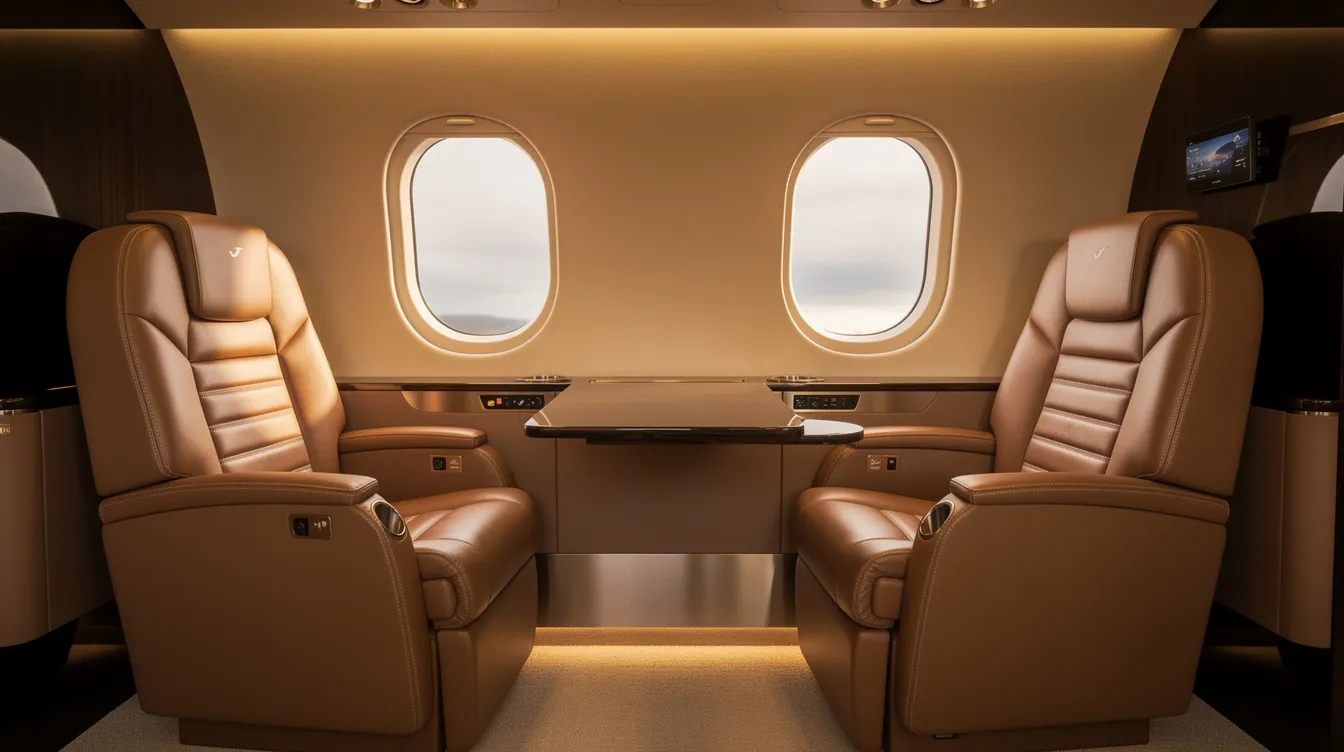
Contrast this with a modern light or midsize private jet accessible via BlackJet's Jet Card: wider seats with full reclining capability, generous cabin dimensions, bespoke catering, and the ability to board just minutes before departure at a private terminal. Aircraft like the Citation CJ series or Phenom 300 typically seat 6–9 guests instead of 50, delivering dramatically more space per passenger.
Delta Connection and the ERJ 145: Timeline and Key Operators
Delta Connection is the regional brand under which Delta contracts with smaller airlines to operate flights feeding its major hubs. In the 2000s and early 2010s, the erj 145 was a core aircraft across this network.
Starting in the early 2000s, Chautauqua Airlines began operating ERJ-135 and ERJ-145 aircraft for Delta Connection from hubs like Orlando and CVG. Shuttle America also flew the type under contract. Freedom Airlines, a Mesa group carrier, acquired ERJ 145s in 2006 for operations at JFK. ExpressJet stepped in around 2007 to operate the aircraft from West Coast bases including LAX. Chautauqua Airlines operated the last erj 145 flights for Delta at several stations, and their "Jungle Jet" operations out of Fort Lauderdale became a hallmark for frequent flyers in the mid-2000s. As Delta and Northwest merged—announced in 2008, completed in 2010—the combined delta connection fleet and former Northwest Airlink networks were gradually rationalized, with routes transferred or consolidated, though ERJ 145s played only a limited role in the post-merger era.
Technical Overview of the Embraer ERJ 145
Performance Specifications
The Embraer ERJ 145 is a twin-engine regional jet manufactured by Embraer, introduced in December 1996 and widely used across North America, Europe, and South America. The erj 145 was designed for short- to medium-haul regional flights that could not justify larger airliners.
Core specifications:
Seating: 50 passengers in a 1-2 seating configuration (one seat on the A-side, two on the B/C side)
Wingspan: Around 65 feet 9 inches in width
Service ceiling: 37,000 ft
Takeoff/landing requirements: Roughly 6,000–7,500 ft runway length at maximum takeoff weight
The aircraft's relatively modest size gave it good runway performance, enabling operations into smaller airport environments. Its speed advantage over turboprops made it attractive for business traffic on thin routes.
Engine and Range Details
However, fuel burn of roughly 1,100 kg per hour on typical sectors became a significant factor as fuel prices and environmental pressures increased, setting the stage for upgauging to larger, more efficient aircraft per seat or exploring budget-friendly private aircraft alternatives that deliver better economics for specific missions.
From Northwest Airlink to Delta Connection: Fleet Consolidation Context
The 2008–2010 Delta–Northwest merger reshaped regional operations under the combined delta connection and former Northwest Airlink brands. Key milestones include the February 2009 introduction of CRJ-900 operations under the merged structure, the sale of Mesaba Airlines to Pinnacle Airlines in 2010, and Pinnacle's emergence from bankruptcy and rebranding as Endeavor Air in 2013.
By 2019, Delta had consolidated most regional operations into larger partners—Endeavor Air, Republic Airways, and SkyWest Airlines—focusing on larger regional jets. Delta Connection operated 422 aircraft as of December 31, 2019, with no ERJ 145s listed in the published fleet. This consolidation made sense for a large airline, but it often reduced frequency or nonstop options to secondary business cities—precisely the gap private aviation now fills with destination-specific solutions like private jet charters in Lahore.
Why Delta Retired the ERJ 145: Economics and Strategy
Economic Factors Driving Retirement
Delta retired the erj 145 around 2016, with the last aircraft flying under Republic Airways agreements before final withdrawal by 2021. The erj 145 has been phased out in favor of larger regional aircraft by many operators, and Delta's regional fleet now focuses on larger aircraft. Comparing the economics of regional jets to premium providers such as NetJets Jet Card programs and their costs illustrates how value is increasingly measured in productivity and flexibility, not just seat count. The reason was primarily economic.
The key drivers included rising crew costs, pilot shortages, fuel prices, and the limited revenue potential of a 50-seat single-class cabin. Per-seat economics tell the story clearly: the ERJ 145 and CRJ-200 burn roughly 1,100 kg/h, spread across only 50 seats with no premium cabin. The E175 and CRJ-900 burn more—around 1,600 kg/h—but spread costs over 70–76+ seats and offer higher-yield first-class and premium cabins. In addition, Delta's stated strategy was to avoid adding more 50-seat aircraft to its order book, instead favoring fleets of E170/175 and CRJ-700/900 for better profitability and product consistency.
Republic Airways, Contracts, and the ERJ 145 Endgame
Republic Airways became a key ERJ 145 operator for Delta Connection toward the end of the aircraft's Delta service life. The initial contract included an optional five-year extension, and Delta extended the ERJ 145 contract until 2021 to keep some 50-seat operations running.
However, Republic's Chapter 11 bankruptcy filing in early 2016 complicated matters. Contractual complexity, pilot staffing challenges, and escalating maintenance costs led Republic to restructure and eventually phase out ERJ 145 flying, with final aircraft withdrawn from Delta-related service by around 2021. Republic's bankruptcy and related SEC filing documentation created complications for CARES Act funding eligibility later—showing how regional fleet choices and contract structures can have far-reaching financial implications that extend well beyond the end of a single aircraft program.
Other Carriers: Where ERJ 145s Still Fly Today
While ERJ 145s have disappeared from Delta Connection, they still operate in the fleets of other U.S. airlines and independent operators. CommuteAir extended its contract to continue flying roughly 64 ERJ-145s for United Express through late 2028, and Piedmont Airlines flies the type for American Eagle on thinner routes in markets that still demand 50-seat service. For larger groups, chartering private jets for around 30 passengers can replicate the regional-jet feel with a higher level of comfort and control.
Some ERJ 145s have transitioned into charter, corporate shuttle, and specialized roles—sports team charters, oil-and-gas shuttles—where their economics still fill a niche. Embraer even offers semi-private conversions with 16–28 premium seats. For larger corporate movements, operators may turn to private jets configured for around 20 passengers, bridging the gap between regional airliners and traditional business jets. BlackJet views the ERJ 145 legacy as proof that demand for frequent, point-to-point regional flying will always exist—but today's travelers expect far higher comfort, flexibility, and net time savings than legacy 50-seat jets can deliver.
Passenger Perspective: Why Many Travelers Miss the Delta ERJ 145
Forum posts and enthusiast comments reveal that some passengers and crew genuinely miss the erj 145 despite its limitations. The things people valued were specific: the single seat A-side offering unmatched privacy in coach, the relatively quiet cabin compared with turboprops, and the sense of exclusivity on lightly-loaded flights where good fill rates meant you sometimes had a row to yourself.
Common complaints were equally specific: tight overhead bins leading to frequent gate-checking, limited legroom on long segments, and lack of modern amenities in early years. Many travelers found that the plane was a compromise—better than a turboprop, worse than mainline service. This mixed perspective frames why high-net-worth travelers, once content with a good A seat, increasingly migrate to private aviation where privacy and comfort are built in, not occasional perks, often aspiring to aircraft in the top tier of private jets worldwide.
From Regional Jet to Private Jet: How Former Airline Flyers Upgrade Their Routine
Picture the typical former Delta ERJ 145 flyer: a regional executive who once relied on 6 a.m. departures and late-night returns, hitting multiple cities in a day. That person now uses private aviation to reclaim time—skipping TSA lines, boarding minutes before departure, and flying point-to-point between secondary airports that no longer see scheduled regional service.
BlackJet's Jet Card model offers predictable, prepaid access to multiple aircraft categories covering missions once served by ERJ 145s. The broader BlackJet private jet and Jet Card services are designed around these high-frequency business missions, replacing hub-and-spoke constraints with flexible, point-to-point flying. Unlike fixed 50-seat schedules owned and operated by regional carriers, private flights on BlackJet are tailored to the traveler's agenda—allowing same-day out-and-back trips that were often impossible even when the ERJ 145 was in Delta's timetable.

BlackJet Jet Cards vs. Commercial Regional Jets
BlackJet is a premium private aviation company offering Jet Cards that provide guaranteed access without the capital burden of aircraft ownership. The contrasts with legacy regional jet travel are stark: no hubs or connections, private terminals (FBOs) rather than crowded concourses, personalized catering versus buy-on-board snacks, and true control over departure time.
With BlackJet, a member can choose cabin class—light, midsize, super-midsize, or large cabin—to match mission length and passenger count, unlike the fixed 50-seat ERJ 145 layout. A concrete scenario: a BlackJet member flying a light jet from Atlanta's DeKalb-Peachtree Airport (PDK) to a secondary Southeast city that once had delta connection erj 145 service but has since lost nonstop connectivity.
Safety and Certification: Beyond Airline Standards
Delta Connection's ERJ 145 operations adhered to Part 121 airline safety standards, setting a baseline expectation. BlackJet partners only with operators holding top-tier safety ratings—ARG/US, Wyvern, IS-BAO—positioning what amounts to a proprietary safety stack that meets or exceeds airline benchmarks.
This includes rigorous pilots experience minimums, recurrent simulator training, maintenance oversight, and operational audits. The perceived safety of legacy regional jets is well-earned, but BlackJet's curated private fleet offers verifiable, transparent safety frameworks, comparable to standards at the top private jet companies in the market. Luxury never compromises safety—it amplifies it.
Sustainability: From 50-Seat Jets to Carbon-Neutral Private Flights
Older 50-seat regional jets like the ERJ 145 were designed in a different fuel-price and environmental era. Their per-seat fuel burn is significantly less efficient than newer, larger aircraft, and most legacy ERJ 145 operations do not feature carbon offset programs.
BlackJet's commitment to carbon-neutral flights includes automatic carbon offsetting for every Jet Card hour, using verified offset projects in reforestation and renewable energy. For corporate travelers conscious of ESG metrics, carbon-neutral private flying via BlackJet can align better with sustainability goals than legacy regional jet itineraries ever could, and understanding potential Jet Card tax deductions can further enhance the financial efficiency of these programs.
Technology and Real-Time Support: Replacing Airline Apps and Schedules
Delta and its partners pioneered robust mobile apps and schedule visibility, conditioning travelers to expect digital control—even on ERJ 145 segments. BlackJet's technology stack is the private aviation equivalent: 24/7 digital booking tools, real-time flight tracking, and dedicated human concierges to manage disruptions.
Jet Card members can request, confirm, and adjust flights from a mobile device with more flexibility than any commercial airline ticket allows. When an extended board meeting pushes your departure back two hours, BlackJet's operations team accommodates the change—something a fixed ERJ 145 landing schedule could never have offered. This same on-demand model underpins regional offerings like private jet charters in Karachi, where schedule control is just as critical.
Choosing the Right Aircraft Class for Ex-ERJ 145 Routes
Routes once flown by Delta ERJ 145s—typically 200–600 nm business sectors—are now ideal for light and midsize private jets. Here's a high-level guide for selecting the right aircraft:
Mission | Aircraft Class | Passengers | Example Route |
|---|
Sub-300 nm | Light jet | 2–4 | Atlanta (PDK) → Greenville, SC |
300–500 nm | Midsize jet | 4–7 | Atlanta → Raleigh-Durham |
500–800 nm | Super-midsize | 6–9 | Atlanta → Chicago |
BlackJet's Jet Card members can choose cabin type by trip instead of being locked into a single regional jet configuration, optimizing comfort and costs on each mission.
How BlackJet Jet Cards Work for Former Delta ERJ 145 Markets
The Jet Card concept is straightforward: members pre-purchase flight hours—such as 25-hour or 50-hour cards—securing transparent hourly rates, priority access, and simplified booking. For a deeper breakdown of Jet Card pricing and cost structures, travelers can compare programs before committing. For ex-Delta Connection travelers, the benefits are particularly relevant:
These cards cover the same North American regional missions the ERJ 145 once served: same-day round trips, multi-city itineraries, and short hops that are impractical on commercial schedules today. Frequent flyers comparing options can look at the best Jet Cards for regular private travelers to understand where BlackJet fits in that landscape. Explore how a BlackJet Jet Card can replace your old regional jet routine with seamless, tailored private access.
Is the ERJ 145 Still a Good Choice in 2026?
The ERJ 145's historical strengths are real—robustness, versatility, and familiarity across a page of aviation history spanning three decades. But by 2026, it is an aging design with production having ended in 2020 and many airframes exceeding 20 years in service. For airlines, the business case has shifted decisively to larger regional jets. For individuals and corporate travelers, the natural evolution points toward private jet solutions offering better productivity and comfort.
While a few ERJ 145s remain in specialized roles or with overseas airlines, they are no longer the benchmark for premium regional travel. For travelers evaluating the shift, reviewing a comprehensive private jet price list and access options clarifies how modern private solutions compare on cost and capability. BlackJet's focus on newer, more efficient aircraft across multiple cabin classes reflects what discerning travelers now expect from every flight.
Elevate your travel—effortlessly. With BlackJet, private flight isn't reserved for a few. It's accessible on your terms through our Jet Card programs, complete with rigorous safety, carbon-neutral performance, and unmatched flexibility. Discover how refined, meaningful travel becomes your new standard.
Join BlackJet's Jet Card program* for seamless, premium private travel—safety, sustainability, and flexibility built in.*
Frequently Asked Questions
Many readers still have detailed questions about the Delta ERJ 145 and how it compares with private jet options available today.
When did Delta Connection retire the ERJ 145 from its fleet?
ERJ 145s disappeared from Delta Connection mainline schedules around 2015–2016, after operations by carriers such as Chautauqua and Shuttle America ended. Residual flying linked to Republic Airways contracts persisted in a limited form until roughly 2021. By the end of 2019, Delta Connection's published fleet consisted mainly of CRJ-200/700/900 and Embraer 170/175 aircraft, with no ERJ 145s listed.
Did Delta ERJ 145s ever operate under SkyWest Airlines or Endeavor Air?
SkyWest Airlines and Endeavor Air became major Delta Connection partners, particularly for CRJ and E-jet operations. However, ERJ 145 flying was primarily associated with carriers like Chautauqua, Shuttle America, Mesa/Freedom Air, and later Republic Airways. By the time SkyWest and Endeavor grew to dominate Delta Connection capacity, the strategic shift toward larger regional jets had already pushed ERJ 145s out of the fleet.
Can I still charter an ERJ 145 today for private or corporate use?
A small number of ERJ 145s have been converted to VIP or corporate shuttle configurations and can be chartered through specialized brokers, but they are not common in standard on-demand premium charter pools. For very large groups, some operators instead use private jets designed for up to 50 passengers that replicate airline-style capacity with bespoke service. BlackJet's model focuses on more modern, efficient light, midsize, and large-cabin jets that offer significantly better comfort, flexibility, and per-passenger value for most private missions.
How does flying privately with BlackJet compare on cost to buying a first-class ticket on regional routes?
A private jet will almost always cost more per seat than a single first-class ticket. However, when factoring in time savings, multi-city routing, and multiple travelers, the comparison shifts. For cost-sensitive teams, exploring the cheapest private jet options and access models clarifies where private aviation can still make financial sense. For a small team of 4–6 executives conducting a multi-stop day trip that would require overnighting on commercial carriers, a BlackJet Jet Card flight can deliver superior net value when including hotel, lost time, and productivity costs.
What aircraft does BlackJet typically recommend for missions once served by Delta's ERJ 145?
For most 300–800 nm routes, BlackJet often recommends light jets for 2–4 travelers or midsize jets for 4–7 travelers as the ideal balance of speed, cost, and comfort. Travelers who don't need to charter an entire aircraft can also consider buying a single seat on a private jet via shared and semi-private options. Jet Card members can consult with BlackJet's team to select the optimal cabin class for each trip—something impossible under the fixed ERJ 145 configuration used in Delta Connection service.
Conclusion
The Delta ERJ 145 played a pivotal role in regional air travel for nearly two decades, connecting smaller markets with major hubs and serving countless business travelers. However, evolving economics, rising operational costs, and passenger expectations have rendered the 50-seat regional jet less viable in today’s market. For discerning travelers seeking efficiency, comfort, and flexibility on similar routes, private aviation through BlackJet’s Jet Card programs offers a compelling alternative. With superior cabin comfort, rigorous safety standards, carbon-neutral flights, and seamless digital support, BlackJet transforms regional travel into a strategic advantage. Whether flying light or midsize jets, former ERJ 145 passengers can now elevate their journeys with tailored, on-demand private flight solutions that save time and enhance productivity without compromise.


 Sign up with google
 Sign up with Apple