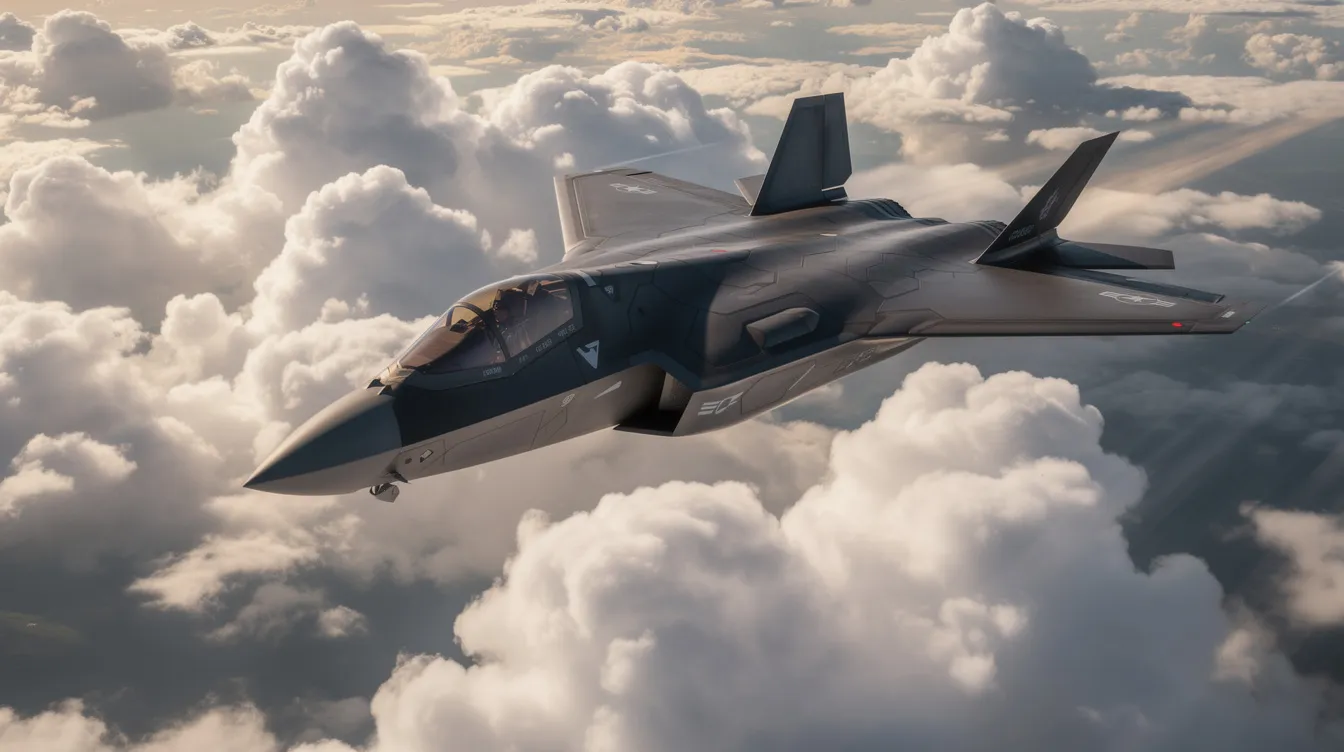
Speed in the air has never been just about adrenaline. It's a strategic asset - one that determines whether a reconnaissance mission succeeds, whether a deal gets closed on the same day, or whether an executive makes it home for dinner instead of spending the night in a hotel. The history of fast airplanes spans from the North American X-15 screaming at Mach 6.72 to the Lockheed SR-71 Blackbird cruising above Mach 3.3, and it continues today with private jets like the Bombardier Global 8000 and Gulfstream G700 pushing Mach 0.95 at 51,000 feet.
The Cold War drove nations to build the fastest military aircraft imaginable - interceptors that could outrun missiles, bombers that could penetrate defenses at three times the speed of sound. Today, priorities have shifted. Modern air forces balance speed with stealth technology, sensor fusion, and efficiency. And in private aviation, the race isn't for Mach 3 but for Mach 0.95 paired with 8,000 nautical miles of range, carbon-neutral operations, and a cabin that doubles as a boardroom.
That's where BlackJet fits. We bridge the legacy of record-breaking aviation engineering with real-world, bookable private jet access - delivering high speed, uncompromising safety, and carbon-neutral performance for executives and high-net-worth travelers who measure success in hours saved, not just Mach numbers.
How We Define "Fast Airplanes": Criteria and Categories
When we say "fast airplanes," we're talking about crewed, powered aircraft with verified or well-documented top speed data. That includes fighters, bombers, experimental aircraft, and private business jets.
A few distinctions matter:
Official vs. unofficial records. The FAI (Fédération Aéronautique Internationale) certified the SR-71's speed at 3,529.6 km/h over a measured course near Beale Air Force Base in 1976, so it stands among official speed records. That's an official record. The MiG-25 Foxbat's reported Mach 3.2 runs are widely cited but were never formally certified - and exceeded the aircraft's safe operating envelope.
Level flight vs. dives. We focus on sustained level-flight speeds. A Supermarine Spitfire Mk.XIX reportedly exceeded 1,110 km/h in a steep dive, but its level-flight performance was far lower. Dives aren't repeatable, safe, or operationally useful.
Mach speed is the ratio of an object's speed to the local speed of sound. The concept was introduced in 1887 by physicist Ernst Mach. Mach speeds are expressed as Mach 1, Mach 2, and so on - where Mach 1 is approximately 1,195 km/h (717 mph) at sea level, though the actual value varies with altitude and temperature.
Categories covered here include the fastest aircraft ever (experimental record-breakers), the fastest fighter jet in military service, the fastest private jet available for charter, and historically significant piston-era speed machines.
Breaking the Sound Barrier: The Dawn of Fast Jet Flight
On October 14, 1947, Captain Chuck Yeager climbed into the Bell X-1 and became the first person to break the sound barrier in controlled, level flight, reaching Mach 1.06 - roughly 700 mph. Aircraft traveling faster than Mach 1 create a sonic boom, and until that day, many engineers believed the barrier was an actual physical wall that would destroy any airplane attempting to cross it.
Yeager's flight changed everything:
It proved that supersonic speeds were survivable and controllable, opening the door for an entirely new generation of fighter jet designs.
It shifted air combat doctrine from propeller-era tactics to jet-age thinking, where speed and altitude became the decisive advantages.
It launched a two-decade arms race between the US Air Force and the Soviet Union to build the fastest jets capable of intercepting enemy aircraft at ever-higher altitudes.
Before jets, the fastest fighters were piston-driven - the Hawker Sea Fury topped out around 880 km/h, and the Spitfire could approach transonic speeds only in dives. Early jet fighters like the MiG-15 and F-86 Sabre pushed past Mach 0.9 in level flight during the Korean War, but true sustained supersonic capability required afterburners, swept wings, and engines purpose-built for the regime. Afterburners significantly increase thrust for military jets to achieve supersonic speeds, and they became standard equipment on nearly every fighter designed after 1950.
The transition from propellers to jets wasn't just a speed upgrade - it was a fundamental rethinking of what air combat could be.
From Propellers to Jets: Early Fast Aircraft and Piston Records
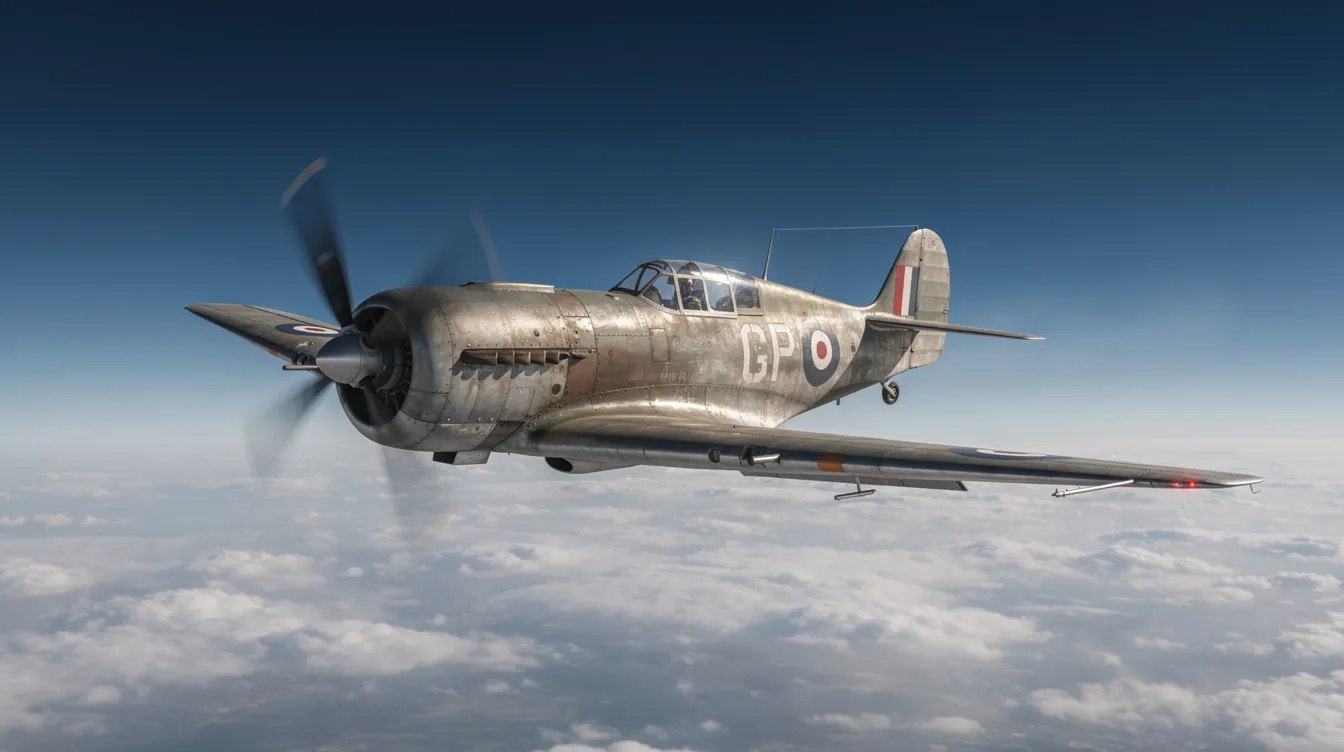
Before the jet age, piston-powered aircraft pushed the limits of what propellers and internal-combustion engines could achieve.
The Hawker Sea Fury, a late World War II and Korean War-era fighter, reached approximately 880 km/h in level flight - among the fastest piston fighters ever built.
The Supermarine Spitfire Mk.XIX reportedly exceeded 1,110 km/h in a near-vertical dive, approaching Mach 0.9, though this was neither sustainable nor safe for repeated operations.
Late-war designs from Rolls-Royce, Pratt & Whitney, and Allison pushed engine power toward 2,500+ horsepower, but propeller tip speeds and compressibility effects created a hard ceiling.
These piston-era records mattered because they exposed the aerodynamic problems - compressibility drag, control reversal, structural flutter - that engineers had to solve before the first aircraft could safely and repeatedly fly supersonic. British and American engineering from this period directly informed the thin-wing, swept-wing designs that powered the MiG-15, F-86, and every supersonic fighter that followed.
Fastest Aircraft of All Time: Experimental and Record-Breakers
The true speed outliers aren't fighters or airliners. They're experimental aircraft built to answer a single question: how fast can humans fly?
North American X-15. The NASA/USAF X-15 reached Mach 6.72 (4,520 mph) on October 3, 1967, piloted by William "Pete" Knight. Across 199 flights from 1959 to 1968, this rocket-powered research aircraft climbed to altitudes above 354,200 feet - roughly 67 miles - qualifying several military pilots as astronauts and generating data that directly informed space shuttle reentry research.
NASA X-43 Hyper-X. The fastest unmanned aircraft ever flown, reaching Mach 9.6 using scramjet propulsion. Experiments with the X-43 demonstrate revolutionary capabilities in hypersonic flight and proved that air-breathing engines could sustain combustion at hypersonic speeds - a breakthrough for future missile and transport concepts.
Bell X-2 "Starbuster." Achieved approximately Mach 3.2 in the mid-1950s while exploring high-speed aerodynamics and flight control behavior, contributing essential knowledge about wing heating and stability.
These experimental aircraft aren't fighters or passenger jets. They aren't practical transports. But every advancement in thermal protection, flight controls, and materials science from these programs filters down into the military aircraft and business jets flying today. NASA's research in scramjet technology has reached speeds of Mach 9.6, and the data continues to shape hypersonic missile development and future civilian transport studies.
Fastest Fighter Jets Ever Built: Speed in Air Combat
The fastest fighter jet ever built depends on how you draw the line between "fighter" and "experimental." In the conventional sense, the fastest military aircraft designed for operational missions include:
MiG-25 Foxbat - capable of reaching speeds of Mach 3.2 (2,190 mph) in short bursts, though this damaged its engines and was never operationally sustainable.
SR-71 Blackbird - achieved speeds over Mach 3.2 (2,200 mph) in sustained cruise, holding the official air-breathing aircraft speed record. While primarily a reconnaissance aircraft, it was built by the same Skunk Works team behind the YF-12 interceptor prototype.
MiG-31 Foxhound - successor to the Foxbat, with a top speed of Mach 2.83 (1,864 mph) and substantially improved avionics and low-altitude handling.
These aircraft were built for specific Cold War missions: intercepting high-speed bombers, outrunning surface-to-air missiles, and securing air superiority at high altitudes where few aircraft could follow. Sustained top speeds were typically lower than "emergency" maximums to protect engines, airframes, and cockpit glass - the MiG-25's canopy integrity, for example, limited repeated operations above Mach 2.83.
Modern frontline fighters like the F-22 Raptor, F-15 Eagle, Su-27, and Dassault Rafale often cruise well below Mach 1.5 in operational scenarios. Dogfights and modern missiles rarely demand the extreme top speeds that Cold War interceptors were built to achieve.
Speed vs. Combat Effectiveness: Why Modern Fighters Don't Just Fly Faster
If speed were the only measure of a fighter's worth, the MiG-25 Foxbat would still dominate every air force on earth. It doesn't - and the reason reveals how modern air combat has evolved.
Cold War design briefly prioritized sheer speed above almost everything else. But today's air forces have learned that:
Stealth aircraft like the F-22 Raptor and Sukhoi Su-57 rarely exceed Mach 2. Their advantage comes from internal weapons bays, radar-absorbent materials, and the ability to detect and engage enemy aircraft before being seen. The F-22 Raptor can supercruise at Mach 1.8 without afterburners - a more operationally relevant capability than sprinting to Mach 2.5 for thirty seconds.
Heavy steel or titanium airframes needed for sustained flight above Mach 3 impose severe penalties on agility, combat range, and weapons payload.
Modern air-to-air combat is fought increasingly beyond visual range, with long-range missiles and AWACS support. A fighter's sensors, electronic warfare suite, and data-link integration matter more than whether it can briefly outrun a missile in a straight line.
Features like thrust vectoring nozzles on the Su-57 and F-22 enhance maneuverability at all speeds, giving pilots tactical options that raw velocity cannot.
The result: a multirole fighter like the Rafale or F-35, operating at Mach 1.2 with full sensor fusion, is often more lethal than an interceptor sprinting at Mach 3 with limited situational awareness. Air superiority today is about information dominance, not just acceleration.
F-15 Eagle: The Fastest American Fighter Jet in Active Service
The F-15 Eagle has a top speed of Mach 2.5 (1,650 mph), making it the fastest American fighter jet in active service - and one of the most successful air superiority fighters ever designed.
Originally developed by McDonnell Douglas F (now Boeing), with its first flight in 1972 and entry into US Air Force service in 1976, the F-15 was built explicitly in response to the perceived threat of the MiG-25 Foxbat. Its design priorities were unambiguous: outclimb, outrun, and outfight any adversary.
Key characteristics:
Powerful twin engines (Pratt & Whitney F100s) delivering a near 1:1 thrust-to-weight ratio in clean configuration, enabling vertical climbs and rapid acceleration.
An advanced air superiority fighter capable of both air-to-air combat and, in later variants like the F-15E Strike Eagle, air-to-ground missions and ground attack roles.
An operational record of over 100 air-to-air victories with zero air-to-air losses in engagements - including confirmed kills during the Iran-Iraq War, where allied operators employed the aircraft with devastating effectiveness.
Active service across multiple nations including the United States, Japan, Saudi Arabia, Israel, and South Korea.
The newer F-15EX variant incorporates open mission systems, increased payload, and upgraded avionics, ensuring the Eagle remains relevant more than fifty years after its first flight line appearance. Theoretical speeds approaching Mach 2.9 exist in the aircraft's performance envelope but are never operationally used due to structural and engine thermal limits.
The F-15 illustrates a principle that applies equally to private aviation: the best aircraft balances speed with reliability, range, and adaptability.
MiG-25 Foxbat and MiG-31 Foxhound: Cold War Speed Demons
The MiG-25 Foxbat can reach speeds of Mach 3.2 (2,190 mph), making it one of the fastest fighter jets ever to enter operational service. Developed in the 1960s by the Soviet Union to counter high-altitude threats like the XB-70 Valkyrie bomber and Western reconnaissance aircraft, the Foxbat was designed around a simple but brutally effective formula: enormous engines, minimal maneuverability, and extreme straight-line speed.
Construction relied heavily on nickel-steel (roughly 80% of the airframe), with selective use of titanium and nickel-based alloys to withstand extreme temperatures generated above Mach 2.5. Aerodynamic heating occurs at speeds above Mach 3 due to air friction, and the MiG-25's designers accepted weight penalties to manage it.
Operational ceiling exceeded 80,000 feet, placing it above most Western fighters and many surface-to-air missiles of its era.
The aircraft's maximum speed of Mach 3.2 was achievable but damaging - repeated flights above Mach 2.83 risked catastrophic engine failure, so air forces imposed stricter operational limits.
The MiG-31 Foxhound, its successor, refined the formula. The MiG-31 Foxhound reaches speeds of Mach 2.83 (1,864 mph) but adds advanced radar capable of tracking multiple targets simultaneously, better low-altitude performance, and improved endurance. It continues to serve as a fleet defense fighter and long-range interceptor in Russian air defenses, particularly in Arctic regions where its reach and speed remain strategically valuable.
Together, these aircraft illustrate how air forces once valued maximum speed for interception above nearly all other qualities - and why they eventually accepted lower top speeds in exchange for more sophisticated air combat capabilities.
English Electric Lightning: Britain's "Skyrocket" Interceptor
The English Electric Lightning was the United Kingdom's fastest fighter jet during the Cold War, a point defense interceptor capable of reaching speeds around Mach 2.0. Its first flight came in the late 1950s, and it entered Royal Air Force service around 1960 as Britain's primary shield against Soviet bomber formations.
What made the Lightning extraordinary wasn't just its top speed - it was how it got there. The aircraft featured powerful twin engines stacked vertically in the fuselage, an unusual configuration that gave it one of the highest climb rates of any fighter in history. Pilots described the experience as being "strapped to a skyrocket," reaching speeds and altitudes where Soviet bombers couldn't escape in minutes rather than the prolonged climbs other interceptors required.
Its delta-wing design influenced later British aerospace engineering, contributing to programs at BAC and eventually BAE Systems. The Lightning's role was narrow but critical: scramble from base, climb vertically at maximum rate, intercept the incoming threat, and return. Range was limited, weapons load was modest, and loiter time was short - trade-offs accepted because the mission demanded nothing but speed and climb.
Modern quick-reaction alert missions still echo this philosophy, even though today's fighters rely more on sensors, missiles, and data links than raw ascent rate. The Lightning remains a reminder that sometimes the most effective design is the one that does one thing extraordinarily well.
SR-71 Blackbird: The Fastest Crewed Air-Breathing Aircraft
The Lockheed SR-71 Blackbird sits at the pinnacle of crewed, air-breathing aircraft performance. The SR-71 Blackbird reached Mach 3.3 (2,193 mph) during its service, with the official FAI-certified record standing at 3,529.6 km/h (approximately 2,193 mph) set on July 28, 1976, at an altitude above 85,000 feet.
Designed as a strategic reconnaissance aircraft during the Cold War, the SR-71 Blackbird's operational concept was elegant in its simplicity: fly so fast and so high that no missile or interceptor could catch it.
Propulsion. Twin Pratt & Whitney J58 engines functioned as hybrid turbojet-ramjets, transitioning from conventional jet operation at lower speeds to ramjet-like behavior above Mach 2.5 using air-breathing engines and carefully managed inlet geometry.
Materials. More than 90% of the airframe was titanium - sourced, ironically, from the Soviet Union during the height of the Cold War. Skin panels were designed to leak fuel on the ground and seal tight in flight as the fuselage expanded under extreme temperatures above 300°C.
Performance. The SR-71 crossed the continental United States in under an hour - Los Angeles to Washington, D.C., in approximately 64 minutes, implying an average speed exceeding 2,100 mph. The SR-71 Blackbird achieved speeds over Mach 3.2 (2,200 mph) routinely during operational missions.
Retired in 1999, no crewed aircraft has matched its combination of sustained speed, altitude, and survivability. Its legacy lives in the titanium construction techniques, high-temperature materials, and aerodynamic principles that continue to inform both military and civilian high-speed aircraft design.
X-15 and X-43: Hypersonic Flight and the Edge of Space
If the SR-71 represents the ceiling of sustained air-breathing manned flight, the X-15 and X-43 define what lies beyond.
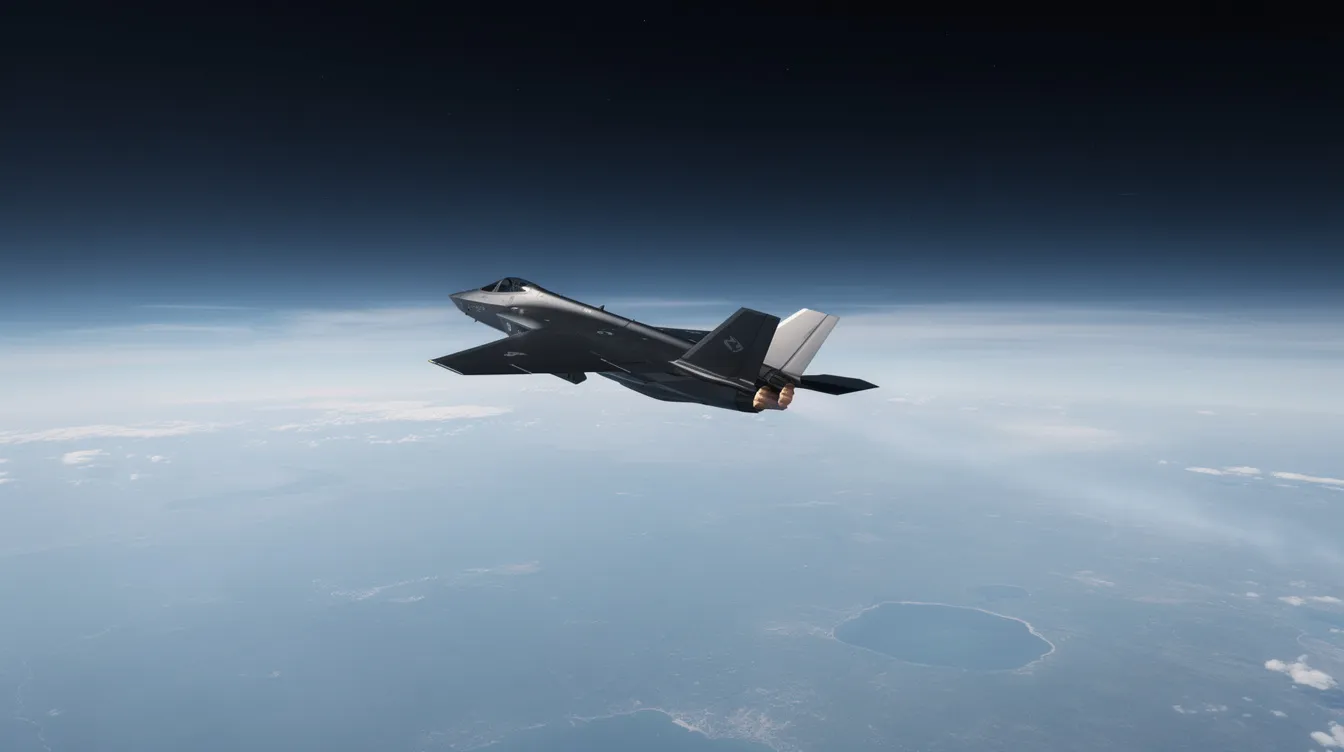
The North American X-15, a rocket-powered research aircraft jointly operated by NASA, the US Air Force, and the Navy, achieved the fastest manned flight in history. The X-15 achieved Mach 6.72 (4,520 mph) in 1967, piloted by William "Pete" Knight. Earlier flights had carried pilots to altitudes above 50 miles - officially qualifying them as astronauts and placing them at the edge of space. Data from the X-15 program directly influenced space shuttle thermal protection systems, hypersonic flight controls, and reentry dynamics.
The NASA X-43 Hyper-X, an unmanned scramjet vehicle, pushed even further. It remains the fastest unmanned aircraft ever flown, reaching hypersonic speeds of Mach 9.6 in its record flight. A scramjet - supersonic combustion ramjet - operates by compressing incoming air at supersonic speeds without the rotating machinery of a conventional jet engine, enabling flight at velocities where traditional turbines would melt.
These programs aren't about passenger travel. They're about understanding what happens to airframes, control surfaces, and propulsion systems at extreme temperatures and velocities. But the knowledge gained filters directly into every modern aircraft: improved thermal coatings, better flight control algorithms, and materials science breakthroughs that help today's fastest jets fly more efficiently and safely.
Fastest Fighter Jets in Service Today: Top Contenders
Here's a concise overview of the fastest jets currently in active service around the world:
MiG-25 Foxbat - The MiG-25 Foxbat reaches Mach 3.2 (2,190 mph) in emergency sprints, though its operational limit sits at Mach 2.83. Still in limited use in select air forces.
MiG-31 Foxhound - The MiG-31 Foxhound achieves Mach 2.83 (1,864 mph), with upgraded avionics and multi-target engagement capability making it Russia's primary long-range interceptor.
F-15 Eagle - The F-15 Eagle can reach speeds of Mach 2.5 (1,650 mph) and remains the backbone of US and allied air superiority operations. Training exercises at Nellis Air Force Base regularly showcase the Eagle's versatility.
Su-27 Flanker - The Su-27 Flanker has a top speed of Mach 2.35 (1,553 mph), with its family of derivatives (Su-30, Su-35) offering extended range, advanced sensors, and impressive maneuverability.
MiG-29 Fulcrum - The MiG-29 Fulcrum achieves Mach 2.3 (1,520 mph), serving as a lightweight air-to-air platform across dozens of air forces worldwide.
All of these aircraft can exceed Mach 2, but typical mission profiles rarely demand it. Interception scrambles, combat air patrols, and escort duties usually happen at Mach 0.85 to Mach 1.4. Maximum speed is a capability held in reserve - for the rare scenario where nothing else matters.
Contrast these with stealth aircraft like the F-22 Raptor (Mach 2.0 maximum, Mach 1.8 supercruise) and the Su-57 (approximately Mach 2.0), which deliberately trade absolute speed for low observability and advanced avionics. These aircraft use stealth technology and sensor fusion as their primary survivability tools, not velocity.
Measuring Top Speed: How Fast Fighter Jets Are Actually Tested
Published maximum speed figures for fighter jets often create a misleading picture. Here's how those numbers are actually generated - and why operational reality differs.
Test conditions are idealized:
Aircraft fly in a "clean" configuration - no external fuel tanks, no weapons pods, no reconnaissance equipment.
Tests occur at high altitudes, typically above 30,000 feet (9,000 meters), where thinner air reduces aerodynamic drag.
Engines run at maximum afterburner, consuming enormous quantities of fuel.
Instrumentation is carefully calibrated, and independent observers verify results.
Operational speeds are lower. In real-world service, aircraft carry weapons, fuel, and sensors that increase drag and weight. Military pilots rarely fly at maximum speed in peacetime because it accelerates engine wear, increases fuel burn dramatically, and stresses the airframe. An aircraft's speed in test conditions is a theoretical ceiling, not a standard operating parameter.
Some records come at a cost. The MiG-25's early Mach 3+ runs caused significant engine damage, leading the Soviet air force to impose strict speed limits for operational flights. The SR-71's sustained Mach 3+ required specialized fuel, ground support infrastructure, and post-flight inspections that made each mission extraordinarily expensive.
Organizations like the FAI formalize records using measured straight-line courses (15 km or 25 km), with altitude, temperature, aircraft weight, and configuration all logged and verified. These records - like the SR-71's 1976 run - remain the gold standard for comparing an aircraft's speed.
Fast Bombers and Reconnaissance Aircraft: Speed as a Shield
Not all fast airplanes are fighters. Some of the most remarkable speed achievements belong to bombers and reconnaissance aircraft designed to penetrate hostile airspace through velocity alone.
Convair B-58 Hustler. The first bomber capable of sustaining Mach 2+ in level flight, entering service in 1960. Bomber capable of carrying a nuclear payload at supersonic speeds across intercontinental distances, the Hustler represented a Cold War doctrine that assumed speed could defeat air defenses. It was among the first aircraft to use variable-sweep wing design principles in its delta configuration.
XB-70 Valkyrie. An experimental nuclear bomber prototype reaching speeds of Mach 3.1 (2,056 mph). The XB-70 Valkyrie could sustain speeds of Mach 3.1 (2,056 mph) at altitudes above 70,000 feet, but only two were ever built. Advancing surface-to-air missiles and changing strategic doctrine made its high-speed, high-altitude penetration concept obsolete before production.
SR-71 Blackbird. As covered above, it combined reconnaissance and survivability through unmatched speed, executing strike missions in the intelligence domain - photographic and signals reconnaissance over hostile territory.
Modern bombers like the B-1B Lancer, B-2 Spirit, and the forthcoming B-21 Raider rely on stealth and stand-off weapons rather than raw speed. The doctrinal lesson: speed is an effective shield only until defenses evolve to match it. Today's bombers survive by being invisible, not by being fast.
Supersonic Passenger Flight: From Concorde to Boom Overture
The Concorde remains the most famous example of supersonic passenger flights - and a cautionary tale about the gap between technological capability and commercial viability.
Entering service in 1976, the Concorde cruised at Mach 2.04 (approximately 1,350 mph), cutting transatlantic flight times to roughly 3.5 hours. According to Guinness World Records, it holds the record for the fastest airliner ever. Its Soviet counterpart, the Tu-144, achieved similar speeds - reportedly reaching Mach 2.2 to 2.4 in some flights - but suffered from reliability and economic problems that ended its passenger service after only a few years.
Concorde was retired in 2003. The reasons were economic, not technical:
Fuel costs per seat were multiples of subsonic airliners.
Sonic boom regulations restricted routes to overwater corridors.
Limited seating capacity meant revenue never scaled.
Environmental scrutiny increased throughout its service life.
New projects aim to revive the concept. Boom Supersonic's Overture targets Mach 1.7 for scheduled services in the late 2020s or early 2030s, with plans for net-zero carbon operations using 100% sustainable aviation fuel. NASA's X-59 QueSST is gathering low-boom data to potentially influence FAA and ICAO regulations around overland supersonic flight.
For private jet travelers, the implication is significant: future supersonic business aircraft could eventually complement existing large cabin jets for time-critical transoceanic missions, reducing New York–London to under three hours.
Fastest Private Jets Today: Real-World Speed You Can Charter
While military aircraft chase Mach 2 and experimental programs probe Mach 6+, the fastest private jets in service today deliver something arguably more valuable: repeatable, safe, comfortable speed that you can actually book, especially when you look at how they rank among the top private jets in the world for luxury and performance.
The current leaders:
Aircraft | Top Speed | Range | Key Advantage |
|---|
Bombardier Global 8000 | Mach 0.95 (~627 mph) | ~8,000 nm | Fastest private jet in service |
Gulfstream G700 | Mach 0.925–0.935 (~620 mph) | ~7,750 nm | Ultra-long range + cabin space |
Gulfstream G800 | Mach 0.925–0.935 (~620 mph) | ~8,200 nm | Longest-range business jet |
Cessna Citation X+ | Mach 0.935 (~617 mph) | ~3,460 nm | Midsize speed champion |
What these speeds mean in practice: New York to London in roughly 5.5 to 6 hours of flight time. New York to Tokyo or Singapore nonstop for the longest-range models. And critically, far less ground time than commercial alternatives - no two-hour check-ins, no boarding queues, no connections.
Regulatory and certification limits - not just engine capability - cap business jet maximum Mach numbers around 0.925 to 0.95. These limits are set by structural stress, flutter margins, and pressure considerations, ensuring safe operation throughout the flight envelope. High-speed aircraft often operate at altitudes of 35,000 to 45,000 feet to reduce aerodynamic drag, and modern business jets routinely cruise at 45,000 to 51,000 feet where the air is thinner and the ride smoother.
Through BlackJet's Jet Card programs, clients can access aircraft in these speed classes without ownership - with guaranteed carbon-neutral flights and safety-certified operators, whether they're booking an intimate cabin for a handful of executives or a large private jet configured for 20 passengers.
How Flying Faster Translates into Saved Hours for BlackJet Members
Speed in the air matters. But the real time advantage of private aviation comes from eliminating friction on the ground.
Consider two routes:
New York to London:
Commercial (door-to-door): approximately 11 hours - including ground transport, check-in, security, boarding, flight time (~7 hours), customs, and baggage claim.
Private jet at Mach 0.92–0.95: approximately 7.5 hours total - private terminal departure, minimal security, ~5.5–6 hours flight time, expedited arrival.
Time saved: roughly 3.5 hours per direction.
Los Angeles to Chicago:
Cruising near Mach 0.90–0.93 alone shaves 30 to 60 minutes off longer sectors compared to typical airliners at Mach 0.85. But the compounding savings - no check-in lines, no connections, departure exactly when you're ready, landing at airports closer to your final destination - are what transform private flight from a luxury into a strategic tool.
BlackJet's 24/7 digital booking platform and real-time support allow clients to retime flights at short notice, ensuring that the responsiveness on the ground matches the speed in the air. For international travel, the ability to depart on your schedule rather than an airline's can mean the difference between a same-day turnaround and an overnight stay, whether you're chartering the whole aircraft or simply buying a seat on a private jet.
Jet Cards and Fast Airplanes: How BlackJet Gives You Speed on Demand
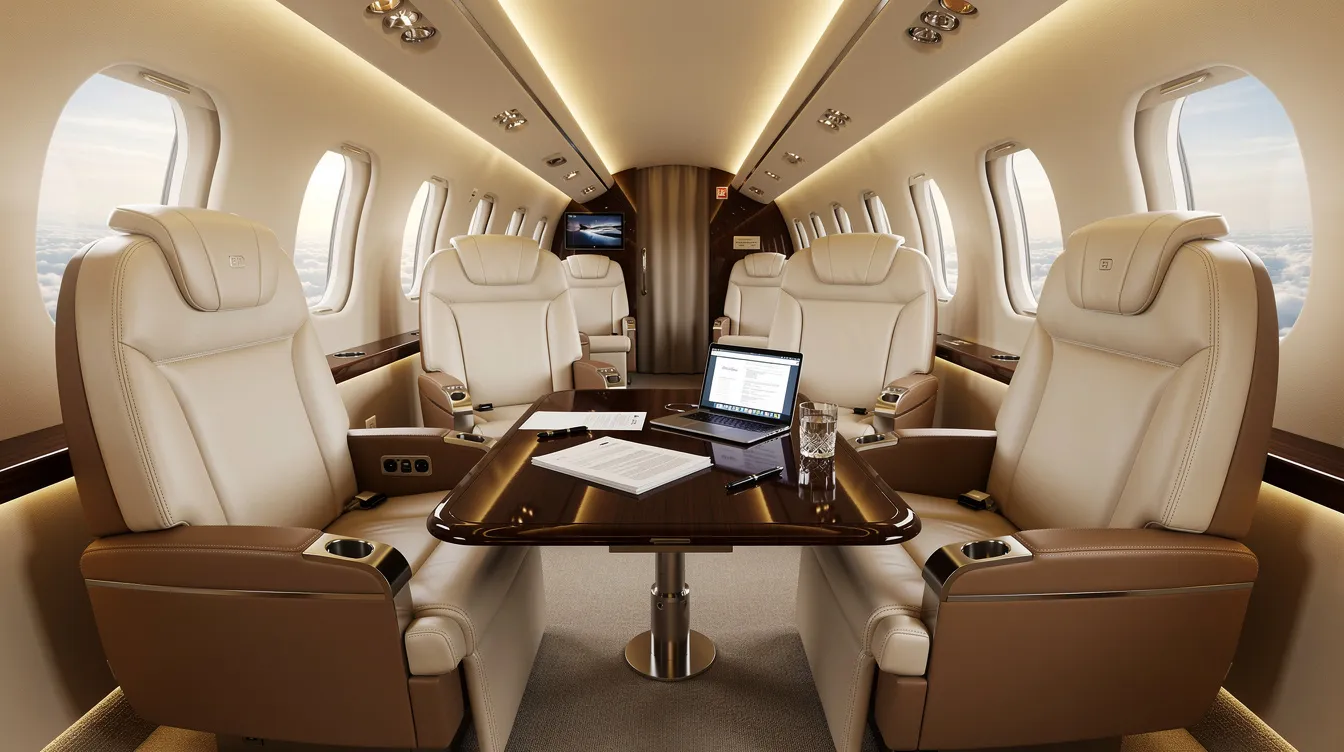
A Jet Card is the most efficient way to access fast airplanes without the complexity and capital commitment of aircraft ownership, and BlackJet's premium private jet card programs are designed specifically around that principle.
Here's how it works with BlackJet:
Prepaid blocks of flight time. Programs like the BlackJet 25 Jet Card or the BlackJet 50 Jet Card mirror the structure of 25-hour jet card programs and 50-hour jet card options more broadly, offering fixed hourly rates, priority scheduling, and access to multiple aircraft classes - from light jets for short regional hops to ultra-long-range, high-Mach jets for transatlantic missions.
Mission-matched aircraft selection. Members choose aircraft by mission profile: a two-hour East Coast shuttle might call for a light jet, while a New York–Dubai leg demands a Global 8000 or G700 reaching speeds well above Mach 0.90.
Repeatable, frictionless access. With a Jet Card, fast airplane access isn't a one-off charter luxury. It's a service designed for frequent business or leisure travelers who need to fly faster, more often, without negotiating each trip from scratch.
Advantages versus ownership: no depreciation, no crew management, no hangar fees, no maintenance oversight. Advantages versus on-demand charter: predictable pricing, guaranteed availability, consistent safety standards, and carbon-neutral operations included as standard—benefits that become even clearer when you understand overall jet card pricing structures, compare jet card costs across providers, and evaluate the best jet cards for frequent flyers.
BlackJet's model is built for discerning travelers who want the fastest jets without the overhead - and who expect safety, sustainability, and technology to come standard, not as upgrades, especially once they understand the broader private jet price landscape and access models.
Safety at High Speed: Why Certification and Standards Matter
Flying near the performance limits of modern business jets demands precision - in maintenance, crew training, and operational oversight.
At high altitudes (45,000 to 51,000 feet), where the fastest private jets cruise, the margin between maximum operating Mach number and aerodynamic stall narrows. Pilots must be trained in high-altitude flight dynamics, upset recovery, and flight envelope awareness. Aircraft must undergo rigorous inspection cycles covering engines, pressurization systems, and airframe integrity.
BlackJet works exclusively with certified operators vetted through independent third-party safety programs such as ARG/US, Wyvern, and IS-BAO. This means:
Pilots meet or exceed minimum experience and recurrent training requirements.
Aircraft are maintained to standards that exceed regulatory minimums.
Operational procedures are audited regularly by independent safety organizations.
Cabin comfort at altitude is actually enhanced, not compromised, by speed. Modern business jets maintain lower cabin altitudes (6,000 to 7,000 feet equivalent), reducing passenger fatigue. Cruising above weather means less turbulence. And the high-altitude cruise profile that enables faster speeds also delivers a smoother, quieter ride.
Contrast this with experimental and military programs, where risk tolerance was vastly higher - X-15 pilots flew with ejection seats into near-vacuum conditions; SR-71 crews wore pressure suits. Private aviation standards are built around passenger safety first, performance second.
Carbon-Neutral Fast Flight: Sustainability Without Slowing Down
Faster flight consumes more fuel. That's physics, and no marketing claim changes it. What can change is how that fuel burn is offset and, increasingly, what fuel is burned—even when you're flying in more affordable private aircraft and entry-level jets or exploring the cheapest private jet options for budget-conscious travelers.
BlackJet's approach to carbon neutrality is systematic, not symbolic:
Accurate tracking. Every flight's fuel consumption is calculated based on actual aircraft performance, routing, passenger load, and flight profile - not estimates or averages.
Verified offsets. Carbon emissions per leg are matched with investments in verified offset projects - reforestation, renewable energy, and methane capture programs selected for permanence and additionality.
Sustainable aviation fuel. Where available, BlackJet operators use SAF blends that reduce lifecycle carbon emissions by up to 80% compared to conventional jet fuel.
Efficient routing. Aircraft selection, flight planning, and altitude optimization are designed to minimize fuel burn per mission without compromising safety or speed.
Future supersonic projects like Boom Overture are being designed with 100% SAF compatibility from day one. BlackJet's membership model is structured to adopt such aircraft once they meet rigorous safety and sustainability thresholds - giving members access to faster, cleaner flight as the technology matures.
With BlackJet, travelers don't have to choose between speed and responsibility. Carbon-neutral flights are included as standard - not an add-on, not an extra charge.
Technology Behind Fast Private Jets: Avionics, Aerodynamics, and Comfort
Several key technologies enable modern private jets to fly faster and farther while delivering a smoother, more productive experience:
Aerodynamics. Advanced aerodynamic shapes like swept wings reduce wave drag at high speeds. The area rule - the principle that minimizing an aircraft's cross-sectional area variation reduces transonic drag - is applied in modern fuselage and wing-root design. High-aspect-ratio wings with raked tips optimize lift-to-drag ratios at cruise.
Propulsion. High-bypass turbofans are used in modern commercial and business jets for efficient high-subsonic cruising. Modern engines deliver more thrust per pound of fuel than anything available even a decade ago, and engine health monitoring systems flag maintenance needs before they become safety concerns.
Structures. Composite materials contribute to lightweight construction in modern high-speed aircraft, replacing aluminum in non-critical areas while titanium and nickel-based alloys handle the high-stress, high-temperature zones. The result: lighter airframes that sustain higher speeds with less fuel burn.
Flight controls. Flight control systems in modern aircraft often use fly-by-wire technology for precise handling at high speeds. Modern high-speed jets use specialized variable-geometry air inlets to slow incoming air before it enters the engine, optimizing performance across the speed envelope. Sustaining high speeds involves managing aerodynamic forces and optimizing thrust-to-weight ratios - tasks now handled by computers faster than any human pilot could manage.
Connectivity. High-speed satellite internet, noise-suppressed cabins, and climate control systems turn the aircraft into a mobile office. For executives, the hours spent at 47,000 feet aren't downtime - they're productive work hours.
BlackJet's digital booking ecosystem complements these in-flight technologies, connecting ground-side efficiency with airborne performance to create the seamless experience that modern travelers expect, whether they're flying with us or comparing top private jet companies and service models across the market.
Comparing Fast Airplanes: Fighter Jets vs Private Jets vs Commercial Airliners
Understanding where private jets sit in the speed spectrum puts their value in perspective.
Fighter jets (Mach 2–3+): Designed for air combat, interception, and short-duration missions. Minimal payload, no passenger comfort, extremely high operating costs per hour, limited combat range in most configurations. A fighter's speed is a tactical weapon, not a travel solution.
Private jets (Mach 0.82–0.95): Optimized for passenger comfort, flexible routing, and point-to-point efficiency. The fastest private jet models - Global 8000, G700, G800 - cruise faster than many 1960s-era fighters while carrying 10 to 20 passengers in full luxury. High-bypass turbofans deliver fuel efficiency that would have been unimaginable to a MiG-25 pilot burning through fuel at Mach 3.
Commercial airliners (Mach 0.78–0.85): Optimized for mass transport, economies of scale, and route network coverage. Boeing 777s and Airbus A350s carry hundreds of passengers efficiently but sacrifice speed, flexibility, and privacy, which is why larger groups often turn to private jets for around 20 passengers or even VIP airliners accommodating up to 50 travelers when they need bespoke schedules and dedicated cabins.
BlackJet occupies the sweet spot: access to the fastest private jets in the world - aircraft that cruise faster than most commercial airliners by a meaningful margin - with the safety, comfort, and sustainability that modern high-net-worth travelers require. No ownership overhead. No compromise.
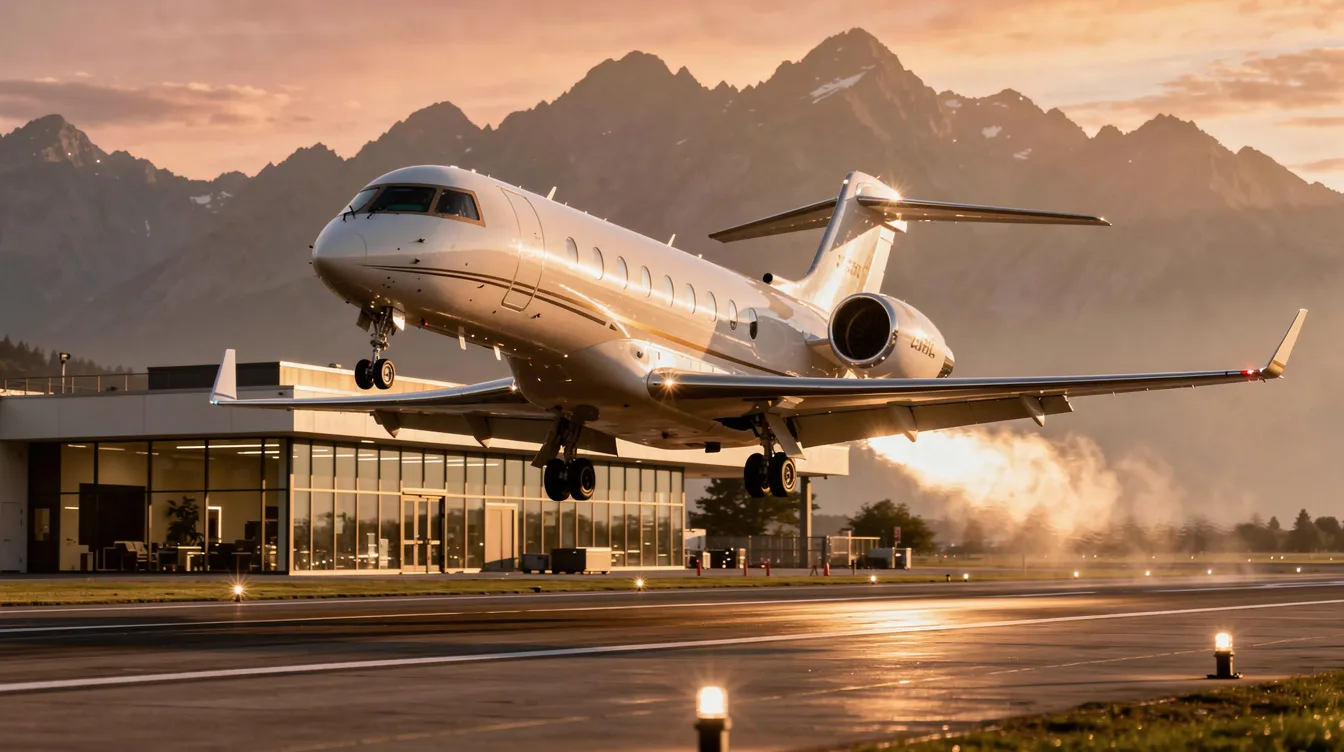
Future of Fast Flight: Supersonic Business Jets and Hypersonic Concepts
The next generation of fast airplanes is taking shape, and the trajectory is clear: faster, cleaner, and potentially supersonic.
Near-term (late 2020s to early 2030s): Low-boom supersonic business jets targeting Mach 1.4 to 1.8 are under active development. Boom Supersonic's Overture, designed for Mach 1.7 cruise, represents the most advanced program. NASA's X-59 QueSST is flying to demonstrate that sonic boom signatures can be reduced to acceptable levels for overland flight, potentially unlocking regulatory changes at the FAA and ICAO.
Mid-term: Subsonic jets will continue pushing toward Mach 0.98 using more efficient engines and advanced aerodynamics. SAF adoption will expand, driven by both regulation and customer demand.
Long-term: Hypersonic passenger concepts - inspired by X-15 and X-43 research - remain experimental and decades from commercial readiness. The thermal, structural, and regulatory challenges of sustained flight above Mach 5 are immense.
BlackJet's position is tech-agnostic but readiness-focused. Our Jet Card programs are structured to incorporate new aircraft types - including supersonic business jets - once they fulfill rigorous safety, sustainability, and reliability thresholds. Members will benefit from early adoption on selected routes when these aircraft become commercially viable, without needing to make speculative investments in unproven platforms—something especially relevant for travelers weighing the commitment of a 100-hour jet card and its total cost.
FAQs About Fast Airplanes and Private Jet Access
What is the fastest aircraft ever?
The NASA X-43 Hyper-X holds the record for fastest unmanned aircraft at Mach 9.6. For crewed, powered aircraft, the North American X-15 reached Mach 6.72 (4,520 mph) in 1967.
What is the fastest fighter jet in active service?
The MiG-25 Foxbat can achieve Mach 3.2 (2,190 mph) in short bursts, though its operational limit is Mach 2.83. The MiG-31 Foxhound and F-15 Eagle follow at Mach 2.83 and Mach 2.5, respectively.
What is the fastest private jet available for charter?
The Bombardier Global 8000 leads at Mach 0.95 (~627 mph), followed by the Gulfstream G700/G800 at Mach 0.935 and the Cessna Citation X+ also at Mach 0.935.
What is Mach?
Mach speed is the ratio of an object's speed to the speed of sound. Mach 1 equals the local speed of sound—approximately 1,195 km/h (717 mph) at sea level, but lower at higher altitudes where temperatures drop.
Why are many modern fighter jets slower than Cold War interceptors?
Modern fighters prioritize stealth, agility, sensors, fuel efficiency, and payload over raw top speed. Pushing beyond Mach 2.5 demands specialized materials and heavy engines, and entails massive fuel burn—trade-offs that modern doctrine no longer justifies for most missions.
Can civilians fly in supersonic military jets today?
Not in any practical or certified way. Military jets aren't certified for civilian passengers, lack comfort provisions, and require specialized pilot training. Supersonic civilian transport is under development but not yet available for regular service.
How does a BlackJet Jet Card work?
A BlackJet Jet Card offers prepaid blocks of flight hours—typically 25 or 50 hours—with fixed hourly rates, priority scheduling, and access to multiple aircraft classes. Members choose their mission profile and speed class without ownership overhead, while our resources on jet card cost comparisons and jet card pricing structures help them benchmark value against other programs.
Can I request a particular fast jet type for my route?
Yes. BlackJet offers aircraft selection based on mission length and speed requirements. Transatlantic flights may use Global 8000 or G700 platforms; shorter regional routes can be served by midsize or light jets—including many of the best small private aircraft options for specific missions. Availability depends on fleet scheduling and operational constraints.
Are BlackJet flights carbon neutral?
Yes. BlackJet tracks actual fuel burn per flight, invests in verified carbon offset projects, integrates sustainable aviation fuel where possible, and optimizes routing to minimize emissions—all included as standard, at no additional cost to members, whether you're flying short regional hops or longer international routes such as private jet charters in and out of Karachi.
Conclusion: Speed, Strategy, and the BlackJet Advantage
From the X-15 touching the edge of space at Mach 6.72 to the SR-71 outrunning missiles at Mach 3.3, from Cold War interceptors reaching speeds that melted their own engines to today's business jets cruising the Atlantic at Mach 0.95, the story of fast airplanes is the story of human ambition meeting engineering reality.
But speed without purpose is just noise. What matters - whether you're a military pilot scrambling to intercept a threat or an executive closing a deal across an ocean - is what speed enables. Hours reclaimed. Meetings made. Flexibility preserved. And increasingly, all of it achieved without environmental compromise.
BlackJet exists at the intersection of these priorities: Jet Card access to some of the fastest private jets in the world, operated by safety-certified partners, delivered carbon-neutral, and managed through a seamless digital platform built for travelers who refuse to choose between speed and responsibility.
Elevate your travel - effortlessly. With BlackJet, private flight isn't reserved for a select few. It's accessible on your terms through our Jet Card programs, complete with rigorous safety, carbon-neutral performance, and unmatched flexibility. Explore our Jet Card offerings and discover how refined, high-speed travel becomes your new standard.


 Sign up with google
 Sign up with Apple