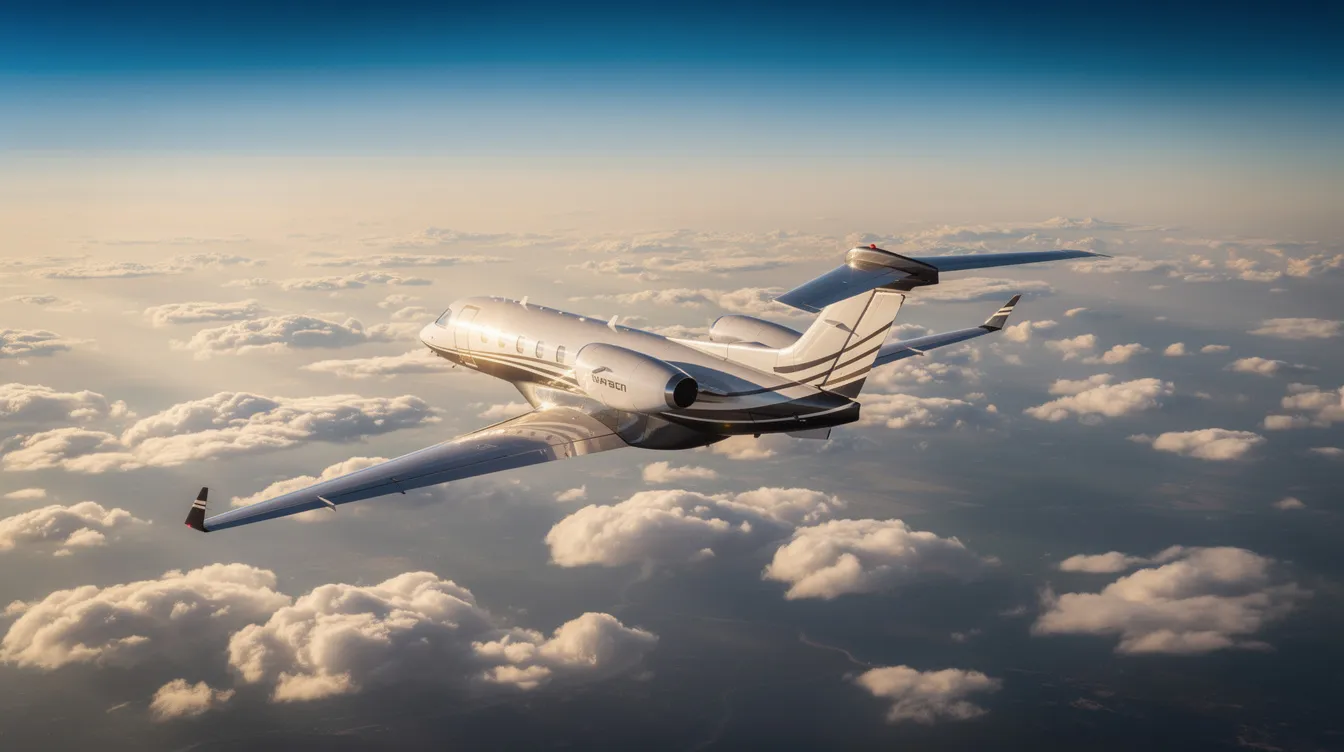
For executives and high-net-worth travelers, time is the most finite resource. Very light jets and light business jets exist to reclaim it-cutting hours off commercial itineraries, accessing smaller airports that airlines ignore, and turning two-day trips into single-day missions. Understanding which aircraft delivers the most speed per dollar is not academic; it is a strategic advantage.
This guide is for executives, business travelers, and private aviation enthusiasts seeking the fastest very light jet options.
Executive overview: fastest VLJ and why speed matters
Among current-production very light jets, the Embraer Phenom 100 is generally regarded as the fastest VLJ, with a maximum speed of 467 knots (537 mph / 859 km/h). Close behind, the HondaJet HA-420 reaches a maximum speed of 422 knots (486 mph), and the Cessna Citation Mustang posts a maximum speed of 420 knots (483 mph). All three dramatically compress travel times on regional business hops of one to three hours, allowing business travelers to visit multiple locations in one day. Very light jets can fly at speeds of 400–450 knots, and very light jets cruise between 350 mph and 430 mph depending on model and power settings.
At BlackJet, we work with these aircraft categories through our Jet Card and on-demand charter network, matching each traveler with the fastest practical option for each mission. Key points to keep in mind:
The fastest VLJ is not always the best choice for every trip-cabin size, range, operating costs, and runway requirements all factor in.
Very light jets are designed for agility and can reach cruising altitudes quickly, which shortens block times on short flights.
Speed leadership shifts depending on whether you measure maximum speed, typical cruising speed, or long-range cruise speed under real-world charter conditions.
What counts as a VLJ vs light jet vs light business jet?
A very light jet (VLJ stands for Very Light Jet, a category of small jet aircraft that typically seats 4-6 passengers and can fly about 1,000 nautical miles) typically falls under 10,000–12,500 lb maximum take-off weight, seats four to six passengers comfortably, and covers roughly 800–1,200 nm in range. These small jet aircraft sit between modern turboprops and larger light business jets in both performance and cost. Very light jets can fly about 1,000 nautical miles on a full fuel load. Here is how the categories break down:
Very light jets: Cirrus Vision Jet, Eclipse 500/550, Cessna Citation Mustang, Embraer Phenom 100, HondaJet. Typical MTOW under ~10,000–12,500 lb, four to seven seats.
Light jets / light business jets: Cessna Citation M2, CJ1/CJ1+, Phenom 300, and similar. MTOW ~12,500–25,000 lb, six to nine seats, longer range.
Some "fastest VLJ" lists restrict to sub-10,000 lb types; others include slightly larger entry-level jet models whose speed, cabin, and cost profiles overlap with VLJs. This is why the very light jet market and the light jet market often blur at the boundary.
Average cruise speed ranges by category:
For a deeper look at how types of private jets compare across cabin classes, see our full guide.
Top 5 fastest very light jets today
This section ranks the fastest VLJs by maximum speed using OEM data and commonly cited aviation industry figures. Each entry includes max speed, typical cruise, cabin details, and a standout feature.
Aircraft Model | Max Speed (knots) | Max Speed (mph) | Range (nm) | Passenger Capacity | Standout Feature |
|---|
Embraer Phenom 100 / 100EV | 467 | 537 | 1,178 | 4–5 | Spacious club-style cabin, advanced Prodigy Touch avionics |
HondaJet HA-420 | 422 | 486 | ~1,223 | 4–5 | Over-the-wing engine mount, natural laminar flow wing, Garmin G3000 avionics |
Cessna Citation Mustang | 420 | 483 | ~1,000–1,150 | 4 | Garmin G1000 glass cockpit, single-pilot operation certification |
Eclipse 500/550 | 370 | 430 | ~1,125 | 4–5 | Low operating costs, advanced safety features in the 550 variant, and very efficient fuel burn |
Cirrus Vision Jet (SF50) | 311 | 358 | >1,200 | 4–5 | Whole-airframe parachute system (CAPS), Safe Return Autoland system |
While the Phenom 100 is technically the speed leader among the fastest light jets, all five balance speed with fuel efficiency and operational simplicity. Many models in the category also feature a T-tail configuration and straight wings optimized for the speed regime of short-range flights.
VLJ speed vs turboprops and larger light jets
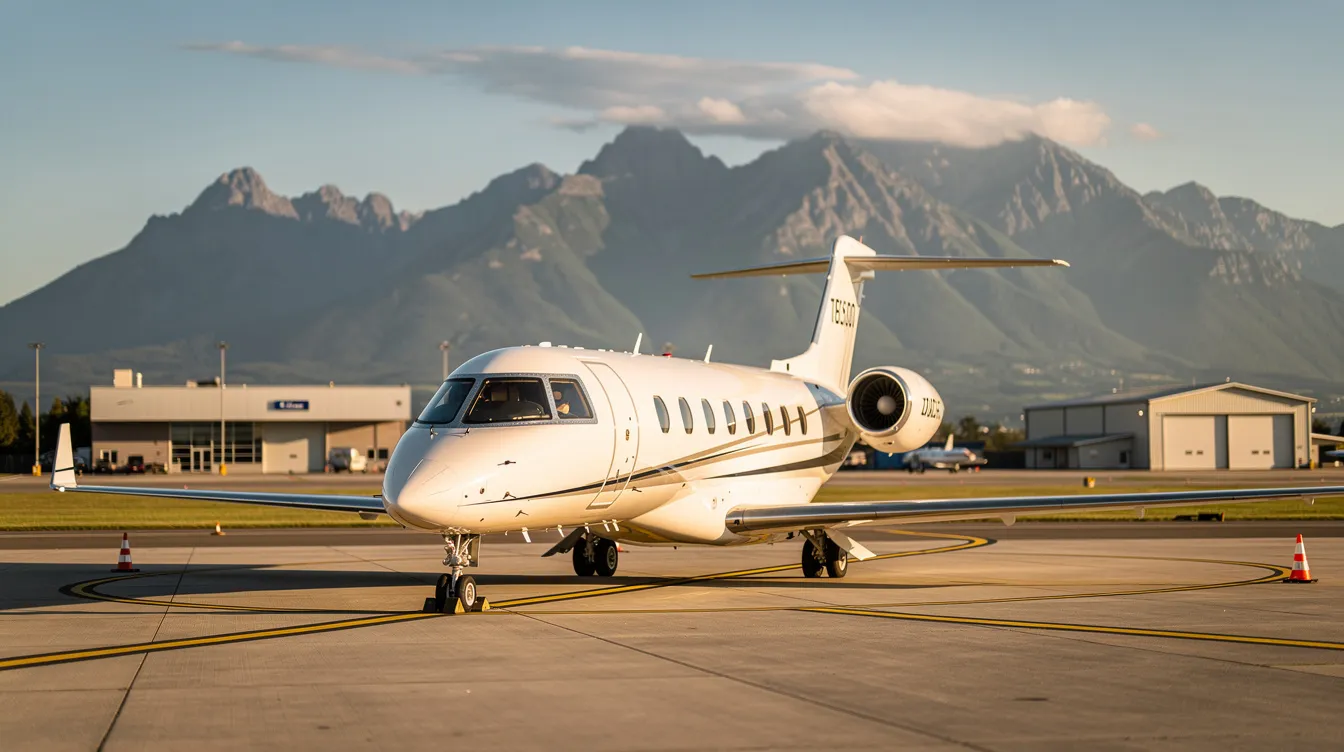
The label "fastest VLJ" only matters in context: how much time do you actually save versus a turboprop or a larger light jet on typical 300–800 nm missions?
Cruise speed comparison: VLJs cruise at ~350–420 knots versus modern turboprops like the Pilatus PC-12 at ~280 knots and larger private jets like the Cessna Citation M2 at ~404 knots or the Phenom 300 at ~455 knots.
Example route: New York to Chicago (~730 nm): A turboprop averaging 280 knots would take approximately 2 hours 35 minutes in block time. A Phenom 100 at ~400 knots cruise cuts that to roughly 1 hour 50 minutes. A larger light jet at ~450 knots saves another 10–15 minutes at significantly higher hourly cost.
VLJs save time by landing at smaller airports closer to final destinations, often shaving 30–60 minutes of ground transfer compared to flying into congested hubs. Very light jets typically require about 3,000 feet of runway and can operate from runways as short as 3,000 feet, opening hundreds of airfields that airlines cannot serve.
Where VLJs win over turboprops:
Higher cruise altitude (up to FL410), smoother ride above weather, pressurized cabins comparable to larger private jets
Advanced technology in avionics for single-pilot operations and reduced pilot workload
Reach your destination quickly in 1–3 hours
Where turboprops still win:
BlackJet advisors often recommend VLJs for trips of one to three hours where speed and comfort outweigh the short-field benefits of turboprops, helping members travel faster without overspending; for travelers comparing options, our guide to how much it costs to charter a small plane lays out typical pricing ranges by aircraft type and mission.
Speed, fuel efficiency, and operating costs
Maximum speed, fuel efficiency, and operating costs are tightly linked-and all matter to jet card and charter clients, even if they never take ownership of the plane.
Charter rates: Very light jet rental costs $2,500 to $3,500 per flight hour, while light jets typically run $4,000–$6,000 per hour. VLJs deliver the lowest operating costs among private jet categories. For broader context across aircraft sizes and routes, review our overview of how much it costs to rent a private jet. For detailed pricing, see our private plane rates guide.
Acquisition context: New VLJs cost between $3.5 million and $5.5 million, relevant for understanding why charter and jet card access often makes more financial sense than ownership. Our breakdown of the private jet price list and access options explains how purchase, charter, fractional ownership, and jet cards compare over time.
Fuel burn: Fuel burn for very light jets averages around 90 gallons per hour at high-speed cruise settings. The Vision Jet's single-engine design and the Eclipse 550's efficient engines bring that figure significantly lower (48–68 gph), while VLJs use less fuel due to their smaller size relative to larger jets. Travelers focused on budget can also explore the cheapest private aircraft options, including economical VLJs and turboprops that balance speed with low operating costs.
Speed vs efficiency trade-off: Flying at maximum cruise speed is not always flying most efficiently. On short flights of 250–400 nm, the time difference between a 420-knot and 460-knot aircraft can be just a few minutes, while fuel burn varies substantially. Many charter missions use slightly reduced cruise speeds-less fuel, more range, lower cost per private flight.
Less maintenance: Simpler systems and lighter airframes in many models mean less maintenance and lower variable costs over time. For cost-conscious flyers evaluating entry points into private aviation, an overview of the cheapest private jet options clarifies where VLJs fit versus turboprops and other small aircraft.
Sustainability and carbon footprint:
VLJs have a lower environmental impact than larger jets per flight hour. Experts estimate aviation contributes about 2.5% of global emissions, and the aviation industry is exploring sustainable aviation fuels for VLJs. Top VLJ manufacturers are testing engines with 100% sustainable fuel.
BlackJet makes every flight carbon neutral via integrated carbon offsets and SAF-based programs, so clients can prioritize speed without increasing net emissions. Learn more about our green private jet initiatives.
Very light jets vs other light business jets in the BlackJet ecosystem
BlackJet provides access to both very light jets and larger light jets through our Jet Card and charter programs, helping clients navigate the full spectrum of small private jet options. The question is never simply "which is fastest?" but rather "which aircraft matches this specific trip?"
Speed: VLJs reach up to ~467 knots maximum; the fastest light jets in the light business jets category typically cruise at ~450–520 mph.
Cabin size: VLJ cabins typically seat four to five passengers with moderate baggage capacity versus six to eight or more in larger light jets with a more spacious cabin, belted lavatory, or emergency toilet options. Understanding private jet sizes and cabin classes helps frame where VLJs sit relative to light, midsize, and large-cabin jets.
Range: VLJs cover ~800–1,200 nm versus light jets at ~1,500–2,000+ nm, making larger jets the choice for longer nonstops.
How popular models compare:
The Cessna Citation Mustang and Citation M2 serve as stepping stones from VLJ to full light-jet performance.
Phenom 100 vs Phenom 300: similar design DNA from Embraer, but the 300 delivers more speed, range, and seats at a higher cost. See our Phenom 300 deep dive.
The Honda Jet blurs the line between VLJ and light jet due to its cabin volume, speed, and advanced technology, making it an appealing choice for travelers who want VLJ economics with near-light-jet capability.
Sample BlackJet client scenarios:
A 25-hour Jet Card member flying Miami–Nassau or Dallas–Houston in a VLJ for optimal cost and flexibility- short-range flights where a very light jet is the most efficient match.
A family using a light jet like a Citation CJ series for a ski trip with more passengers and luggage, where cabin volume and baggage capacity matter more than "fastest VLJ" status.
BlackJet's role is to match aircraft category to each traveler's priorities: speed, operating costs, group size, baggage, and runway length. VLJs provide privacy and comfort for business travel; larger jets add space when the mission demands it, all within the broader ecosystem of BlackJet private jet card and membership services.
Technology, safety, and comfort in the fastest VLJs
Speed alone does not define a private jet. Advanced technology, safety systems, and cabin comfort make the fastest VLJs genuinely practical for frequent private flying.
Avionics and advanced technology:
Garmin G1000/G3000-based flight decks power the Phenom 100, Citation Mustang, and HondaJet with synthetic vision, weather radar, and integrated autopilots.
These systems reduce pilot workload dramatically in single-pilot operations, a hallmark of many models in the very light jet market.
The Vision Jet's CAPS whole-airframe parachute and Safe Return Autoland system stand out as safety innovations unique to Cirrus aircraft in the aviation world.
Cabin experience:
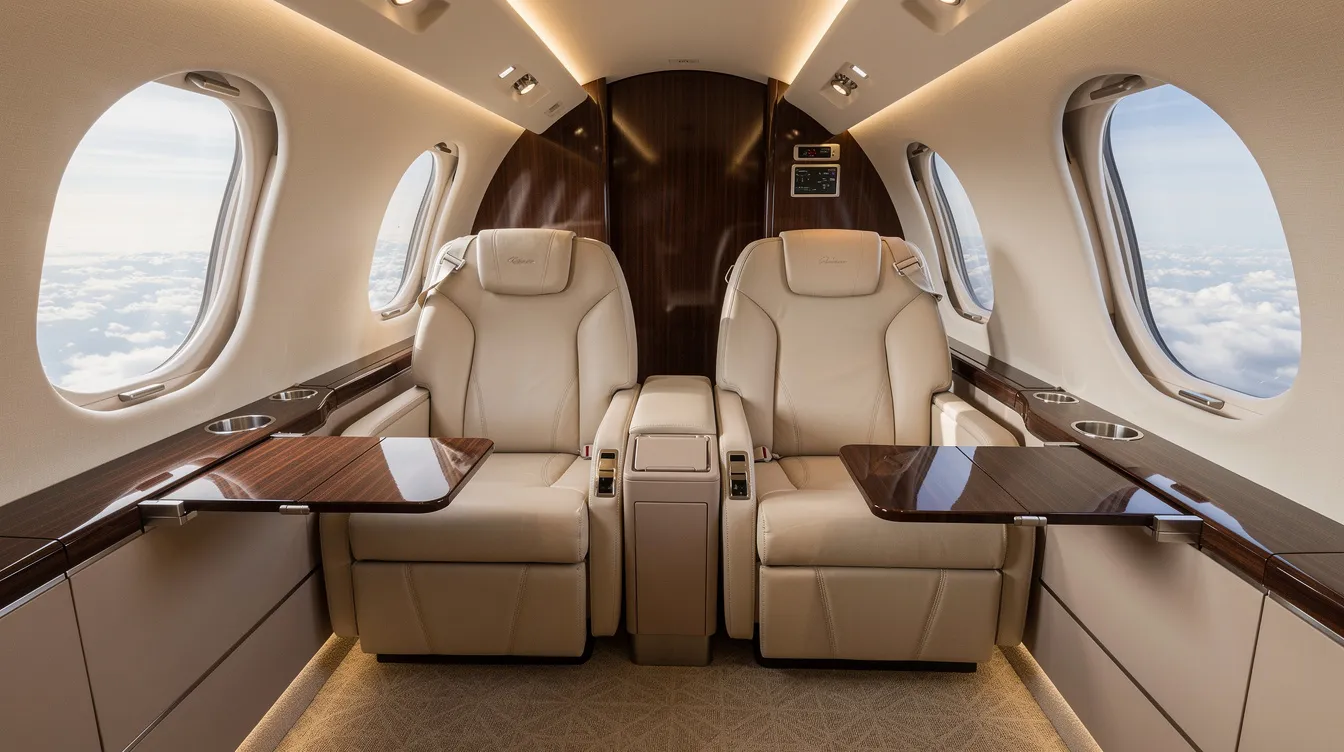
Club seating for four in the Phenom 100 and Citation Mustang, with swiveling seats and fold-out tables for laptop work.
The HondaJet is designed to minimize cabin noise, and higher cruise altitudes versus turboprops improve rest and productivity.
Amenities including Wi-Fi, USB-C power, and refreshment centers make even short business legs productive. Cabin height and cabin width vary by model, but all offer pressurized comfort at altitude.
BlackJet safety standards:
BlackJet partners exclusively with operators meeting leading safety audit standards (ARGUS, IS-BAO, and equivalent programs).
Our real-time operations team monitors flights and weather to ensure the fastest practical routing without compromising safety.
Today's fastest VLJs are effectively compact business tools-integrating speed, advanced avionics, and advanced safety features once reserved for larger private jets.
Choosing between the fastest VLJ and other options with a Jet Card
BlackJet's Jet Card and membership model help clients choose the right balance of speed, cost, and aircraft size for each itinerary-rather than locking into a single VLJ type. Our overview of jet card pricing structures and fees explains how different programs package hourly rates and surcharges.
Key decision factors: Understanding jet card cost per hour is central to evaluating whether a VLJ-focused program or a broader light-jet mix delivers better value for your flying profile.
Trip length and route: under ~1,000 nm favors VLJs; longer legs may require a light jet or midsize.
Group size and luggage: two to four executives fly comfortably in a VLJ; a family of six to seven needs a larger business jet
Airport constraints: short runways and remote strips favor VLJs and their ~3,000 ft capability
Priorities: fastest block time vs lowest operating cost vs maximum comfort
Example comparison: On a 900 nm route like New York–Miami, a Phenom 100 and a Phenom 300 differ by roughly 15–20 minutes in block time, but the hourly rate gap can exceed $1,500. For a solo executive, the VLJ is the smarter allocation. For a group of six with luggage, the larger jet earns its premium. A broader guide to jet card cost and value can help frequent flyers benchmark these trade-offs across providers.
BlackJet's digital tools let members instantly compare estimated times, cost, and aircraft categories within the app, filtering for very light jets, light jets, or other categories based on preferences. For travelers still evaluating access models, a comparison of the best jet cards for frequent flyers highlights when fixed-rate programs make sense relative to pure on-demand charter. Every flight is carbon neutral at no extra cost.
Explore BlackJet 25+ Hour Jet Cards-25-hour or 50-hour options-and discover how predictable access to VLJs and light jets at fixed hourly rates can reshape the way you fly. For deeper budget planning, see our breakdowns of 50-hour jet card cost and 100-hour jet card pricing across leading providers.
FAQ: Speed, costs, and practical details about very light jets
Below are concise answers to the most common questions from prospective private fliers exploring the fastest VLJ options.
What is the fastest very light jet currently in service? The Embraer Phenom 100EV holds the top position with a maximum speed of 467 knots (537 mph). The HondaJet HA-420 follows closely at 422 knots.
How fast do most very light jets actually cruise in day-to-day operations? Most VLJs cruise between 350 mph and 430 mph in real-world charter and owner operations, depending on altitude, weight, and power setting. Operators often fly at 80–90% of maximum cruise speed to optimize fuel and range.
How much does it cost per hour to charter a very light jet vs a larger light jet? VLJ charter rates typically range from $2,500 to $3,500 per flight hour. Light jets run $4,000–$6,000 per hour. Travelers comparing short-term charter to longer commitments may also want an overview of leasing a private jet and its costs. See our light jet charter guide for details.
How many passengers can a VLJ like the Phenom 100 or Citation Mustang comfortably seat? Very light jets can seat four to six passengers comfortably, with many models configured for four in club seating plus pilots.
How far can a typical VLJ fly nonstop? Average range is approximately 1,000–1,200 nautical miles, with the HondaJet reaching ~1,223 nm and the Phenom 100 covering 1,178 nm. For travelers comparing membership brands, our overview of NetJets jet card cost and programs provides a useful benchmark alongside BlackJet's offerings.
Are VLJs safe in bad weather or at high altitudes compared to larger jets? Yes. Modern VLJs feature FIKI certification, weather radar, synthetic vision, and pressurized cabins rated for altitudes up to 41,000–43,000 ft. The Cirrus Vision Jet adds a whole-airframe parachute for an additional layer of safety.
Can I request a specific aircraft type through a BlackJet Jet Card? BlackJet members can specify preferences for aircraft category and, where fleet availability allows, request specific types like the Phenom 100 or HondaJet for their private flight.
Conclusion: The Strategic Advantage of Choosing the Fastest Very Light Jets
In the realm of business aviation, the fastest very light jets offer more than just speed—they deliver a strategic edge that transforms how executives and discerning travelers manage their time. With maximum speeds reaching up to 467 knots, models like the Embraer Phenom 100 redefine regional travel by enabling multiple stops in a single day without sacrificing comfort or safety. When compared to commercial flights or even turboprops, VLJs provide unparalleled convenience by accessing smaller airports and reducing ground transfer times.
However, speed is just one pillar. BlackJet integrates advanced technology, rigorous safety standards, and sustainability initiatives to ensure every flight is not only swift but secure and environmentally responsible. Whether selecting a VLJ or a larger light jet, the key lies in matching aircraft capabilities to mission requirements—balancing speed, range, passenger count, and operating costs.
For frequent travelers seeking to elevate their private aviation experience, BlackJet’s Jet Card programs offer seamless access to the fastest VLJs alongside a curated fleet of light jets, all backed by proprietary certification and carbon-neutral flight commitments. Discover how choosing the right very light jet can reshape your travel, turning hours lost into productive, effortless journeys.


 Sign up with google
 Sign up with Apple