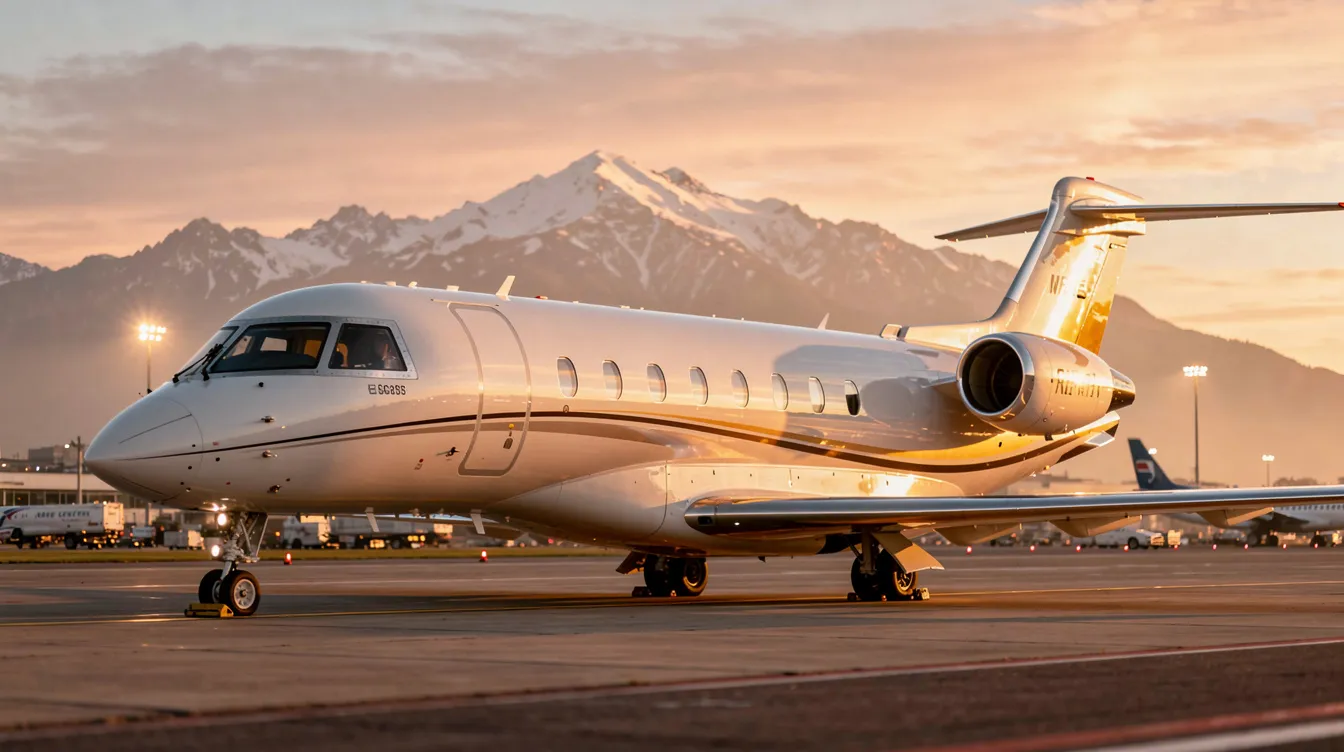
For high-net-worth and corporate travelers, selecting a private jet provider is not a lifestyle indulgence-it's a strategic decision that directly impacts productivity, security, and capital allocation. The Flexjet vs. NetJets debate is the most common comparison in the industry for good reason: these two firms dominate fractional ownership programs and set the standard for white-glove service in private aviation. Whether you access a plane through fractional ownership, a lease, or jet cards, the structural differences between providers shape your cost, flexibility, and quality of life in the air.
Consider the math: flying privately on a light jet from New York to Miami can save two to three hours compared to commercial first class once you factor in airport transit, security lines, and connection delays. Access to secondary airports, like Teterboro instead of JFK, or Van Nuys instead of LAX, adds further convenience that no premium airline seat can replicate. Modern private aviation prioritizes adaptability and optionality, which is why access-first models like BlackJet's Jet Card programs have gained serious interest among travelers who want premium flying without the capital lock-in of ownership.
This article compares NetJets and Flexjet across fleet, programs, cost, service, and safety, and positions where BlackJet's premium Jet Card programs fit in that landscape.
Company Background: NetJets vs Flexjet at a Glance
NetJets and Flexjet are the two largest providers of fractional aircraft ownership in the world. Fractional ownership is a program that allows multiple individuals or entities to purchase a share of an aircraft, providing access to private jet travel without full ownership responsibilities. Both operate as fractional providers with deep roots in business aviation, yet they serve their clients with meaningfully different philosophies.
NetJets was founded in 1964 and pioneered the fractional ownership concept. The company is headquartered in Columbus, Ohio, and is owned by Berkshire Hathaway. NetJets operates a fleet of over 800 aircraft globally, spanning operations across the United States and Europe. Its primary offerings include fractional ownership shares (starting at a 1/16 share, roughly 50 hours per year), leases, jet cards, and on-demand charter access. NetJets is generally considered the industry leader in scale, and NetJets is known for its strong reputation and global access.
Flexjet was founded in the mid-1990s as part of Bombardier's aviation division and is now under Directional Aviation, headquartered in Richmond Heights, Ohio. Flexjet's fleet consists of approximately 300 aircraft, smaller than NetJet's, but deliberately curated. Its offerings include fractional ownership, leases, membership programs, and branded service tiers like the Red Label experience. Flexjet is known for highly personalized boutique service and younger fleets.
The core distinction: NetJets emphasizes breadth, consistency, and global scale. Flexjet trades some of that scale for more curated, design-forward cabins and a more intimate client relationship. Your choice between NetJets and Flexjet depends on travel style preferences and how you weigh scale against personalization.
Fleet & Aircraft Types: Light Jets to Large Cabin Jets
The aircraft type you fly determines your range, comfort, runway access, passenger capacity, and cost per hour. Choosing a provider means evaluating whether its fleet matches your mission profile-whether that's a two-hour regional hop or a transatlantic crossing, and understanding the different types of private jets for every traveler can clarify those trade-offs.
NetJets' fleet covers the full spectrum. Representative models include the Embraer Phenom 300 and Cessna Citation XLS in the light jet category, the Citation Latitude and Challenger 350 for midsize and super-midsize missions, and ultra-long-range aircraft like the Gulfstream G500 and Global 6000 for intercontinental travel. NetJets offers a wide range of aircraft types for flexibility, and its large cabin jets are especially strong for transatlantic routes. NetJets also offers recovery aircraft stationed at strategic hubs to minimize delays-a meaningful advantage during peak demand periods like holidays or major conferences.
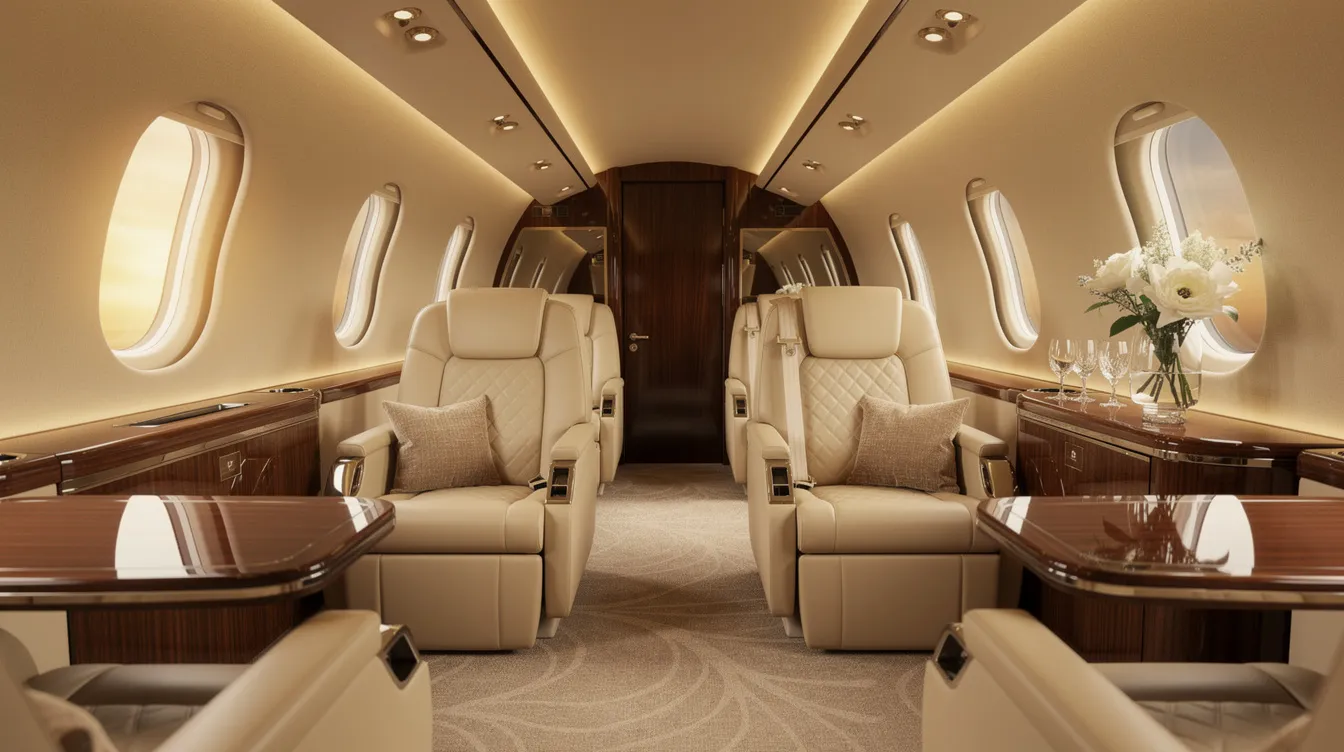
Flexjet's fleet features the Embraer Phenom 300 for light jet missions, the Challenger 3500 for super-midsize, and the Gulfstream G650ER and Praetor series for long-range travel. Flexjet offers 50 interior designs across its fleet, reflecting its emphasis on cabin aesthetics and bespoke interiors. This design-forward approach appeals to clients who view the cabin as an extension of their lifestyle, not just a transport pod.
During peak periods, a fleet of over 800 aircraft (NetJets) naturally provides more scheduling options than a fleet of roughly 300 (Flexjet). However, Flexjet's curated positioning means its aircraft are often reserved by loyal clients well in advance.
For BlackJet Jet Card members, the approach is entirely different: you can choose your cabin class, from smaller jets to large cabin jets, per trip, without committing to a specific aircraft through ownership. This eliminates the mismatch risk of being locked into one plane when your mission changes.
Program Structures: Fractional Ownership, Leases, and Jet Cards
The structural difference between ownership and access defines your financial exposure, flexibility, and exit options. It's the single most important decision before comparing providers, and understanding the broader private jet price landscape and access models provides essential context.
NetJets offers fractional ownership starting at a 1/1share, approximately 50 hours per year, with typical contract lengths of five years. Owners pay an upfront capital cost, monthly management fees, and occupied hourly rates. Leases provide a capital-light alternative with similar access but without equity. NetJets also offers jet card options (such as prepaid 25-hour Jet Card programs) for buyers wanting fixed flight time without ownership. Fractional ownership programs typically allow access to multiple aircraft through fleet interchange, though rules apply.
Flexjet mirrors the 1/16 share entry point with similar contract terms of up to 60 months. A notable feature: Flexjet allows owners to sell up to 25% of unused hours, which can help offset costs if travel volume drops unexpectedly. Flexjet also offers membership and card-style access for those who fly fewer than 50 hours annually or prefer lower commitment. This sell-back feature, where Flexjet allows owners to sell up to 25% of unused hours, adds a layer of flexibility uncommon among fractional program structures.
Both providers require multi-year contracts, and exiting a fractional program involves resale or buyback mechanics, often at depreciated value. For travelers whose schedules are volatile or whose usage patterns shift year to year, the commitment can feel heavy.
This is where an access-first model differs. BlackJet's Jet Card programs (25-hour and 50-hour Jet Card options) require no aircraft equity, carry no depreciation risk, and offer the ability to pause or scale usage without the friction of a multi-year contract. There's no capital tied up in a depreciating asset, and no monthly management fees when you're not flying. For the business owner or executive whose demand for hours fluctuates, this is possibly the most efficient structure available.
Cost Comparison: Capital, Hourly Rates, and Total Commitment
Exact pricing in private aviation shifts with fuel costs, aircraft type, and market conditions, especially if you're comparing full ownership with more budget-friendly private aircraft options. However, publicly available estimates and a clear view of overall jet card cost structures provide a useful directional comparison for anyone weighing these programs.
NetJets indicative costs: NetJets' initial purchase for a 1/16 share of a light jet is approximately $850,000. Monthly management fees typically run $12,000 to $28,00,0, depending on aircraft category. NetJets' occupied hourly rates range from approximately $8,500 to $18,500, covering light jets through heavy and ultra-long-range planes, plus taxes and fuel surcharges. NetJets' first-year cost for a 1/16 share can reach approximately $1 million when you combine the capital outlay, management fees, and occupied hours. In subsequent years, the annual cost drops significantly, primarily consisting of management and hourly fees, but you're still assuming depreciation on your share. NetJets generally has higher upfront membership fees than Flexjet, though NetJets offers transparent and predictable pricing models that appeal to corporate budgets.
Flexjet indicative costs: Flexjet's initial purchase for a light jet like the Phenom 300 is around $500,000, and FlexJet's initial purchase for a 1/16 share ranges from approximately $500,000 to $600,000 for light jets, rising to $800,000–$950,000 for super-midsize jets like the Challenger 3500. Monthly management fees typically range from about $7,000 to $9,000 for light jets and $11,000 to $13,000 for midsize and super-midsize categories. FlexJet's occupied hourly rates range from approximately $2,500 to $9,000, depending on cabin class. FlexJet's first-year cost for a 1/16 share is roughly $800,000. Flexjet generally requires lower upfront capital than NetJets, though the deal depends heavily on aircraft type and share size.
Capital efficiency matters. Tying up several hundred thousand or over a million dollars in a fractional share means that money isn't working elsewhere. You also bear residual value risk: when your contract ends, the share may sell back at a depreciated price. Both NetJets and Flexjet offer jet cards, but their core brand identity remains tied to fractional ownership.
BlackJet's Jet Card pricing removes the equity question entirely. You pay for prepaid blocks of flight time across multiple aircraft categories-no capital tied up in ownership, no depreciation to absorb, and simpler budgeting for firms and individuals who want to pay for usage rather than an asset, especially compared with more budget-friendly private aircraft options aimed at minimizing upfront spend. For frequent business travelers who expect their schedules to shift, this predictability in cost is a tangible benefit.
Feature | NetJets | Flexjet | A wide |
|---|
Company Size | Fleet of 800+ aircraft globally | Fleet of ~300 aircraft | Access to multiple certified operators |
Ownership Model | Fractional ownership, leases, jet cards | Fractional ownership, leases, jet cards | Jet Card access (no ownership) |
Initial Capital | ~$850,000 for 1/16 share (light jet) | ~$500,000–$600,000 for 1/16 share (light jet) | No capital required |
Contract Length | Typically 5 years | Typically 5 years | No long-term contract |
Management Fees | $12,000–$28,000/month | $7,000–$13,000/month | None |
Hourly Rates | $8,500–$18,500 per hour | $2,500–$9,000 per hour | Prepaid hourly blocks |
Fleet Flexibility | A wide range of aircraft types | Curated fleet with 50 interior designs | Choose cabin class per trip |
Unused Hours Policy | No resale option | Sell up to 25% of unused hours | Hours do not expire |
Service Style | Standardized corporate style | Personalized boutique service, Red Label | Seamless booking, 24/7 support |
Safety Certifications | ARGUS Platinum, IS-BAO Stage 3 | IS-BAO Level 2, FAA Diamond Award | Certified operators, data-driven safety |
Sustainability | Optional carbon offsets | Optional carbon offsets | Carbon-neutral flights included |
Unique Perks | Access to major sporting events, global reach | Customized cabins, luxury brand partnerships | Technology-driven, flexible access |
Service Experience: White Glove Service, Lifestyle Perks, and Onboard Feel
White-glove service in private aviation extends well beyond the plane itself. It encompasses scheduling flexibility, ground logistics, catering, cabin design, and lifestyle partnerships that define the overall travel experience, and the leading private jet companies for luxury travel all differentiate heavily on these dimensions.
NetJets delivers a service profile built on consistency and corporate readiness. NetJets operates with a more standardized corporate style, backed by Berkshire Hathaway's resources, with uniform cabin configurations, well-trained pilots and crews, and concierge support. NetJets provides exclusive access to major sporting events and curated partnerships, offering a predictable, polished experience that appeals to corporate travelers with demanding schedules.
Flexjet takes a distinctly different approach. Flexjet offers a more personalized travel experience, and Flexjet is often chosen for a more customized service experience, which is also reflected in its Flexjet Jet Card pricing and options. Flexjet's Red Label program offers customized cabin experiences, with design-forward interiors, dedicated crews, and refined dining. Flexjet's flight attendants undergo a two-week interview process and training program before serving passengers, a detail that reflects the company's commitment to premium, individualized service. Partnerships with luxury brands, yacht builders, and curated client events (combining private jets with exclusive gatherings) make Flexjet appealing to those who view flying as part of a broader lifestyle.
Top fractional providers sometimes extend benefits comparable in value to six-figure lifestyle perks-access to events like the Super Bowl or art fairs-though specifics vary by program level. You'll hear about these from friends who own shares, but availability is dependent on your tier and usage.
BlackJet's angle is different. Rather than competing on lifestyle perks, BlackJet focuses on seamless booking technology, 24/7 real-time flight support, and carbon-neutral flights-all paired with high-touch concierge service. The emphasis is on operational excellence and sustainability as the foundation of premium travel, not generic add-ons.
Safety, Sustainability, and Technology Across Providers
For serious private aviation users, safety standards, sustainability commitments, and technology infrastructure are as important as seats and cabin size. These factors are non-negotiable for anyone flying regularly and are hallmarks of the best private jets in the world.
Safety: NetJets focuses on consistent operational reliability and safety, holding ARGUS Platinum certification since 2011 and IS-BAO Stage 3 accreditation. Its pilots are typically typed to fly one aircraft type, and the company uses flight data monitoring across its operating fleet. Flexjet holds IS-BAO Level 2 certification and has earned the FAA Diamond Award of Excellence in Maintenance Training for over 20 consecutive years. Both providers invest heavily in crew training and third-party audits. When comparing any provider, ask for specific safety ratings, maintenance protocols, and crew experience data.
Sustainability: The industry faces increasing pressure for carbon accountability. Of course, both NetJets and Flexjet offer optional carbon offset programs or sustainable aviation fuel initiatives, though these are typically add-ons rather than defaults. BlackJet takes a different approach: every Jet Card flight is carbon-neutral through built-in offset mechanisms, at no extra cost to members. No opt-in friction, no additional charge-sustainability is standard.
Technology: NetJets and Flexjet both deploy sophisticated dispatch and scheduling systems to manage their fleets. User-facing tools, apps, digital booking, and real-time support vary in sophistication. For busy executives, the quality of the booking platform and response times can matter as much as the plane itself. BlackJet's digital booking tools (web and mobile) and 24/7 live support are designed to make scheduling and managing flights as seamless as possible, with data-driven safety oversight across its certified operator network.
Use Cases: Who Should Choose Flexjet, NetJets, or an Access-First Jet Card Like BlackJet?
The best option depends on your flying pattern, financial strategy, and preference for ownership versus flexibility, as well as your understanding of jet card membership pricing across providers.
The heavy user who values long-term stability: Consider an executive flying 80 to 150 hours per year on routes like New York to London or Los Angeles to Tokyo, consistently, for at least five years. A NetJets or Flexjet fractional share in large cabin jets or super-midsize aircraft delivers predictable availability, guaranteed access to a known fleet, and corporate budget alignment; understanding NetJets Jet Card costs and structures can also clarify how prepaid options compare for this profile. The high capital cost is spread over many hours, and the fixed management structure suits stable, high-volume schedules.
The lifestyle-focused, design-conscious flyer: A family that flies seasonally-Aspen in winter, the Mediterranean in summer, Miami in spring-values cabin comfort, curated interiors, and brand experiences more than raw scale. Flexjet's boutique positioning, with its 50 interior designs and Red Label service, appeals directly to this traveler. If they fly 50 or more hours annually, a fractional program makes financial sense; below that, evaluating the best jet cards for frequent flyers or a membership model may be better.
The high-flexibility client: A business owner whose travel volume swings from 25 to 75 hours one year and 10 to 30 the next, across different aircraft sizes and destinations. For this profile, an access-first Jet Card like BlackJet's or other 25-hour jet card structures eliminates the risk of paying management fees on idle hours or losing money on depreciation. No long-term contract, no capital lock-up, and the ability to scale usage up or down without financial penalty. Fleet flexibility lets you match the right cabin to each mission-a light jet for a quick regional trip, a large cabin for a transatlantic crossing-without over-specing or under-utilizing.
The connection back to cost and structure is direct: ownership ties up capital and assumes stable demand; jet cards shift cost into variable usage, which is more efficient when demand is uncertain, especially when you compare 50-hour jet card cost and value across providers.
FAQs: Flexjet vs NetJets and How Jet Cards Compare
Is Flexjet cheaper than NetJets?
Directionally, yes, Flexjet generally requires lower upfront capital for comparable aircraft categories (a light jet share starting around $500,000 versus roughly $850,000 at NetJets). However, total cost depends on aircraft type, share size, hourly rates, and management fees. Pricing from both providers shifts with market conditions, so request current quotes before committing and, if you are considering alternatives, review a comprehensive guide to leasing a private jet as another way to structure access.
What is the typical contract length with NetJets or Flexjet?
Most fractional ownership agreements run for five years. Both providers also offer shorter-term leases (typically 30 to 60 months) and jet card or membership options with no multi-year commitment.
Can I access both light jets and large cabin jets with one fractional program?
Fractional shares are tied to a specific aircraft type, though both NetJets and Flexjet offer fleet interchange options that let you switch between categories under certain rules. Jet cards-including BlackJet's programs-offer multi-cabin access per trip without being locked to one aircraft type, drawing on a wide range of types of private jets for every traveler.
What if my travel volume drops?
In fractional ownership, fixed costs (monthly management fees, minimum hours) continue regardless of usage. Flexjet's sell-back option for up to 25% of unused hours offers some relief. With a Jet Card like BlackJet's, prepaid hours are non-expiring and carry no fixed monthly fees, making it easier to reduce usage without financial penalty.
How do jet cards differ from fractional ownership?
Jet cards are prepaid blocks of flight time with no aircraft equity, no depreciation risk, and typically more flexible exit options. A detailed look at jet card membership pricing highlights how providers structure this. Fractional ownership involves buying a share in a specific aircraft, accepting capital commitment and depreciation, and paying ongoing management fees.
How does BlackJet's Jet Card fit into this decision?
BlackJet's Jet Card is ideal for frequent travelers who want guaranteed access to multiple aircraft categories, light through large cabin, without long-term ownership risk. It combines prepaid convenience with carbon-neutral flights included at no extra cost, ensuring sustainability is a standard feature rather than an optional add-on. Members benefit from seamless digital booking, 24/7 real-time support, and access to a broad network of certified operators, providing flexibility unmatched by fractional ownership. This model eliminates capital lock-in and depreciation concerns, making it perfect for those whose travel needs fluctuate or who prefer to avoid multi-year contracts. With BlackJet, travelers enjoy premier safety standards, proprietary certification, and a curated fleet that adapts to each mission's requirements, delivering a premium experience without compromise.
Choosing the Right Private Aviation Partner
NetJets stands as the global, large-scale, reliability-focused fractional leader-the best option for high-volume flyers who value consistency and breadth. Flexjet positions itself as the boutique, design-forward alternative with strong white-glove service and a more intimate relationship with its clients. For those considering full ownership alongside these models, exploring 10-million-dollar private jet options can frame the capital trade-offs. BlackJet offers an access-first, Jet Card–based solution emphasizing flexibility, technology, safety, and carbon-neutral flights, without the constraints of fractional ownership, while still enabling access to 16-seat private jet options, private jets suitable for around 20 passengers,s or even large private jets for up to 50 passengers when group size requires it.
The right decision comes down to how many hours you fly per year, which aircraft categories you need (light jets through large cabin jets), your appetite for capital commitment, and how much contract flexibility matters to your life and business, all within the broader context of the private jet price list and access options.
Conclusion: Navigating the Flexjet vs NetJets Decision with BlackJet's Advantage
Choosing between Flexjet and NetJets is a pivotal decision that shapes your private aviation experience, balancing scale, personalization, cost, and flexibility. NetJets offers unmatched global reach and operational reliability, ideal for executives with stable, high-volume travel needs. Flexjet appeals to those seeking a boutique, design-centric journey with personalized service and the flexibility to recoup unused hours.
However, for discerning travelers prioritizing adaptability, capital efficiency, and sustainability, BlackJet’s access-first Jet Card programs present a compelling alternative. By eliminating long-term contracts and ownership risks, BlackJet empowers you to tailor your travel precisely to your evolving lifestyle. If you are not ready for full aircraft access, you can also explore how to buy a seat on a private jet as an entry point into private aviation. Seamless booking across multiple aircraft classes, certified safety standards, and built-in carbon-neutral flights elevate your journey beyond traditional fractional ownership.
Ultimately, the right choice aligns with your travel patterns, financial strategy, and values. For some, that may mean focusing on the cheapest private jet options or entry-level aircraft, while others prioritize top-tier cabins and global range. Explore how BlackJet can reshape your private aviation experience—combining the best of technology, flexibility, and premium service to unlock effortless, responsible luxury in the skies.


 Sign up with google
 Sign up with Apple