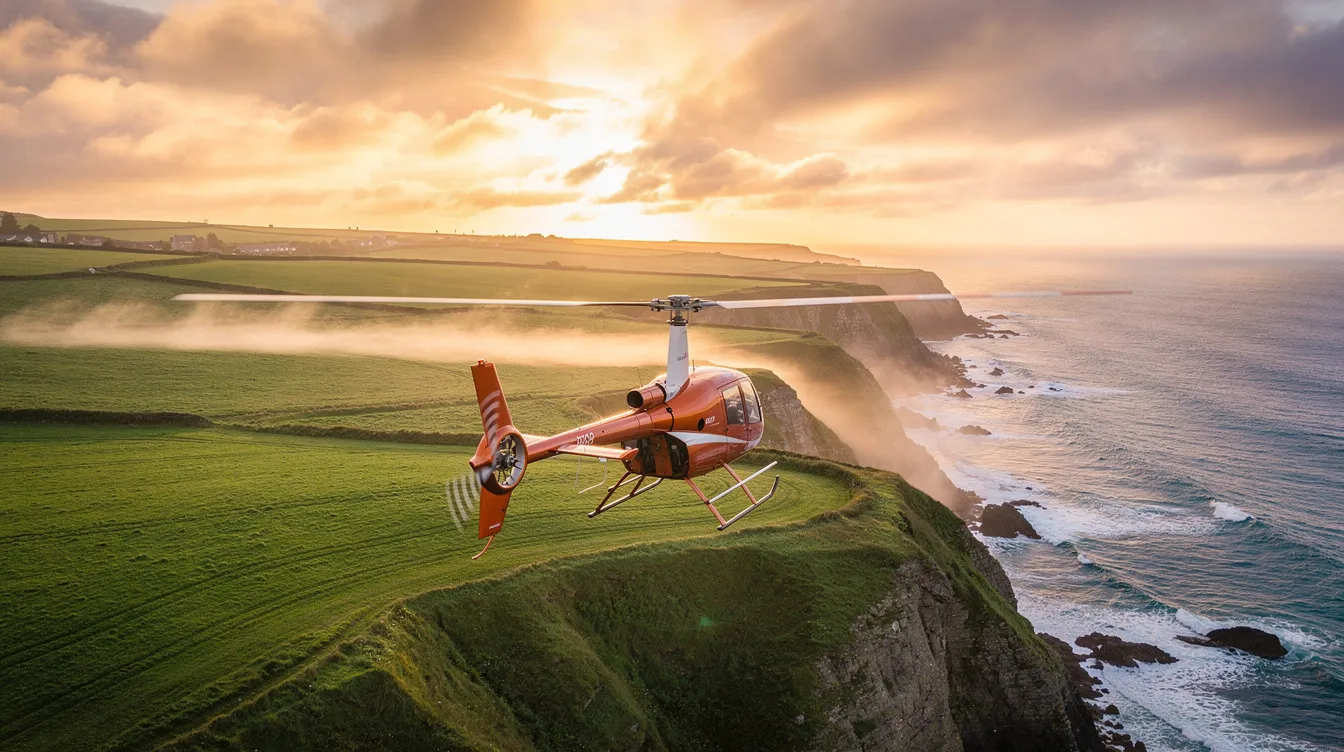
Introduction: Why Microlight Helicopters Matter for Modern Private Travel
A microlight helicopter is a lightweight rotary-wing aircraft. A microlight helicopter is a lightweight rotary-wing aircraft designed to push the boundaries of personal flying. Since the 1980s, advances in composite materials, two-stroke engines, and lighter alloys have made it possible for a single pilot to build, own, and operate a helicopter that weighs less than many motorcycles. The result is a visceral flying experience - open cockpit, exceptional visibility, vertical takeoff and landing - that appeals to aviation enthusiasts who prize hands-on freedom over cabin comfort.
These machines occupy a unique corner of the aviation landscape. At one end sit FAR Part 103 ultralight vehicles, capped at 254 pounds empty weight, five gallons of fuel, and a single seat. At the other end are certified light helicopters like the Robinson R44 and private jets that serve business and luxury travel with full crew, pressurized cabins, and intercontinental range. The helicopter microlight falls deliberately between those worlds: minimal regulation, minimal cost, maximum pilot involvement.
Manufacturers such as Composite FX grew the Mosquito series through the 2000s, while digital charter platforms expanded in the 2010s, giving travelers two very different paths to rotorcraft access. BlackJet focuses on the latter - premium, carbon-neutral jet access paired with vetted helicopter transfers - rather than competing with kit manufacturers. Here is why both paths matter and how to decide which fits your life.
What Counts as a Microlight / Ultralight Helicopter Today?
The terms "ultralight helicopter" and "microlight helicopter" overlap but carry different legal meanings depending on country and category.
U.S. FAR Part 103 criteria for an ultralight helicopter:
Ultralight helicopters must weigh under 254 pounds empty (115 kg), or up to 314 lb (142 kg) with floats
Fuel capacity for ultralights is capped at 5 gallons (19 liters)
FAR Part 103 limits ultralight speed to 55 knots in level flight at full power
Ultralight helicopters are limited to single-seat configurations
No pilot license is required for compliant ultralight helicopters - and microlight helicopters usually require less stringent medical certifications for pilots
How other aircraft types compare:
Category | Seats | Empty Weight | Fuel | Speed Limit | License Required? |
|---|
Part 103 ultralight | 1 | ≤ 254 lb (115 kg) | ≤ 5 gal | ≤ 55 knots | No |
Experimental kit helicopter | 1–2 | 275–450 lb | Varies | Often > 55 kts | Yes |
European microlight (single seat) | 1 | MTOM ≤ 300–330 kg | Country-dependent | Stall-speed rules apply | Typically yes |
European two-seat VLR | 2 | MTOM ≤ 500–600 kg | Higher allowable | Varies | Yes |
Weight restrictions for microlight helicopters generally range between 300 kg and 600 kg across European regulatory frameworks. Many designs marketed as "ultralight" are technically experimental or light sport, meaning experimental helicopters require FAA registration and pilot licensing once they exceed any Part 103 threshold. Microlight helicopters are subject to strict regulatory weight and performance limits, and microlight helicopters typically operate under simplified regulations compared to certified rotorcraft.
Iconic Ultralight Helicopters: Mosquito XE, Composite-FX and More
A handful of manufacturers dominate the single-seat ultralight helicopter market. The most recognized is Composite FX, based in Trenton, Florida.
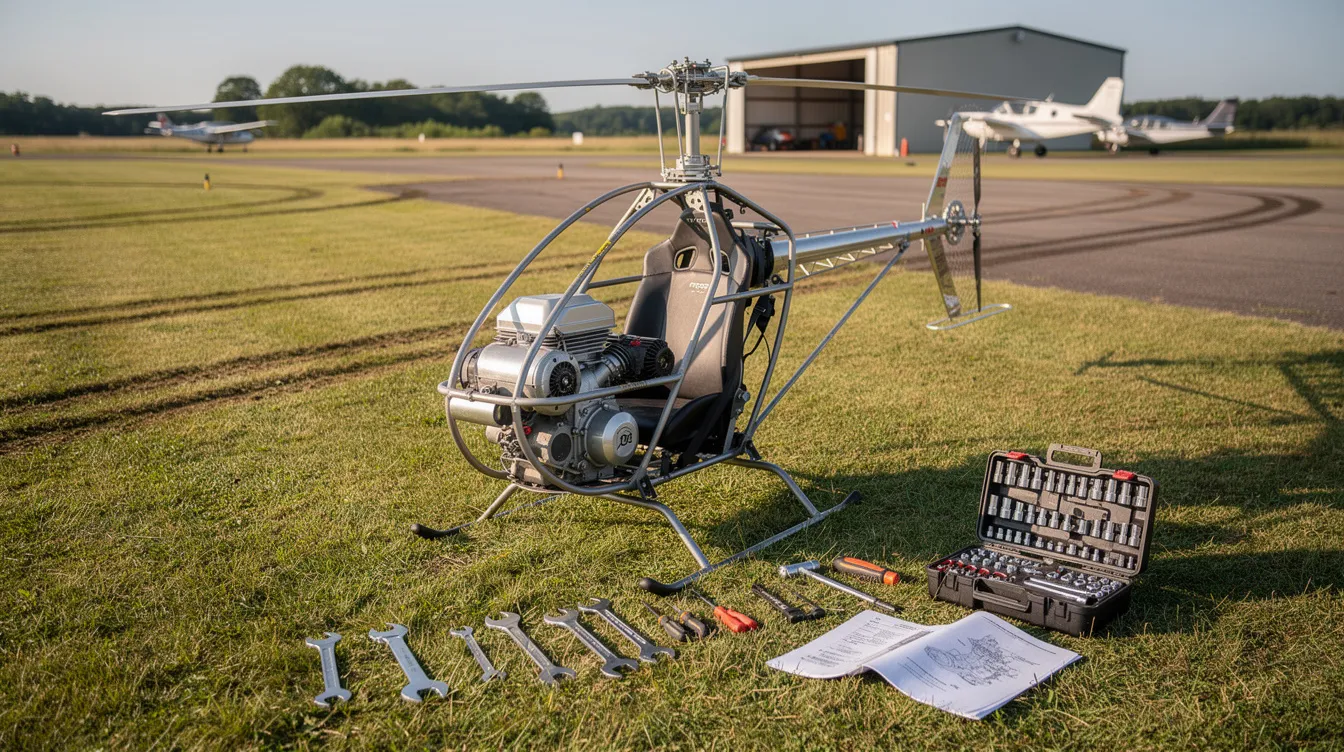
The Mosquito XE is a single-seat ultralight helicopter with an empty weight near the Part 103 envelope. It uses the MZ202 two-cylinder, two-stroke piston engine and ships as a kit. The Mosquito XE starts at $53,000 for a basic kit, making it one of the most accessible powered rotorcraft on the market.
The XEL variant adds floats and a horizontal tail fin, pushing compliance toward the 314 lb float-equipped limit under Part 103. The 2026 XEL kit lists at roughly $76,000.
The XET is a turbine-powered experimental single-seat helicopter. Its airframe kit runs about $94,000, excluding the turbine engine itself.
Small helicopters typically seat one to seven people, but the Mosquito line is exclusively single-seat, built for personal use and recreation.
Other notable aircraft types include the Rotorschmiede VA115 from Germany - a coaxial-rotor design with an empty weight of exactly 115 kg, engineered to the Part 103 line - and the Heli-Sport CH-7 Kompress Charlie 2 from Italy. Two-seater ultralight helicopters include models like the ARGO AH-2.2 and the Dynali H3 Sport, which has nearly 200 units flying across 14 countries. Certified light helicopters include the Robinson R44 and Airbus H125, which operate in an entirely different regulatory and price category.
Design and Performance Basics: Weight, Materials, and Flight Envelope
Every gram matters in helicopter microlight design. Consider the math for a Part 103 machine: ultralight helicopters weigh under 254 pounds empty; add a 170 lb pilot and 30 lb of fuel (5 gallons), and the gross weight reaches approximately 454 lb - leaving zero margin for accessories, avionics, or a heavy jacket.
Microlight helicopters generally feature minimalistic designs for greater agility. Composite FX builds the Mosquito airframe from fiberglass and carbon composite, and composite rotor blades reduce weight, resist corrosion, and dampen vibration. Rotor systems, blade count, and rotor head configuration directly influence hover capability, climb rate, and control feel.
Engine choices define the performance ceiling. Two-stroke pistons like the MZ202 are light and affordable but loud; turbine engines in the XET deliver a superior power-to-weight ratio at far higher cost and complexity. Typical cruise speeds for microlight helicopters are between 60 and 90 mph, while ultralight helicopters cannot exceed a speed of 55 knots under Part 103. Ultralight helicopters can fly for 30–60 minutes on 5 gallons, giving a practical range of roughly 20–40 nautical miles. Lightweight design in microlights allows for lower fuel consumption, and many microlight helicopters can be stored in home garages or trailers due to their compact size. Microlight helicopters can offer a more immersive flying experience due to their open-cockpit designs. Typical cruise speed for light helicopters ranges from 90–130 mph - significantly faster but at significantly higher cost.
Single Seat vs Two-Seater Microlight Helicopters
Mission, regulation, and budget drive the choice. Microlight helicopters are often designed for one or two occupants only, and the split between single-seat and two-seater reshapes every aspect of ownership.
Single-seat advantages:
Easier to meet Part 103 limits - no pilot's license needed if compliant
Lower price: Mosquito XE, XEL, and XET kits all fall under $100,000
Simpler maintenance and operation for sport and recreational flying
Microlight helicopters can operate from small clearings or private property due to their VTOL capabilities
Two-seater realities:
Typical empty weight around 300–450 kg with higher useful load for utility, instruction, or touring
The CH-77 Ranabot kit prices near €109,000 excluding engine and avionics
Registration, a pilot's license with helicopter rating, insurance, and airworthiness inspections are generally required in every country.
Two-seat and light four-seat helicopters often act as shuttles connecting passengers to and from fixed-wing aircraft on longer legs.
Microlight helicopters are capable of vertical takeoff and landing regardless of seat count, but the regulatory and financial gap between a single-seat fun machine and a two-seater is substantial.
Costs, Ownership Reality, and Alternatives to Buying an Ultralight Helicopter
Helicopter ownership promises freedom - direct access to the sky on your own schedule. But even for ultralight and kit-built machines, the real cost goes well beyond the price of a kit.
Key cost categories:
Ultralight helicopter kits range from $20,000 to $80,000; the Mosquito XE starts at $53,000
Annual maintenance costs for ultralight helicopters run a few thousand dollars for engine rebuilds, rotor blades, and spares.
Certified helicopters can cost hundreds of dollars per flight hour in fuel, maintenance, and insurance.
A used Robinson R22 typically costs over $150,000; new Robinson R44 helicopters cost several hundred thousand dollars.s
Building a kit requires the owner to complete at least 51% of the process under FAA experimental rules - often hundreds of hours of work
Microlight helicopters often benefit from lower purchase and operating costs compared to traditional helicopters, and maintenance for microlight helicopters can be simpler and less costly. Yet compare the life of an owner building and flying a Mosquito for 50 hours a year with a BlackJet Jet Card member who has already mastered the basics of Jet Card cost and pricing structures,s flying coast-to-coast by jet, then transferring by chartered helicopter to a coastal resort. The Jet Card user faces no hangarage, no engine overhauls, no weather-grounded weekends - and covers distances the ultralight simply cannot.
How Helicopter Microlights Fit into Premium Private Aviation (BlackJet Perspective)
Microlight helicopters can provide a visceral flying experience similar to motorcycles - raw, immersive, deeply personal. But for the traveler pushing beyond recreational flight toward strategic mobility, small helicopters work best as one link in a larger chain, often complemented by small private aircraft chosen for specific missions.
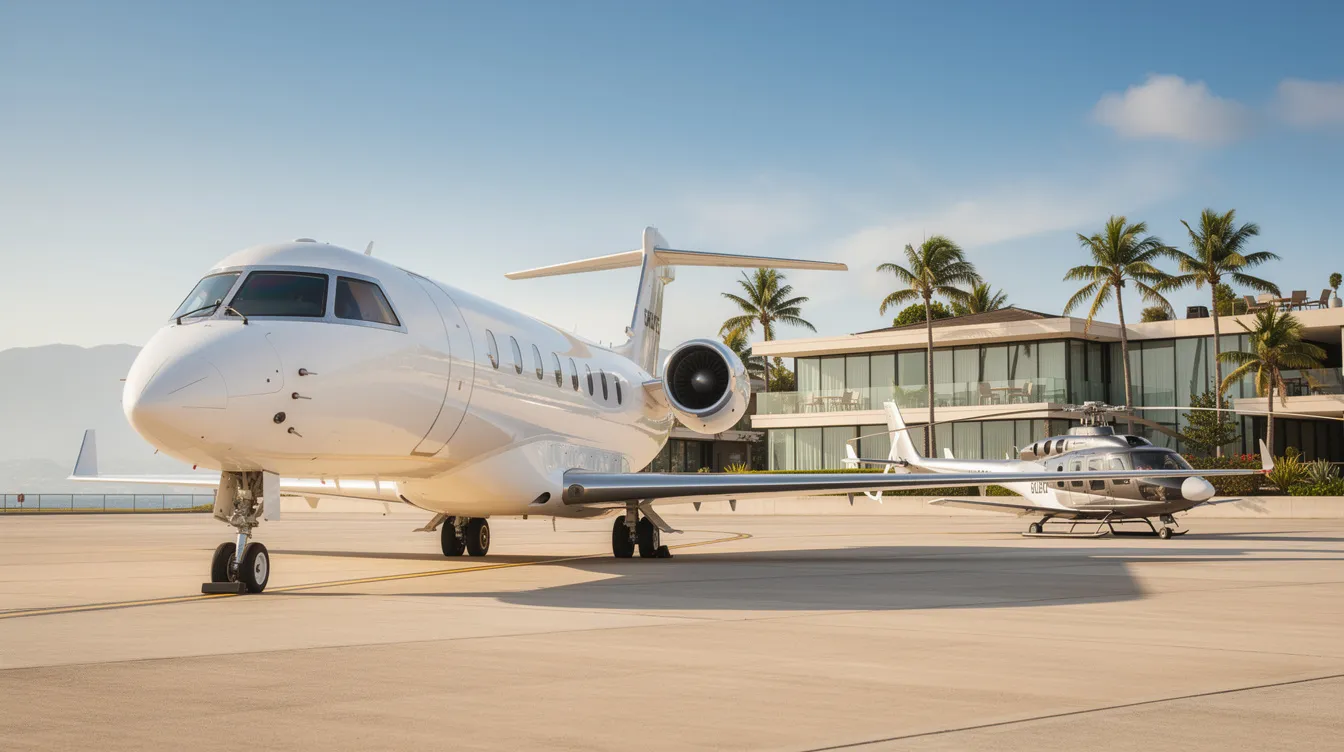
Helicopters excel at short hops under 100–150 nautical miles where door-to-door time beats even a fixed-wing light jet. The Robinson R44 cruises at 110 knots with 2.5–3 hours endurance - ideal for resort transfers, island access, or ski-lodge approaches. Microlight helicopters typically provide good visibility for recreational flying, but certified operators provide the safety, payload, and weather resilience that premium travelers require, especially when accessed through BlackJet’s premium private jet and Jet Card services.
BlackJet's Jet Card programs - available in 25-hour or 50-hour increments - give members prepaid access to multiple jet cabin classes with 24/7 digital booking and real-time human support, with the BlackJet 25+ Hour Jet Card and broader 50-hour Jet Card cost comparisons across providers helping travelers benchmark value and flexibility. When the itinerary demands a helicopter leg, BlackJet coordinates transfers through partners that meet ARGUS Platinum or Wyvern Wingman safety standards, similar to the vetted operators highlighted among the best Jet Cards for frequent flyers. All BlackJet flights are carbon neutral by default - at no extra cost - giving environmentally conscious users an advantage over typical private flying, particularly compared with many budget-friendly private aircraft ownership options.
Example scenario: An executive evaluates whether chartering a private jet is worth it compared with other options, then flies New York to Miami on a midsize jet via BlackJet after learning how to buy an individual seat on a private jet, and finally transfers by chartered helicopter to a Keys resort - seamless, certified, carbon-accounted. No gyrocopter kit to maintain, no hangar lease to sign, no weather-day gambles.
Frequently Asked Questions about Helicopter Microlights and Private Access
Do I need a pilot's license to fly an ultralight helicopter?
If your machine fully meets FAR Part 103 - single seat, under 254 lb empty, no more than 5 gallons of fuel, speed limited to 55 knots - then no pilot license is required in the United States. However, professional training remains essential. Most builders log time in two-seat trainers before soloing, and any helicopter that exceeds even one Part 103 threshold falls into the experimental category requiring full FAA registration, airworthiness compliance, and a private rotorcraft rating.
How safe are ultralight helicopters compared with chartered helicopters or private jets?
Safety in the ultralight world hinges on pilot proficiency, personal maintenance diligence, and conservative weather decision-making. Certified operators follow strict safety management systems, carry redundant control systems, and undergo recurring inspections. BlackJet works exclusively with operators vetted to rigorous third-party standards, which significantly reduces risk compared with self-reliant operation of a single-seat ultralight and aligns with the vetted fleets described in an overview of private jet pricing and access options.
When is a helicopter better than a fixed-wing jet for private travel?
For distances under 100–150 nautical miles, or when you need to land where no runway exists - a mountaintop lodge, a yacht deck, a private estate - a small helicopter wins on door-to-door time. Beyond that range, a fixed-wing aircraft outperforms on speed, comfort, and cost per mile, especially if you select from the cheapest private jet options that balance purchase and operating costs. BlackJet can coordinate both legs into a single itinerary.
How does a BlackJet Jet Card compare to owning a helicopter or ultralight?
Ownership delivers passion and direct control - ideal for the dedicated sport pilot who adapts their life around flying. A Jet Card delivers predictable cost, professional quality, carbon-neutral performance, and access across many routes without maintenance, hangars, or budget surprises. Travelers comparing a helicopter kit budget with a 100-hour Jet Card cost breakdown and broader Jet Card pricing structures and fees often find the membership model easier to forecast. For the traveler who values time and flexibility over the building process, the Jet Card is the more strategic platform. Visit BlackJet to explore how it works.
Conclusion: The Strategic Role of Helicopter Microlights in Modern Aviation
Microlight helicopters represent a compelling point in the spectrum of private aviation—offering a complex balance of accessibility, cost efficiency, and immersive flying experience. For enthusiasts and pilots who value hands-on control and the thrill of open-cockpit flight, ultralight kits like the Mosquito XE provide an unparalleled connection to the sky with minimal regulatory burden. However, for the discerning traveler or business executive, these microlights serve best as part of a broader, strategic mobility plan rather than a standalone solution.
When integrated with premium private aviation services such as BlackJet’s Jet Card programs, microlight helicopters complement larger aircraft by providing nimble, point-to-point access to remote or otherwise inaccessible destinations. This synergy elevates travel beyond mere luxury, framing it as a seamless, efficient, and sustainable experience.
Whether you are drawn to the raw freedom of piloting your own ultralight or prefer the ease and reliability of professional charter, understanding the nuances of microlight helicopters helps you make informed choices. The future of private aviation is not just about speed or size but about combining safety, sustainability, and technology to create meaningful, personalized journeys.
Elevate your travel - effortlessly. With BlackJet, private flight is accessible on your terms through Jet Card programs built on rigorous safety, carbon-neutral operation, and unmatched flexibility. Whether you are weighing long-term private jet leasing and custom agreements, exploring large-cabin jets for 20-passenger groups or VIP airliners for up to 50 travelers, reviewing UK-based private jets for sale, or arranging bespoke private jet charters in Karachi or luxury charters in Lahore, BlackJet can align your aircraft access with your mission. Whether the idea of a helicopter microlight sparks your imagination or you simply want to fly without the complexity of ownership, contact BlackJet to discover how refined, seamless travel becomes your new standard.


 Sign up with google
 Sign up with Apple