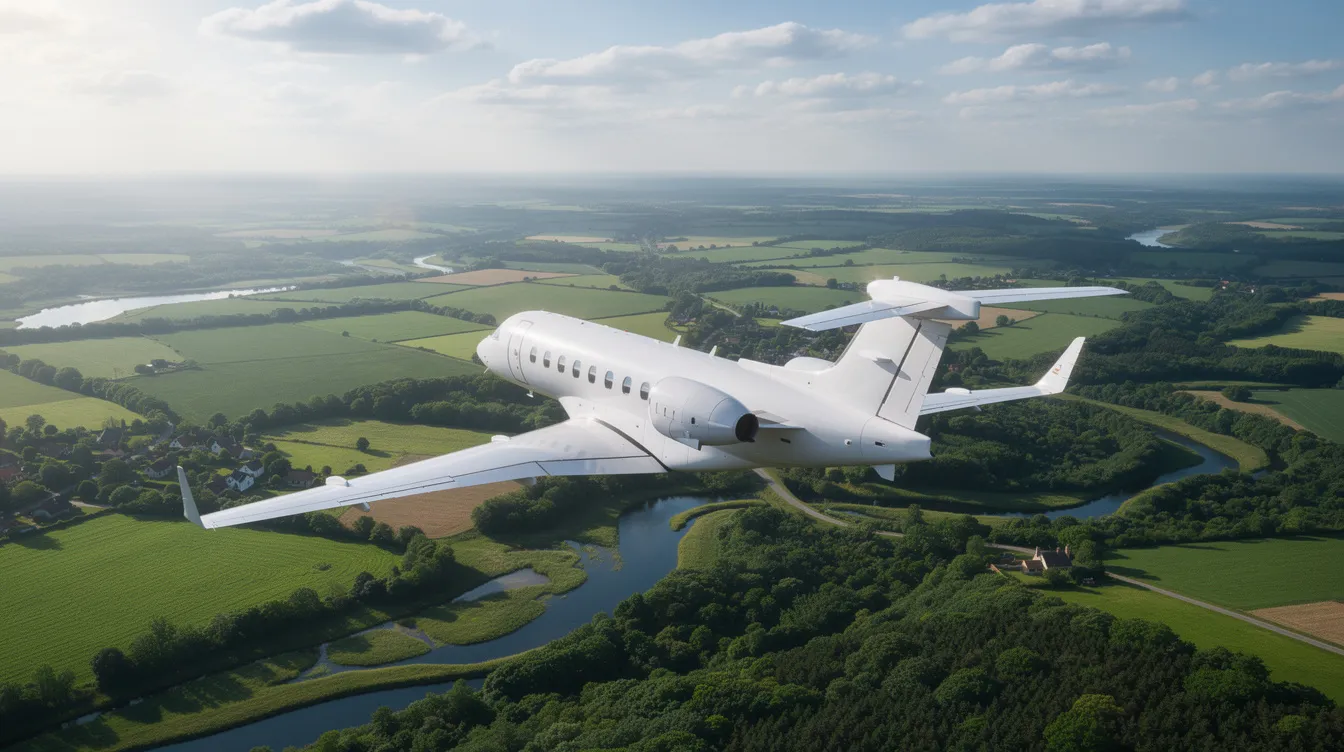
If you're researching the honda jet airplane price, expect roughly $2.5 million for used early HA-420 aircraft, about $6–7 million for a new Elite II when fully equipped, and around $10–13 million for the upcoming HondaJet Echelon. For executives, owner-pilots, and high-net-worth leisure travelers comparing private aviation options, the real question isn't just what a HondaJet costs to buy—it's what it costs to own and operate, how the models differ, what the cabin experience is like, and whether buying one makes sense for the way you fly.
That's where the numbers quickly widen: beyond the sale price, HondaJet ownership brings fixed and variable expenses, maintenance, crew, insurance, hangar, and utilization economics that can make access a better fit than full ownership. If you fly fewer than roughly 200–300 hours a year, options like charter or a BlackJet jet card can deliver HondaJet-class flexibility, safety, and efficiency without the capital commitment and ongoing ownership burden.
Honda Jet Pricing at a Glance (Answer First)
HondaJet prices range from $2.5 million to $13 million in 2025–2026, depending on model generation, condition, and whether you're buying new or pre-owned. Here's where the main variants land in today's market:
Used early ha 420 "Classic" models typically sell for about $2.5 million, with pricing stretching into the low $3M range for well-maintained airframes with hondajet apmg upgrades.
The hondajet elite generally trades in the mid $3M to high $4M band. HondaJet Elite models can command prices over $4 million when equipped with desirable avionics and low total time. The elite s sits slightly higher, often high $4M to around $5M or more.
A new or nearly-new hondajet elite ii runs approximately $6 million to $7 million fully equipped with the latest safety and cabin technology.
The upcoming HondaJet Echelon is expected to cost between $10 million and $13 million, expanding the honda jet lineup into a higher cabin class.
But acquisition cost is only the first layer. Annual fixed costs, variable costs, maintenance reserves, and depreciation significantly expand the true price of ownership. For travelers flying fewer than 200–300 flight hours per year, a premium jet card or on-demand charter through BlackJet often delivers the same honda jet aircraft experience-privacy, speed, schedule control-without tying up millions in capital or absorbing unpredictable operating costs.
About Honda Aircraft Company and the HA-420 HondaJet Family
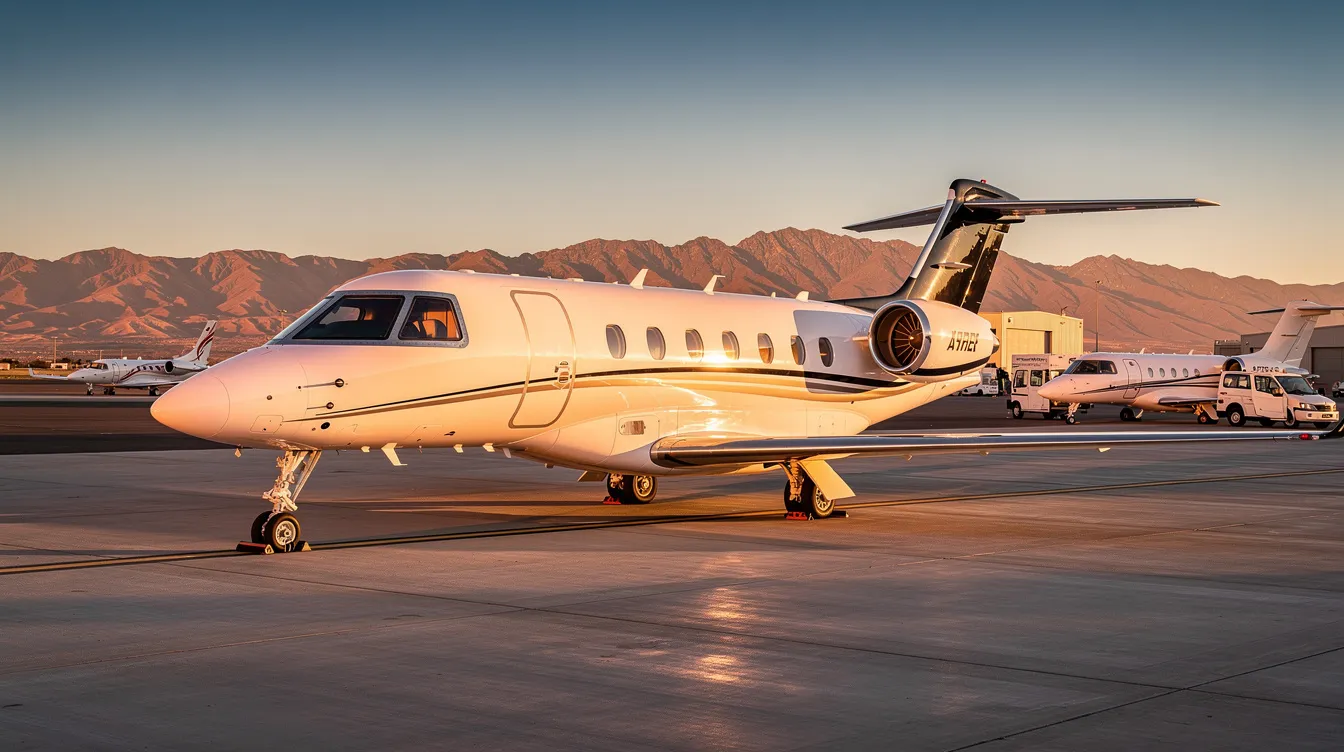
Honda Aircraft Company, a subsidiary of Honda Motor Co., operates from Greensboro, North Carolina, where it designs, manufactures, and supports the HA-420 hondajet family. Since its first delivery in the mid-2010s, the aircraft has evolved through several distinct generations. HondaJet models include the original HA-420 (often called the hondajet classic), the advanced performance modification group (APMG) retrofit package, the Elite variant introduced around 2018, the elite s, and the elite ii, which Honda announced with certification in late 2022 and continues delivering into 2025–2026.
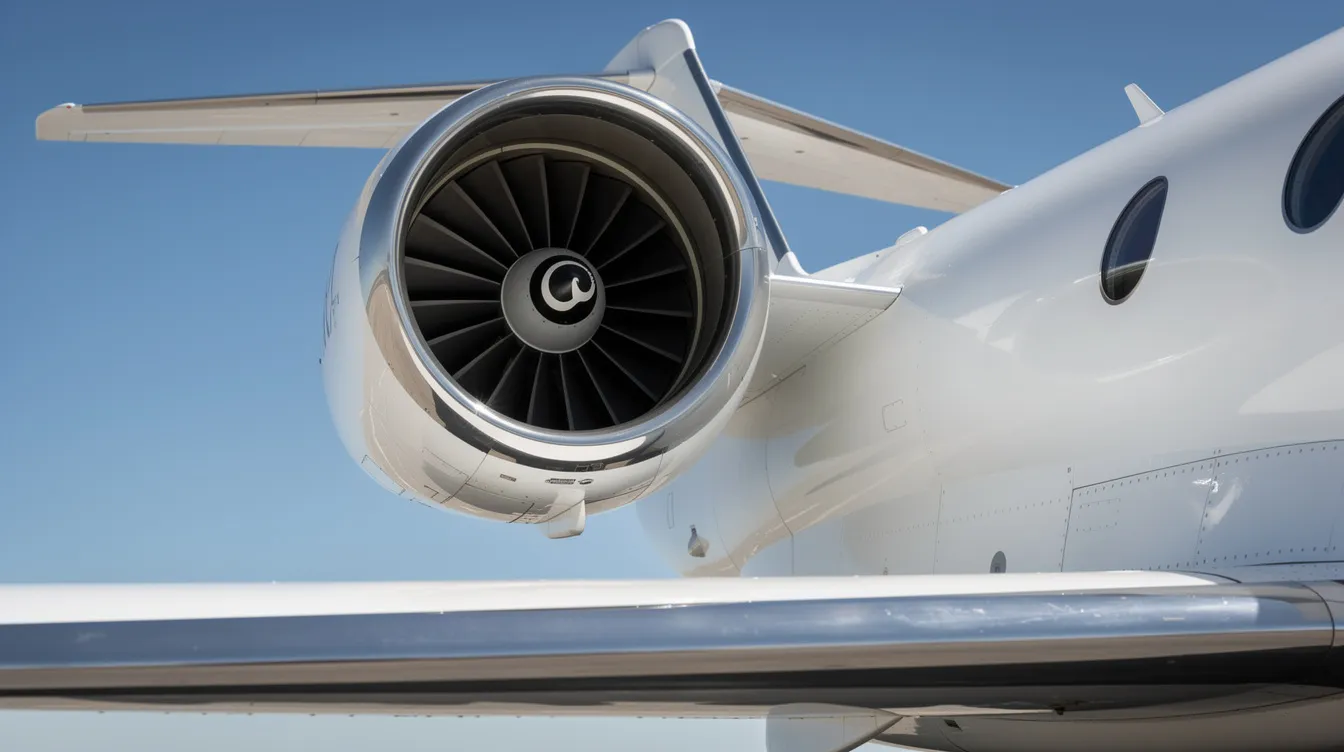
Several design innovations set the hondajet aircraft apart from other very light jets. The over-the-wing engine mount configuration-with engines mounted above the wing rather than on the aft fuselage-reduces cabin noise, frees interior cabin space, and improves aerodynamic efficiency. A composite fuselage built from advanced carbon-fiber materials lowers weight and drag. The ge honda hf120 turbofans are efficient engines engineered for durability and low fuel burn, with a targeted TBO around 5,000 hours.
Inside, the honda jet seats four to five passengers in an executive club layout, features an aft fully enclosed lavatory, and offers generous baggage space for its class. The aircraft holds single pilot certification, making it attractive for owner-pilots. HondaJet aircraft have logged 98,000 hours with 99.7% dispatch reliability, a track record that supports strong residual values and gives confidence to both prospective buyers and frequent charter clients.
New vs. Pre-Owned Honda Jet Acquisition Cost
The acquisition cost of a honda jet is the purchase price plus every dollar required to close the transaction-and it's only the starting line for what you'll actually spend. The price of a HondaJet varies based on condition and model generation, with factors affecting the price of pre-owned HondaJets including flight hours and maintenance history, avionics upgrades, interior condition, and whether the airframe is enrolled in engine or maintenance tracking programs.
Here's where the market sits in 2025–2026:
Used early HA-420 models sell for about $2.5 million, ranging into the low $3M for APMG-upgraded examples with clean records.
Elite and elite s variants occupy the $3M–$5M+ band. Current listings for hondajet aircraft range from $2,525,000 to $4,650,000, reflecting a mix of hours, spec, and model year.
New HondaJet Elite II pricing is around $6 million, with fully equipped examples reaching toward $6.95 million at list.
Beyond the sticker, buyers should budget for pre-purchase inspections, broker commissions, sales tax or use tax, delivery flights, and potential paint or interior refurbishment-together easily adding $100,000–$300,000 to the effective cost. The listed sale price can also differ from the final transaction value after broker fees, lender requirements, inspections, and closing adjustments. And depreciation can reduce aircraft value by half in five years, meaning a $6M jet may be worth $3M before you've finished paying it off.
For travelers flying well under 250 hours per year, the acquisition cost alone often exceeds the value of multiple years of premium jet card flying across light jet and midsize cabins through BlackJet, especially once you compare jet card cost per hour against true ownership economics.
What Drives Honda Jet Ownership Costs: Fixed vs. Variable
HondaJet ownership requires significant fixed and variable costs that run well beyond the purchase price. Understanding the split between these two categories is essential for honest annual budget planning.
Fixed costs hit your balance sheet whether the aircraft flies or sits in the hangar. Fixed costs for a HondaJet range from $200,000 to $900,000 annually depending on location, crew structure, and program enrollment:
Hangar or premium ramp parking at a major airport
Hull and liability insurance tailored to corporate or owner-operator profiles
Crew salaries, benefits, and recurrent simulator training (if not purely owner-flown)
Navigation database subscriptions, charts, and connectivity plans
Annual minimums on engine and airframe maintenance programs
Variable costs scale with every flight hour and cycle:
Fuel burn of approximately 100–120 gallons of Jet-A per hour, translating into $600–$1,000+ in fuel expense per flight hour at 2025–2026 prices
Routine and unscheduled maintenance labor and parts
Engine and airframe reserves accrued per hour toward future overhauls
Landing fees, handling charges, and overnight parking at busy FBOs
There's also a risk dimension. Unexpected maintenance events, service bulletins, and market downturns can spike annual budgets or compress resale value with little warning. Ownership costs can exceed $500,000 annually for a HondaJet even at modest utilization.
BlackJet's model eliminates this exposure. Members see a transparent, all-in hourly rate for chartered honda jet aircraft and similar aircraft-no personal liability for total fixed costs, reserves, or maintenance surprises, while still capturing many of the advantages outlined in a practical guide to whether chartering a private jet is worth it.
Honda Jet Annual Budget Examples: 100–400 Flight Hours
The "right" annual budget for a honda jet depends almost entirely on how many hours you actually fly. Here's how the math shifts across typical utilization bands:
Around 100 hours per year: Total cash costs may reach $500,000 to $800,000 annually, with per-hour effective cost heavily burdened by fixed costs that don't shrink just because the jet stays parked. At this utilization, you're effectively paying $5,000–$8,000 per flight hour before capital costs even enter the picture.
Around 200 hours per year: Annual spend rises to roughly $600,000–$800,000 or more, but the per-hour figure drops meaningfully as hangar, insurance, and crew costs spread across more missions. A realistic all-in hourly figure (excluding depreciation and capital) might land near $2,300–$3,000.
Around 350–400 hours per year: Annual operating costs for a HondaJet can range from $500,000 to over $1 million at this level. At the upper end, annual ownership costs can exceed $1,200,000 when you include capital service and depreciation. However, effective cost per hour improves significantly-this is where ownership starts to pencil out against charter.
These figures typically exclude the opportunity cost of tying up $3M–$7M in a depreciating asset and financing charges, which push the true economic cost even higher.
For high-net-worth individuals flying 50–150 hours per year, a premium jet card or on-demand charter solution through BlackJet often delivers superior economics without the annual budget commitment of ownership; a focused 25 hour jet card guide can help clarify how these programs work.
HondaJet Operating Cost per Hour and Fuel Burn
Cost per hour is the most common benchmark for comparing a honda jet against other very light jets, light jet alternatives, turboprops, or charter programs. Operating costs range from $1,200 to $1,600 per flight hour for the HA-420 and Elite family, encompassing fuel, routine maintenance, engine reserves, and typical landing and handling fees. Local fuel prices and mission profiles shift the exact figure.
The HondaJet's fuel burn profile is one of its strongest selling points. At typical cruise settings, the aircraft consumes approximately 100–120 gallons of Jet-A per hour. At mid-2025 U.S. fuel prices of roughly $6–$8 per gallon, that translates to $600–$960 in fuel expense per hour. Longer sectors in the 500–800 NM range better leverage the HondaJet's fuel efficiency than multiple short hops under 250 NM, where climb fuel consumption represents a larger share of the total.
Flight profile matters: payload, weather (icing, headwinds), and altitude restrictions all influence practical fuel burn and hourly cost. Increased fuel capacity on later variants also supports extended range missions with fewer fuel stops.
BlackJet wraps all of these inputs into transparent, pre-quoted charter pricing, so members see an all-inclusive figure for HondaJet-class missions rather than managing individual line items like fuel, maintenance, and landing fees. For a deeper look at fuel efficiency across the private jet market, see our guide to the most fuel-efficient airplanes and how they compare with some of the cheapest private aircraft options available to budget-conscious flyers.
Cabin Experience, Baggage Space, and Lavatory: What You're Paying For
Much of what justifies the honda jet airplane price goes beyond raw performance. The cabin experience is where this business jet truly differentiates itself from other very light jets.
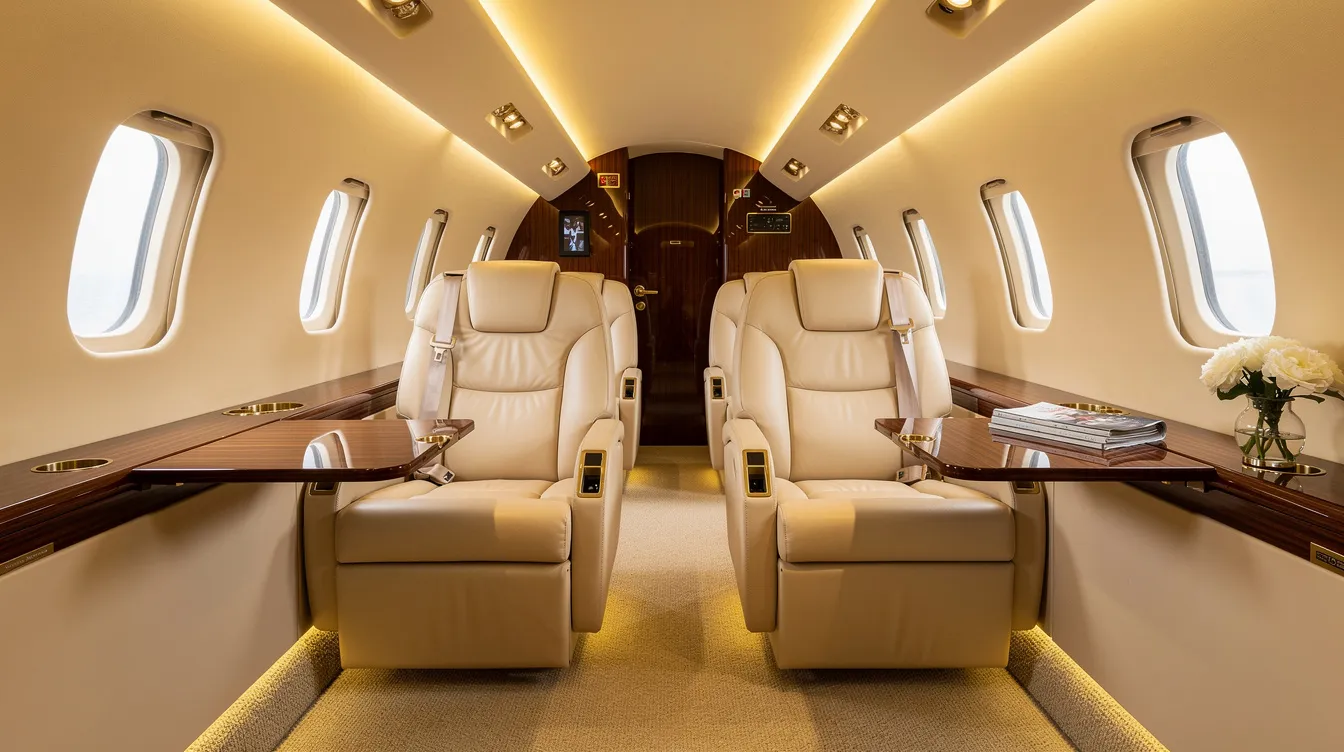
The standard interior features four club-configured executive leather seats-sometimes supplemented by a side-facing seat or belted lavatory seat depending on the variant. Every Elite, Elite S, and Elite II configuration includes a fully enclosed lavatory in the aft cabin, delivering privacy and convenience that commercial aviation simply cannot match on two- to three-hour sectors.
Baggage space is split between a forward nose compartment and a spacious aft hold, totaling approximately 62 cubic feet on the Elite II-enough for several roller bags, garment bags, and golf clubs. Across the model range, cabin space improvements include upgraded materials, acoustic enhancements for a quieter ride, refreshed color palettes, USB-C charging, and refined lighting and cabin management systems.
These comfort features matter deeply to BlackJet's clientele: time-sensitive executives, families, and leisure travelers who expect an environment comparable to or better than first class-with total privacy. When you charter through BlackJet, you experience these HondaJet-level cabin benefits without carrying the capital expenditure or long-term maintenance obligations that justify the aircraft's higher purchase price.
Elite, Elite S, Elite II and Beyond: How Model Differences Affect Price
The honda jet family spans four main variants-original HA-420 Classic, Elite, Elite S, and Elite II-each adding performance, technology, or comfort that directly influences market value.
Range and speed: The HondaJet Elite II has a maximum range of 1,547 nautical miles with four passengers, a meaningful increase over earlier models. Increased range means fewer fuel stops on longer missions and greater operational flexibility. The HondaJet Elite II has a maximum cruise speed of 422 knots, with refinements in climb performance, takeoff distance, and landing distance compared to predecessors.
Avionics and safety: The evolution from Classic to Elite II brought progressive avionics upgrades on the Garmin G3000-based flight deck, including autothrottle, stabilized approach advisories, and optional Emergency Autoland on the elite ii. These enhancements support single-pilot operation with meaningful safety margins and appeal to pilots who value innovation and technology in the cockpit.
Economic impact: Longer nonstop legs reduce per-trip fuel costs and repositioning. Later models typically retain value better on the pre-owned market. The honda jet specifications on each successive variant reflect Honda's commitment to incremental refinement-not revolution-meaning the practical experience between a late Elite and an Elite II charter may feel remarkably similar aircraft to aircraft.
For many travelers, this makes charter an efficient way to enjoy the latest tech without chasing every model release as an owner, especially once you understand where HondaJet fits on the broader private jet price list alongside other categories.
Honda Jet Ownership vs. Jet Card and Charter with BlackJet
Here's the core trade-off: owning a honda jet means a multi-million-dollar capital commitment, ongoing fixed costs, management complexity, and asset risk. Accessing similar aircraft through BlackJet's jet card and on-demand charter programs means predictable costs, zero asset liability, and freedom to fly the right aircraft for every mission.
Scenario comparison: An owner flying 150 hours per year on their own HondaJet might spend $700,000–$900,000 annually in total cash operating costs-before depreciation and capital charges. A BlackJet member purchasing a 50-hour or 100-hour jet card and supplementing with ad hoc trips often achieves comparable or lower annual spend with far less risk and administrative burden; comparing the best jet cards for frequent flyers can clarify which structure matches your HondaJet-class mission profile.
Chartering is often more cost-effective for under 200 flight hours per year. Charter avoids long-term commitments and maintenance responsibilities entirely. Ownership is more competitive for flyers over 300 hours annually, but even high-utilization owners often keep a jet card as a flexible supplement for routes or cabin sizes their owned aircraft can't serve, making it important to understand jet card pricing structures before committing.
Beyond cost, BlackJet offers advantages ownership cannot:
Access to multiple aircraft categories-very light jets like the HondaJet, midsize cabins, or large-cabin jets-trip by trip, including large-group options such as 16 seat private jet cabins when your team or family grows
24/7 digital booking and real-time support tailored around your calendar, not aircraft positioning
Safety-focused sourcing from audited operators that meets or exceeds leading private aviation standards
BlackJet positions itself as a sophisticated alternative to outright honda jet purchase-strategic, on-demand access rather than asset management.
Sustainability, Safety, and Technology in HondaJet-Class Travel
The HondaJet's design philosophy-efficient engines, natural laminar flow aerodynamics, and lightweight composite construction-aligns with broader sustainability trends in private jet travel. The HF120 engines deliver strong fuel efficiency relative to peers, and Honda has tested the powerplant with Sustainable Aviation Fuels (SAF), signaling a path toward lower lifecycle emissions.
BlackJet takes this further. Where applicable, BlackJet arranges carbon-neutral flights across its programs at no extra cost to members, extending sustainability beyond what any individual aircraft owner can achieve on their own, and offers flexible structures like leasing a private jet for clients who want asset access without full ownership.
On safety, the HondaJet's modern avionics suite includes envelope protections, stabilized approach advisories, and Emergency Autoland availability on the Elite II. BlackJet complements this with rigorous operator-vetting processes, safety certifications, and a preference for reputable aircraft and crews with strong maintenance oversight.
Advanced digital tools-scheduling platforms, real-time tracking, integrated trip management-allow BlackJet members to leverage HondaJet-class efficiency without hands-on involvement in crew scheduling, maintenance coordination, or regulatory compliance. For many clients, sustainability, safety, and time control outweigh the perceived status of ownership, making premium access products a smarter deployment of capital.
Is a Honda Jet Right for You? Key Questions to Ask
Before committing to a honda jet purchase-or any private jet ownership-run the numbers through these diagnostic questions:
How many hours will you actually fly per year over the next five to seven years? If your answer is under 200, the economics almost always favor jet card or charter access.
Do your missions fit within HondaJet range? Regional trips of 400–1,200 NM are the sweet spot. If you regularly need larger cabins or longer legs, ownership of a single light jet limits flexibility.
Can you absorb the annual fixed costs and asset risk? Even in a quiet year, a parked HondaJet still costs six figures in hangar, insurance, and program fees.
How important is fleet flexibility? A jet card program lets you choose between very light jets, midsize, or large-cabin options trip by trip-something no single-aircraft purchase can replicate, particularly with products like BlackJet 25+ Hour Jet Card once you understand jet card cost per hour and category trade-offs.
If annual utilization is volatile or your travel needs span multiple cabin classes, variable-cost access through BlackJet typically outperforms a fixed-cost HondaJet commitment that might sit idle for weeks at a time.
How BlackJet Helps You Capture HondaJet Benefits Without the Price Tag
BlackJet's jet card and charter solutions deliver the advantages that attract buyers to the honda jet-privacy, schedule control, regional speed, an enclosed lavatory, and generous baggage space-without the acquisition cost or long-term fixed costs of ownership.
Practical use cases: If you're comparing outright purchase to on-demand access, it also helps to understand how much to rent a private jet on a trip-by-trip basis across different cabin sizes.
A founder commuting monthly between Austin and Silicon Valley on a 25-hour jet card, sometimes aboard a HondaJet-class aircraft for solo trips, sometimes upgrading to a midsize cabin when bringing the leadership team.
A family combining several regional leisure trips per year, leveraging HondaJet-class efficiency for direct access to secondary airports with shorter runways, while occasionally opting to buy a seat on a private jet when a full-aircraft charter isn't necessary.
What sets BlackJet apart:
Carbon-neutral flights and a genuine commitment to sustainable private aviation
A curated operator network with strong safety standards and maintenance oversight
An intuitive digital booking platform with real-time support that adapts to last-minute changes
The smartest path to HondaJet-class travel isn't always through ownership. It's through strategic access that protects your capital, eliminates operational complexity, and gives you the freedom to fly the right aircraft for every mission, particularly with flexible products like the BlackJet 25+ Hour Jet Card.
Explore how a BlackJet Jet Card can deliver the private jet experience you want-without the ownership burden. Request a tailored proposal benchmarked against your projected travel and see how the numbers compare. For deeper due diligence around private aviation economics and fleet fit, you may also want to understand how much a private jet pilot costs, compare 12 seater private jet pricing with HondaJet-class cabins, review NetJets jet card costs as a benchmark, or explore large-group options from 50 passenger private jets up to charter planes for 100 passengers. If you decide ownership belongs in your portfolio, BlackJet can help you assess opportunities such as a UK private jet for sale, or even set up region-specific solutions like private jet charters in Karachi to complement your HondaJet-class access strategy.
Conclusion: Strategic Private Jet Access Beyond Ownership
The HondaJet airplane price represents just the starting point in the journey toward private aviation. While ownership offers prestige and direct control, it demands a significant capital investment, ongoing fixed and variable costs, and exposure to depreciation and operational risks. For many high-net-worth individuals, executives, and discerning travelers, these factors make outright ownership less practical unless flying extensively—typically over 300 hours annually.
BlackJet provides a compelling alternative, delivering HondaJet-class performance, comfort, and safety without the burdens of ownership. Through flexible jet card programs and on-demand private jet charter, travelers gain seamless access to a curated fleet with advanced safety certifications, carbon-neutral flight options, and cutting-edge technology. This approach maximizes convenience and sustainability while preserving capital and eliminating asset management complexities.
Ultimately, the smartest path to private jet travel is one that aligns with your unique mission profile, travel frequency, and financial priorities. Whether you choose to own or access via BlackJet, understanding total costs, operational demands, and available options ensures your private aviation experience is not just a luxury—but a strategic advantage.
Explore how BlackJet can elevate your travel with exclusive HondaJet access tailored to your lifestyle and business needs. Discover the freedom of premium private jet travel without compromise.


 Sign up with google
 Sign up with Apple