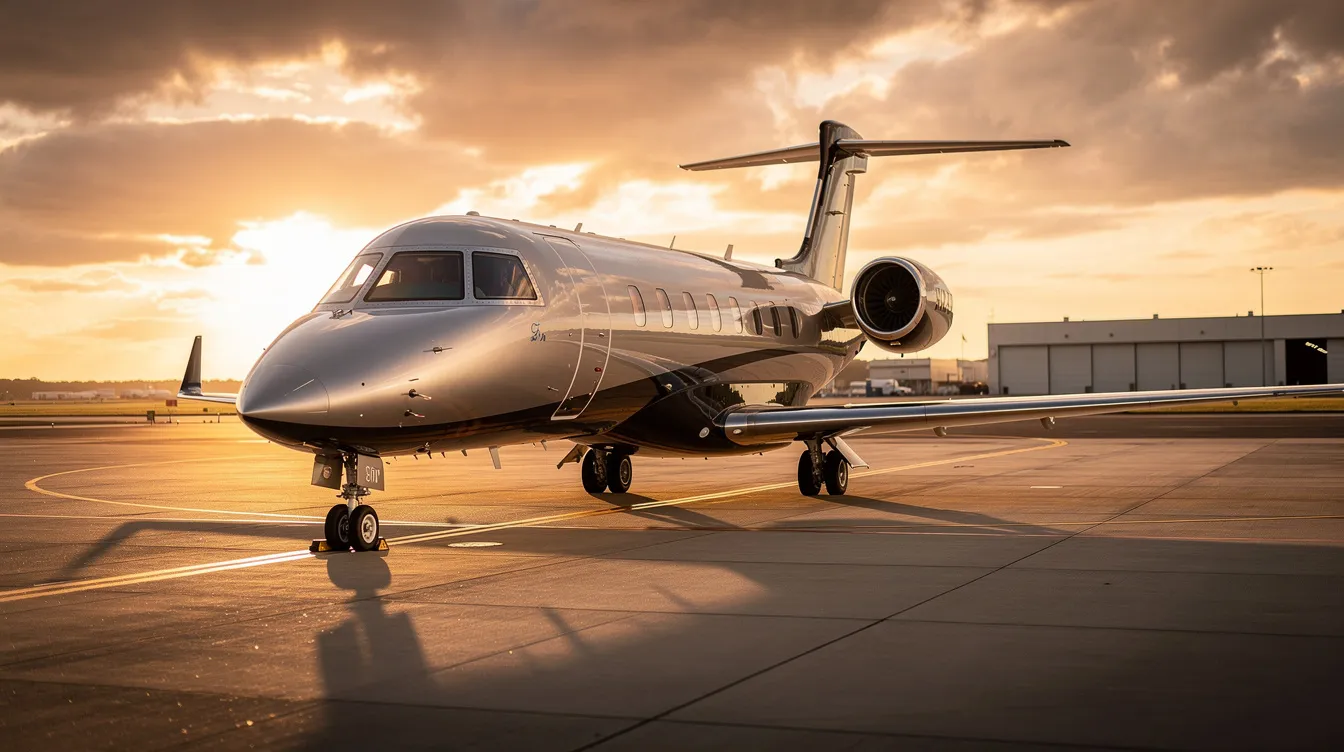
Private jet cost is the first question every prospective traveler asks, and the honest answer spans a wide range. Whether you're evaluating full aircraft ownership, weighing on-demand charter pricing, or considering a Jet Card membership, the numbers depend on aircraft type, mission profile, and how you structure access. This guide breaks down every layer of private jet pricing in 2026 so you can make a clear-eyed financial decision.
Quick Answer: How Much Does It Cost to Fly on a Private Jet Today?
If you're looking to buy, private jet purchase prices range from $2 million to over $100 million for new aircraft. Used private jets trade between roughly $1 million and $50 million depending on aircraft category, aircraft age, avionics, and maintenance history.
If you'd rather rent, private jet charter costs range from $2,300 to $23,000 per hour in the U.S., with the rate determined primarily by the size of the private aircraft you select. Here are the current 2026 ranges per flight hour:
Aircraft category | Typical passengers | Estimated charter cost per flight hour |
|---|
Turboprops | 4–8 | $2,300–$4,600 |
Very light jets | 4–6 | $4,500–$6,500 |
Light jets | 6–8 | $5,500–$8,500 |
Super light jets | 6–8 | $6,000–$9,000 |
Midsize jets | 7–9 | $4,700–$11,000, depending on model |
Super midsize jets | 8–10 | $9,500–$14,000 |
Heavy and ultra-long-range jets | 10–19 | $12,000–$23,000 |
VIP airliners | Varies by configuration | $18,000–$23,000 |
Ultra-luxury VIP airliners cost $18,000 to $23,000 per hour.
To put those numbers in context: a one-way private flight from New York to Miami on a light jet runs approximately $17,000–$23,000 all in. A transatlantic trip from New York to London on an ultra-long-range jet costs roughly $70,000–$95,000 one way.
BlackJet's Jet Card model offers a third path. Members pre-purchase a block of flight hours—typically 25 or 50 hours—at fixed, all-in rates, so the private jet cost per hour is known before the first wheels-up. This article will compare private jet ownership, on-demand private jet rental, and Jet Cards so you can decide what fits your usage and budget.
Why Private Jet Access Is a Strategic Advantage, Not Just a Luxury
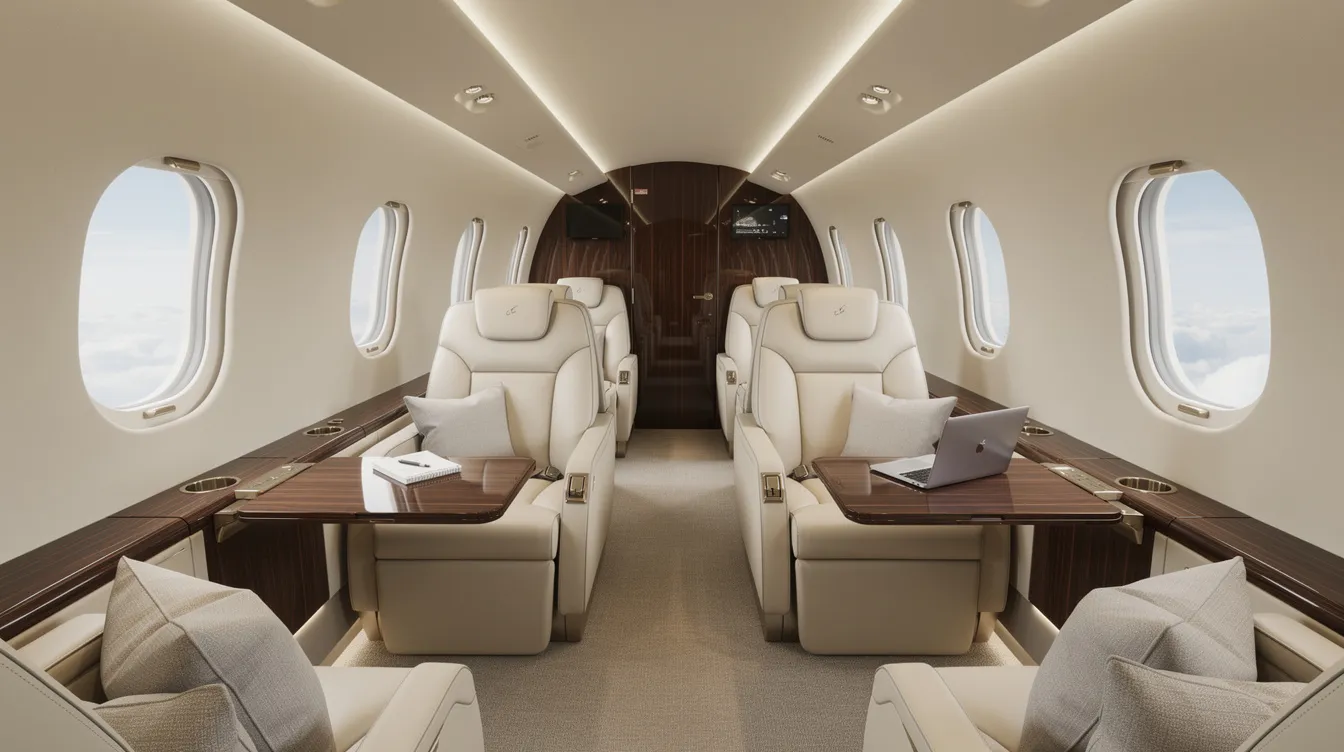
Flying private eliminates roughly two to three hours of dead time per domestic leg—no TSA queues, no connection gates, no boarding groups. You arrive at a private terminal minutes before departure, board the entire aircraft, and depart on your schedule. For executives and entrepreneurs logging 20 to 200+ annual flight hours, this time recovery compounds fast.
The cabin becomes an office, a boardroom, or a place for uninterrupted rest. Confidential calls happen without seatmates. Families travel on their own timeline. The value of private jet travel is less about champagne and more about control over the most limited resource any leader has: time.
Consider a CEO who needs to close deals in New York, Chicago, and Dallas in a single day. On scheduled airlines, that itinerary requires at least two days and multiple connections. On a super light jet, all three meetings happen back-to-back with a same-day return. That's not luxury—it's leverage.
BlackJet makes these strategic benefits predictable and accessible through membership and Jet Card programs, so you gain the advantages of flying private without tying up several million dollars in your own aircraft; its premium private jet card solutions are designed to balance cost control with safety and comfort.
What Drives the Cost of Private Jet Travel?
Private jet pricing isn't arbitrary. It's shaped by a handful of technical and operational factors:
Aircraft size and aircraft category (turboprop through ultra-long-range)
Total flight time and distance
Where the aircraft starts and ends the day (positioning and repositioning)
Dates and season (peak holiday periods command premiums)
Trip shape: one-way, round trip, or multi-leg flights
Group size and baggage, which may dictate a larger aircraft
The billable flight hour is the basic pricing unit, but it rarely equals raw airborne minutes. Daily minimums—often 2.0 to 3.0 hours—and repositioning can push the billed time well above actual flight time. Later sections show how BlackJet's Jet Card pricing builds these factors into transparent hourly rates, so members avoid surprise surcharges and hidden fees.
How Much Does a Private Jet Cost to Buy in 2026?
The acquisition price is only one part of total private jet ownership cost, but it's still the biggest check you'll write. Purchase prices depend on aircraft size, range, age, and level of luxury. Here are the current new-aircraft price bands:
Very light jets: $2 million to $5 million new
Light jets: $3.5 million to $9 million new
Super light jets: ~$7–$11 million
Midsize jets: $5 million to $30 million new (a broad category spanning entry midsize through super midsize)
Large jets and ultra-long-range jets: $25 million to $100 million new
Pre-owned jets of each category can trade for 30–60% below the original aircraft price depending on aircraft age, total flight hours, avionics generation, and maintenance status. A 2020 Gulfstream G650ER in solid condition currently lists around the low $40 million range pre-owned, while a 2018 Cessna Citation CJ3+ trades in the $6.5–$7.5 million range.
Buyers must also budget for pre-purchase inspections, legal and escrow fees, registration, and potential refurbishment. Interior, paint, and avionics upgrades can add $500,000 to $5 million depending on aircraft size, meaning the total cost at acquisition extends well beyond the sticker.
Private Jets by Category: From Very Light to Ultra Long Range
Private jets are grouped by cabin size and range, and the aircraft category directly affects private jet cost both to own and to charter. Here's a concise breakdown:
Very light jets (4–6 seats, ~1,100–1,500 nm range): regional hops under 1,000 nm. Examples include the Cirrus Vision Jet and Phenom 100.
Light jets (6–8 seats, ~1,600–2,200 nm): workhorse business jets for domestic routes. The Phenom 300E and Citation CJ4 Gen2 lead this class.
Super light jets (6–8 seats, ~1,800–2,400 nm): slightly more cabin room and range than standard light jet costs suggest, bridging light and midsize.
Midsize jets (7–9 seats, ~2,500–3,000 nm): cross-country capability, often coast-to-coast nonstop. Citation Latitude and Praetor 500 are popular.
Super midsize jets (8–10 seats, ~3,200–4,000 nm): transcontinental range with stand-up cabins. Challenger 3500 and Citation Longitude are flagships.
Large cabin / heavy jets (10–14 seats, 4,000+ nm): long-haul international. Gulfstream G500 and Falcon 2000LXS.
Ultra long-range jets (13–19 seats, 6,500–8,000+ nm): nonstop global missions like New York to Hong Kong. Global 7500/8000 and G700/G800 define the segment.
Later sections pair these categories with hourly charter rates and estimated ownership costs so you can compare aircraft across the spectrum; you can also review types of private jets for every traveler to align cabin size and range with your mission profile.
How Much Does It Cost to Rent a Private Jet (Charter Pricing per Flight Hour)
Most travelers don't own a private aircraft. They use private jet rental costs and considerations to evaluate on-demand charters, priced primarily by the billable flight hour. Private jet rental costs range from $2,300 to $17,000 per hour for most categories, with VIP airliners pushing to $23,000.
Here are realistic 2026 all-in charter ranges by category:
Turboprops: ~$2,300–$4,600/hour
Very light jets: ~$4,500–$6,500/hour
Light jets: ~$5,500–$8,500/hour
Super light jets: ~$6,000–$9,000/hour
Midsize jets: ~$4,700–$7,500/hour for entry midsize; $7,500–$11,000/hour for upper midsize
Super midsize jets: ~$9,500–$14,000/hour
Heavy jets: ~$12,000–$18,000/hour
Ultra long-range jets: ~$17,000–$23,000/hour
Aircraft size significantly impacts hourly rental rates. A critical point: pricing is per entire aircraft, not per seat. Whether one or six passengers board the same aircraft, the private jet charter cost stays the same.
These are typical U.S. retail estimates including aircraft, flight crew, jet fuel, and standard fees—but quotes can shift by season and route. For a deeper look at private charter flight costs, BlackJet publishes transparent hourly breakdowns.
The difference between pay-per-trip charter and BlackJet's Jet Card is predictability: members pre-purchase flight hours at a fixed private jet cost per flight hour instead of fluctuating retail charter rates.
Private Jet Rental Cost Breakdown: What You're Really Paying For
Beyond the headline hourly rate, several components stack up to determine the full private jet charter pricing and the full private jet rental cost:
Billable flight hours: the core charge, calculated from engine start to engine stop (not just airborne time).
Repositioning flights: if the private plane must fly empty to your departure point, that ferry leg adds cost. Repositioning flights can add high costs to quotes.
Fuel and fuel surcharges: jet fuel is volatile. Fuel typically constitutes 25% to 35% of total operating costs, and operators often layer in a 10–15% surcharge.
Flight crew time and overnights: pilots must travel, rest, and be compensated, especially on multi-day missions.
Airport landing and handling fees: landing fees, ramp fees, and international customs handling vary widely by airport.
Navigation and overflight charges: particularly on international routes.
De-icing: seasonal and location-dependent.
Catering: standard provisions are often included; premium catering is extra.
Private jet charter prices include a 7.5% federal excise tax on domestic legs, a line item many first-time flyers don't anticipate.
The gap between a "base hourly rate" and an all-in quote can be substantial. BlackJet's model publishes all-in Jet Card hourly rates with these components bundled, so members aren't blindsided by ownership-style extras or last-minute add-ons.
How Is Billable Flight Time Calculated in Private Aviation?
Clients often ask why a 50-minute flight shows up as 2.0 billable hours. The answer lies in how private aviation measures flight time.
Billable flight time typically includes taxi, takeoff, climb, cruise, descent, and landing—engine-on to engine-off. It can also include repositioning segments when the aircraft must travel from its base to your departure airport. Daily minimums, commonly 2.0 to 3.0 hours, mean that short hops are billed at the minimum regardless of actual airborne time.
A concrete example: Los Angeles to Las Vegas is roughly 45–55 airborne minutes on most private jets, but the billable flight hour count is typically 2.0 due to the daily minimum. That means a light jet at $6,000 per flight hour would invoice $12,000 for that leg even though airborne time was under an hour.
Understanding how each billable flight hour is recorded matters for budgeting. BlackJet's Jet Card contracts spell out exactly how flight hours are calculated, so members can estimate their private jet travel costs with confidence before confirming any trip details.
Real-World Private Jet Trip Examples & Total Costs
Theory is useful; real numbers are better when paired with a focused look at chartering a small private plane. Here's what typical trips actually cost in 2026:
Los Angeles → Las Vegas (one way, light jet): ~$10,000–$15,000. Approximately 50 minutes airborne, 4–6 passengers. Short flight time, but daily minimums push the invoice up.
Chicago → New York (one-way, super light or midsize jet): ~$16,000–$24,000. Around 1.5–2 flight hours, 6–8 passengers comfortably.
New York → Miami (one-way, light or midsize jet): ~$17,000–$26,000. Roughly 2–2.5 flight hours, a staple route for frequent flyers.
New York → London (one-way, heavy or ultra-long-range jet): ~$70,000–$95,000. About 7–8 flight hours, 10–14 passengers on the same model of heavy jet.
Here's where the per-person math gets interesting. Divide the New York–Miami midsize jet cost of $22,000 by eight passengers, and the per-seat price is $2,750—often comparable to a last-minute business class fare on the same route, without the three-hour round-trip ground transportation and terminal overhead.
BlackJet members use their Jet Card to lock in a predictable per-flight-hour rate for these missions, rather than re-shopping charters trip by trip.
The True Cost of Private Jet Ownership: Beyond the Purchase Price
Buying a private jet shifts your cost profile from per-trip spending to ongoing ownership costs that accrue every month whether the aircraft flies or not. Owning a private jet involves capital costs and annual operating expenses that surprise many first-time private jet owners.
Ownership costs break into two categories:
Fixed costs remain constant regardless of flight hours: hangar fees, crew salaries, insurance, aircraft management, and subscriptions. Fixed operating costs can account for 40% to 60% of total annual ownership costs.
Variable costs scale directly with flight hours and trip lengths: fuel, maintenance, landing fees, and catering.
Annual operating costs vary widely based on aircraft type and usage, but total ongoing costs typically run $500,000–$2,000,000+ per year depending on aircraft size and utilization. Larger jets usually have higher operating costs due to increased fuel and maintenance needs, and private jet pilot costs and salaries are a major component of that fixed expense profile.
For a light jet flown around 200 annual flight hours, all-in ownership costs often equate to $2,500–$3,500 per flight hour. For large cabin and ultra-long-range jets, it can climb to $7,000–$10,000+ per flight hour. Depreciation affects the long-term return on aircraft investment, further eroding the economics if utilization is low.
Many clients prefer to avoid these ownership costs and complexity by using Jet Cards or on-demand private jet rental, leveraging comprehensive jet card pricing guides to compare membership structures before committing.
Ongoing Ownership Costs in Detail
The ongoing costs are what surprise many first-time buyers far more than the acquisition price. Here's what jet owners face annually:
Annual fixed costs:
Hangar fees: typically range from $30,000 to over $200,000 per year, depending on location and facility quality
Aircraft insurance (hull and liability coverage): insurance costs range from $15,000 to over $85,000 annually for private jets
Crew salaries: can range from $85,000 to over $300,000 per pilot annually, and most business jets require two pilots
Pilot training and recurrent certification are necessary ongoing expenses, adding tens of thousands of dollars annually
Aircraft management fees and subscriptions (charts, connectivity, tracking)
Variable operating costs:
Fuel: the largest variable line item, driven by fuel prices and aircraft weight. Higher fuel costs on older, less efficient engines can dramatically change the equation.
Routine maintenance and unplanned maintenance events: scheduled inspections plus the engine reserves that build toward overhauls
Landing fees and navigation charges
Cleaning and catering
As aircraft age, maintenance can rise sharply, making older "cheap" pre-owned jets more expensive per flight hour than newer, more efficient private jets of the same model. Charter revenue from placing your own aircraft on a certificate can help offset some ownership expenses, but it introduces wear, scheduling complexity, and regulatory requirements—considering an overarching private jet price list and options can clarify where ownership versus access makes sense.
BlackJet members avoid these ownership costs entirely. They pay only for flight hours flown on vetted aircraft in BlackJet's network.
When Does Buying a Private Jet Make Financial Sense?
The decision almost always comes down to annual utilization—how many flight hours you actually fly each year. High utilization typically makes full ownership more cost-effective.
Practical break-even thresholds:
Light and super light jets: ownership starts to pencil out above ~200–250 annual flight hours
Midsize jet and larger: typically requires 300–400+ flight hours per year to justify the full stack of ownership costs
A traveler flying 100–150 hours per year can typically access newer aircraft via charter or Jet Cards for less money and less risk than owning their own aircraft. Buying a private jet may not be the most economical option for infrequent travelers.
Before committing to aircraft ownership costs, track 12–24 months of your actual travel data: routes, frequency, passenger counts, and hours. That dataset will tell you whether you're a buyer or a cardholder, and a detailed look at whether chartering a private jet is worth it can sharpen that comparison.
Many BlackJet members fly in this sweet spot under 250 annual hours, making Jet Card membership more rational—and more flexible—than purchasing a private plane.
Jet Cards & Memberships: The Middle Ground Between Ownership and Charter
Jet cards offer prepaid access to private jets for fixed hours. You buy a block of time—typically 25 or 50 flight hours—at a fixed private jet cost per flight hour, then draw down that balance as you fly. Membership programs provide flexible access to private jets without asset risk, and an in-depth guide to jet card cost can help you benchmark providers and structures.
How Jet Cards differ from pay-as-you-go charter—and how to evaluate jet card cost per hour compared with ad hoc charter rates:
Guaranteed or priority aircraft availability, even during peak periods
Capped or fixed hourly rates that don't fluctuate with spot-market demand
Standardized service and safety standards across every flight
BlackJet's Jet Card model offers multiple cabin classes (light, midsize, super midsize, large), 24/7 digital booking tools, and carbon-neutral flights included at no additional charge. Members don't pay for crew, maintenance, hangars, or private jet insurance—those ownership costs are embedded in the hourly rate and handled by BlackJet's operator network.
Who fits best: business owners, frequent leisure families, and executives flying roughly 25–150 private jet hours per year. For a detailed comparison of jet card pricing across providers, BlackJet publishes transparent breakdowns and highlights the best jet cards for frequent flyers based on availability, flexibility, and cost transparency.
Comparing Options: Ownership vs Jet Card vs On-Demand Charter vs Commercial
Choosing between models starts with matching your travel pattern to the right cost structure.
Full ownership: Highest control and customization of your own aircraft. Also the highest fixed and ongoing costs, plus management complexity. Best suited for 300+ flight hours per year or specialized missions (medevac, government, unique configurations).
Jet Cards (BlackJet as example): Predictable hourly pricing, guaranteed access to multiple aircraft types, no asset risk or depreciation. Ideal for 25–200 hours per year. Fractional ownership allows sharing costs with multiple owners but still involves capital commitment and partial management burden—Jet Cards avoid both.
On-demand private jet charter: Maximum flexibility with no commitment. Pay per trip. But private jet pricing swings with aircraft availability, season, and lead time. Best for occasional or irregular travel.
Commercial business/first class on scheduled airlines: Lower per-seat cost, but more time lost to security, connections, limited schedules, and the inability to reach smaller airports. For frequent flyers on premium routes, the per-person delta between private and commercial narrows when a full cabin splits the cost of the entire aircraft.
Hidden Fees & How to Avoid Surprises in Private Jet Pricing
Many travelers' first experience with private jets involves unexpected extras on the final invoice. Booking within 14 days can increase prices by 10% to 20%, and that's just the start—especially when you're evaluating larger commitments like a 100-hour jet card cost.
Common hidden fees include:
Peak-day and holiday surcharges
Fuel surcharges layered on top of "included fuel"
De-icing charges in winter months
After-hours FBO fees
Crew overnight expenses on multi-day trips
International handling and customs clearance
Change or cancellation penalties
To protect yourself, always distinguish between a "base hourly rate" and the total all-in expected cost for your specific itinerary. A reputable provider will define what is included and what is billed "as incurred" before you sign.
BlackJet's approach: Jet Card agreements clearly disclose what is in the hourly rate, what counts as a billable flight hour, and which rare extras (like special de-icing events) are billed only if actually used. No ambiguity.
Safety, Certification & Sustainability: Costs That Actually Matter
While price matters, safety and environmental impact should never be sacrificed to shave a few hundred dollars off your private jet cost.
Top-tier operators maintain certifications like ARG/US, Wyvern, and IS-BAO, which require robust crew training, rigorous maintenance protocols, and recurring third-party audits. These certifications add to operating costs but dramatically reduce risk. Cutting corners on crew experience or routine maintenance can lower the price tag but raises unacceptable safety exposure.
On sustainability: private aviation companies offer carbon-neutral flight options. Sustainable aviation practices aim to reduce environmental impact through newer, fuel-efficient engines, lighter materials, and verified carbon offsets. Carbon offsets cost approximately $7.99 per 1,000 lbs of CO₂, meaning that offsetting a $100,000 flight costs about $793—roughly 0.6% to 0.8% of the total rental price.
BlackJet ensures every flight is carbon-neutral by default, incorporating sustainability into the service instead of offering it as a hidden upsell. That cost-effective approach embeds responsibility directly into the Jet Card hourly rate.
Technology & Service: How Digital Tools Can Lower the Cost of Flying Private
Technology doesn't just add convenience—it can meaningfully reduce private jet costs by optimizing aircraft selection and routing, particularly when paired with structured products like the BlackJet 25+ Hour Jet Card.
Modern booking platforms aggregate fleets, compare aircraft across operators, and reduce empty repositioning legs. When the aircraft waits closer to your departure point, repositioning costs drop. Centralized visibility into aircraft availability can also unlock occasional empty leg flights—one-way repositioning flights priced at steep discounts. Empty leg flights can save up to 75% off standard rates for flexible travelers willing to match an existing routing and are often highlighted in resources on the cheapest private jet options.
BlackJet offers mobile booking, real-time flight support, instant confirmations, and digital itinerary management. These tools help members book a private jet quickly while the platform handles the logistics of matching the right aircraft to the mission. The result: competitive Jet Card pricing without sacrificing safety or experience.
How Many Private Jets Do You Really Need Access To?
Most individuals and companies don't need to own fleets. They need reliable access to the right jet on the right day. The question isn't how many private jets you can buy—it's whether you can reach the right aircraft category when you need it.
Many corporations with heavy travel still own just one primary private aircraft and backfill with charter or Jet Card solutions during maintenance windows or peak demand. For private individuals and families, access to a network of aircraft types—light for short hops, midsize for regional, ultra-long-range jets for intercontinental—via a provider like BlackJet is typically more cost-effective than owning multiple jets; selecting from the best small private aircraft for each need ensures the right fit for each mission.
Jet Cards and on-demand private jet rental effectively give you access to as many jets as you need without multiplying ownership costs. Operationally, starting with access rather than acquisition is safer and more flexible for the majority of travelers.
How to Reduce the Cost of Private Jet Travel Without Downgrading Your Experience
Managing private jet costs doesn't mean downgrading. It means making smarter choices:
Right-size the aircraft: choose turboprops, very light jets, or super light jets when the mission profile and baggage allow. Resources on top affordable private planes can help you identify cost-efficient models. Don't default to heavy jets for a two-person, 90-minute leg flight.
Fly on flexible departure times and off-peak days to avoid seasonal surcharges. Mid-week travel often yields better availability and lower repositioning.
Use secondary airports closer to your final destination. Airport landing and handling charges are often lower, and ground transportation time can actually decrease; this can be especially impactful when you charter a small plane into airports that large jets and airlines may not serve as efficiently.
Consider one-way empty leg opportunities when your schedule is flexible.
Lock in Jet Card hourly rates to eliminate last-minute price spikes, especially if you need to avoid the 10–20% premium for short-notice bookings. For strategies on flying private affordably, BlackJet publishes regular guidance.
A fuel stop on a long-range mission can also be more cost-effective than booking a larger, thirstier jet that can make the nonstop run.
FAQs: Private Jet Cost, Ownership Costs & Jet Cards
How much does a private jet cost per flight hour for different sizes?
Turboprops cost about $2,300 to $4,600 per flight hour. Light jet costs range from $5,500 to $8,500. Midsize jets cost between $4,700 and $7,500 for entry models and up to $11,000 for upper midsize. Super midsize jet rates run $9,500–$14,000. Heavy and ultra long range jets range from $12,000 to $23,000 per flight hour; a focused look at 12-seater private jet costs can provide more specific guidance for common large-cabin configurations.
What ongoing costs should I expect if I own a jet?
Expect $500,000–$2,000,000+ annually for hangar fees, crew salaries, insurance, fuel, and maintenance. The exact figure depends on aircraft type, utilization, and whether you manage the aircraft yourself or hire a management company.
Is a Jet Card cheaper than owning if I fly under 200 hours a year?
In nearly all cases, yes. Ownership break-even for a light jet is roughly 200–250 annual flight hours; for larger jets, 300–400+. Below those thresholds, Jet Cards and charter are more cost-effective.
Are there hidden fees I should watch for when comparing quotes?
Yes. Watch for fuel surcharges, repositioning charges, crew overnights, de-icing, after-hours fees, and the federal excise tax. Always request an all-in quote with your specific trip details.
Can I share or split a flight with others to reduce per-person private jet cost?
The cost is per aircraft, not per seat. But filling more seats lowers your per-person expense. Some operators and platforms offer shared private plane options or shuttle routes on popular leg flights, and for larger groups you may consider the best private jets for 20 passengers to right-size capacity.
How does carbon-neutral flying affect my price?
Carbon offsetting typically costs 0.6% to 0.8% of the total rental price. BlackJet includes carbon-neutral performance in its Jet Card rates at no additional charge.
How quickly can BlackJet arrange a jet for an urgent trip?
Depending on aircraft availability and positioning, BlackJet can often confirm a private jet within hours. Short-notice bookings may carry a modest premium, but Jet Card members receive priority access.
How much does it cost to join a Jet Card program?
Entry deposits for 25-hour blocks on light jets typically start in the low-to-mid hundreds of thousands of dollars. A 50-hour Jet Card represents a larger upfront commitment but often secures a lower effective per-hour rate on the same model of aircraft; comparing structures such as NetJets jet card cost can help you benchmark pricing and value across the market.
Conclusion: Choosing the Smartest Way to Pay for Private Jet Access
Private jet ownership can range from $2 million to well over $100 million, plus substantial ongoing costs that run hundreds of thousands to millions of dollars annually. Private jet rental and Jet Cards provide capital-light alternatives that scale with actual usage rather than calendar-year obligations. Compare private jet charter costs and Jet Card pricing to understand how each access model fits your budget.
The right solution depends on your annual flight hours, your mission profile, and how much operational complexity you want to manage personally. For the majority of travelers flying under 250 hours a year, structured access through a Jet Card delivers the same aircraft, same safety, and same experience—without the balance-sheet burden. Review BlackJet's safety standards and learn how carbon-neutral private flights support more responsible travel.
BlackJet exists for travelers who want predictable, carbon-neutral, safety-focused private jet travel without owning a private aircraft. Explore BlackJet's Jet Card programs, share your expected flight hours with our team, and discover how structured access can lower your effective private jet cost while elevating every journey.
Elevate your travel—effortlessly. Join BlackJet's Jet Card program for seamless, premium private travel with safety, sustainability, and flexibility built in.


 Sign up with google
 Sign up with Apple