Jet fuel is the single largest variable cost in private aviation. When prices move, your charter quote moves with them. Whether you fly ten hours a year or a hundred, understanding what drives jet fuel pricing — and how to insulate yourself from its volatility — is a strategic advantage that separates informed travelers from everyone else.
This guide breaks down exactly how jet fuel prices are set, where they stand right now, and what it all means for anyone who flies private in 2026.
Why Jet Fuel Prices Matter for Private Jet Travelers Right Now
The global average jet fuel price is $181.46 per barrel as of last week — a figure that rose 6.1% in a single week. For private jet travelers, that number is not abstract. It flows directly into every charter quote, every Jet Card hourly rate, and every repositioning fee you see on an invoice.
Fuel expenses average over 30% of total airline operating costs globally, and in private aviation the ratio is similarly significant: fuel commonly represents roughly 25% of total charter cost. When jet fuel spot prices double - as they have year-over-year in certain U.S. Gulf Coast assessments - the arithmetic is unavoidable. A midsize jet burning 2,200 gallons on a multi-hour mission faces a fuel bill north of $17,000 at today's retail FBO rates.
BlackJet's Jet Card model is built with this reality in mind. Rather than exposing members to raw spot-market swings on every flight, our programs use negotiated fuel arrangements, smart routing, and volume purchasing to keep pricing as stable and transparent as possible.
Key takeaways:
Global jet fuel prices have surged into the range of $150 to over $180 per barrel in 2026.
Retail Jet-A at U.S. FBOs averaged approximately $7.80 per gallon in April 2026, with some locations exceeding $9.50.
European and UK retail rates run between $9.00 and $12.00 per gallon, including taxes and fees.
Fuel is the largest variable cost in private aviation, making price awareness essential for anyone booking regularly.
How Jet Fuel Prices Are Set: From Crude Oil to the Wing
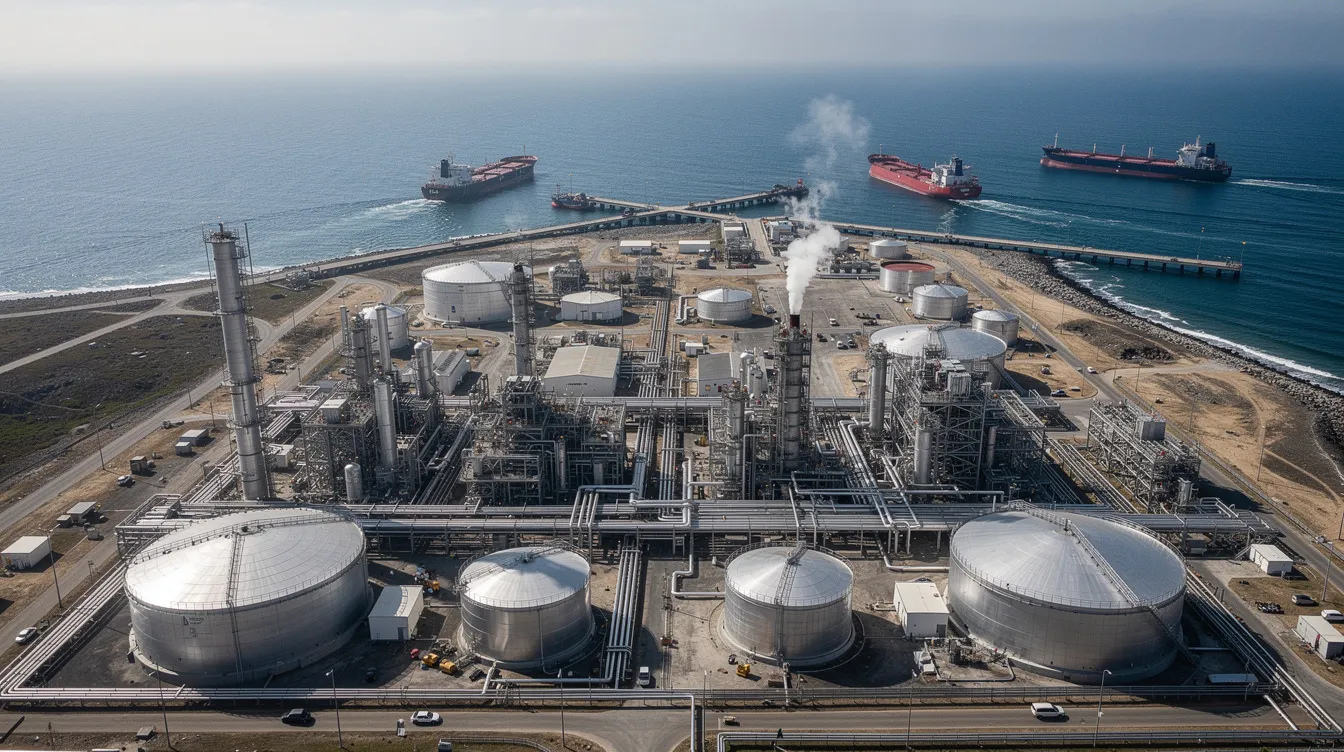
The price you pay for jet fuel at an FBO is the result of a multi-step supply chain, and each step adds cost.
The journey begins with crude oil—benchmarked by Brent, WTI, or regional equivalents. Crude oil prices account for more than half of jet fuel costs. From there, the crude enters a refinery where fractional distillation separates kerosene-type jet fuel from gasoline, diesel, and other products. Jet fuel pricing is influenced by crude-oil costs and the crack spread required to turn crude into aviation kerosene - the margin refiners earn for converting raw crude into usable fuel.
Once refined, jet fuel enters regional wholesale markets where it is assessed by pricing agencies like S&P Global Platts at major hubs: U.S. Gulf Coast, Singapore, Rotterdam, and ARA (Amsterdam-Rotterdam-Antwerp). These jet fuel spot prices reflect large-volume cargo trades.
But what operators actually pay at a specific airport is a different figure. Logistics and distribution add a variable transportation fee to fuel costs. Into-plane fees, storage charges, smaller-volume premiums, airport taxes, and local supply-chain costs all inflate the delivered price beyond the headline benchmark.
Crude oil → Refinery → Regional wholesale market → Airport/FBO supply → Into-plane pricing → Your charter quote
Large operators and airlines negotiate bulk purchase agreements and hedging contracts to reduce volatility. Smaller operators or ad hoc bookings pay more per gallon.
Jet fuel differs from gasoline and diesel chemically and economically — it is a kerosene-type distillate with distinct sulfur requirements and different pricing dynamics than diesel. During aviation demand surges, jet fuel typically trades at a premium to both.
Recent Trends: Jet Fuel Spot Prices in 2025–2026
The past 18 months have been anything but calm for jet fuel markets. Here is what the data shows, with average jet fuel prices in the U.S. updated as of Sep 19, 2026:
Early 2025: Prices were relatively stable and moderate compared to the preceding year. Demand recovery continued steadily, and supply was adequate.
Late 2025: Refinery maintenance in winter tightened supply. Geopolitical tensions in the Middle East began building, and jet fuel pricing proved sensitive to geopolitical events and disruptions in major shipping routes.
Q1 2026: Global jet fuel spot prices surged. Platts assessed global jet fuel at $173.94 per barrel in May, with early April breaking above $217 per barrel during crisis-period peaks driven by the Strait of Hormuz disruption.
Mid-2026: Prices moderated to approximately $161 per barrel globally by mid-May, but remained elevated by historical standards. Average jet fuel prices are updated as of September 19, 2026, and the Argus jet fuel price was $4.51 per gallon on September 18, 2026.
Sep 2026: The jet fuel price rose 6.1% to $181.46/bbl last week, reflecting continued tightness in distillate markets.
Regional differences have been pronounced. Asia-Pacific hovered below average during peak months (around $153/bbl in May per Platts assessments), while North America and Europe frequently exceeded $160/bbl. Northwest Europe spot prices (CIF NWE) were assessed around $1,600 per metric ton in mid-September.
Weekly fuel price analysis — published by IATA and S&P Global/Platts — is a primary source of related data that operators and pricing teams use to adjust quotes. Any interactive chart tracking these benchmarks week by week reveals the same pattern: sharp spikes followed by partial corrections, with the overall trend elevated.
Jet Fuel vs Other Aviation Fuels: Jet A, Jet A-1, 100LL, and SAF
Not all aviation fuel is the same, and the type your aircraft burns affects both pricing and availability.
Jet A: The standard kerosene-type fuel used across North America. Nearly all turbine-powered private jets — from light jets to large-cabin aircraft — burn Jet A.
Jet A-1: The global specification with a lower freezing point, used throughout Europe, Asia, the Middle East, and Africa. Pricing differences versus Jet A largely stem from logistical and import costs rather than chemistry.
100LL (Avgas): Used in piston-engine aircraft and some smaller turboprops. In the U.S., average avgas 100LL price runs about $6.96 per gallon; in the UK and Europe, £2.80–£3.60 per litre. Availability is limited, and pricing is volatile. Within BlackJet's network, 100LL is primarily relevant for turboprop connections rather than mainline jet service.
Sustainable Aviation Fuel (SAF): A drop-in replacement blended with conventional jet fuel. In 2026, SAF prices at major U.S. airports sit around $10.34 per gal - approximately 33% above standard Jet-A. Global SAF production capacity is projected at up to 120 million gallons per year, still a fraction of total aviation fuel demand.
A side-by-side comparison of these fuel types — covering price per gallon, primary use case, and availability - would be a valuable reference for anyone evaluating private jet fuel costs across different aircraft categories, especially when paired with a deeper understanding of the different types of jet fuel used in aviation.
Key Drivers Behind Jet Fuel Price Movements
Jet fuel does not exist in isolation. Its price is the product of several interlocking forces, each capable of moving the market in a matter of days.
Crude oil benchmarks: Brent and WTI set the floor. Major geopolitical disruptions have impaired global crude oil logistics throughout 2025–2026, particularly around the Strait of Hormuz, which removed a significant portion of Middle East supply routes into Europe.
Refinery capacity and crack spreads: Refining margins can increase even if crude oil prices are stable when supply chains are tight. Refinery outages have caused crack spreads to widen to unprecedented levels, meaning the cost of converting crude into jet fuel has spiked independent of raw material prices. Unexpected capacity constraints at refineries can cause sharp price spikes with little warning.
Seasonal and economic factors: Seasonal and economic factors drive fluctuations in jet fuel prices. Summer travel surges, holiday cargo peaks, and weather disruptions all increase consumption. Seasonal consumption typically drains existing national fuel reserves during peak travel periods. Periodic spikes in passenger travel demand amplify price spikes during heavy travel periods.
Aviation-specific demand: Airline capacity growth, cargo volume, and the ongoing recovery of business travel all put upward pressure on jet fuel demand.
Regional logistics: Pipeline constraints, storage limitations, and weather events can cause localized spikes at specific airports — sometimes adding dollars per gallon in a matter of days.
Environmental regulation and carbon pricing: Schemes like the EU Emissions Trading System and emerging SAF blending mandates add indirect costs to conventional jet fuel supply chains. Increasing pressure to adopt sustainable practices influences overall market pricing dynamics.
How Jet Fuel Prices Affect Private Jet Charter Quotes
When fuel prices move, charter quotes move. Here is how the mechanics work.
Operators build fuel costs into hourly charter rates using one of two approaches: either baking an assumed fuel cost into the all-in hourly rate, or quoting a base rate with a separate fuel surcharge line item that adjusts with the market. Both methods trace back to the same underlying variable — the delivered cost of jet fuel at your departure and arrival airports.
A concrete example: Consider a light jet charter from New York to Miami. In a month when Jet-A at the departure FBO costs $6.50 per gallon, the fuel component for that mission might run approximately $5,200. In a high-price month at $8.60 per gallon, the same mission's fuel bill climbs to roughly $6,880 — an increase of over $1,600 on fuel alone. Multiply that across a year of regular travel, and the impact is material.
On-demand charter typically passes fuel costs through at or near current market rates. You pay what the market dictates on the day of your flight.
Contracted solutions like Jet Cards may absorb short-term fluctuations or apply modest surcharges when fuel crosses defined thresholds.
BlackJet's quoting tools factor in real-time fuel prices at departure and destination airports. You see transparent, all-in pricing before you confirm — no hidden surcharges after the fact.
Jet Fuel Prices and Jet Cards: Fixed vs Variable Rates
A Jet Card is a prepaid block of flight hours - typically 25, 50, or 100 hours — that provides guaranteed access to private jets at a predetermined rate structure. For high-frequency travelers, it replaces the uncertainty of ad hoc charter pricing with something more predictable and is best evaluated with a clear view of how jet card pricing structures work.
But "predictable" does not mean "immune to fuel markets." The question is how that exposure is managed.
Fixed hourly rate cards lock in a rate for a contract period. If fuel prices spike mid-term, the operator absorbs the difference - or applies a periodic fuel surcharge that is disclosed upfront. This gives members budgeting clarity.
Dynamic or indexed cards tie the hourly rate to a jet fuel spot price index. Members benefit when fuel drops but pay more when it rises.
BlackJet's approach balances both: our Jet Card programs offer rate predictability with fairness. If average jet fuel prices cross a pre-defined band over a sustained period, a modest per-hour adjustment may apply — but members are never blindsided by a sudden spike on a single flight, a key advantage highlighted in our guide to the best jet cards for frequent flyers.
Example: A 25-hour Jet Card holder flying a light jet might see a per-hour fuel adjustment of $150–$250 if average spot prices cross a threshold and remain elevated for a defined period. That is a fraction of the volatility they would face booking each flight individually on the spot market.
Regional Fuel Price Differences: U.S., Europe, Middle East, Asia
Private jet fuel prices vary dramatically depending on where you refuel. Understanding these differences is part of flying smart.
United States: The jet fuel price for Chicago, Houston, Los Angeles, and New York is $4.51 per gallon at wholesale benchmarks. Retail FBO prices are significantly higher - averaging $7.80/gal nationally in April 2026, with some East Coast FBOs exceeding $8.63/gal. Final retail costs at airports vary significantly based on local distribution bottlenecks and fit into the broader picture of private jet pricing across aircraft types and access models.
Europe and UK: Retail Jet-A-1 runs between $9.00 and $12.00 per gallon, reflecting higher local taxes, tighter supply chains, and the logistical cost of importing fuel. Government excise taxes and environmental fees alter the final cost per gallon of jet fuel across European markets.
Middle East: Generally competitive due to proximity to crude production, though premium FBOs at hubs like Dubai still carry handling and service markups.
Asia-Pacific: Wholesale prices have trended below the global average in 2026 (around $153/bbl in May), but retail costs at island or remote airports can spike due to transport constraints.
Regional supply conditions and operational factors can create price discrepancies in jet fuel costs — sometimes by several dollars per gallon between two airports only a few hundred miles apart. A map view of FBO pricing across any single country reveals surprising variation.
BlackJet's network and volume purchasing arrangements help smooth these regional differences for Jet Card members, particularly on frequently flown routes where we maintain standing fuel agreements.

Fuel Prices and Private Jet Route Planning
Operators do not simply fly the shortest path — they factor fuel costs into routing decisions. When the price difference between two airports is significant enough, it can make economic sense to adjust the plan.
Tankering is the practice of uplifting extra fuel at a cheaper airport to avoid buying fuel at a more expensive destination. If a BlackJet member is flying from London to Nice and Jet-A-1 at the departure airport is $1.50 per gallon cheaper than at Côte d'Azur, the crew may take on additional fuel in London. The aircraft burns slightly more fuel carrying the extra weight, but the net savings can be meaningful — especially on larger-cabin jets with higher burn rates.
On a longer mission like London to Dubai, the calculus changes. Range limitations and payload considerations may require a fuel stop regardless, and the crew selects intermediate airports partly based on fuel pricing and availability, a crucial factor when choosing the most budget-friendly private aircraft options for a given route.
Routing for fuel economy is standard practice among experienced operators, but it always operates within safety and performance margins.
BlackJet's operational standards are clear: safety, maintenance, and performance requirements come before any fuel price optimization. No crew in our network will compromise margins to save on fuel.
For members, this is invisible — you book your trip, and the operations team handles the rest. The savings flow into more competitive pricing without any compromise on the experience.
Jet Fuel Price Risk Management for Frequent Flyers
From the traveler's perspective, fuel price risk is straightforward: it is the uncertainty about what your next flight will cost. If jet fuel spikes 20% between the time you plan a trip and the time you fly, your quote may shift accordingly — unless you have already locked in terms.
Airline purchasing strategies, including fuel hedging, influence exposure to price changes. Large operators and airlines use forward-purchase contracts, options, and swaps to smooth out cost volatility. When the forward fuel curve is in backwardation — near-term prices higher than futures — some operators pause additional hedging and wait for more favorable entry points.
For private fliers, committing to a Jet Card hours package acts as a personal hedge. A 50-hour Jet Card purchased before a period of rising fuel prices effectively locks in more favorable economics for the duration of the contract.
Example: A corporate client who secured a 50-hour Jet Card in early 2025 — when wholesale jet fuel averaged around $4.00 per gallon - flew through the Q1 2026 price surge with rate terms that reflected pre-spike conditions. Over the life of that card, the effective savings versus ad hoc charter during the same period were substantial, similar to analyses found in our breakdown of Flexjet jet card cost and options.
Jet Cards do not eliminate fuel risk entirely, but they significantly reduce your exposure compared to booking each flight at prevailing market rates.
Sustainable Aviation Fuel (SAF) Pricing and Its Premium
Sustainability in private aviation is no longer optional — it is a strategic expectation. For high-net-worth and corporate clients, demonstrable environmental practices have become a requirement, not a differentiator.
SAF is chemically compatible with conventional jet fuel and can be blended at ratios up to 50% without any aircraft modification. The challenge is price. In 2026, SAF at major U.S. airports costs approximately $10.34 per gallon - a 33% premium over standard Jet-A. That premium reflects limited feedstock availability, constrained production capacity (approximately 120 million gallons per year globally), and distribution bottlenecks.
Increasing pressure to adopt sustainable practices influences overall market pricing dynamics, pushing both SAF production investment and conventional fuel carbon costs upward.
On a transatlantic mission using an SAF blend, the incremental fuel cost can add several thousand dollars. For a large-cabin jet burning 4,000+ gallons, a 33% premium on even a partial SAF blend is significant.
BlackJet's commitment to carbon-neutral flights integrates both SAF use (where available) and certified carbon offsets — at no extra hassle to the member. The cost is managed within our program structure, not passed through as a surprise line item.
Private Jet Classes and Their Fuel Consumption Profiles
When fuel prices rise, aircraft selection becomes a meaningful lever for cost control. Different cabin categories burn fuel at dramatically different rates, and understanding the cheapest private jet options for various missions helps align comfort with operating cost.
Very light jets (e.g., Phenom 100): ~80–100 gallons per hour. Ideal for short hops where fuel cost sensitivity is highest and illustrative of how a significant share of the global private jet fleet consists of smaller, more efficient aircraft.
Light jets (e.g., Citation CJ3): ~120–180 gallons per hour. The workhorse for regional trips like New York to Chicago.
Midsize jets (e.g., Hawker 800XP): ~200–250 gallons per hour. Comfortable range and cabin space for coast-to-coast missions.
Super-midsize jets (e.g., Citation Longitude): ~250–300 gallons per hour. Transcontinental capability with stand-up cabins.
Large-cabin jets (e.g., Gulfstream G650): ~350–450+ gallons per hour. Intercontinental range and full suite amenities.
Trip comparison: Flying New York to Chicago in a light jet during a high-price month ($8.00/gal) costs roughly $2,600 in fuel. The same route in a super-midsize jet burns nearly double, pushing the fuel line to approximately $4,800. On a short mission where a light jet meets your passenger and luggage requirements, the savings are clear.
BlackJet's advisors help members choose the right cabin class for each mission — matching comfort expectations with fuel-efficiency realities. On shorter legs, downsizing from a super-midsize to a light jet can offset much of a fuel price increase while still delivering a premier experience, while those considering ownership of a larger aircraft can weigh these dynamics against the features of a $20 million private jet and its operating profile.

Safety, Compliance, and Fuel Quality Despite Price Pressures
Rising fuel prices create cost pressure across the industry. What they must never create is a reason to cut corners on safety or fuel quality. At BlackJet, this principle is non-negotiable.
Every operator in our network meets rigorous certification standards. No license to operate — whether under Part 135 regulations, IS-BAO Stage ratings, ARG/US, or Wyvern Wingman — is maintained without strict adherence to fuel quality protocols, supporting the broader reality that private jets are an exceptionally safe mode of air travel.
Reputable FBOs test fuel for contamination, water content, and specification compliance before every delivery to an aircraft. These procedures are followed regardless of regional price differences or supply tightness.
During supply disruptions — such as when Europe temporarily relaxed grade barriers to accept U.S.-produced Jet A in Jet A-1 markets — operators in BlackJet's network continued to verify fuel quality at every stop.
Maintenance and fueling procedures are audited regularly. Private jet safety is a pillar of our offering, and it does not flex with the fuel price cycle.
Technology and Real-Time Fuel Price Data in BlackJet's Platform
In a volatile fuel market, the quality of the data feeding your pricing tools matters as much as the data itself, especially for travelers evaluating larger commitments like a 100 hour jet card and its total cost profile.
BlackJet's digital booking platform integrates regularly updated jet fuel price data into routing and pricing logic. When you request a quote, the system pulls current fuel costs at your departure and destination airports and builds them into the all-in price you see on screen, giving clearer context for anyone evaluating how much it costs to rent a private jet on a route-by-route basis.
Members receive transparent pricing that already reflects current fuel conditions. There are no post-flight surprises.
BlackJet's operations team monitors fuel prices at alternate airports in real time. If weather or ATC changes force a routing adjustment, the team identifies the most cost-effective refueling option within safety parameters.
We view market data from industry-standard sources — the same benchmarks issued by Platts and Argus that major airlines use — to ensure our pricing remains competitive and fair.
When major shifts in jet fuel prices occur, BlackJet provides high-level market updates to members so they can plan accordingly.
Comparing Private Jet Access Models in a High Fuel Price Environment
Not all private jet access is created equal — and the way you access private aviation determines who bears the fuel price risk.
Full aircraft ownership: You pay for every gallon directly. Fuel procurement, hedging, and vendor negotiations are your responsibility (or your management company's). In a year of volatile prices, ownership costs can swing dramatically, especially once you factor in private jet pilot compensation and related crew expenses.
Fractional ownership: Fuel costs are typically passed through in an hourly "occupied rate" that adjusts periodically. You share the risk with other fractional owners, but you are still exposed to market movements, making it important to understand how private jet leasing structures and costs compare.
Jet Card / on-demand charter: Fuel risk is largely managed by the operator or card provider. With BlackJet's Jet Card, rate structures absorb short-term fluctuations, and any adjustments are communicated transparently, which is why many travelers benchmark options by comparing jet card cost per hour across providers and aircraft types.
Scenario: A business executive flying monthly between Los Angeles and New York logs roughly 60 flight hours per year on a super-midsize jet. In a year when jet fuel averages $7.80/gal, the fuel component alone exceeds $140,000 for an owner. A Jet Card holder flying the same hours benefits from negotiated fuel rates, volume discounts, and rate structures that dampen the impact of mid-year spikes.
Impact of Jet Fuel Prices on Commercial vs Private Aviation
Commercial airlines and private operators both feel fuel price movements, but the transmission mechanism differs.
Airlines typically manage fuel costs through surcharges - line items added to ticket prices that adjust with published fuel indices. These surcharges are often slow to decrease when fuel prices fall and quick to rise when they spike. From the passenger's view, the connection between fuel cost and fare is opaque.
In private aviation, pricing is more direct. Charter quotes reflect current fuel costs, and operators adjust in near real-time. While private travel carries higher per-seat costs, the agility in scheduling and routing can partially offset fuel-related inefficiencies — no circuitous hub connections, no idle time on the ground, no fuel burned taxiing behind 30 other aircraft.
A last-minute commercial business class ticket during a fuel price spike might run $4,000–$8,000 one-way on a transatlantic route, with limited schedule flexibility, which is why many travelers explore buying a single seat on a private jet via shared or semi-private options.
A BlackJet-arranged private flight for a small group during the same period spreads fuel costs across passengers while offering departure-time flexibility, direct routing, and hours of productive time recaptured, often comparing favorably with the total expense of chartering or owning a 12 seater private jet.
For frequent fliers, the total cost of travel - factoring in time, productivity, and flexibility — often makes private access more rational than the per-gallon comparison alone suggests.
Carbon Offsets, Emissions, and the Role of Fuel Prices
Higher jet fuel prices and growing pressure to reduce aviation emissions are converging forces. For private aviation clients, both realities demand attention.
BlackJet calculates emissions for every flight based on aircraft type, distance, and fuel burn. We purchase high-quality, verified carbon offsets to achieve carbon-neutral status on every mission — at no extra hassle or cost to the member. This is not a marketing claim; it is an operational practice built into our program economics and is fully integrated into our BlackJet 25+ Hour Jet Card offering.
Carbon offsets are managed separately from jet fuel spot prices. While fuel costs fluctuate daily, offset pricing follows its own market - typically far less volatile.
For corporate clients with ESG reporting requirements, BlackJet provides documentation of offset purchases and emissions calculations.
The combination of SAF adoption (where available), fuel-efficient aircraft selection, and certified offsets creates a credible sustainability framework — one that is increasingly expected by boards, investors, and regulators, especially as the global private jet fleet continues to expand and more travelers seek affordable entry points into private jet travel.
How BlackJet Helps You Navigate Fuel Price Volatility
Jet fuel prices will continue to move. Supply disruptions, geopolitical events, seasonal demand, and the energy transition will all exert pressure in different directions. The question for private fliers is not whether prices will be volatile - it is whether that volatility reaches them.
BlackJet's core strategies for insulating Jet Card members include:
Negotiated fuel arrangements across a network of preferred FBOs, securing volume-based pricing below standard retail rates.
Smart aircraft selection guided by experienced advisors who match cabin class to mission requirements — ensuring members don't burn more fuel than necessary.
Technology-driven scheduling that incorporates real-time fuel data into routing and pricing, capturing savings from tankering and alternate airport strategies.
Rate structures designed to absorb normal market fluctuations, with transparent adjustments only when sustained shifts warrant them.
A member story: One long-standing BlackJet Jet Card holder - a corporate executive flying 40+ hours annually between the East Coast, Midwest, and Gulf — maintained a stable annual travel budget through all of 2025 and the turbulent first half of 2026. While ad hoc charter rates in the same period rose by double digits, their Jet Card terms and BlackJet's fuel management kept total costs within a predictable band.
In a market where jet fuel prices shift week to week, informed access is the real luxury. BlackJet's Jet Card programs are designed so that fuel price headlines stay in the news — not on your invoice.
Explore BlackJet Jet Card membership and discover how effortless private aviation can be, even in a volatile fuel market. Speak with a BlackJet travel advisor today.



 Sign up with google
 Sign up with Apple