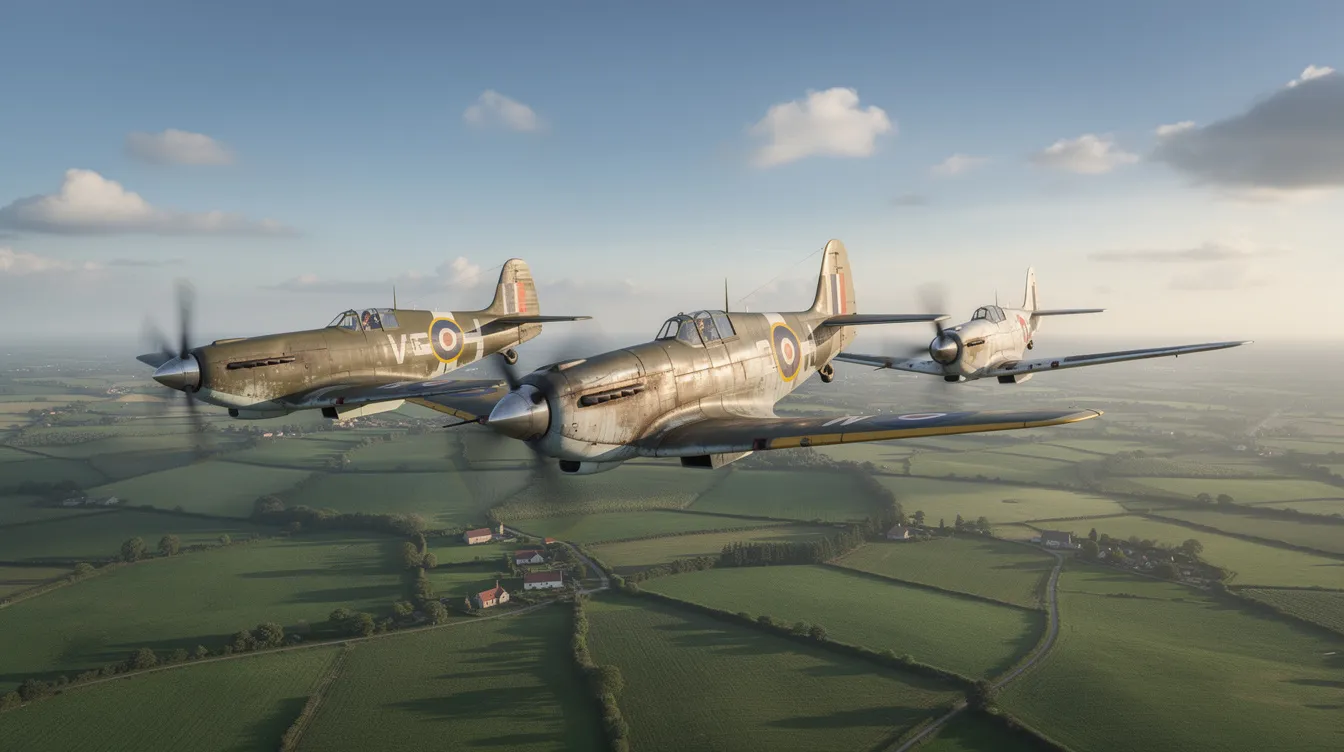
From the skies above Normandy to contested airspace over the Pacific, military aircraft have shaped the outcome of every major conflict since the early twentieth century. This military planes list brings together significant aircraft by role and era—from World War II icons and Cold War bombers to modern air-superiority fighters, multirole jets, reconnaissance and electronic warfare aircraft, tankers, maritime patrol platforms, carrier-based aviation, and unmanned systems such as the MQ-9 Reaper, alongside benchmarks like the F-15, B-52, and F-35. For military aviation enthusiasts, defense professionals, historians, and private aviation travelers, it offers a clear view of how these aircraft define modern air power and how military innovation continues to influence private jet safety, technology, and sustainability far beyond the battlefield.
Overview: Why Military Aircraft Still Shape Global Power
Military aircraft are fixed-wing or rotary-wing platforms used by national defense forces for missions spanning air superiority, strike, surveillance, transport, refueling, and special operations. They are categorized by their primary mission, yet military aircraft can perform multiple roles, depending on the mission and loadout. The United States Air Force was established on September 18, 1947, and during World War II the service had 2.4 million personnel supporting air operations worldwide. At peak strength, the USAF operates approximately 80,000 aircraft, a figure that underscores just how central aviation remains to national security.
Air forces, Navy carrier strike groups operating from aircraft carriers, and Marine Corps expeditionary wings coordinate to project power globally. Fighter aircraft contest airspace, bombers deliver strategic payloads, and transport aircraft move troops, equipment, and supplies over strategic distances. Technology developed under these programs—composite materials, fly-by-wire control systems, satellite navigation, and electronic warfare countermeasures—routinely migrates into business aviation, ultimately reaching the premium private jets that serve discerning travelers.
This list is organized by role and era, from World War icons through Cold War jets and stealth bombers to modern 5th generation fighters and emerging unmanned systems, mirroring the innovations highlighted in our guide to the best aircraft of 2026 across military, commercial, and private aviation.
Core Combat Roles: How Air Forces Use Different Types of Military Aircraft
No single aircraft fulfills every mission, because each type is optimized for the ability to handle a specific mission set. Design demands for speed, stealth, payload, and endurance often conflict, which is why militaries deploy specialized platforms across distinct roles:
Air superiority fighters - designed primarily for air-to-air combat. Examples: F-15C Eagle, Su-27 Flanker.
Multi-role fighter aircraft - capable of both air combat and ground attack in a single sortie. Examples: F-16 Fighting Falcon, Dassault Rafale, Saab JAS 39 Gripen.
Attack aircraft / close air support - reinforced airframes with heavy weapons loads for ground attack capability. Example: A-10 Thunderbolt II.
Bombers - large aircraft designed to drop massive payloads of ordnance over long distances. Examples: B-52 Stratofortress, B-2 Spirit.
Reconnaissance aircraft - gather intelligence and monitor activities using advanced sensors. Examples: U-2, RQ-4 Global Hawk.
Electronic warfare aircraft - designed to disrupt enemy sensors and communications. Example: EA-18G Growler.
Aerial refueling tankers - extend the range and endurance of other aircraft. Example: KC-135 Stratotanker.
Maritime patrol aircraft - conduct surveillance over oceans and perform anti-submarine warfare. Example: P-8A Poseidon.
Specialized aircraft can monitor enemy movements and provide tactical reconnaissance, while unmanned aircraft are used for surveillance and strike missions without risking pilots. Military helicopters provide air mobility and support operations across every branch.
Just as militaries match aircraft to mission, private aviation matches aircraft classes to traveler needs—light jets for regional hops, large-cabin long-range jets for intercontinental flights, drawing on a wide range of types of private jets for every traveler.
World War II Icons: Foundational Military Planes That Defined Air Combat
World War II transformed aviation from a supporting arm into a decisive strategic force. The interwar period had seen rapid development in airframe and engine technology, and by 1939 air power was central to every theater. Key platforms include:
Supermarine Spitfire (UK) - single engine air superiority fighter that defended Britain during the Battle of Britain, 1940–1941.
Messerschmitt Bf 109 (Germany) - backbone Luftwaffe fighter aircraft, produced in greater numbers than any other World War II fighter.
P-51 Mustang (USA) - long-range escort fighter that for the first time enabled deep bomber penetration into Germany.
B-17 Flying Fortress & B-24 Liberator (USA) - heavy bombers central to daylight strategic bombing campaigns over Europe.
B-29 Superfortress (USA) - high-altitude bomber used in the Pacific; the B-29 Superfortress was used for atomic bombings in 1945, dropped on Hiroshima and Nagasaki in August, a pivotal outcome that ended the war.
A6M Zero (Japan) - carrier-based naval fighter dominating early-war Pacific air combat until outclassed by newer American designs.
Il-2 Sturmovik (USSR) - armored ground attack aircraft crucial on the Eastern Front, produced in enormous units.
These aircraft established the doctrines of strategic bombing, long-range escort, and carrier aviation that the world would build upon for decades.
Cold War to Stealth Age: Jet Fighters, Attack Aircraft, and Strategic Bombers
After World War II, jet propulsion and nuclear weapons reshaped the operational history of air power. The Korean War and Vietnam War drove rapid development across fighters, attack aircraft, and bombers.
Fighters & air superiority:
MiG-15 vs F-86 Sabre - the F-86 Sabre was a key fighter in the Korean War, marking the first large-scale jet-on-jet air combat.
F-4 Phantom II - McDonnell Douglas twin-engine multirole fighter-bomber flown by the Navy, Air Force, and Marine Corps; heavily used in the Vietnam War.
MiG-21 - one of the most produced jet fighters in history, central to Vietnam and numerous regional conflicts.
F-14 Tomcat - Navy carrier-based interceptor with variable-sweep wings, intended for fleet defense.
F-106 Delta Dart - USAF interceptor tasked with continental air defense during the Cold War, established under Air Defense Command before its transition to Tactical Air Command and later Training Command roles.
Ground attack & close air support:
A-4 Skyhawk - light single engine attack aircraft used by the Navy and Marines in Vietnam.
A-10 Thunderbolt II - purpose-built for close air support with unmatched survivability and a 30mm cannon, entering service in the late 1970s.
Strategic bombers:
B-52 Stratofortress - in service since 1955, this Boeing-built bomber represents one of history's longest-serving military platforms, projected to fly into the 2050s.
Tu-95 "Bear" - Soviet turboprop strategic bomber central to nuclear deterrence.
B-1B Lancer - variable-geometry bomber for low-level penetration, produced by Rockwell (later Boeing).
B-2 Spirit - the first operational stealth bomber, entering service in the 1990s. The F-117 Nighthawk was used in the Gulf War in 1991, proving stealth's decisive advantage in combat for the first time.
Electronic warfare aircraft like the EA-6B Prowler evolved during this period to suppress enemy air defenses and control the electromagnetic spectrum, a capabilities set later inherited by the EA-18G Growler.
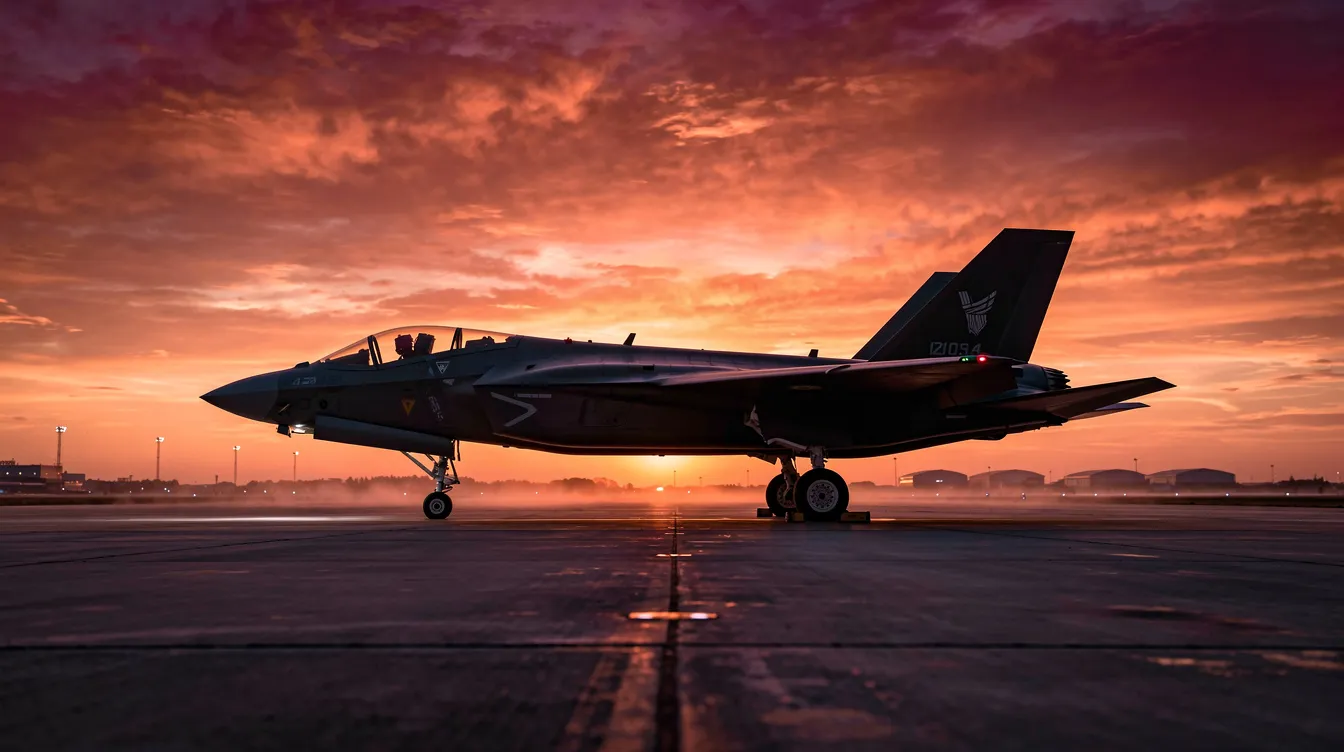
Modern Fighter Aircraft: 4th and 5th Generation Air Superiority and Multirole Jets
Fighter generations mark leaps in radar, stealth, avionics, and weapons integration. Fourth generation jets like the F-16 (General Dynamics, now Lockheed Martin) and Su-27 introduced fly-by-wire and advanced radar. Fifth-generation platforms add low-observable stealth, sensor fusion, and networked data links, just as the newest private jet innovations like the Global 8000, G700, and Falcon 10X push the boundaries of range, efficiency, and onboard technology.
US & NATO:
F-15C/E/EX Eagle - air superiority and strike variants in service since the mid-1970s; the F-15EX represents the current upgrade path.
F-16 Fighting Falcon - the world's most exported multirole fighter, with Block 70/72 as the latest production standard.
F/A-18E/F Super Hornet - carrier-based multirole fighter central to Navy strike groups.
F-22 Raptor - USAF stealth fighter optimized for first-look, first-shot air superiority, operational since the mid-2000s.
F-35A/B/C Lightning II - Lockheed Martin's joint strike fighter family, with over 1,300 aircraft delivered globally and 191 delivered in 2025 alone. The F-35A is replacing legacy F-16s in some units, while the F-35B serves Marines and the F-35C supports carrier operations.
Global scope:
Eurofighter Typhoon - European air superiority and strike fighter.
Dassault Rafale - French multirole fighter, capable of carrier operations.
Saab JAS 39 Gripen - lightweight multirole fighter popular with Nordic and export customers.
Su-27/30/35 family - Russian air superiority and multirole platforms.
Chengdu J-10 / J-20 - Chinese multirole and stealth designs advancing rapidly.
Advanced avionics, AESA radar, and data links now matter as much as raw speed. Many safety, navigation, and communication standards found in business aviation-TCAS, modern FMS, satellite comms-trace directly to systems first proven in these military jets.
Beyond Fighters: Transport, Tanker, AEW&C, and Support Aircraft
Fighters and bombers depend on a backbone of support platforms for logistics, refueling, and command and control, much as private travelers choose from different private jet sizes to match range and capacity for each mission.
Transport & airlift:
C-130 Hercules - tactical transport used by the Air Force and marines worldwide since the 1950s.
C-17 Globemaster III - Boeing-built strategic airlifter for intercontinental missions.
A400M Atlas - European airlifter bridging C-130 and C-17 capabilities.
Tankers:
AEW&C:
The USAF operates the E-3 Sentry as an AWACS system. The E-3 Sentry is an airborne warning and control system whose radars on AEW&C aircraft can distinguish targets hundreds of miles away. AEW&C systems detect aircraft and ground vehicles at long ranges, and AEW&C units perform command and control functions in air engagements. These aircraft are used for both offensive and defensive operations.
E-2 Hawkeye - carrier-capable AEW&C supporting Navy strike groups.
Reconnaissance & EW:
U-2 / SR-71 (historic) - Cold War high-altitude reconnaissance.
RC-135 Rivet Joint - signals intelligence platform for surveillance and intelligence gathering.
EA-18G Growler - dedicated electronic warfare aircraft suppressing enemy radar and communications.
Carrier and Marine Corps Aviation: Aircraft Built for the Sea
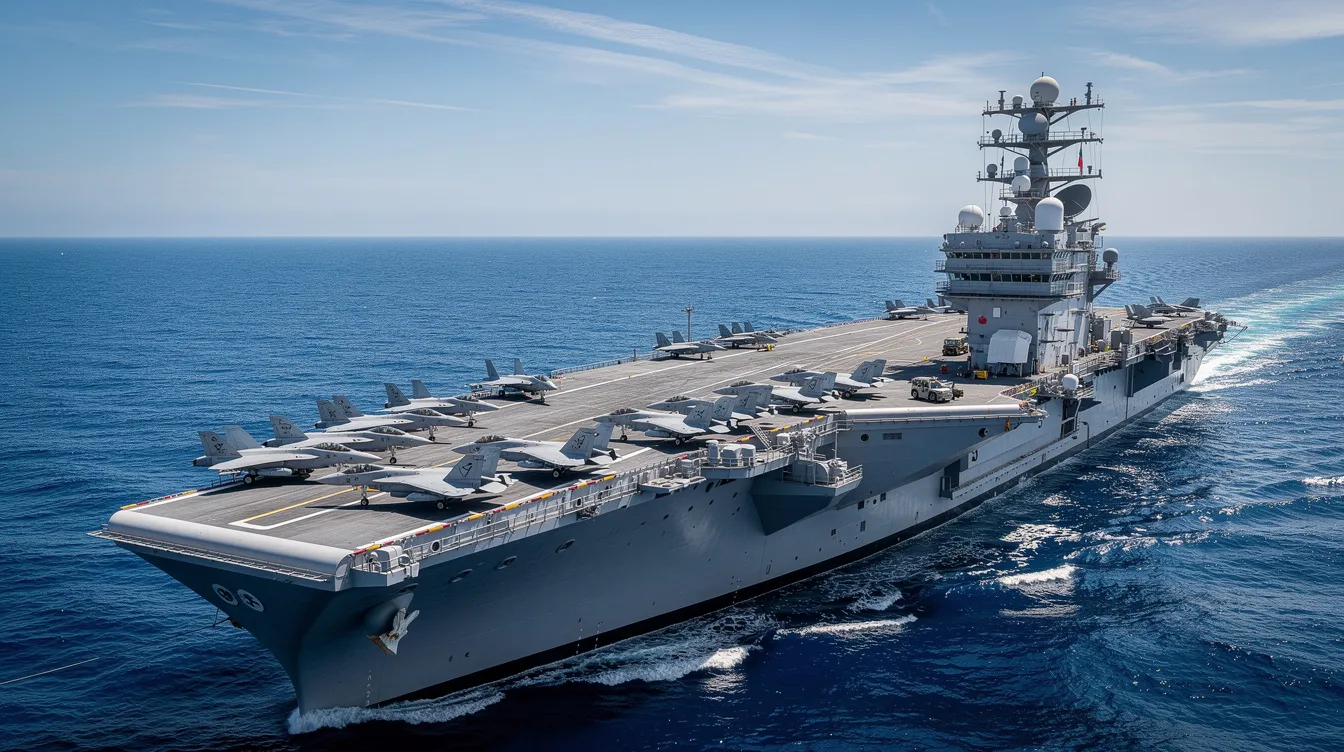
Naval aviation and Marine Corps aviation operate under unique constraints. Aircraft must land on aircraft carriers via arrested recovery, withstand catapult launches, resist saltwater corrosion, and fold wings for compact storage.
Key carrier-capable platforms include the F/A-18E/F Super Hornet, F-35C (stealth carrier variant), and historically the F-14 Tomcat and A-6 Intruder. The F-35B STOVL variant serves the Marines and USMC from amphibious assault ships and short expeditionary runways, a transition from the AV-8B Harrier II. Heavy-lift tiltrotors like the MV-22 Osprey and CH-53K King Stallion support army and Marines amphibious operations, while in private aviation large-cabin aircraft and VIP airliners serve as the best private jet options for around 20 passengers.
Carrier strike groups bring their own airfield to sea—an advantage in demand wherever land bases are unavailable. In a parallel sense, BlackJet members gain flexible access to thousands of global airports unreachable by commercial airlines.
Unmanned Systems, Electronic Warfare, and the Future of Military Aircraft
Future air power will blend crewed and uncrewed platforms, surveillance balloons, artificial intelligence, and advanced electronic warfare into networked forces operating across air, space, and cyber domains.
Unmanned systems: In parallel, business aviation continues to refine the best small private aircraft for varied missions, from efficient turboprops to very light jets.
MQ-1 Predator / MQ-9 Reaper - evolved from pure ISR to armed strike, proving that unmanned aircraft are used for surveillance and strike missions without risking pilots.
RQ-4 Global Hawk - high-altitude long-endurance reconnaissance.
Collaborative Combat Aircraft (CCAs) - "loyal wingman" concepts like the XQ-58 Valkyrie. Under the NGAD program, the USAF plans roughly 200 crewed Boeing F-47 sixth-generation fighters plus more than 1,000 CCAs.
Electronic warfare & cyber: Electronic attack capabilities to blind enemy radar and communications continue to expand, while defensive EW-missile warning, directed IR countermeasures-protects friendly forces. Integration with space-based assets and cyber represents a combination of capabilities no prior generation possessed, just as top-tier business jets now combine ultra-long range, advanced avionics, and wellness-focused cabins to rank among the top 10 best private jets in the world.
Sixth-generation programs:
NGAD / F-47 (USA) - selected in March 2025, developed by Boeing.
GCAP (UK/Italy/Japan) - targeting mid-2030s entry, with initial funding of approximately €18.6 billion.
FCAS (France/Germany/Spain) - Europe's most ambitious defense project, though facing delays. July 2025 reports indicated ongoing industrial and political misalignment.
These programs emphasize stealth, adaptive-cycle engines, AI, and optionally manned operation technologies that will filter into civil aviation over coming decades, much as earlier military test programs produced the jet engines, pressurization standards, and weather radar that private aviation relies on today and now even enable more affordable private jet options for a wider range of travelers.
FAQs: Military Planes and Their Impact on Aviation
Q1: What distinguishes a fighter aircraft from a multirole fighter?
Fighter aircraft are primarily designed for air-to-air combat to gain air superiority, such as the F-15C Eagle. Multirole fighters, like the F-16 Fighting Falcon, combine air combat and ground attack capabilities in one platform, offering greater mission flexibility.
Q2: How do military aircraft influence private jet technology?
Many safety, navigation, and communication technologies used in private jets�1such as GPS, collision avoidance systems, and satellite communications�1originated in military aviation programs, where rigorous testing and operational demands drive innovation.
Q3: What roles do aerial refueling tankers play in military operations?
Aerial refueling tankers, like the KC-135 Stratotanker, extend the range and endurance of combat and support aircraft by refueling them mid-flight, enabling longer missions without landing.
Q4: How are unmanned military aircraft used today?
Unmanned systems such as the MQ-9 Reaper perform surveillance and strike missions without risking pilots, providing persistent intelligence, reconnaissance, and precision strike capabilities.
Q5: Why is carrier-based aircraft important for naval operations?
Carrier-based aircraft like the F/A-18E/F Super Hornet operate from aircraft carriers, providing naval strike groups with flexible air power projection where land bases are unavailable, crucial for maritime dominance.
Q6: What is the significance of stealth technology in modern military aircraft?
Stealth technology reduces an aircraft's radar and infrared signature, enhancing survivability and first-strike capability, exemplified by aircraft like the B-2 Spirit and F-35 Lightning II.
Q7: How do military aircraft support sustainability efforts in private aviation?
Military advancements in efficient engines and materials inform sustainable aviation technologies. BlackJet, for example, ensures carbon-neutral flights through verified offsets, reflecting a commitment to environmental responsibility.
From Military Skies to Private Jet Experience: What This Means for BlackJet Travelers
Understanding this military planes list reveals something striking: nearly every safety and performance standard that discerning private travelers take for granted was first proven under the most demanding conditions imaginable-combat.
Pressurization, jet propulsion, GPS navigation, collision-avoidance systems, weather radar, and satellite communications all trace their operational history to military programs. BlackJet leverages this heritage directly, and understanding how private jets achieve such high safety standards helps explain why these technologies matter beyond the battlefield:
Explore how BlackJet's Jet Card programs can deliver fighter-jet levels of responsiveness with the comfort of a modern business cabin-whether your mission is New York to London, LA to Aspen, or Geneva to Dubai—and how BlackJet's premium private jet cards and membership options, including the BlackJet 25+ Hour Jet Card, structure that access with predictable pricing and aircraft choice.
Modern military aircraft safeguard nations. Modern private jets, managed by a premier provider like BlackJet, safeguard your time, control, and comfort-whether you are comparing jet card membership pricing and cost structures, evaluating the best jet cards for frequent flyers, or benchmarking options such as NetJets jet card costs and benefits and Flexjet jet card pricing. For larger groups, you might consider the best private jet options for up to 50 passengers, explore premium private jets for sale in the UK, or even plan bespoke itineraries using private jet charters in Karachi, all informed by a clear understanding of overall jet card costs across providers.


 Sign up with google
 Sign up with Apple