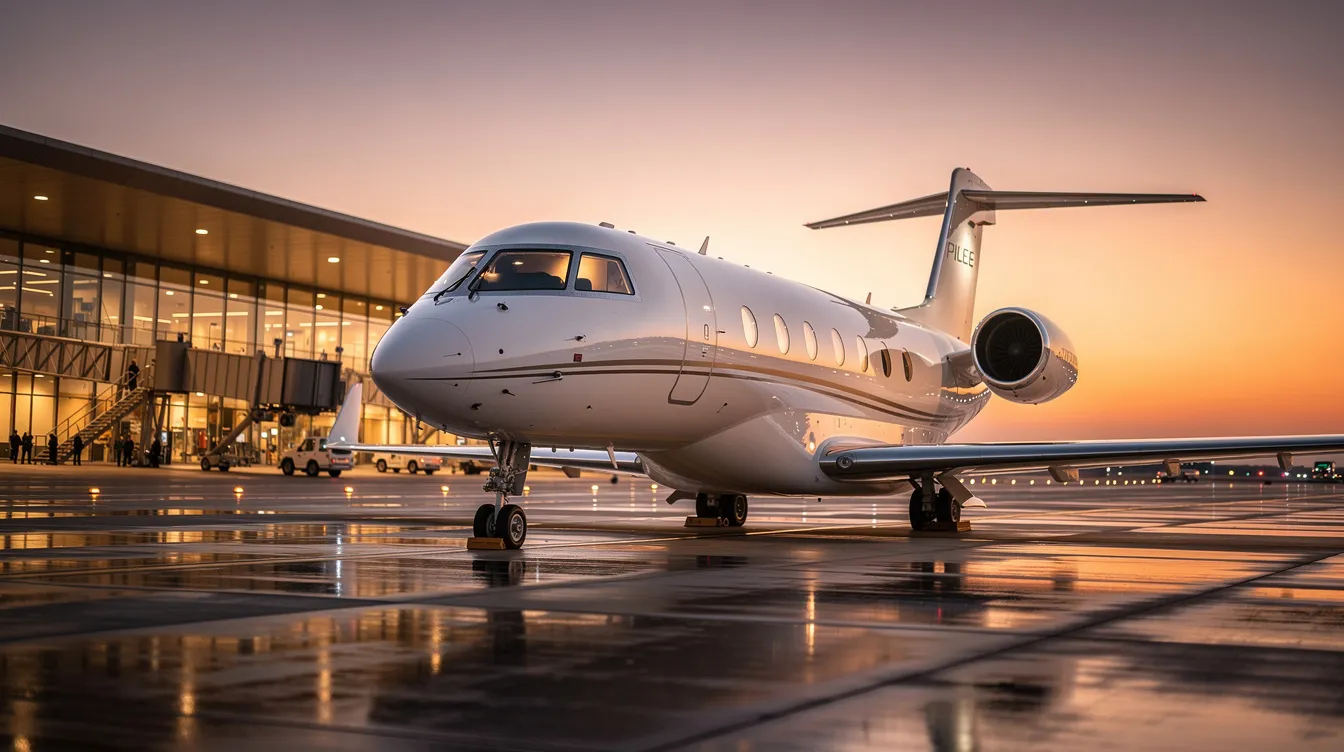
Private aviation is not merely a luxury; it is a strategic infrastructure. For the executives, entrepreneurs, and families who depend on it, the ability to reach 3,100+ airports worldwide on short notice translates directly into competitive advantage, personal security, and irreplaceable time. No company embodies this reality more than NetJets, the world's largest operator of business jets. Yet the question "what is NetJets' net worth?" has no simple answer, because the company sits inside one of the most complex conglomerates on earth. This article unpacks the data, revenue engines, fleet assets, and intangible moats that shape the NetJets net worth conversation and explains how modern jet card programs offer a complementary path into the same ecosystem.
Fast Answer: What Is NetJets' "Net Worth" Today?
NetJets is a wholly owned subsidiary of Berkshire Hathaway. It is not publicly traded, does not file standalone SEC reports, and has never published an official valuation. That means there is no ticker symbol, no market cap, and no quarterly earnings call devoted exclusively to the NetJets brand. Everything we know about its financial scale comes from Berkshire's consolidated balance sheets, segment disclosures, fleet data, and forward order announcements.
Still, the clues are substantial. NetJets owns the world's largest private jet fleet and is the market leader in fractional jet ownership, commanding roughly 13.3% of total U.S. private aviation activity and approximately 70% of net sales in the fractional ownership market. NetJets operates a fleet of over 1,100 aircraft globally and flies to over 3,100 airports worldwide, serving approximately 12,500 customers. Those numbers alone place it in a category shared by only a handful of carriers on earth.
Analysts who study the NetJets net worth question typically triangulate from several data points:
Service group revenues reported in Berkshire's annual report (aviation services within that group reached an estimated $20.7B in 2024 and $23.0B in 2025)
Fleet replacement cost, which at current OEM list prices could exceed tens of billions of dollars
Forward order books, including a deal with Embraer for up to 250 Praetor 500 jets worth over $5 billion
Pre-tax earnings and operating margins within the service group
Based on these inputs and commentary from Berkshire insiders, NetJets is estimated to be valued at over $9 billion as of 2026. At the 2023 annual meeting, Charlie Munger reportedly said the company had become "as valuable as one of the big airlines."
To put the NetJets fleet in perspective, its 1,100+ aircraft fleet rivals or exceeds the total narrowbody fleet counts of some national carriers. Consider that Turkish Airlines, one of the world's largest airlines by destinations served, operates roughly 400 aircraft. NetJets' count nearly triples that figure, albeit across smaller business jets optimized for privacy, speed, and point-to-point flexibility rather than mass passenger throughput.
By contrast, newer private aviation models like BlackJet's Jet Card programs sit at the opposite end of the capital spectrum:
Both models serve the same core demand, but their balance sheets, and therefore their implied valuations, look fundamentally different.
How NetJets Makes Its Money: Revenue Engines Behind the Valuation
NetJets is an industry leader in private aviation and the fractional ownership business. Its revenue model is built on multiple interlocking streams, each contributing to the recurring cash flow that underpins any serious estimate of its enterprise value.
Fractional Ownership
NetJets pioneered the fractional ownership model in 1986, and it remains the company's backbone. Fractional ownership allows clients to buy shares of a specific aircraft type, typically a 1/16th share or larger, granting a set number of flight hours per year (roughly 50 occupied hours for a 1/16th share). The process involves:
This structure creates predictable, multi-year contracts with high switching costs. Fractional ownership also reduces the overhead of maintenance and staffing for the individual owner, because those responsibilities fall to NetJets' centralized operations. Understanding fractional jet ownership depreciation and its impact is crucial here, since long-term asset values and tax treatment shape the true cost of these shares. NetJets accounts for 70% of net sales in the fractional ownership market, a dominance that only NetJets offers at this scale.
Jet Cards and Prepaid Programs
For travelers who fly fewer flight hours annually or prefer flexibility over equity commitment, NetJets and its former subsidiary, Marquis Jet Partners, developed prepaid card products. These jet card programs lock in hourly rates for a block of hours (often 25 or 50) across selected cabin classes. Pricing ranges from approximately $160,000 for a light jet card to over $325,000 for heavy-cabin access, broadly in line with what you see when you break down NetJets jet card costs and pricing structures.
Leases and Whole-Aircraft Programs
NetJets also offers operating lease liabilities and lease structures for corporations and flight departments. These expand the addressable market and smooth utilization across the core fleet and, in many cases, can be paired with tax benefits of fractional jet ownership that materially offset the headline cost of access.
Ancillary Revenues
Executive jet management services, pilot training synergies with FlightSafety International, international programs through NetJets Europe, and maintenance services all contribute to ancillary revenue. In the broader landscape of top private jet companies for luxury travel and service, these adjacent offerings are increasingly important differentiators. NetJets generates an estimated annual revenue of $6 billion to $8 billion across these combined streams.
In contrast, asset-light models like BlackJet focus on jet card programs without fleet ownership. Clients prepay for hours across light, midsize, and super-mid jets, gaining private jet access without the depreciation exposure or shared aircraft repurchase liabilities that come with fractional shares. A detailed look at jet card cost structures across providers like NetJets and Sentient shows how these programs trade capital intensity for price transparency and flexibility. This capital-light approach influences valuation differently: higher multiples on smaller revenue bases, driven by technology, safety certification, and customer experience rather than hard assets.
NetJets Within Berkshire Hathaway: From 1998 Deal to a Trillion-Dollar Conglomerate
Berkshire Hathaway acquired NetJets, then called NetJets (originally Executive Jet Aviation), in 1998 for approximately $725 million in cash. Warren Buffett had been a fractional share owner himself and saw enormous potential in scaling the shared aircraft ownership programs model nationwide and eventually worldwide.
Within Berkshire's financials, NetJets is grouped in the service group, sometimes labeled "Service and Retailing," alongside businesses as varied as FlightSafety International, Dairy Queen, TTI, and XTRA. Because Berkshire does not break out standalone financials for NetJets aviation, its net worth is woven into the larger conglomerate rather than evaluated in isolation. Investors seeking exposure do so through Berkshire Class A (BRK.A) or Class B (BRK.B) shares; there is no separate NetJets stock.
NetJets' operational size expanded significantly following a multi-decade growth phase under Berkshire's ownership. Key milestones include:
Year | Event |
|---|
1998 | Berkshire acquires Executive Jet Aviation for $725M |
2002–2005 | European expansion; heavy losses in NetJets Europe |
2006 | Revenues increased 596% since 1998; fleet dominance established |
2009 | Record $711M loss; Buffett calls it a major problem |
2010–2011 | Restructuring; return to profitability |
2015–2024 | Sustained growth in aviation services revenue |
2025 | Service group revenues reach $23.0B |
Berkshire Hathaway's support helped NetJets avoid bankruptcy in its early years under the conglomerate's umbrella. Buffett acknowledged at the 2009 annual meeting that the company had been his "biggest mistake," but maintained conviction that its long-term moat in private aviation would eventually justify the investment. That patience, backed by Berkshire's balance sheet, is the parent company's advantage that no nearest competitor can replicate.

Financial Performance: What Berkshire's Reports Reveal About NetJets' Worth
While NetJets doesn't publish full standalone financials, Berkshire's annual filings provide valuable clues about its profitability trajectory and scale. The narrative arc is one of a capital-intensive headache that gradually became a disciplined, growing business jet platform.
Growth and Crisis Years (1998–2009)
After the acquisition, NetJets expanded aggressively. By 2006, its revenues had increased 596% since 1998. NetJets' fleet size was 487 planes in the U.S. by 2007, and global operations were expanding. But costs outran revenue. NetJets operated at a pre-tax loss of $157 million cumulatively from 1998 to 2009. The nadir came in 2009: NetJets reported a $711 million loss, primarily attributable to bloated European operations, rising debt, and the financial crisis. NetJets' debt increased from $102 million to $1.9 billion since 1998, a trajectory that alarmed even Buffett.
Restructuring and Recovery (2010–2019)
Under new leadership, NetJets attacked costs. By 2011, the company had achieved pre-tax earnings of $227 million after restructuring, a dramatic reversal. Fleet utilization improved, certain other obligations were renegotiated, and the focus shifted to high-margin fractional owners and away from unprofitable routes. Higher maintenance discipline and tighter procurement partially offset continued pressure from higher flight crew costs and depreciation.
Post-COVID and Recent Performance (2020–2025)
NetJets experienced a 27% decline in customer flight hours in 2020 due to the pandemic, but margins proved resilient as fixed costs were managed carefully. By 2024, NetJets' revenues increased 9.1% year-over-year, driven by more aircraft in shared ownership programs and increased demand. However, NetJets' service group pre-tax earnings fell to $2.31 billion in 2024, reflecting higher maintenance, fuel, and crew costs. In 2025, service group revenues climbed to $23.0B with pre-tax earnings rebounding to approximately $2.7B, even as alternative models like unlimited private jet membership programs experimented with very different revenue and margin structures.
Cost Structure and Margin Realities
The cost side of the ledger is relentless for an asset-heavy operator:
Aircraft depreciation on a fleet of 1,100+ planes
Fleet renewal and estimated payments for new aircraft orders
Pilot training investments and higher flight crew wages
Safety and regulatory infrastructure
Airport facilities and maintenance complexity
These factors compress return on invested capital compared to asset-light models. Jet card providers and charter brokers like BlackJet carry fewer hard assets but rely on network quality, technology, and safety certification to justify premium pricing, resulting in a fundamentally different margin profile.
The financial resilience, however, tells a valuation story: long-term contracts, high retention among fractional owners, and a reputation for operational excellence, safety, and service provide intangible value beyond what near-term earnings alone suggest.
Fleet, Orders, and Assets: Estimating NetJets' Asset Base
When estimating NetJets' net worth in practical terms, the physical fleet, long-term OEM orders, and supporting infrastructure are arguably the most tangible components. NetJets operates the finest fleet in business aviation, not by accident but by sustained, multi-billion-dollar investment.
Current Fleet Picture
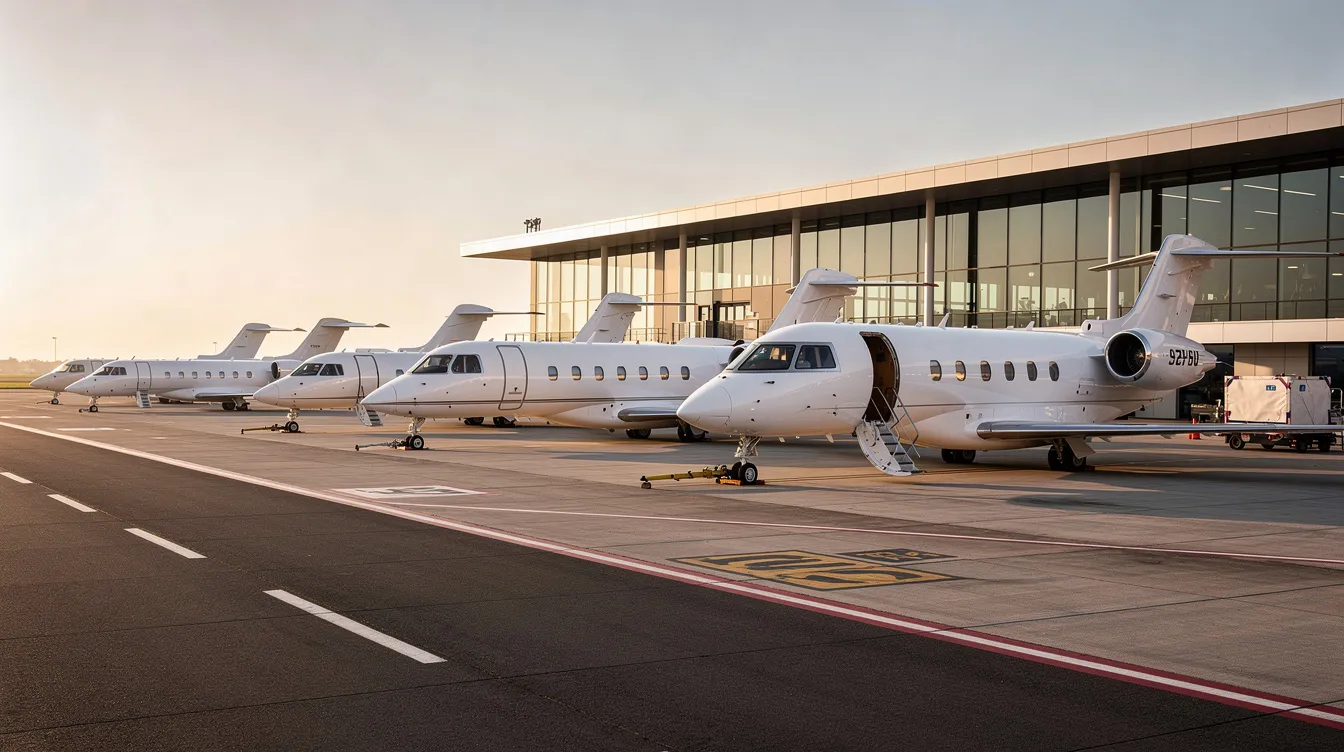
NetJets operates a fleet of over 1,100 airplanes globally, spanning light jets, midsize jets, super-midsize, and large-cabin corporate jets. The core fleet includes:
Cessna Citation family aircraft (Latitude, Longitude, XLS, Sovereign)
Embraer Phenom 300 and Praetor 500 models
Bombardier Globals (5500, 6000, 7500, 8000)
This diversity allows the NetJets program to match a specific aircraft type to each mission, whether it is a two-hour domestic hop or a transatlantic crossing.
Forward Orders
NetJets plans to add up to 250 Praetor 500 jets, part of a deal with Embraer valued at over $5 billion, with deliveries that began in 2025. Additional commitments with Bombardier cover larger jets like the Global 7500 and Global 8000 for long-range missions. NetJets regularly enhances its fleet with dozens of new aircraft deliveries each year, and in 2024 alone, NetJets delivered its 50th new private jet, valued at $1.3 billion collectively for that delivery tranche. The company is also taking delivery of ongoing Cessna/Citation renewals in the light and midsize categories while phasing out older used aircraft like aging Citation XLS models by 2027.
Replacement Cost
If one were to replicate NetJets' fleet at current OEM list prices, the cost would stretch into the tens of billions of dollars. A single Praetor 500 lists at approximately $19–20 million. A Bombardier Global 7500 exceeds $75 million. Multiply across 1,100+ airframes, and the fleet value alone dwarfs many public companies' entire enterprise values.
Strategic Infrastructure
Beyond aircraft, NetJets opened private terminals in multiple U.S. cities, including Las Vegas, and invested in ramp space at key airports like Teterboro and Palm Beach. NetJets aims to enhance customer experience with new infrastructure, including dedicated lounges, expedited security, and ground transport coordination. These facilities are strategic assets that enhance both customer satisfaction and the overall enterprise value.
In contrast, asset-light providers like BlackJet concentrate their value in technology platforms, customer relationships, sustainability frameworks, and safety protocols rather than in owned aircraft and hangars, with economics defined by jet card pricing models and membership structures rather than balance-sheet aircraft values.
The Warren Buffett Effect: Management, Moat, and Perceived Value
Warren Buffett has logged thousands of flight hours on NetJets aircraft. His personal endorsement, as both an investor and a customer, has elevated the NetJets brand among high-net-worth individuals and corporate boards in ways that no marketing budget could replicate.
Yet the Buffett story is also one of candor. In 2009, he publicly acknowledged that NetJets had been a major problem, calling the escalating losses and operational missteps of the early 2000s his "biggest mistake." The turnaround that followed, led by executives who tightened cost controls, reduced debt, and renewed focus on safety and service, restored NetJets' contribution to Berkshire's value.
The economic moat around NetJets rests on four pillars:
Fleet scale and diversity: Only NetJets can guarantee access to larger jets and light cabins alike, across 3,100+ airports, often on just hours' notice.
Pilot training and safety infrastructure: Deep collaboration with FlightSafety International creates operational excellence that competitors struggle to match.
Long-term contracts: Fractional shares lock in multi-year commitments and high retention among fractional owners.
Berkshire's capital strength: The ability to place multi-billion-dollar aircraft orders and absorb cyclical downturns without financial distress.
Forbes noted in 2026 that NetJets' enterprise value is now seen internally as comparable to a major airline, a remarkable transformation from the company Buffett once called his costliest error.
Newer, technology-led players like BlackJet build trust differently: through transparent safety certification, carbon-neutral commitments, and digital booking platforms rather than conglomerate backing. Both approaches serve the same fundamental need, but they arrive at perceived value through different mechanisms.
NetJets vs. Other Private Aviation Models (Including Jet Cards)
For travelers weighing how NetJets' scale relates to the private jet card comparisons they encounter, here is how the major models stack up:
Model | Capital Commitment | Fleet Exposure | Flexibility | Best For |
|---|
Fractional Ownership (NetJets) | High (share purchase + fees) | Direct asset ownership | Guaranteed availability | 50+ hours/year, predictable routes |
Full Jet Ownership | Very high | Single aircraft | Maximum control | 200+ hours/year |
On-Demand Charter | None upfront | None | Per-trip pricing | Occasional travelers |
Jet Card (e.g., BlackJet) | Moderate (prepaid block) | None | Choose aircraft type per trip | 25–75 hours/year |
Flexjet is NetJets' second-largest competitor in fractional ownership, but no nearest competitor matches NetJets' fleet size or geographic reach. A closer look at Flexjet jet card costs and options highlights how rivals position themselves on flexibility and pricing rather than sheer scale. NetJets holds a 13.3% share of U.S. private aviation and remains the largest operator in the fractional space.
Scenario: A board member flying monthly between New York and Dallas (roughly 50–60 hours per year) might compare a NetJets 1/16th fractional share, requiring an upfront investment north of $850,000 plus monthly management fees and hourly charges, against a BlackJet Jet Card offering 50 prepaid hours in a midsize cabin. A breakdown of 50-hour jet card costs and value trade-offs shows why many flyers at this utilization level gravitate toward cards instead of equity. The jet card eliminates shared aircraft repurchase liabilities, depreciation exposure, and operating lease liabilities, while offering the freedom to choose the right aircraft type for each leg.
For valuation purposes, markets typically assign high multiples to proven recurring-revenue platforms with strong safety records, whether they own the fleet or orchestrate access to it.
Safety, Training, and Sustainability: Intangible Drivers of NetJets' Value
In private aviation, perceived value and net worth are not just about fleet size or revenue. Safety protocols, pilot training depth, and sustainability commitments are intangible assets that directly influence premium pricing, customer retention, and brand equity.
NetJets has long positioned itself as the industry leader in safety:
For frequent flyers comparing options, understanding the best jet cards for high-usage travelers is part of assessing how these safety and service promises translate into real-world programs. These practices increase the lifetime value of each customer relationship and thus impact any reasonable estimate of NetJets' overall enterprise value.
The industry's shift toward Sustainable Aviation Fuel (SAF) and emissions reductions is reshaping competitive dynamics. NetJets has made investments in SAF and carbon-awareness programs, while companies like BlackJet have gone further by building carbon-neutral flights into their jet card programs by default, at no extra cost to the traveler. For sophisticated clients, this sustainability promise itself is a value driver.
Technology enhancements round out the intangible stack:
Advanced scheduling platforms
Connectivity upgrades (Starlink, Gogo partnerships)
Real-time digital booking tools
Mobile support apps
These non-tangible assets—safety, certification, sustainability, and technology—elevate both NetJets' and its peers' perceived net worth well beyond what physical aircraft values alone suggest.
Future Outlook: What NetJets' Net Worth Could Look Like by 2030
Record demand for private jet travel post-COVID, ongoing commercial airline disruptions, and high retention among existing users all point toward continued growth in private aviation. At the same time, large-group movements are increasingly handled through charter solutions for around 100 passengers, blurring the lines between business aviation and bespoke commercial service. NetJets' scale positions it to capture a disproportionate share of the expanding market.
Key macro drivers affecting future NetJets net worth include:
Corporate profitability and GDP growth are fueling demand for executive jet travel
Supply constraints in business jet production from OEMs like Bombardier and Embraer
Regulatory pressure on emissions, which could raise costs but also favor well-capitalized operators
Pilot shortages and recent pay increases across the industry are compressing margins in the short term, but reinforcing the need for operators with strong safety cultures
Product mix is evolving:
More entry-level new aircraft for shorter regional missions
Sustained investment in long-range jets for international routes
Flexible products like leases and jet card programs to smooth utilization and lower the barrier to entry
For some owners, that may mean weighing the features of a 15 million dollar private jet against the capabilities of a more capable 20 million dollar intercontinental aircraft before deciding whether to own or simply access similar cabins via cards.
In a continued growth scenario, aviation services revenues within Berkshire's service group could reach $30–35 billion by 2030, assuming 6–8% compound annual growth. Even in a mild recession, NetJets' contracted hours, diverse fleet, and Berkshire backing provide a resilient floor. NetJets is likely to remain the flagship fractional ownership and private jet brand, while more agile, tech-focused card providers like BlackJet grow alongside it, offering complementary pathways into private aviation for a broader audience.
How BlackJet Fits In: Jet Cards as a Capital-Light Path to Private Jet Access
Unlike NetJets, BlackJet does not own a massive fleet. Instead, it focuses on premium jet card programs that provide private jet access without fractional ownership or aircraft acquisition costs. The model is built on three principles:
Flexibility
Safety
Sustainability
BlackJet's core offering includes 25- and 50-hour Jet Card programs that lock in hourly rates across multiple aircraft cabin classes, from light to large cabin, similar in structure to other 25-hour jet card guides that outline features and costs. Key value pillars include:
This model appeals to frequent but not ultra-heavy travelers: business owners, private equity partners, and affluent leisure travelers flying several times a year who want privacy and flexibility without tying up capital in fractional shares, and who may ultimately graduate into a dedicated BlackJet 25+ Hour Jet Card solution as their flying increases.
Example: A European founder making regular London–New York trips might compare the $2M+ capital commitment of a large-cabin NetJets fractional share against a BlackJet Jet Card offering transatlantic access at a locked-in hourly rate, with no residual risk and the freedom to fly a different aircraft type on a domestic leg.
Discover how a BlackJet Jet Card can offer premier private jet access without the capital intensity of fractional ownership. Explore premium jet access →
FAQ: NetJets Net Worth, Investment, and Private Jet Alternatives
Below are concise answers to the most common questions about the NetJets net worth, investment exposure, and private aviation alternatives, including how to interpret jet card cost-per-hour comparisons and broader jet card pricing guides across providers.
Is NetJets publicly traded, or can I buy NetJets stock directly?
No. NetJets is a wholly owned subsidiary of Berkshire Hathaway. There is no separate stock listing. You cannot purchase NetJets shares on any exchange.
How can I indirectly invest in NetJets' value?
Through ownership of Berkshire Hathaway stock (BRK.A or BRK.B). This gives indirect exposure to the service group's performance, including aviation services and NetJets.
What is the estimated net worth of NetJets within Berkshire Hathaway?
Analysts and Berkshire insiders have suggested an implied enterprise value in the $9 billion+ range as of 2026. This is an estimate, not a published figure, since NetJets is privately held within the conglomerate.
How does NetJets make money from fractional ownership and jet cards?
Fractional ownership generates capital upfront through share purchases, recurring monthly management fees, and hourly flight charges. Jet card products provide prepaid blocks of flight hours at premium hourly rates; a detailed 100-hour jet card cost breakdown illustrates how these programs can represent millions in predictable revenue from a relatively small group of high-usage clients. Together, these create a diversified, high-retention revenue base.
How is NetJets different from a jet card provider like BlackJet?
NetJets owns and operates over 1,100 aircraft, offers fractional ownership, and shoulders asset risk, including depreciation and shared aircraft repurchase liabilities. BlackJet focuses on prepaid jet card programs with no fleet ownership, leveraging vetted operator networks and digital tools to deliver flexible private jet access with lower capital commitment.
How do safety standards and carbon-neutral programs affect the value of private aviation brands?
Strong safety protocols lower insurance costs, enhance trust, and support premium pricing, all of which increase customer lifetime value and brand equity. Carbon-neutral programs, like those built into BlackJet's jet card by default, are increasingly expected by sophisticated travelers and contribute to differentiation and long-term brand value.
Can I access private aviation benefits without buying a NetJets share?
Yes. On-demand charter, jet cards, and lease programs all provide private jet access without fractional ownership. You can even buy a single seat on a private jet via shared and semi-private services if you only need occasional access. BlackJet's jet card model, for example, offers 25- or 50-hour blocks across multiple cabin classes with guaranteed carbon-neutral flying, no management fees, and no ownership risk.
What role does NetJets' global leader status play in Berkshire's overall valuation?
NetJets is the largest operator of business jets in the world and a core contributor to Berkshire's service group revenues and cash flow. While its standalone net worth is not published, its scale, fleet value, and recurring revenue base enhance the overall valuation of a conglomerate now worth over $1 trillion.
For high-net-worth travelers and executives, the key question is not simply what NetJets is worth, but which model—fractional ownership, jet cards, or charter—best aligns with your flight profile and capital strategy. Some may prioritize minimizing capital outlay by focusing on the cheapest private aircraft and budget-conscious options, while others simply want to know what the cheapest private jet options look like today. NetJets' net worth is a benchmark for the sector's scale and potential. But access to the same caliber of private aviation no longer requires that level of capital commitment.
Conclusion: NetJets' Enduring Value in Private Aviation
NetJets stands as a towering figure in private aviation, embodying the strategic advantages of scale, safety, and operational excellence. Its estimated net worth of over $9 billion reflects not only the immense physical asset base of more than 1,100 aircraft but also the intangible moats crafted through decades of innovation in fractional ownership, pilot training, and customer service. Backed by Berkshire Hathaway’s financial strength, NetJets continues to expand its fleet and infrastructure, securing its position as the market leader amid rising demand and evolving sustainability expectations.
For discerning travelers and corporate clients, NetJets offers unparalleled access and reliability, albeit with significant capital commitment. Meanwhile, capital-light alternatives like BlackJet’s Jet Card programs provide flexible, carbon-neutral private jet access without the burdens of ownership. Together, these models illustrate the diverse pathways to private aviation, each with unique value propositions.
Ultimately, NetJets’ net worth is more than a number—it represents a legacy of trust, innovation, and premium service that defines the future of executive travel. Whether through fractional shares or curated jet cards, private aviation remains an essential asset for those who value time, safety, and seamless global mobility.
Discover how BlackJet can complement your private aviation strategy with flexible, sustainable jet card access. Explore premium jet access →


 Sign up with google
 Sign up with Apple