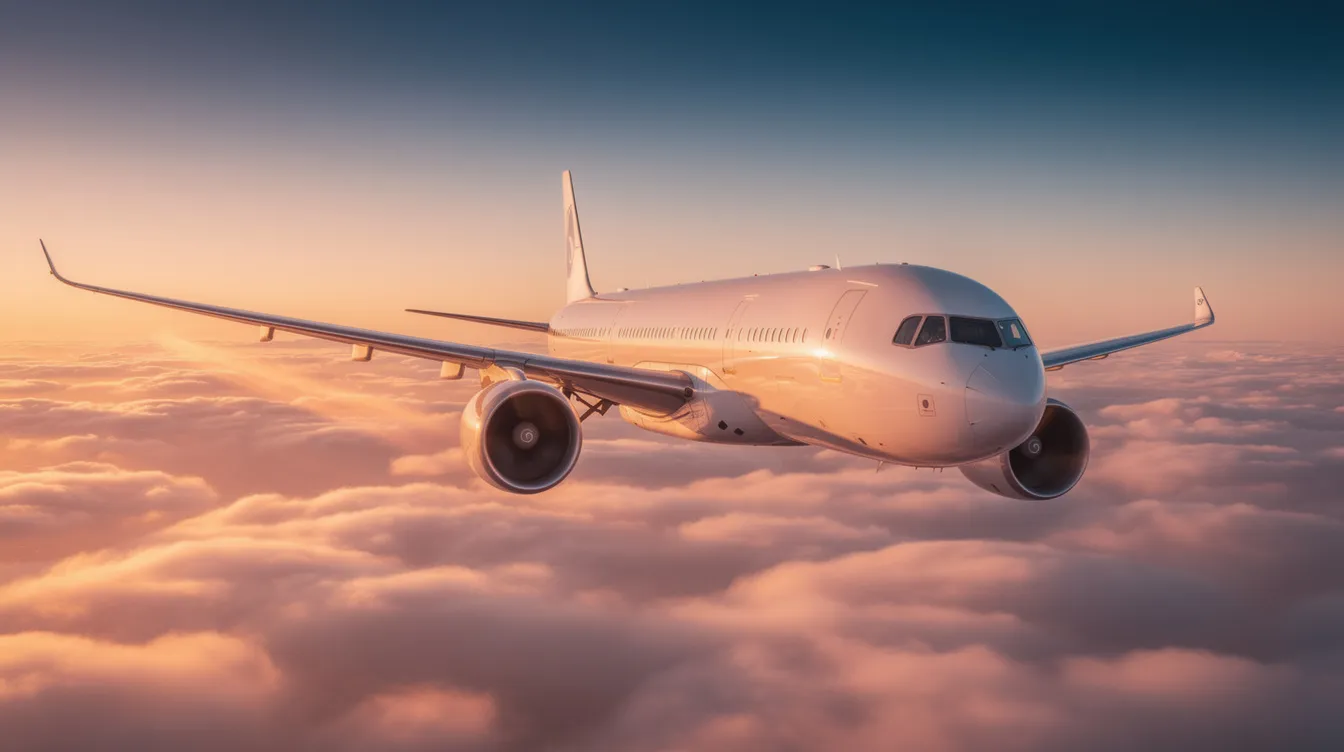
The commercial aviation sector is undergoing a massive transitional phase, balancing sustainability and technology—and for those who fly privately, the ripple effects are impossible to ignore. From the widebody Boeing 777X pushing toward its first delivery to the Airbus A321XLR already connecting cities that were once out of single-aisle range, the newest plane designs arriving today and tomorrow are resetting expectations for every traveler who values comfort, speed, and discretion.
This guide unpacks what these aircraft bring to the table, why they matter even if you never board one, and how BlackJet members can leverage the same wave of innovation through smarter private jet access.
Executive overview: what is the "newest plane" today?
As of mid-2026, the title of newest airliner in active passenger service belongs to the Airbus A321XLR, which entered service in November 2024 with Iberia and Aer Lingus before expanding to additional airlines across Europe and North America. Alongside it, the Comac C919 first flew commercially in May 2023, marking China's entry into the narrowbody competition. On the widebody front, recent Airbus A350-900 and A350-1000 deliveries continue, while Boeing's 777X remains the flagship next-generation airplane still working through certification flights ahead of a planned 2027 service entry.
Why does any of this matter to a frequent business or high-net-worth traveler? Three reasons stand out. First, quieter cabins and lower cabin altitude translate to arriving less fatigued—critical when a meeting or family event waits on the other side. Second, longer range eliminates layovers on routes that previously demanded a stop, saving hours of ground time. Third, improved fuel efficiency and lower emissions align with growing personal and corporate ESG commitments.
These advances play differently depending on how you fly. Scheduled airlines deploy the newest planes across dense routes to maximize seat economics. Private aviation and Jet Card users, by contrast, gain access to equivalent technology through modern large-cabin and ultra-long-range business jets that share design DNA-composites, engine architecture, environmental systems-with these commercial platforms. BlackJet clients, for instance, can pair a private jet sector to a hub with a premium commercial flight on the latest widebody for the transoceanic leg, achieving a next-generation experience from door to door that mirrors the capabilities of the newest private jet models.
The sections ahead start with a close look at the Boeing 777X family—its proposed variants, its history at the Dubai Airshow, its flight deck and cabin innovations—then survey other newest airliners, trace how their technology shapes private jet design, and explain how a Jet Card model lets you ride each wave of progress without the burden of ownership.
Boeing 777X at a glance: the newest long‑haul giant
The Boeing 777X is Boeing's newest widebody family, designed to succeed the commercially dominant 777-300ER and serve the world's highest-demand long-haul routes. Led by the 777-9 variant, the program achieved its first flight in January 2020 and has since accumulated thousands of hours of flight test data. Boeing now expects the 777X to be certified in 2027, with first delivery to launch customer Lufthansa following shortly after.
Here is what defines this airplane as a generational leap:
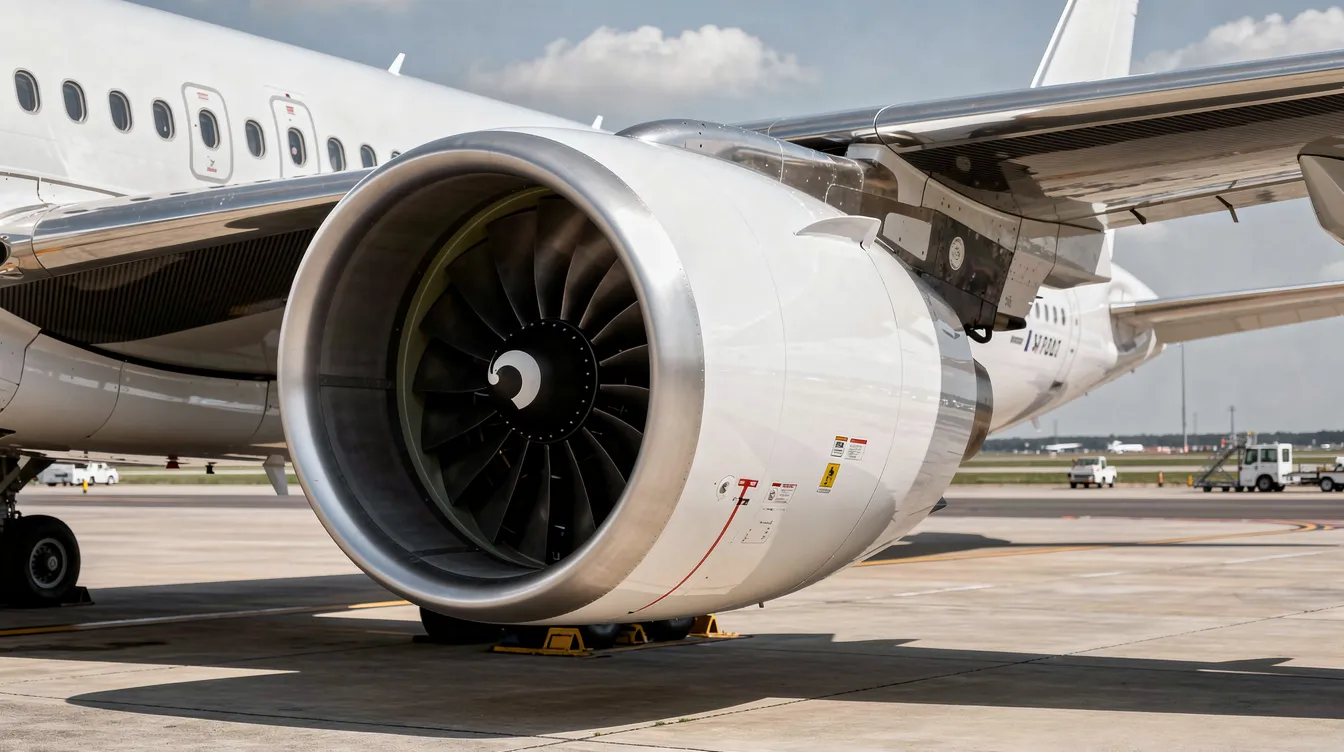
It is a twin-engine design powered by the GE9X, a new engine option developed by GE Aviation that produces 134,000 pounds of thrust-the most powerful commercial jet engine ever built-while delivering dramatic gains in fuel burn reduction through improved materials and aerodynamics.
The Boeing 777-9 seats over 400 passengers in a typical airline layout, with a range of 7,285 nautical miles, making it capable of connecting virtually any global city pair nonstop.
Its composite wing is the largest Boeing has ever produced, and it features folding wingtips—a first for a commercial airliner—that fold upward on the ground for airport gate compatibility and extend in flight for maximum aerodynamic efficiency.
Boeing projects approximately 20 percent lower fuel burn and emissions compared to the aircraft it replaces, alongside a 40 percent smaller noise footprint.
As of mid-2026, the test fleet continues final certification flights with the FAA and EASA. The final configuration of avionics and systems is being locked down. Key customers include Emirates (the largest operator-to-be, with roughly 270 aircraft on order), Qatar Airways, Singapore Airlines, Cathay Pacific, British Airways, and Air India, among others. More than 600 firm orders sit in the backlog, though none have been delivered yet.
For private travelers, the 777X matters even if you never sit in row 14. Its cabin technologies—lower noise, better pressurization, improved humidity-set the standard that trickles directly into the next generation of large business jets. And for those considering Boeing's full range of aircraft, a future VIP or BBJ-configured 777X could offer the ultimate in private widebody travel.
The 777X family and proposed variants (777‑8, 777‑8F, 777 Business Jet)
Beyond the headline 777-9, Boeing has planned a flexible product family with several proposed variants designed to address different corners of the market.
The 777-8 is the shorter-fuselage, ultra-long-range sibling. It carries 384 passengers in a typical layout and is designed for routes exceeding 14,000 kilometers nonstop—city pairs like Dubai–Los Angeles or Sydney–London that demand range over raw capacity. Its entry into service is expected to follow the 777-9 by roughly a year.
The 777-8F is a dedicated freighter variant, offering a structural payload of approximately 110 tonnes over around 5,000 nautical miles. It targets replacement demand for aging 747 freighters and older 777F models, with cargo demand driving significant interest. Airlines including Cathay Pacific and others have placed freighter orders, and first delivery of this variant is planned around 2028.
The Airbus A350F also aims to combine modern freighter technology with high efficiency for cargo operations, positioning it as direct competition in this space.
Potential Boeing Business Jet derivatives based on the 777-8 or 777-9 platform would cater to heads of state, sovereign governments, and ultra-high-net-worth individuals. These VIP aircraft could support bespoke cabin layouts: private bedrooms, conference rooms, full dining areas, and aero-medical suites—all within a fuselage wide and long enough to rival a small apartment, directly comparable to some of the largest private jets for sale and charter.
Market drivers include sustained cargo growth, the retirement cycle of older large freighters, and sovereign VIP demand for ultra-long-range platforms that can circle half the globe without stopping.
Some of these variants remain in the design phase or at an early production stage, with final assembly timelines still fluid. But the two variants at the heart of the passenger program—the 777-9 and the 777-8-are the ones that will reshape airline fleet strategies and, by extension, what "premium" looks like in long-haul travel for the rest of this decade.
Dubai Airshow milestones: where the Boeing 777X stole the spotlight
The Dubai Airshow has long served as the world's stage for widebody orders, and the Boeing 777X story is inseparable from it. Emirates, by far the program's largest customer, has used the biennial event to make a series of commitments that effectively underwrote the airplane's development.
Key moments include:
2013 Dubai Airshow: Boeing formally launched the 777X program, announcing record-breaking orders worth more than $100 billion at list prices. Emirates, Etihad Airways, and Qatar Airways were among the first to sign, anchoring the program with Gulf-carrier demand for high-capacity, long-range widebodies.
Subsequent shows (2015–2023): Boeing used each edition to update timelines, showcase the first prototype progress, display the folding wingtip mechanism in static displays, and demonstrate next-generation cabin mockups with larger windows and advanced lighting. Emirates placed top-up orders at the 2023 show, raising its total 777X commitment to roughly 205 aircraft across two variants.
At these events, cabin early designs and technology demonstrations—including new seat configurations, in-flight connectivity systems, and environmental control upgrades—generated significant media coverage and industry competition with Airbus.
For BlackJet clients, these showcases parallel the kind of innovation they experience firsthand: the latest cabin features in premium long-haul commercial flights, or the newest aircraft available through private charter that share many of the same design principles.
Inside the 777X flight deck and passenger cabin
The 777X flight deck represents an evolution of Boeing's 777 and 787 Dreamliner cockpit heritage, blending proven architecture with modern avionics systems that improve both safety and pilot workload management.
Key flight deck features include:
Large touchscreen digital displays replace many legacy analog and mixed-format instruments, giving the pilot an integrated view of navigation, engine performance, and systems health.
Head-up displays (HUD) and enhanced vision systems project critical flight data directly into the pilot's line of sight, improving situational awareness during low-visibility approaches.
Advanced fly-by-wire systems provide flight envelope protection while maintaining the handling characteristics that experienced Boeing pilots expect, reducing training time through cockpit commonality.
Automation in aviation increasingly provides pilots with predictive weather information and flight-path optimization, and the 777X cockpit integrates these capabilities natively.
The passenger cabin raises the bar just as decisively:
A wider cross-section than competing widebodies allows airlines to offer more personal space per seat-or wider aisles, depending on configuration—across all cabin classes.
Larger windows, improved pressurization (lower effective cabin altitude), and better humidity control reduce passenger fatigue on flights exceeding ten hours.
Quieter interiors result from the GE9X's acoustic treatment and advanced sound insulation throughout the fuselage.
Flexible seating configurations let airlines tailor first, business, and economy products to different routes and markets, with modular galleys and lavatories.
These same features—lower cabin altitude, superior noise insulation, advanced environmental control—are mirrored in modern long-range business jets that BlackJet clients regularly fly, underscoring how airliner and private jet design increasingly draw from the same technology well and align with the capabilities of the top private jets in the world.
Newest airliners already flying passengers
While the 777X remains in testing, several other aircraft already represent the newest plane technology available to travelers today. These airliners are actively reshaping global route networks and raising baseline expectations for in-flight comfort.
Airbus A321XLR: entered service in November 2024 with a range of approximately 4,700 nautical miles—enough to serve transatlantic routes like Madrid–Boston or Dublin–Miami in a narrowbody frame. Fuel efficiency gains of 15–20 percent over earlier A321neo versions make it economically viable on thinner routes that previously required a widebody.
Airbus A220-100/300: one of the quietest single-aisle aircraft in operation, with composite fuselage construction, wider seats for its class, and strong efficiency on regional and thin international routes serving 110–150 passengers.
Airbus A330neo: entered service in December 2018 with redesigned wings and new engines, delivering meaningful efficiency improvements on medium- to long-haul routes across Asia, Europe, and South Asia.
Airbus A350-1000: the largest member of the A350 family, featuring a low cabin altitude, large windows, and advanced environmental systems that make it a favorite on ultra-long-haul routes for airlines like Qantas, Singapore Airlines, and Cathay Pacific—offering a comfort benchmark similar to leading private jets for 15 passengers.
Boeing 737 MAX 8: returned to service in late 2020 after its well-documented grounding; now the backbone of fleet renewal at airlines worldwide, with improved fuel burn and modernized avionics compared to the NG series it replaces, and operating alongside fleets from the top private jet companies that many BlackJet clients consider when comparing access models.
Comac C919: China's clean-sheet design narrowbody competitor, which first flew commercially in May 2023 with China Eastern Airlines. It seats approximately 170–190 passengers and is gradually expanding into broader Chinese domestic service.
Embraer E195-E2: a next-generation regional jet that offers significant fuel efficiency improvements compared to previous-generation models, making it a strong contender on shorter regional routes where right-sizing matters.
BlackJet clients often encounter these aircraft as premium commercial links—flying business or first class on an A350-1000 for a transatlantic sector before or after a private jet leg. The comfort floor they set directly influences expectations when stepping aboard a private cabin and helps explain current billionaire private jet price trends as ultra-high-net-worth travelers pursue aircraft that match or exceed these standards.
Next-generation aircraft on the horizon
Looking beyond what is flying today, several programs in development or early testing will define the next decade of aviation and push the meaning of "newest plane" further forward.
Boeing 737 MAX 7 and MAX 10: both nearing certification as of mid-2026, with the MAX 7 expected to enter service in the first quarter or second quarter of 2027. These fill the smaller and larger ends of the MAX narrowbody family.
Yakovlev MC-21: Russia's next-generation narrowbody, featuring composite wings and modern new engines. It is expected to enter service in 2027, though geopolitical factors may affect its international reach.
Comac C929: a widebody twin-aisle airplane under development in China, targeting the long-haul market currently dominated by Boeing and Airbus. Still in early development, it has not yet flown.
Boom Overture: a supersonic commercial concept aiming to reintroduce faster-than-sound passenger flight by the mid-2030s, with planned routes serving ultra-premium travelers on select transoceanic city pairs.
Hybrid-electric propulsion systems are being tested to reduce emissions in regional aviation, with several manufacturers pursuing demonstration aircraft that could lead to certified regional platforms within the next decade.
These programs collectively emphasize efficiency, longer range, and in some cases raw speed. For ultra-premium travelers, breakthroughs like Boom could compress a six-hour transatlantic flight into under four—an advantage that would ripple into private aviation if supersonic business jet derivatives follow.
How "newest plane" technology shapes private jet design
Innovations developed for large commercial airliners do not stay on the production line; they migrate rapidly into private jet and long-range business aircraft design, often within a single product cycle.
Advanced composite materials are becoming increasingly important in aircraft design and manufacturing. The carbon-fiber wings and fuselage sections pioneered by the 787, A350, and now the 777X appear in current flagship private jets, reducing weight and improving fatigue life.
Modern turbofan engines achieve efficiency gains through improved materials and aerodynamics-the same principles behind the GE9X and Pratt & Whitney GTF now power smaller engines on the latest Gulfstream, Bombardier, and Dassault platforms and underpin many of the best features of a 20 million dollar private jet.
Aircraft wings are becoming more sophisticated with higher-aspect-ratio designs and advanced winglets, boosting range and reducing fuel burn on long private flights just as they do on widebodies.
Environmental control systems borrowed from airliner development deliver lower cabin altitude, better humidity, and quieter interiors—directly improving how rested a BlackJet member feels after a seven-hour flight.
Digital transformation in aviation includes predictive maintenance technologies to monitor aircraft systems in real time, and these are now standard on modern business jets, improving dispatch reliability and safety.
Consider a BlackJet client selecting a super-midsize or large-cabin jet for a nonstop New York–London sector. The aircraft they board likely features composite structures derived from A350 production technology, an engine option with acoustic treatment inspired by widebody turbofans, and avionics that share architecture with the latest airliner flight decks. The newest plane thinking is already in the cabin around them.
Aircraft categories and cabin classes that feel "next generation"
BlackJet's fleet access spans multiple cabin categories, each benefiting from the innovations described above to different degrees, whether you are chartering occasionally or exploring a premium UK private jet for sale as a longer-term solution.
Light jets (4–6 passengers, typically 1–2 hour legs): next-generation features appear primarily in updated avionics, quieter cabins, and modern materials. Ideal for regional hops where speed of ground access—think smaller private terminals—matters most.
Midsize jets (6–9 passengers, 2–4 hour range): improved fuel efficiency, wider cabin cross-sections allowing flat-floor comfort, and full-size lavatories bring these closer to an airliner business-class feel on medium routes.
Super-midsize jets (8–10 passengers, transcontinental range): lower cabin altitude, advanced pressurization, and enough range to fly coast-to-coast nonstop. These aircraft frequently incorporate composite construction and new-generation turbofans and are well represented among private jets for sale under 10 million.
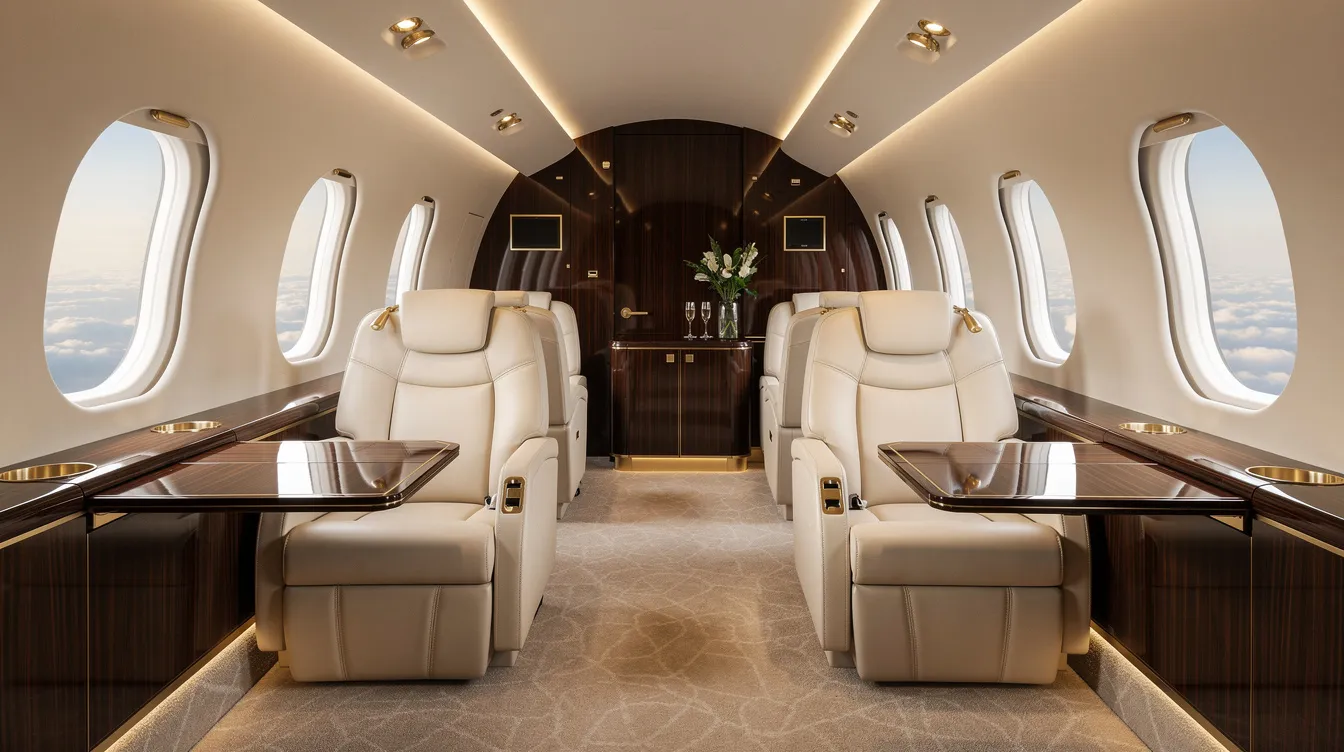
Large-cabin and ultra-long-range jets (12–18 passengers, 8–15+ hour nonstop legs): the private equivalent of flying a next-generation widebody like the 777X or A350. Stand-up cabins, lie-flat seating, bespoke conference and dining areas, and engine noise levels comparable to the quietest commercial aircraft in service. A Gulfstream G650 or G700-class airplane, for example, offers private passengers the kind of cabin environment that the 777X promises to hundreds and sits among the leading 10 million dollar private jet options for discerning buyers.
The key distinction remains privacy and flexibility. A large-cabin jet trades passenger volume for total customization—your schedule, your route, your cabin layout.
Jet Cards vs. owning a jet in the era of next-generation aircraft
BlackJet's Jet Card programs-available in 25-hour, 50-hour, and other configurations—offer prepaid access to private jets across multiple cabin types without the capital commitment of ownership. In an era when aircraft technology evolves rapidly, this model carries strategic advantages, especially with products like the BlackJet 25+ Hour Jet Card that lock in fixed rates on newer aircraft.
Avoiding depreciation risk: when a new engine option or airframe variant enters the fleet, owned aircraft lose residual value. Jet Card users sidestep this entirely, always flying on the most suitable available airplane without bearing the write-down.
Flexible access to newer aircraft: as charter operators refresh their fleets with the latest production models, Jet Card holders benefit immediately—no OEM waitlist, no hangar logistics, no crew hiring, particularly when they choose among the best jet cards for frequent flyers.
Right-sizing every mission: a 25-hour card lets you choose a midsize jet for a two-hour domestic hop and a large-cabin ultra-long-range jet for an international trip the following week. Ownership locks you into one aircraft type regardless of the mission, so understanding 50-hour Jet Card costs helps quantify the value of that flexibility.
Consider a business executive who flies roughly 150 hours per year—enough to justify ownership on paper. Buying a large-cabin jet built in 2019 means flying an airplane that lacks the cabin humidity, noise insulation, and avionics of models entering production in 2026 and 2027. With a Jet Card, every flight can be on the newest or best-matched aircraft, while annual costs remain variable and transparent. For a deeper comparison of Jet Card costs and structures and a broader view of jet card pricing, the math often favors flexibility over fixed ownership.
Private jet charter and connectivity with the newest airliners
Many BlackJet travelers already blend private and premium commercial sectors into a single itinerary-and the arrival of next-generation airliners makes the commercial leg far more compelling.
A typical pattern: private jet from a regional airport (say, Teterboro) to a major hub like JFK, then onward on a new-generation long-haul airliner-an A350-1000 today, or a 777-9 once in service-in first or business class, then a private jet again to a remote final destination.
Charter flexibility lets clients avoid older, noisier regional aircraft by substituting a private jet sector that delivers a consistently modern experience on both ends of the journey, whether they need an intimate cabin or the best private jet for 20 passengers on a larger group itinerary.
The newest widebodies make the commercial middle segment more restful: lower cabin altitude, reduced noise, better humidity control. Combined with private terminal access on the jet legs, total door-to-door stress drops markedly, even when you charter a private jet for 50 passengers for events or corporate movements.
Scenario: London–Dubai–Maldives. A BlackJet member departs from a private terminal outside London aboard a large-cabin jet, arriving in Dubai in under seven hours. The following morning, they board a Qatar Airways A350-1000 (or, soon, a 777-9) in first class for the flight to Malé. On arrival, a light jet or seaplane transfer completes the journey to a private island—no queues, no checked luggage, no wasted hours. The newest airliners make the middle segment seamless; the private legs make the ends effortless.
Safety and certification: why the newest planes matter
Every new aircraft type-whether the Boeing 777X or a newly certified business jet-must pass some of the most demanding safety certifications in any industry. The FAA and EASA require thousands of hours of flight test data, structural fatigue testing, emergency evacuation demonstrations, icing trials, and systems redundancy validation before an airplane can carry a single passenger.
Newer designs incorporate lessons from decades of operational history: redundant flight control systems, improved cockpit ergonomics to reduce pilot error, and advanced flight envelope protection that prevents the aircraft from exceeding safe parameters.
Predictive maintenance-enabled by onboard sensors that continuously monitor engines, avionics, and structural health, allows operators to address issues before they become disruptions, improving dispatch reliability.
Airline optimization using algorithmic flight paths reduces fuel consumption and noise over communities, while also improving safety margins through more precise routing.
BlackJet applies similarly rigorous criteria when sourcing aircraft and operators. Through BlackJet Certified, every partner undergoes third-party safety audits, and pilot experience minimums and fleet age standards ensure that members fly on well-maintained, modern equipment. Modern private jets now feature enhanced vision systems, synthetic vision, and full glass cockpits that match or exceed the safety technology found on the latest commercial airliners-closing what was once a meaningful gap between the two worlds.
Sustainability and carbon-neutral travel on next-generation aircraft
The newest planes bring meaningful environmental progress. The Boeing 777X's projected 20 percent reduction in fuel burn, the A321XLR's efficiency on formerly widebody-only routes, and the A330neo's improved per-seat economics all contribute to a lower carbon footprint per passenger kilometer.
Sustainable Aviation Fuel (SAF) can lead to lifecycle emissions reductions of up to 80 percent compared to conventional jet fuel. As SAF production scales, newer aircraft designed to run on high SAF blends-will compound their efficiency advantages.
Lighter airframes built from advanced composites, paired with more efficient flight operations (continuous descent approaches, optimized cruise altitudes), further reduce fuel consumption across every sector.
BlackJet ensures every journey is carbon neutral through verified offset programs, and increasingly partners with operators that can uplift SAF where supply is available. Learn more about BlackJet's approach on our sustainability page.
A practical illustration: a modern large-cabin jet with a 20 percent improvement in fuel burn per hour compared to its predecessor, combined with certified carbon offsets equal to remaining emissions, delivers roughly half the total greenhouse gas impact of an equivalent flight on an older aircraft. Over dozens of annual flights, that difference accumulates into a material reduction—one that aligns with both personal values and corporate reporting requirements.
Technology and booking: bringing "next generation" to the ground
The newest planes are only part of the equation. Digital tools now make accessing them-or their private-jet equivalents-faster and more transparent than ever.
BlackJet's 24/7 digital booking platform delivers instant quotes across cabin classes, matching aircraft to your route, passenger count, and baggage requirements in seconds. Mobile access means a trip can be confirmed from a car, a boardroom, or a beach.
Real-time flight support monitors weather, airspace, and ground conditions, allowing dynamic rerouting or schedule adjustments that keep your journey on track.
Fleet and performance data—fuel efficiency, cabin specifications, noise levels—are integrated into aircraft selection, so Jet Card holders can filter by the features that matter most: range, comfort, environmental impact, or simply the newest airplane available.
This operational layer mirrors how airlines manage fleet data for new types like the 777X or A350: leveraging real-time systems intelligence to optimize every flight. For BlackJet members, the result is reduced friction, faster confirmations, and pricing transparency that turns a complex aviation decision into a seamless one.
Comparing next-generation airliners with long-range business jets
How do the newest widebody airliners stack up against current flagship business jets from the perspective of someone choosing between them?
Range and city pairs: the 777-9's 7,285-nautical-mile range covers New York–Tokyo or Los Angeles–Sydney with ease. Ultra-long-range business jets like the Bombardier Global 7500 or Gulfstream G700 match many of these pairs nonstop, though at far lower passenger counts.
Cabin altitude and noise: commercial widebodies have improved dramatically, but VIP private jets often go further-custom soundproofing, lower cabin altitude through smaller fuselage volume, and personalized atmospherics.
Seating density vs. personal space: a 777-9 carries over 400 passengers; a large-cabin private jet carries 12–18 in the space of a studio apartment, with fully bespoke interiors.
Ground experience: private jets access thousands of smaller airports and private terminals, bypassing security lines and hub congestion. Commercial flights, even on the newest airliner, still route through major hubs.
Sample profile - New York to Tokyo: flying commercially on a future 777-9 in business class offers a superb cabin product at a fraction of the per-seat cost. Flying all-private on an ultra-long-range jet eliminates the hub entirely and saves three to four hours of ground time. A blended approach—private to JFK, commercial widebody to Narita, private jet onward—optimizes both comfort and cost.
Jet Card access through BlackJet lets travelers make this choice flight by flight, always optimizing for comfort, time, or cost without being locked into a single aircraft or mode—and for very frequent flyers, analyzing 100-hour Jet Card costs can clarify when scaling up hours delivers better value than ad hoc charter.
Future concepts: supersonic and hydrogen-powered "newest planes"
Beyond the current generation, two categories of aircraft promise to redefine what "newest plane" means entirely: supersonic transports and zero-emission propulsion.
Boom Overture is the most advanced supersonic commercial concept, targeting entry into service in the mid-2030s. It would cut transatlantic crossing times roughly in half-a transformative proposition for time-sensitive travelers on routes between New York and London or Los Angeles and Tokyo.
Hydrogen and hybrid-electric designs: Airbus's ZEROe concept explores hydrogen combustion and fuel-cell propulsion for medium-haul aircraft, with a target service date around 2035. Several smaller manufacturers are pursuing hybrid-electric regional platforms that could reach certification sooner.
These programs expand the future definition of next-generation aviation beyond geometry and range into speed, propulsion, and sustainability simultaneously.
BlackJet intends to remain platform-agnostic, ready to integrate supersonic or alternative-fuel aircraft into its network as they achieve certification and demonstrate viable operations. When the history books record the next leap in aviation, our members will be among the first to fly it.
FAQs: newest planes, Boeing 777X, and private jet access
When will the Boeing 777X enter airline service?
Boeing is targeting 2027 for the first delivery of the 777-9 to launch customer Lufthansa. As of August 2026, the certification path is progressing through final flight events and development assurance reviews with the FAA.
What is the newest airliner flying today?
The Airbus A321XLR, which entered service in November 2024, is the newest single-aisle type in commercial operation. On the widebody side, continuing deliveries of the Airbus A350-1000 and A330neo represent the latest production platforms.
How do next-generation planes improve comfort and safety?
Lower cabin altitude, quieter engines, improved humidity control, and advanced avionics all contribute to reduced fatigue and enhanced safety. Redundant flight control systems and predictive maintenance—powered by real-time sensor data-further improve reliability.
Can I fly privately on an aircraft similar in range and comfort to the 777X?
Yes. Ultra-long-range business jets offer comparable or superior cabin comfort on routes up to 7,500 nautical miles, with fully bespoke interiors. VIP-configured widebodies (such as potential BBJ 777X derivatives) will eventually offer airliner-scale private cabins for heads of state and ultra-high-net-worth travelers. For more comments on private jets in this class, see our guide to private jets of billionaires.
How does a Jet Card let me access newer aircraft?
Because Jet Card programs like BlackJet's draw from a broad fleet of charter operators, members fly on whatever aircraft best fits each mission-including the newest models in the fleet. There is no ownership lag and no capital risk when a newer model enters production.
Are BlackJet flights carbon neutral on newer jets?
Yes. BlackJet pairs the lower fuel burn of modern aircraft with verified carbon offsets, and partners with operators that can supply SAF where available-delivering carbon-neutral travel at no additional cost to the member.
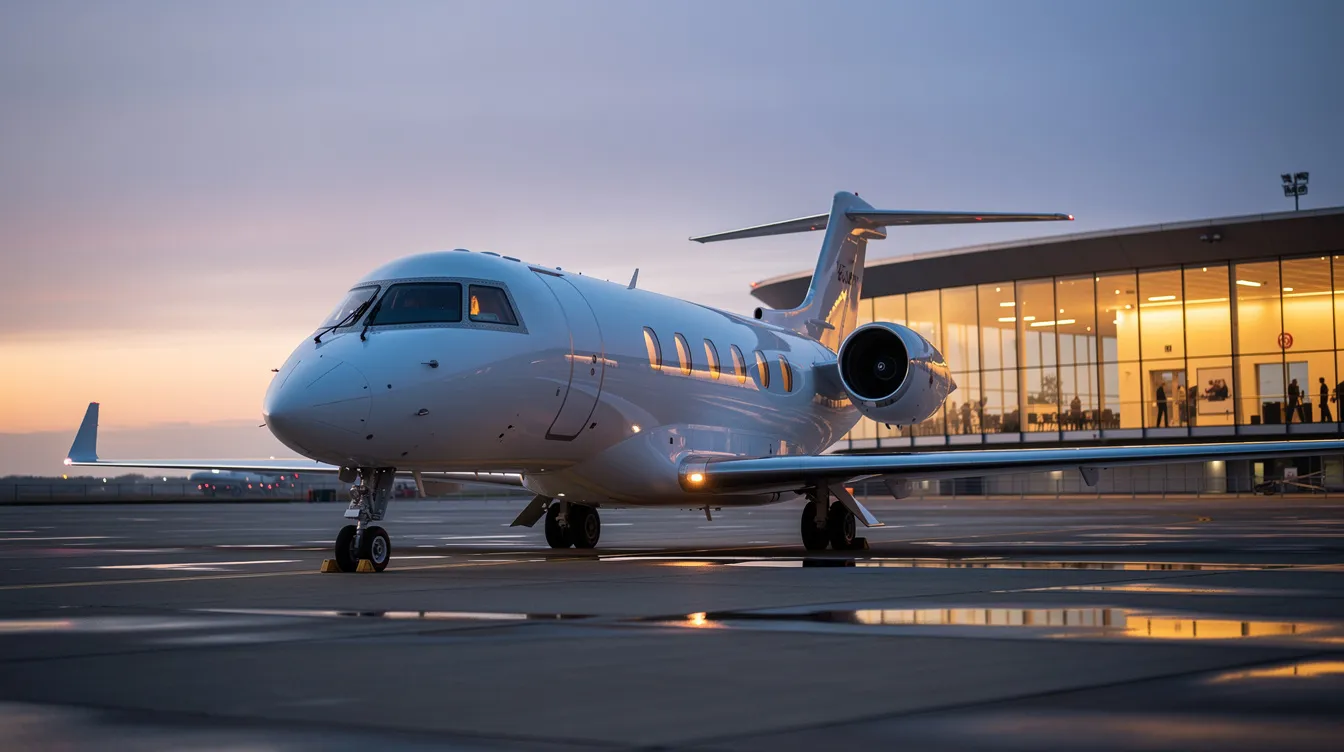
How to choose the right "next generation" experience with BlackJet
The threads running through every section above converge on a single insight: the newest long-haul giants like the Boeing 777X, next-generation narrowbodies like the A321XLR, and cutting-edge private jets all push premium travel permanently upward. The question is not whether the standard has changed—it has—but how to position yourself to benefit from it consistently.
When evaluating your options, consider:
Route length: short domestic hops favor light or midsize jets; transcontinental and international legs call for super-midsize or large-cabin aircraft with range to match the newest airliners.
Passenger count: a solo traveler or small group gains the most from all-private itineraries; larger groups may find that blending a private jet sector with a premium commercial widebody flight delivers exceptional value.
Privacy vs. loyalty: if airline loyalty programs and ground lounge access matter, mixing modes makes sense. If total privacy and schedule control are non-negotiable, an all-private approach is the answer.
Sustainability priorities: newer aircraft paired with SAF and offsets offer a materially lower footprint. A Jet Card ensures you always have access to the most efficient available airplane.
Scenario one: a quarterly New York–London commuter books a 50-hour Jet Card through BlackJet, flying a large-cabin jet nonstop each way, arriving via private terminals on both ends. Total time saved per round trip versus commercial first class: approximately four to five hours.
Scenario two: a multi-city European business tour-London, Milan, Zurich, Paris in four days-uses a super-midsize jet for each hop, avoiding connecting flights and overnight layovers entirely. The Jet Card model makes this operationally seamless without the overhead of owning a jet based in any single city, while still delivering a cabin experience comparable to many 15-million-dollar private jets.
The world of aviation is moving fast. The newest planes are quieter, cleaner, and more capable than anything that came before. With BlackJet, you do not need to wait for the future to arrive—you can fly it today.
Explore BlackJet Jet Card membership or speak with a BlackJet advisor to design your next-generation travel strategy.


 Sign up with google
 Sign up with Apple