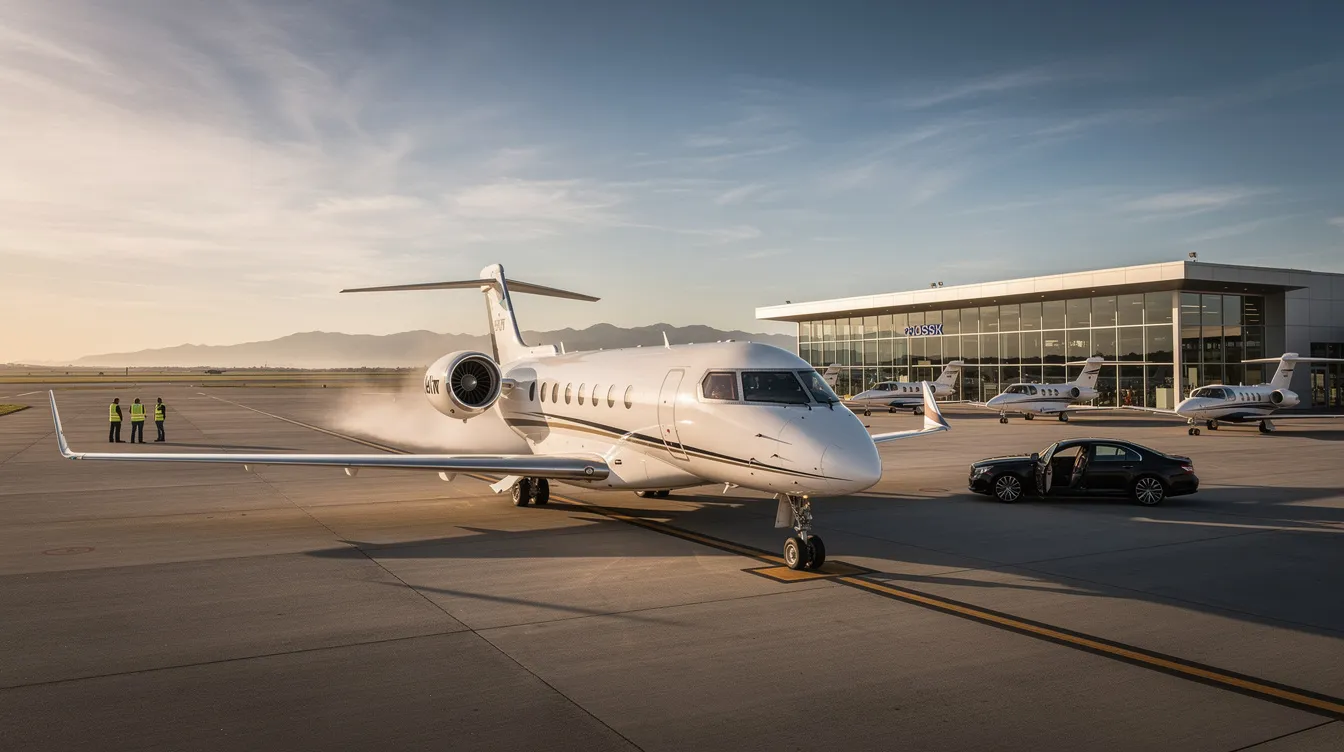
This guide is for business owners, charter operators, and high-net-worth individuals considering the purchase of a passenger airplane or exploring private jet alternatives. We cover types of passenger airplanes for sale, evaluation criteria, cost comparisons, and the benefits of Jet Card programs. Whether you are expanding a fleet, launching a charter startup, developing a corporate shuttle program, or seeking a VIP conversion, this comprehensive resource will help you make informed decisions in the evolving 2026 aviation market.
In 2026, buyers search for passenger airplanes for sale for diverse reasons: fleet expansion, charter startup launches, corporate shuttle programs, or VIP conversions. Yet the gap between commercial airline cabins—high seat density, rigid schedules, crowded terminals—and private jets remains stark. ARGUS data shows private aviation delivers door-to-door time savings of 3-5 hours per transatlantic leg via secondary airports like Teterboro or Farnborough. This article helps you find regional jets, narrow-bodies, and VIP airliners while revealing why many businesses now select BlackJet Jet Card programs over outright aircraft ownership.
Quick Overview: Types of Passenger Airplanes for Sale in 2026
The current market spans 19-seat commuters to 100+ seat narrow-body jets and VIP-configured airliners. Here’s what’s available:
Type | Example Models | Typical Passenger Capacity | Notable Features |
|---|
Commercial commuters | Beechcraft 1900D (1992–1996), LET L-410 UVP-E20 (2020–2024) | 19 | Efficient for short-haul, regional routes; low operating costs |
Regional jets | Embraer ERJ-135ER (2001–2004), ERJ-145LR (1999–2005) | 30–50 | Popular for charter, ACMI, and corporate shuttle conversions |
Narrow-body airliners | Boeing 737-700/800, Airbus A318/A319 (early 2000s–2015) | 100–150 | Suitable for airline layout, all-business class, or VIP head-of-state refits |
Reconfiguration potential | Various (see above) | Varies | Options for airline layout, all-business class, or VIP with lie-flat seating |
Business jets categories | Light, mid-size, large jets | 6–19 | Classified by size and range; tailored options beyond commercial configurations |
Helicopter types | Light, medium, heavy helicopters | 4–19 | Serve roles such as transport, medical evacuation, law enforcement; complement fixed-wing options |
What follows: Evaluation criteria, operating economics, safety considerations, and when Jet Card models outperform buying.
Current Market Snapshot: Sample Passenger Aircraft Listings
To benchmark “typical” value when you search featured listings or filter aircraft for sale by location, consider these 2024–2026 exemplars:
Aircraft | Year | TT (Hours) | Config | Price Range |
|---|
Beechcraft 1900D | 1994 | 34,500 | 19 pax | $3.2M |
L-410 UVP-E20 | 2023 | 150 | 19 pax | $8.5M |
CASA CN-235 | 1993 | 14,200 | 40 pax | $6-8M |
ERJ-145LR | 2000 | 30,800 | 49 pax | $14.5M |
ERJ-135ER | 2001 | 23,000 | 30 pax | $12M |
Airbus A318 VIP | 2009 | 5,200 | 25 pax | $38M |
Maintenance notes matter: a fresh 2C inspection valid through Sept 2027 or gear cycles at 40% remaining materially impacts near-term costs.
How to Evaluate Passenger Airplanes for Sale
When evaluating passenger airplanes for sale, consider the following key criteria:
Airframe age & total time: A 1990s commuter at 35,000+ tt remains airworthy under Part 135 if cycles stay below pressurization limits. Lightly used regionals (12,000–18,000 hours) command 20-30% premiums.
Maintenance status: C-checks run $500k–$1.5M; D-checks reach $3–5M. A hot-section inspection due in April 2027 erodes value by $500k per engine. A comprehensive review of maintenance logbooks is vital to verify completeness and currency. Missing or incomplete maintenance logs can significantly reduce resale value and airworthiness. Conducting a title search ensures the aircraft is free of liens before purchase.
Cabin configuration: Compare 19-seat commuter density versus 2+1 business seating versus VIP layouts with bedrooms—the standard high-net-worth travelers now expect.
Avionics & compliance: ADS-B Out, WAAS/LPV, TCAS II v7.1, RVSM, and FANS/CPDLC for oceanic operations. Upgrading older airliners to 2026 EASA/FAA mandates can exceed $2M. Private jets increasingly adopt advanced avionics and safety systems like ADS-B to enhance situational awareness and safety.
Operating economics: An ERJ-135 burns 1,800–2,200 kg/hour ($10k–15k total DOC including crew and maintenance reserves), versus comparable Jet Card hourly rates with zero ownership overhead. A clear understanding of the broader private jet price list, costs, and options helps benchmark these hourly figures. Total Cost of Ownership also includes fixed costs like insurance, hangar fees, and crew salaries.
Aircraft age and condition: New aircraft offer the latest technology and factory warranties, but come with higher upfront costs and longer delivery times. Used aircraft are more budget-friendly and available immediately, though they may require refurbishment and higher maintenance.
Broker and legal support: Using accredited brokers specialized in specific aircraft types provides market insight and negotiation assistance, and resources on how to become an airplane broker highlight the expertise that top professionals bring to complex transactions. Engaging aviation attorneys ensures contracts comply with FAA and other regulatory requirements.
Mission profile definition: Selecting the appropriate aircraft size and range requires defining your mission profile—distance and passenger count—to optimize value and performance, especially when comparing the best small private aircraft for different needs.
Passenger Airliners vs Private Jet Access with BlackJet
Owning a passenger airliner is capital-intensive. Jet Card access delivers similar outcomes with far lower friction.
Aspect | Passenger Airliner Ownership | BlackJet Jet Card Access |
|---|
Capital commitment | A $15M ERJ-135 plus $5M VIP conversion ties $20M+ | $250k–$1M into a 25- or 50-hour BlackJet Jet Card—no depreciation, no flight department |
Utilization threshold | Ownership suits 600–900 annual hours on consistent shuttle routes | For 50–200 hours across varied destinations, Jet Cards win economically |
Operational complexity | AOC certification ($2–5M setup), crew recruitment, CAMO management ($100k/year) | BlackJet’s 24/7 dispatch and digital booking |
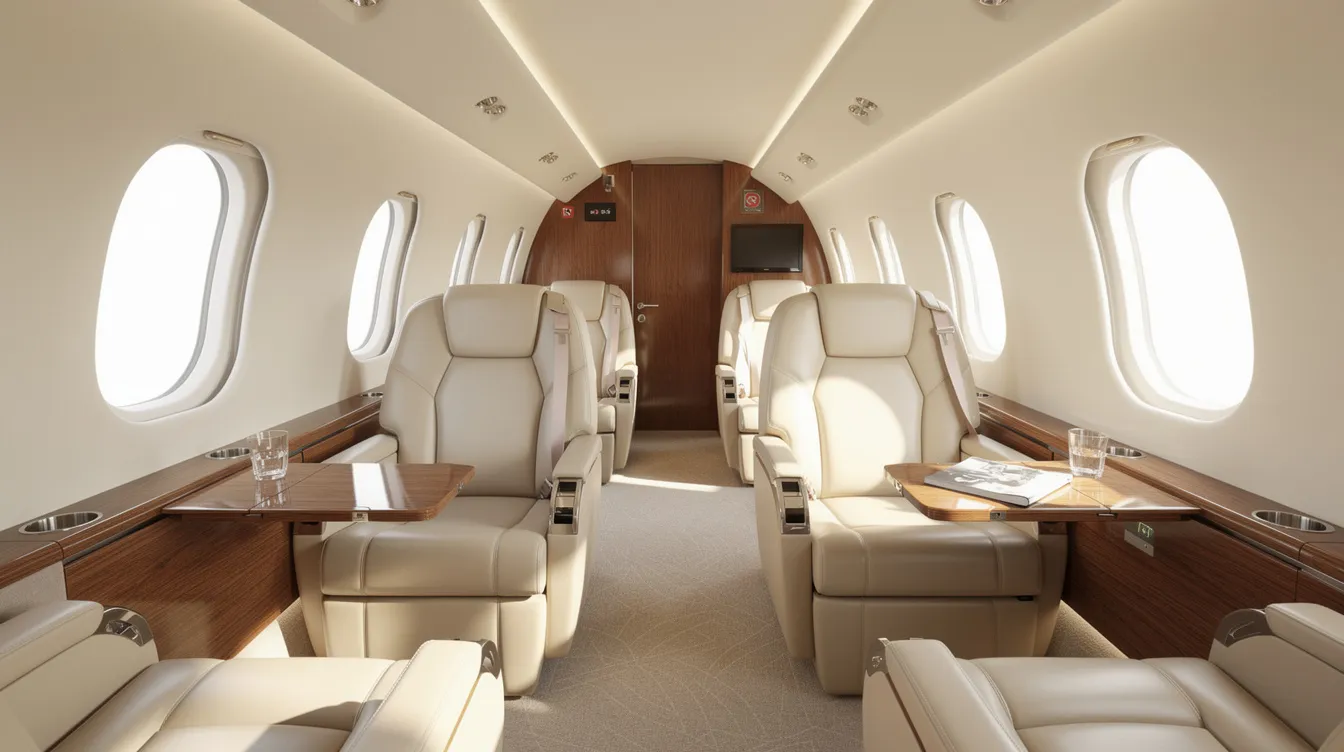
Cabin experience | Super midsize and large cabin private jets already offer the privacy, workspace, and amenities buyers seek from VIP conversions | |
Risk allocation | Airliner ownership introduces Part 125 oversight and corporate liability | BlackJet’s pre-vetted operators handle regulatory accountability |
Jet Card benefits | N/A | Jet card programs offer prepaid access to private jets without ownership responsibilities, providing flexibility to choose from multiple cabin types and aircraft models. A detailed look at jet card pricing, costs, and benefits clarifies how these memberships compare to full or fractional ownership. They include 24/7 digital booking tools and real-time support, enhancing convenience and responsiveness. |

Safety & Certification: What Matters for Passenger Aircraft and Private Flights
Passenger airplanes for sale must meet strict airworthiness standards, but ongoing safety depends on operator culture and auditing.
Airworthiness records: Complete logbooks, AD/SB compliance, and enrollment in manufacturer programs (RR CorporateCare, Embraer MSP Gold) indicate consistent upkeep
Operator certification: FAA Part 135, EASA AOC, plus IS-BAO Stage III, ARGUS Platinum, and Wyvern Wingman standards
Crew training: Simulator recurrents every 6 months, type ratings ($30k for ERJ courses), and minimum PIC thresholds of 3,000+ hours
Pre-Purchase Inspection (PPI): Hiring a reputable, independent mechanic to inspect the airframe, engine, and avionics before purchase is essential.
Legal compliance: Engaging aviation attorneys ensures purchase contracts meet FAA and regulatory standards.
Third-party audits: Many private aviation companies undergo safety audits to verify compliance and boost passenger confidence, and evaluations of top private jet companies for luxury travel often highlight how safety and service standards vary by provider.
BlackJet’s framework: Continuous operator audits, route risk assessment, and proprietary vetting exceeding regulatory minimums—acting as a guardian jet program for every flight
Sustainability in Passenger Aviation and BlackJet’s Carbon-Neutral Commitment
Regional jets burn 1,500–2,500 kg CO₂ per hour; narrow-bodies exceed 5,000 kg/hour. Environmental impact now weighs alongside cost for informed buyers.
Fleet modernization: Winglets cut 4-6% fuel burn; SAF blends reduce lifecycle emissions 75%. Sustainable aviation fuels (SAFs) significantly lower carbon emissions compared to traditional jet fuels.
Emerging technologies: The aviation industry is adopting electric and hybrid aircraft to reduce fossil fuel reliance and enhance sustainability, while innovations in the cheapest private jet and entry-level options are making efficient private flying accessible to more travelers.
BlackJet’s commitment: Every flight is carbon-neutral via verified offset projects (VCS/Gold Standard)—included at no extra cost
Smarter utilization: A lightly used owned airliner idles 90% of the year; BlackJet’s shared model optimizes fleet usage, cutting per-passenger emissions 30-50%
Technology & Booking: How BlackJet Simplifies Access vs Traditional Aircraft Ownership
Even airliner owners need scheduling, dispatch, and support systems—areas where BlackJet operates at scale.
Digital booking: Mobile and web platforms deliver quotes in minutes, confirm flights 24-48 hours out, and manage itineraries in real time
24/7 operations center: Rerouting for weather, arranging ground transport, handling last-minute changes across Europe, Asia, and beyond
Data-driven fleet selection: AI matching optimizes runway analysis, passenger count, and range requirements—selecting from light jets to the largest private jets for long-range missions
Corporate integration: Jet Card usage integrates with Concur/SAP travel workflows more seamlessly than managing an in-house cockpit operation
Use Cases: When a Passenger Airliner Makes Sense vs Jet Card Membership
Regional corporate shuttle (ownership case): A manufacturing group operating daily Monday–Friday shuttles on a 600nm field route at 700 annual hours may justify a pre-owned ERJ-135.
Executive board travel (Jet Card case): A multinational board flying 12x yearly on routes like NYC–London via BlackJet’s 50-hour large-cabin program spends less than dedicated airliner operations, especially when leveraging the best long-range private jets for nonstop international routes.
Luxury family travel (Jet Card case): A high-net-worth family flying Aspen, Mediterranean, and Caribbean trips with 8-10 passengers switches between super midsize and large cabin jets—or, for larger groups, private jets configured for around 20 passengers—avoiding year-round fixed costs.
Ad-hoc charter/ACMI (partnership case): Acquiring a 100-seat narrow-body to sell capacity essentially creates an airline business, whereas leveraging private jets for up to 50 passengers via charter can deliver similar group capacity with far less operational complexity. Many investors now replace this with on-demand private jet solutions.
Frequently Asked Questions
What’s the difference between a passenger airliner and a private jet?
Passenger airliners (100+ seats) operate under Part 121; private jets (under 20 pax) fly Part 135 with on-demand flexibility.
How much does a typical passenger airplane cost?
Acquisition runs $5–50M; operating costs add $10k–20k/hour variable plus $3–5M fixed annually, with many buyers targeting private jets for sale under 10 million as an entry point.
Can I convert a regional jet to VIP?
Yes—conversions cost $2–10M and take 6-12 months for aircraft like ERJ-135s, though some buyers instead opt for purpose-built large private jets with VIP interiors.
How does a Jet Card compare financially?
For under 200 annual hours, Jet Cards save 40-60% by eliminating capex, depreciation, and flight department overhead, and detailed analyses of jet card cost structures and pricing can sharpen those comparisons.
What safety certifications matter?
Seek IS-BAO Stage III, ARGUS Platinum, and Wyvern Wingman. Guides to the best jet cards for frequent flyers also stress how these safety benchmarks differentiate leading programs. BlackJet exclusively partners with operators meeting these standards.
How does BlackJet ensure carbon neutrality?
Every flight includes verified offsets via VCS/Gold Standard projects—reforestation, renewables—at no additional cost.
What are the main categories of business jets and helicopters?
Business jets are classified as light, mid-size, or large jets based on size and range, while helicopters fall into light, medium, and heavy types, serving roles from transport to medical evacuation; many affordable private planes for budding aviators sit at the lighter end of these categories.
What should I consider before buying an aircraft?
Conduct Pre-Purchase Inspections, review complete maintenance logs, perform title searches, and budget for fixed and variable costs, especially if you are comparing the cheapest private aircraft and other budget-friendly options. Employ accredited brokers and aviation attorneys to navigate purchase complexities.
How to Get Started: Buying vs Joining BlackJet
If you’re set on buying, engage an independent broker, commission market analysis for your target type, arrange pre-purchase inspections, and model 5-10 year operating costs with aviation-experienced legal and tax advisors. Curated marketplaces for premium UK private jets for sale can also streamline shortlisting. Information rights during due diligence matter—select transparent sellers.
If you prioritize flexibility, explore BlackJet Jet Card tiers (25-hour, 50-hour, bespoke) aligned to your annual hours and preferred cabin sizes, including the BlackJet 25+ Hour Jet Card for fixed-rate access to mid, super-mid, and large-cabin aircraft. No helicopters or turboprops needed when large-cabin jets serve your missions.
BlackJet’s consultative approach: We help prospective aircraft buyers benchmark whether ownership is optimal, providing impartial guidance rooted in real trip data, whether you’re acquiring an airliner or simply buying a seat on a private jet.
Discover how BlackJet can deliver airliner-level access with private-jet precision—explore our Jet Card programs or speak with our team about your travel profile today, especially if you are comparing top private jets in the world for performance and luxury or benchmarking against NetJets jet card cost and programs.
Conclusion: Elevate Your Travel Experience with BlackJet
In today’s dynamic aviation landscape, owning a passenger airplane offers prestige but comes with significant complexity, cost, and operational demands. BlackJet redefines private air travel by providing seamless, flexible access to a diverse fleet of private jets through our Jet Card programs—eliminating ownership burdens while maintaining exceptional safety, customization, and sustainability standards.
Whether you seek the convenience of regional shuttles, VIP international flights, or ad-hoc luxury travel, BlackJet’s proprietary certification, 24/7 support, and carbon-neutral commitment ensure every journey is effortless and responsible. Visit blackjet.com to discover how our innovative approach can transform your travel, offering unparalleled access and peace of mind without the overhead of aircraft ownership.


 Sign up with google
 Sign up with Apple