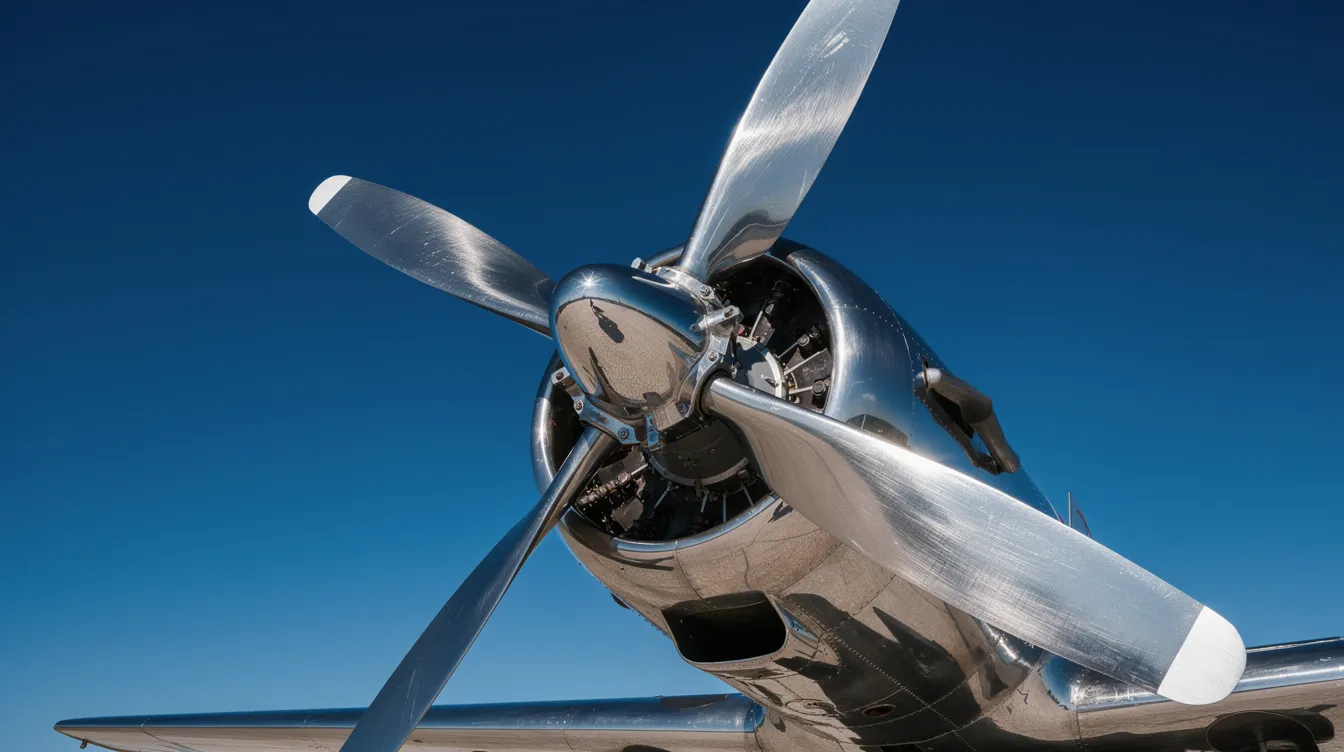
In private aviation, the right aircraft is not always the fastest one - it is the one that gets you precisely where you need to be. For high-net-worth travelers seeking access beyond the reach of commercial airlines and even many jets, understanding how a propeller plane fits into a strategic travel plan is a genuine competitive advantage.
Why Propeller Aircraft Still Matter for High-End, Time-Sensitive Travel
In 2026, propeller aircraft will remain indispensable for regional, remote, and short-haul aviation missions. While jets dominate transcontinental corridors, propeller planes excel at short-haul flights and cargo in remote areas where runway infrastructure and lower passenger demand make jet service impractical or impossible. Turboprops are ideal for regional routes under 1,500 km, and on those sectors, they can use up to 50% less fuel than jets of comparable capacity. Additionally, turboprop aircraft emit fewer CO₂ emissions than regional jets, reinforcing their role in sustainable regional travel.
Turboprop engines typically cruise at around 300 knots (550 km/h) - slower than regional jets, yes, but when you factor in ground transfers, boarding delays, and the reality that climb and descent phases dominate short flights, the door-to-door time difference often shrinks to minutes. Approximately 34% of airports globally rely on turboprop aircraft as the only scheduled or charter-capable powered aircraft type, meaning prop planes unlock thousands of smaller airports and remote locations that commercial airlines simply cannot serve.
At BlackJet, we primarily place members on jets through our Jet Card programs. But aviation is about reach, not just speed. We routinely integrate turboprop aircraft through vetted partner operators when a mission demands short-field or remote-airport access - think a final hop from Boston into Nantucket's compact airfield, or connecting from Los Angeles to a mountain strip near Mammoth Lakes. In these scenarios, a propeller plane is not a compromise. It is the only aircraft that can complete the journey.
How Propeller Planes Work: From Spinning Wings to Thrust
A propeller plane uses an engine to spin blades to create forward movement - and the physics behind it are elegantly simple. Each propeller blade is essentially a rotating wing. As it spins, air flows over its surfaces at different speeds, creating a pressure difference: lower pressure on the forward face, higher on the rear. This pressure difference generates thrust, pulling the aircraft forward. Propeller planes generate lift via fixed wings, just like any conventional airplane, while the propeller system handles propulsion.
The blade is twisted along its entire length so that each section - from root to tip - meets the oncoming air at the correct propeller blade angle. This twist accounts for the fact that blade tips move faster than the root due to rotary motion. The blade pitch, or angle of the blade relative to its plane of rotation, determines how much air the propeller "bites" per revolution. Variable pitch propellers let pilots adjust this angle - like shifting gears on a bicycle - optimizing thrust for takeoff at low speeds, then flattening pitch for cruise at high speeds. Constant-speed propellers use governors to maintain optimal RPM automatically, balancing fuel efficiency and noise. Propeller blades can also be angled to act as powerful airbrakes upon landing, helping propeller planes stop very quickly on short, unpaved, or grass airstrips.
It is important to note that propeller planes require a forward runway to take off, though this runway can be significantly shorter and less developed than those required by jets. This capability enables access to remote and constrained airfields that jets cannot serve.
On modern turboprop aircraft, advanced materials like carbon-fiber composites enable scimitar-shaped blade tips that reduce noise and delay shock formation as tips approach transonic speeds. These technological advancements in propeller propulsion mean that today's propeller-driven aircraft are quieter and more efficient than many travelers expect. It is worth noting that long before engines powered flight, concepts like human-powered aircraft occupied inventors' imaginations - but it was the combination of engine power and propeller control that made practical aviation possible.
Types of Prop Planes: Piston vs Turboprop, Single vs Twin
Two propulsion families define the world of prop planes: piston engines and turboprop engines. Understanding the distinction - and how single-engine versus twin-engine configurations serve different missions - helps travelers make informed choices.
Feature | Piston Engines | Turboprop Engines |
|---|
Engine Type | Reciprocating internal combustion | Gas turbine driving a propeller |
Typical Speed | Under 200 mph | Around 300 knots (550 km/h) |
Aircraft Size | Smaller, lighter aircraft | Larger regional and executive planes |
Common Use | Training, recreation | Regional airlines, cargo, medevac |
Fuel Efficiency | Lower compared to turboprops | Up to 50% less fuel than jets |
Runway Requirements | Moderate | Can operate from shorter, unpaved runways |
Maintenance | More frequent | Longer intervals, advanced monitoring |
Payload & Range | Limited | Higher payload and longer range |
Piston engines are internal combustion engines that burn aviation fuel in reciprocating cylinders, converting combustion into rotary motion through a crankshaft. They power smaller, lighter aircraft and are standard for smaller, single-engine training aircraft like the Cessna 172 or Diamond DA40. Propeller planes with piston engines typically travel at lower speeds, generally under 200 mph, and serve personal ownership, recreational flying, and very light charter. Their lower acquisition and maintenance costs make them accessible, but speed and payload limitations restrict commercial utility.
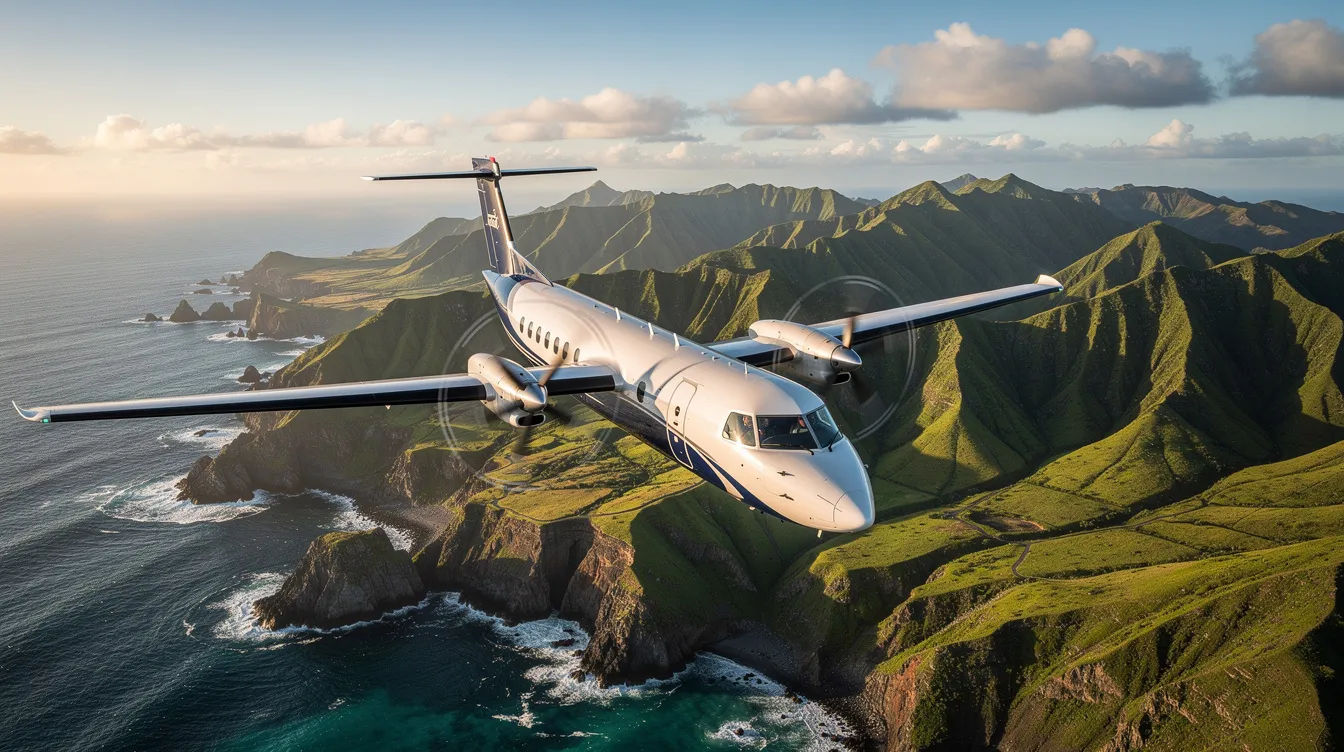
Turboprop aircraft use a gas turbine engine - essentially a jet engine core - to drive a propeller via a reduction gearbox. The lineage stretches back to when the first turboprop engine was patented in 1929, but practical application arrived with Dart engines like the Rolls-Royce Dart, one of the first practical turboprop engines, which first ran in 1946. The Vickers Viscount entered service in the 1950s as the first successful turboprop airliner. Turboprop technology evolved significantly during the 1960s and 1970s, and modern turboprop models like ATR 42 and ATR 72 were introduced in the 1980s and 1990s, establishing ATR turboprop aircraft as regional workhorses.
Single-engine turboprops such as the Pilatus PC-12 or Daher TBM 960 deliver high performance for up to six passengers with lower operating costs and simpler maintenance. Twin turboprops - the Beechcraft King Air 350, ATR 42-600, and others - provide greater payload and engine redundancy and are common among regional airlines and corporate shuttles, often available in VIP configurations. Some twin-engine designs use counter-rotating propellers to reduce asymmetric thrust on engine failure, improving controllability in challenging environments. Piston engines are standard for smaller, single-engine training aircraft, while small private turbine aircraft dominate commercial and executive operations.
Turboprop Engines: Components, Performance, and Modern Safety
A turboprop engine bridges the gap between jet engines and piston powerplants. At its core, it is a turbine-powered aircraft propulsion system: a gas turbine engine drives a reduction gearbox, which in turn spins a variable-pitch propeller. Most of the thrust - roughly 85–90% - comes from the propeller rather than exhaust, making the propeller system the primary force generator.
Key engine components include the air intake, compressor stages that produce compressed air at high pressure, a combustion chamber where fuel-air mixtures ignite, turbine stages that extract energy from expanding gases, a power turbine, and the reduction gearbox connecting the turbine to the propeller. Here is how the cycle works:
Ambient air is drawn in and compressed through multiple stages to high pressure.
Fuel is injected, mixed, and ignited in the combustion chamber; hot gases expand and spin the turbines.
The power turbine extracts work and transmits it through the reduction gearbox, turning the propeller at optimal RPM far below turbine speed.
Propeller control systems - including digital engine control systems like FADEC - adjust blade pitch to optimize the power generated for each flight phase.
Modern turboprop engines feature variable-pitch propellers for efficiency, and turboprop aircraft are most efficient below 725 km/h. The Pratt & Whitney PW127XT, a benchmark among modern turboprop engines, exemplifies current capability: the PW127XT engine improves fuel efficiency by 3% over previous generations, extends time on wing to approximately 20,000 hours (a ~40% increase over previous generation engines), and uses durable components with advanced condition-based maintenance monitoring. These improvements reduce maintenance costs and unscheduled events, directly enhancing safety margins.
Turboprop engines can use up to 50% less fuel than jets on similar routes under 1,000–1,500 km, delivering strong low-speed thrust and excellent climb rates - critical for operations from short runways. For BlackJet, every partner operator flying turbine-powered aircraft must meet rigorous certification standards before a single member steps aboard.
Propeller Planes in Practice: Regional Airlines, Remote Airports, and Unpaved Runways
Propeller aircraft underpin regional connectivity across six continents. From island nations in the Pacific to northern Canada and the mountains of Europe, prop planes provide the only viable air link for communities that lack the infrastructure for jet operations. Approximately 34% of airports globally rely on turboprop aircraft for scheduled or charter service - a figure that underscores how deeply embedded these aircraft are in global transport.
Regional airlines deploy passenger turboprops like the ATR 72-600 and De Havilland Canada Dash 8-400 on regional routes with lower passenger demand and short runways. These aircraft, powered by modern turboprop engines, serve short-haul routes, consuming significantly less fuel than regional jets on similar routes. They are commonly used for cargo and freight operations, and turboprop aircraft can also serve medical evacuation missions - applications where operational flexibility and access to remote airports matter more than cruise speed.
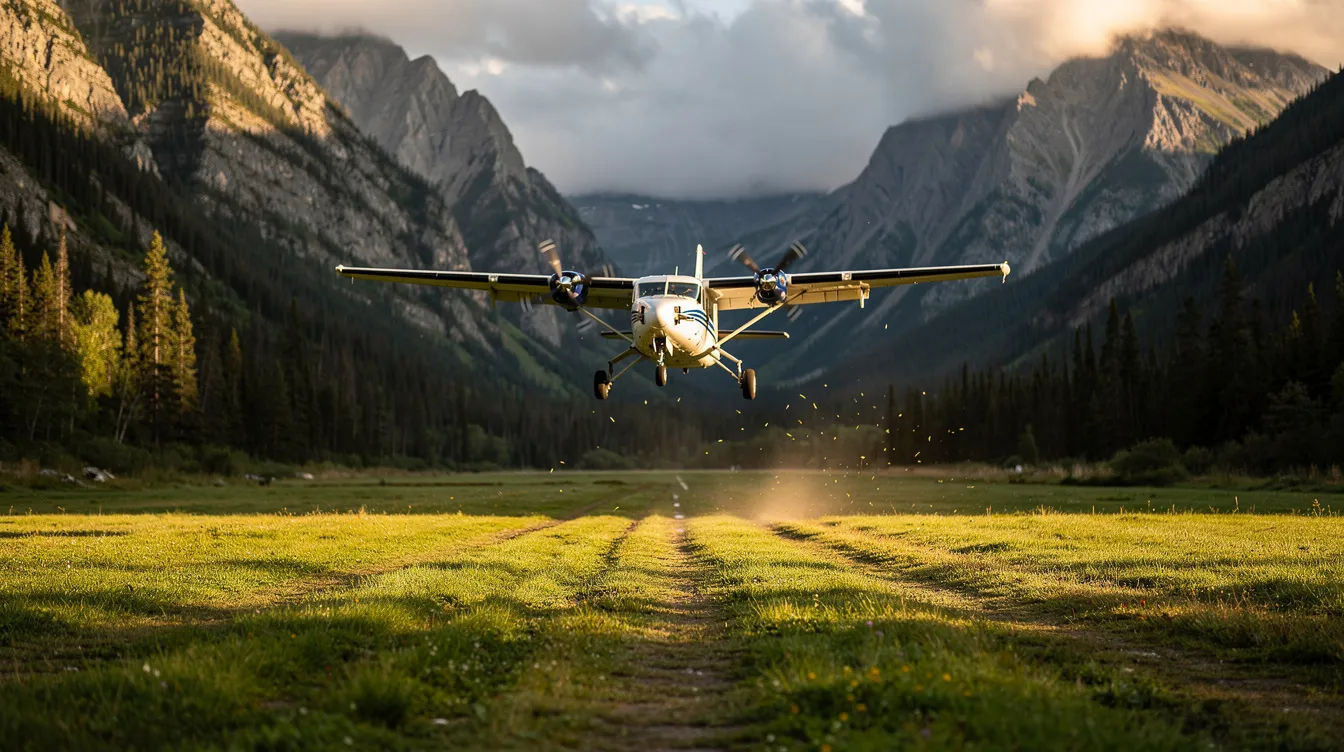
Propeller planes can operate from shorter, sometimes unpaved runways. Turboprop aircraft can operate from runways as short as 1,100 meters, and some bush-configured prop planes handle even less. Features like rugged landing gear, gravel kits, and vortex dissipators protect engines and airframes on unpaved runways - grass, gravel, or compacted earth. Propeller planes require a forward runway to take off, but that runway can be remarkably modest compared to what jets need (typically 1,500 meters or more).
Consider a BlackJet member flying by jet into Dallas, then connecting via a chartered turboprop to a ranch airstrip in West Texas - only 975 meters of packed dirt, inaccessible to any jet. Or a traveler reaching a remote fishing lodge in Canada's Yukon via a gravel strip at lower altitudes surrounded by mountains. These are real scenarios where propeller-driven aircraft are the only option.
Limitations exist: payload reductions on hot or high-elevation fields, increased takeoff distance at high density altitude, and the reality that turboprop cabins can feel noisier than jet cabins. Professional crews apply strict performance planning to every operation in challenging environments.
Economics, Sustainability, and When a Prop Plane Makes Sense for BlackJet Members
The economics are straightforward. Charter rates for executive turboprops typically range from $2,000–$3,500 per hour, compared to $4,000–$6,000 for light jets on equivalent missions. Fuel burn drives the gap: a Pilatus PC-12 burns 55–70 gallons per hour versus 180–250 for light jets. Propeller planes are often more economical in terms of fuel consumption compared to jets, and affordable private jet and turboprop options are highly fuel-efficient at lower speeds, delivering high efficiency on sectors where jets simply burn significantly less fuel than they would on longer legs. Lower operating costs per seat-mile, combined with lower landing fees at smaller airports, create meaningful cost efficiency on short-haul routes.
Sustainability is equally compelling. Turboprop aircraft emit fewer CO₂ emissions than regional jets, and turboprops reduce contrail formation compared to jets because they typically cruise at lower altitudes rather than the 30,000 to 40,000 feet where jets form persistent contrails. Modern turboprops are designed to operate on alternative fuels, including Sustainable Aviation Fuel and synthetic aviation fuels - the PW127XT is already certified for SAF compatibility. BlackJet offsets 100% of flight emissions for every member journey at no additional cost, and selecting turboprop segments where appropriate further reduces the underlying carbon footprint, advancing environmental sustainability across our network. Modern turboprop engines improve fuel efficiency by 3% over previous models, compounding savings across thousands of flight hours.
Market forecasts through 2044 project demand for more than 2,000 new passenger turboprops and several hundred freighters globally, driven by regional growth, infrastructure constraints, and tightening environmental regulations. For BlackJet members, this means an expanding, modernizing fleet of affordable private planes and light jets - reducing emissions while extending reach.
Safety, Training, and BlackJet's Standards for Propeller Operations
Modern turboprops operated under commercial standards maintain excellent safety records, backed by decades of refinement in aircraft design, engine reliability, and regulatory oversight. Twin turboprops offer engine redundancy; single-engine turboprops like the PC-12 compensate with rigorous certification requirements, advanced avionics, and conservative operational planning, similar to the latest personal aircraft chosen for safety and versatility.
Pilot training for propeller aircraft emphasizes propeller control techniques - including feathering, engine-out procedures, and managing asymmetric thrust in twins - along with short-field and soft-field operations. Crews operating into remote airports and unpaved runways receive specialized training for hot, high, and variable conditions. Aircraft systems contribute layers of protection: glass cockpits, terrain awareness and warning systems (TAWS), weather radar, and real-time engine monitoring that tracks vibration, temperatures, and pressures for early fault detection. As described in the FAA Airplane Flying Handbook, understanding the propeller system and its interaction with the engine is foundational to safe propeller aircraft operations.
BlackJet evaluates every partner operator against stringent standards before approving them for member flights. This includes safety certifications such as ARGUS, IS-BAO, or equivalent frameworks, verified maintenance discipline on specific aircraft types, documented crew experience, and compliance with Part 135 or equivalent regulations. These same criteria apply whether you are chartering a light turboprop or arranging a charter plane for 100 passengers. We apply the same rigor to turboprop partners as to our jet operators - because safety is not negotiable regardless of the propulsion system.
Choosing Between a Jet and a Prop Plane for Your Next Trip
The decision between a jet and a propeller plane comes down to mission specifics: route length, runway conditions, passenger count, schedule urgency, and environmental priorities, as well as how different jet card pricing structures align with your flying profile. Here are three scenarios that illustrate the logic:
Executive commuting between nearby financial centers
Zurich to Milan, roughly 220 km. A turboprop covers this in under an hour, accessing smaller airports closer to city centers with lower operating costs and less fuel than a jet. On regional travel legs like this, the speed difference is negligible door-to-door, and the fuel-efficient turboprop delivers clear advantages for frequent flyers comparing jet card options.
Family traveling to an island or ski resort
A couple with children flying from Paris to a Corsican mountain airfield with a 1,200-meter runway. Jets operate at higher speeds and can travel longer distances compared to propeller planes, but they cannot land at this strip. A propeller plane is the only practical option, offering operational flexibility to reach remote locations that define memorable vacations, especially when paired with the right small private aircraft category for the mission.
Multi-leg itinerary with a BlackJet Jet Card
A member flies transcontinental from New York to Denver on a midsize jet, then connects via turboprop to a private ranch airstrip at 7,500 feet elevation. Jets typically cruise at altitudes between 30,000 and 40,000 feet for the long segment, while the turboprop handles the final leg at lower altitudes, matching the mission perfectly. BlackJet's digital platform recommends the appropriate aircraft category - light jet, midsize, large cabin, or turboprop - based on your preferences and the realities of each segment, with options like the BlackJet 25+ Hour Jet Card providing predictable access for these itineraries.
Frequently Asked Questions About Propeller Planes and Private Aviation
Are turboprops really slower than jets, and does it matter on short routes?
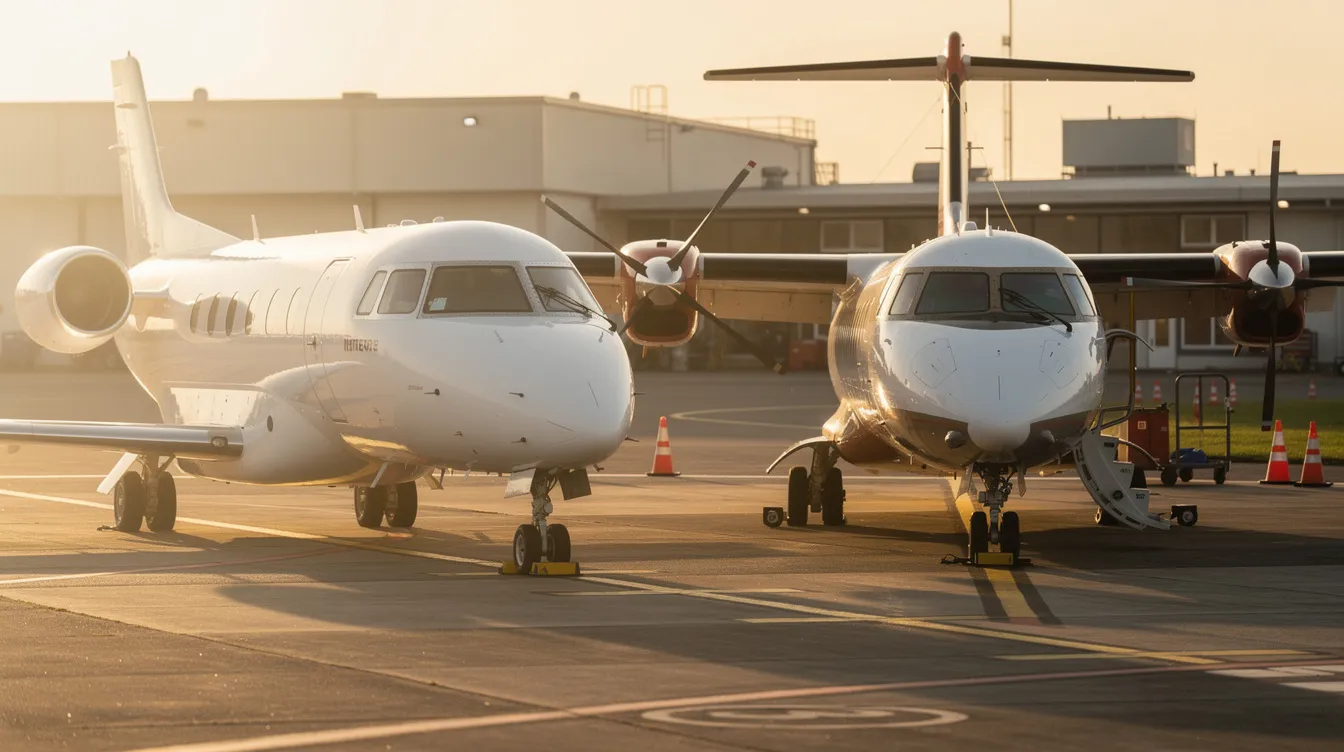
Turboprop engines typically cruise at around 300 knots versus 430–470 for light jets. On routes under 800 nautical miles, the time difference is often 15–30 minutes because ground transfers and terminal procedures dominate total travel time. For short-haul routes, speed matters less than access and cost efficiency, especially when you weigh that against the economics of a 100-hour jet card program for longer missions.
How noisy are modern prop planes compared with light jets?
Jet engines produce less vibration compared to propeller-driven engines, and jet cabins are generally quieter at cruise. However, modern turboprops with scimitar blade tips and advanced materials have reduced cabin noise substantially compared to older designs. On flights under 90 minutes, most travelers find modern turboprop aircraft cabins entirely comfortable, particularly when using a flexible 25-hour jet card solution to pair short turboprop hops with longer jet segments.
Can propeller planes land on unpaved runways that jets cannot use?
Yes. Turboprops can operate from short and unpaved runways - grass, gravel, or compacted earth - with appropriate equipment like gravel kits and reinforced landing gear. Many jets require paved runways of 1,500 meters or more, while turboprop aircraft can operate from runways as short as 1,100 meters.
Are single-engine turboprop aircraft safe for private travel?
Aircraft like the Pilatus PC-12 have outstanding safety records under commercial operation. Certification standards, professional crews, advanced avionics, and conservative performance planning ensure that single-engine turboprops meet rigorous safety thresholds. For travelers blending turboprop segments with jet time via a 50-hour jet card program, BlackJet only partners with operators who exceed minimum regulatory requirements.
What is the difference between a turboprop engine and a piston engine in practice?
A turboprop engine uses a gas turbine core - burning fuel in a continuous combustion process - to drive a propeller through a reduction gearbox. Piston engines use reciprocating internal combustion engines with cylinders and fuel-air mixtures. Turboprops deliver significantly more power for their weight, fly faster, reach higher altitudes, and have longer service intervals, while pistons often power the cheapest new personal planes suited to lighter, shorter-range missions. Piston engines remain practical for lighter, shorter-range aircraft.
Does BlackJet include turboprops in its Jet Card program or just jets?
BlackJet's Jet Card programs center on jet access across multiple cabin classes, structured around transparent jet card pricing models. When a mission requires a turboprop - for remote airports, short runways, or regional hops - we arrange access through carefully vetted turboprop partners, ensuring the same standards of safety, service, and reliability our members expect.
How does BlackJet keep propeller flights carbon neutral?
BlackJet offsets 100% of flight emissions across all aircraft types, including turboprop segments, at no additional cost to members. Because turboprops burn significantly less fuel on short sectors, the underlying emissions are already lower - and our offset program covers the remainder, supporting verified environmental projects.
Elevate Your Regional Travel Strategy with BlackJet
Propeller planes - especially modern turboprop aircraft - have evolved significantly from their mid-century origins into precision instruments for regional travel and remote access. They consume significantly less fuel, serve approximately 34% of the world's airports that jets cannot reach, and increasingly operate on alternative fuels. When paired with ultra-long-range private jets, they complete the picture: seamless door-to-destination travel with no gaps in your itinerary.
BlackJet's Jet Card programs - including our 25-hour and 50-hour options and alternatives to providers like NetJets jet card programs - give you curated access across jets and, where the mission demands, propeller aircraft through rigorously vetted partners, whether you're flying solo or organizing a large private jet for 50 passengers. Every flight meets our certification standards. Every journey is carbon neutral. Every aircraft is matched to your route, your schedule, and your priorities.
Explore BlackJet's Jet Card and charter solutions to integrate both jets and turboprops into a seamless, efficient travel plan - on your terms, whether you need the best private jet for 20 passengers, a top private jet for 30 passengers, or a single turboprop, with strategic use of every aircraft type for the destinations that matter most to you.


 Sign up with google
 Sign up with Apple