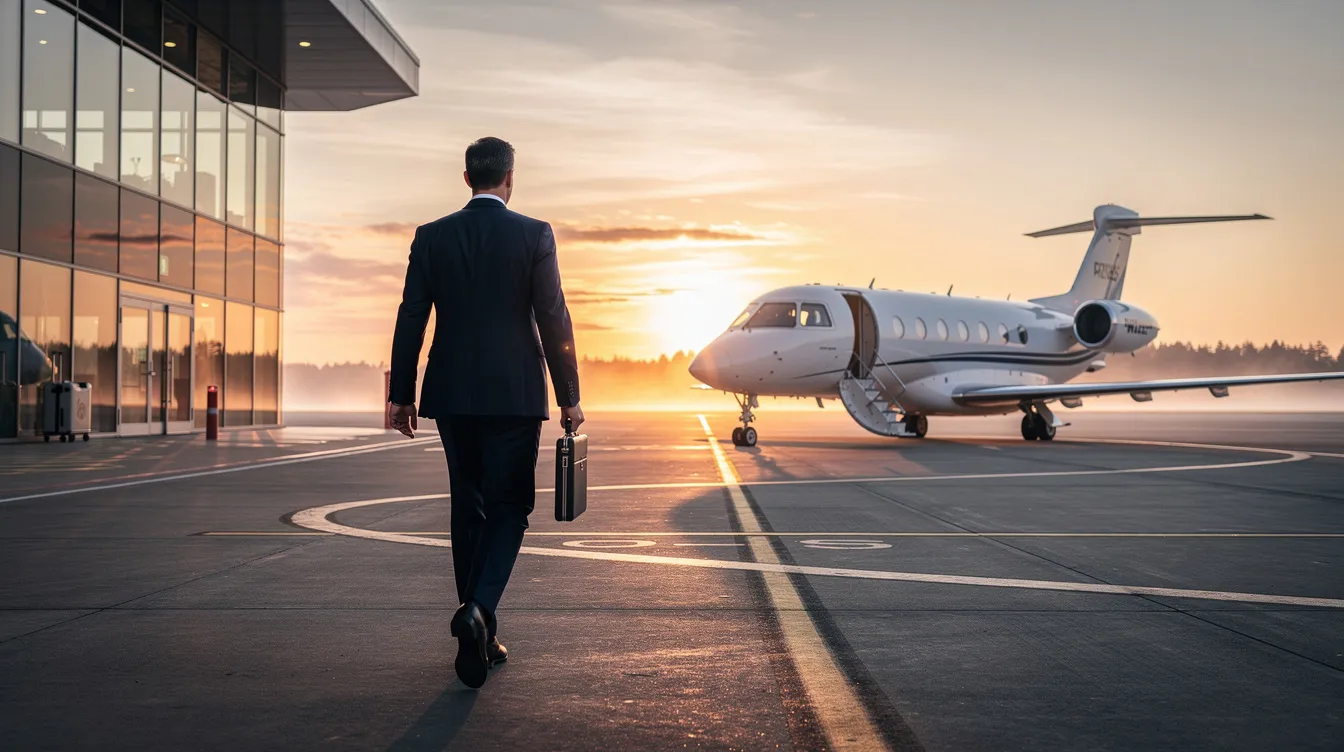
Premium travel is no longer defined only by champagne, lounges, or a wider business class seat. For those seeking the top airlines' business class experience, the real advantage is control: control over schedule, privacy, routing, safety, and time.
This guide is designed for premium travelers, executives, and high-net-worth individuals who want to understand the evolving landscape of top airlines' business class and private jet access in 2026. We cover the latest innovations, compare leading airline products, and help you decide when to choose business class or private aviation for your needs. Making informed choices for premium travel in 2026 is essential for maximizing comfort, efficiency, and value—whether you are a frequent flyer, a corporate leader, or someone who values privacy and flexibility.
This guide reviews the two airlines' business class products in 2026, from Qatar Airways Qsuite, Singapore Airlines' business class, EVA Air's Royal Laurel, Air France's Business Suite, ANA's The Room, and more. Then it compares those cabins with BlackJet’s Jet Card model for travelers who want business class luxury without the limits of scheduled aviation.
Why Elite Travelers Are Rethinking Business Class in 2026
Many new business class cabins are being designed with privacy doors, massive 4K screens, and hotel-like amenities, marking a significant evolution in the business class experience. The latest business class seats often feature advanced technology such as Bluetooth audio, wireless charging, and high-definition entertainment systems, enhancing the overall passenger experience.
The introduction of fully enclosed suites with sliding doors in business class is becoming more common, providing passengers with increased privacy and comfort during flights. Many modern business class seats are designed with privacy doors, providing a more secluded travel experience for passengers. The trend in business class is moving towards suites with hotel-like amenities, including larger screens and enhanced privacy features.
This is why the world’s best business class today can feel closer to yesterday’s first class. High-end business class often features double beds, group seating configurations, and expansive amenities. Qatar Airways, Singapore Airlines, ANA, Cathay Pacific, and Emirates are known for providing premier long-haul business class experiences, and the Skytrax World Airline Awards consistently feature Qatar Airways, Singapore Airlines, and ANA as top-rated business class airlines in global rankings.
Yet even the best business class airline has structural limits. Business class passengers still work around fixed departure times, airport queues, hub connections, and cabins shared with 30–60 other passengers. Avoiding hubs and queues can save up to 3–5 hours per trip. Flying from Teterboro instead of JFK, or London Farnborough instead of Heathrow, can turn a travel day into a focused half-day.
That is where BlackJet enters the conversation. For travelers who already buy premium seats from Qatar Airways, Singapore Airlines, Air France, Eva Air, or Etihad Airways, private jet access is not simply an indulgence. It is a strategic upgrade when privacy, timing, and direct routing matter more than the airline brand.
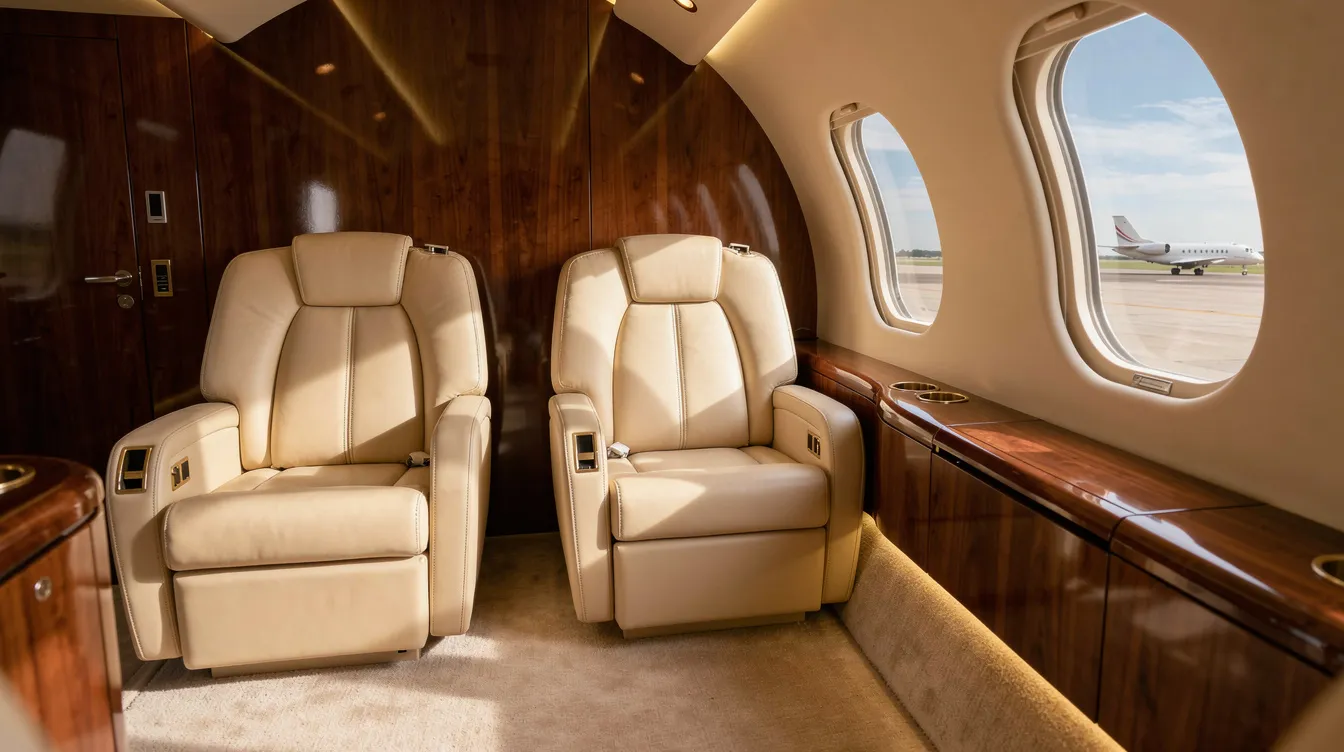
How to Choose the Best Business Class Airline for Your Route
The best business class choice is not just about the airline. It is about the exact aircraft, seat, route, timing, and ground experience.
Hard product vs soft product: The terms 'hard product' and 'soft product' are commonly used in the travel industry to differentiate between the physical aspects of a flight experience and the service elements. A hard product typically refers to the physical seat, cabin design, and amenities available on an aircraft, while a soft product encompasses the service, food, and overall passenger experience. The balance between hard and soft products can significantly influence a traveler's overall satisfaction and experience during a flight.
Seat layout matters: Look for 1-2-1 layouts, direct aisle access, privacy doors, large footwells, storage, and a proper lie-flat seat. A middle seat in old 2-3-2 layouts, or a narrow footwell in older staggered cabins, can ruin an otherwise premium itinerary. ANA’s The Room is a hard-product leader because it offers unusually wide seats, privacy doors, and a sofa-like feel.
Aircraft type matters: A Qatar Airways Boeing 777 with Qsuite is very different from an older A330-style layout. Emirates A380 business class is famous for its social space, while some legacy 777 cabins have lagged in retrofit. Delta Air Lines' A350 suites differ from older 767 products. Many airlines are not created equal across their own fleets.
Route pairing matters: London–Tokyo on Japan Airlines business class using the A350-1000 can be exceptional. New York–Paris on Air France’s new product can be superb when operated by a refurbished 777 with the latest business suite. But the same brand on another aircraft may deliver a noticeably weaker overall business class experience.
Lounge and ground service matter: A business class lounge can set the tone before a long-haul flight. Singapore Airlines, Qatar Airways, Turkish Airlines, Air France, and Emirates invest heavily in lounges, but ground service still does not remove security, boarding, baggage, and connection friction.
The key takeaway is simple: never book a business class airline by reputation alone. Book the aircraft and route combination.
World’s Top Business Class Airlines in 2026
This ranking-style overview focuses on the top airlines business class travelers should know in 2026. Five airlines consistently outperform others in business class travel by combining ultra-private suites with excellent service and gourmet dining.
Airline | Signature Business Class Product | Highlights | Notable Features |
|---|
Qatar Airways | Qsuite | Fully enclosed suites, sliding doors, dine-on-demand | Double beds, quad seating, Starlink Wi-Fi |
Japan Airlines | A350-1000 Safran Unity Suites | Privacy doors, headrest speakers, seasonal menus | Refined Japanese design, Apex Suites on 777 |
All Nippon Airways | The Room | Extra-wide sofa-style seats, sliding doors | Forward and rear-facing layout |
Singapore Airlines | Long-Haul Business Class | Wide seats, Book the Cook, KrisWorld entertainment | Elite cabin crew, new seat rollout in 2026 |
Etihad Airways | Business Studio & A350 Business Suite | Staggered seating, dine-on-demand, Armani bedding | Espresso, Arabic coffee, Abu Dhabi lounges |
Emirates | A380 Business Class | Lie-flat seats, onboard bar, ICE entertainment | Bulgari amenities, social lounge |
Air France | Business Suite | Reverse herringbone seats, sliding doors | Michelin-inspired dining, French wine selection |
Turkish Airlines | Stelia Opal seats on 787 & A350 | Strong soft product, DO&CO catering | Istanbul mega-hub lounge, excellent coffee |
Delta Air Lines | Delta One Suites | Privacy doors, Westin bedding, upgraded lounges | 4K screens, Starlink Wi-Fi on select aircraft |
British Airways | Club Suite | 1-2-1 layout, suite doors, HD screens | Refurbished 777s, improved privacy and storage |
Notes on Choosing Business Class
Always check the aircraft type and seat map before booking to ensure you get the desired hard product.
Consider lounge access and ground services as part of the overall experience.
Look for airlines offering dine-on-demand and pre-order meal services for flexibility.
Review route-specific cabin configurations since the same airline may have different products on different aircraft.
Best Business Class Airlines by Region & Use Case
Premium cabins are best judged by mission profile.
Asia-Pacific: Singapore Airlines, Japan Airlines, ANA, EVA Air, and Cathay Pacific are standouts. Typical flagship routes include New York–Singapore, London–Tokyo, Taipei–Los Angeles, and Hong Kong–Sydney. EVA Air’s royal laurel class is especially consistent, while Cathay’s Aria Suite brings advanced privacy and technology.
Europe: Air France, British Airways, Swiss, Austrian Airlines, Finnair, ITA Airways, Lufthansa's business class, LOT Polish Airlines, and Virgin Atlantic all have strong route-specific offerings. British Airways Club Suite is a major upgrade over the old Club World, especially on London–New York. Austrian Airlines stands out for its catering and coffee service.
Middle East and connecting hubs: Qatar Airways, Emirates, Etihad Airways, and Turkish Airlines dominate premium connections between Europe, Asia, Africa, Australia, and South America. Doha–São Paulo, Dubai–Sydney, and Abu Dhabi–New York are examples where routing and hub experience matter.
North and South America: Delta, United, American, LATAM, and Air Canada dominate many routes. Business class to South America can be mixed; New York–Buenos Aires and Miami–Santiago may offer excellent seats on one aircraft and older cabins on another.
For overnight transatlantic flights, choose a lie-flat bed, privacy, bedding, and a quiet cabin. For ultra-long-haul flights over 14 hours, prioritize width, Wi-Fi, doors, and dine-on-demand. For day flights, service, Wi-Fi, storage, and lunch service may matter more than bedding. For “bleisure” trips, the lounge, wine list, and arrival timing can determine the best business class experience.
For travelers flying these missions repeatedly, jet card-based private aviation becomes less of a luxury indulgence and more of a scheduling tool.
Deep Dive: Signature Business Class Products to Know
Qatar Airways Qsuite offers a 1-2-1 layout with doors, double beds in the center, quad seating, dine-on-demand, pajamas, caviar on select routes, and Starlink Wi-Fi being rolled out. It remains a reference point for the world's best business class.
Singapore Airlines Long-Haul Business uses very wide seats on A350 and 777 aircraft, with forward-facing flat bed comfort, Book the Cook, KrisWorld entertainment, and exceptional crew service. It does not always offer dine-on-demand or pajamas, but the service culture is elite.
EVA Air Royal Laurel Class offers 1-2-1 reverse herringbone on 777 aircraft and staggered layouts on 787 aircraft. Expect premium champagne, strong Taiwanese dining, occasional Din Tai Fung collaboration, high-quality pajamas, and a refined cabin feel.
Air France Business Suite uses Safran reverse herringbone seats with sliding doors on 777 and A350 aircraft. Bulkhead seats may offer extra space, while the dining program leans into French chefs, wine, and thoughtful presentation.
British Airways Club Suite is a 1-2-1 product with doors on A350, 787-10, some 787-9, and refurbished 777 aircraft. It improves storage, privacy, and screen size over the old Yin-Yang Club World cabin, though some fleets still carry older seats.
Cathay Pacific Aria Suite uses a Collins Aerospace Elements seat platform with doors, Bluetooth audio, wireless charging, strong bedding, and signature touches like Cathay Delight. Cathay Pacific is again becoming a serious contender for the best business class airline on Asian trunk routes.
Etihad A350 Business Suite and 787 Business Studio offer doors or strong staggered privacy, Bluetooth audio, Armani / Casa bedding, dine-on-demand, espresso, and Arabic coffee.
Delta One Suites provide doors on A350 and A330-900neo aircraft, all-aisle access, Westin Heavenly bedding, and upgraded Delta One lounges at hubs such as JFK. Not every Delta widebody has suites yet.
Austrian Airlines and Swiss offer strong, more classic reverse herringbone business class products. Austrian’s catering and coffee menu are especially notable on Vienna–New York and other long-haul routes.
Business class dining experiences often feature gourmet meals prepared by renowned chefs, with menus that reflect local cuisine and seasonal ingredients. Airlines are increasingly focusing on the quality of their dining experiences, with many offering extensive wine lists and premium beverage selections to complement meals. Business class cabins are increasingly featuring dine-on-demand service, allowing passengers to order meals at their convenience rather than at set meal times. Many airlines now offer dine-on-demand service in business class, allowing passengers to order meals at their convenience rather than adhering to a set meal schedule.
Business Class vs Private Jet: What Changes for the Traveler
Even the best business class products still operate inside the airline system. Private aviation changes the system.
Schedule control is the first difference. When flying business class, you adapt to the airline’s timetable. With a BlackJet Jet Card, travelers can request departure when it suits the meeting, family schedule, or market opportunity, in contrast to other programs such as Flexjet’s jet card pricing and options. Non-peak bookings are often arranged with 24–48 hours’ notice, and many trips can be confirmed faster depending on availability.
The airport experience is also different. Commercial premium cabins still require terminals, security, boarding, baggage rules, and often lounges. BlackJet travelers use private terminals and FBOs at airports such as Teterboro, Van Nuys, London Farnborough, and Biggin Hill.
Privacy changes most of all. A business class suite with a door is still part of a shared cabin. A private jet is a private space for your family, board, advisors, or executive team.
Consider a CEO flying from New York to Toronto, and then from Chicago to New York in one day. On airlines, such a flight sequence requires three airport arrivals, three boarding processes, possible delays, and limited meeting privacy. On a BlackJet light or midsize jet, the same day can be built around the meetings, not the other way around, and executives who only need a single seat can also explore buying a seat on semi-private or shared private jet flights.
Baggage handling, secondary airports, and direct routing add further value. There is no missed connection because there is no connection. There is no lost checked bag in the same commercial sense. There is no need to choose between a poorly timed nonstop and an efficient meeting schedule.
Inside BlackJet: Jet Cards for Former Business Class Loyalists
BlackJet is designed for travelers who used to default to top-tier commercial premium cabins but now require more control, discretion, and reliability.
BlackJet Jet Card programs offer 25-hour and 50-hour prepaid blocks across light, midsize, super midsize, and large cabin aircraft, a structure that aligns closely with broader 50-hour jet card cost benchmarks and value drivers. Rates are fixed by aircraft category, hours do not expire, and typical costs include fuel surcharge, federal excise tax, and carbon offsets. This gives travelers a clearer alternative to ad hoc charter and a more flexible option than aircraft ownership.
Booking is supported through 24/7 digital tools, mobile and web access, real-time support, and a dedicated flight team. The goal is simple: make private jet access as effortless as booking premium commercial travel, while preserving the customization that business class cannot provide.
Safety is central. BlackJet uses a proprietary safety certification process, strict operator vetting, pilot experience standards, maintenance oversight, and third-party audit standards such as ARG/US, Wyvern, or IS-BAO, where applicable. In private aviation, operator quality varies, so certification and oversight matter.
Sustainability is also built in. BlackJet states that flights are carbon neutral by default, with integrated offset programs and a methodology designed to address aviation emissions beyond basic CO₂. You can learn more about BlackJet’s approach to carbon-neutral flights.
A typical BlackJet client may still choose Singapore Airlines for New York–Frankfurt–Singapore, but use a Jet Card for New York–Nassau, New York–Aspen, or West Coast regional travel where airlines require poor timings, connections, or unnecessary ground time—especially once they understand the cost structure of a 100-hour Jet Card and how a 25-hour jet card compares in features and pricing.
Aircraft Categories vs Business Class Cabins
Business class cabins include reverse herringbone seats, staggered suites, private suites with doors, and group seating concepts. Private jet categories are simpler: light, midsize, super midsize, large cabin, and ultra-long-range, spanning many of the top private jets in the world and mirroring the core private jet size categories from very light to VIP airliners.
Light jets, such as Phenom 300-type aircraft, usually seat 6–8 passengers and cover roughly 2–3 hours nonstop. They work well for Boston–Washington, London–Geneva, São Paulo–Rio, or New York–Toronto.
Midsize and super midsize jets typically seat 7–9 passengers and can cover 5–7-hour missions depending on aircraft and conditions. These aircraft can replace many business class routes, such as New York–West Coast, London–Dubai, or intra-South America trips that might otherwise require connections, and they sit at the heart of the main types of private jets available to different traveler profiles.
Large cabin and ultra-long-range jets offer stand-up cabins, more luggage capacity, sleeping arrangements, enclosed lavatories, and intercontinental range, similar to some of the best 10 million dollar private jet options and many of the hallmark features you’d see in a 20 million dollar private jet. They can complement or replace first class and business class travel on routes such as New York–London, Paris–São Paulo, or Singapore–Tokyo for large groups up to 50 passengers, as well as missions that call for private jets suitable for around 15 passengers.
The practical guidance is this: use light jets for regional speed, super midsize jets for transcontinental flexibility, and large cabin jets for group travel up to 20 passengers or other top 16-seat private jet options when your team, luggage, privacy, or sleep requirements justify the upgrade.
Comparing Total Trip Time: Business Class Airlines vs BlackJet
For busy executives, total door-to-door time matters more than the cabin glamour alone.
New York City to Miami by business class may involve 45–60 minutes to JFK or Newark, arrival 90–120 minutes before departure, security, boarding, a three-hour flight, baggage, and ground transfer. Total door-to-door time can reach 6–7 hours.
With BlackJet, a traveler may use Teterboro, arrive 20–30 minutes before departure, board through an FBO, fly directly, and exit through a private terminal. Door-to-door time can be closer to 3–4 hours,s depending on traffic and airport choice.
London to Geneva by commercial business class may require Heathrow arrival, security, lounge time, boarding, a short flight, arrival processing, and transfer. Total time can become 5–6 hours.
With BlackJet from Farnborough or Biggin Hill, the same journey can often be completed in roughly 2–3 hours door-to-door. To airlines' business class offerings like Singapore Airlines or Air Fr, a nce shine on long-haul trunk routes. BlackJet excels when the mission is a short-notice board meeting, a multi-city day, an airport poorly served by nonstops, or an “impossible” same-day return.
Once a traveler reaches 1 international round-trip ticket per year, or frequent regional hops where time has a high economic value, Jet Card economics become more competitive with full-fare business class travel, especially when compared against established providers and their NetJets jet card pricing structures.
Sustainability in Premium Travel: Modern Business Class & BlackJet
Premium cabins have a higher carbon footprint per passenger, and serious travelers increasingly scrutinize sustainability claims.
Leading airlines such as Air France, Delta Air Lines, and Singapore Airlines are investing in efficient aircraft,rcraft including the A350 and 787, exploring sustainable aviation fuel, and offering offset options. More efficient widebodies can reduce fuel burn per seat, especially on dense long-haul routes.
BlackJet’s model is different. Carbon neutrality is built into the service rather than treated as a checkout add-on. BlackJet’s sustainability program offsets flights by default, and ESG-conscious executives can also consider sustainable aviation fuel contributions where available—an approach that aligns with broader billionaire private jet price and ownership trends and the most expensive private jet options in the luxury market.
A balanced strategy may use efficient business class for major long-haul trunk sectors and BlackJet for essential regional segments where direct routing and Jet Card pricing prevent wasted time, unnecessary connections, and inefficient repositioning by the traveler, especially once you understand the broader private jet price list and access options.
The goal is not to pretend premium travel has no impact. The goal is to make each trip more intentional, more efficient, and more accountable.
Safety & Security: Airlines’ Business Class vs Private Jet Standards
For C-suite and high-profile individuals, safety includes operational safety, personal security, and data security, and understanding how safe private jets really are helps put those risks in context.
Commercial airlines have clear strengths: regulated operations, standardized crew training, redundant systems, and mature maintenance programs. Top airlines such as Singapore Airlines, Qatar Airways, and EVA Air are widely regarded as among the safest operators globally.
Private aviation is sometimes misunderstood. The risk is not that all private jets are inherently unsafe; the risk is variation among operators. BlackJet mitigates this through operator vetting, audit standards, pilot experience requirements, maintenance review, and a proprietary certification process, while also leveraging operational advantages like flying at higher cruise altitudes than commercial airlines to reduce congestion and turbulence.
Security is another advantage. Private terminals reduce exposure to crowds, media, and public travel patterns. A confidential itinerary can be coordinated with corporate security, ground transportation, and family, or in that way, scheduled airlines generally cannot provide for business-class passengers, even though concerns such as whether private jets experience more turbulence are often top-of-mind for new flyers.
When to Choose Top-Tier Business Class vs When to Choose BlackJet
This is not an either/or decision. Many BlackJet members still use premium commercial airlines where they make sense and rely on Jet Card membership pricing structures to keep private flying predictable.
Choose business class when:
You are flying a single long-haul sector with flexible timing.
The route offers an exceptional cabin, such as Qatar Qsuite, ANA The Room, Air France Business Suite, or EVA Air Royal Laurel.
Airline loyalty, partner programs, mileage earning, or lounge access creates meaningful value.
Premium economy or economy would be too uncomfortable, but private aviation is not necessary for the mission.
Choose BlackJet when:
You need multi-stop trips in one or two days.
A meeting is time-critical, and a delay would be costly.
The destination is poorly served by non-airline business options.
You need absolute privacy for negotiations, family travel, or sensitive work.
You want to avoid a hub, middle seat risk, crowded lounge, or inconsistent J class product.
The real upgrade is control over your schedule and environment. Even the best business class airline cannot fully provide that.
Frequently Asked Questions About Business Class & Private Jet Travel
Is Qatar Qsuite still better than most other business class products in 2026?
Yes. Qatar Qsuite remains one of the strongest business class suites in the world because it combines doors, flexible center seating, dine-on-demand, strong lounges, and excellent service. Qsuite Next Gen upgrades should reinforce that position.
How does Singapore Airlines business compare to Air France's business on Europe–Asia routes?
Singapore Airlines is stronger for cabin crew consistency, Book the Cook, and premium service culture. Air France is especially strong when operating its latest Business Suite with doors, French dining, and wine. The best choice depends on aircraft, timing, and whether Singapore’s new business class retrofit is available on the route.
Which business class airline is best for flying to South America?
For South America, look first at aircraft and routing. Air France can be excellent on Paris–São Paulo, while Delta Air Lines, American, United, LATAM, and Air Canada may dominate North America–South America routes. Cabin quality can vary widely.
At what annual travel spend does a Jet Card start making sense vs buying business class tickets?
A Jet Card starts to make sense when time saved, privacy, and schedule control outweigh ticket cost alone. Travelers making 10–20 international roundtrips, frequent regional hops, or regular short-notice trips should review their annual patterns.
Can I still earn airline miles if I sometimes use BlackJet instead of a business-class airline?
Yes, airline miles still apply to commercial flights you take. BlackJet flights are separate from airline frequent flyer programs. Many travelers use both: airlines for predictable long-haul routes and BlackJet for complex or time-sensitive missions.
How far in advance do I need to book a BlackJet flight?
BlackJet trips are commonly requested 24–48 hours before departure for non-peak periods. Shorter notice can be possible depending on aircraft availability and mission details.
How safe is a private jet charter versus a major airline?
Major airlines have strong safety systems. Private jet charter safety depends heavily on operator quality. BlackJet’s certification, vetting, pilot requirements, and maintenance oversight are designed to reduce that variability.
Are BlackJet flights really carbon neutral?
BlackJet states that flights are carbon neutral by default through integrated offset programs. The company’s sustainability model is designed to include offsets in the trip rather than adding them as an optional extra.
What aircraft types will I typically fly with a Jet Card vs a business class airline-widebody?
A business class airline-widebody may use an A350, 777, 787, or A330. A BlackJet Jet Card gives access to light, midsize, super midsize, and large cabin private aircraft. Private jets are smaller than widebodies, but they provide a fully private cabin and access to more airports.
Conclusion: Redefining Premium Travel in 2026
In 2026, the landscape of premium travel is evolving beyond the traditional confines of top airlines' business class. While leading carriers like Qatar Airways, Singapore Airlines, and ANA continue to push the boundaries of comfort, privacy, and service within scheduled aviation, discerning travelers increasingly seek the strategic advantages of private jet access. BlackJet’s Jet Card programs offer unmatched control over schedule, routing, and privacy, transforming travel from a necessary obligation into a seamless extension of business and lifestyle priorities.
Choosing between elite business class and private jet access is no longer a binary decision but a nuanced strategy tailored to mission profiles, frequency, and personal values. Whether prioritizing the solid soft product and innovative hard product of a world-class airline or the bespoke flexibility and direct routing of a private jet, the modern premium traveler commands both options.
Elevate your travel with confidence and intention. Explore how BlackJet can complement your existing premium travel choices, offering safety, sustainability, and exclusivity that align with the demands of today’s high-stakes journeys. The future of business class is not just about where you fly—it’s about how you take control of your time and experience.


 Sign up with google
 Sign up with Apple