

Why Gulfstream Type Ratings Matter for Elite Private Jet Operations
A Gulfstream type rating is required to act as Pilot in Command of Gulfstream jets, and in 2027, these certifications represent one of the most demanding achievements in business aviation. Type ratings are required for complex or multi-engine jet aircraft, and type ratings ensure pilots can operate specific aircraft safely across diverse global missions. Unlike airline pilots who fly predictable hub-to-hub routes, Gulfstream crews operate with far greater autonomy-flying into compact runways, navigating international regulatory frameworks, and adapting to bespoke schedules that demand rapid decision-making under pressure.
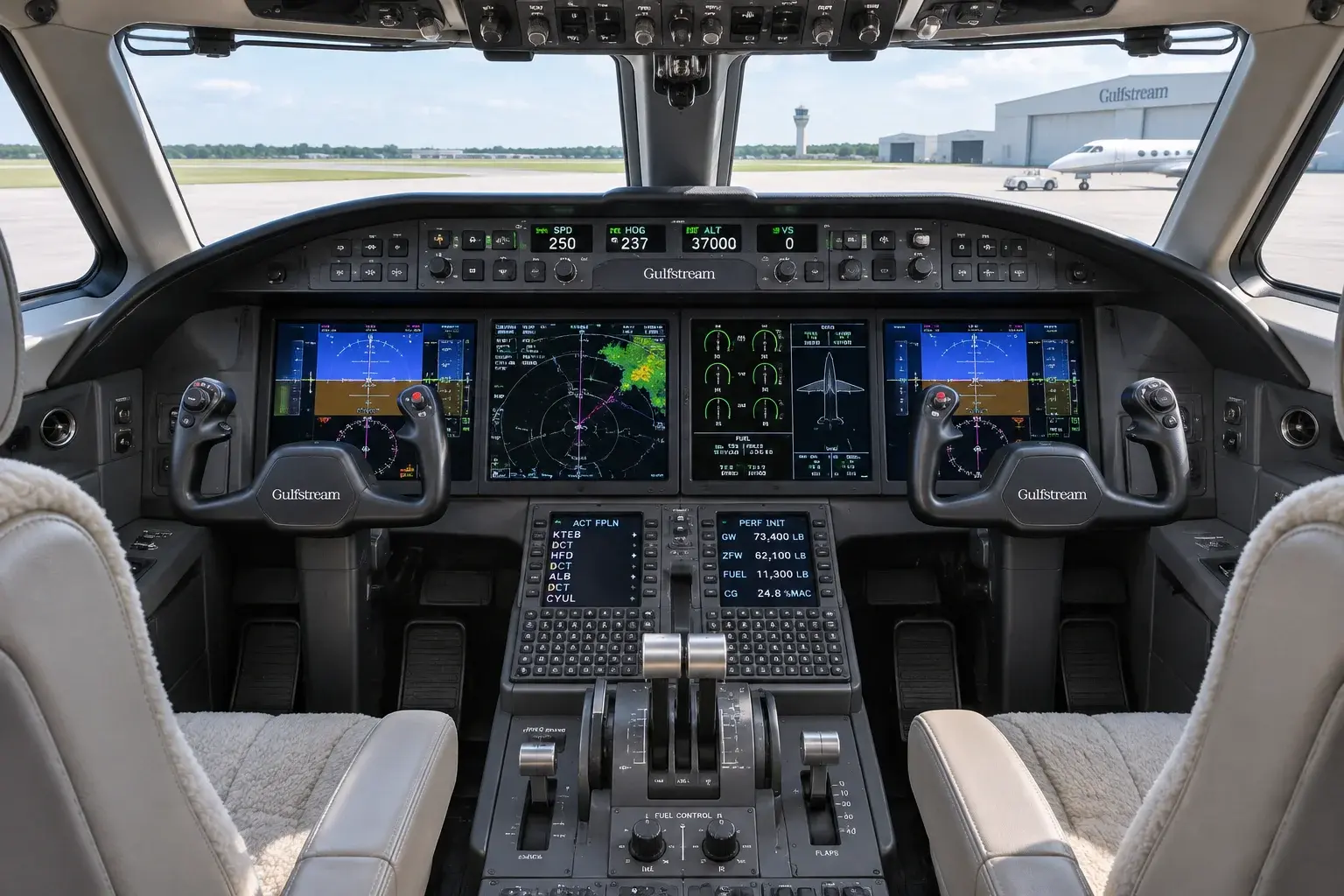
For BlackJet clients, properly type-rated and recurrently trained crews are a core pillar of flight safety, comfort, and reliability, complementing BlackJet’s broader premium private jet card and membership solutions. Modern Gulfstream aircraft like the G500, G600, G650, G700, and G800 feature advanced fly-by-wire systems, Symmetry Flight Deck avionics, and performance envelopes that demand dedicated type rating training well beyond a generic jet qualification. Initial type rating courses typically take 21 to 28 days to complete, with a type rating cost ranging from approximately USD 55,000 to USD 80,000 for current-generation models.
What Is a Gulfstream Type Rating? (And How It Differs from Standard Jet Training)
A type rating is an additional authorization on a pilot license that permits operation of a specific aircraft type. All Gulfstream models are considered turbojet aircraft and exceed 12,500 pounds maximum takeoff weight, which is why they fall under type ratings rather than generic class ratings. FAA regulations govern the type rating process for Gulfstream aircraft under 14 CFR § 61.31.
Gulfstream type ratings are tied to specific FAA type certificates rather than the Gulfstream brand as a whole. Different Gulfstream models may require different type ratings despite similar appearances. For example, the GVI type rating covers the Gulfstream G650 and G650ER, while the GVII designation applies to the G500/G600 family, and the GV rating covers the legacy G450/G550 lineup. No Gulfstream model offers a single-pilot exemption type rating option-all require multi-pilot operations. Holding a Gulfstream type rating does not qualify a pilot to operate jets from other manufacturers; for context, Boeing offers Full Type Rating courses aligned with ICAO standards for its own aircraft types. BlackJet only places crews whose current type rating matches the exact Gulfstream variant operating client flights, reinforcing regulatory compliance at every level.
Prerequisites and Experience Required for Gulfstream Type Ratings
Gulfstream type ratings are usually not a first type rating for most pilots. They typically follow several thousand hours of flight training and turbine experience. For a Gulfstream PIC role in 2027, typical prerequisites include:
Requirement | Typical Value |
|---|---|
Total flight hours | 3,000–4,500+ |
Multi-engine engine hours | 1,500+ |
Turbine hours | 500–1,000+ |
Pilot certificate | Valid ATP certificate (FAA) or EASA ATPL with MCC certificate |
Medical certificate | Current First-Class medical certificate |
Instrument flying record | Strong instrument flying record and readiness for complex IFR environments |
Many pilots building a flying career toward Gulfstream cockpits come from Part 135 charter operations, regional airlines, or military transport backgrounds before transitioning into corporate and private jet roles. SIC positions may accept lower total time, but candidates still need solid multi-engine IFR skills, especially when flying for leading global private jet companies that mandate robust multi-crew standards. High-end operators-Fortune 500 flight departments, tech firms, and luxury charter providers-often require essential pilot qualifications including 4,000+ hours and an existing Gulfstream rating. This aligns with broader discussions of whether private jets are safe and how risk is managed. Human factors readiness is equally critical: the ability to demonstrate stress management, crew resource management, and sound decision-making under high workload defines who earns the left seat.
Inside Gulfstream Type Rating Training: Course Structure and Content
Type rating courses typically include ground school and simulator training in a structured curriculum that builds knowledge progressively. Type rating courses typically last 2 to 3 weeks for ground school, covering aircraft systems-electrical, hydraulics, flight controls, avionics-plus normal and abnormal procedures, performance calculations, and weight and balance. Type ratings cover unique systems and performance characteristics specific to each Gulfstream model, and type ratings are aligned with ICAO and IATA standards.
Gulfstream training includes systems integration and cockpit procedure practice before simulator sessions, ensuring pilots gain familiarity with the actual aircraft's cockpit flow in Fixed Training Devices before stepping into Level D full-flight simulators. Simulator training usually consists of about 40 hours total, spread across approximately 6 to 9 days, with intensive focus on emergency procedures: engine failures, fires, rapid decompression, rejected takeoffs, windshear, and single-engine approaches, all of which are key cost drivers within a broader private jet pricing and cost structure. Pilots must log simulator hours on modern Gulfstream systems to fly low-visibility approaches. Gulfstream G500 initial training requires about 5 days of dedicated simulator sessions following ground school. For comparison, Proflight offers a 17-day course for the CE-525 type rating, illustrating how duration varies by aircraft complexity and by whether crews are preparing for midsize jets or the largest private jets designed for global missions. Gulfstream type ratings emphasize international and long-range flight operational training, preparing crews for oceanic crossings and complex airspace—exactly the profiles flown by many top 16-seat long-range private jets. Under EASA, lower-time pilots may need a Jet Orientation Course and Multi-Crew Cooperation training as prerequisites, while FAA paths follow Part 61 or Part 142 structures. The practical test at the end evaluates the pilot's complete ability to operate the airplane safely across all scenarios.

Gulfstream OEM and Factory-Authorized Type Rating Programs
FlightSafety International is Gulfstream's factory-authorized training provider, operating major centers in Savannah, Dallas, Long Beach, Teterboro, and Farnborough. Their instructor teams develop curricula in direct collaboration with Gulfstream engineering, with simulators matched to specific tail numbers and software loads. This means procedures, checklists, and the flight manual mirror what crews encounter in the real aircraft.
Programs span every current Gulfstream model-from legacy GV/G450/G550 courses still in high demand due to large in-service fleets, to G650/G650ER and the newest G700/G800 offerings—mirroring the diversity of aircraft available in premium private jets for sale in the UK. Training integrates Competency-Based Training and Assessment principles, emphasizing the "why" behind each decision rather than rote button-pressing. This approach reinforces skills in communication, workload management, and situational awareness. BlackJet works exclusively with operators who use OEM or factory-authorized training pipelines, giving Jet Card members confidence that every crew member is current on the latest Gulfstream safety resources and system updates.
Type Rating Cost, Duration, and Recurrent Training for Gulfstream Jets
Gulfstream type ratings often involve high costs and exclusive training facilities, but this investment directly underpins flight safety and professional advancement. Type rating training costs vary by aircraft type and provider, just as overall private jet affordability and entry-level options depend heavily on aircraft category and mission profile. Here are realistic 2027 ranges:
Gulfstream Model | Initial Type Rating Cost (USD) | Course Duration | Annual Recurrent Cost (USD) |
|---|---|---|---|
G450/G550 (GV) | $40,000–$60,000 | ~3–4 weeks | $20,000–$30,000 |
G500/G600 (GVII) | $55,000–$75,000 | ~15–21 days | $25,000–$35,000 |
G650/G650ER (GVI) / G700/G800 | $70,000–$95,000 | ~3–4 weeks | $30,000–$40,000 |
Cost summary: An initial Gulfstream type rating costs around $60,000 on average, while recurrent Gulfstream training costs about $28,000 annually. Key cost drivers include aircraft complexity, simulator location, PIC vs. SIC track, and additional modules like Low Visibility Operations or Extended Range certification—considerations that sit alongside the advanced technology and cabin features highlighted in 20 million dollar private jet purchases.
FAA requires a valid proficiency check every 12 months for PIC. Type ratings must be revalidated annually through simulator checks-recurrent training for Gulfstream pilots typically occurs every 12 months, or 6 months for certain commercial PICs. Recurrent simulator sessions focus on rare but critical failures and reinforce CRM and human factors principles. For individual pilots, obtaining a Gulfstream type rating can define access to six-figure flying positions. For BlackJet and its operating partners, recurrent training is a non-negotiable safety investment that underpins products like the BlackJet 25+ Hour Jet Card.
How Gulfstream Type Ratings Enhance Flight Safety, Human Factors, and the BlackJet Experience
Deep aircraft systems knowledge built through type rating training reduces the risk of misdiagnosed failures, while repeated emergency drills in simulators build muscle memory for events that may never occur in a real aircraft. Standardized procedures across crews produce predictable, safe cockpit behavior-a critical element of private jet safety.
Consider a New York–London night flight in a G650 encountering Atlantic weather deviations and an avionics alert. Because both pilots completed recurrent type rating training within the past six months-including scenario-based practice for exactly this kind of event-the situation is managed with efficiency and confidence, even on missions that resemble those flown by 15-passenger ultra-long-range private jets. BlackJet's partner operators track training cycles digitally, ensuring no pilot flies outside recurrent windows, and integrate human factors data into crew scheduling—an approach comparable to leading private jet charter companies in the USA that emphasize rigorous oversight and standards. Modern Gulfstream flight training also covers fuel-efficient profiles and optimal routing, which BlackJet overlays with carbon-neutral flight commitments and technology-driven dispatch for every mission, whether clients are exploring budget-friendly private aviation options or flying on flagship large-cabin jets.
Planning Your Gulfstream Career or Charter Strategy: Practical Questions and Answers
How long does it take to get a Gulfstream G500 or G650 type rating?
Expect a 2–3 week course including pre-study, ground school, and simulator training. Gulfstream G500 initial training lasts about 5 days for the simulator phase alone.
Can a low-time pilot jump straight into a Gulfstream type rating?
Rarely. Many pilots need airline, charter, or military experience first. Most complete their first type rating on smaller business jets before pursuing a Gulfstream.
Do airlines pay for Gulfstream type ratings?
No—these ratings are typically funded by corporate operators or self-sponsored by pilots in exchange for a service agreement.
How often do I need recurrent training?
Type ratings must be revalidated regularly to remain active, with annual simulator checks standard under both FAA and EASA rules.
As a traveler, how do Gulfstream type ratings affect my BlackJet experience?
Every crew operating your flight holds a current, variant-specific type rating with up-to-date recurrent training—giving you the highest standard of safety and performance on long-range and complex trips, whether you’re booking a whole aircraft or simply buying a seat on a private jet.
Always confirm the latest regulatory and provider details, as course structures and costs can evolve, particularly if your flying profile includes occasional upgrades to 50-passenger private jet charters.

BlackJet, Gulfstream Crews, and Your Next Private Jet Journey
Rigorous Gulfstream type rating training, annual recurrent checks, and human-factors-focused instruction come together to create the safest, smoothest private flights in aviation. For travelers considering ownership or access models in the 10 million-dollar private jet segment, this training standard is a key differentiator. BlackJet's Jet Card programs provide access to Gulfstream and other premium aircraft categories operated exclusively by fully type-rated, recurrently trained crews under strict safety protocols. With 24/7 digital booking, real-time weather and risk monitoring, and carbon-neutral flights as standard, private jet access through BlackJet is a strategic advantage-saving time over commercial first class, reaching secondary airports directly, and delivering the privacy that board-level and UHNW travel demands, similar to the expectations set by the most expensive private jet experiences.
Elevate your travel-effortlessly. Whether you’re comparing top-tier luxury private jet options or planning large-group missions on 20-passenger private jets, explore BlackJet's Jet Card options or speak with a BlackJet advisor about tailored Gulfstream-capable services for your 2027 travel plans.