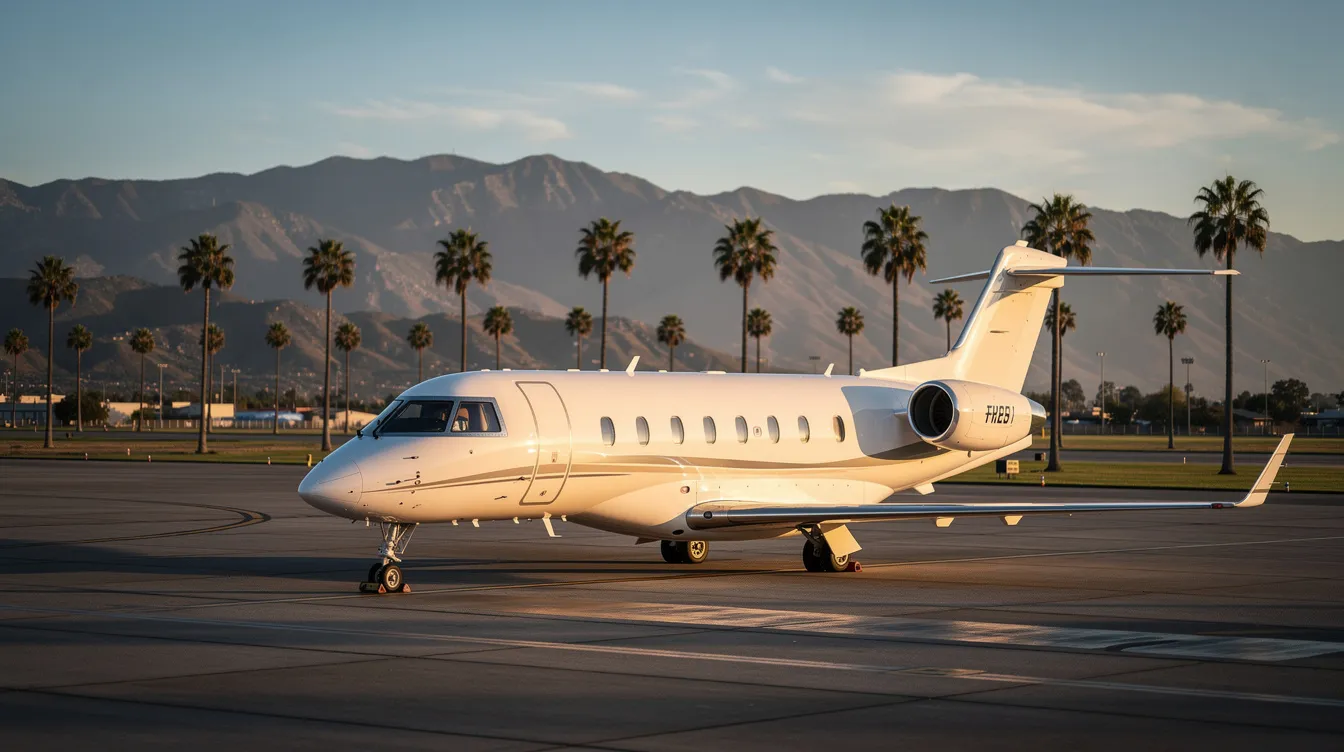
For executives and high-net-worth travelers, choosing the right airport in California is a strategic decision that shapes every minute of your trip. The state's aviation network is vast, and knowing how to navigate it separates those who merely travel from those who travel intelligently.
Executive Overview: Why California Airports Matter for High-End Travelers
California is home to some of the busiest and most complex airports in the world. Commercial hubs like Los Angeles International Airport and San Francisco International Airport move tens of millions of passengers annually, offering extraordinary global connectivity but also long security lines, ground traffic congestion, and rigid schedules. For travelers who value time above all else, these major airports represent both opportunity and friction.
The alternative is private aviation into smaller county airport fields, executive terminals, and regional airports that sit closer to where business actually happens. California hosts dozens of commercial airports and hundreds of general aviation fields that BlackJet members can use as origin, destination, or diversion points on any given day.
BlackJet's premium private jet card program model provides access to a nationwide and global fleet, enabling optimized routing into both large international airports and less congested domestic airports across the state. Consider a Los Angeles–based executive who needs to attend an afternoon meeting in Palo Alto. Flying commercial from LAX to SJC means navigating terminal crowds, a two-hour check-in buffer, and ground transit on both ends. With BlackJet, that same executive departs Van Nuys, lands at San Jose 75 minutes later, and arrives at the meeting having saved three to four hours door-to-door. That time advantage is the foundation of private aviation in California.

How California's Airport Network Is Structured
California has over 2,400 airports of various sizes, from international mega-hubs to rural grass strips. Private and commercial travelers mainly interact with a smaller, more curated set of facilities. Understanding how they are categorized helps you choose smarter.
Major Airport Categories Across California
Major international airports: LAX, SFO, SAN, SJC, SMF, ONT
Secondary international airports: Palm Springs (PSP), Fresno Yosemite (FAT), Oakland (OAK)
Regional and commercial airports: Long Beach (LGB), Hollywood Burbank (BUR), Santa Ana John Wayne (SNA), Monterey (MRY), Santa Barbara (SBA)
County and executive airports: Van Nuys (VNY), Carlsbad McClellan–Palomar (CRQ), Napa County (APC)
Major International Airports
International airports focus on long-haul flights and international destinations, while domestic and regional airports handle shorter routes but often sit closer to business districts or resort areas. The geographic split between southern California and northern California airports matters for travelers planning multi-city trips - a route like LA to Palm Springs to Napa involves airports spanning 500 miles of diverse terrain.
Secondary International Airports
BlackJet's Jet Card members can select among this full network, frequently flying into airports that commercial schedules ignore or underserve entirely.
Regional and Executive Airports
These airports offer flexibility and proximity, often providing a more streamlined experience for private jet travelers.
Los Angeles International Airport (LAX): Global Gateway, Strategic Backdrop
LAX Overview
LAX is the busiest airport in California by passenger traffic and among the world's top ten; specifically, LAX is the world's eighth-busiest airport by passenger traffic. In 2024, it handled approximately 76.6 million total passengers, and in 2018, LAX served over 87 million passengers at its pre-pandemic peak. LAX serves about one-third of California's total passenger traffic, making it the state's undisputed commercial aviation center.
International and Domestic Connectivity
As a gateway for transpacific and transatlantic international destinations, LAX connects to route clusters spanning Asia, Europe, Central America, Mexico, and Oceania. International carriers like British Airways, Air Canada, and dozens of others operate alongside domestic airlines including American Airlines, Delta Airlines, United Airlines, Southwest Airlines, Alaska Airlines, and Frontier Airlines.
Modernization and Upgrades
LAX has a modernization plan costing $30 billion adopted in 2017, encompassing the Airfield & Terminal Modernization Project and the Landside Access Modernization Program. While these upgrades - including the Terminal 4 and 5 refresh and the Automated People Mover - will ultimately improve the passenger experience, construction through 2028 adds complexity to ground access and terminal navigation.
Private Jet Considerations
For private travelers, LAX presents crowded airspace, slot constraints, and ground traffic that can erode the value of flying commercial first class. Many BlackJet members instead use nearby general aviation fields like Van Nuys or Hawthorne for private plane departures from Los Angeles, reserving LAX only for occasional commercial connections when needed.

San Francisco International Airport (SFO): Northern California's International Hub
SFO Overview
San Francisco International Airport is situated 13 miles south of the city of San Francisco and functions as the primary international gateway for the San Francisco Bay Area. SFO is the second busiest airport in California after LAX, handling approximately 51.3 million passengers in fiscal year 2023–24, with international enplanements rising over 20% year-over-year.
Hub Operations and Connectivity
SFO serves as a major hub for United Airlines, with the airport code SFO recognized globally. San Francisco International Airport has four terminals and connects to destinations in Asia, Europe, and North America, making it a critical node for business travelers in tech, finance, and venture capital.
Weather and Operational Challenges
However, operational realities can complicate commercial travel. Frequent fog and marine layer effects - particularly in summer mornings and evenings - cause weather-related delays. On-time departures at SFO averaged roughly 79% in late 2023, a notable decline from prior years.
Private Jet Alternatives
For private flyers, alternatives exist. San Jose International Airport is located in Silicon Valley and offers closer access to Palo Alto and the Peninsula. Oakland International and smaller fields like Hayward Executive absorb overflow when SFO is congested. BlackJet can route members directly to the best-placed airport for their agenda - SJC for a San Jose–area investor meeting, or Santa Rosa for a Napa winery weekend - instead of defaulting to SFO.
Other Key International Airports in California
San Diego International Airport (SAN)
San Diego International Airport (SAN) is the busiest single-runway airport in the U.S., with immediate proximity to downtown San Diego. Despite its space constraints, SAN handles international traffic to Mexico, Canada, and the UK, making it a useful south coastal gateway. Evening noise limits and capacity restrictions are worth noting for late-arriving flights.
San Jose Mineta International Airport (SJC)
San Jose Mineta International Airport (SJC) sits in the heart of Silicon Valley, serving tech executives with select international routes to Europe and Asia alongside heavy domestic traffic. Its location makes it the closest airport to many of the region's most important corporate campuses.
Sacramento International Airport (SMF)
Sacramento International Airport (SMF) serves California's state capital and the surrounding region, handling both commercial and occasional international service. It is ideal for state government affairs, agribusiness travel, and as a stepping stone to wine country.
Ontario International Airport (ONT)
Ontario International Airport (ONT) is a top regional airport in southern California, positioned in the Inland Empire east of Los Angeles. In calendar year 2024, ONT saw approximately 6.65 million domestic travelers and 438,000 international passengers - both record highs - demonstrating that international traffic is increasingly shifting to airports outside traditional hubs.
BlackJet members can pair these airports with nearby regional and private fields, choosing the optimal mix of commercial and private segments on complex itineraries.
California's Secondary International Airports
Fresno Yosemite International Airport (FAT)
Fresno Yosemite International Airport (FAT) is the Central Valley's main commercial and international gateway. Its airport code FAT may lack glamour, but the airport is convenient for travelers heading to Yosemite, Sequoia, and Kings Canyon national parks. Seasonal international routes - often to Mexico - supplement its domestic schedule with carriers including Sun Country and Continental Airlines connecting through regional hubs.
Palm Springs International Airport (PSP)
Palm Springs International Airport (PSP) specializes in leisure traffic to the Coachella Valley. Palm Springs International Airport is closest to the Coachella Valley and also the closest airport to Joshua Tree National Park. Direct flights arrive from key US and Canadian cities during peak season, and the relaxed, resort-style terminal experience sets the tone for a desert getaway. The airport handles an increasing number of seasonal passengers from Canada and beyond.
Metropolitan Oakland International Airport (OAK)
Metropolitan Oakland International Airport (OAK) is another major international airport in the state, positioned as a less crowded alternative to SFO with both domestic and some international destinations. It is popular with low-cost and leisure carriers, and private travelers benefit from its shorter taxi times and simpler ground access.
From BlackJet's perspective, these airports allow members to clear customs and immigration on arrival while still enjoying more flexible departure times and tailored FBO services.
Regional and Commercial Airports: Beating California Congestion
Regional commercial airports often deliver the best combination of proximity, lower congestion, and faster ground processing compared with mega-hubs. For travelers who value customer satisfaction and efficiency, these fields deserve serious consideration.
Airport Comparison Table
Airport Name | Code | Best For |
|---|
Long Beach (Daugherty Field) | LGB | South LA, port district access |
Hollywood Burbank | BUR | Studios, Glendale, Pasadena |
Santa Ana John Wayne | SNA | Orange County business, Disneyland |
Santa Barbara | SBA | Central Coast retreats |
Monterey Regional | MRY | Big Sur, Carmel, golf |
San Bernardino International Airport | SBD | Inland Empire access |
Long Beach (LGB)
Long Beach (Daugherty Field) is ideal for travelers needing access to South LA and the port district.
Hollywood Burbank (BUR)
BUR serves the entertainment industry and offers a municipal airport feel despite handling significant commercial traffic.
Santa Ana John Wayne (SNA)
SNA provides seamless access to Orange County's business districts and Disneyland.
Santa Barbara (SBA)
Santa Barbara is perfect for Central Coast retreats.
Monterey Regional (MRY)
Monterey Regional Airport is closest to Big Sur and Carmel, making it the natural choice for coastal retreats.
San Bernardino International Airport (SBD)
San Bernardino International Airport is another regional option that can reduce congestion and improve access for certain Southern California itineraries.
Flying commercial into these airports can be smoother than LAX or SFO, but flying private via BlackJet removes remaining pain points like limited flight times, connections through distant hubs, or the need to conform to fixed schedules, and highlights when chartering a private jet is worth it for demanding California itineraries. Discerning travelers should map their usual California destinations to the nearest practical airport and build a personalized air strategy.
County and Executive Airports: The Private Jet Advantage
County airport and executive fields form the backbone of efficient private aviation in California. Facilities like Van Nuys (VNY), Carlsbad McClellan–Palomar (CRQ), and Napa County (APC) are designed for speed and discretion.
Van Nuys alone averages approximately 217,000 aircraft operations per year, with roughly 70,000 private jet operations annually - a figure that rose over 52% between 2016 and 2022. Four major FBOs - Castle & Cooke, Clay Lacy Aviation, Jet Aviation, and Signature Aviation - provide fueling, hangars, customs clearance, and chauffeured transfers.
These airports, typically not used by domestic airlines or commercial carriers, offer faster turns, closer proximity to city centers or resorts, and quieter facilities for VIP passengers. The time savings are tangible:
VNY instead of LAX for West LA destinations: skip 45–90 minutes of ground transit each way
Napa County (APC) instead of SFO/OAK for wine country: arrive 10 minutes from your vineyard, not 90
CRQ instead of SAN for north San Diego County coastal clients
BlackJet's Jet Card programs let members tap into these fields on short notice, with guaranteed availability across multiple cabin sizes, offering many of the same benefits outlined in our guide to the best jet cards for frequent flyers. On-field services include private terminals (FBOs), chauffeured transfers, secure hangar facilities, and catering - all coordinated by your BlackJet support team.
Matching Airports to Itineraries: Business, Leisure, and Multi-Stop Trips
The "best" California airport depends entirely on the trip's purpose, schedule, and onward connections - especially for travelers mixing commercial and private segments.
Business Example
A week of investor meetings across Los Angeles, Orange County, and San Diego. BlackJet might recommend BUR or VNY for LA-based sessions, SNA for Orange County, and a quick hop to SAN or Carlsbad to eliminate highway travel between the region's notoriously congested corridors.
Leisure Example
A family vacation combining Disneyland, Palm Springs, and Joshua Tree. Rather than landing at LAX and driving for hours, an efficient routing uses SNA for the theme park stay and PSP for the desert leg - two short private flights replacing six or more hours of driving.
Multi-stop Executive Roadshow
Private flights can string together smaller airports - Fresno Yosemite, Sacramento, Napa County, and San Jose - in a single day that would be virtually impossible to connect efficiently with regular commercial schedules. A route like SMF to FAT to APC to SJC covers the Central Valley, capital, wine country, and Silicon Valley before dinner.
The key insight: think in door-to-door times, not block times, especially once you understand how much it costs to rent a private jet for specific California routes versus spending extra hours navigating large hubs. A 55-minute commercial flight that requires 3 hours of ground transit and airport processing on each end is a 7-hour commitment. A 70-minute private flight from a closer field with 15-minute FBO processing is under 2 hours total. BlackJet's flight support team builds these optimized routings for every Jet Card member trip.
Comparing Commercial First Class vs Jet Card Private Flights in California
Flying commercial first or business class out of Los Angeles International or San Francisco International is a premium experience - but it still operates within the constraints of commercial aviation. Here is how it compares to booking a BlackJet Jet Card flight from a regional or executive airport, particularly when you look at the broader private jet price list across aircraft sizes and access models.
Dimension | Commercial First Class | BlackJet Jet Card |
|---|
Check-in & security | 60–90 min domestic, 2–3 hrs international | 15–30 min at FBO |
Airport proximity | Major hub, often 30–60 min drive | Regional/executive field, often 10–20 min |
Schedule flexibility | Fixed departure times | Depart when ready |
Privacy | Shared cabin, lounge | Private cabin, private terminal |
Same-day changes | Fees, standby uncertainty | Coordinated by support team |
Consider a specific route: LAX to SFO in commercial first class. The block time is about 1 hour 20 minutes, but total door-to-door time including ground transit, check-in, security, boarding, landing, and baggage typically runs 5 to 6 hours round trip. A private flight from BUR to OAK covers a similar distance in about 1 hour 10 minutes with total door-to-door time under 3 hours.
Jet Card pricing with fixed hourly rates and no acquisition cost offers more predictability than jet ownership and greater time efficiency than frequent commercial premium travel, especially when you understand jet card cost per hour and how it compares to other access models. Commercial still makes sense for very long-haul solo trips with flexible dates. But for tight back-to-back meetings, multi-city circuits, and high-privacy requirements, private via BlackJet is clearly superior.
BlackJet Jet Cards: Using California Airports Without Owning a Jet
BlackJet's Jet Card model provides prepaid access - in tiers like 25-hour and 50-hour programs, including the flagship BlackJet 25+ Hour Jet Card - across multiple aircraft categories with guaranteed availability and transparent hourly pricing. It is the most efficient way to use the full network of USA California airport options without the capital commitment of ownership.
When flying frequently between California airport pairs, Jet Cards deliver advantages over ad-hoc charter: faster booking, priority access at peak times, and standardized service levels regardless of which operator fulfills the flight, all underpinned by a transparent jet card pricing structure.
Typical member usage patterns in California include, for very frequent fliers, evaluating whether a 100-hour jet card cost structure aligns with their annual route mix and schedule needs:
Frequent shuttles: LA to San Francisco, LA to San Diego, SJC to PSP — patterns where understanding 50-hour jet card cost can help right-size your commitment.
Monthly trips: Silicon Valley investor circuits, Sacramento legislative sessions
Seasonal escapes: Palm Springs in winter, Lake Tahoe in summer, Napa in harvest season, where some travelers explore cheapest private aircraft options or lower-cost categories to keep recurring trips efficient.
Cabin class options scale to the mission, from light jets up to the best private jet for 20 passengers when you are moving a full leadership team or extended family between California hubs. Light jets handle short hops within California and often overlap with the cheapest private jet options that still deliver the comfort and speed high-end travelers expect. Midsize and super-midsize aircraft cover cross-state or cross-country route segments, while a 12-seater private jet can be ideal for larger executive teams or multi-family trips. Large cabin jets serve international segments to Mexico, Canada, or Europe with range and comfort, and for very large groups you might consider private jets for up to 50 passengers on select missions.
BlackJet's technology platform allows digital booking and itinerary changes via app or web, while a real-time support team optimizes airport selection and slot times for every trip, whether you are reserving a full aircraft or simply buying a seat on a private jet on select routes. The result is a flexible, cost-predictable travel strategy built around the airports that actually serve your destinations - not just the ones with the most airline deals.
Safety, Certification, and Operational Excellence Across California Airports
In private aviation, safety standards should exceed mere regulatory compliance - particularly in dense airspace like southern California and the San Francisco Bay area, where commercial, private, and training traffic converge.
BlackJet's safety pillars include:
Using only audited, certified operators meeting FAA Part 135 standards
Strict pilot experience minimums exceeding regulatory baselines
Ongoing monitoring of aircraft maintenance records and operational performance
Third-party safety audits aligned with industry-leading protocols
Busy international airports like LAX and SFO and smaller county airports each carry different risk profiles. High-traffic hubs involve complex taxiway geometry, wake turbulence from heavy aircraft, and dense approach corridors. Smaller fields may involve terrain considerations, shorter runways, or mixed traffic with training aircraft - a concern the NTSB has flagged at facilities like Van Nuys.
Professional operators adapt accordingly. For example, weather diversion planning from San Francisco International to San Jose or Oakland is standard practice on foggy mornings. Similarly, high desert winds at Palm Springs may trigger rerouting to an alternate field, handled seamlessly by BlackJet's operations team.
BlackJet manages NOTAMs, runway closures, landing slot restrictions, and real-time weather so Jet Card members can focus on their agenda rather than the technicalities of each California airport, while benefiting from the smoother rides enabled when private jets fly higher than commercial aircraft.
Sustainable and Carbon-Neutral Flying in and out of California
California leads the nation in environmental policy, and high-net-worth travelers increasingly expect their aviation choices to reflect responsible stewardship. BlackJet ensures every journey is carbon neutral - at no extra cost to members, even when members choose affordable private jet options or smaller aircraft classes to further reduce fuel burn.
This commitment is delivered through verified carbon offset programs and, where available, sustainable aviation fuel (SAF) blending. Each flight's emissions are calculated and offset through accredited environmental projects, with full transparency provided to members.
Practical steps members can take to reduce emissions per trip include:
Choosing the right aircraft size for the route - a light jet for a two-passenger California hop uses significantly less fuel than a large cabin aircraft
Combining multiple meetings into a single multi-stop California trip rather than separate round trips
Using closer regional airports to cut repositioning and reduce empty-leg flying
Some California airports - particularly larger international airports - are investing in sustainable aviation infrastructure. LAX's modernization includes electrified ground support equipment and modern fuel systems. SFO has pursued renewable energy and emissions reduction across its operations. These airport-level investments align with BlackJet's long-term environmental strategy.
Technology, Booking, and Real-Time Flight Support with BlackJet
BlackJet's technology platform simplifies the complexity of choosing between Los Angeles International, nearby regional fields, and the hundreds of other airports in California available for private operations.
Core digital features include:
App and web-based booking with real-time aircraft availability
Transparent pricing displayed before confirmation
Stored traveler preferences - favorite airports, ground transportation providers, catering choices
Live weather and airport condition feeds informing every recommendation
The flight support team uses real-time data to recommend alternative airports when conditions shift. If SFO is reporting heavy fog on a Tuesday morning, your advisor may suggest departing from SJC or OAK instead, adjusting ground transfers automatically.
The end-to-end experience works like this:
A member opens the app.
Selects "Los Angeles" as the departure city.
Sees private options across VNY, BUR, HHR, and LAX with estimated drive times from their location.
Receives a recommended pick based on their calendar and destination.
Books instantly—no phone trees, no waiting—just informed choices backed by aviation expertise.
This combination of technology and human support reduces friction for members who frequently fly among California airports and to international destinations beyond, whether heading south to Mexico, north to Canada, or east across the country.

Sample Trip Scenarios: Optimizing Real Routes Across California
Concrete itineraries make the benefits of private aviation and smart airport selection easiest to understand.
Scenario 1: LA–San Francisco–Sacramento Legislative and Investor Tour (2 days)
Day one: depart BUR at 7:30 AM, land OAK by 8:50 AM for a morning meeting in downtown San Francisco. Afternoon flight OAK to SMF for a legislative dinner in Sacramento. Day two: morning sessions at the Capitol, then SMF back to VNY by noon. Total private flight time: approximately 4 hours. The same itinerary via commercial through Los Angeles International and San Francisco International would require at least 12 additional hours of ground transit and airport processing across four commercial segments.
Scenario 2: Orange County to Yosemite Long Weekend
Depart SNA Friday morning, land at Fresno Yosemite International Airport by 10 AM. BlackJet coordinates a ground transfer to the park - you are at your lodge by lunch. Return Sunday afternoon on the same route. No six-hour drives through the Central Valley.
Scenario 3: Silicon Valley to Palm Springs Winter Escape
Depart SJC on a Friday at 2 PM, land at Palm Springs International Airport by 3:15 PM - tee time at 4. The customized departure timing maximizes time on the golf course and eliminates the five-hour drive through traffic on I-10.
Each scenario showcases a different combination of international, domestic, and county airport choices available to BlackJet Jet Card members, illustrating when a longer-term private jet leasing arrangement might complement on-demand Jet Card flying for heavy users.

FAQ: Using USA California Airports with BlackJet
Which is the best California airport for private jets near Los Angeles?
Van Nuys (VNY) is the most popular choice, handling roughly 70,000 private jet operations per year with four full-service FBOs. Hawthorne (HHR) and Burbank (BUR) are also strong options depending on your final destination in the LA region. Your BlackJet advisor recommends the optimal field for each trip.
Can I mix commercial flights through LAX or SFO with private segments on a BlackJet Jet Card?
Absolutely. Many members fly commercial internationally into LAX or SFO and then use BlackJet for domestic legs to secondary cities. The flight support team coordinates timing between commercial arrivals and private departures.
How much notice does BlackJet need to arrange a flight between California airports?
Jet Card programs include guaranteed availability windows, often as short as 24 to 48 hours. For peak-season travel to destinations like Palm Springs or Lake Tahoe, earlier planning is advisable.
If I am arriving from an international destination, which California airports can handle private arrivals with customs on-site?
Several California airports are designated CBP User Fee airports where customs processing happens at the FBO - including VNY, SAN, and OAK. Processing typically takes 5 to 15 minutes for private arrivals versus 45 or more at a commercial terminal.
How does BlackJet ensure safety and carbon-neutral operations across different California airports?
Every flight uses audited, certified operators with strict pilot minimums. Carbon neutrality is standard across all Jet Card flights at no additional cost, delivered through verified offset programs and SAF integration where available.
Conclusion and How to Engage BlackJet for California Airport Travel
California's combination of international airports, commercial airports, and county airport options creates exceptional flexibility for travelers who know how to use them. The state's network - spanning from the busiest airport in the nation to quiet executive fields minutes from your front door - is an asset that rewards strategic thinking.
BlackJet transforms that complexity into a seamless network, connecting Los Angeles, San Francisco, Silicon Valley, wine country, desert resorts, and national parks with tailored private flights. The pillars are straightforward: Jet Card simplicity, rigorous safety and certification standards, carbon-neutral flights as standard, and advanced technology backed by 24/7 flight support.
If the way you travel across California no longer matches the pace of your life, it may be time for a different approach, including comparing providers such as Flexjet jet card pricing and options alongside BlackJet when building your long-term strategy. Explore BlackJet Jet Card membership or speak with an aviation advisor to design a California-focused travel strategy built around the airports that actually serve your world - not just the ones with the longest security lines.


 Sign up with google
 Sign up with Apple