The question sounds simple enough: what is the world's best aeroplane? If you searched for the world's best aeroplane, you are in the right place. The answer, it turns out, depends entirely on what you need the airplane to do. A reconnaissance jet screaming at Mach 3.3 above 85,000 feet is spectacular, but it will not get you to a board meeting in London refreshed and ready to negotiate. This guide walks through every angle of "best" - from speed records and flagship airliners to private jets - so you can decide which aircraft earns the title for your life. Whether you are an aviation enthusiast, a frequent flyer, or simply curious about what makes an aeroplane truly exceptional, this guide will help you understand the contenders for the title of world’s best aeroplane and why it matters for travelers and industry professionals alike.
Answering the Big Question: What Is the "World's Best Airplane"?
There is no single aircraft that dominates every metric at once. Instead, there are clear winners by category:
Fastest crewed jet: The SR-71 Blackbird still holds the current record for sustained, air-breathing crewed flight at roughly Mach 3.3.
Best long-haul passenger aircraft: The Airbus A350 and Boeing 777 lead modern aviation with their balance of range, cabin comfort, and fuel efficiency.
Fastest civilian private jet: The Gulfstream G700 cruises near Mach 0.935, pairing extreme speed with a cabin that redefines luxury.
Top airplanes excel through market-leading performance and innovative technology - but the context in which they operate matters just as much as the spec sheet.
For airlines like Singapore Airlines, Emirates, and American Airlines, "best" usually means filling hundreds of seats efficiently across thousands of miles. For a high-net-worth executive using a BlackJet Jet Card, "best" means the aircraft that saves hours, eliminates connections, and turns air travel into a strategic advantage rather than a logistical headache.
This article moves from record-breaking jets, through the finest passenger experiences, into private aviation. Every section is grounded in concrete data: dates, Mach numbers, service histories, and real-world trip scenarios.
How We Define the "Best Airplane"
A "best" airplane is one that excels through market-leading performance and innovative technology, though the context of use determines which qualities matter most.
To compare airplanes fairly, we evaluate them against a consistent set of criteria:
Criterion | What It Measures |
|---|
Speed | Maximum and cruise Mach numbers |
Range | How far does it fly without refueling |
Safety | Certifications, accident rates, and pilot training |
Comfort | Cabin altitude, humidity, noise, seat layout |
Economics | Cost per hour, maintenance, utilization |
Innovation | Materials, engines, and avionics breakthroughs |
Sustainability | Fuel burn, SAF compatibility, carbon programs |
Passenger experience | Door-to-door time, connectivity, privacy |
That framework yields very different "winners" depending on the mission:
Fastest plane in the world? Experimental scramjets like the NASA X-43fly at Mach 9.6, but they will never carry paying passengers.
Best commercial airliner for passengers? The A350 or Boeing 787, depending on the route.
Best private jet for business travel? A super-midsize or large-cabin jet selected through a Jet Card program.
For BlackJet's members, reliability, seamless digital booking, and access to a curated fleet outrank raw speed. Advancements in aircraft technology focus on efficiency, safety, and passenger comfort - and those are precisely the attributes that matter most when you fly dozens of legs a year.
Fastest Planes Ever Built: Speed Records in the Sky
Speed has always captured the imagination. Here are five aircraft that pushed the boundary of what was thought possible:
North American X-15 (1960s): A rocket-powered research plane that reached Mach 6.7 and touched the edge of space at over 350,000 feet. Its pilot, among others, earned astronaut wings.
SR-71 Blackbird (1966–1998): The uncontested king of crewed, air-breathing speed at Mach 3.3, set officially in 1976.
MiG-25 Foxbat (1960s–present): A Soviet interceptor rumored to have dashed beyond Mach 3.2, though never officially validated at those speeds.
XB-70 Valkyrie (1960s): A North American supersonic bomber prototype that sustained Mach 3 cruise in test flights before the program was canceled.
NASA X-43 (2004): An unmanned scramjet that achieved approximately Mach 9.6 for a few seconds - the fastest air-breathing flight ever recorded.
The Fédération Aéronautique Internationale (FAI) certifies many official aviation speed records, but numerous aircraft never pursue formal validation due to military secrecy, cost, or risk. Meanwhile, Chuck Yeager's historic 1947 breaking of the sound barrier in the Bell X-1 paved the way for every supersonic achievement that followed.
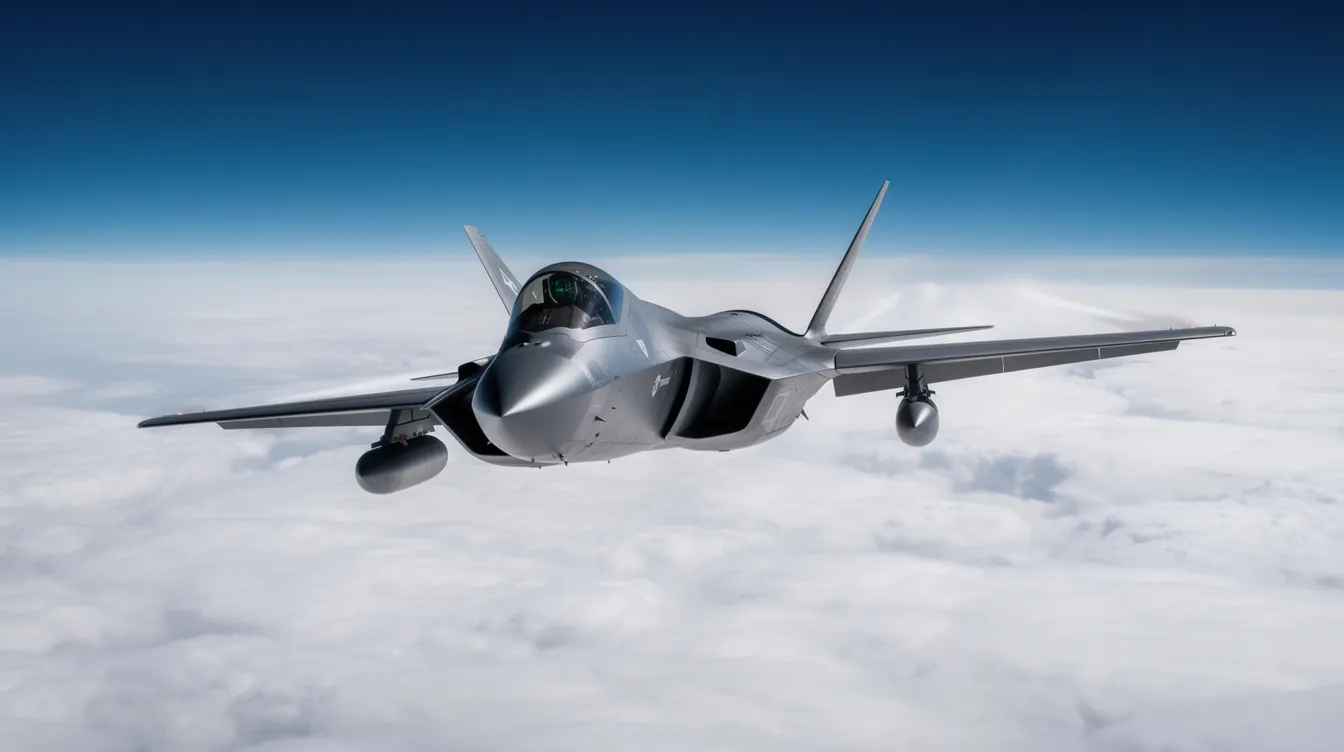
Why don't these aircraft qualify as the "world's best airplane" for most people? Simple: they carry no passengers, burn fuel at extraordinary rates, require specialized ground crews, and operate in restricted airspace. Speed alone does not equal utility.
The SR-71 Blackbird: Benchmark for Crewed Jet Speed
The SR-71 remains an engineering marvel more than half a century after its first flight. Developed by Lockheed's Skunk Works and entering service in 1966, it was purpose-built for reconnaissance during the Cold War.
Key specifications:
Record speed: 3,529.6 km/h (about 2,193 mph), Mach 3.3, set on July 28, 1976
Operating altitude: Routinely above 80,000–85,000 feet
Construction: Titanium airframe designed to expand with heat at cruise speed
Defense strategy: Outrun any missile fired at it rather than evade
Its cockpit accommodated a pilot and a reconnaissance systems officer - no room for passengers, no pressurized cabin for comfort, and no economy class to speak of. Fuel burn was prodigious; specialized JP-7 fuel and tanker support were required for every mission.
The SR-71 was retired because satellites and drones eventually performed its intelligence-gathering role at a lower cost. But no crewed, air-breathing jet has come close to matching its record in the decades since. It perfectly illustrates the trade-off at the heart of "best": unmatched in speed, yet completely impractical for the kind of business or leisure travel that modern aviation serves.
Official vs Unofficial Speed Records
Not every fast aircraft has a plaque on the wall. The difference between official and unofficial records often comes down to bureaucracy, secrecy, and cost.
Official records require FAI-sanctioned observers, calibrated instrumentation, and flights over measured courses. The SR-71's 1976 record, for example, was meticulously documented.
Unofficial claims include combat-achieved dash speeds (the MiG-25's rumored Mach 3.2+), manufacturer test data, and classified military programs that never sought public validation.
Historical records stretch back further than many realize. During World War II, piston-engine and seaplane records were fierce competitions - the Macchi-Castoldi M.C.72 seaplane, for example, set a propeller-driven speed record in 1934 that stood for decades. The BAC 1-11 first flew on April 9, 1965, and while it was never a record-setter for speed, it pioneered rear-engine jet service and operated until its retirement in 2019.
Today, hypersonic research vehicles like the X-43 and experimental scramjets push beyond classic jet boundaries, but they are not practical transports. The Lockheed Martin F-35 Lightning II is considered the most advanced fifth-generation fighter, while the Lockheed F-22 Raptor is celebrated for its unmatched stealth capabilities - yet neither will ever appear on a passenger boarding pass.
For BlackJet's audience, the real takeaway is this: a record run over a fixed course is impressive, but what matters is reliable, repeated, safe operations - flight after flight, year after year.
Best Commercial Airliners for Passenger Experience
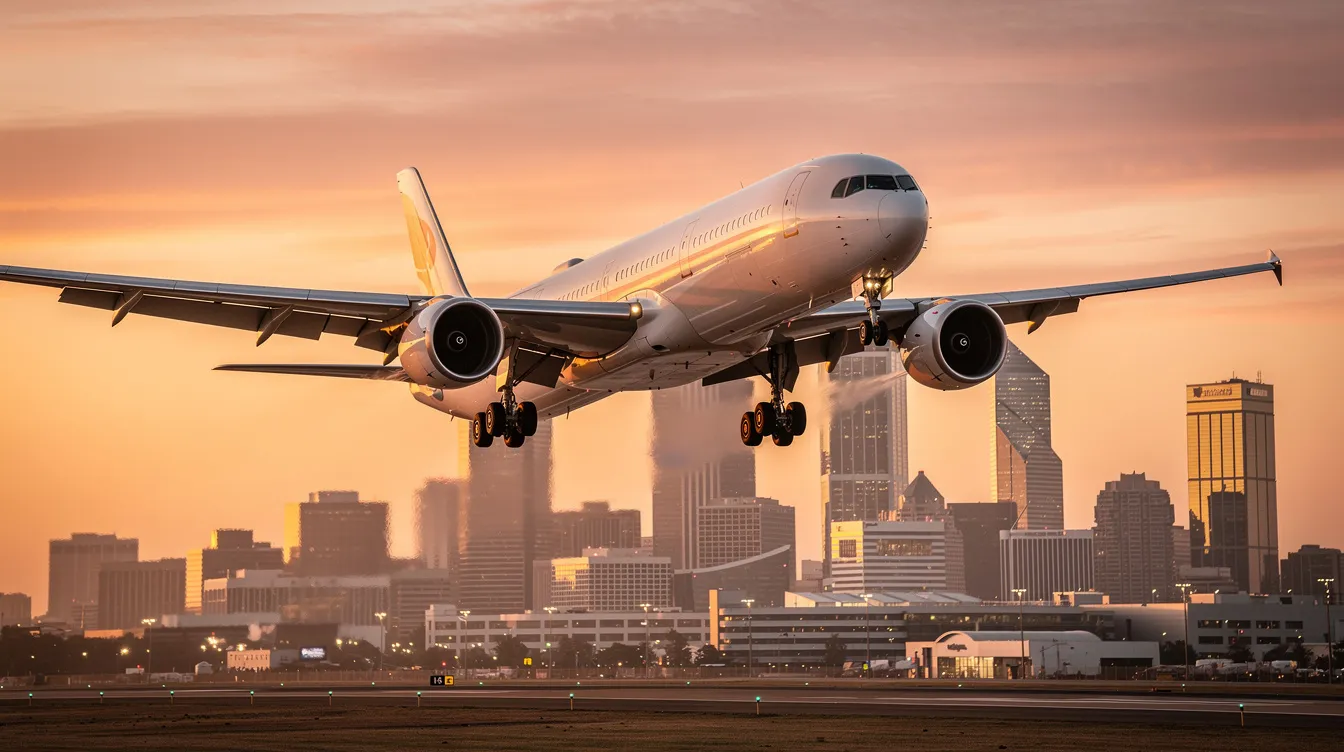
Ultra-efficient twinjets dominate long-haul travel as of 2025–2026, and the flagship models define what "best" looks like for hundreds of millions of travelers.
Airbus A350: Known for its fuel efficiency and passenger comfort, the A350 features a quieter cabin, lower cabin altitude (around 6,000 feet), and higher humidity than older metal-skinned airplanes. The Airbus A350 is quieter and smoother than many older aircraft, and it has better payload and range than the Boeing 787.
Boeing 777: The world's largest twinjet aircraft, known for its incredible range and solid economics. Its two engines deliver transcontinental and transoceanic capability that once required four engines and a much larger airframe.
Boeing 787 Dreamliner: Composite construction and advanced environmental systems make it a passenger favorite, though the A350 edges it out on payload and range.
Airbus A380: The world's largest passenger plane can carry over 800 passengers in an all-economy configuration. Its sheer size creates space for onboard lounges, showers, and bar areas on carriers like Emirates.
The Boeing 737 family is the world's most widely operated commercial jet, while the Airbus A321neo is praised for range and operational flexibility in medium-haul markets. The Airbus A321XLR holds the distinction of having the longest range of any narrow-body plane, blurring the line between short-haul and intercontinental service. Modern aircraft prioritize efficiency and passenger experience in design and performance - and nowhere is that clearer than in the latest generation of commercial aircraft types.
Singapore Airlines and Other World-Class Carriers
When travelers debate which airlines operate the best airplanes to fly on, a handful of names surface repeatedly.
Singapore Airlines sets the standard with its A380 suites - private rooms with closing doors at 40,000 feet - and its A350 business class, where lie-flat seats, attentive flight attendants, and meticulous cabin air quality combine into an experience most airlines cannot match. Cathay Pacific consistently ranks among Asia's finest, while Qatar Airways and Emirates compete with lavish first-class products and modern fleets.
Korean Air, another frequently praised carrier, deploys A350s and 777s on long-haul routes across the Pacific. European flag carriers like British Airways and Air France have invested heavily in refreshed business class cabins, though passenger reviews remain mixed compared to their Asian and Middle Eastern rivals.
Among us carriers, Delta has pushed its premium product forward with Delta One suites, while American Airlines relies heavily on A321s, 737s, and 777s - workhorses that prioritize network breadth over cabin luxury.
Yet even the finest commercial experience comes with constraints: fixed schedules, crowded terminals, connection risks, and hours spent in security lines. For many BlackJet clients, the calculus is straightforward - the top airlines' business class is excellent when it aligns with your schedule, but private aviation wins when control, privacy, and time matter more than a window seat on an A380.
Iconic Airliners That Changed What "Best" Meant
Every era of commercial aviation has had a defining aircraft - a plane that redefined what passengers and airlines considered the standard.
Douglas DC-3 (1936): First flown on June 25, 1936, the DC-3 revolutionized air travel by making scheduled, multi-stop airline service reliable enough to be commercially viable. It was the first aircraft to prove that airlines could profit from carrying passengers alone, without mail subsidies.
Boeing 707 (1958): Made its first commercial flight on October 26, 1958, ushering in the jet age. Pan Am was the first airline to operate transatlantic 707 service, cutting crossing times in half compared to propeller-driven airliners.
Boeing 747 (1970): The jumbo jet first flew on January 22, 1970, and was the first widebody passenger aircraft. Its distinctive upper deck and four engines made it an icon for decades, operated by carriers from TWA to Singapore Airlines.
Concorde (1976–2003): The Concorde achieved speeds of Mach 2.04, or 1,354 mph - twice the speed of sound. Operated by British Airways and Air France, its last flight came in 2003, grounded by economics, noise concerns, and a tragic accident in 2000.
Airbus A320 (1988): Introduced fly-by-wire controls to commercial aviation and became the most delivered aircraft in history by October 2025, powering high-frequency routes for most airlines worldwide.
Airbus A380 (2007): Made its first passenger flight on October 25, 2007, with Singapore Airlines. Despite being the world's largest passenger plane, many airlines have retired or reduced their A380 fleets as smaller aircraft with two engines proved more economical.
As commercial aviation scaled up over the decades, a segment of travelers moved in the opposite direction - toward smaller aircraft and private jets that offered the control and privacy that even the best airliner could not.
Passenger Comfort: The Best Airplanes to Actually Fly On
Ask frequent flyers which airplanes they prefer, and the answers cluster around a few favorites:
Aircraft | Why Passengers Love It |
|---|
Airbus A380 | Massive cabin space, low noise, smooth ride; the upper deck feels like a private club |
Airbus A350 | Quiet, smooth, higher humidity, lower cabin altitude - you land feeling human |
Boeing 787 | Composite construction, larger windows, better pressurization |
Airbus A220 | Has the widest economy seats in the industry; 2-3 layout means no dreaded middle seat |
Embraer E175 | 2-2 seating in economy class; every seat is essentially an aisle or window seat |
Boeing 747 | The 747 features a unique upper deck for first-class passengers - an experience that newer aircraft simply do not replicate. |
Seat layout matters more than many travelers realize. In long-haul business class, a 1-2-1 configuration ensures direct aisle access for every passenger. In economy class, the difference between a 3-3-3 and a 2-4-2 layout can determine whether a ten-hour flight feels tolerable or torturous. Cabin air quality - the combination of pressurization, humidity, and filtration - also plays a significant role in how rested you feel upon arrival.
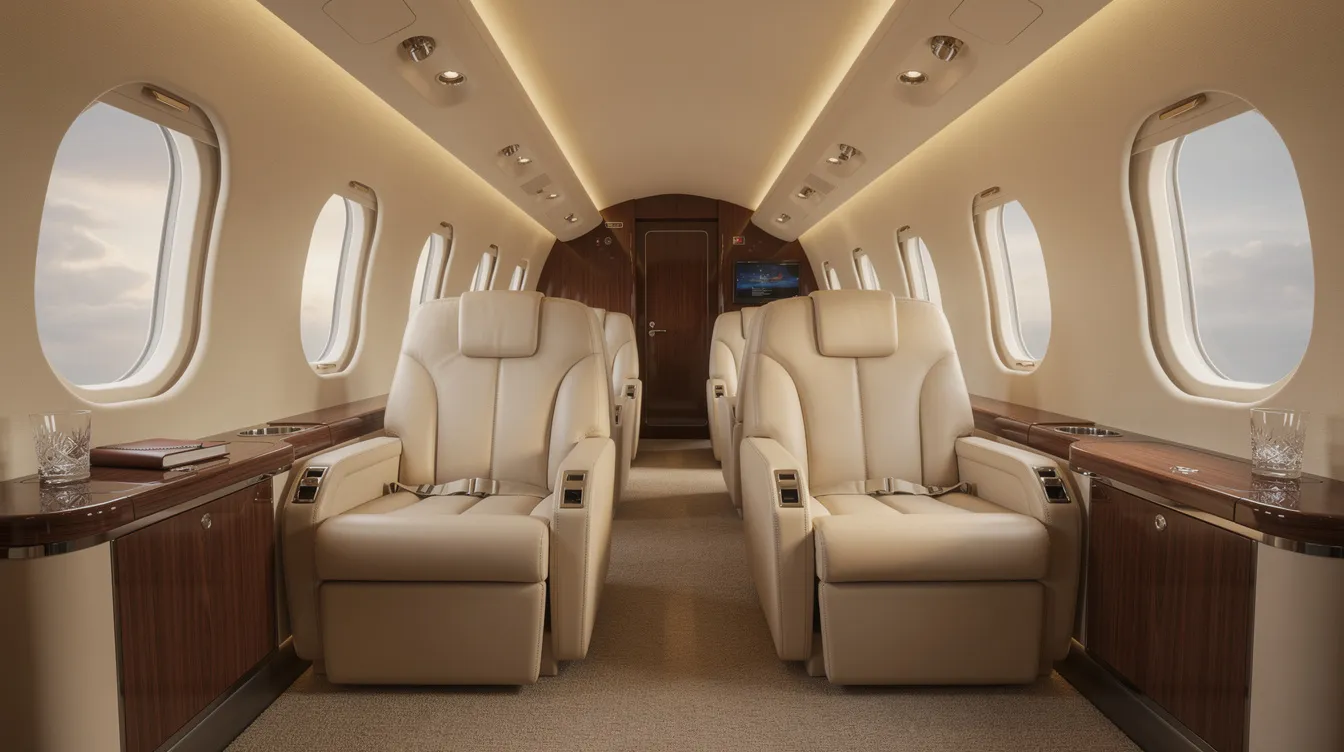
But here is the reality for BlackJet members: in a private jet cabin, every seat is effectively first class. There is no competition for overhead bin space, no stranger reclining into your lap, and no announcement from the cockpit asking flight attendants to prepare for landing while you are mid-conversation. The "best airplane" is often the one where the entire cabin is yours.
Private Jets: Where "Best Airplane" Gets Personal
In private aviation, "best" is almost entirely defined by the individual traveler's mission - route length, party size, luggage requirements, and time sensitivity, all of which map directly onto different types of private jets for every traveler.
Key categories and examples: Choosing among these private jet sizes is ultimately about aligning the aircraft to your specific mission profile.
Light jets (e.g., Citation CJ3+, Phenom 300E): Ideal for regional hops of 2-3 hours with 4-7 passengers and often the entry point into small private jets luxury travel options.
Midsize jets (e.g., Citation Latitude, Hawker 800XP): Greater range and cabin volume for coast-to-coast flights.
Super-midsize jets (e.g., Praetor 600, Challenger 3500): Transcontinental range with stand-up cabins and more luggage capacity.
Large-cabin/long-range jets (e.g., Gulfstream G650ER, Gulfstream G700, Bombardier Global 7500): Intercontinental range, full-size galleys, sleeping quarters. The Bombardier Global 8000 is one of the fastest and longest-range business jets available today, and many 16-seat private jet options sit in this same large-cabin category.
The G700 cruises near Mach 0.935 with a cabin altitude of approximately 2,840 feet at 41,000 feet - lower than what most airlines achieve. The Cessna Citation X+ also reaches Mach 0.935, making it a serious contender for the title of fastest civilian jet, though its cabin is considerably smaller.
Rather than locking into a single aircraft type, a Jet Card from BlackJet provides access across multiple categories and ties directly into the broader suite of premium private Jet Card programs the company offers. Fly a light jet for a quick Dallas-to-Austin hop, then step into a large-cabin aircraft for New York-to-London. The aircraft matches the mission, not the other way around. Compare that to owning a single jet: you pay fixed costs - hangar, crew, maintenance, depreciation - whether the plane flies or sits idle. For a detailed look at top private jets, the differences in range, speed, and cabin volume are worth understanding before choosing, especially when evaluating the best private jet for 15 passengers for larger groups.
Why Jet Cards and Private Jet Charter Often Beat First Class
A Jet Card is a prepaid block of flight hours - typically 25 or 50 hours - that gives guaranteed access to vetted aircraft at fixed hourly rates. No ownership overhead. No depreciation risk. No scramble to find a charter at peak pricing.
Here is how it compares to flying, even the best commercial first class or business class, once you understand typical Jet Card pricing structures:
Factor | Commercial First/Business | BlackJet Jet Card |
|---|
Airport access | Major hubs, long security lines | Smaller airports, minutes from tarmac to takeoff |
Departure time | Fixed airline schedule | Your schedule |
Connections | Often required | Direct routing, always |
Privacy | Shared cabin | The entire cabin is yours |
Booking | Days or weeks in advance | Same-day via mobile app |
Multi-city same day | Extremely difficult | Routine |
Sample scenario: A CEO needs to travel from New York to Dallas for a morning meeting, then from Dallas to San Francisco for an afternoon session, returning that evening. On commercial airlines - even first class on American Airlines - that itinerary involves three separate bookings, two connections, and roughly 14-16 hours of total travel time including ground transit, check-in, and layovers. With a BlackJet Jet Card, the same day involves two direct legs and a late-evening return - roughly 10 hours total, with work getting done in a quiet cabin between each stop.
When you factor in the cost comparison between Jet Cards and ad-hoc charter, the economics favor prepaid programs for anyone flying more than a few legs per quarter; a solid grasp of Jet Card cost and membership pricing makes those trade-offs even clearer. Time value seals the case.
Safety, Certification, and Why It Matters More Than Speed
For discerning private travelers, the conversation about the "best airplane" always begins with safety. An aircraft is only as good as the operator behind it.
U.S. private jet operations fall under FAA Part 135 for charter, but the real differentiator is whether an operator goes beyond regulatory minimums, something that matters just as much when you explore more affordable private plane options. Third-party auditing bodies set higher bars:
ARG/US: Tiered ratings (Gold, Platinum, Platinum Elite) based on SMS implementation, flight data monitoring, crew qualifications, and on-site audits.
Wyvern Wingman: Focuses on operational safety, crew currency, and maintenance oversight.
IS-BAO: International Standard for Business Aircraft Operations, emphasizing safety management systems and risk assessment.
The Cirrus SR22 is known for its advanced avionics and safety features, including the CAPS whole-aircraft parachute system - an example of how even smaller aircraft now integrate life-saving innovation, much like the models covered in guides to the best small private aircraft for every need.
BlackJet's curated network ensures that every aircraft - from light jets to large-cabin aircraft - meets consistent safety and crew training standards. Each pilot holds current simulator training, each aircraft follows maintenance schedules that meet or exceed manufacturer requirements, and every operation is backed by transparent safety data.
Private aviation safety today compares favorably to historical airline travel, thanks to modern avionics, redundancy, and data-driven operations. For members, the peace of mind is not an add-on - it is the foundation.
Sustainability and Innovative Design in Modern Aircraft
A decade ago, "innovative design" in aviation meant faster engines and swept wings. Today, it increasingly means lower fuel burn, advanced aerodynamics, and compatibility with sustainable aviation fuel.
Modern airliners demonstrate the shift clearly:
The A350 and 787 use advanced composite airframes that reduce structural weight by up to 20%.
The A320neo family leverages LEAP and PW1000G engines for dramatically improved fuel efficiency over predecessors.
Winglets, laminar flow nacelles, and optimized flight routing compound those gains further.
In supersonic aviation, Boom Supersonic's Overture aims to operate on 100% SAF, with its Symphony engine designed from the ground up for clean fuel. It targets Mach 1.7 cruise - faster than any commercial airliner since the Concorde - while seeking to address the noise and emissions problems that grounded supersonic travel a generation ago. Airbus announced its own zero-emission hydrogen concept programs, though those remain in early development.
BlackJet's commitment to carbon-neutral flights through verified offsets and SAF sourcing where available positions sustainability as a core pillar, not a marketing afterthought, even when highlighting the cheapest private jet options for cost-conscious travelers. For many travelers, picking a provider with a genuine green private jet strategy is now as important as choosing the latest aircraft type, especially when comparing budget-friendly private aircraft options.
Technology Onboard: From Inflight Wi-Fi to BlackJet's Digital Platform
The perception of "best airplane" is shaped as much by what happens inside the cabin as by what happens under the wings.
On the commercial side, airlines like Singapore Airlines, Emirates, and Delta invest heavily in inflight entertainment - 4K screens, high-speed Wi-Fi, streaming libraries, and ambient lighting schemes designed to reduce jet lag. In business class and first class, the hardware is increasingly impressive.
Private jets take a different approach. Instead of massive IFE screens, the emphasis falls on:
High-speed satellite connectivity for video calls, email, and secure communications
Multiple power outlets and USB-C ports at every seat
Flexible cabin configurations that convert from meeting rooms to sleeping quarters
A quiet cabin environment where you can actually hear yourself think
BlackJet adds a digital layer on top of the aircraft itself. The mobile booking platform lets members browse availability by aircraft type, see real-time pricing, and confirm flights in minutes - no aviation jargon, no phone trees. Real-time flight support means a member can adjust departure times, change destinations, or add passengers with a message to the concierge team.
For example, a member planning a last-minute North American business trip can open the app, select a super-midsize category for a Chicago-to-Miami leg, confirm within minutes, and receive ground transport coordination automatically, in much the same way a traveler might buy a seat on a private jet through shared or semi-private services. The "best airplane" experience is the combination of the metal and the digital tools that make using it seamless.
From Private Jets to Commercial Giants: Understanding Aerodynamics and Design
Every object that flies obeys the same four forces: lift, drag, thrust, and weight.
Lift is generated by the shape of the wings. On a jet, carefully sculpted airfoil profiles create the pressure difference needed to rise.
Drag is the resistance the air puts up. Winglets, smooth surfaces, and retractable landing gear reduce drag on modern aircraft.
Thrust comes from jet engines that accelerate the aircraft until lift exceeds weight.
Weight determines how much lift you need. Fuel load and passenger count shift the center of gravity and affect performance.
Swept wings on jets like the MiG-15 and F-15 improved high-speed performance. The Cessna 172, the most popular training aircraft in the world with over 45,000 built, uses a straight wing optimized for low-speed stability.
Next time you board a BlackJet flight, look at the winglets, the engine placement, and the smooth cabin surfaces. They are all fruits of decades of aerodynamic optimization.
Matching the "Best Airplane" to Your Mission
There is no single "world's best airplane." There are only best-fit aircraft for particular missions. Here are four scenarios that illustrate the point:
Family holiday, North America to Asia: An A350 on Singapore Airlines offers lie-flat business class, lower cabin altitude, and a direct routing that minimizes jet lag. The aircraft's range and fuel efficiency make it ideal for ultra-long-haul.
Executive day-trip, multi-city: A super-midsize jet accessed through a BlackJet Jet Card handles Dallas → Santa Fe → Aspen with no commercial connections, no checked-bag drama, and total schedule control, while similar planning principles apply when organizing private jets for 30 passengers on larger corporate or event itineraries.
Transatlantic sprint: A Gulfstream G700 flies New York to London nonstop at Mach 0.90, arriving in roughly seven hours with a cabin that feels more like a private office than a plane, while other private jet options for 20 passengers deliver similar comfort for larger groups.
Business travel: A BlackJet Jet Card member chooses the aircraft that matches the mission, whether a light jet for a short regional flight or a large-cabin jet for international travel.
BlackJet acts as a mission-matching partner, recommending aircraft categories based on passenger count, route length, baggage, and time constraints. Safety, sustainability, and digital convenience are now as central to "best" as speed or glamour.
The smartest travelers focus on outcomes - time saved, meetings made, rest gained - rather than aircraft trivia alone.
BlackJet's Perspective: What Makes an Airplane "Best" for Our Members
When BlackJet selects aircraft partners, the evaluation starts with four non-negotiable criteria:
Third-party safety certification (ARG/US Platinum or higher, Wyvern Wingman, IS-BAO)
Modern avionics and maintenance programs that exceed manufacturer minimums
Cabin comfort standards - low cabin altitude, clean air, quiet interiors, well-maintained furnishings
Support for carbon-neutral operations through verified offsets and SAF where available
Members benefit from this curation. Instead of researching individual tail numbers, maintenance logs, or operator histories for every trip, they tap into a vetted fleet through the best Jet Card programs available - light jets to large-cabin aircraft, all meeting consistent standards, much like those highlighted in broader guides to the best Jet Cards for frequent flyers.
BlackJet's 24/7 support team helps members choose between, for example, a midsize versus super-midsize for a particular itinerary, or between different cabin layouts depending on whether the flight is a working session or a rest leg.
For many members, the "best airplane in the world" is simply the one that appears when they need it, flies directly to the closest airport, and feels like a familiar, private space every time. It is not about chasing the fastest or the newest - it is about knowing that every flight, without exception, will operate at the highest level of safety, comfort, and discretion.
That is the difference between owning an aircraft and having a personal fleet without the complexity of ownership, an approach epitomized by the BlackJet 25+ Hour Jet Card.
Experience the Ultimate in Private Jet Access with BlackJet
Elevate your travel with BlackJet's exclusive Jet Card programs, designed for discerning travelers who demand flexibility, safety, and unparalleled convenience. Whether you need a light jet for a quick regional trip or a large-cabin aircraft for intercontinental journeys, BlackJet offers seamless access to a curated fleet that meets the highest standards of certification and comfort.
Our proprietary digital platform empowers you to book flights in minutes, adjust itineraries in real time, and enjoy dedicated 24/7 concierge support. Every flight is carbon neutral, reflecting our commitment to sustainability without compromising luxury or performance.
Join BlackJet today and transform your travel experience. Discover how effortless premium private jet access can be—without the burdens of ownership or the unpredictability of ad-hoc charters. Your next journey awaits with BlackJet’s trusted safety protocols, cutting-edge technology, and personalized service tailored to your mission.
Explore our Jet Card options and unlock a world where the best airplane is always within reach.
Frequently Asked Questions (FAQs)
Q1: What makes the Gulfstream G700 the fastest private jet?
The Gulfstream G700 cruises near Mach 0.935, combining exceptional speed with a spacious, luxurious cabin. Its advanced engines and aerodynamic design allow it to cover transcontinental distances quickly while maintaining comfort and efficiency.
Q2: How does a Jet Card from BlackJet differ from owning a private jet?
A Jet Card offers prepaid access to a curated fleet of private jets without the fixed costs and responsibilities of ownership. It provides flexibility to choose aircraft types based on mission needs, with guaranteed availability, consistent pricing, and 24/7 digital booking and support.
Q3: Are private jets safer than commercial flights?
Private jets operating under BlackJet's network meet or exceed stringent safety certifications such as ARG/US Platinum and Wyvern Wingman. Pilots undergo rigorous training, and aircraft maintenance follows strict schedules, making private aviation safety comparable or superior to commercial airlines.
Q4: What sustainability initiatives are in place for private jet travel?
BlackJet ensures every flight is carbon neutral through verified offsets and supports sustainable aviation fuel (SAF) use where available. Modern aircraft in the fleet utilize advanced materials and engines designed for fuel efficiency, aligning luxury travel with environmental responsibility.
Q5: How do modern commercial aircraft improve passenger comfort?
Aircraft like the Airbus A350 and Boeing 787 feature lower cabin altitudes, higher humidity, quieter cabins, and larger windows. These innovations reduce jet lag and enhance the overall flying experience, making long-haul flights more comfortable for passengers.
Q6: Can I book a private jet last minute with BlackJet?
Yes. BlackJet’s proprietary digital platform allows members to book flights in minutes, even on the same day, with real-time availability and pricing. This flexibility supports dynamic travel needs without the delays typical of commercial airline bookings.
Conclusion: Choosing Your Own "World's Best Airplane"
The world's best aeroplane is a moving target - and that is the point. The SR-71 Blackbird is best if your mission demands Mach 3.3 above 85,000 feet. The Airbus A350 is best if you need to fly 300 passengers from Europe to Asia with maximum fuel efficiency. A Gulfstream G700 is best if you want to cross the Atlantic in a private cabin at near-supersonic speed.
What connects all of these is a simple truth: the magic of flight comes from smart design meeting human ambition, whether the sky is reached through jet engines or a well-planned itinerary.
For high-net-worth and frequent travelers, the most practical answer to "best airplane" is not a specific tail number - it is access. Access to the right aircraft for today's mission, backed by safety protocols you can trust, sustainability commitments that matter, and a digital platform that makes booking as simple as sending a message.
Explore BlackJet's Jet Card programs and discover how premium private jet access can reshape the way you travel - not someday, but on your very next trip, especially when you compare alternatives like Flexjet Jet Card costs and options.


 Sign up with google
 Sign up with Apple


