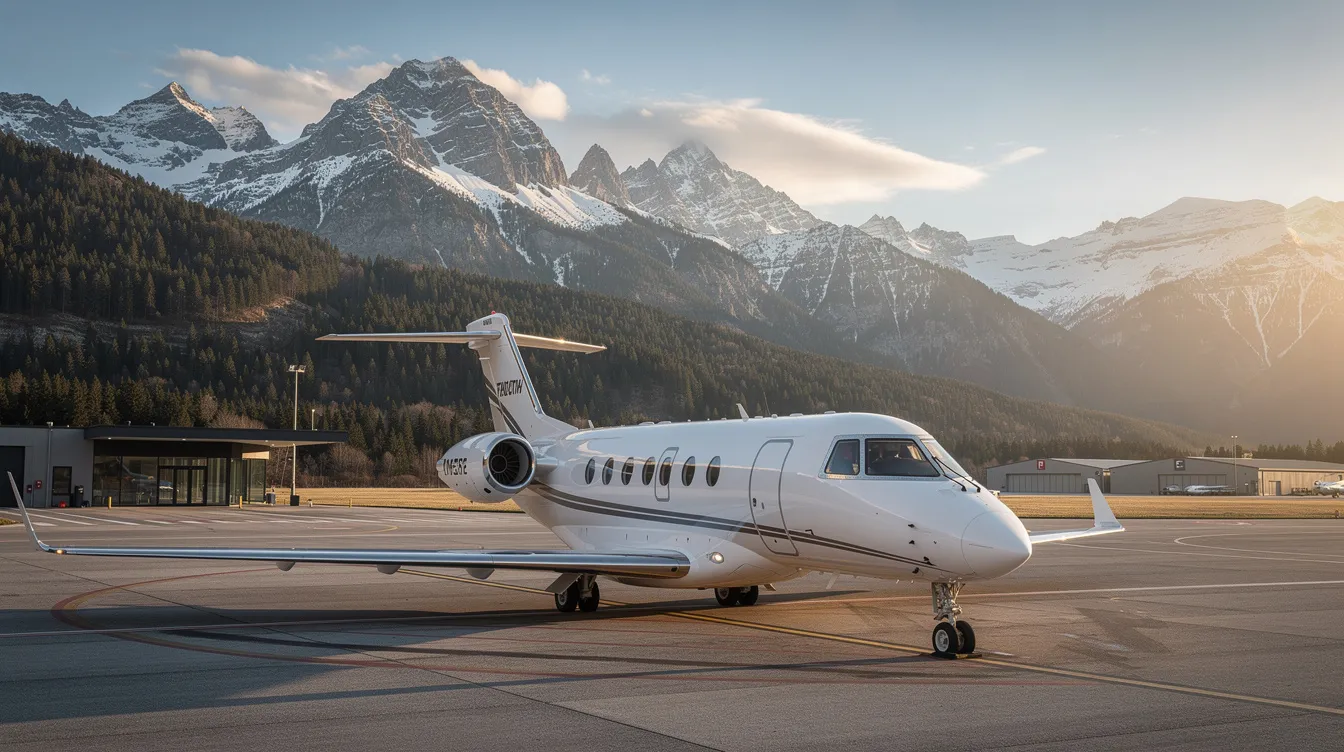
When a board of directors, executive team, or UHNW family needs to move together, commercial flights fracture the group across connections, classes, and terminals. A 20-passenger private jet eliminates that friction entirely. Traveling with a large group on a private jet maximizes efficiency, and private jets provide a seamless boarding process, often in 20 minutes at a private terminal rather than the hours consumed by commercial airlines. Purchasing a 20-passenger jet involves evaluating cabin configuration and mission profile, making it a decision rooted in strategy rather than spectacle.
The 18-to-22-seat class sits at a sweet spot in private aviation: large enough for in-flight meetings, private bedrooms, and a fully equipped galley, yet manageable enough to avoid the infrastructure demands and ramp costs of full VIP airliners seating 50 or more. It bridges the gap between booking two super midsize jets for a group trip and chartering an entire aircraft designed for airline-scale operations.
At BlackJet, we specialize in large-cabin private jet access through our Jet Card programs and private jet charters, but we also advise clients weighing whether to buy versus charter. This guide answers the questions that matter most: which 20-passenger jet for sale fits your mission, what it truly costs, and whether ownership, a Jet Card, or charter delivers the best return on your travel investment.
Defining the 20-Passenger Jet Category
Twenty-passenger jets are classified as large-cabin or VIP airliners, and heavy jets accommodate 16–20 passengers comfortably.
When buyers search for a "220-passengerjet for sale," they typically encounter aircraft certified for 17-to-22 passengers. Twenty-passenger jets are classified as large-cabin or VIP airliners under FAR Part 25 or EASA Large Aircraft rules. Heavy jets accommodate 16 to 20 passengers comfortably, though the marketed seat count sometimes differs from the certified maximum because VIP interiors sacrifice density for luxury. Consider aircraft with a wide-body configuration for a 20-passenger capacity, as narrower fuselages struggle to deliver the comfort this buyer expects.
Three platform types dominate. First, VIP airliners built from commercial frames: the Boeing Business Jet (BBJ) and Airbus Corporate Jet (ACJ319/ACJ320). Second, large cabin jets and ultra-long-range aircraft such as the Bombardier Global 7500, Gulfstream G650, and Dassault Falcon 8X, which are purpose-built for private aviation but can approach 20 seats in high-density layouts. Third, converted regional jets like the CRJ-200/700, Embraer Lineage 1000E, and Challenger 850, offering volume at lower acquisition cost.
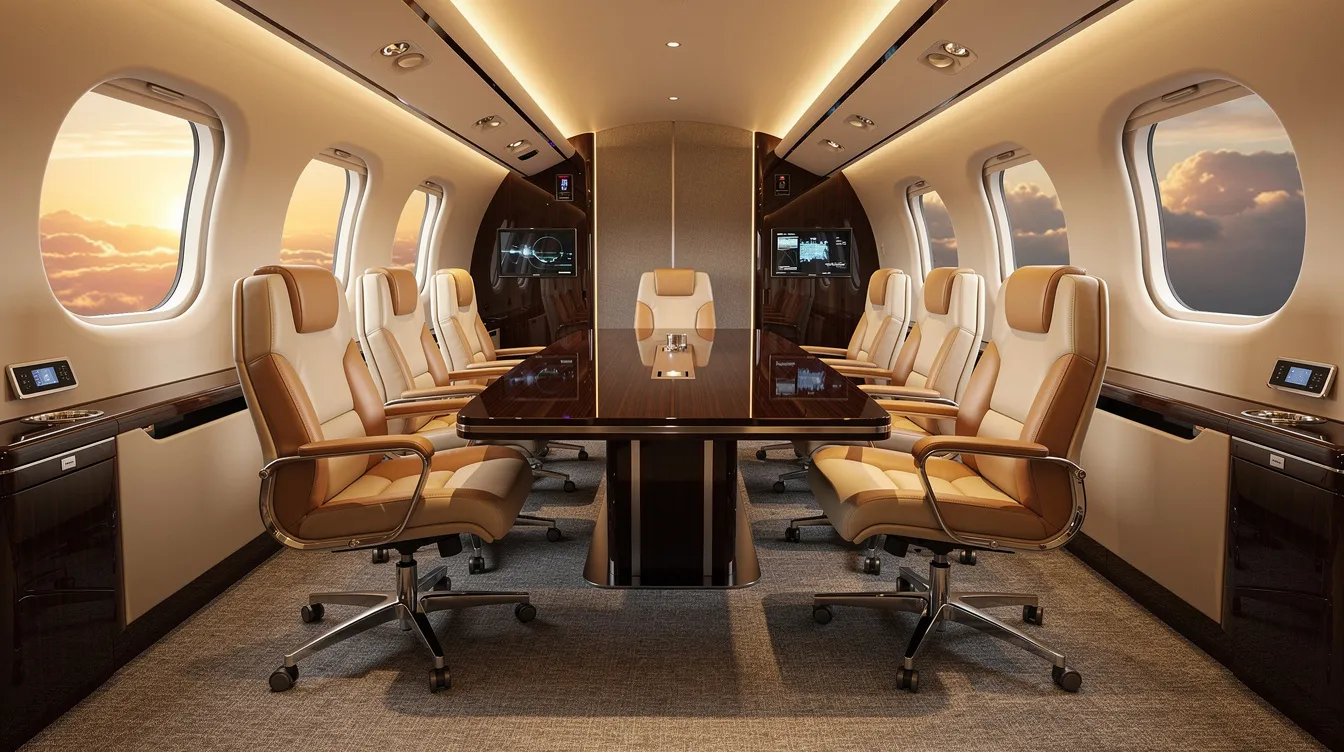
Configuration choices drive usable count. Club seats, divans, a large conference table, and private sleeping quarters all consume floor space. A layout designed for board-level business missions may seat 15 in supreme comfort, while a shuttle-style arrangement for the same flight could accommodate 22. Buyers must decide whether the aircraft serves as a flying office, a residence, or both.
Popular 20-Passenger Jets Currently on the Market
Inventory for this aircraft category is tight. Many VIP airliners trade off-market, with fewer than 3-5% of the installed fleet appearing on public listing sites at any given time. Buyers serious about a 20-passenger jet for sale need broker networks, industry contacts, and advisory partners who track aircraft worldwide.
Key manufacturers of large business jets include Boeing, Airbus, and Bombardier. Here are the specific aircraft families most commonly available for sale in 2025-2026:
VIP Airliners: Boeing Business Jet (BBJ1 / 737-700, BBJ2, BBJ3, BBJ MAX), Airbus Corporate Jet (ACJ319, ACJ320, ACJ319neo)
Large Cabin / Ultra-Long-Range: Bombardier Global 6000, Global 6500, Global 7500; Gulfstream G550, G600, G650/G650ER; Dassault Falcon 7X, Falcon 8X
Converted Regional / Niche: Bombardier Challenger 850, Embraer Lineage 1000/1000E, CRJ-200/700 VIP conversions
Typical production years still trading actively include 2005-2023 for BBJ and ACJ families, 2018 and later for the Global 7500, and 2012 onward for the G650. Aircraft availability fluctuates quarterly, so timing your search matters. For a deeper look at the broader landscape, explore our guide to the types of private jets available today.
Boeing Business Jet (BBJ): Flagship 20-Passenger Platform
The BBJ, based on the Boeing 737-700/800 airframe, remains the archetypal 20-passenger jet for sale for heads of state, sovereign wealth funds, and global corporations. Boeing Business Jet can be customized for 20 passengers in a layout that feels closer to a private residence than a private aircraft.
A typical BBJ cabin includes a master suite with a private shower, a conference room seating eight to ten, a forward lounge, a dedicated office, guest rooms, and crew-rest quarters, all within stand-up cabins that offer over six feet of headroom. Fitted with auxiliary fuel tanks, the BBJ delivers intercontinental range exceeding 6,000 nautical miles, enabling long-haul flights such as New York to Dubai or Los Angeles to Tokyo with 15 to 20 passengers and full baggage. For charter insights on this platform, see our Charter Boeing Business Jet overview.
Purchase prices vary widely. Older BBJ1 units from the late 1990s through early 2000s often trade between $20 million and $35 million, depending on airframe hours, engine cycles, and interior condition. Later BBJ2, BBJ3, and NG/MAX variants with modern avionics and recent completions command $80 million to $110 million or more. New large-range business jets can cost between $40 million and over $100 million, and the BBJ sits squarely at the top of that bracket when fully outfitted.
Airbus Corporate Jet (ACJ319/ACJ320): Wide-Cabin Luxury
The Airbus Corporate Jet family offers arguably the widest fuselage in the VIP airliner class, providing more cabin volume per linear foot than the BBJ. That translates to wider aisles, more generous stand-up headroom, and the ability to design multiple distinct zones that feel like rooms rather than sections of an aircraft. Airbus Corporate Jet models feature multiple living areas, including forward lounges, mid-cabin offices, dining zones, and aft private suites.
Common ACJ319 and ACJ320 VIP configurations seat 18-19 guests in residential-style comfort, with premium catering preparation areas, spacious lavatories, and optional showers. The ACJ319neo, fitted with additional fuel tanks, achieves approximately 6,750 nautical miles of range, making intercontinental journeys between London and São Paulo or Dubai and Singapore entirely practical.
Pre-owned ACJ319 aircraft from the early 2000s frequently trade between $25 million and $40 million used, depending on hours and completion quality. Newer sharklet and neo variants with bespoke high-end interiors push well past $100 million,n including interior completion, per industry reporting. The ACJ's advantages, exceptional volume and comfort, come with trade-offs: higher fuel burn per nautical mile than the latest purpose-built large cabin jets, greater airport and runway requirements, and higher landing fees at many facilities.
Large Cabin & Ultra-Long-Range Alternatives (Global, Gulfstream, Falcon)
Not every buyer needs a vip airliner. Purpose-built large cabin private jets offer a compelling middle path, seating 14 to 19 in standard luxury layouts and approaching 20 in shuttle configurations, while delivering superior fuel efficiency and access to smaller regional airports, similar to the segment covered in our review of16-seatt private jet options.
The standout options include:
Bombardier Global 7500: Cabin volume of roughly 2,786 cubic feet, certified for 19 passengers, with a range of approximately 7,700 nautical miles. Bombardier Global 7500 connects cities like New York and Hong Kong nonstop, making it the ideal aircraft for ultra-long flight distance requirements and a flagship among long-range private jets for sale. The new list price sits around $75 million.
Gulfstream G650/G650ER: Exceptional speed (Mach 0.925) and a service ceiling near 51,000 feet. Gulfstream G650 can be configured for 20 passengers, though most VIP layouts seat 14 to 18, making it a leading private jet choice for 15 passengers. Pre-owned examples from 2012 onward often trade between $30 million and $50 million depending on pedigree.
Dassault Falcon 7X/8X: Tri-engine reliability, roughly 6,450 nautical miles of range, and the ability to operate from shorter runways. Smaller cabin than the Global 7500 but a significant advantage for buyers who need diverse fleet access to constrained airports.
Gulfstream G550: An older but proven workhorse. Pre-owned G550s often appear in the $18 million to $30 million band, offering strong value for aircraft owners who prioritize range and reliability over newest-generation interiors.
Many large cabin jets in this segment serve as heavy jet alternatives to full airliners, delivering 90% of the capability at a fraction of the operating cost, while the very largest platforms profiled in our guide to the largest private jets for sale cater to buyers who prioritize maximum space above all else.
Converted Regional Jets & Niche 20-Seat Platforms
For buyers focused on domestic flights, corporate shuttle routes, or sports-team transport, converted regional jets offer a compelling entry point, sitting just below the 40-to-50-seat VIP airliners discussed in our overview of the best private jet for 50 passengers. The Bombardier Challenger 850 (a CRJ-200 derivative), Embraer ERJ-135/145, and CRJ-200/700 conversions can be configured with 18 to 30 seats in semi-VIP layouts.
Acquisition costs are dramatically lower. A typical purchase price for older pre-owned large jets in this segment is between $8 million and $25 million, overlapping with the bracket where buyers also compare 20 million dollar private jet features in newer or more sophisticated platforms. Challenger 850 examples from 2006 trade around $8 million to $10 million, squarely within the range evaluated in our overview of 10 million dollar private jet options. CRJ conversion projects, including VIP interior, auxiliary fuel, and avionics upgrades, often total $12 million to $22 million.
The advantages are clear: lower capital outlay, a spacious cabin relative to price, and ready availability of airframes from regional airlines retiring fleets, which is equally relevant when evaluating larger group solutions like those covered in our guide to charter plane 100 passengers cost. The trade-offs are equally real: higher noise levels, shorter range than ultra-long-range aircraft, less refined onboard amenities, and slower resale compared to paramount business jet platforms or full VIP completions. These are workhorses, not showcases.
Purchase Economics: What a 20-Passenger Jet Really Costs
The sticker price is the beginning, not the end. Annual operating costs for large jets can reach several million dollars depending on utilization, and a structured private jet pricing guide helps frame how 20-seat aircraft compare with smaller categories. Here is the full picture aircraft owners should budget for:
Acquisition Price Brackets:
Converted regional jets/niche: $8M–$25M, overlapping with the cost bands explored in our guide to 12-seater private jet pricing
Older VIP airliners (BBJ/ACJ, 2000s vintage): $25M–$40M
Pre-owned large-cabin jets vary in price from $15 million to $40 million
New-build VIP airliners or latest-generation business jets: $40M–$100M+
For many buyers, a broader private jet price list overview provides useful context when positioning a 20-passenger acquisition within their overall aviation budget.
A thorough pre-purchase inspection is essential before closing a transaction, covering airframe, engines, avionics, interior, and all maintenance records.
Annual Fixed Costs ($1.5M–$4M+):
Crew salaries and recurrent simulator training
Hangar fees and home-base costs
Insurance (hull and liability)
Management fees, dispatch, scheduling
Subscription maintenance and avionics programs
Operating costs include crew salaries, hangar fees, and insurance as the primary fixed cost drivers. Maintenance programs for large aircraft often exceed $200,000 annually on top of engine program reserves.
Variable Costs Per Flight Hour:
Aircraft Class | Hourly Rate Range |
|---|
Heavy jets | $8,000–$11,000 |
Ultra-long-range jets | $11,000–$14,000 |
VIP airliners (BBJ/ACJ) | $15,000–$25,000 |
Total charter costs include landing fees and crew overnight costs, along with fuel, catering, de-icing, airport fees, and federal excise taxes. A fully loaded ownership cost per flight hour ranges from $10,000 to $25,000 depending on type and utilization. The final charter cost for equivalent access can be compared against these figures to determine breakeven.
Jet Card, Private Jet Charters, or Ownership: Which Makes Sense for 20 Passengers?
This is the decision that separates strategic buyers from impulsive ones. Should you pursue a 20-passenger jet for sale, rely on private charter, or leverage a jet card model like BlackJet's—and how do you evaluate the landscape of best jet cards for frequent flyers against outright ownership?
Ownership typically makes financial sense above roughly 300 to 400 flight hours per year on a consistent mission profile, while a thorough grasp of Jet Card membership pricing helps clarify when prepaid access is the better fit. Below that threshold, a charter or a Jet Card is usually more economical. Booking a private jet typically starts with a quote request, and a dedicated charter specialist, often your personal flight coordinator, coordinates all travel arrangements without the burden of managing crews, maintenance, or compliance.
BlackJet's Jet Card programs, including 25-hour, 50-hour, and our dedicated 25+ Hour Jet Card options, give guaranteed access to large cabin jets for 16 to 19 passengers without capital outlay. To understand the mechanics, see how Jet Cards work. Rates for large cabin jets average approximately $15,000 per hour, and understanding jet card cost per hour allows buyers to benchmark Jet Card pricing against full ownership, offering predictable budgeting and tailored service.
Even aircraft owners frequently use charter or Jet Cards for supplemental lift: backup during maintenance downtime, when a different aircraft category is needed, or when scheduling conflicts arise, and comparing the best jet cards for frequent flyers can surface programs that complement an existing fleet strategy. Fractional ownership is occasionally discussed at this size class, but the bespoke nature of 20-seat interiors makes shared arrangements uncommon. The reality is that private jets offer the flexibility to blend ownership and access models. If you fly frequently on consistent routes with 20 passengers, ownership warrants serious analysis. If your travel is episodic, a Jet Card delivers premium service without the operational overhead.
Mission Planning: Range, Airports, and Ground Transportation
Matching the right larger aircraft to real-world missions requires more than checking a range chart. Here are the factors serious buyers evaluate:
Nonstop Flight Distance Requirements:
New York to London: ~3,000 nm (achievable by most large cabin jets)
Los Angeles to Honolulu: ~2,200 nm
Dubai to Singapore: ~3,400 nm
New York to Dubai: ~6,700 nm (requires BBJ, ACJ, or Global 7500)
A round-trip from New York to London costs $170,000 to $250,000 by private charter in this cabin class.
Private jets offer direct access to more airports than commercial airlines, but VIP airliners require longer runways, often 6,000 feet or more, and larger apron infrastructure, a key differentiator when comparingultra-long-rangee private jets for sale that can still operate into select secondary airports. Purpose-built long-range private jets like the G650 or Falcon 8X can serve secondary fields, reducing ground transportation time significantly. For large group private travel, this difference can save hours versus routing through congested major hubs.
Ground transportation planning is integral to the mission. Coordinating executive shuttles, limousines, and helicopters for 20-person groups demands the same flight-level precision. BlackJet routinely manages door-to-door itineraries, handling all the arrangements from tarmac to final destination. Travelers can arrive at private terminals just 20 minutes before departure, and booking well in advance is recommended for high-demand periods. Passengers need a valid government issued id for domestic flights.
Cabin Layout, Comfort, and Technology
Buyers of 20-passenger jets must think in terms of "flying office plus residence" rather than seat count alone. A 20-passenger layout requires generous square footage to ensure comfort, and the best interiors are designed around how passengers will actually use the space during overnight flights or long-haul sectors.
Layout Options:
Multiple distinct zones: forward lounge, mid-cabin conference area with a large conference table, dining area, private bedrooms, and aft galley with crew rest
Private suites with full-size beds and en-suite lavatories
A fully equipped galley positioned forward or aft, depending on service flow
Private jet travel allows for customized in-flight catering, and sophisticated entertainment systems with 4K monitors, Ka-band high-speed Wi-Fi, and smart cabin controls are now standard in premium completions. Circadian lighting systems, featured on platforms like the Gulfstream G700 and Global 7500, reduce fatigue on intercontinental journeys by mimicking natural light cycles.
Comfort extends beyond aesthetics. Newer aircraft maintain cabin pressurization at roughly 4,000 to 4,500 feet equivalent altitude at cruise, meaningfully reducing passenger fatigue compared to older airframes or commercial cabins. HEPA air-filtration systems, humidity control, and advanced noise insulation make the spacious cabin feel genuinely restful, a decisive factor for groups conductingin-flightt meetings upon arrival.
Safety, Certification, and Regulatory Considerations
Large-group operations on a private aircraft demand uncompromising safety standards from acquisition through daily operation. Private jet travel often exceeds commercial airline safety standards, and buyers should hold themselves and their operators to the highest benchmarks.
Regulatory Framework:
FAA (Part 91 private, Part 135 charter) or EASA oversight governs airworthiness, maintenance, and crew licensing
ARGUS Platinum or Wyvern Wingman certification is required for operators that BlackJet partners with, ensuring a third-party audited safety culture
Clients receive access to aircraft maintenance logs and crew history, providing full transparency
Crew Qualifications:
Large business jets typically require two type-rated pilots and cabin attendants
Pilots must have ATP licenses and thousands of flight hours, with simulator recurrent training every 6 to 12 months
Cabin crew trained in emergency evacuation, medical response, and personalized service
Aircraft undergo rigorous maintenance and audit protocols. Enrollment in OEM maintenance programs such as Bombardier's Smart Services, Gulfstream programs, or third-party solutions like JSSI and CAMP directly affects dispatch reliability, insurance conditions, and residual value. For buyers considering whether they might charter out their aircraft when not in use, Part 135 certification adds another layer of regulatory and safety obligations. NetJets operates primarily under fractional models with its own oversight structure, but independent owners must build or contract equivalent capability.
Sustainability and Carbon-Neutral Operations
Large private jets face increasing scrutiny on emissions. A VIP airliner can burn thousands of gallons per flight hour, and stakeholders from institutional investors to family members are asking harder questions about environmental impact.
Practical levers buyers can deploy include choosing newer, more fuel-efficient platforms (neo and MAX variants offer measurable improvements), sourcing Sustainable Aviation Fuel where available, and optimizing routing and payload to minimize unnecessary fuel burn, especially on the newest private jets where manufacturers are embedding advanced efficiency technologies. BlackJet already offsets 100% of flight emissions for members at no extra cost, and similar carbon-neutral frameworks can be integrated into owner flight departments using verified offset programs through standards like Gold Standard or Verra, alongside careful analysis of jet card pricing structures to ensure sustainability initiatives are built into your access model.
The reality is that electric or hydrogen propulsion for this aircraft category remains decades away, even as the newest private jet models incrementally improve efficiency, materials, and avionics to reduce environmental impact. For now, the most credible path to sustainable air travel at scale combines modern airframes, SAF adoption, and transparent offset programs, an approach that lets aircraft owners and Jet Card members alike fly private with accountability.
Using BlackJet as Your Acquisition and Access Partner
BlackJet is first and foremost a premier access platform, offering Jet Card programs and private jet charters backed by proprietary safety certification and carbon-neutral operations. But we also support clients standing at the crossroads of buying a specific aircraft versus accessing a diverse fleet on demand.
Our advisory team can benchmark real charter and Jet Card costs against projected ownership costs for a specific 20-passenger jet for sale on the market, using your actual routes, passenger loads, and annual hours. We assess aircraft categories and cabin classes, comparing a BBJ versus a Global 7500 versus a G650 for your mission profile, and model whether a single-owned aircraft or a blended strategy delivers superior economics and flexibility.
Whether you are evaluating your first acquisition or supplementing an existing fleet with guaranteed access during maintenance windows, BlackJet provides the data and the platform to make the right call. We invite you to discuss your 12-to-24-month travel plans with our team to determine whether to buy, use a Jet Card, or blend both approaches. Explore our Private Jet for 20 Passengers guide for additional context.
Frequently Asked Questions About 20-Passenger Jets for Sale.
What specific jets actually seat around 20 passengers in VIP configuration?
The Boeing Business Jet (BBJ1/2/3), Airbus Corporate Jet (ACJ319/ACJ320), Bombardier Global 7500, Gulfstream G650, Embraer Lineage 1000E, and Challenger 850 all support layouts in the 17-to-22 seat range. Configuration determines the exact count, as haute jets prioritize zones over density.
How much should I budget to buy and operate a 20-passenger jet annually?
Acquisitions range from $8 million for older conversions to $100 million-plus for new VIP airliners. Fixed costs run $1.5 million to $4 million annually. Variable costs add $8,000 to $25,000 per flight hour depending on type, and for very frequent flyers, a100-hourr Jet Card cost analysis can be a useful reference point when comparing against full ownership. Budget accordingly for a larger aircraft of this class.
Can I charter out my aircraft when I am not using it to offset costs?
Yes, but operating under Part 135 requires additional certification, insurance, and regulatory compliance. Charter revenue can offset fixed costs meaningfully, but it introduces wear, scheduling complexity, and operational overhead. Many charter flight operators structure this through management companies.
Is fractional ownership a viable alternative at this size?
Fractional ownership works well for light jets and super midsize jets but is uncommon at the 20-seat level. The bespoke nature of VIP airliner interiors makes shared arrangements impractical. Jet Cards offer a more flexible path to the same flight access.
How long does a typical transaction take from LOI to delivery?
For pre-owned aircraft, expect 60 to 120 days from letter of intent through pre-purchase inspection, contract negotiation, and closing. New completions with custom interiors can take 12 to 24 months or longer.
Should I buy new or pre-owned in 2025-2026?
Pre-owned offers faster delivery and lower capital outlay, but you inherit someone else's interior choices. New builds provide full customization and the latest technology, but at significantly higher cost and longer timelines. Both paths require expert advisory.
How does a single large jet compare with booking two smaller jets for the same flight?
Chartering two super midsize jets splits your group, eliminates the benefits of collaborative travel and in-flight meetings, and often costs more per seat-mile than a single heavy jet or VIP airliner carrying everyone on the same flight. A single larger aircraft also simplifies ground transportation, catering, and scheduling.
Can I still fly private with BlackJet even if I purchase my own aircraft?
Absolutely. Many aircraft owners use BlackJet Jet Cards for supplemental lift, different cabin classes, backup during maintenance, or when traveling to destinations where their own aircraft is impractical. Our programs provide guaranteed access across a global fleet regardless of whether you own.
What safety standards should I require from any operator?
Insist on ARGUS Platinum or Wyvern Wingman certification, ATP-rated pilots with type-specific training, and enrollment in recognized maintenance programs. BlackJet requires these standards from every partner operator in its network, and restrictive baggage policies and security protocols should mirror or exceed commercial standards.
Conclusion: Deciding Your Best Path to 20-Seat Private Access for Large Groups
The decision to pursue a 20-passenger jet for sale is ultimately a function of four variables: mission profile, annual flight hours, capital appetite, and tolerance for operational complexity. Buyers who fly frequently on consistent intercontinental journeys with 15 to 20 passengers will find ownership delivers unmatched control and availability. Those with more episodic or varied travel patterns will discover that a Jet Card or on-demand private charter provides equivalent personalized service and premium service at a fraction of the commitment.
Whether you purchase your own aircraft, access one through BlackJet's Jet Card programs, or blend both strategies, the objective remains constant: maximize time, privacy, and control over how your team, board, or family moves across the world. The right answer is the one calibrated to your reality, not an aspiration.
Discover how BlackJet can help you build a tailored access strategy for 20-passenger group travel. Connect with our advisory team to evaluate your next 12 months of air travel and determine the path that delivers the most value for every flight hour.


 Sign up with google
 Sign up with Apple