
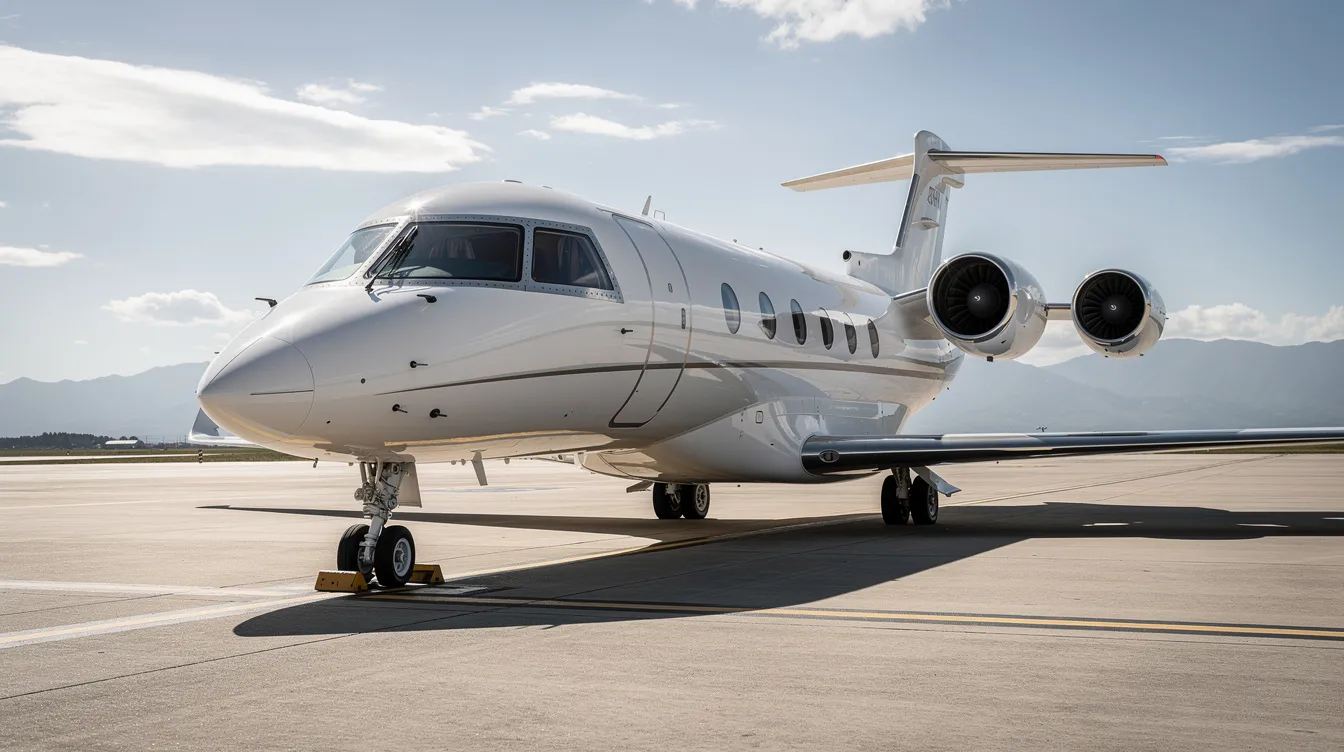
A private jet eliminates the two to three hours of pre-departure time that commercial business class demands at each end of a trip. On a New York to London route, that translates to four to six hours recovered per round trip; time that compounds over dozens of annual flights into weeks of reclaimed productivity. For frequent travelers in 2027, this isn't about opulence. It's about how you allocate the one resource you can't buy more of: time.
Why a $7 Million Private Jet Is a Strategic Asset, Not Just a Luxury
The figure "$7 million" circulates constantly in private jet conversations. People searching for a $7 million private jet often picture something like a Dassault Falcon 7X: long range, stand-up cabin, intercontinental capability. The reality is more nuanced. A brand-new Falcon 7X has never sold for $7 million. Models built between 2019 and 2023 list for $35 million to $45 million, and even a 2012 airframe with roughly 6,000 flight hours asks around $14.5 million on the pre-owned market, according to Asian Sky Group's 2026 market data.
The Dassault Falcon family, and the Falcon 7X in particular, has long held court as a benchmark for what large-cabin private aviation can deliver: 5,950 nautical miles of range, a cruise speed of 488 knots, and a cabin that can accommodate 12 to 16 passengers in a corporate layout. When people type "$7 million private jet" into a search bar, the Falcon 7X is often the mental image, even though the actual numbers place it in a different bracket entirely.
This gap between aspiration and acquisition cost is precisely why most high-net-worth individuals and executives in 2027 are moving away from outright ownership. Rather than locking $7 million to $70 million into a depreciating asset, they redirect capital toward jet card programs and on-demand charter. The strategic advantage remains the same: privacy, control, and time recovered from commercial travel. The financial exposure drops by an order of magnitude.
This post covers three topics: what a $7 million budget actually buys in the private jet market, what makes the Dassault Falcon 7X a reference point in this conversation, and how BlackJet's premium private jet cards deliver Falcon-level comfort and range without the burdens of ownership.
What Does $7 Million Really Buy You in Private Jets?
Seven million dollars is a real number in private aviation, but it occupies a specific place in the market. At this price point, buyers are looking at pre-owned aircraft, typically 10 to 20 years old, with high airframe hours and cabins that may need refurbishment. This is not the price of a new flagship; it's a tier below the best 10 million dollar private jet options that offer newer technology and cabins. It's the entry point for older jets that still fly but carry post-purchase risk.
Aircraft Types Available at $7 Million
Here's what falls within a $7 million budget in 2027:
Category | Example Aircraft | Typical Age at $7M | Range | Cabin |
|---|---|---|---|---|
Light jets | Citation CJ2, Learjet 45 | Early 2000s | 1,500–2,000 nm | Low ceiling, 6–8 seats |
Midsize jets | Hawker 800XP, Citation XLS+ | Early-to-mid 2000s | 2,500–3,200 nm | Comfortable for 2–4 hr flights |
Aging large cabin | Gulfstream V, Dassault Falcon 900 | 1990s–early 2000s | 4,000–5,800 nm | Stand-up, but dated avionics/interiors |
A Gulfstream V from the late 1990s or a Falcon 900 variant from the same era might appear near the $7 million mark. These are capable aircraft, but they come with aging avionics, higher maintenance frequency, and cabins that show their years. By contrast, the 20 million dollar private jet segment covers much newer aircraft with cutting-edge technology and lower maintenance risk. The Bombardier Global Express and Bombardier Global Express XRS, both respected long-range platforms, rarely drop to $7 million unless airframe hours are very high or inspections are overdue.
Operating Costs and Ownership Considerations
What most people miss about a $7 million private jet purchase is what happens after the wire transfer, and how that fits into the broader private jet price list of acquisition and ownership costs. A couple of line items illustrate the scale: annual fixed costs for a large-cabin jet (hangar, crew salaries, insurance, management) run approximately $1.7 million per year. Variable costs add $8,599 per flight hour for fuel, maintenance reserves, and landing fees. An owner who flies 200 hours annually faces a total operating cost north of $3.4 million per year, on top of the original purchase price. Insurance alone on a $40 million hull can exceed $400,000 annually, according to industry cost guides published in 2026.
Jet Card Alternative: Maximizing Value
Now consider redirecting that same $7 million toward a BlackJet Jet Card. At current large-cabin hourly rates of roughly $13,968 per hour, $7 million buys approximately 500 hours of large-cabin flight time, and a clear understanding of jet card pricing structures makes it easier to see how that capital converts directly into hours flown. Spread across several years at 100 to 150 hours annually, that capital covers three to five years of private jet travel across multiple cabin classes, especially once you break down the jet card cost per hour, without a single dollar going to hangar rent, crew training, or depreciation.
A concrete scenario brings this into focus. A business owner based in New York flies 150 to 200 hours per year, splitting time between Miami, Los Angeles, and occasional London trips. Owning a single aging large-cabin aircraft at a $7 million acquisition cost plus $3 million or more in annual costs means spending $10 million in the first two years for access to one airframe. With a BlackJet 50-hour Jet Card renewed annually, that same travel profile costs roughly $700,000 to $900,000 per year. The owner retains capital flexibility, avoids residual value risk, and gains the ability to select the right aircraft for each mission: a light jet for a 90-minute hop to Miami, a large private jet for overnight transatlantic legs, or, on specific trips even evaluate whether chartering a private jet is worth it compared to using card hours.
The Role of Long-Range Icons Like the Dassault Falcon 7X
The Dassault Falcon 7X entered service as the world's first business jet with a fully digital fly-by-wire flight control system, and its track record underscores how safe private jets are in practice when operated under rigorous standards. Its three Pratt & Whitney Canada PW307A engines give it a distinctive silhouette and a practical advantage: the trijet configuration provides shorter takeoff distances and steeper approach capability than many twin-engine competitors, opening access to airports that larger jets cannot use.
With a range of approximately 5,950 nautical miles, the Falcon 7X connects city pairs like Paris to Tokyo or New York to Dubai nonstop under favorable wind conditions. Its Dassault EASy flight deck (upgraded to EASy II on later production aircraft) set an industry standard for cockpit integration. The cabin operates at a lower altitude equivalent than many peers, reducing fatigue on long flights; a detail that matters to people who need to arrive ready for a week of meetings rather than recovering from one.
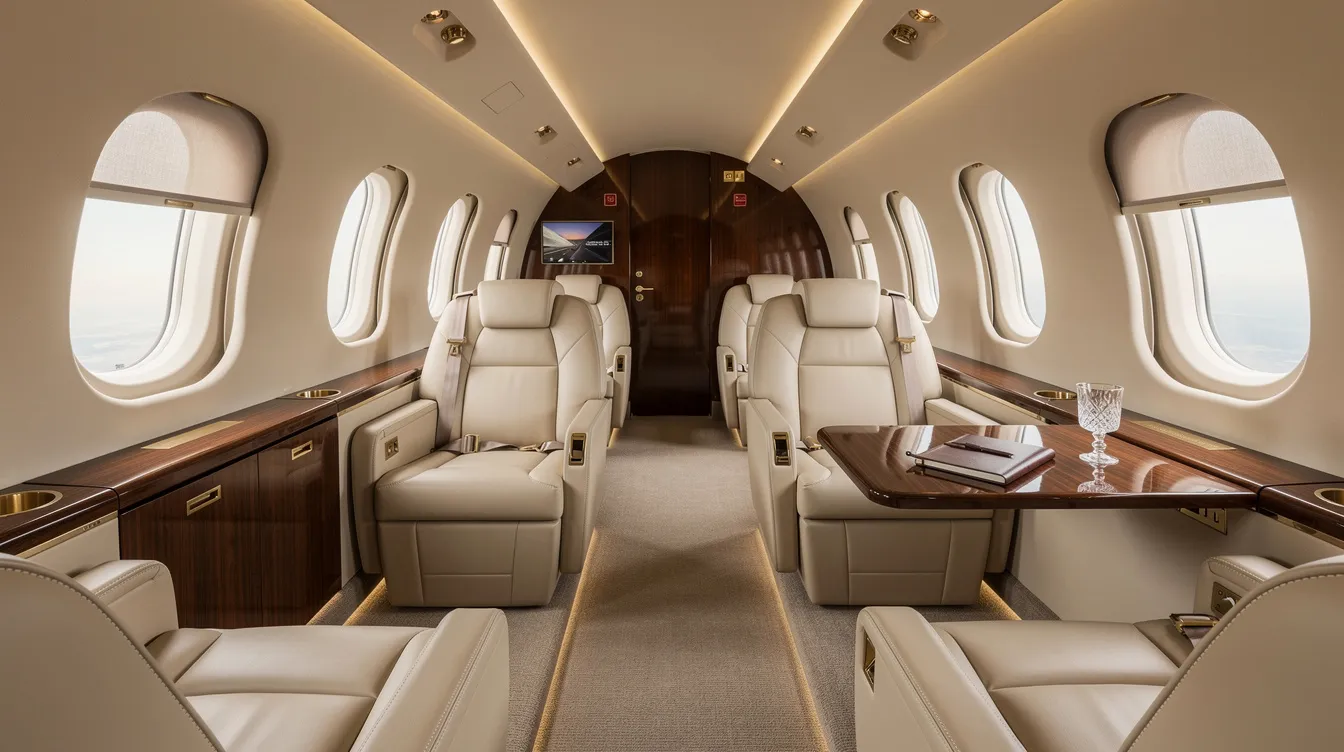
The interior reflects what Falcon buyers expect: a stand-up cabin with multiple living zones, typically configured as a forward conference area, a mid-cabin lounge, and a private aft cabin with lie-flat beds. A full galley serves meals on intercontinental sectors. These features place the 7X in a different category from the light and midsize jets that actually trade in the $7 million range. When people search for a 7 million private jet, they're often picturing this level of luxurious cabin space, even though the aircraft itself costs two to six times that figure, closer to the 15 million dollar private jet category in terms of overall capability and finish.
Comparing the Falcon 7X to Other Long-Range Jets
How does the Falcon 7X compare to its long-range peers? The Gulfstream G550 offers similar range (roughly 6,750 nm) and a wider cabin, but requires longer runways. The Bombardier Global Express XRS matches the Falcon on range while providing a slightly wider cross-section, illustrating how private jet charter pricing shifts as you move into these ultra-long-range categories. The Falcon's advantage lies in operational flexibility: it can use shorter runways at places like London City Airport or Lugano, where wing geometry and approach speed matter. Its tri-engine design also carries a weight penalty and higher overhaul costs; real trade-offs that an owner must weigh but that a jet card member never has to consider.
The 8X, Dassault's successor to the 7X, improved fuel efficiency and acoustic comfort while adding 500 nautical miles of range. Both models remain aspirational reference points in private aviation, and both sit well above the $7 million price point even on the pre-owned market.
Accessing Falcon-Level Luxury With a BlackJet Jet Card
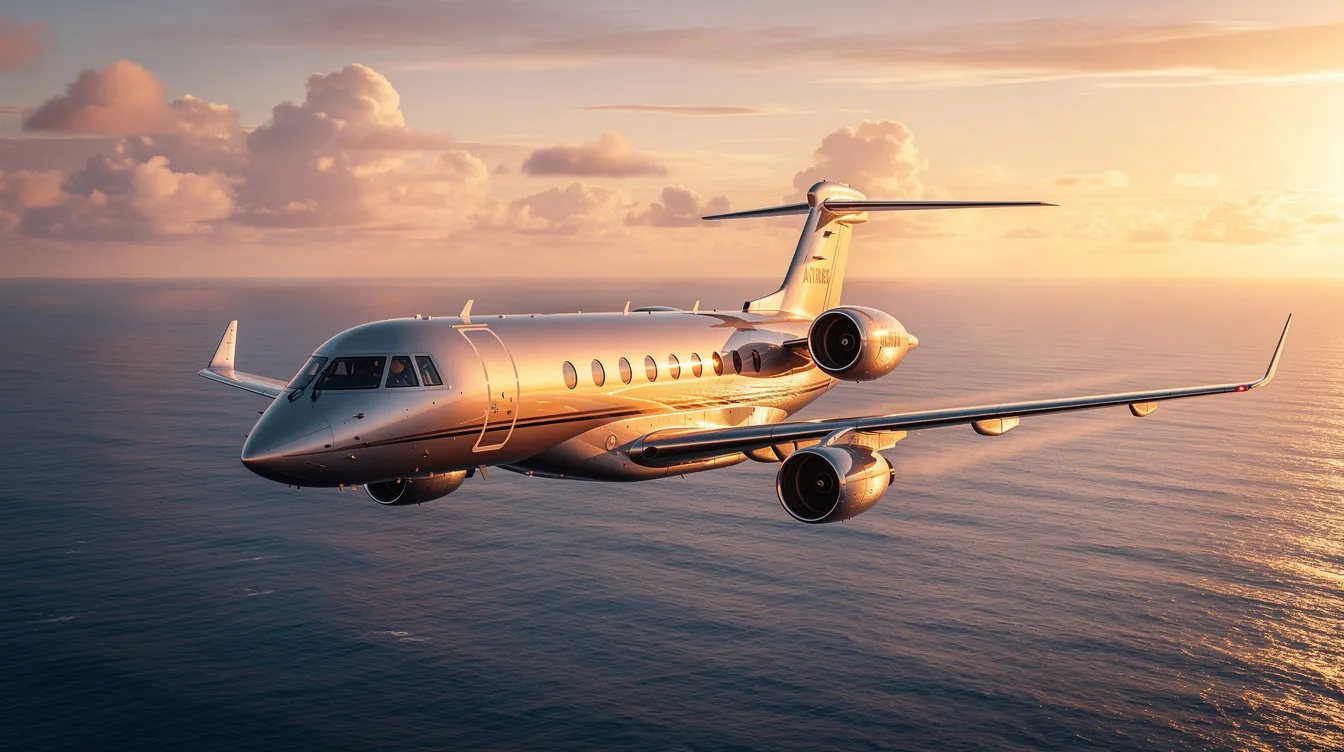
Ownership is one way to access a Falcon 7X. It is not the only way, and for most travel profiles, it is not the most efficient way. BlackJet's Jet Card programs let members enjoy aircraft comparable to the Dassault Falcon 7X for specific long-range missions, while using lighter, less expensive jets for shorter legs. No capital outlay. No sign-on to years of fixed costs. No crew management.
The structure is straightforward. Members purchase prepaid blocks of 25 or 50 flight hours at fixed hourly rates organized by cabin category, similar in concept to a 25-hour jet card that packages predictable access for infrequent but high-value trips. As of late 2026, published median rates across the industry run approximately $8,531 per hour for light jets, $9,434 for midsize, $11,895 for super-midsize, and $13,968 for large cabin. BlackJet members lock in their rate at purchase, eliminating the price volatility that plagues on-demand charter booking and capturing many of the advantages highlighted in guides to the best jet cards for frequent flyers. Understanding jet card costs in advance removes one of the largest friction points in private travel planning, especially when comparing structures like a 100 hour jet card to smaller blocks.
BlackJet's digital platform lets members confirm a jet for routes like New York to London or Los Angeles to Honolulu through a mobile app, with 24/7 real-time support for schedule changes, weather disruptions, or last-minute itinerary shifts. You leave on your schedule, not an airline's. If weather closes one airport, the operations team reroutes to an alternate before you've finished your morning email.
Sustainability and Safety with BlackJet
Safety is not an add-on; it is the foundation. BlackJet sources aircraft only from operators holding ARGUS, IS-BAO, or equivalent third-party audit certifications. Every flight on a complex aircraft like the Falcon 7X uses experienced two-pilot crews with recurrent training. Members never need to assess an individual jet's maintenance history, engine program status, or avionics currency. That burden sits with BlackJet's operations team, which maintains rigorous oversight across the fleet, much like other leading providers discussed in analyses of Flexjet jet card cost and options. For travelers who prioritize verified safety standards, this model eliminates the due diligence that an owner who owns a single aircraft must perform continuously. BlackJet's approach mirrors what the safest private jet operations in the world look like: standardized, audited, and transparent.
Every BlackJet flight is carbon neutral at no extra cost to the member. Verified carbon offset programs cover each trip automatically, and BlackJet integrates sustainable aviation fuel where supply chains allow, extending the logic behind the cheapest private jet options into the sustainability dimension as well. As of April 2027, SAF availability continues expanding at major hubs in the US and Europe, and BlackJet's commitment to green aviation means members don't have to choose between comfort and responsibility, whether they're chartering a small plane and weighing the cost to charter a small aircraft or booking a large-cabin jet.
A use case brings this to life. Consider a CEO based in London who travels to New York, Dubai, and Geneva multiple times per year. Some weeks require a nonstop transatlantic crossing; others need a quick 90-minute hop to Geneva. With a BlackJet 25-hour Jet Card, she selects a large-cabin aircraft (Falcon 7X class or equivalent) for the overnight London-to-New York leg, then books a midsize jet for the Geneva round trip two days later, all while understanding how much it costs to rent a private jet on comparable routes and how that compares to her 50 hour jet card structure. This kind of mission-matched flexibility is impossible with a single owned $7 million private jet. A Gulfstream V from the 1990s might handle the transatlantic leg but would be expensive overkill for intra-European travel; and it would sit in a hangar burning fixed costs every day it doesn't fly, a contrast to purpose-built charter solutions for 100 passengers or tailored jet card programs that scale with actual usage.
The question isn't whether $7 million is enough for a Falcon 7X. It isn't. The question is whether tying up capital in any single airframe is the smartest way to access what the Falcon 7X represents: range, comfort, privacy, and control over your time.
BlackJet's Jet Card answers that question with a model built for how executives actually travel in 2027: variable missions, multiple destinations, zero tolerance for operational friction, and economics that stand up well when compared with NetJets jet card costs and other legacy programs. No depreciation. No crew scheduling headaches. No maintenance surprises that ground your aircraft the week you need it most.
Explore BlackJet membership to experience Dassault Falcon-level range and comfort on your terms. Discover how BlackJet can reshape your travel.
Frequently Asked Questions About a $7 Million Private Jet
Can you buy a Dassault Falcon 7X for $7 million?
No. In 2027, pre-owned Falcon 7X aircraft generally command far more than $7 million. Even older examples may cost well above that figure, while newer models can reach tens of millions of dollars. A $7 million budget is more likely to buy an older light or midsize jet, or a high-time, aging large-cabin aircraft that may require substantial maintenance and refurbishment.
What kind of private jet can you buy for $7 million?
At this price, buyers may find pre-owned aircraft such as a Citation CJ2, Learjet 45, Hawker 800XP, or older Gulfstream V and Falcon 900 variants. Range, cabin size, age, and condition vary significantly. A pre-purchase inspection and review of maintenance records, engine programs, and upcoming inspections are essential before committing.
How much does it cost to operate a $7 million private jet?
Purchase price is only part of the expense. Ownership can involve annual fixed costs for crew, hangar, insurance, and management, plus variable costs for fuel, maintenance, and airport fees. For a large-cabin aircraft, annual operating costs can reach several million dollars depending on utilization and condition. Exact costs depend on the aircraft and its operating profile.
Is a jet card a better alternative to owning a private jet?
A jet card can suit travelers who want predictable access without taking on aircraft acquisition, crew, maintenance, hangar, and depreciation costs. Members buy prepaid flight hours and can select different cabin categories for different trips. Ownership may be appropriate for those who fly extensively and want dedicated control of an aircraft, but it also concentrates costs and operational responsibility in a single asset.
Can a BlackJet Jet Card provide access to Falcon 7X-level travel?
BlackJet members can request an aircraft suited to a long-range mission, subject to availability, route, and operational requirements. A Jet Card provides access to aircraft through the program rather than ownership of a specific Falcon 7X. For a trip such as London to New York, the operations team can help arrange an appropriate large-cabin aircraft; shorter routes can use a more mission-appropriate category.
What safety standards should buyers and jet card members consider?
Look for independent operator audits such as ARGUS or IS-BAO, qualified two-pilot crews where required, recurrent training, and careful oversight of aircraft maintenance. Jet card members should also understand how the provider selects and monitors operators. These safeguards matter whether arranging a single charter or evaluating a long-term private aviation program.
Conclusion: Private Jet Access Without the Ownership Burden
A $7 million budget can open the door to private aircraft ownership, but it will not buy a Dassault Falcon 7X—and the purchase price is only the beginning of the commitment. For travelers who value Falcon-level range and comfort without concentrating capital in one aging airframe, a Jet Card offers a more flexible path. Members can match aircraft to each mission, access digital booking tools and real-time support, and avoid the ongoing demands of crew, maintenance, hangarage, and private jet operating costs. They can also compare the model with private jet charter and learn more about private aviation safety.
In 2027, the right choice depends on how often you fly, which routes you travel, and how much operational responsibility you want to carry. Ownership may suit travelers with consistent, high annual utilization; a Jet Card can better serve those whose schedules and aircraft needs vary. Explore BlackJet membership to discover a more considered way to access private aviation—with safety oversight, carbon-neutral flights, and the freedom to travel on your terms.