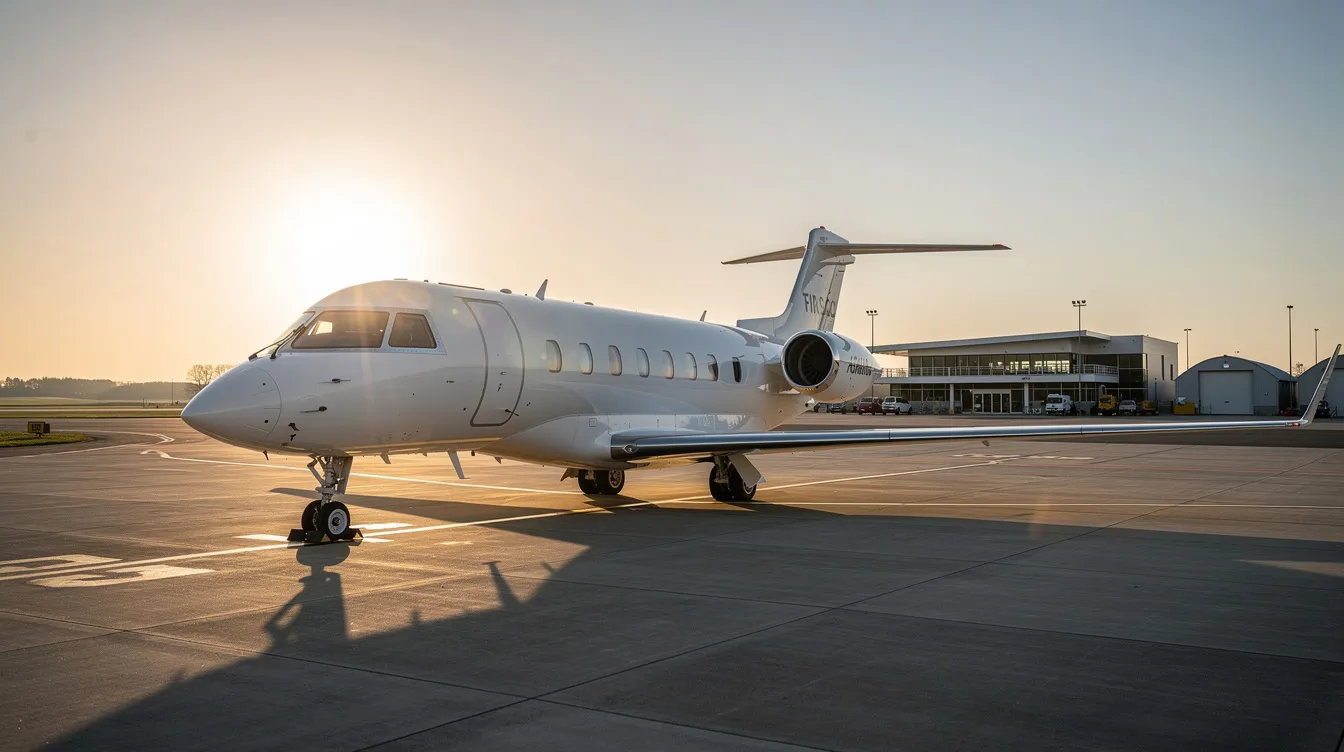
The definition of the best airline flight is evolving rapidly, especially for high-net-worth and executive travelers. Traditionally, the best airline flight was synonymous with securing a coveted suite on Singapore Airlines, enjoying the luxury of Cathay Pacific first class, or leveraging miles for upgrades on legacy carriers. However, as the needs and expectations of affluent travelers change, so too does the meaning of premium air travel. This article directly compares commercial first class and private jet options, focusing on what truly matters to high-net-worth individuals and executives: time, privacy, flexibility, safety, and sustainability. If you are searching for the best airline flight for your unique travel style and route, this guide will help you understand why the old rankings may no longer apply—and what new criteria are shaping the future of luxury air travel.
Why the Definition of 'Best Airline Flight' Is Changing
For years, rankings from Skytrax and passenger surveys shaped how travelers defined premium air travel. But frequent executives and high-net-worth travelers now evaluate flights by a broader set of factors: total door-to-door time, schedule control, privacy, safety certification, and environmental responsibility. The question is no longer which airline has the best cabin—it is which travel model protects the most valuable resource you have: your time.
Consider a New York to London business trip. Commercial first class on different airlines requires arriving at JFK two to three hours early, navigating security and boarding queues, then collecting luggage at Heathrow before a ground transfer to your meeting. Fly private with a BlackJet Jet Card, and you depart from a quiet FBO near the city, board in under 20 minutes, and land at London Farnborough—closer to central London than Heathrow. The result: three or more hours saved each way, plus full control over your departure time.
Southwest Airlines, American Airlines, and other domestic carriers serve their segments well. But for travelers who move through multiple airports weekly and need certainty above all else, the best airline flight in 2025 looks fundamentally different. Here is what it includes:
Speed: Eliminating hours of ground time per trip
Certainty: Departing on your schedule, not an airline's
Privacy: An exclusive cabin for work, rest, or confidential conversations
Safety: Operator vetting and pilot standards that exceed regulatory baselines
Sustainability: Carbon-neutral flights by default, not as an afterthought
How Travelers Usually Choose the Best Airline Flight
Many travelers value reliability and past experiences when booking, and choosing the best airline depends on your specific route and travel style. Most travelers start their search by comparing awards, loyalty programs, and ticket prices. They often gravitate toward carriers they already know and trust, using a variety of tools and criteria to make their decision.
Common Decision Factors
Travelers typically evaluate airlines and flights based on:
Price and fare class
Flight schedules and direct routes
Loyalty programs and elite status
On-time performance
Customer service reputation
Amenities such as seat comfort, Wi-Fi, and in-flight dining
Award-Winning Airlines
Industry rankings and passenger surveys highlight the strengths of leading airlines:
Qatar Airways is recognized as the industry leader by Skytrax.
Qatar Airways and Singapore Airlines consistently rank as top carriers by passenger surveys.
Singapore Airlines is renowned for outstanding cabin crew hospitality.
Delta Air Lines and Alaska Airlines are top-rated airlines, with Delta Air Lines consistently scoring highly in customer satisfaction studies and Alaska Airlines rated highly for its friendly staff.
Southwest Airlines is favored for value and customer service.
JetBlue Airways is often ranked high for seat legroom.
These accolades reflect the airlines' commitment to service, comfort, and reliability, but the best airline flight is ultimately dependent on your specific route and travel style.
Flight Search Tools
Travelers use a range of online tools to compare options and find the best airline flight:
KAYAK: Searches hundreds of airline ticket sites for deals.
Google Flights: Refreshes flight results almost instantly during searches.
Skyscanner: Offers more sorting options than most competitors.
Momondo: Consistently finds the cheapest fares available.
Flight Network: Found the lowest fares six times in tests.
Price Tracking Features
To monitor and secure the best fares, these platforms offer robust price tracking:
KAYAK: Price Alerts for flight price tracking; Price Calendar highlights the cheapest days to fly.
Google Flights: Price tracker and fare alert system.
Skyscanner: Price tracker and fare alert emails.
Momondo: Price tracker and fare insights for flights.
Timing Tips
Savvy travelers use timing strategies to maximize value:
January is the cheapest month to fly.
Thursday is the cheapest day to fly domestically.
Wednesday is typically the cheapest day for international flights.
July is the most expensive month for domestic flights.
Book flights early for peak travel periods like summer.
Flexible dates can help find cheaper flight options.
Hacker fares can save money by combining one-way tickets on chosen dates.
Booking Channels
Understanding where and how to book is key:
OTAs (Online Travel Agencies): Sell tickets directly to consumers (e.g., Expedia, Priceline).
Aggregators: Compile results from multiple OTAs and airlines (e.g., Google Flights). Aggregators do not sell tickets directly and depend on the quality of OTAs they search.
Most sites let you compare flight options in one search, but each third-party site or aggregator has limitations.
Route and Destination
Direct flights are always ideal for travelers.
Access to all the airports on a given route, alliance membership, and on-time performance round out the evaluation.
Yet even the best airline on paper—with the best fare on the best dates—still requires early arrival at congested hubs, slow security lines, potential delays or canceled flights, and rigid departure times. For an executive comparing the lowest fares from Los Angeles to Hong Kong via Cathay Pacific, the airfare may look competitive, but the five-plus hours of ground time on each end quietly erode the value. Cheaper base tickets can cost more when considering hidden fees for luggage, flight changes, and seat selection—a fee structure that adds friction to every trip.
However, for high-net-worth travelers, these traditional criteria may not capture what truly defines the best airline flight. The next section explores how the experience of flying commercial first class compares to private jet travel.
Commercial First Class vs. Private Jet: What the Best Airline Flight Really Feels Like
For high-net-worth travelers, the best airline flight is not just about the in-air experience but the entire journey from door to door. This section compares the commercial first class experience with private jet travel, highlighting the differences that matter most to executive and luxury travelers.
In-Flight Experience Comparison
Flying first class on Singapore Airlines or Cathay Pacific delivers an exceptional in-air experience: enclosed suites, lie-flat beds, premium dining, and world-class service. But that experience starts and ends at a commercial terminal, surrounded by thousands of other passengers. The best flight is not only what happens at 35,000 feet—it is the sum of every minute from your front door to your final destination.
Private aviation with BlackJet recalibrates the equation. When you fly private through premium private jet cards & Jet Card programs, the entire plane is yours. There is no shared cabin, no boarding queue, no baggage carousel.
Step-by-Step Comparison: Commercial First Class vs. Private Jet
Feature | Commercial First Class | Private Jet (BlackJet) |
|---|
Check-in & Security | Arrive 2–3 hours early, long lines | Arrive 20–30 minutes early, minimal screening |
Boarding | Mass boarding at gates | Walk directly from the car to the aircraft door |
Cabin Privacy | Shared cabin, even in suites | Exclusive cabin for you and your guests |
Schedule Control | Fixed airline timetable | On-demand departure, adjusts to your day |
Routing | Limited to commercial airports | Access to 4,000+ airports in the US alone |
Example Itinerary
Commercial Route: 45-minute drive to JFK, 2+ hours at the airport, 3-hour flight, baggage claim, then a ride to the meeting—roughly 7 hours door-to-door.
Private Route: 20-minute drive to Teterboro, 15 minutes at the FBO, same flight, car waiting planeside in Miami. Total: approximately 4 hours.
Studies show private jet travel can save 3–4 hours one-way on many routes.
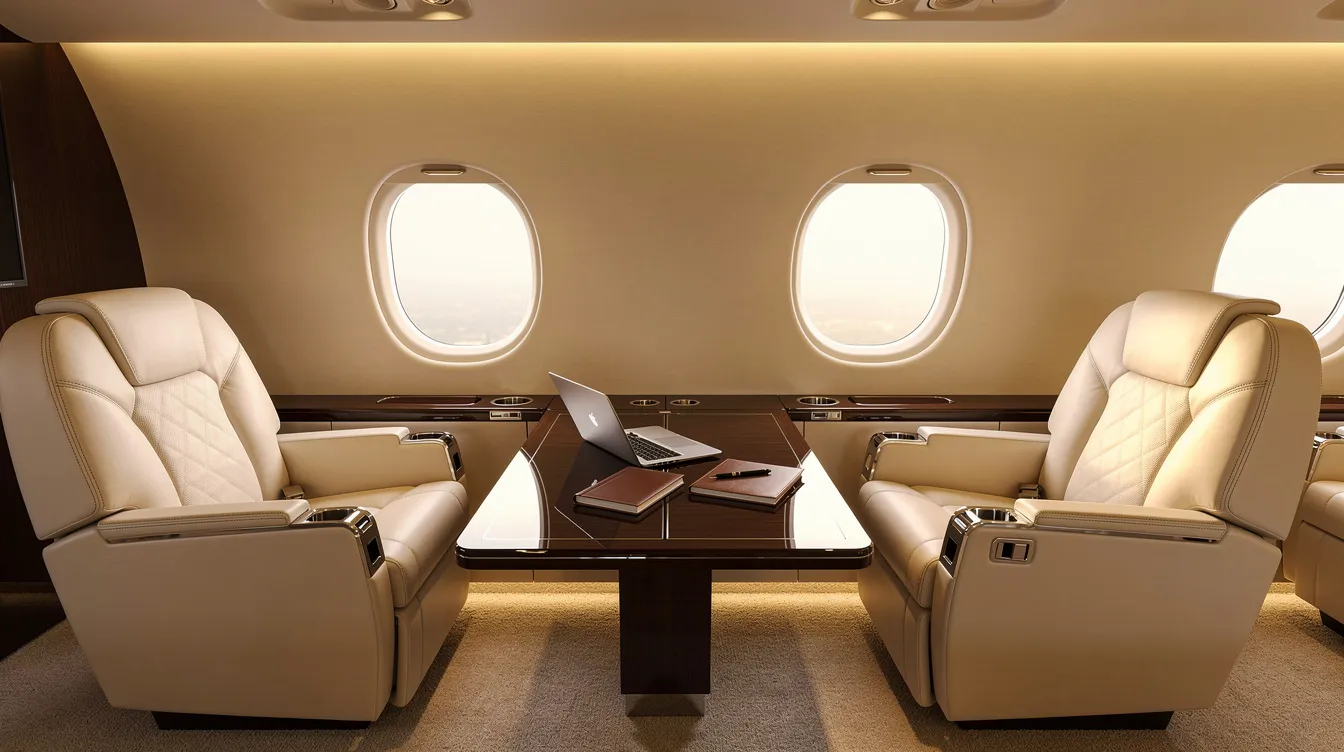
The in-flight experience reinforces the difference: lie-flat seating for all passengers, tailored catering versus preset airline menus, a confidential work environment with room to spread out, and the ability to travel with family, pets, or specialized luggage without restriction.
For high-net-worth travelers, the best airline flight is the one that protects time, privacy, and control—even if the ticket price exceeds the lowest fare on a commercial carrier.
Transitioning from commercial first class to private jet travel is not just about luxury—it's about redefining what matters most in air travel. The next section explores how Jet Cards simplify this process for frequent travelers.
Why Jet Cards Beat Chasing the Lowest Fares
A Jet Card is a prepaid block of flight hours—typically 25 or 50 hours—that locks in access to private jets across multiple aircraft categories at fixed hourly rates. Instead of searching sites for the best fare on every trip, a Jet Card member simply requests a flight and flies, with Jet Card cost and pricing remaining predictable trip after trip.
The Reality of Fare Hunting
Frequent travelers flying 20–30 international trips per year across airports in New York, Dallas, Paris, and London spend hours on fare comparison, managing loyalty accounts, and dealing with flight changes. A Jet Card eliminates that cognitive load entirely.
Key Advantages of Jet Cards
Predictable pricing: Fixed hourly rates by aircraft category, from light jets (~$5,000–$7,000/hr) to large cabin and ultra-long-range jets (~$12,000–$20,000+/hr), with no surprise surcharges and a clear Jet Card cost per hour
Guaranteed availability: Book with reasonable notice and your aircraft is confirmed—no sold-out flights, no standby lists, no scrambling for tickets during peak travel
Aircraft flexibility: Access light, midsize, super midsize, and large cabin jets from a single program, matched to each trip's distance and passenger count
24/7 real-time support: Dedicated operations team manages every detail, from ground transport to catering, so you never have to compare options across multiple booking platforms
Transparent scope: Know exactly what your money covers—no hidden fee for luggage, no credit card info entered repeatedly across sites, no pay-per-change penalties
For travelers who save time by not chasing the best deals across frontier booking platforms and aggregators, a Jet Card converts air travel from a variable expense into a predictable, private utility; many evaluate the best Jet Cards for frequent flyers to maximize this benefit.
As you consider the value of time and certainty, the next section examines the critical role of safety and certification in defining the best airline flight.
Safety & Certification: The Hidden Factor Behind the Best Airline Flight
Awards celebrate service and amenities. Sophisticated travelers quietly prioritize something else: safety. Commercial airlines operate under IATA standards and government oversight, which establishes a strong baseline. But in private aviation, the range of operator quality is wide—and the difference between adequate and exceptional can be measured in pilot hours, maintenance protocols, and real-time oversight.
BlackJet Certified: Going Beyond Standard Certifications
BlackJet Certified vetting goes beyond standard certifications. Here is what it includes:
Audited operators: Every operator must hold FAA Part 135 certification plus independent safety ratings such as ARGUS Platinum or Gold and Wyvern Wingman
Pilot experience minimums: Captains with 5,000+ total flight hours and approximately 1,000 hours on type; First Officers with 2,500+ hours; recurrent simulator training annually
Dual-pilot operations: Required on relevant aircraft types for redundancy
Weather and route monitoring: BlackJet's operations team evaluates conditions before every departure and communicates proactively
Pre-flight checks: Maintenance logs, component life-cycle data, and aircraft readiness are verified before each flight
Use Case Example
A late-night winter departure from Denver to Chicago. Icing conditions develop over the Rockies. BlackJet's operations team evaluates the weather, assigns a heavier aircraft rated for the conditions, confirms crew rest compliance, and notifies the client two hours before departure—offering either a revised routing or an adjusted timeline. That level of oversight is what separates the safest private jets from ad-hoc charters found on most sites.
With safety assured, the next consideration for discerning travelers is environmental responsibility. The following section details how sustainability is integrated into the best airline flight experience.
Sustainability & Carbon-Neutral Flights in Luxury Travel
Environmentally conscious travelers increasingly factor emissions into their definition of the best flight. Commercial airlines generally offer optional carbon offsets at checkout. BlackJet takes a different approach: every Jet Card flight is carbon neutral by default, at no extra cost to the member.
How Carbon Neutrality Works
Emissions calculation: CO₂ output is measured per flight based on aircraft type, route distance, and fuel burn
Certified offsets: Emissions are offset through verified registries (Verra, Gold Standard), funding projects such as reforestation and clean energy, not unverified credits
Fleet selection: Modern, fuel-efficient aircraft are prioritized to reduce baseline emissions before offsets are applied
Industry context: NetJets purchased approximately 73 million liters of Sustainable Aviation Fuel globally in 2024, and SAF can reduce lifecycle greenhouse gas emissions by up to 80% versus conventional jet fuel
Concrete Example
A 7-hour transatlantic flight from White Plains, New Yo,rk to London Farnborough on a long-range private jet burns thousands of gallons of fuel. BlackJet calculates the precise carbon footprint, secures verified offsets covering 100% of emissions, and delivers a carbon certificate to the member detailing the aircraft, route, emission factor, and specific projects funded. That transparency is what responsible luxury travel demands, and it is an obvious differentiator for travelers who care about more than just the destination.
As sustainability becomes a baseline expectation, technology and real-time support are the next frontiers in delivering the best airline flight experience.

Technology & Real-Time Support: Designing the Best Airline Flight, Every Time
BlackJet's digital ecosystem replaces the slow process of searching across multiple airline apps and third-party sites. One platform handles aircraft selection, scheduling, ground transport, catering, and real-time updates.
Key Capabilities for Jet Card Members
Real-time pricing visibility: See available aircraft by category, range, and fixed hourly rate—no guesswork, no fare fluctuations
Integrated trip management: Ground transport coordination, catering preferences, FBO selection, and Wi-Fi requirements managed in a single interface
Proactive notifications: Weather changes, aircraft repositioning, or schedule adjustments communicated before they become disruptions
Instant flight options: Request and confirm flights across multiple airports and aircraft types without toggling between airline apps, kayak-style aggregators, or loyalty dashboards
Example
An executive in San Francisco needs to move a meeting up by two hours. Within minutes, BlackJet's operations team adjusts the departure from Van Nuys, confirms an updated aircraft, and arranges revised ground transport at the destination FBO. No rebooking fee, no call center hold times—just a seamless adjustment that keeps the day on track. Finally, that is what real-time support looks like when the details matter.
With technology streamlining every step, the next section explores how aircraft and cabin class choices differ between commercial and private travel.
Choosing Aircraft & Cabin Class: Private Jets vs. Airline Cabins
Commercial travelers think in terms of economy, business, and first class—fixed cabin products with fixed seat maps. BlackJet clients choose aircraft categories tailored to each trip's distance, passenger count, and purpose.
Aircraft Categories
Light jets (2–6 passengers): Ideal for short regional hops under 2 hours—Dallas to Houston, for example. Compact but efficient, perfect for a quick day trip to a nearby city, and often the best small private aircraft choice for short missions.
Midsize jets (4–8 passengers): Cross-country US flights like New York to Aspen or Chicago to Denver. More cabin room, larger luggage capacity, and enhanced amenities for a 3–5 hour leg.
Super midsize and large cabin jets (8–14 passengers): Suited for longer domestic routes and transatlantic flights. Stand-up cabins, full galleys, separate seating zones, and high-speed connectivity, with many falling into the category of 16-seat private jet options for larger groups.
Ultra-long-range jets (8–16 passengers): Non-stop capability for routes like Los Angeles to Tokyo or New York to London, often cruising higher than airlines, as described in how high a private jet flies. These replace the need to search for first-class availability across different airlines and loyalty programs entirely.
The entire cabin is effectively first class: a private cabin with custom catering, the ability to sleep, hold confidential meetings, or travel with family and pets without the typical airline restrictions on luggage or boarding. There are no seat assignment battles, no cabin class hierarchies, and no competition for overhead bin space, even when you prioritize the cheapest private jet options for shorter hops. You can explore a detailed comparison of private jet types to match the right aircraft to your travel style.
Understanding these options, first-time private fliers can expect a seamless and elevated experience, whether they book a whole aircraft or simply buy a seat on a private jet, as detailed in the next section.
First-Time Private Fliers: What to Expect on Your Best Airline Flight Yet
If you have spent years navigating commercial first class or business travel and are considering your first private flight, the process is simpler than you might expect. There are no complicated boarding groups, no crowded gate areas, and no need to arrive hours early.
Step-by-Step Private Jet Experience
Booking: Request your flight through your Jet Card account—select aircraft category, route, and preferred departure time.
Pre-flight communication: Receive tail number, crew details, schedule confirmation, and ground transport arrangements.
Arrival at FBO: Arrive 20–30 minutes before departure at a private terminal; park steps from the aircraft or step out of a chauffeur-driven car.
Board: Walk directly to the plane; the crew handles your luggage and provides a brief safety review.
In flight: Enjoy tailored catering (favorite drinks, dietary preferences), Wi-Fi for work, climate and lighting set to your preference, and the privacy to take calls or rest.
Arrival: Step off the aircraft to a waiting car; bags loaded directly—no carousel, no wait, no taxi line.
Example Itinerary
A first-time BlackJet member flies from Chicago Midway to Teterboro for a board meeting in York County. Chauffeur picks up at home, 20-minute drive to the FBO, 15 minutes before wheels up. Land at Teterboro, car meets planeside, arrive at the meeting location in under three hours total. No overnight in hotels required—return the same evening. Compare that to a commercial journey through O'Hare with its congestion, delays, and unpredictable connections, and the tips for choosing private become self-evident.
For those still weighing their options, the following FAQ addresses common questions about the best airline flight and private jet access.
FAQ: From Best Airline Tickets to Best Private Jet Access
Is private jet travel always more expensive than commercial first class?\
For solo travelers on popular direct routes, commercial first class is generally less expensive per person. But for groups of 4–8 passengers, or on routes without direct commercial service, the per-person cost of private begins to compare favorably—especially when you factor in the value of hours saved and the ability to book without rigid schedules; those considering 10 million dollar private jet options often benchmark these economics carefully.
How does a Jet Card compare to an ad-hoc charter?\
For many travelers, the decision comes down to understanding Jet Card pricing structures versus one-off charter quotes.
A Jet Card provides fixed hourly rates, guaranteed availability, and vetted operators. An ad-hoc charter means quoting each flight separately, with variable pricing, potential repositioning fees, and less predictability. For frequent fliers, Jet Cards reduce friction dramatically, and a 100-hour Jet Card cost guide can clarify when that level of commitment makes financial sense.
Can I use BlackJet from secondary or smaller airports?\
This is particularly relevant if you routinely move groups and are exploring private jets for 20 passengers or larger.
Yes. Private operators access 4,000+ airports in the US alone, including smaller fields that commercial carriers do not serve. This means departing from an airport closer to your home or office and landing closer to your final destination.
How far in advance do I need to book?\
Lead times vary by provider and program, as outlined in resources on Flexjet Jet Card cost and options.
Light jets can often be arranged on short notice—sometimes within 24 hours. Large cabin or ultra-long-range jets for international trips typically require more lead time, especially during peak travel weeks, and different private jet companies for luxury travel set their own notice requirements.
If I already have elite status with different airlines like Singapore Airlines or Cathay Pacific, why should I consider a Jet Card?\
Even travelers loyal to flagship carriers often explore 25-hour Jet Card programs as a flexible complement to their status.
Elite status delivers lounges, priority boarding, and upgrades—but still within the airline's fixed schedule and shared cabins. A Jet Card gives you your own schedule, an entire private cabin, direct routing, and measurably less time wasted, and resources on a 50-hour Jet Card cost can help you compare this to your annual premium ticket spend. The benefits extend well beyond what any loyalty tier can offer.
Are private jet flights with BlackJet really carbon neutral?\
Sustainability is becoming a core concern even for those comparing billionaire private jet price trends and top-tier aircraft.
Yes. BlackJet calculates emissions for every flight based on aircraft type and route, then secures verified carbon offsets through certified registries. This is included by default in every Jet Card program—no additional cost, no opt-in required, even for those evaluating 20-million-dollar private jet features or ownership. Learn more about green private jet travel.
Conclusion: The Best Airline Flight Is the One That Works for Your Life
For serious travelers, the world of airline rankings, fare alerts, and loyalty tiers serves a purpose—but it solves for the wrong problem. The best airline is not the one with the top spot on an awards list or the lowest fare in a search engine. It is the one that delivers full control over your time, environment, and safety, trip after trip.
BlackJet's Jet Card model offers a strategic upgrade from even the finest first-class products on different airlines by turning air travel into a predictable, private utility. No more comparing dozens of flight results, managing upgrades, or hoping your connection holds. Just seamless, carbon-neutral travel designed around your schedule.
As global travel demand grows and airports become more congested, private jet access will increasingly define what the best airline flight truly means. Explore BlackJet Jet Card programs and discover how private aviation can reshape the way you travel in 2026 and beyond.


 Sign up with google
 Sign up with Apple