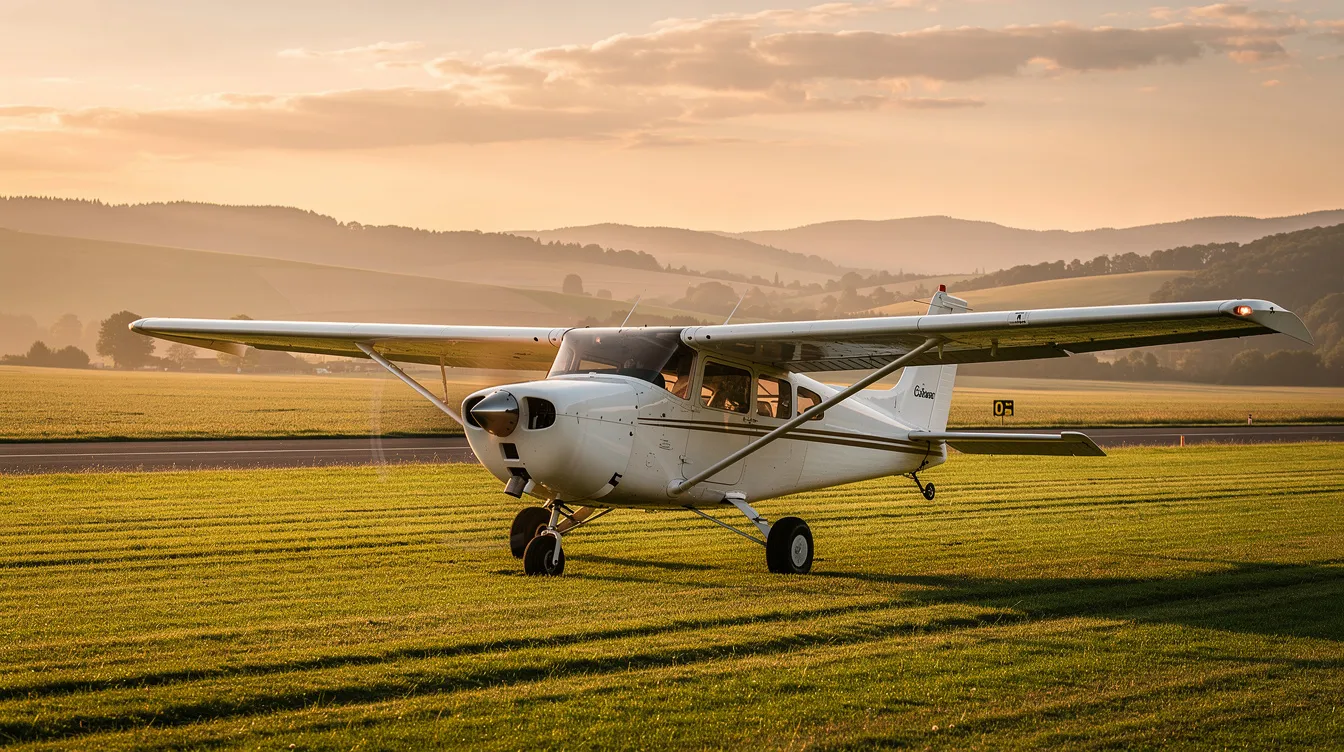
The Cessna 150 is one of general aviation's most recognized airplanes - a two-seat, all-metal trainer with tricycle landing gear that introduced hundreds of thousands of pilots to the sky. First produced by the Cessna Aircraft Company in 1958 and built continuously until 1977, it remains a cornerstone of flight training worldwide. Understanding what this plane can and cannot do is essential for any pilot charting a course from piston flying toward turboprops, charter, or private jet travel. The Cessna 150 is a two-seat tricycle-gear general aviation airplane. This guide is intended for student pilots, private owners, and aviation enthusiasts interested in the Cessna 150’s capabilities and role in pilot progression.
The Cessna 150 is a high-wing, fixed-gear aircraft known for its docile handling and reliability across decades of service.
Over 24,000 Cessna 150s were built from 1958 to 1977, making it one of the most produced civilian plane types in history.
Its primary missions include flight training, personal use touring, and short cross-country flying.
With a wingspan of 33 ft 4 in and a simple system with no retractable landing gear, the aircraft rewards pilots trained on fundamentals rather than complexity.
The Cessna 150 serves as an entry-level aircraft for pilot training, and many aviators who start here eventually progress to faster, longer-range aircraft - including private jets.
Design and Development History
The Cessna 150 evolved from the tailwheel Cessna 120/140 series. Cessna's original design goal was straightforward: build a modern trainer with tricycle landing gear that eliminated ground-loop tendencies, and add Fowler-type "Para-Lift" hinged wing flaps for slower, more controllable landings. The result was a cabin that felt roomier and more accessible than its predecessors, with forward visibility that made taxi and pattern work far easier for students.
The Cessna 150 first flew on September 12, 1957. Production commenced in late 1958 as a 1959 model year airplane after FAA type certification in July 1958. Cessna assigned 31 different model designations during the production run, and the finished production line delivered its last 150M models in 1977 before the Cessna 152 took over.
Key design milestones across the production span:
1959–1963: The first model series featured a straight tail and "fastback" fuselage with no rear window. Manual flaps operated via a cockpit lever.
1964–1965: Introduction of the "Omni-Vision" wraparound rear window and a gross weight increase to approximately 1,600 lbs.
1966: Swept tail introduced along with electric flaps, larger cabin doors, and other changes to the fuselage. Cessna produced 3,067 units of the 1966 model year alone - the peak production year. The airplane was priced at $9,500 in 1967.
1971: Tubular main gear legs replaced leaf-spring style on later models, improving ground handling. Landing and taxi lights were also repositioned.
1975 (150M): Taller, narrower vertical stabilizer, updated paint schemes, and the Commuter II equipment package rounded out the final chapter.
Variants: Commuter, Commuter II, Aerobat & Other Models
Cessna offered several factory variants throughout the 150s life, each targeting a different mission or buyer profile.
Standard / Trainer: The base configuration with dual controls, basic instrument panel, and minimal avionics. Designed purely for flight training and local flying. This remained the backbone of flight schools through the 1960s and 1970s.
Commuter: An upgraded package aimed at private owners and small-town business commuters. Added improved interiors, a center console, better avionics (including vacuum-driven attitude indicators), and sometimes wheel fairings on the main wheels for a modest speed gain.
Commuter II: Introduced with the 150M, this variant formalized the equipment list - upgraded upholstery, more complete avionics, and styling that made the airplane feel less utilitarian and more suited to personal cross-country use.
Aerobat (A150): Aerobatic Aerobat models featured a structurally reinforced airframe, four-point shoulder harnesses, jettisonable doors, and distinctive checkerboard paint schemes on the tail. Certified for limited aerobatic maneuvers including spins, rolls, and lazy eights within defined envelopes.
Patroller: Built for observation work such as pipeline patrol and aerial survey. Equipped with observation windows in the lower doors, long-range fuel tanks (up to approximately 38 gallons), and a message-drop tube. A niche variant, but it demonstrated the airframe's versatility.
Each variant shared the same core airframe, but the trade-offs mattered. The Commuter added more weight from equipment, reducing useful load. The Aerobat sacrificed some payload capacity for structural strength. Choosing the right variant depended entirely on the mission.
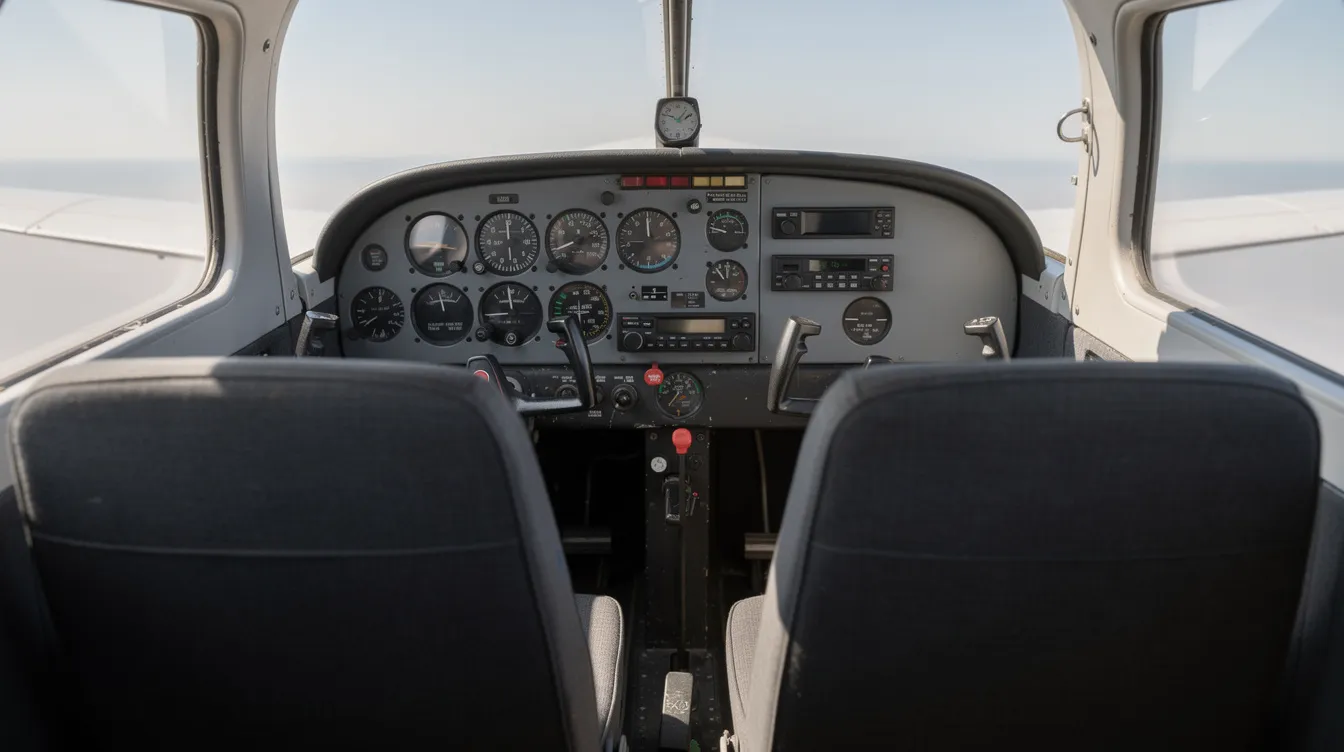
Engine, Fuel System, and Core Specifications
Nearly every US-built Cessna 150 is powered by the Continental O-200-A - a 100 hp, air-cooled, direct-drive, horizontally opposed four-cylinder engine. It is simple, well-understood, and supported by a deep parts network even decades after production ended.
The fuel system uses two wing tanks feeding through a cockpit fuel shutoff valve. On standard-equipped aircraft, fuel capacity is 23–26 gallons usable, while the Cessna 150 can have a fuel capacity of 40 gallons with optional long-range Patroller tanks installed.
Core specifications for a mid-1970s 150M Commuter II:
Max gross weight: approximately 1,600 lbs
Empty weight: roughly 1,110–1,130 lbs depending on installed equipment
Useful load: approximately 470–490 lbs
Fuel capacity: 26 US gallons standard (about 22.5 usable); up to 38–40 gallons with long-range options
Engine: Continental O-200-A, 100 hp
Landing gear: Fixed tricycle - no retractable components, keeping maintenance and pilot workload low
Seat tracks: Adjustable fore-and-aft for pilot and one passenger
Performance: Cruise, Climb, Range, and Stall Speed
The Cessna 150's performance numbers are modest by modern standards, but they tell an important story about what this airplane does well - and where it reaches its limits.
Cruise speed: The Cessna 150 has a cruise speed of approximately 100 knots (roughly 115 mph) at 75% power and 7,000 ft. The Cessna 150's maximum speed is approximately 122 mph. With certain modifications, cruise can reach approximately 113 knots.
Fuel burn: Its typical fuel burn is about 5 to 6 gallons per hour at normal cruise power settings.
Climb rate: At sea level with a moderate load, expect around 670 feet per minute. Performance drops noticeably at higher density altitudes or near max gross weight.
Service ceiling: The aircraft can reach a service ceiling of 15,300 feet, though most training and personal flights stay well below 10,000 ft.
Range: With standard tanks (22.5 usable gallons), realistic range is about 250–340 NM with reserves. Long-range tanks extend this to 500+ NM, but at the cost of reduced payload.
Stall speed: Clean configuration (flaps up): approximately 48 knots CAS. With full flaps deployed: approximately 42 knots CAS. These low stall speed values make the airplane forgiving during slow-flight practice and short-field landings, though carrying more weight raises these numbers.
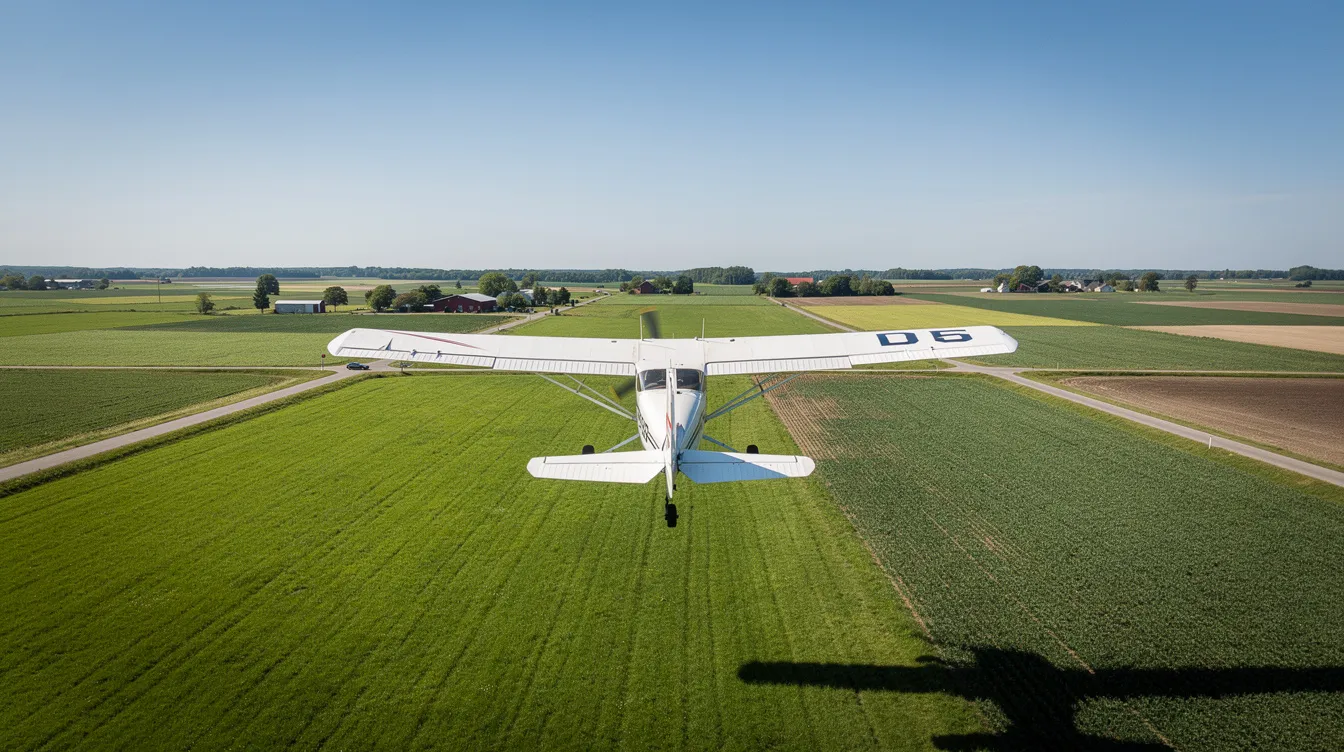
Flight Handling, Training Characteristics, and Safety
The Cessna 150 has excellent training characteristics due to its forgiving handling. Its relatively low wing loading produces gentle, well-buffeted stalls with predictable recovery - exactly what instructors want when teaching ab initio students. The airplane's benign spin entry and recovery characteristics made it a staple of spin training programs for decades.
The high-wing configuration provides better visibility downward and forward during taxi, takeoff, and landing - critical for building situational awareness in student pilots.
Control harmonies are straightforward. Pitch, roll, and yaw responses are proportional and intuitive, which keeps the learning curve manageable.
The Cessna 150 is sensitive to turbulence and crosswinds, which actually serves a training purpose: students learn to manage gusts and maintain coordination early, building skills that transfer to larger, faster aircraft.
It has limited cabin space, making it cramped for larger occupants, but for training purposes the cozy cockpit keeps everything within easy reach.
Safety considerations that instructors emphasize: maintain adequate speed on final approach (especially at higher gross weight), practice stall recognition and recovery regularly, and account for density altitude on hot days when climb performance degrades significantly.
Weight, Balance, Useful Load, and Practical Limitations
The useful load of a later-model Cessna 150 is one of the airplane's most talked-about constraints, and it often features prominently in discussions of the best options for the cheapest plane. With an empty weight around 1,110–1,130 lbs and a gross weight of 1,600 lbs, you have roughly 470–490 lbs to work with - total.
Here is a practical loading example:
Item | Weight |
|---|
Pilot (adult) | 180 lbs |
One passenger (adult) | 180 lbs |
Headsets, bags, charts | 25 lbs |
Full standard fuel (26 gal) | 156 lbs |
Total payload | 541 lbs |
Available useful load | ~480 lbs |
Over gross | ~61 lbs |
This scenario shows that two average-weight adults with full fuel and minimal baggage can push the airplane over its certified max. Pilots must either reduce fuel or carry less weight.
Long-range tanks add even more weight to the fuel load, squeezing payload further.
Center-of-gravity limits are relatively tight. Heavy baggage behind the seat shifts the CG aft, which can degrade stall speed margins and pitch stability - particularly dangerous at short or high-elevation fields.
Complete logs and weight-and-balance documentation should be reviewed before every flight, not just annually.
Flight Planning in a Cessna 150
Flight planning in a Cessna 150 demands discipline. The airplane's limited speed, range, and payload mean there is little margin for poor planning, which is why many owners weigh these trade-offs against the practical cost comparison of chartering a private jet.
Typical missions include local training sorties of 30–60 minutes, cross-country flights of 50–150 NM between nearby airports, and short regional hops that keep legs under 200 NM. Longer trips require fuel stops, weather monitoring, and careful weight management.
Fuel reserves: FAA requires 30 minutes reserve for VFR day flight; prudent pilots carry more. With standard tanks, that leaves roughly 3 hours of usable flight time.
Winds aloft: At 100 knots cruise, a 20-knot headwind cuts ground speed by 20% - significantly extending leg times and fuel requirements.
Terrain and weather: Without pressurization or de-icing, pilots route around high terrain and convective weather. The airplane is not IFR-capable in its base configuration, though some owners add the avionics to qualify.
Alternate airports: Smart 150 pilots identify alternates with shorter taxi distances and lower traffic volume, minimizing time and fuel wasted on the ground.
Contrast this with private jet flight planning and range: a professionally crewed jet handles routing, weather analysis, ATC coordination, and ground services end-to-end. The passenger's only decision is when to arrive at the terminal.
Modifications, Upgrades, and Conversions
Many Cessna 150s flying today carry modifications that significantly update or improve the original design.
Avionics: Modern GPS units, ADS-B Out transponders, and upgraded communication radios bring older 150s into compliance with current airspace requirements. Some owners install lightweight autopilots and electronic flight instruments, making the airplane more cross-country friendly.
STOL kits: STOL kits enhance short-field performance of the Cessna 150 through modified leading edges, vortex generators, or revised flap geometry. These are popular with bush pilots or owners operating from short grass strips.
Engine conversions: The Cessna 150 can be upgraded to 150 hp via STC-approved conversions (such as installing a Lycoming O-320). The 150-hp conversion improves climb rate to 1,000 fpm - a substantial gain over the stock 670 fpm. However, the conversion adds more weight, changes CG, and increases fuel burn.
Interior and lighting: LED landing and taxi lights, refreshed upholstery, and soundproofing kits improve comfort and safety. Each modification that increases empty weight reduces useful load, so owners must update all weight-and-balance supplements accordingly.
Acquisition costs vary widely for modified Cessna 150s - a well-equipped, low-time airframe with modern avionics and a fresh engine commands a premium over a stock airplane with high-time components.
Comparing the Cessna 150 to Other Aircraft
The Cessna 150 occupies a specific niche. Understanding how it compares to other aircraft helps pilots decide when the airplane fits and when it does not.
Cessna 150 vs. Cessna 152: The 152 (1977–1985) swapped the Continental O-200 for a 110 hp Lycoming O-235, offered a slight gross weight increase, and reduced maximum flap deflection from 40° to 30°. Performance gains were modest. Handling remained similar. The 152 is slightly more capable but not a generational leap. Both are covered in guides like Top Small Planes of 2026.
Cessna 150 vs. Cessna 172: The 172 carries nearly double the useful load (900–1,000 lbs), cruises 20–30 knots faster, and seats four. Operating cost per hour is higher, but mission flexibility is vastly greater for cross-country or passenger-carrying flights.
Cessna 150 vs. Piper PA-28 Cherokee: The PA-28 offers a low-wing platform with better load capacity and more room, though training characteristics differ. The 150 remains the more forgiving stall and spin trainer.
Training effectiveness: For pure ab initio instruction, the 150's simplicity, low cost, and benign handling are hard to beat. For missions requiring more flexibility - more passengers, more range, IFR flying - pilots must look beyond the two-seat trainer and consider top affordable private planes and entry-level jets.
Ownership Costs, Value, and When to Look Beyond the Cessna 150
The Cessna 150 remains one of the most affordable airplanes to own and operate - which is precisely why it endures as a trainer and personal airplane and frequently appears in guides to the best cheapest planes for budget-conscious pilots.
Acquisition: Airworthy 150s typically sell for $40,000–$55,000; upgraded or low-time Aerobat variants can reach $60,000–$65,000. Non-flying project aircraft start around $15,000–$25,000. These figures place the 150 firmly within many guides to the cheapest private aircraft and budget-friendly options. Most Cessna 150s are older aircraft that may require substantial maintenance.
Hourly operating cost: The Cessna 150's hourly operating cost is $70–$95, broken down roughly as:
Hourly fuel costs range from $30 to $51
Maintenance costs range from $10 to $25 per hour
Engine reserve costs are approximately $15 to $20 per hour
Annual fixed costs: Insurance costs range from $800 to $2,000 per year. Add hangar or tie-down fees, annual inspection, and miscellaneous expenses, and total annual cost for a moderately active owner (150+ hours/year) runs approximately $18,000.
When pilots outgrow the 150, many start to research the cheapest private jet options for longer trips:
Needing to carry three or more passengers regularly
Flying legs beyond 300–500 NM on a schedule
Requiring IFR capability in actual weather
Facing time-critical business travel where a 100-knot airplane cannot compete with airline or jet alternatives
From Cessna 150 to Private Jet Travel with BlackJet
Many pilots who earn their wings in a Cessna 150 eventually face a reality: the airplane that taught them to fly cannot keep pace with their professional or personal travel demands. When a 200 NM leg at 100 knots no longer makes sense - because the meeting is 800 miles away, because three colleagues need to come, or because weather demands an aircraft with more capability - BlackJet’s premium private jet cards and charter solutions turn private jet access into a strategic advantage rather than a luxury.
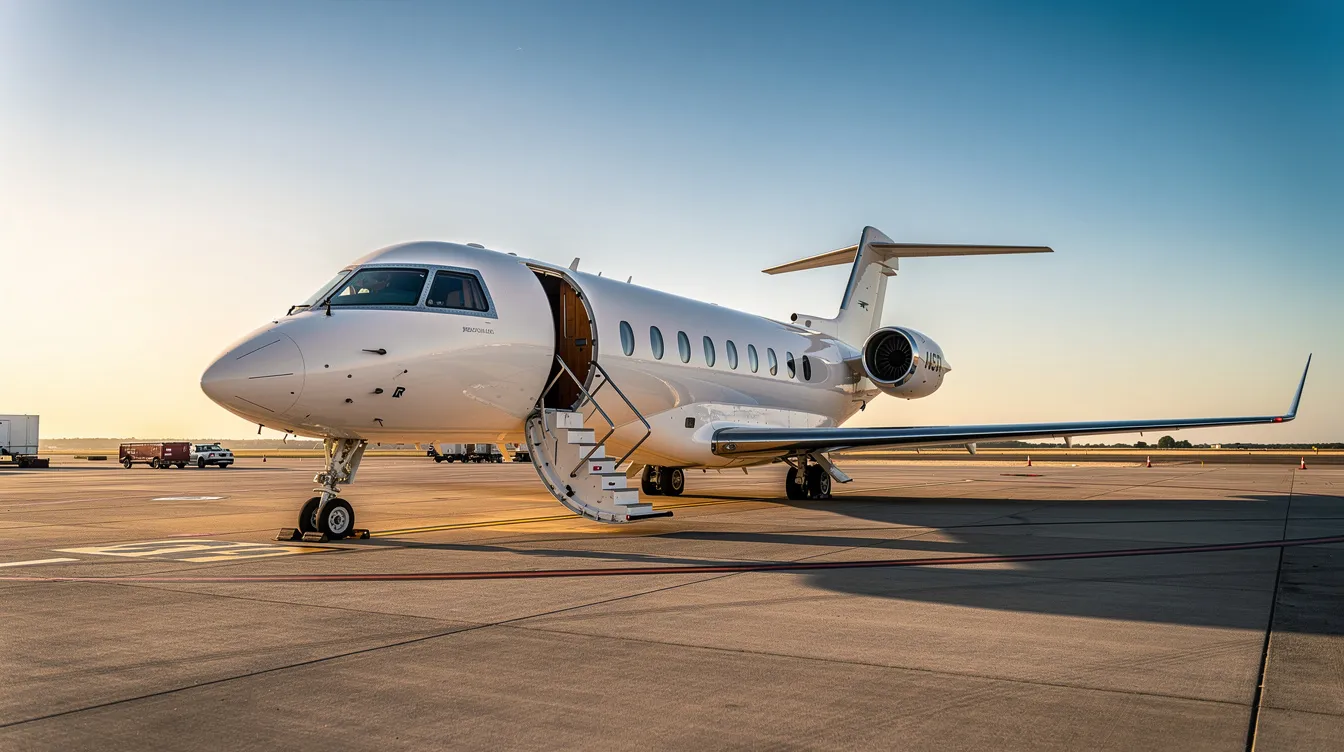
BlackJet's Jet Card model provides prepaid access to light, midsize, and large-cabin jets through 25-hour and 50-hour programs. Pilots ready to move beyond piston trainers often compare the complete guide to the 25-hour Jet Card with a comprehensive guide to 50-hour Jet Card cost and value, and BlackJet’s own 25+ Hour Jet Card solution offers fixed rates on larger cabins. No ownership burden, no maintenance scheduling, no hangar lease.
End-to-end operations: BlackJet handles all flight planning, crew coordination, and ground logistics. Compare this to the hands-on preflight workload of a Cessna 150 - weight and balance, fuel calculations, weather briefings, NOTAM checks - and the difference is transformative. The passenger experience is seamless.
Performance contrast: Private jet charters can fly 1,000+ NM at 400 knots - covering in two hours what would take a 150 an entire day with multiple fuel stops. Exploring the features of a 5 million dollar jet highlights how cabin size, range, and speed reshape what trips are practical. More flexibility in scheduling, routing, and weather tolerance means fewer cancellations and more productive travel.
Safety and sustainability: BlackJet partners with operators meeting rigorous safety standards, including independent audits and top-tier certification. Travelers comparing access models often look at comprehensive jet card cost guides, survey the best jet cards for frequent flyers, and study jet card pricing structures and benefits to balance safety, sustainability, and value. Every flight is carbon neutral at no additional cost - a meaningful evolution from burning avgas in a 50-year-old piston engine.
Technology: 24/7 digital booking, real-time trip support, and concierge services replace the clipboard-and-paper planning that defines small-airplane flying.
Frequently Asked Questions About the Cessna 150 and Next-Step Travel Options
Is a Cessna 150 a good first aircraft for new private pilots? Yes. Its forgiving stall behavior, simple systems, widespread parts availability, and low hourly cost make it an ideal first airplane. However, its two-seat capacity and limited range mean most owners eventually need something larger for cross-country or passenger missions.
How far can you realistically fly in a 150 on one leg? With standard tanks (22.5 usable gallons), plan for 250–300 NM with adequate reserves. Long-range tanks extend this to 400–500 NM, but at the expense of payload - you may only be able to carry one passenger with minimal baggage. For travelers regularly exceeding these distances, understanding the 100-hour Jet Card cost and structure can clarify when stepping up to private jets is more efficient.
How tight are weight-and-balance limits with two adults and bags? Very tight. Two 180 lb adults plus full standard fuel and 25 lbs of gear exceeds the useful load on most later models. Reduce fuel or weight to stay legal and safe.
What upgrades matter most for training versus cross-country use? For training, prioritize reliability and a basic, functional instrument panel. For cross-country, invest in GPS navigation, ADS-B, an autopilot, long-range fuel tanks, and interior comfort upgrades.
When does it make more sense to book a private jet instead of flying yourself in a 150? When your trip exceeds 300–400 NM, when you need to carry more than one passenger, when weather demands IFR capability you don't have, or when the opportunity cost of spending a full day in transit outweighs the cost of chartering a jet.
How can a Jet Card complement owning or renting a trainer like the Cessna 150? Keep the 150 for weekend flying, local trips, and the pure enjoyment of piloting. Use a Jet Card for business travel, longer family trips, or any mission where speed, range, and cabin comfort matter. Comparing Flexjet Jet Card costs and options or NetJets Jet Card pricing with BlackJet programs, and even region-specific offerings like private jet charters in Karachi, shows how flexible these solutions can be. It is the most practical way to access private aviation without doubling your ownership burden.
Conclusion
The Cessna 150 remains an enduring entry-level aircraft for flight training and short regional trips, valued for its simple systems, forgiving handling, and modest operating costs. Its two-seat cabin, roughly 100-knot cruise speed, limited payload, and weather exposure also define clear limits. For longer, time-sensitive journeys or travel with colleagues and family, private jet access can be a strategic complement—not a replacement for the pleasure of flying a trainer.
BlackJet’s Jet Card programs offer prepaid access to multiple cabin classes without the fixed responsibilities of aircraft ownership. With digital booking, real-time support, rigorous operator safety standards, and carbon-neutral flights, BlackJet makes it easier to choose the right aircraft for each mission. Explore premium jet access and discover how a Jet Card can take you beyond the Cessna 150’s range and schedule.
Elevate your travel - effortlessly. With BlackJet, our Jet Card programs make private flight accessible on your terms, with rigorous safety, carbon-neutral performance, and unmatched flexibility. Whether you need large-group charter solutions for around 100 passengers or the best private jet options for 50 travelers, explore our offerings and discover how refined, meaningful travel becomes your new standard.


 Sign up with google
 Sign up with Apple