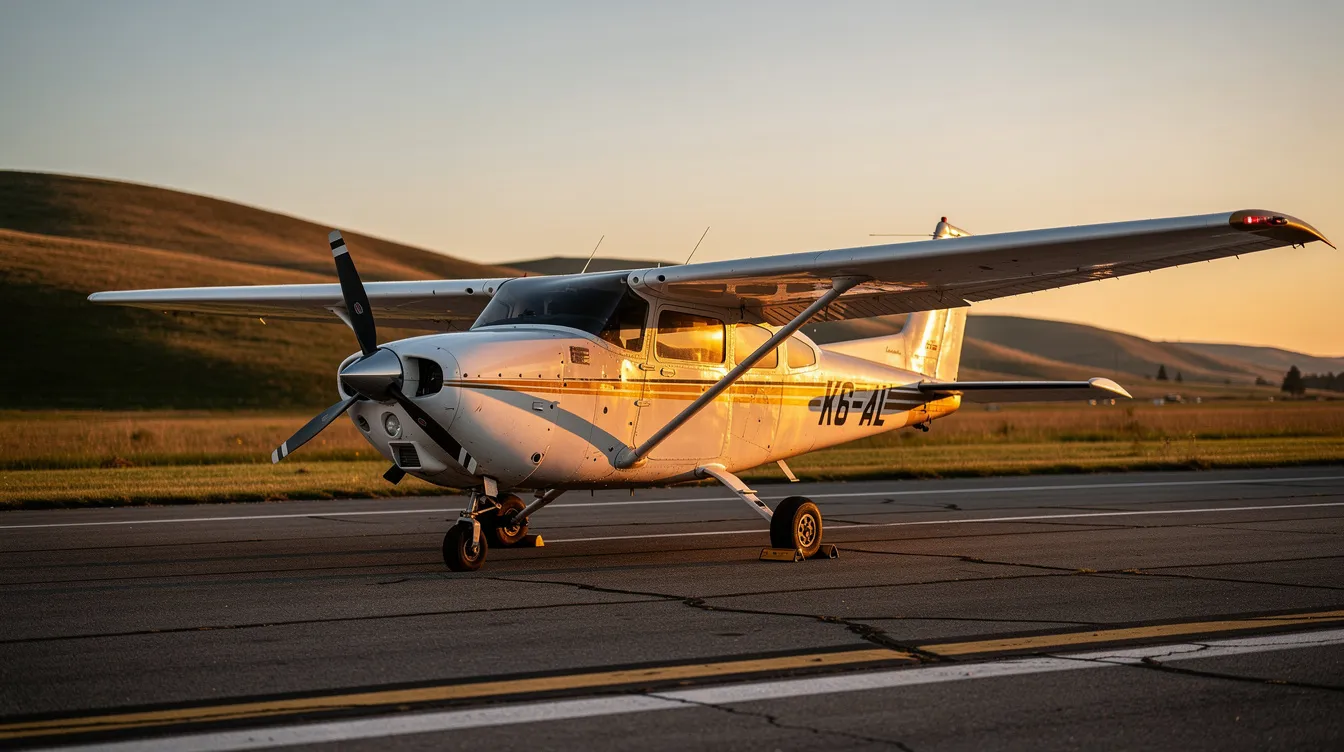
Cessna 172 Cost of Ownership Spreadsheet: Build, Customize, and Understand Your True Numbers
Owning a Cessna 172 is one of the most rewarding decisions a pilot can make—and one of the most financially misunderstood. A well-built Cessna 172 cost-of-ownership spreadsheet replaces guesswork with precision, giving you a clear monthly number before you sign anything.
Quick Answer: What Your Cessna 172 Will Really Cost Per Month
Most buyers start with a simple question: how much aircraft can I really afford? The answer depends on your specific airplane, financing, location, and how often you fly. Here is a concrete starting point.
Key Concepts:
Fixed costs are expenses you pay regardless of how much you fly (e.g., insurance, hangar, loan payments, annual inspections).
Variable costs are expenses that increase with each hour flown (e.g., fuel, oil, maintenance reserves).
Understanding the relationship between fixed and variable costs is crucial: fixed costs are spread over more hours as you fly more, reducing your per-hour cost, while variable costs scale directly with usage.
Consider a 2003–2006 Cessna 172S with a purchase price around $250,000–$320,000, financed over 15 years at roughly 7% APR with 20% down. At 100 hours per year, expect a monthly ownership range of approximately $1,800–$2,500, covering your monthly loan payment, hangar, insurance, maintenance reserves, and fuel.
Cessna 172 ownership costs are divided into fixed costs and variable costs. The total annual cost of operating a Cessna 172 ranges from $19,000 to $30,000 for 100 hours flown, with operating costs running $150 to $250 per hour depending on your setup.
Local fuel prices and hangar rates can move this estimate up or down. The rest of this article walks step-by-step through building a spreadsheet to model these operating costs for any variant. And while the focus here is piston ownership, high-hour or business travelers may ultimately find greater value in private jet access via a jet card program instead of owning a single-engine aircraft.
Why a Cessna 172 Cost of Ownership Spreadsheet Beats Back-of-the-Envelope Math
Aircraft ownership is a bundle of fixed and variable operating costs, and a spreadsheet lets you see how each line item behaves as flight hours or financing change. Without one, most buyers make predictable mistakes:
Focusing only on purchase price and ignoring engine reserves
Underestimating insurance or forgetting sales tax and closing fees
Failing to model how utilization (50 vs 150 hours per year) changes their cost per hour
A spreadsheet lets you test scenarios—hangar vs tie-down, a 10-year vs 15-year loan term, whether avionics upgrades now or later changes the monthly picture. Lenders and underwriters build the same structured view internally when evaluating aircraft ownership risk. Disciplined aircraft owners use this model to compare aircraft by monthly ownership cost rather than sticker price, much like BlackJet clients use cost-per-hour analysis to compare owning vs chartering vs a jet card for their travel profile.
Step 1 – Define the Aircraft You're Modeling (Year, Variant, and Useful Load)
Model and Year
Dedicate the first block of your spreadsheet to a clear "Aircraft Profile" section. This is where everything downstream gets its inputs.
Add labeled cells for:
Purchase Price Range
Typical market purchase price range: older 1970s 172 M/N models often $110,000–$180,000; late-model 172S often $300,000+ as of 2024. Used Cessna 172 prices range from $30,000 to $200,000 across the full spectrum, and pilots on tighter budgets may want to compare these numbers with the cheapest new plane options covered in broader affordability guides.
Airframe and Avionics
Total time on airframe and time since major overhaul (SMOH)
Avionics summary: legacy steam gauges, partial upgrade, or full glass like G1000
Useful Load
Include useful load explicitly. List empty weight, max gross weight (2,450 lb for most 172S), and calculated useful load. The fuel burn for a Cessna 172 is about 8 to 10 gallons per hour, and full fuel capacity significantly reduces available payload for passengers and baggage; comparing these tradeoffs with cheapest single-engine plane options can help frame whether a 172 is the right entry point. If your mission requires two adults, two kids, and bags, you may need newer models with better useful load despite higher acquisition cost.
Step 2 – Capture the True Cessna 172 Purchase Price and Acquisition Costs
Sticker Price vs All-In Acquisition Cost
This section of the spreadsheet should separate "Sticker Price" from "All-In Acquisition Cost." Buyers often underestimate what they actually pay to close.
Create distinct rows for:
Negotiated purchase price
Pre-buy inspection: a pre-purchase inspection costs around $1,500 to $3,000, and pre-purchase inspections can reveal hidden maintenance issues that change the deal
Immediate squawk fixes and repairs revealed by the inspection
Sales tax or use tax based on home state (6–8% where applicable)—sales tax and closing costs can add significant money to ownership expenses
Title search, escrow, and registration fees
Example Calculation:
Item | Amount |
|---|
Asking Price | $220,000 |
Inspection & Repairs | $10,000 |
Sales Tax (7%) | $15,400 |
Title/Escrow/Registration | $2,500 |
Total Upfront Cash Needed | $247,900 |
If you plan avionics upgrades (ADS-B, IFR GPS, or a full glass panel), include a dedicated line for avionics work scheduled within the first 24 months. Summarize at the bottom with a single "Total Upfront Cash Needed" cell covering down payment, closing costs, and anticipated early upgrades.
Step 3 – Model Your Monthly Loan Payment
Financing Inputs
Cessna 172 financing typically requires a 15% down payment, though many buyers put 20% down. A typical loan term for aircraft financing is 20 years, with terms ranging from 10 to 20 years depending on the lender and aircraft age. Interest rates in mid-2020s generally fall between 6–8% APR for qualified borrowers.
Add a "Financing" area with input cells for:
The spreadsheet should calculate the loan amount, monthly loan payment using a standard amortization formula, and total interest paid over the life of the loan. Monthly payments can average roughly 1% of the aircraft's value as a quick sanity check, which is why many budget-conscious pilots also look at the best options for the cheapest plane before committing to a financed 172.
Example Calculation:
Loan Amount | Term (years) | Interest Rate | Monthly Payment |
|---|
$260,000 | 15 | 7% | ~$2,300 |
Stretching to 20 years drops the monthly payment but increases total interest significantly. Financing should consider total ownership costs, not just the purchase price—lenders often look for a comfortable 36% total debt-to-income ratio including the aircraft loan. Underwriters may also count income from a property you rent when evaluating the overall debt picture.
Step 4 – Fixed Annual Costs: Insurance, Hangar, and Required Inspections
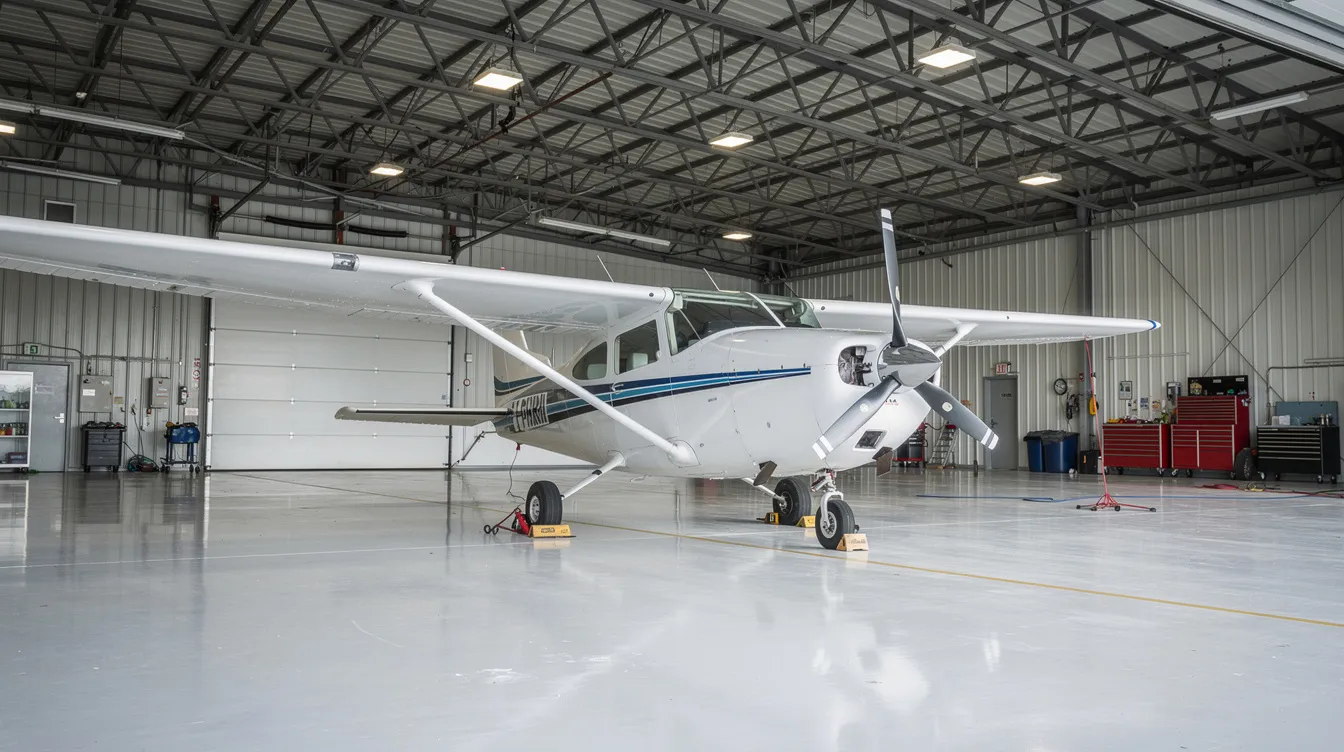
Fixed costs are incurred regardless of flight hours. Group them in your spreadsheet and convert to both annual and monthly figures, then compare your totals to other cheapest plane options to see where the 172 sits on the affordability spectrum.
Fixed Cost Category | Typical Annual Range |
|---|
Insurance | $1,500–$3,500 |
Hangar or tie-down | $2,400–$7,200 |
Annual inspection (base) | $1,800–$2,500+ |
Database subscriptions (GPS/G1000) | $300–$1,000 |
Misc (charts, recurrent training) | $300–$800 |
Cessna 172 annual insurance costs range from $1,500 to $3,500 based on pilot experience and hull value. Hangar or tie-down fees can vary broadly from $2,400 to $7,200 annually depending on location—urban airports in California or Florida charge significantly more than rural fields. Annual inspections can vary based on aircraft condition; older airframes often need additional corrosion or avionics work, and integrated avionics and other onboard systems can add inspection or troubleshooting time when issues appear. Budgeting for avionics database updates generally ranges from $300 to $1,000 annually.
Example Calculation:
Item | Annual Cost |
|---|
Insurance | $2,500 |
Hangar | $4,800 |
Annual Inspection | $2,200 |
Subscriptions | $500 |
Total Fixed | $10,000 |
At 100 hours per year, that alone is $100 per hour before fuel or reserves.
Step 5 – Variable Operating Costs: Fuel, Oil, and Routine Maintenance
Variable costs scale directly with the number of flight hours. Modeling them accurately is the main thing that separates a useful budget from a fantasy, and it also gives you a clean baseline for comparing ownership against the cost to charter a small plane for certain missions.
Baseline numbers for a typical Cessna 172:
Fuel burn: a Cessna 172 typically burns 8 to 10 gallons per hour; use 9 gph at 65–75% power as a common planning figure
Average fuel cost: $50 to $80 per hour depending on local avgas price ($6.00–$8.50/gallon in many U.S. markets)
Oil changes and consumables: routine maintenance and oil changes for a Cessna 172 can cost $20 to $40 per hour,r covering oil, filters, brake pads, tires, and minor items
Your spreadsheet should calculate fuel cost per hour (fuel burn × price per gallon), consumables cost per hour, and total direct variable cost per hour excluding reserves. Let the user toggle annual flight hours (50, 100, 150) to see how annual variable cost and blended hourly cost shift.
Step 6 – Engine, Prop, and Major Maintenance Reserves
Reserves are not a bill you pay each month—they are a planned savings amount to cover big-ticket stuff like engine overhaul, propeller overhaul time, and unexpected major repairs. Underestimating them is the single biggest reason owners feel blindsided by aircraft ownership costs, especially when you later compare these lifecycle expenses to a private jet price list across access models such as full ownership, fractional, charter, and jet cards.
Engine overhaul for a Cessna 172 typically costs $25,000 to $35,000 and occurs every 1,800 to 2,000 hours. Setting aside $15 to $20 per flight hour funds engine reserve adequately for overhaul. Annual maintenance reserves should be 1–2% of aircraft value to help you maintain the airplane to a consistent standard between major events and cover broader lifecycle needs.
Reserve Amounts (per hour):
Example Calculation:
Reserve Type | Per Hour | Annual (100 hrs) |
|---|
Engine Reserve | $15–$20 | $1,500–$2,000 |
Propeller Reserve | $3–$8 | $300–$800 |
Maintenance Reserve | $10–$20 | $1,000–$2,000 |
Total Reserves | $28–$48 | $2,800–$4,800 |
At $35/hr total reserves × 100 hours = $3,500 per year, or about $290 per month that you should spend into a dedicated savings account. This makes sense whether you plan to keep the airplane for five years or twenty.
Step 7 – Bring It Together: Total Monthly and Per-Hour Cost Formulas
This is the dashboard—the summary block that answers "What does my Cessna 172 actually cost per month and per flight hour?"
Summary Line | Monthly Amount (Example at 100 hrs/yr) |
|---|
Monthly loan payment | ~$2,300 |
Fixed costs (monthly share) | ~$830 |
Variable costs (fuel + oil) | ~$900 |
Reserves (engine + maintenance) | ~$290 |
Total monthly ownership cost | ~$4,320 |
For the hourly view, include fuel + oil per hour, reserves per hour, and the hourly share of fixed and financing costs based on your selected annual hour assumption; this structure mirrors how jet card pricing is modeled with transparent hourly rates and surcharges. Cessna 172 operating costs range from $150 to $250 per hour depending on variant, financing status, and utilization. For a financed late-1990s 172R at 100 hours per year, expect an illustrative total of roughly $200–$230 per hour when all items are included. Flying 150 hours per year spreads fixed costs more efficiently and drops your per-hour number. Budget 1–2% of aircraft value annually for maintenance reserves and format the summary block cleanly—bold totals, shaded key cells—so the spreadsheet is fun to use, not a chore to read.
Step 8 – Scenario Tabs: Cash Purchase vs Financing, Low vs High Utilization
Sophisticated buyers should create separate tabs to compare scenarios:
Cash purchase: zero loan payment but higher upfront outlay and opportunity cost on capital
Standard financing: 15–20% down with amortized payments
Utilization levels: 50, 100, and 200 hours per year
Duplicate the main model and adjust the loan payment line (zero for all-cash), annual hours flown, and fuel price scenarios, much like you would when comparing the best jet cards for frequent flyers with different deposit levels and hourly rates. Insurance costs depend on pilot experience and aircraft value, so adjust that input too when comparing different aircraft.
Key insight: At 60 hours per year, fixed and loan costs dominate,te and the hourly cost might exceed $250. At 150 hours, the same airplane might drop below $180 per hour. This kind of scenario analysis is similar to how BlackJet clients compare owning vs. chartering when time and comfort matter more than absolute hourly cost, or weigh a piston’s economics against the cheapest private jet options and entry-level VLJs.
Ownership vs Alternatives: Renting, Clubs, and Jet Cards for Higher-End Travel
Before you commit to owning your own plane, compare the three main alternatives using your spreadsheet numbers as a baseline.
Renting from an FBO
Higher hourly rates (often $160–$220 wet for a 172) but no fixed costs. If you fly fewer than 50 hours per year, renting often makes more financial sense, and for infrequent premium trips you might instead buy a seat on a private jet rather than own the whole airplane.
Flying Club
Buy-in equity plus lower hourly rates, with shared fixed costs across members. A good middle ground for pilots who want availability without full ownership risk, and a useful benchmark when comparing small-aircraft economics with structured programs like Flexjet jet card options.
Jet Cards and On-Demand Private Jets
Much higher cost per hour, but radically better speed, comfort, and productivity for regional and long-range business travel; frequent users should run the numbers against a 100-hour jet card cost guide to see where the break-even lies.
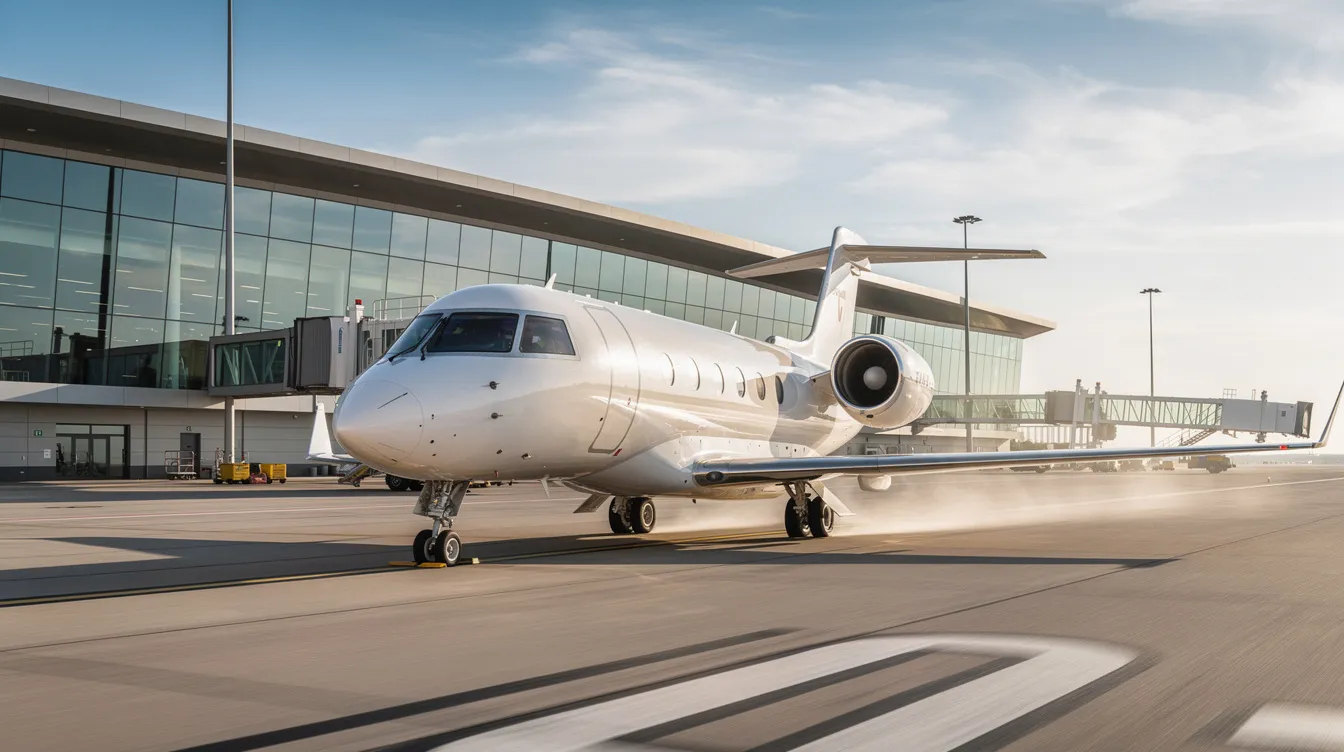
Many successful aircraft owners split missions: weekend local flights and training in the 172, while time-sensitive or international trips are handled through a carbon-neutral, safety-vetted jet card program, often starting with a flexible25-hourr jet card to test how private jet access fits their travel profile. Use your spreadsheet to measure the time saved and productivity gained on a multi-city business route—a light jet covering the same distance in a fraction of the time may justify the premium.
Frequently Asked Questions About Cessna 172 Operating Costs and Spreadsheets
What is a realistic hourly operating cost for a Cessna 172 if I own it?
Direct operating costs run $150–$250 per hour depending on financing, utilization, and location. Refer to your Step 7 dashboard for your personalized number.
How should I adjust my spreadsheet if avgas jumps from $6 to $8 per gallon?
Change the fuel price input in Step 5. At 9 gph, a $2/gallon increase adds $18 per hour—a bit over $1,800 per year at 100 hours.
What if I fly fewer hours than I planned?
Use the scenario tabs from Step 8. At 50 hours per year, your per-hour cost may exceed $300 because fixed costs and financing are spread across fewer flights.
How do I handle an early engine overhaul in my cost model?
Your reserve line from Step 6 should cover this. If overhaul time arrives before reserves are fully funded, model a lump-sum payment or short-term loan in a separate scenario tab.
When do my travel needs outgrow a Cessna 172?
When you consistently need to fly longer routes, carry more passengers, or reach meetings same-day across time zones, compare your 172 costs with a private jet card calculator. The math often favors a jet card for business-critical aviation once speed and productivity enter the equation.
How BlackJet Fits Into Your Long-Term Aviation Plan
For many pilots and entrepreneurs, a Cessna 172 is the entry point into aviation—a place where the love of flying begins. A flexible jet card becomes the strategic tool for high-value trips where time, privacy, and comfort matter most.
Your cost of ownership spreadsheet helps clarify which trips truly justify operating a small piston aircraft and which ones deserve a different approach. BlackJet offers:
Prepaid jet card access with predictable hourly rates across multiple cabin classes, including structured options like the BlackJet 25+ Hour Jet Card
Safety-vetted operators and proprietary certification standards
Carbon-neutral flights with built-in offsetting at no extra cost, which is especially compelling when you compare it to the cost structures in a typical 50-hour jet card program
Digital and mobile tools for 24/7 booking and live support
A real-world scenario: A client flies a personally owned 172 for weekend local flights, but uses a 25-hour BlackJet card for quarterly New York–Miami board meetings and European conferences where same-day, nonstop private jet travel provides a strategic edge no airline or piston airplane can match—similar to the way a 5 million dollar jet ownership decision forces you to weigh capital outlay against smarter access models.
Use your Cessna 172 cost of ownership spreadsheet as one side of a broader aviation plan. Explore how BlackJet's jet card can complement—or eventually replace—ownership as your travel profile evolves, especially once you’ve compared programs like NetJets jet card cost structures to BlackJet’s own offerings.


 Sign up with google
 Sign up with Apple