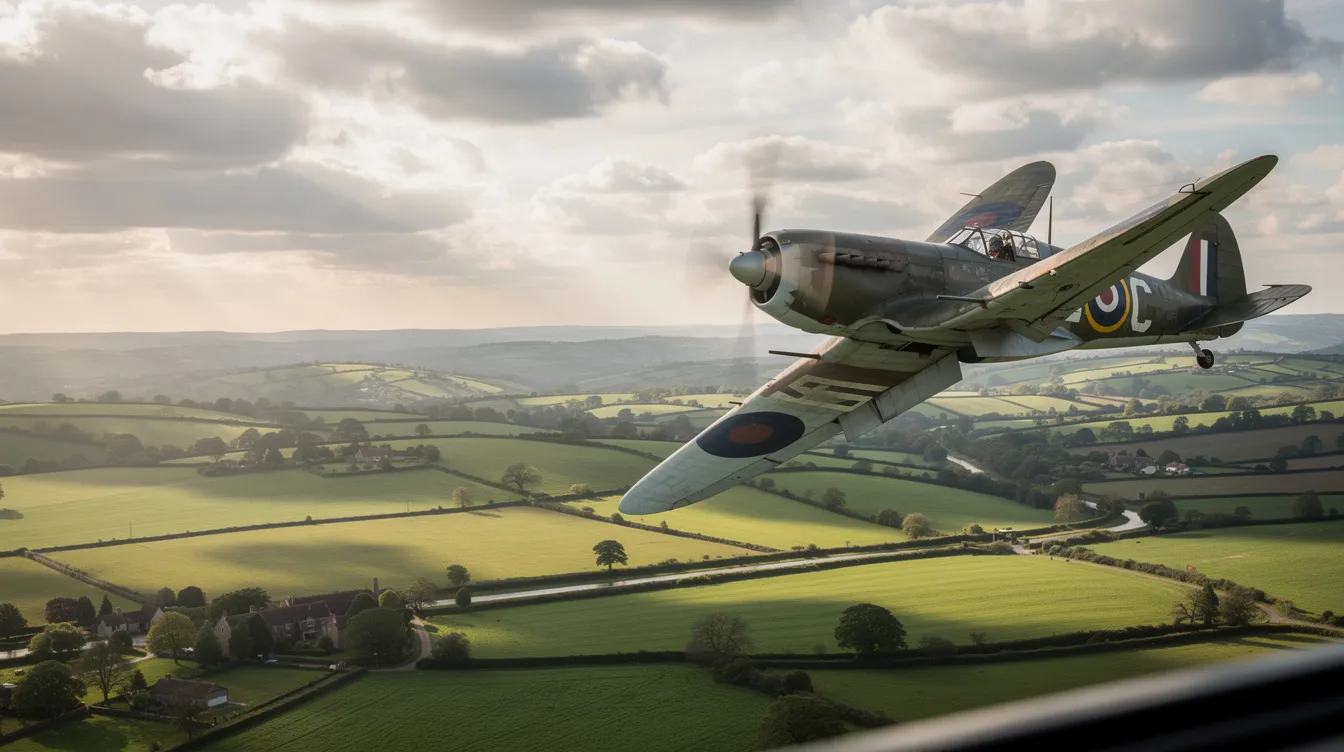
There is something irreducibly compelling about fighter jets. The roar of twin engines at full afterburner, the knife-edge silhouette cutting through cloud layers at supersonic speeds, the knowledge that behind those canopies sit pilots trained to operate at the very edge of human capability—these are the reasons cool fighter planes have captivated imaginations for more than a century. From the fabric-covered biplanes of World War I to the radar-absorbing composites of the F-22 Raptor, fighter aircraft have always represented the sharpest point of technological ambition.
Key Fighter Aircraft Types: Definitions
Before diving into the history and technology of cool fighter planes, it's important to define three major categories:
Air Superiority Fighter: An aircraft designed to dominate enemy aircraft in aerial combat, excelling in speed and maneuverability. These fighters are optimized to gain and maintain control of the airspace.
Multirole Fighter: A flexible aircraft designed to effectively carry out a variety of combat missions, including air-to-air engagements, ground attacks, and reconnaissance operations.
What makes a fighter plane "cool"? It comes down to four qualities: raw performance (speed, climb rate, ceiling), iconic aircraft design, a proven combat record, and breakthrough technology that changed the rules of air combat. Air superiority fighters dominate the skies in combat by combining all four. Multirole fighters can perform various mission types simultaneously—from intercepting enemy aircraft to prosecuting ground targets—which makes them arguably even more versatile. The coolest planes in history tend to excel in at least two of these dimensions, and the very best define entire eras of warfare.
At BlackJet, our world is private aviation—Jet Cards, business aircraft, and seamless travel—rather than dogfighting at 50,000 feet. Yet many of our members first fell in love with aviation watching a Spitfire documentary or standing beneath the intakes of an F-15 at an air show. That shared passion for flight connects every corner of the aerospace world.
Consider the numbers. The F-15 Eagle can reach speeds of Mach 2.5—more than 1,650 mph—and a service ceiling near 60,000 feet. A large-cabin private jet typically cruises between 35,000 and 51,000 feet, by contrast, at roughly Mach 0.85 (around 600 mph). The performance gap is staggering, and it underscores why military aircraft remain the Formula 1 of the skies while private jets serve as the executive limousine—different missions, shared engineering DNA.
Fighter Jet Comparison Table: Key Performance and Role Attributes
Aircraft | Role | Max Speed (Mach) | Service Ceiling (ft) | Notable Features |
|---|
Supermarine Spitfire | Air Superiority | 0.58–0.63 | 34,000–40,000 | Elliptical wings, Rolls-Royce Merlin engine |
Hawker Hurricane | Air Superiority | 0.56 | 36,000 | Rugged design, heavy armament |
P-51 Mustang | Air Superiority | 0.58 | 41,900 | Long-range, laminar-flow wing |
Messerschmitt Bf 109 | Air Superiority | 0.62 | 36,000 | High climb rate, versatile variants |
MiG-21 | Interceptor/Multirole | 2.0 | 58,000 | Lightweight, Mach 2 capable |
F-15 Eagle | Air Superiority | 2.5 | 65,000 | High payload, 104 aerial victories |
F-16 Fighting Falcon | Multirole | 2.0 | 50,000 | Fly-by-wire, versatile weapons loadout |
Su-27 Flanker | Air Superiority | 2.35 | 62,000 | Supermaneuverability, long range |
F-22 Raptor | Air Superiority | 2.0 | 65,000 | Stealth, supercruise, sensor fusion |
F-35 Lightning II | Multirole | 1.6 | 50,000 | Stealth, sensor fusion, vertical takeoff (B variant) |
MiG-25 Foxbat | Interceptor | 3.2 | 80,000 | High-speed, high-altitude reconnaissance |
Chengdu J-20 | Air Superiority | 2.0 | 65,000 | Stealth, supercruise |
Sukhoi Su-57 | Air Superiority | 2.0 | 65,000 | Thrust vectoring, stealth |
World War II Icons: Piston-Engine Legends That Defined Air Superiority
The Second World War produced some of the most recognizable propeller-driven aircraft ever to fly—machines that turned the tide of entire campaigns and whose silhouettes remain instantly identifiable more than eight decades later.
Supermarine Spitfire
The Supermarine Spitfire was crucial in the Battle of Britain, defending Great Britain's skies against the Luftwaffe in the summer and autumn of 1940. Designed in response to a 1934 RAF specification and first flown in March 1935, the Spitfire married R.J. Mitchell's elegant elliptical wings with the legendary Rolls-Royce Merlin engine. Early variants reached a top speed of roughly 360 mph and a ceiling near 34,000 feet; later Griffon-powered marks pushed past 440 mph and 40,000 feet. Over 20,000 were produced, cementing the Spitfire as the definitive air superiority fighter of its era.
Hawker Hurricane
The Hurricane is often overshadowed by its more glamorous stablemate, but this rugged fighter delivered approximately 60 percent of RAF kills during the Battle of Britain. Armed with eight .303 machine guns and built on a sturdy tubular-steel frame, the Hurricane could absorb punishment that would have shredded a lighter airframe. Roughly 14,487 units were built by 1944, and the aircraft served in various forms—including fighter bomber and ground attack roles—across every theatre of the war.
P-51 Mustang
When the United States needed a long-range escort to shepherd B-17 and B-24 bombers deep into Germany, the P-51 Mustang answered the call. Its laminar-flow wing and efficient radiator design gave it a maximum speed of nearly 440 mph and, with drop tanks, the range to fly from Great Britain to Berlin and back. The Mustang is widely regarded as one of the best fighter aircraft of World War II, and its arrival over Europe in significant numbers during 1944 shifted air superiority decisively toward the Allies.
Mitsubishi A6M Zero
Early in the Pacific War, the Zero stunned Allied pilots with extreme maneuverability and range that no contemporary fighter could match. Japan achieved this by stripping armor and self-sealing fuel tanks—a design philosophy that proved devastating once American tactics and new aircraft like the F6F Hellcat exploited those vulnerabilities.
Messerschmitt Bf 109
Germany's premier fighter throughout the world war, the Bf 109 excelled in dive speed and climb rate, matching or exceeding the Spitfire in certain altitude bands. Continuous upgrades across its E, F, and G variants kept it competitive into 1945, though it gradually lost the edge as Allied production overwhelmed the Luftwaffe.
These piston-engine legends laid the groundwork for what came next. Lessons in aerodynamics, cockpit layout, gun placement, and role specialization—from pure air superiority to dedicated ground attack aircraft—carried directly into the jet age.
The Dawn of the Jet Age: Cold War Speed Demons and Interceptors
The Cold War turned the sky into an arms race measured in Mach numbers and service ceilings. Jet engines replaced pistons, swept wings replaced straight ones, and guided missiles began supplementing—then replacing—machine guns as the primary air-to-air combat weapon.
Messerschmitt Me 262
The first operational jet fighter was the Messerschmitt Me 262, which entered service with the Luftwaffe in late 1944. Capable of roughly 540–560 mph, it outran every Allied propeller-driven aircraft in the sky. Though its impact was limited by fuel shortages and Hitler's insistence that it serve as a fighter bomber rather than a pure interceptor—which was not what it was originally intended for—the Me 262 proved that jet-powered air combat was the future. Post-war, captured examples directly influenced American and Soviet Union jet programs.
First and Second Generation Jets
The first jet fighters gave way rapidly to swept-wing designs with afterburners. By the mid-1950s, air forces worldwide had transitioned from subsonic to supersonic speeds, and early radar-guided missiles began appearing alongside traditional cannon armament. These first- and second-generation jets were experimental aircraft in spirit—pushing boundaries of speed and altitude that would have seemed fantastical a decade earlier.
Notable First and Second Generation Jets:
Gloster Meteor (UK): First British jet fighter, entered service in 1944.
F-80 Shooting Star (USA): First operational US jet fighter.
MiG-15 (USSR): Swept-wing design, formidable in the Korean War.
F-86 Sabre (USA): Swept-wing, excellent maneuverability, the main US jet in Korea.
MiG-21
The MiG-21 was introduced in 1955 and produced over 9,000 units, making it one of the most widely built production aircraft in aviation history. Lightweight, cheap, and capable of Mach 2, it became the backbone of air forces across the Soviet Union, Warsaw Pact, and dozens of non-aligned countries, having been developed by the Mikoyan-Gurevich design bureau. It saw action in numerous conflicts—Vietnam, the Middle East, the Indo-Pakistani wars—and some examples remain in active service today. The MiG-21 was originally designed primarily for point-defense interception, but its adaptability extended its career far beyond anyone's expectations.
F-86 Sabre vs MiG-15 in Korea
The Korean War (1950–53) produced the first major jet-versus-jet engagements. The F-86 Sabre and MiG-15 were closely matched:
F-86 Sabre: Superior pilot visibility, slat wings for agility.
MiG-15: Devastating cannon punch, excellent climb rate.
These dogfights shaped modern fighter tactics and underscored the increasingly important role of pilot training and ground-controlled interception.
MiG-25 Foxbat
If the question is "What is the fastest jet fighter ever fielded?", the MiG-25 Foxbat has a top speed of Mach 3.2—though sustaining speeds beyond Mach 2.8 risked catastrophic engine damage. Its service ceiling of approximately 80,000 feet made it a reconnaissance aircraft and high-altitude interceptor without peer. The trade-off was poor maneuverability at lower altitudes, making it vulnerable to more agile adversaries. Its stablemate, the MiG-31, can reach a maximum speed of Mach 2.83 and improved on the Foxbat's limitations with better radar and weapons integration.
F-104 Starfighter
Nicknamed the "missile with a man in it," the F-104 Starfighter embodied 1950s–60s interceptor extremism: tiny wings, enormous thrust, high speed at the expense of almost everything else. Its dangerous safety record earned it a grim reputation among NATO pilots, but its razor-thin profile and raw velocity made it an icon of experimental aircraft design philosophy pushed to the limit.
Multirole Workhorses: F-16, F-15, Su-27, and the Modern Fighter Jet
By the 1970s, air forces recognized that future conflicts would demand aircraft capable of both air superiority and ground attack. The era of the dedicated interceptor gave way to the multirole fighter jet platforms that could dogfight at 40,000 feet in the morning and strike ground targets with precision munitions in the afternoon.
F-16 Fighting Falcon
The General Dynamics F-16 Fighting Falcon pioneered the fly-by-wire flight control system, setting a new standard for agility and pilot control. It began life as a lightweight day-fighter concept and evolved into one of the most successful military aircraft in history. First deliveries arrived in 1978, and the type entered service with the USAF before being exported to over 25 countries. The F-16 Fighting Falcon has 2,102 units currently in operation globally, making it one of the most widely used fighter jets worldwide. Its frameless bubble canopy and side-stick controller set the template for modern jets. The F-16 Fighting Falcon is a multirole fighter jet that supports almost every weapon in the US inventory—from AIM-120 AMRAAM missiles to GPS-guided bombs—making it one of the most flexible platforms ever built. Its relatively low cost compared to heavier fighters has ensured its relevance across numerous conflicts, from the skies over Iraq to the suppression of enemy air defenses.
F-15 Eagle
If the F-16 is the versatile middleweight, the F-15 Eagle is the heavyweight champion of air superiority. With its first flight in 1972, the F-15 was designed primarily as a pure air superiority fighter—heavily armed, fast, and uncompromising. The F-15 holds a record of 104 aerial victories with zero combat losses, a testament to its unmatched combat effectiveness. The F-15 can reach speeds of Mach 2.5 and has evolved through the F-15E Strike Eagle (a dedicated fighter-bomber variant) and into the modern F-15EX Eagle II, which can carry almost 30,000 lbs of weapons, giving it one of the heaviest payloads of any fighter in active service. The F-15EX can carry nearly 30,000 lbs of weapons across a mix of air-to-air and air-to-ground ordnance, making it relevant well into the 2040s.
Su-27 Flanker Family
The Soviet answer to the F-15, the Su-27 "Flanker," entered service in the mid-1980s as a long-range air superiority fighter with exceptional agility and thrust-to-weight ratio. Its derivatives—Su-30, Su-33, and Su-35—added multirole capability, advanced avionics, and three-dimensional thrust vectoring. The Flanker family remains the backbone of Russian and several export air forces, and its cobra maneuver became a signature display of supermaneuverability at air shows worldwide.
Eurofighter Typhoon and Dassault Rafale
European nations developed their own fourth-generation-plus fighters rather than relying entirely on American designs.
Eurofighter Typhoon: Features the advanced ECRS Mk2 AESA radar for better targeting and sensor fusion, and it can supercruise at Mach 1.5 fully loaded, giving it a significant operational edge.
Dassault Rafale: Handles everything from air superiority to nuclear strike missions.
Both are true multirole platforms, and their combination of high speed, agility, and sophisticated avionics earns them a firm place among the world's best fighter aircraft, much like the top private jets in the world that blend luxury with high performance. The Grumman F-14 Tomcat, with its distinctive variable-sweep wings for adaptive performance, also deserves mention as a Cold War icon that influenced carrier-based fighter design for decades.
From the cockpit, these modern jets offer pilots a sensory experience unlike anything else—helmet-mounted cueing systems, fly-by-wire responsiveness, and the raw acceleration of afterburning turbofans. That is, in a word, what makes them cool.
Stealth and the Fifth Generation: F-22, F-35, J-20, and Su-57
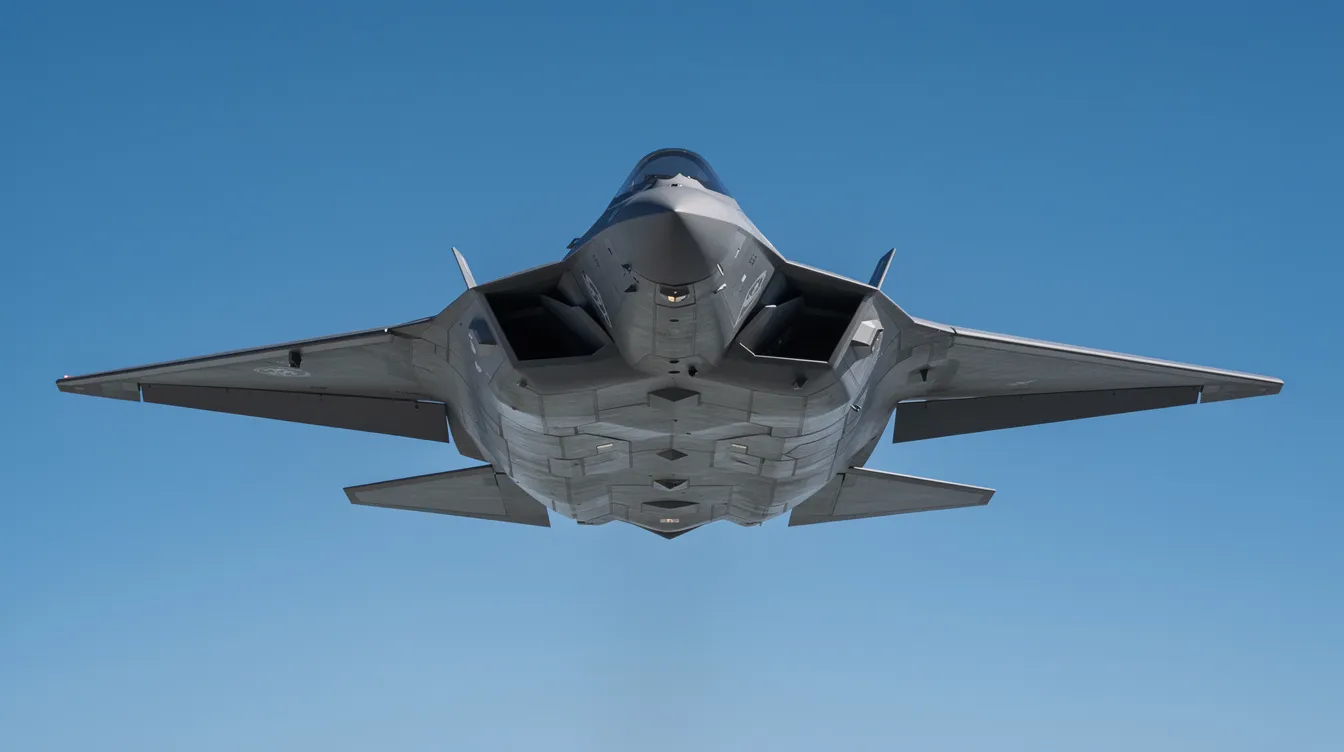
What separates a fifth-generation fighter from everything that came before? Four defining traits: stealth technology that renders the aircraft nearly invisible to radar, internal weapons bays that preserve the clean radar signature, sensor fusion that merges data from dozens of sources into a single pilot display, and the ability to operate as a node in a networked battlefield. These aircraft don't just fly—they operate in an information-rich environment that would be unrecognizable to a Korean War–era pilot, just as today's small private aircraft optimized for specific missions would seem futuristic compared to early business planes.
F-22 Raptor
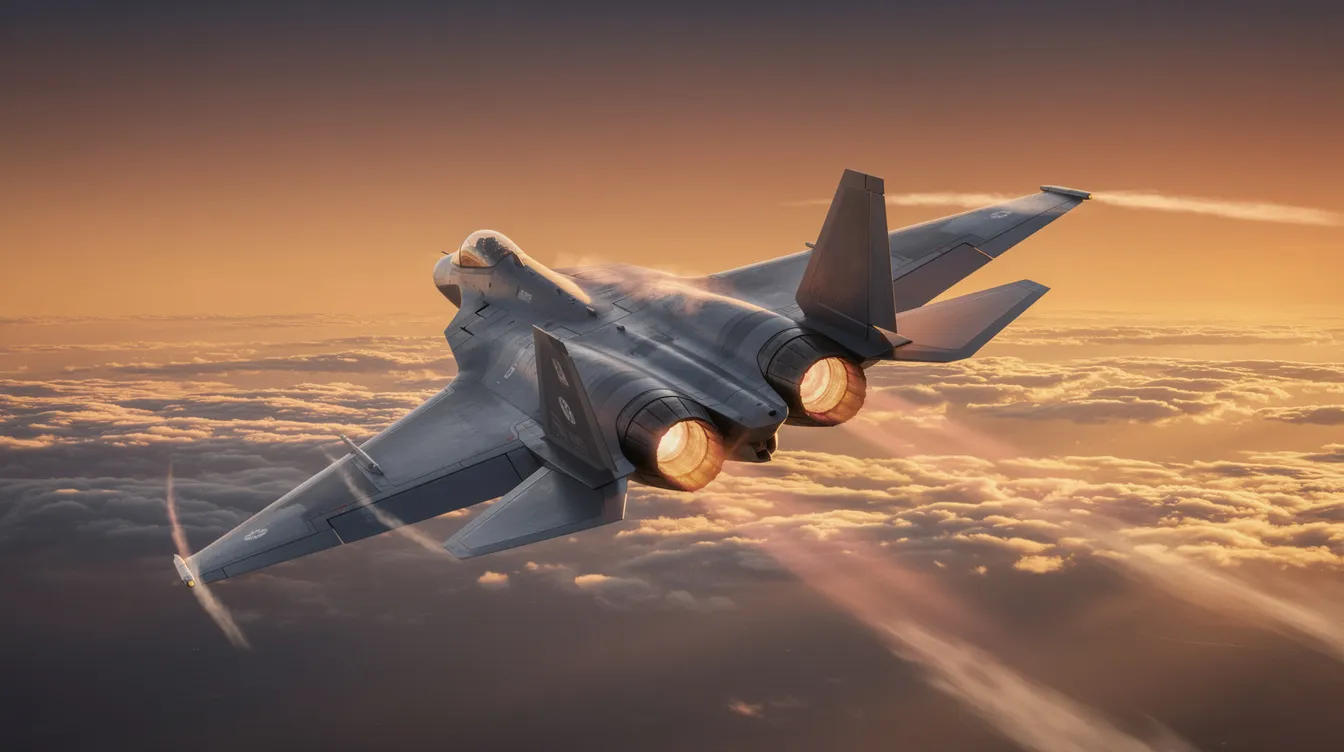
The F-22 Raptor is the first operational fifth-generation fighter, entering USAF service in December 2005 as the world's premier air superiority platform. It has a radar cross section comparable to a marble—estimated at roughly 0.0001 m²—achieved through angular shaping, serrated panel edges, and radar-absorbent materials. It can supercruise at Mach 1.8 without afterburners and has a maximum speed of Mach 2.0 with afterburners. The F-22 Raptor serves as an air superiority fighter without equal, blending stealth, speed, and agility in a package no other aircraft can match.
That dominance comes at a price. The F-22 Raptor costs over $150 million per unit, and the total production cost is nearly $300 million per airframe when development is amortized across the limited run of approximately 195 aircraft. Put another way, the Lockheed Martin F-22 Raptor costs over $140 million per unit even at the most conservative estimates, and Congress capped production, ensuring exclusivity that only amplifies its mystique.
F-35 Lightning II
If the F-22 is the scalpel, the F-35 Lightning II is the Swiss Army knife. The Lockheed Martin F-35 Lightning II is rated as the top multirole fighter in the world, serving in three variants: F-35A (conventional takeoff for the USAF), F-35B (short takeoff and verticaltakeofff/landing for the Marines), and F-35C (carrier-based). The F-35 Lightning II has over 880 units in service across dozens of countries, with over 1,300 delivered as of early 2026. Its helmet-mounted display lets pilots "see through" the aircraft, and its sensor suite fuses radar, infrared, and electronic warfare data into a single tactical picture. The F-35 has a radar cross-section equivalent to a golf ball, making it exceptionally stealthy from all angles.
The scale of the program is staggering. The F-35 Lightning II program costs approximately $1.196 trillion over its lifetime, making it one of the most expensive military projects ever undertaken. The F-35 Lightning II has a unit cost of about $110 million—less than the Raptor, but multiplied across thousands of airframes and decades of service. The F-35 Lightning II has a top speed of Mach 1.6, slower than many fourth-generation fighters, but its designers traded raw speed for stealth, sensor capability, and multirole flexibility. It functions simultaneously as an attack aircraft, an electronic warfare platform, and a reconnaissance asset.
Chengdu J-20 "Mighty Dragon"
China's entry into the fifth-generation arena, the J-20, entered operational service with the PLAAF around March 2017. The Chengdu J-20 can reach Mach 2 without afterburners—a genuine supercruise capability—and the Chengdu J-20 has a weapons payload of 24,000 lbs carried internally and externally, optimized for long-range, beyond-visual-range engagements in the Pacific theatre. It represents a significant leap for Chinese aircraft design and a signal that the world's fifth-generation club is no longer exclusive to the United States.
Sukhoi Su-57
Russia's answer to the Raptor, the Sukhoi Su-57, is a key Russian 5th-gen fighter known for high agility, featuring three-dimensional thrust vectoring that enables supermaneuverability at close range. The Su-57 entered service in December 2020, but the Su-57 has approximately 30 units in service as of 2026—a fleet size that limits its strategic impact. The Sukhoi Su-57 excels in agility and air combat roles, though questions remain about the maturity of its stealth coatings and avionics suite compared to Western competitors.
What Comes Next: Sixth-Generation Concepts
The next chapter is already being written. The US NGAD program, the UK–Japan–Italy GCAP, and the European FCAS consortium are all exploring new aircraft concepts: optionally manned airframes, directed-energy weapons, variable-cycle engines, and deep integration with autonomous drone wingmen. These sixth-generation platforms will be less about classic dogfighting and more about networked, stand-off warfare—a fundamental shift in how countries will operate and maintain air superiority.
Legendary Attack Aircraft and Bombers That Stole the Spotlight
Not every iconic military aircraft is a pure fighter. The line between fighter jets, ground attack aircraft, and strategic bombers has blurred repeatedly throughout aviation history, and some of the most beloved planes in the world fall outside the air superiority category entirely.
A-10 Thunderbolt II ("Warthog")
Built around its 30mm GAU-8/A Avenger cannon—a weapon so large the aircraft was literally designed around it—the A-10 is the definitive close air support platform. Its titanium "bathtub" cockpit armor, redundant flight systems, and ability to fly with significant battle damage made it a lifesaver for ground troops in Iraq and Afghanistan. The Warthog isn't fast, stealthy, or pretty, but it may be the most beloved ground attack aircraft in the history of the US Air Force.
F-4 Phantom II
The Phantom was the Cold War workhorse: a twin-seat, twin-engine beast that served as a fighter, a fighter-bomber, a reconnaissance aircraft, and a Wild Weasel defense-suppression platform. Heavily armed and capable of hauling enormous payloads, the F-4 saw combat in Vietnam, the Middle East, and with NATO air forces around the world. Its raw power and versatility made it the standard against which other aircraft were measured for two decades.
F-105 Thunderchief
Originally intended as a nuclear strike platform, the "Thud" became the primary high-speed, low-altitude bomber over North Vietnam. Its missions were among the most dangerous in the war—flying through some of the densest air defense networks ever constructed—and the aircraft earned a reputation for ruggedness under fire that few other types could match.
B-52 Stratofortress
With a massive wingspan of 185 feet, eight engines, and a first flight dating to 1952, the B-52 is the ultimate symbol of American strategic air power. Projected to remain in service into the 2050s, it has served in every major conflict since the Cold War and can deliver both conventional and nuclear ordnance across intercontinental distances.
Other Notable Bombers:
Tu-95 "Bear" (Russia): Distinctive contra-rotating turboprop bomber.
B-2 Spirit (USA): Stealth bomber, advanced design.
These aircraft prove that "cool" extends well beyond the fighter category, just as large-cabin private jets for around 20 passengers show how scale and capacity can define an aircraft's appeal outside pure combat roles.
From Air Superiority to Executive Superiority: What Fighter Jets Teach Us About Private Aviation
The distance between a fighter cockpit and a private jet cabin is measured in G-forces and mission profiles, not in engineering philosophy. Both domains demand absolute reliability, rigorous safety protocols, and relentless attention to performance—the stakes simply differ, which is exactly the balance a premium private jet card and charter service like BlackJet is designed to strike.
Technologies pioneered in fighter aircraft have filtered directly into the business jets that serve private aviation. Fly-by-wire flight controls, first proven in military programs like the F-16 Fighting Falcon, are now standard on modern business jets. Composite materials developed for stealth airframes reduce weight and improve fuel efficiency in civilian platforms. Advanced avionics—terrain awareness systems, synthetic vision, and datalink communications—trace their lineage to military research programs funded during the Cold War and beyond, even on more affordable private aircraft options aimed at budget-conscious flyers.
The mission profiles, of course, are opposites. An air superiority fighter is built for 9g turns, supersonic intercepts, and sustained operations in contested airspace. A private jet is built for comfort, range, and efficiency—carrying executives to meetings or families to vacations with minimum friction and fitting into a broader private jet price landscape that ranges from entry-level light jets to ultra-long-range flagships. Where a fighter pilot straps into an ejection seat, a private jet passenger settles into hand-stitched leather.
At BlackJet, we don't fly cool fighter planes—but we leverage the same aerospace ecosystem to deliver safe, certified, carbon-neutral private jet travel. Whether you're booking a light jet for a regional hop or a super-midsize aircraft for a transatlantic crossing, the engineering rigor behind your flight shares DNA with the platforms described throughout this article, even if you're looking at the most budget-friendly private jet options to enter the market. Private aviation aircraft categories—light jets, midsize jets, and large-cabin aircraft—each occupy their own performance envelope, trading the raw speed of a fighter for the range, cabin volume, and efficiency that make business travel productive rather than punishing.
BlackJet Perspective: Safety, Sustainability, and Seamless Access vs Owning Your Own Jet
If fighter aircraft represent the pinnacle of aerospace performance, BlackJet brings that same discipline to private travel—without the noise, the G-forces, or the $150-million price tag, and with safety standards aligned with what you'd expect after understanding how safe private jets are compared with other forms of air travel.
Safety
Military aviation invented the checklist, and those protocols now underpin every serious private aviation operation. BlackJet enforces stringent operator vetting, third-party safety ratings through organizations like Wyvern and ARGUS, and minimum pilot experience requirements that exceed industry norms. Every aircraft in our network undergoes the same kind of systematic inspection culture that keeps fighter jets mission-ready. The result: safety standards that rival or exceed those of commercial airlines.
Sustainability
Fighter jets burn prodigious quantities of fuel—an F-15 at full afterburner consumes fuel at rates that would horrify any environmentalist. Private aviation carries its own carbon footprint, which is why BlackJet ensures every journey is carbon neutral at no extra cost to the traveler. We automatically offset every flight and, where available, support the use of sustainable aviation fuel (SAF). It is an increasingly important commitment as the aviation industry works to reconcile performance with environmental responsibility.
Technology
Modern fighter operations rely on networked, data-rich environments where information flows in real time. BlackJet mirrors that philosophy with 24/7 digital booking tools, real-time flight support, and a mobile platform that puts scheduling, itinerary changes, and concierge services at your fingertips.
Access Model
Owning a jet means fixed costs, maintenance headaches, and depreciation. On-demand charter offers flexibility but no price predictability. For many travelers, understanding jet card costs and membership pricing is the first step toward choosing the right access model. BlackJet's Jet Card programs—available in 25-hour and 50-hour increments—deliver the best of both worlds: prepaid hours, guaranteed availability, multiple cabin classes, and transparent pricing that eliminates surprises. It's the difference between owning a fighter squadron and having one on call.
Use Cases: When a Jet Card Beats Even the Coolest Fighter Plane
You probably don't need an F-22 in your hangar—but here's what you might actually use, especially if you've compared the best jet card options for frequent flyers and know what kind of access fits your missions.
Scenario 1: New York to London - The Transatlantic Executive
A senior executive needs to be in London for a board meeting, followed by a dinner in Mayfair. Commercial business class means three hours of airport time on each end, shared lounges, and a schedule dictated by airline timetables. With a BlackJet 25-hour Jet Card on a large-cabin aircraft, the executive departs from a private terminal, works uninterrupted for seven hours in a cabin configured as a flying office, and arrives rested—saving nearly five hours of total travel time compared to commercial, while benefiting from the kind of value outlined in a comprehensive 50-hour jet card cost guide. That's precision timing worthy of a fighter mission brief, applied to international business travel.
Scenario 2: Los Angeles to Aspen - The Family Ski Trip
A family of four with two children, a dog, and enough ski gear to stock a rental shop. Commercial aviation means checked bag fees, layovers in Denver, and a cramped shuttle ride to the resort. BlackJet arranges an appropriate midsize jet, handles luggage and pets on board, and delivers the family door-to-slope in a fraction of the time, similar to the aircraft often highlighted among top private jets for sale under 10 million dollars. No TSA lines, no overhead bin battles.
Scenario 3: London–Zurich–Milan–Paris - The European Roadshow
A fund manager needs to meet investors across four European cities in three days. A 50-hour Jet Card and a midsize jet turn this into a seamless circuit: depart each city on your schedule, prep for the next meeting in flight, and land at FBOs minutes from the city center, much like the flexibility described in analyses of Flexjet jet card costs and options. The same mission-planning mindset that drives fighter sortie scheduling—reliability, timing, contingency—applies directly to multi-leg business trips.
FAQ: Cool Fighter Planes, Modern Air Forces, and BlackJet Jet Cards
Can civilians fly in or own ex-military fighter aircraft?
Yes, but with significant caveats. Demilitarized fighters like L-39 Albatros trainers and even some older MiG-21s are available on the civilian market. However, owning and operating one requires specialized training, FAA experimental aircraft certification, and maintenance costs that can rival those of a small business jet. Insurance is expensive, and finding qualified mechanics is a challenge. It is a niche hobby for the deeply committed, and many enthusiasts find it more practical to study private jet membership and NetJets-style jet card costs than to maintain an ex-military fighter.
What is an air superiority fighter?
An air superiority fighter is an aircraft designed primarily to gain and maintain control of the airspace. These fighters excel in speed and maneuverability. Examples include the F-15 Eagle, the F-22 Raptor, and the Su-27 Flanker. These differ from attack aircraft like the A-10 Warthog, which are optimized for destroying ground targets rather than engaging enemy aircraft in aerial combat.
What is a multirole fighter?
A multirole fighter is an aircraft capable of performing various combat roles effectively. This includes air-to-air combat, ground attack, and reconnaissance missions. Examples include the F-16 Fighting Falcon, F-35 Lightning II, and Dassault Rafale. In private aviation, similarly flexible access comes from products like a 100-hour jet card cost and benefits package, which lets frequent flyers adapt aircraft choice and routing to each mission.
What is an interceptor?
An interceptor is a fighter aircraft designed to engage enemy aircraft quickly, often with the primary mission of intercepting and destroying incoming bombers or fast-moving threats. Notable examples include the MiG-25 Foxbat and F-104 Starfighter.
Which is the best fighter jet in the world today?
It depends on the criteria. For stealth and air superiority, the F-22 remains unmatched. For multirole versatility and allied interoperability, the F-35 Lightning II leads. For historical high-speed records, the MiG-25 still holds bragging rights at Mach 3.2. The answer changes with the mission—there is no single best fighter for every scenario, just as there is no single best aircraft for every private travel need.
Why aren't fighter jets used for private travel?
Fighter jets are optimized for combat, not comfort. They lack pressurized passenger cabins, their operating costs run into tens of thousands of dollars per flight hour, their range is limited without aerial refueling, and the noise alone would make them unsuitable for civilian airports. A business jet offers everything a fighter cannot: quiet cabins, lie-flat seating, galley service, and the range to connect continents without stopping—benefits that become even more compelling when you explore premium private jets for sale in key markets like the UK.
What is a Jet Card, and how does BlackJet's program work?
Prepaid flight hours in 25-hour or 50-hour blocks, with no aircraft ownership required, which can be a smarter path than jumping straight into owning a 5 million private jet for many flyers
Access to multiple cabin classes—light, midsize, super-midsize, and large-cabin jets, including aircraft comparable to 20 million dollar private jets with long-range and high-end features
Guaranteed availability windows so your aircraft is ready when you are
Transparent, all-in pricing with no hidden fees or fuel surcharges
24/7 digital booking and real-time flight support through BlackJet's mobile platform
Is private aviation safe and sustainable?
BlackJet collaborates solely with operators who adhere to stringent third-party safety certifications.Every flight is carbon neutral—offsets are built into the program automatically, ensuring sustainability is not an afterthought but a baseline commitment, and aligning with what discerning travelers compare when evaluating top private jet companies for luxury travel and service.
Conclusion: The Enduring Allure and Strategic Edge of Cool Fighter Planes
Cool fighter planes embody more than just cutting-edge technology and raw performance; they represent the apex of human ingenuity in aerospace engineering and combat strategy. From the legendary agility of the Spitfire to the stealth and sensor fusion of the F-22 Raptor, these aircraft have continuously pushed the boundaries of what is possible in the skies. They define eras of air superiority and influence global military balance, while inspiring generations of aviators and enthusiasts alike.
Yet, the legacy of fighter jets extends beyond the battlefield. The innovations honed in these high-performance machines ripple through to private aviation, shaping the safety, sustainability, and technology standards that premium travelers expect today. At BlackJet, we recognize that while few will pilot a fighter, many can experience the strategic advantage of seamless, secure, and flexible private jet access through our Jet Card programs.
Ultimately, cool fighter planes remind us that mastery of the skies requires a blend of speed, precision, and adaptability—qualities that resonate whether commanding a supersonic interceptor or navigating the complex demands of global business travel. Embrace the spirit of aerial excellence and discover how BlackJet can elevate your journey to new heights.


 Sign up with google
 Sign up with Apple