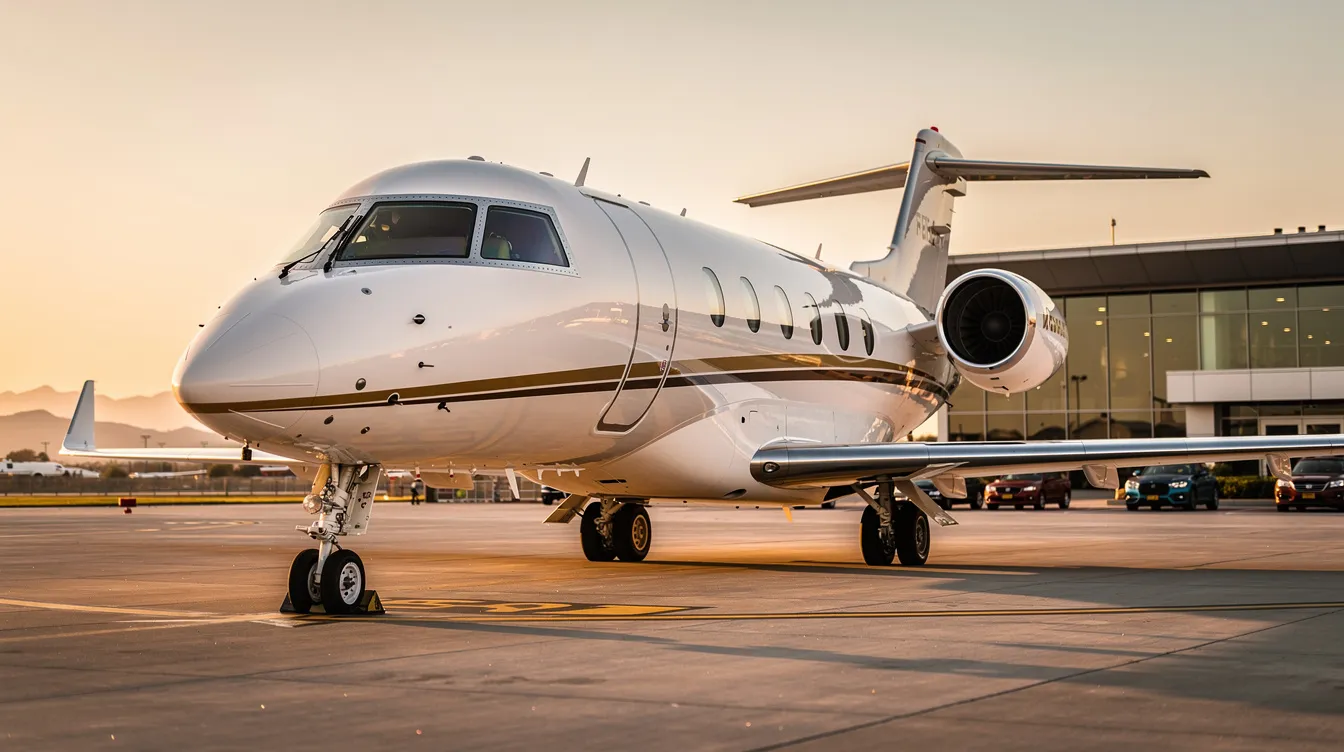
Introduction: Why Corporate Flights Matter More Than Ever
Corporate flights refer to private or chartered aircraft used for business purposes, and in 2026 they have become a strategic asset rather than a line-item luxury. Companies use corporate flights to save executive travel time and improve scheduling efficiency — and the numbers back it up. A New York to Chicago business trip that takes roughly six hours door-to-door in economy class on a commercial carrier shrinks to about three and a half hours on a private jet, including ground time on both ends. Corporate flights are distinguished from commercial flights by their scheduling and intended passengers, giving executives control that no airline loyalty tier can match.
This guide covers:
How commercial corporate travel programs (corporate discounts, fare classes, seat selection) compare to private jet solutions
When jet cards like BlackJet's 25-hour and 50-hour programs outperform ad-hoc charter or business class tickets
How to handle disruptions when plans change mid-trip
Safety certification, sustainability, and the technology that ties it all together
Concrete use cases from companies that blend commercial and private flights for maximum impact
BlackJet is a premium jet card and private jet charter provider built for executives who want faster, safer, and more controlled corporate travel.
Corporate Flights 101: Commercial vs Private for Business Travel
In commercial aviation, a "corporate flight" typically means a ticket booked under negotiated company rates — managed company money flowing through economy class, premium economy, or business class on scheduled airlines. Corporate travel policies dictate who flies what cabin, which carrier gets preference, and how seat preferences are handled.
In private aviation, the definition shifts entirely. Corporate aviation includes whole aircraft ownership, fractional ownership, and charters. Corporate flights can be company-owned, fractional ownership, or chartered on-demand, and they offer on-demand scheduling and access to private airports that commercial carriers simply cannot reach.
Here is how the two compare on a concrete route:
Factor | Qatar Airways Business Class (JFK–LHR) | BlackJet Super-Mid Private Jet (TEB–LTN) |
|---|
Airborne time | ~7 hours | ~7 hours |
Pre-flight time | 2–3 hours (check in, security, boarding) | 20–30 minutes |
Schedule flexibility | Fixed departures | Depart when ready |
Privacy | Shared cabin | Full cabin exclusivity |
Per-person cost (solo) | ~$5,000–$7,500 return | Significantly higher |
Per-person cost (group of 6) | ~$30,000–$45,000 total | Approaches business class per person |
Corporate flights typically have higher per-hour operating costs compared to commercial flights, but for groups and time-sensitive itineraries, the gap narrows fast. Commercial stays strategic when large teams travel infrequently. Private becomes the right answer when tight schedules, multi-city roadshows, or high-value meetings demand more control.
How Corporate Flight Programs on Commercial Airlines Work
Major airlines run structured corporate travel programs designed to lock in volume and reward loyalty. United Airlines partners with over 40 airlines in the Star Alliance, giving corporate accounts broad global reach. Southwest Airlines has no change fees for same-day bookings, making it a favorite for domestic business travelers who need flexible scheduling. Programs like Rapid Rewards Business on Southwest or United's Corporate Preferred portal let companies book flights through dedicated channels, apply corporate discounts, and track spending in one platform.
Here is how enrollment and access typically work:
Companies register with proof of business and annual spend expectations (often $50K+ for premium tiers)
Fares are accessed via GDS platforms, airline portals (similar to SWABIZ or Southwest websites), or integrated booking tools
Employees can earn loyalty points through corporate travel programs, and companies can earn points from qualifying travel purchases
Corporate travel programs can include status matches for employees transitioning from personal frequent-flyer accounts
Employees can use corporate travel benefits for personal trips in some programs, adding a travel perks layer that helps attract talent
Seat selection and seat preferences management matter at scale. Travel managers define policies: who may choose extra legroom seats, when business class is authorized, and how upgrades are allocated. Corporate flights allow for streamlined booking processes for employee convenience, and corporate travel programs provide transparency in spending across departments.
Scenario: A small tech firm in Austin books corporate flights in economy class on Southwest Business. Junior staff accumulate Rapid Rewards points for future business travel. Executives fly economy-plus domestically but use BlackJet jet card hours when a business trip requires same-day turnarounds or a destination Southwest does not serve. Booking corporate flights can lead to financial savings through negotiated rates and discounts, and companies can sidestep expensive third-party service fees by booking direct.
Booking.com for Business has over 380 airlines available, and 1.5 million companies use Booking.com for Business to manage hotel and flight bookings alongside airline-direct programs. Corporate travel policies can streamline booking processes across multiple airlines and lodging providers.
Private Jet Corporate Flights: When Business Travel Demands More
When business takes executives frequently between key markets - New York to Miami, Paris to Zurich, Dubai to Riyadh — private jet corporate travel becomes the efficient choice. Corporate flights allow total privacy for confidential meetings during travel, and they operate often at higher altitudes than commercial airliners, enhancing travel efficiency with smoother rides and more direct routing.
The main private options break down as follows, and understanding jet card pricing structures is key to comparing them effectively:
Corporate flight booking supports flexibility and convenience for frequent business travelers. You arrive 20–30 minutes before departure at a private terminal, skip security lines entirely, and corporate flights provide access to priority services such as expedited security screening at the few airports that require it.
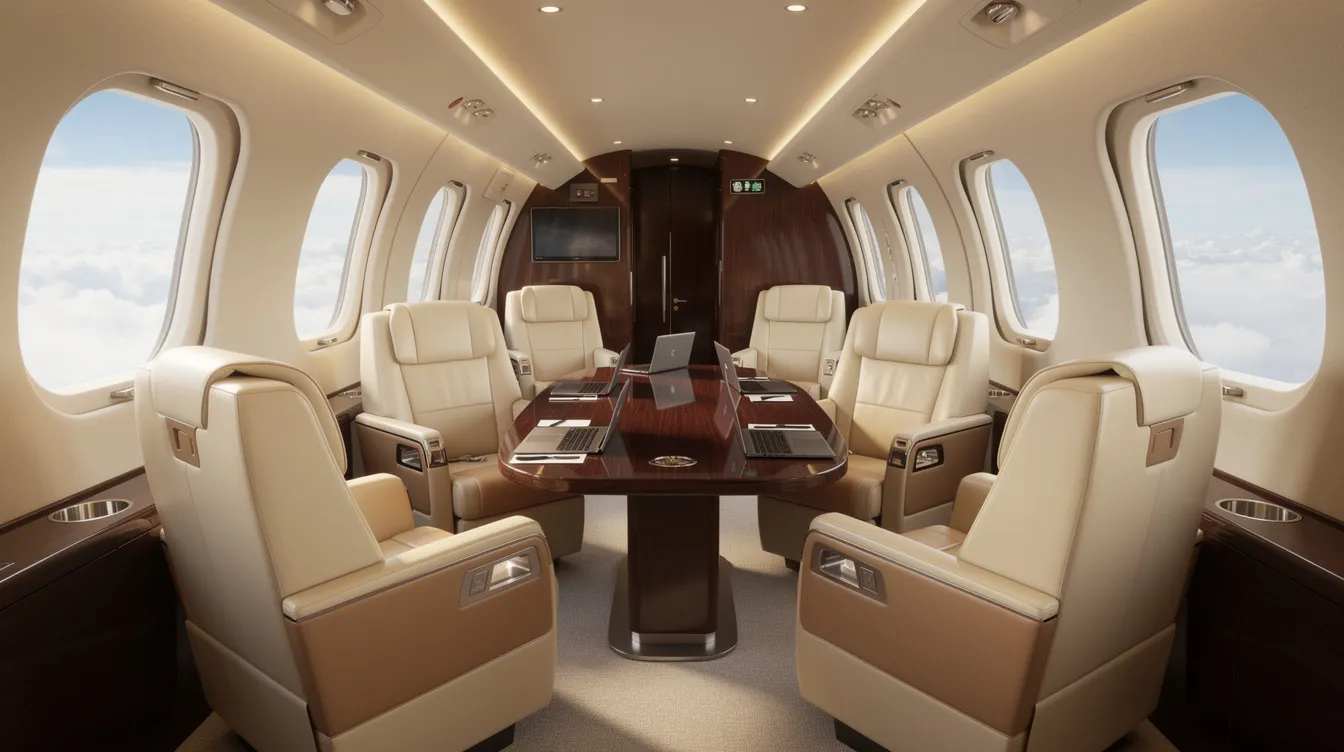
Sample use case: A CEO needs to fly from Chicago to San Francisco for a morning investor meeting. Using a BlackJet super-midsize jet, she departs from Chicago Executive Airport at 5:30 AM, arrives at Oakland's private terminal by 7:45 AM local time, and is in the conference room by 8:30 AM. The return flight departs at 4:00 PM. No overnight stay, no lost day. The perception advantage matters too - arriving by private jet to a major conference signals operational seriousness without requiring a word of explanation.
Jet Cards and Company Money: Predictable Costs vs Ad-Hoc Charter
A jet card is a prepaid block of flight hours — typically 25 or 50 hours, with options scaling up to 100-hour jet card programs - at fixed rates across aircraft categories. This replaces the fluctuating prices of on-demand charter with budget predictability that CFOs can plan around.
Here is why jet cards serve company money better than ad-hoc charter, especially when you understand overall jet card cost structures:
Fixed hourly rates eliminate surprise repositioning fees on core routes
Consolidated invoices align with corporate travel budgets and quarterly reporting
Guaranteed availability windows reduce the risk of being priced out during peak demand
Corporate flight bookings can save companies significant travel expenses versus last-minute charter surcharges
BlackJet offers jet cards across cabin sizes — light, mid, super-mid, and large cabin — with transparent hourly pricing aligned to competitive jet card cost per hour benchmarks. For context, industry benchmarks for jet card cost per hour on 25-hour cards run approximately $7,300/hr for light jets up to $13,600/hr for large cabin aircraft, pre-tax.
Booking flights early can reduce travel costs significantly even in private aviation — jet card holders who plan trips with standard lead times avoid peak-day surcharges that can add 10–15% to hourly rates. Flexible cancellation policies help reduce unexpected costs and avoid unnecessary costs when itineraries shift.
Policy guidance for travel managers: Define when executives may use private jet card hours versus booking business class on commercial flights. Reviewing the best jet cards for frequent flyers can help benchmark benefits and costs. A practical threshold: private jet travel is permitted for groups of 4+ executives when the per-person cost does not exceed published business-class fares by more than 20%.
Optimizing Corporate Flights on Commercial Airlines
For companies that rely mainly on commercial flights, optimization means more than finding the latest deals. It means building a process around negotiation, policy, and carrier selection.
Negotiate based on data: Annual spend, preferred routes, and cabin mix (economy class vs business class) drive discount depth. Airlines typically offer 3–5% for SMEs, with larger companies securing double-digit reductions
Choose the right airline for each corridor: Qatar Airways introduced Qsuites, a revolutionary business class in 2017, making it a strong pick for long-haul to Doha and beyond. Singapore Airlines won multiple awards for best airline in 2023 and remains dominant on Asia-Pacific routes. Emirates Airlines offers complimentary chauffeur services for business class passengers, adding ground-level convenience, while in private aviation you can benchmark against top private jet charter companies in the USA for similar route coverage
Standardize seat selection policies: Specify when employees may choose extra legroom seats or business class, and enforce rules across markets to control costs
Time your bookings: Non-refundable fares save money but carry risk when plans change. Flexible fare rules or corporate contracts with change fees waived (like Southwest's same-day policy) protect the budget
Use integrated tools: Booking platforms facilitate easier management of corporate travel and expenses, and corporate booking tools provide policy compliance and budget control for businesses across all in one platform
Designing a Corporate Travel Policy That Integrates Private Jets
Modern corporate travel policies should explicitly address both commercial corporate flights and private jet usage rather than treating private as an emergency exception. Corporate travel can motivate employees and attract talent when the policy reflects trust and efficiency, and when it is aligned with practices used by leading private jet companies.
Key elements to include:
Approved routes and scenarios: Multi-city roadshows spanning 2–3 days, client visits where schedule risk exceeds $50K in opportunity cost, or destinations without efficient commercial service
Spending caps and approval workflows: CFO or COO sign-off required above a defined threshold; hours allocated by department quarterly
BlackJet integration: Define who can book, how jet card hours are drawn down, and how last-minute changes trigger private jet use as a fallback
Exception handling: When a commercial flight is canceled, and the team risks missing a multimillion-dollar meeting, the policy authorizes same-day BlackJet charter without additional approval layers
Sample clause: "Private jet travel is permitted for groups of 4+ executives when the per-person cost does not exceed published business-class fares by more than 20%, or when irregular operations on commercial carriers threaten confirmed meetings valued above $100K."
Safety, Certification, and Risk Management in Corporate Flights
For corporate travel, safety must be measurable and auditable. Companies have a duty of care to ensure the safety of traveling employees—on both commercial and private flights.
BlackJet vets every operator against third-party safety frameworks including ARGUS (Platinum and above), Wyvern Wingman certification, and IS-BAO compliance. All charter operators must hold a Part 135 certificate, the FAA's regulatory baseline for commercial air operations
Crew experience thresholds, maintenance record audits, and Flight Risk Assessment Tools (FRAT) are standard requirements before any aircraft enters BlackJet's network
Real-time tracking is essential for managing employee safety during travel — BlackJet provides flight status visibility so compliance and risk teams always know where executives are
Scenario: A legal team evaluating private jet authorization for a 2026 European expansion requests documentation. BlackJet provides ARGUS ratings, crew hour logs, maintenance histories, and insurance certificates — the same rigor a compliance team would apply to any vendor.
Sustainability and Carbon-Neutral Corporate Flights
Sustainability is a board-level concern in 2026, and corporate flights must connect to ESG commitments with specifics, not slogans.
BlackJet ensures every jet card flight is carbon neutral by default via verified carbon offsets — at no extra cost to the client. Sustainability is built into the jet card, not sold as an add-on, which is increasingly important even for clients evaluating 10 million dollar private jet ownership options
Industry leaders like PrivateFly offset every flight to 300% of calculated CO₂ emissions to account for non-CO₂ effects; BlackJet follows a similarly rigorous approach anchored to 4AIR-level verification
ESG and finance teams should request annual emissions reports segmented by route, class of travel, and private vs commercial share
Sustainable aviation fuel (SAF) credits are available on select routes as supply expands
Example: A European private equity firm uses BlackJet for quarterly portfolio-company visits across four cities. In its 2026 ESG report, the firm documents carbon-neutral private jet usage with verified offset data provided directly by BlackJet.
Technology and Real-Time Support: Making Corporate Flights Seamless
Digital tools turn corporate flight management from a manual process into a streamlined advantage, especially for organizations considering the largest private jets for global operations. BlackJet's technology platform combines mobile booking, traveler profiles with stored seat preferences, and dashboards showing hours remaining and upcoming itineraries.
Book a private jet for a last-minute business trip from London to Geneva via app or phone - or arrange private jet charters in Karachi just as seamlessly — BlackJet's 24/7 support team confirms aircraft in minutes
Compare this to commercial booking dashboards where travelers connect through portals managing flight status, fare classes, and change policies across multiple airlines
When plans change — weather diversions, client meeting shifts, aircraft swaps — dedicated BlackJet support handles re-routing and alternatives with zero hold time

Use Cases: How Different Businesses Leverage Corporate Flights
Creative agency, New York: Junior staff flies commercial economy class with negotiated corporate discounts on United. Senior partners use BlackJet light jets for tight client tours across Boston, Washington, and Philadelphia — three cities in one day, every week. Free upgrades on commercial handle the team; jet card hours handle the partners.
Manufacturing group, Europe: Quarterly inspections across Munich, Prague, Warsaw, and Budapest run as a single-day circuit on a BlackJet mid-size jet, with larger teams occasionally upgrading to 16-seat private jet options for added comfort. Four separate commercial legs with connections would consume two days and a significant budget on hotels. The jet completes the route by 6 PM, saving one full business day per quarter.
Technology startup, Austin: The team flies Southwest with Rapid Rewards Business to conferences, earning points and keeping costs in check. Board members and investors fly on reserved BlackJet jet card hours for key events and fundraising meetings, occasionally consolidating stakeholders on private jets for 20 passengers or even 50 passenger private jet charters for major launches — the convenience and perception align with the company's growth-stage ambitions. The save on unnecessary costs while directing company money where it creates the best solution for each traveler.
Frequently Asked Questions About Corporate Flights
What are corporate flights?
Corporate flights are aircraft journeys arranged for business purposes. They may be commercial airline tickets booked through a company travel program or private and chartered flights used to transport employees, executives, or clients.
When should a company choose a private jet over commercial business class?
Private aviation can make sense when a team needs to visit several cities in a short period, reach destinations with limited commercial service, protect confidential discussions, or avoid schedule constraints that put important meetings at risk. For routine routes and larger teams traveling infrequently, commercial business class may offer better value.
How do jet cards work for corporate travel?
A jet card provides prepaid access to a set number of private flight hours, often across different aircraft categories. BlackJet's 25-hour and 50-hour programs offer an alternative to aircraft ownership and ad-hoc charter, with a more predictable way to plan recurring business travel needs.
Are corporate private flights safe?
Safety depends on the operator, aircraft, and crew. Companies should review applicable operating certificates, third-party safety ratings, pilot experience, maintenance standards, and insurance. BlackJet vets operators using safety frameworks such as ARGUS, Wyvern, and IS-BAO, and requires charter operators to hold an FAA Part 135 certificate.
Can corporate flights support sustainability goals?
Yes. Companies can track emissions and use verified carbon offsets to address the footprint of business aviation. BlackJet includes carbon-neutral flights through verified offsets at no extra cost to clients; corporate ESG teams can request emissions information for reporting.
What happens if a corporate flight itinerary changes?
Options vary by provider and booking type. A jet card can offer flexibility to adjust a trip, subject to its terms, availability, and notice requirements. BlackJet's 24/7 support team can help coordinate schedule changes, alternate aircraft, and rerouting when circumstances shift.
Getting Started with BlackJet for Corporate Flights
Adding BlackJet to your corporate travel toolkit follows a clear process:
Discovery call: Map current business travel patterns — routes, frequency, current spend on economy class and business class tickets, and where schedule risk costs you the most
Jet card selection: Choose between a 25-hour or 50-hour BlackJet Jet Card and the aircraft category that fits your typical passenger loads and destinations
Policy integration: Build private jet access into your corporate travel policy with defined approval rules, spend thresholds, and coordination alongside existing airline programs
Launch and review: After the first quarter, evaluate productivity gains, budget impact, and traveler satisfaction — refine allocations based on actual usage data
Corporate flights in 2026 are not about choosing between commercial and private. They are about knowing when each creates an advantage - and having access to both without friction.
Discover how BlackJet can reshape your corporate travel strategy. Explore our jet card programs and connect with our team to design the travel experience your business deserves.


 Sign up with google
 Sign up with Apple