For travelers accustomed to premium cabins, the Embraer 175 first-class experience on a short regional hop can be a reality check. It is the aircraft type you are most likely to encounter on feeder routes across the United States, and knowing what to expect - and what alternatives exist - is a strategic advantage.
Overview: Why E175 First Class Matters for Premium Travelers
The Embraer 175 is a 76-seat regional jet operated by American Eagle, United Express, and Alaska Airlines (via partners like SkyWest and Horizon). It dominates short-haul routes across the country, connecting smaller markets to major hubs. When you book a first-class ticket on a route like San Diego to Los Angeles, Seattle to Vail, or Palm Springs to Phoenix, there is a strong chance you will board an E175.
First class on E175 is often seen as a supplement to better experiences - a positioning leg before a long-haul business class or international first class flight. The cabin itself spans four rows with 12 first-class seats in a 1-2 layout, and while it offers meaningful improvements over main cabin, it is not considered true first class by many travelers who have experienced lie-flat suites or even domestic first on most mainline aircraft.
For passengers flying these routes regularly, the calculus changes. Passengers often experience delays on E175 flights due to air traffic control, and the cumulative time spent at the security checkpoint, in boarding queues, and waiting at baggage claim adds up. BlackJet members who also fly commercial first class as a benchmark report saving four to eight hours per round trip when switching to private jet travel with BlackJet for the same regional routes. Private aviation appeals to frequent travelers seeking flexibility, privacy, and luxury - qualities that a regional first-class cabin simply cannot deliver at the same level.
This first class review is written from that elevated perspective: what does E175 first class actually deliver, where does it fall short, and when does a private jet make more strategic sense?
Embraer 175 First Class Cabin Layout & Best Seats
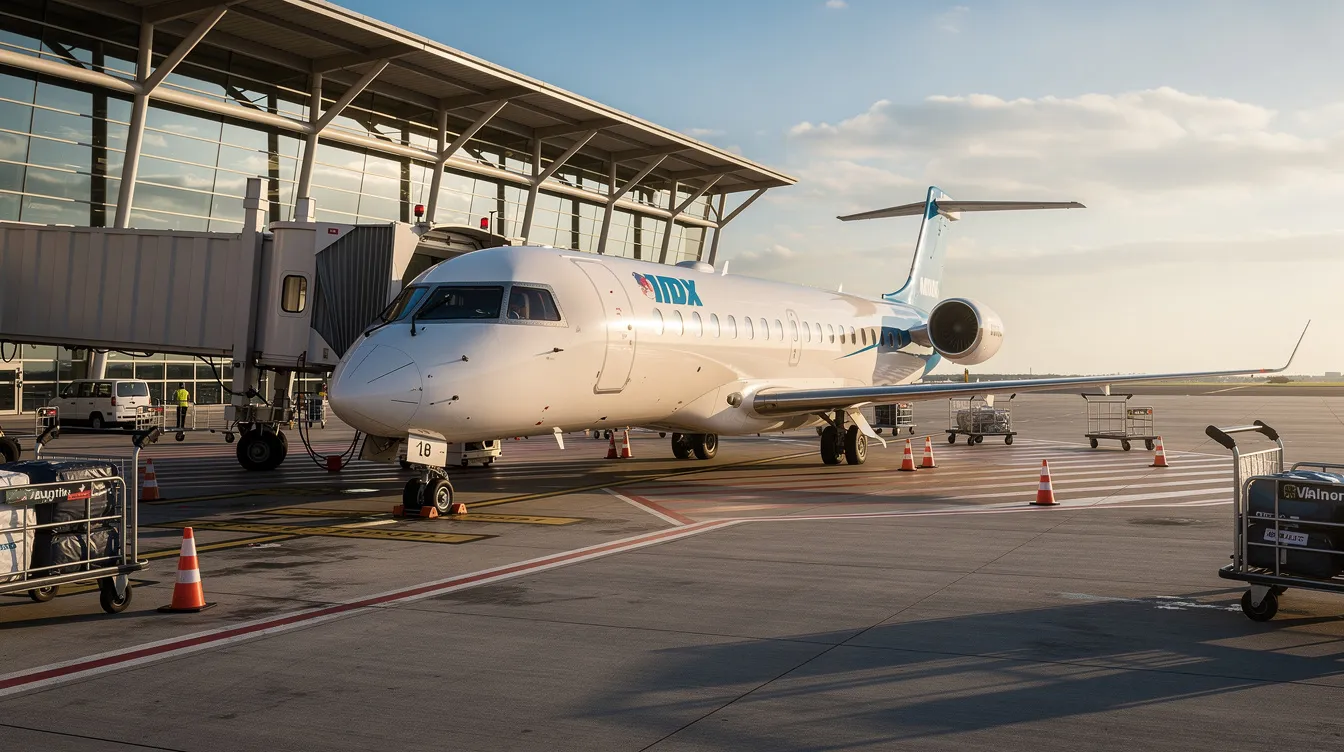
The standard Embraer 175 configuration seats 76 passengers across two cabin classes. The first class cabin occupies the front four rows with 12 seats arranged in a 1-2 layout - single seats on the left side of the aircraft (column A) and two seats on the right (columns D and F). Behind first class, you will find premium economy or main cabin extra, then standard economy.
What "e175 first class" means is largely consistent across American Airlines, United Airlines, and Alaska Airlines, though finishes vary. Alaska tends toward leather upholstery with power outlets at every seat. American and United offer similar dimensions with slight differences in materials and cabin wear. Regardless of carrier, the core seat dimensions remain the same: first class seats have a standard legroom of 37 inches, seat width is approximately 20 inches - which may feel narrow compared to mainline aircraft - and seats recline five inches in first class. First class seats also have minimal padding for comfort, which is noticeable on flights longer than an hour.
For the solo traveler, the best seat is on the left side in the single seats: 2A, 3A, or 4A. These offer genuine privacy with no seatmate and reduced aisle traffic. Row 1A has no seat ahead of it but sits close to the galley and lavatory. Couples or colleagues should target the paired two seats in rows 2D/F or 3D/F, balancing proximity to the galley against lavatory door noise. By comparison, a private jet cabin layout offers club seating you can rotate, wider seats (often 21 to 25 inches), and full cabin access with no strangers in your space. The E175 is a comfortable aircraft for a narrow-body regional jet, but it is not a private workspace.
Ground Experience: Check-In, Security & Boarding Process
Consider a concrete morning: you are catching an American Eagle flight AA3645 from Palm Springs to Phoenix, departing at 7:30 AM. You leave home at 5:45 AM, arrive at PSP by 6:15, check in at the dedicated first class counter, clear the security checkpoint with TSA PreCheck, and reach the gate by 6:50 - a full 40 minutes before departure. You have two complimentary checked bags and a carry-on that you hope fits in the overhead bins.
The boarding process on regional jets is where the ground experience diverges from mainline flights. American Eagle E175 boarding can begin without prior notice to passengers - you may miss the gate agent's call if you step away. Similarly, boarding for United Express E175 can start unexpectedly without announcements, which catches passengers off guard. Alaska Airlines handles it more methodically: boarding for Alaska Airlines E175 starts with preboarding for disabled guests, then Alaska Airlines boards first class passengers before other groups.
However, even with priority boarding, overhead bins on a narrow-body regional aircraft fill quickly. Larger carry-on bags risk being gate checked, and small bags must go under the seat ahead. Boarding for United Express E175 can also be delayed due to air traffic control, erasing any time buffer you built.
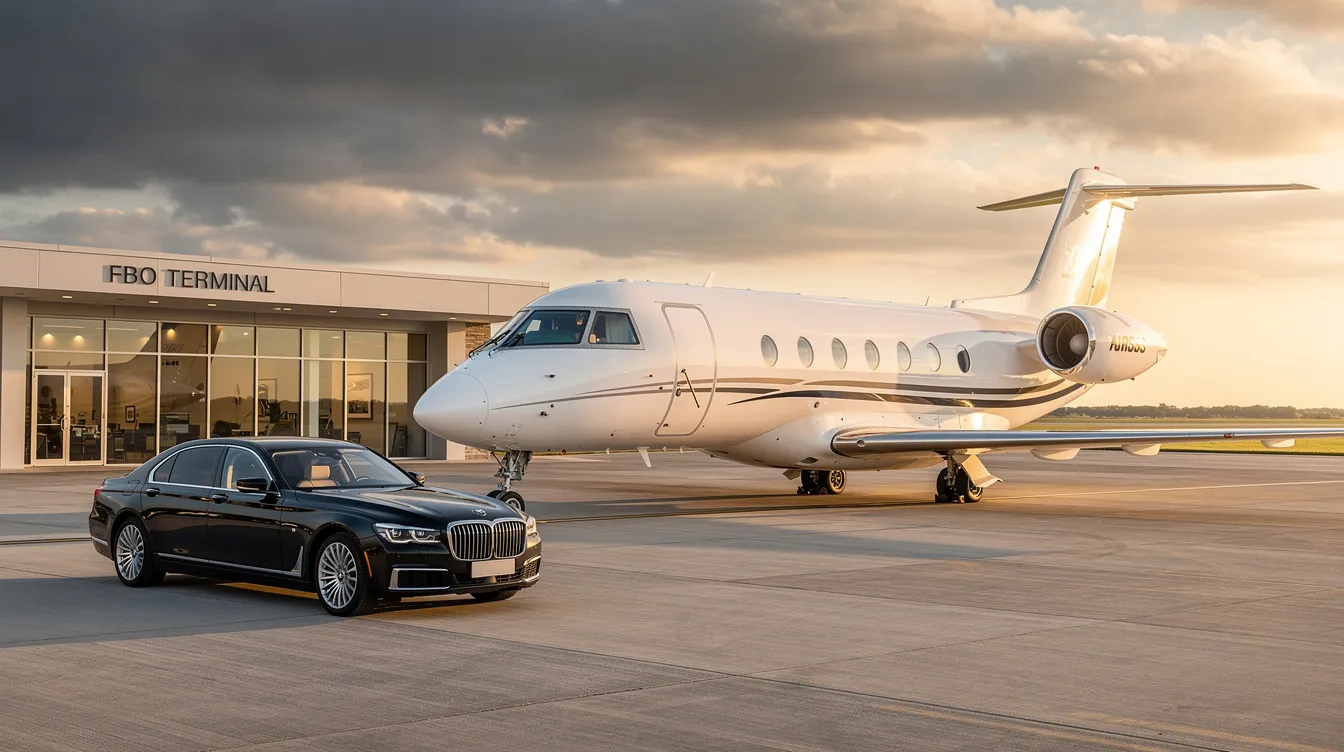
Now contrast that with BlackJet. You arrive at a private terminal (FBO) near Palm Springs at 7:15 AM - fifteen minutes before departure. No TSA lines, no gate agent, no jet bridge congestion. Your luggage is handled directly. You walk from your car to the aircraft in under two minutes. The difference is not marginal; it is structural. For time-sensitive trips in Southern California and beyond, the ground experience alone justifies evaluating private access.
In-Flight Comfort: E175 First Class Seats vs. a Private Jet Cabin
Once onboard, the Embraer 175 first class cabin delivers on its core promise: no middle seats anywhere in the aircraft, decent leg room at 37 inches, and a 1-2 layout that gives class passengers more breathing room than economy, though it cannot match the volume or amenities of the largest private jets designed for long-haul luxury. The leather class seats, large windows, and relative quiet at the front of the plane create a noticeably better environment than rows further back.
Storage is adequate but constrained. Overhead bins accept standard 22-inch roll-aboards - not expanded bags - and there is a small closet for coats near the galley. Every first class seat has a tray table, AC power or USB outlets, and an aisle seat option on the right side for those who prefer easy access. But the limitations are real: aisles are narrow, recline is modest at five inches, and the fixed seat layout offers limited privacy. First class service on E175 is limited on short flights, so you may not even have time to fully settle in before descent begins. As one reviewer noted, "these aren't fancy lie-flat seats - they're upright armchairs."
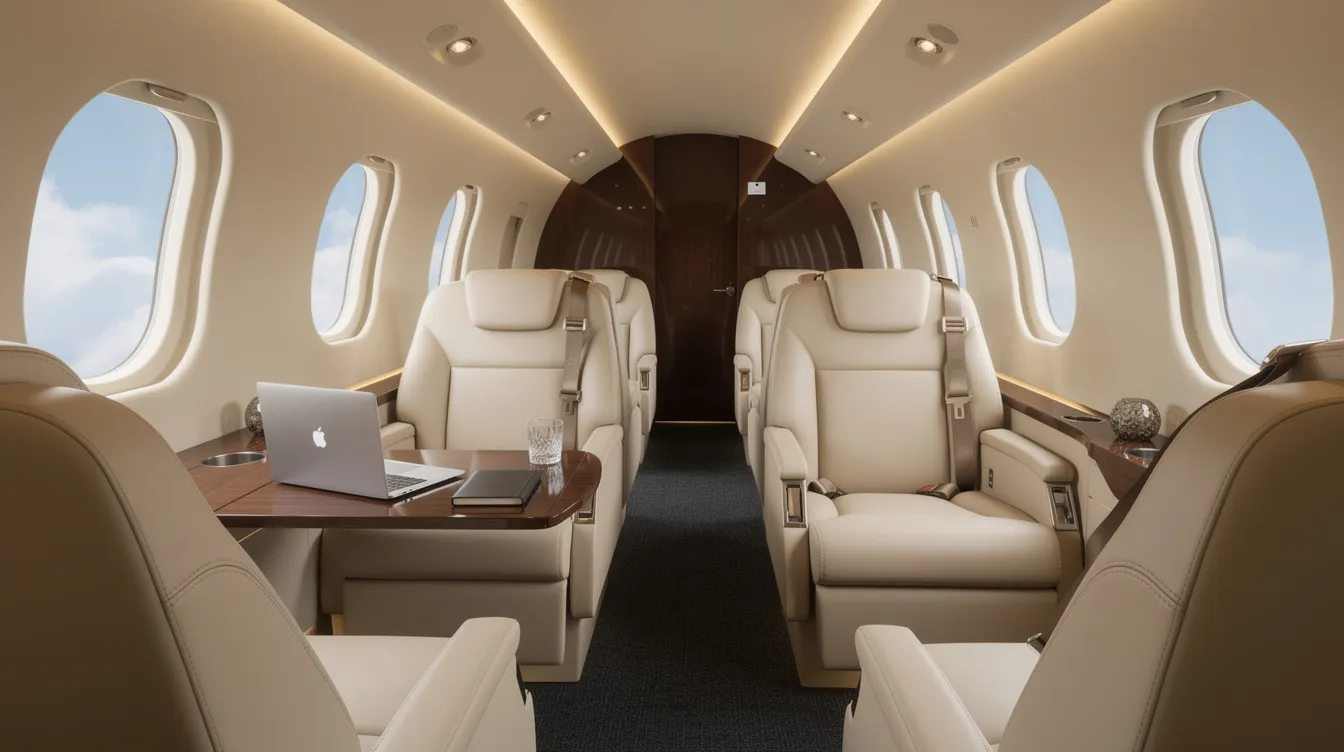
On a 90-minute first class flight from, say, San Diego to San Francisco on American Airlines, you get a comfortable recliner with a drink and a snack. On the same route via a BlackJet light jet, you get an entire cabin for your party, club seating you can face in any direction, a conference-style table for work, and the ability to move freely. The E175 is a solid regional aircraft. A private jet cabin is a different category entirely, especially when you scale up to private jets configured for around 20 passengers.
Onboard Service: Food, Drinks, and Entertainment on the Embraer 175
Service levels on the Embraer 175 vary by airline and route length, but class passengers should calibrate expectations toward "adequate" rather than "indulgent."
On American Eagle E175 first class, expect a pre-departure beverage when time allows, followed by soft drinks, beer, wine, and basic spirits. Snacks are typically packaged - think mixed nuts, crackers, or a small snack basket. American Eagle E175 first class offers limited beverage service, and on a short flight under 90 minutes, the flight attendant may only complete one pass. Drinks often arrive in plastic cups, and do not expect a hot towel - that is reserved for mainline aircraft on longer routes. Fun fact: drink orders on regional jets are sometimes taken verbally before takeoff to save time in the air.
United Express operates similarly. United Express offers a snack basket on short flights - almonds, chips, and the like - and first class on United Express includes a choice of beverages. Consistency can vary; on very short sectors, the snack basket may not appear at all.
Alaska Airlines distinguishes itself on longer flights. Alaska Airlines serves meals on flights over 670 miles, with options like grilled chicken or seasonal salads, but it still operates within commercial altitude and routing constraints that many private jets can avoid by cruising higher and more directly. Alaska Airlines offers pre-order meal options for first class, which is a meaningful upgrade over the grab-and-go approach of other carriers.
For in-flight entertainment, streaming entertainment is available on the Embraer 175 via own device entertainment - you stream to your phone or tablet through the airline's app, whereas owners of 10-million-dollar private jets often install fully customized entertainment suites. Over 100 movies and TV shows are available for streaming, and in-flight entertainment options vary by airline operating the E175, but they are still modest compared with what a 15-million-dollar private jet can support in terms of bespoke cabin technology. Wi fi access costs $8 to $10 on the Embraer 175, though messaging services are free on the Embraer 175 wi fi. There are no seatback screens, and internet access can drop at certain altitudes. In-flight entertainment is functional, but it is not curated.
By contrast, BlackJet flights offer fully customizable catering - ordered in advance from specific restaurants if desired - along with curated beverage lists, and full control over music, lighting, and cabin ambiance without airline app limitations.
Routes, Airlines, and When E175 First Class Makes Sense
The Embraer 175 appears most frequently on regional flights operated by American Airlines (via American Eagle partners like Envoy and SkyWest), United Airlines (United Express via Mesa and SkyWest), and Alaska Airlines. Typical routes include Burbank to San Francisco, San Diego to Los Angeles, Seattle to Vail, Palm Springs to Phoenix, and dozens of other hub-feeder connections, which are also prime candidates if you want to buy an individual seat on a private jet instead of booking the whole aircraft.
Paying for a 175first-classs upgrade often makes sense when the cost is modest - last-minute upgrades typically run $50 to $150 - and you gain priority boarding, two free checked bags, and a quieter ride, though savvy travelers sometimes explore strategies to fly private more affordably on the same routes. On longer flights where Alaska serves a meal, the value increases. Award redemptions that route you through an E175 segment ahead of a long-haul business class leg can also feel like a good deal; the regional leg itself is modest, but it is included in the itinerary at no additional mileage cost.
The strategic question is when a first-class seat on a regional jet is "good enough" versus when private access changes the equation. For a low-stakes positioning flight ahead of an international departure, the E175 works. For a Friday afternoon trip from Los Angeles to San Francisco with a dinner meeting on arrival, a BlackJet Jet Card or BlackJet 25+ Hour Jet Card lets you depart on your schedule, skip the terminal entirely, and arrive closer to your destination - turning a three-hour commercial ordeal into a 90-minute door-to-door trip.
Safety, Sustainability, and Technology: Regional Jets vs. BlackJet Standards
The Embraer 175 is a modern, fuel-efficient regional jet with fly-by-wire controls, advanced avionics, and improved wingtips that cut CO₂ emissions by over 6% compared with earlier designs. All E175 flights operate under FAA Part 121 or Part 135 oversight with two-pilot crews and rigorous airline maintenance programs across American, United, and Alaska.
BlackJet layers additional scrutiny on top of industry baselines, operating in the same arena as top private jet companies focused on safety and service. Through its BlackJet Certified program, every partner operator, aircraft, and pilot is individually audited against standards that exceed FAA minimums. Fewer than 30% of US charter operators pass their certification. The safety advisory board includes former FAA and NTSB personnel, and operators must hold certifications aligned with frameworks like ARGUS Platinum and Wyvern Wingman. Private aviation companies often emphasize safety certifications and carbon-neutral flights because their clients demand accountability at every level, especially when chartering large private jets for groups of 50 passengers.
On sustainability, sustainable aviation includes initiatives like carbon offsets and environmentally friendly practices, and even travelers focused on the most affordable private jets increasingly factor in emissions and offset programs. BlackJet makes every flight carbon neutral by default - emissions are calculated per route and aircraft, then offset through third-party verified projects, which matters whether you are flying on a large-cabin jet or considering more budget-friendly private aircraft options. Commercial airlines are improving efficiency, but individual passengers rarely see clear carbon-neutral commitments tied to their specific flight.
Technology-wise, airlines offer apps for boarding passes, seat selection, and wi fi, but managing and operating the largest private jets also requires sophisticated digital tools for maintenance, crewing, and global trip support. BlackJet provides 24/7 digital booking tools, live pricing, real-time flight support, and trip management through mobile and concierge channels - a fundamentally different level of control compared with even well-known providers such as those discussed in NetJets jet card cost comparisons.
Jet Cards, Cabin Classes, and How BlackJet Fits into Your Travel Mix
The Embraer 175 first class experience is best understood as a premium economy-plus product for short regional hops, and it is often the comparison point for travelers exploring the cheapest private jet options that can still beat commercial on time and privacy. It is a step up from the main cabin, but it is not the step-change that comes with moving to private jet access.
A Jet Card is the simplest way to access that step-change: prepaid blocks of flight hours - jet card programs and pricing can include options for 25-hour or 50-hour prepaid access - that guarantee availability across multiple aircraft categories, including light jets, midsize jets, and large-cabin aircraft. Private aviation services offer prepaid access to private jets through jet card programs, and private aviation service users value the convenience of prepaid jet time over ownership, especially when they can also optimize jet card tax deductions for business travel. Private jet services typically provide 24/7 digital booking tools and real-time support, making the experience seamless from booking to landing.
High-net-worth individuals often prefer private aviation for business and leisure travel and typically start by understanding the broader private jet price list and access options. The typical profile: a West Coast executive who normally flies American Airlines E175 first class on routes like SAN–LAX–JFK, accruing miles and status, but who may also consider unlimited private jet membership models once trip frequency crosses a certain threshold. But for quarterly board meetings in Aspen with ski equipment, or a family trip to a mountain resort with children and gear, she activates her BlackJet Jet Card instead of trying to buy a single seat on a private jet. The commercial legs earn miles; the private legs save hours, eliminate baggage anxiety, and deliver her refreshed - not frazzled from fighting for overhead bin space.
FAQ: Embraer 175 First Class vs. Private Jet with BlackJet
These are the questions we hear most from travelers evaluating their options.
Is the Embraer 175 first class worth it for a 45–60 minute flight?
On a short flight of that length, the upgrade delivers meaningful comfort: more leg room, no middle seats, priority boarding, and a quieter cabin. But service will be minimal - possibly one beverage pass - and the time spent at the airport may exceed the flight itself. If time matters more than the fare difference, private access on the same route can cut your door-to-door trip in half.
What are the best seats in E175 first class for solo travelers or couples?
Solo travelers should target left side single seats in rows 2A through 4A for privacy and reduced aisle traffic. Couples or colleagues fly best in paired seats like 3D/F, which balance distance from the galley and lavatory. Avoid 1A and 1D/F if galley noise bothers you.
How does American Airlines E175 first class compare to United's or Alaska's on similar routes?
All three carriers offer the same core product: 12 first-class seats, 37-inch pitch, roughly 20-inch width, and a 1-2 layout. The differences are in service consistency. Alaska tends to offer more generous catering on longer regional flights, while American and United vary more by route and crew.
How does the E175 boarding process differ from boarding a private jet?
Commercial boarding involves check-in counters, security screening, concourse walks, gate waits, and grouped boarding - a process that can consume 60 to 90 minutes. With BlackJet, you arrive at a private terminal 15 to 20 minutes before departure, walk directly to your aircraft, and fly. No lines, no announcements, no competition for overhead bins.
What's the difference between a first-class ticket on a regional jet and a BlackJet Jet Card?
A first-class ticket gives you a premium seat on the airline's schedule in a shared cabin. A Jet Card gives you a private aircraft on your schedule with your party only, customizable service, and operator-level safety oversight, similar in structure to many of the best jet card programs for frequent flyers. The cost is significantly higher, but the product is categorically different, especially if you are evaluating larger commitments like a 100-hour private jet card cost versus ad-hoc upgrades. Learn more about how Jet Cards work.
Is flying private more sustainable than booking E175, first class?
On a per-passenger basis, a full commercial flight is more fuel-efficient. However, BlackJet makes every flight carbon neutral through automatic offsets calculated per route and aircraft, verified by third-party standards. Most airlines do not offer per-flight carbon neutrality to individual passengers.
Can I still earn miles if I split travel between commercial first class and BlackJet?
Yes. Commercial first-class flights on American, United, or Alaska earn frequent-flyer miles per your fare class. Private Jet Card travel does not earn airline miles but may include loyalty benefits within the private aviation program. Many travelers use both: airlines for mile accrual and positioning, BlackJet for the trips where time and privacy are non-negotiable.
Conclusion: Choosing Between Embraer 175 First Class and BlackJet
The Embraer 175 first class cabin delivers where it counts on a short regional hop: no middle seats, decent legroom, priority check-in, and a quieter ride than economy. For positioning flights and low-stakes connections, it remains a solid product - especially at upgrade prices under $150.
But the limitations are real. Variable onboard service, fixed schedules tied to hub operations, exposure to delays, narrow aisles, and a class review that reads closer to "premium economy" than genuine first class. For travelers who measure the cost of a trip in hours lost rather than dollars spent, these constraints add up.
BlackJet exists for the trips where those constraints become unacceptable: guaranteed private cabins, tailored schedules, carbon-neutral flights, rigorous safety oversight, and seamless booking through Jet Cards and digital tools, or even unlimited private jet membership concepts if your flying pattern justifies them. Explore how a BlackJet Jet Card can complement your existing first-class and business-class travel - and turn your most important journeys into fully private, on-demand experiences.


 Sign up with google
 Sign up with Apple