For business executives and global families who measure travel in continents rather than time zones, heavy jets represent the most capable class of private aircraft in the sky. This comprehensive guide is dedicated to heavy jets for private travel, providing an in-depth look at what defines a heavy jet, their technical specifications, cabin experience, leading models, technology, cost structures, and how to access these aircraft through BlackJet’s jet card programs—without the burden of ownership.
Scope:
This guide covers the definition and classification of heavy jets, their key characteristics (size, weight, range, speed, and cabin features), the passenger experience, flagship models available in 2026, advanced technology, comparisons with other jet categories, typical use cases, cost and access models, safety standards, sustainability considerations, and practical booking steps with BlackJet.
Target Audience:
This resource is tailored for business executives, global families, entrepreneurs, and ultra-high-net-worth (UHNW) individuals who require strategic, efficient, and comfortable intercontinental travel solutions.
Why Understanding Heavy Jets Matters:
Heavy jets are not just about luxury—they are strategic tools that convert flight time into productive hours, offer unmatched comfort and privacy, and provide the efficiency needed for global business or family travel. Understanding the capabilities, costs, and access options for heavy jets empowers travelers to make informed decisions that maximize value, safety, and convenience.
Heavy Jets at a Glance: Why They're the Strategic Choice for Global Travelers
A heavy jet is one of the largest aircraft in private aviation, typically seating 10–18 passengers, capable of intercontinental flights at a cruise speed near Mach 0.85—roughly 460 to 520 knots. Heavy jets offer a range of 5,500 to over 8,000 miles and can fly non-stop for over 13 hours, connecting city pairs like New York–London, Los Angeles–Tokyo, and Dubai–Geneva without fuel stops.
Consider the math on a New York–London trip: commercial first class involves two hours of airport process on each end, rigid schedules, and shared terminals. A heavy jet departs from an FBO on your schedule, saving four to six hours door-to-door while providing a secure environment for negotiations, rest, or family time. For entrepreneurs and UHNW families, this isn't luxury for its own sake—it’s a strategic tool that converts flight time into productive hours.
BlackJet provides prepaid access to private heavy jets and other cabin classes through its premium private jet card programs, with 24/7 digital booking and real-time support. The result: a premium flying experience backed by advanced technology, dedicated cabin crew, and long-range capabilities—without owning an aircraft.

Next, let’s define exactly what qualifies as a heavy jet in business aviation and why these aircraft stand apart from other categories.
What Is a Heavy Jet in Business Aviation?
The term "heavy" means different things depending on context. In commercial aviation and air traffic control, the designation exists primarily for wake turbulence separation. Air traffic control requires greater separation behind heavy jets due to wake turbulence, and the main safety reason for the "Heavy" designation is to ensure adequate separation between aircraft. The Airbus A380 is classified as "Super" due to its stronger wake turbulence, while—interestingly—the Boeing 757 is classified as a "Heavy" jet for separation rules despite not meeting weight criteria, because of its outsized wake characteristics. Heavy jets generate significant wake turbulence affecting following aircraft, which is why operating rules require increased spacing.
In the business jet industry, "heavy jet" describes something different: a large cabin aircraft with a maximum takeoff weight (MTOW) typically between 70,000 and 105,000 lb. Heavy jets typically have an MTOW of 70,000–105,000 lb. They can accommodate 12 to 18 passengers, offer an intercontinental range of roughly 5,500–8,000 nautical miles, and provide seating for 12 to 18 passengers. These aircraft typically fly at higher altitudes than commercial airplanes, often cruising above 41,000 feet where air traffic is thinner, and rides are smoother.
Heavy jet aircraft fit into a broader spectrum of business jets that includes very light jets, light jets, midsize, super midsize jets, heavy, and bizliners. Concrete examples include the Gulfstream G550, Gulfstream G650ER, Bombardier Global 6000, Global 7500, and Dassault Falcon 7X/8X. In BlackJet’s ecosystem, these are the go-to options for transatlantic and transpacific missions where passengers need lie-flat sleeping and full-service catering.
With a clear definition in place, let’s examine the key characteristics that set heavy jets apart from other private aircraft.
Key Characteristics: Size, Weight, Range, and Cruise Speed
Weight and Size
Most heavy jets carry a maximum takeoff weight between 70,000 and 115,000 lb for the ultra-long-range variants, placing them among the largest private jets for luxury travel. This figure directly affects runway length requirements, fuel load, and usable payload. Heavy jets require longer runways and specialized ground services at airports—typical takeoff distances run from 5,700 to 6,300 feet at sea level under ISA conditions.
Passenger capacity generally ranges from 10 to 14 in comfortable charter layouts, though many models seat up to 16–19 in high-density or manufacturer marketing configurations. More seats mean less space per person, so most operators trading in passenger comfort favor the lower end of that range to preserve the spacious cabins these aircraft are known for.
Range
Range divides the category into two tiers. Standard heavy jets cover roughly 4,000–6,000 nautical miles. Ultra long range jets like the Bombardier Global 7500 and Gulfstream G700/G800 push past 7,000 nm, with the Global 7500 reaching 7,700 nm, similar to the capabilities described in our guide to the best long range private jets for sale.
Cruise Speed
The average cruise speed can reach up to 520 knots, with flagship models capable of a maximum speed approaching Mach 0.925–0.935.
Cabin Features
Cabins usually offer a stand-up height of 6 ft 2 in to 6 ft 6 in and widths exceeding eight feet—room enough for opposing club seating, conference tables, and dedicated rest areas. Compare this to super midsize jets: similar top speeds, but heavy jets win decisively on range, baggage capacity, and multi-zone cabin comfort for long-haul flights.
Having outlined the technical and operational characteristics, let’s step inside and explore what the cabin experience is like aboard a heavy jet.
Cabin Experience: Inside a Large Cabin Heavy Jet
Cabin Layout
Heavy jets often feature large, spacious cabins designed around a consistent principle: cabin zoning helps separate work, family time, and rest. A typical cabin layout includes a forward full galley with hot catering capability, a double-club seating area, a mid-cabin conference or dining zone, an aft lounge or private stateroom, and one or two enclosed lavatories. Many heavy jets include full-sized galleys equipped with espresso machines, convection ovens, and wine storage.
Amenities
Seats in most heavy jets convert to lie-flat beds, and multi-zone cabins allow an executive to hold a meeting forward while family members rest aft. Picture an overnight New York–London flight aboard a Bombardier Global 6000: the forward section serves as a flying conference room until dinner, the mid-cabin converts to a dining area, and the aft stateroom offers a proper bed for five hours of sleep before landing at Farnborough.
Passenger Comfort
Entertainment systems typically include 4K screens, personal device streaming, high-speed Wi-Fi, and advanced soundproofing for a quiet flying experience. Cabin altitude on newer heavy jets holds around 4,000–5,000 feet at cruise, reducing fatigue and jet lag on 10–12-hour missions. Professional cabin attendants handle gourmet catering and personalized service throughout.
Heavy jets typically accommodate 10–16 passengers with comprehensive baggage space, including specialized storage for golf clubs, skis, and production equipment—making them ideal for long family vacations, roadshows, or music tours and an excellent starting point when evaluating the best private jet options for 15 passengers.
Now that we’ve explored the interior experience, let’s look at the flagship heavy jet models available in 2026.
Flagship Heavy Jet Models in 2026
This section profiles the benchmark heavy and ultra-long-range business jets commonly available on premium charter and jet card programs in 2026, including those frequently requested by BlackJet members.
Gulfstream G550
With its first flight in 2002 and enter service date of 2003, the G550 remains a workhorse of the heavy category. It carries up to 16 passengers, offers a range of 6,750 NM, and cruises at Mach 0.80–0.85. Its PlaneView flight deck set an early standard for large format displays in business aviation.
Gulfstream G650ER
The G650ER pushed long-range business jet performance forward with roughly 7,500 nm range at long-range cruise. Its cabin spans about 8.5 feet wide, seats up to 19 in marketing configurations (though 13–16 is typical in charter), and it cruises at Mach 0.85 with a maximum operating Mach of 0.925.
Gulfstream G700 and G800
Among the newest new models, the G800 claims approximately 8,200 nm of range with extended range capabilities that redefine transpacific travel. The Symmetry flight deck uses active control sidesticks and touchscreen interfaces, representing a generational leap in advanced technology.
Bombardier Global 6000/6500
The Global 6000 offers roughly 6,000 nm range with a wide, comfortable cabin. The 6500, its successor, extends range to about 6,600 nm and introduced the Bombardier Vision Flight Deck—a suite of large touchscreen displays, synthetic vision, and enhanced situational awareness tools, placing both aircraft among the top private jets worldwide for luxury and performance.
Bombardier Global 7500
The longest-range purpose-built business jet, the Bombardier Global 7500 offers a range of 7,700 NM at Mach 0.85, with four distinct living zones and a maximum cruise near Mach 0.925. Its "Smooth Flex Wing" technology improves ride quality and runway performance, making it a flagship example in any discussion of the best long range private jets for global travel. List price runs approximately $75 million.
Dassault Falcon 7X/8X
The trijet design gives these Falcons exceptional short-field and steep-approach runway performance. The 8X extends range to about 6,450 nm with many models of the Falcon family known for fuel-efficient cruise profiles.
Dassault Falcon 6X
A newer entry with a maximum takeoff weight of 77,459 lb, the Falcon 6X delivers the widest cabin cross-section in its class and runs on the Dassault EASy flight deck. Its first flight occurred in 2021, and it represents a compelling blend of large cabin comfort and efficient operation.

With the leading models in mind, let’s explore how advanced technology and flight deck systems shape the heavy jet experience.
Technology and Flight Deck: How Advanced Systems Shape the Heavy Jet Experience
Beyond spacious cabins, heavy jets are defined by advanced technology that directly benefits passengers. Fly-by-wire controls on aircraft like the Dassault Falcon 8X and the Bombardier Global family provide precise, smooth handling that passengers feel as a more comfortable ride, especially in turbulence, reflecting broader trends highlighted in our guide to the best and most advanced aircraft of 2026.
The bombardier vision flight deck exemplifies the standard: large format touchscreen displays, synthetic and enhanced vision systems, head-up displays, and advanced automation that reduce pilot workload while improving situational awareness. Comparable systems include the Gulfstream Symmetry flight deck on the G700/G800 and the Dassault EASy flight deck, all sharing intuitive interfaces and integrated safety features drawn from decades of aerospace engineering.
For passengers, the payoff is tangible: smoother handling, more efficient routing, better fuel planning, and higher dispatch reliability. These translate into a more predictable and comfortable flying experience—fewer delays, fewer diversions, and more precise arrival times for critical international itineraries.
Connectivity matters too. Integrated cabin management systems allow app-based control of lighting, temperature, and window shading. Multiple internet connectivity options—including JetWave, Starlink, and Gogo Galileo compatibility—keep business travelers connected across oceans. BlackJet works with operators that meet stringent safety and technology standards, ensuring members typically fly on aircraft equipped with modern avionics suites and current maintenance status.
Now that we’ve covered the technology, let’s compare heavy jets to other business jet categories to see where they fit in the broader private aviation landscape.
Heavy Jets vs Other Business Jet Categories
Private jets span a wide spectrum. Here’s how heavy jets compare to other categories:
Very Light Jets:
Carry 4–5 passengers on hops under 1,200 nm.
Light Jets:
Handle regional routes like Miami–Nassau with 6–8 seats, similar to the mission profiles covered in our guide to the best small private aircraft for every need.
Super Midsize Jets:
Can cross the Atlantic with smaller groups but trade cabin volume for range.
Heavy Jets:
Serve large parties or missions where unmatched comfort, baggage, and long distances are non-negotiable.
Bizliners (Boeing Business Jets and Airbus Corporate Jets):
Offer even larger aircraft with bespoke interiors, but at higher operating costs and with more airport limitations than heavy jets, making them suitable for specialized missions like the best private jets for 50 passengers.
Practical Comparison Example:
A super midsize jet might technically reach London from New York, but a heavy jet offers superior cabin layout and sleep options for an overnight crossing.
For a Los Angeles–Hawaii group trip with 12 passengers and golf equipment, a heavy jet handles the baggage while the super midsize struggles.
Heavy jets offer improved efficiency for large groups when operating near capacity, spreading the cost across more seats.
BlackJet’s jet card and on-demand model lets members choose the right cabin class per trip—light jets for a quick regional hop, heavy jets for intercontinental travel—providing ultimate flexibility instead of locking customers into a single aircraft type as with full ownership, and aligns closely with what frequent flyers look for in the best jet card programs and their benefits.
With these comparisons in mind, let’s look at the typical missions and use cases where heavy jets excel.
Typical Missions and Use Cases for Heavy Private Jets
Heavy jets excel on missions that combine long distances, large groups, and the need for productive or restful air travel. Consider an executive team flying New York–London–Riyadh over three days: the cabin serves as a flying office outbound, a rest suite overnight, and a secure environment for pre-meeting strategy sessions. Heavy jets typically accommodate 12 to 18 passengers per flight, making them ideal for board delegations and corporate roadshows.
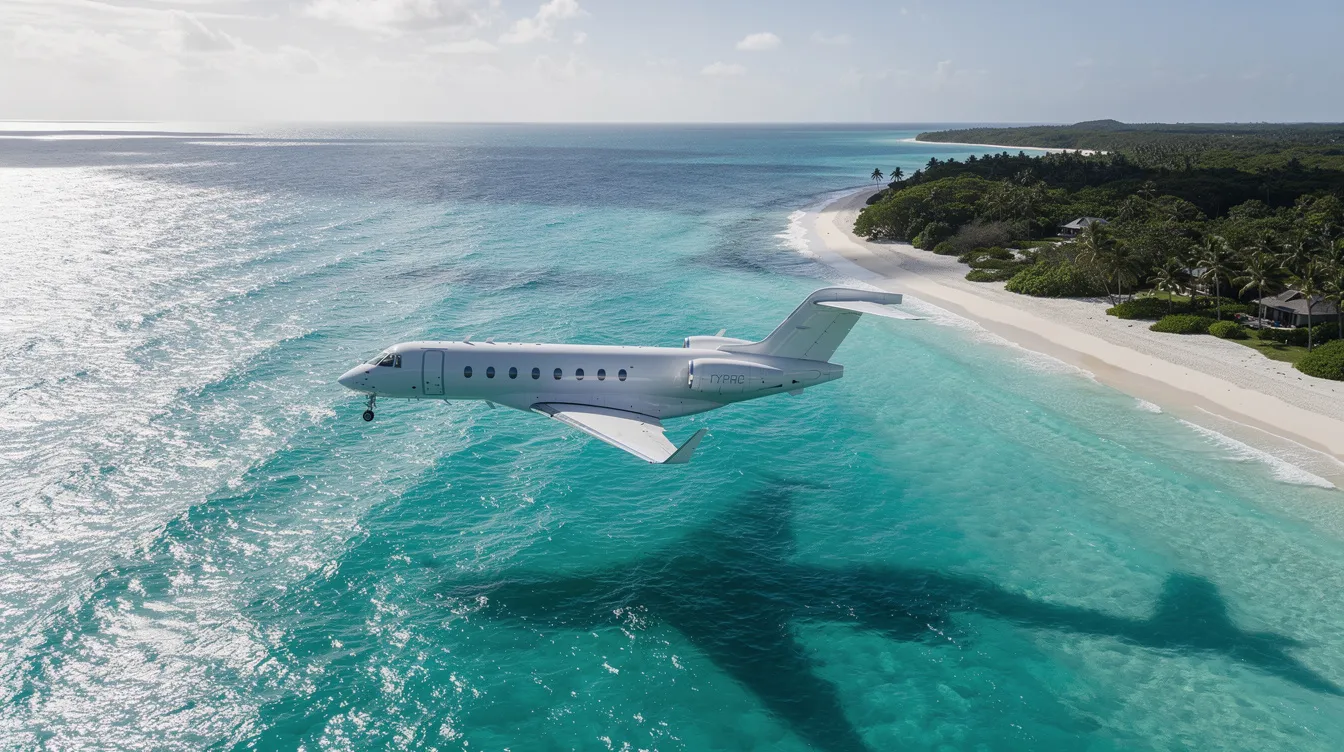
A BlackJet member using a 50-hour jet card might schedule quarterly board meetings in Europe and Asia, leveraging heavy jets for overnight intercontinental flights and switching to midsize aircraft for intra-European legs. Other specialized use cases include high-security diplomatic travel, entertainment tours with bulky production equipment, and multi-week family vacations connecting destinations like Los Angeles–Paris–Maldives.
For groups of 8–14 flying long-haul travel routes, heavy jets often prove the most economical per seat-mile compared with booking multiple commercial first-class tickets—especially when factoring in time saved, eliminated layovers, and reduced ground transportation complexity, and they scale logically into larger-cabin solutions when evaluating the best private jets for 20 passengers. The large size baggage holds accommodate everything from ski gear for Alpine holidays to film equipment for location shoots.
Now that you know where heavy jets shine, let’s break down the costs and access models for these aircraft.
Costs, Ownership, Charter, and Jet Cards
Heavy jets typically range from $15 million to $30 million on the pre-owned market, with ultra long range flagships and bespoke interiors running substantially higher—a new Global 7500 lists around $75 million, while a G650ER lists near $70.5 million; at the entry point of this spectrum, a 15 million dollar private jet’s features and trade-offs illustrate how buyers think about value versus capability. Heavy jets have higher operating costs compared to lighter aircraft: operational costs for heavy jets range from $5,000 to $6,500 per hour in direct variable expenses, with all-in costs including crew, maintenance, hangar, and insurance pushing total annual outlays much higher for owners—a dynamic explored in depth when evaluating the best 20 million dollar private jet options.
Access Models
Full Ownership
Fractional Ownership
On-demand Charter
Jet Card Programs
When to Choose Each Model
For a traveler flying 75–100 hours per year on long haul routes, full ownership is often unjustifiable, and tools like a 100-hour private jet card cost analysis help quantify when moving beyond smaller hour blocks makes sense. A 25-hour or 50-hour BlackJet Jet Card provides access to heavy jet cabins for intercontinental missions and smaller jets for regional trips—no depreciation, no crew management, and predictable hourly pricing that simplifies budgeting for corporate travel departments and family offices, especially when you understand broader jet card pricing structures and fees.
With costs and access models clarified, let’s turn to the critical topic of safety and reliability in heavy jet operations.
Safety, Certification, and Reliability in Heavy Jet Operations
Safety standards for heavy jets match or exceed those of commercial aviation. In the U.S., charter operations fall under FAA Part 135, which mandates crew qualification standards, recurrent training, maintenance schedules, and drug and alcohol testing—all more stringent than Part 91 private operations.
Third-party safety audits add another layer. ARGUS Platinum and Wyvern Wingman PRO represent the highest independent safety ratings, involving on-site audits of operations, maintenance, training, and safety management systems. IS-BAO Stage 3 certification demonstrates a fully implemented Safety Management System. BlackJet partners with operators that meet or exceed these benchmarks.
Heavy jet redundancy is extensive: multiple hydraulic and electrical systems, advanced avionics with synthetic vision, and rigorous maintenance schedules designed for high-utilization, long-range service. Before booking, experienced travelers should verify operator certifications, crew hours on type, and recent maintenance status. A reputable provider pre-screens all of this—robust maintenance and crew planning minimize delays and diversions for critical international itineraries, with top operators targeting 99%+ dispatch reliability.
With safety assured, let’s address the growing importance of sustainability and environmental considerations for heavy jets.
Sustainability and Environmental Considerations for Heavy Jets
Transparency first: heavy jets burn more fuel per flight than smaller aircraft, and private jets can generate thousands of tons of CO₂ emissions annually across fleets. On ultra-long-range routes, the environmental footprint per mission is significant.
However, the trajectory is improving. Newer heavy jets improve efficiency with better engines and lighter materials—high-aspect-ratio wings, composite structures, and optimized aerodynamics like the Smooth Flex Wing on the Global 7500 reduce fuel burn per passenger-mile compared to previous generations, echoing broader sustainability advances across the best new aircraft of 2026.
Sustainable aviation fuel plays a growing role. SAF can deliver roughly 70–80% lifecycle CO₂ reductions compared to conventional jet fuel and is certified as a drop-in replacement under ASTM standards, requiring no aircraft modification. Many modern heavy jets operate on SAF blends, and supply is scaling—though it remains expensive and regionally uneven.
BlackJet addresses sustainability through carbon-neutral flights by default via high-quality carbon offset programs, route optimization to minimize unnecessary fuel burn, and partnerships with operators investing in SAF where available. For environmentally conscious travelers, practical steps include choosing newer, more efficient aircraft, flying direct when possible, and consolidating passengers to maximize efficiency per seat on every flight.
With sustainability in mind, let’s discuss how to select the right heavy jet for your specific mission.
How to Choose the Right Heavy Jet for Your Trip
Selecting the right heavy jet comes down to a handful of decision drivers:
Number of passengers
Route distance in nautical miles
Desired cruise speed and total flight time
Baggage volume
Cabin configuration needs
Budget
A useful rule of thumb: when 8–14 passengers are flying more than 3,000–4,000 nm, or when lie-flat sleeping and a large cabin are essential, a heavy jet is the right starting point. Below that threshold, a super midsize may suffice; above it, only ultra-long-range models will do, often overlapping with the segment covered in our overview of the largest private jets available for sale.
Model Trade-offs:
A slightly shorter-range heavy jet at the lower end costs less per hour but may require a fuel stop on the longest routes.
A tri-jet like the Falcon 8X delivers exceptional runway performance for challenging airports, while a twin-engine G650ER offers efficiency on standard routes.
BlackJet’s team and digital tools simplify this: rather than expecting customers to know model codes, the platform presents a shortlist of capable aircraft with clear data on range capabilities, baggage, and cabin layout. For example, a family trip from New York to Johannesburg—nearly 7,000 nm—maps naturally to a long-range business jet like the Bombardier Global 7500. A corporate New York–London shuttle with six passengers and a tight schedule might fly a Gulfstream G550, saving cost without sacrificing comfort. The right match depends on the mission, and the world of heavy jets offers many models to operate across virtually every scenario.
Once you’ve chosen your ideal heavy jet, here’s how booking works with BlackJet.
Booking Heavy Jet Flights with BlackJet: From Jet Card to Takeoff
The journey starts with a BlackJet jet card—a 25-hour or 50-hour prepaid program that gives members access to private jets across every cabin class, from light jets to heavy private jets, with the BlackJet 25+ Hour Jet Card detailing specific hourly rates and inclusions for each cabin type. From there, booking follows a straightforward path through BlackJet’s digital or mobile platform, whether you’re exploring heavy jets or more budget-friendly private aircraft options for shorter or regional missions.
Members provide origin and destination airports, dates and times, passenger count, luggage specifics, and any special requirements—pets, dietary needs, or in-flight equipment. BlackJet’s team then sources and vets suitable heavy jets from its operator network, presenting options by cabin class, aircraft model, cruise speed, and total flight time.
Value-added service rounds out the experience: arranging ground transportation at both ends, coordinating catering with full galley capabilities, and providing real-time flight support during international operations—permits, slot coordination, and weather route planning, whether the mission calls for a heavy jet or one of our curated small private jet luxury travel options. Prepaid hours mean transparent pricing before confirmation, and a single point of contact handles changes, diversions, or schedule shifts.
The result is a seamless process that delivers unmatched comfort and ultimate flexibility for every intercontinental mission—without the complexity of ownership or the uncertainty of ad-hoc charter, while still aligning with strategies for accessing the most affordable private jet options when appropriate to the mission and budget.
Discover how a BlackJet Jet Card can reshape your travel. Explore premium jet access and experience what heavy jets were designed to deliver.


 Sign up with google
 Sign up with Apple


