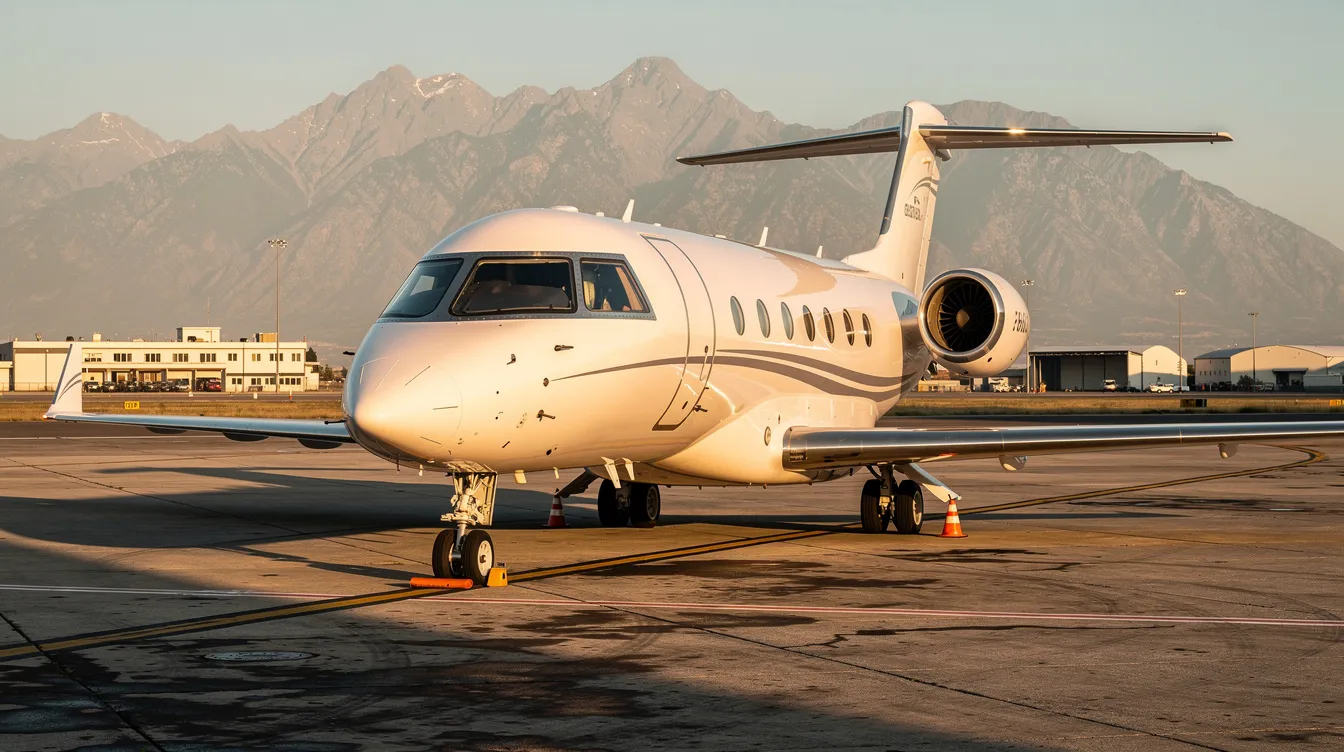
For executives and high-net-worth individuals who measure travel in hours reclaimed rather than miles flown, the HondaJet family represents one of the most compelling propositions in business aviation today. This guide covers the full range of HondaJet specifications, including performance, cabin features, and ownership alternatives, for business aviation decision-makers. Understanding these specifications is crucial for optimizing travel efficiency, maximizing productivity, and making informed decisions about private jet access or ownership.
Executive Snapshot: HondaJet Key Specs and Why They Matter for Business Aviation
A "very light jet" (VLJ) is a category of small business jets typically seating four to six passengers, certified for single-pilot operation, and designed for short to medium-range missions. The HondaJet HA 420 and its successors occupy a strategic position at the top of this segment, delivering near light jet performance with lower operating cost, shorter runway requirements, and access to hundreds of regional airports that larger aircraft simply cannot use. For time-sensitive travelers navigating routes under 1,500 nautical miles, this aircraft class converts idle hours into productive ones.
Range and Speed Overview
Range: The HondaJet family spans a range from approximately 1,223 nm (original HA-420 with NBAA IFR reserves—fuel reserves required by the National Business Aviation Association for safe alternate airport diversion) to 1,547 nautical miles (Elite II with four passengers).
Maximum Cruise Speed: Reaches roughly 422 KTAS (Knots True Airspeed), or about 486 mph (782 km/h).
Passenger Capacity
Ownership Alternatives
Consider a concrete scenario: flying New York to Chicago on a HondaJet versus commercial aviation business class. The private jet departs from a smaller corporate field with no security lines, no connection, and no terminal congestion. Door-to-door, you save two to three hours on a route that is barely 700 nautical miles. Multiply that across 25 or 50 annual trips, and the math shifts from luxury to strategic advantage.
Honda Aircraft Company, headquartered in Greensboro, North Carolina, manufactures every HondaJet variant. For travelers who want this level of performance without the capital commitment, BlackJet offers premium Jet Card programs and charter access to HondaJet-class aircraft, delivering the same speed and flexibility with none of the fixed costs.
Honda Aircraft Company and the HA-420 HondaJet Family
Honda Aircraft Company was founded in 2006 as Honda's dedicated aviation arm, though experimental Honda jet prototypes date back to the late 1980s. Decades of aerodynamic research culminated in the HA-420 HondaJet, which achieved FAA type certification in late 2015. The first delivery followed shortly after, establishing Honda Aircraft in the light business jet market.
Each subsequent variant builds on the previous model, adding range, performance, or cabin enhancements. The HondaJet family has evolved through several variants:
HA-420 "Classic" (2015): The baseline HondaJet aircraft with approximately 1,200+ nm range and cruise speed near 420 KTAS.
HondaJet APMG (2018): The Advanced Performance Modification Group upgrade package, retrofittable to earlier HA-420 airframes, adding increased range, take off run reduction, and avionics improvements.
HondaJet Elite (2018): Refined cabin, increased fuel capacity, and extended range into the 1,350–1,400 nm band. The HondaJet Elite became the standard production model.
Elite S (2021): Enhanced steering augmentation, updated avionics software, and cabin refinements.
HondaJet Elite II (announced 2022): The current flagship with 1,547 nm range, autothrottle (an automated system that manages engine thrust for optimal performance and safety), and expanded payload capability. Deliveries have ramped through 2023–2026.
Core design innovation remains consistent across the family: a composite fuselage, aluminum wing, over-the-wing engine mount, and Natural Laminar Flow optimized surfaces. By early 2024, over 250 HondaJets had entered service globally, accumulating more than 210,000 flight hours. The HondaJet has a 99.7% dispatch reliability rate, positioning it as a proven platform in private aviation.
Exterior Dimensions and Airframe Design
The HondaJet's compact exterior dimensions give it a decisive operational edge. Smaller airports, shorter taxiways, and tighter FBO ramps are all within reach.
Key exterior dimensions for the Elite II (effectively unchanged from earlier HA-420 airframes):
Length: approximately 42.6 ft (13.0 m)
Wingspan: approximately 39.8 ft (12.1 m)
Height: approximately 14.9 ft (4.5 m)
The over-the-wing engine mount places the twin turbofans above and slightly forward of the wing's trailing edge. This layout frees fuselage volume that would otherwise be consumed by engine nacelles or structural reinforcements, while simultaneously reducing interference drag. The composite fuselage of the HondaJet is designed to reduce weight and improve cabin space, using smoother aerodynamic shaping with fewer joints than traditional metal construction. The aluminum wing provides structural efficiency and straightforward maintenance.
Compared with similar aircraft in the light jet class—such as the Embraer Phenom 100 or Citation M2—the HondaJet's wingspan and overall footprint are notably more compact. This translates directly into access to hundreds of additional regional airports that larger aircraft cannot practically use, putting travelers closer to their final destinations and reducing ground time.
Cabin Layout, Seating, and Enclosed Lavatory
Seating Configuration
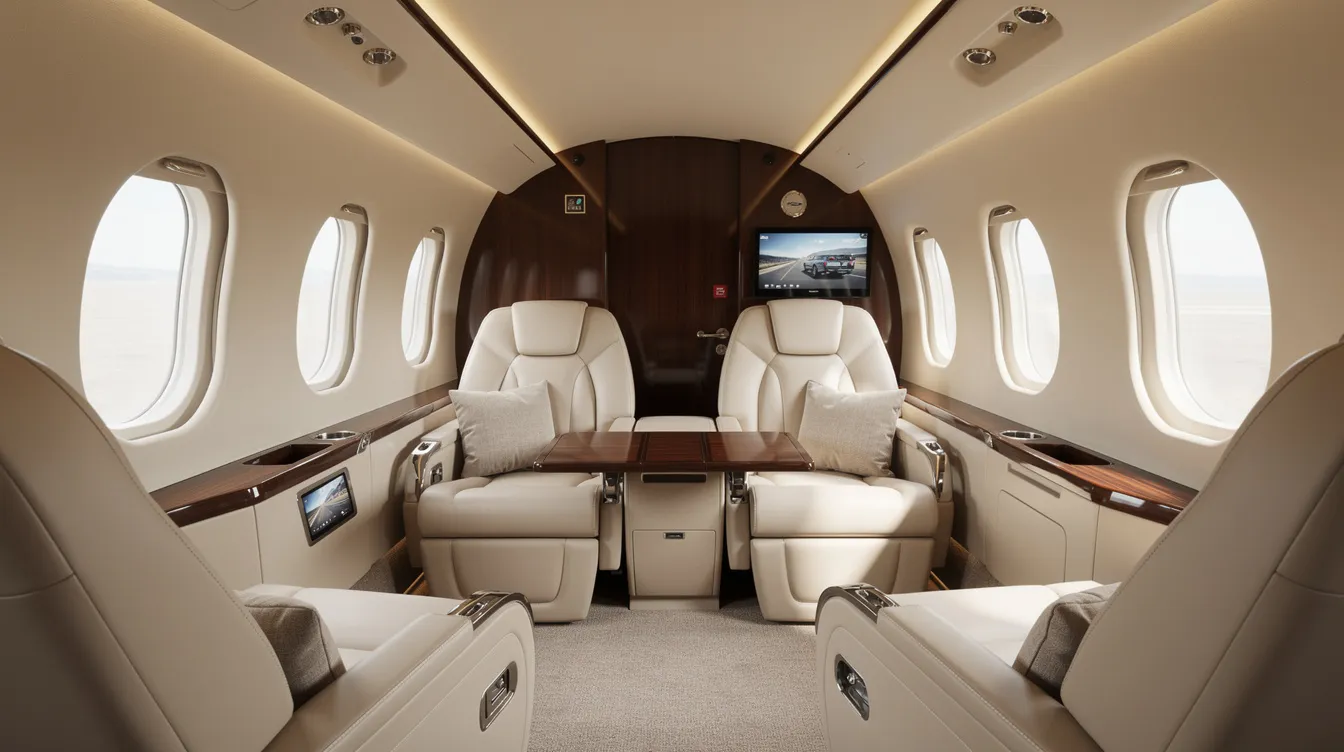
Step inside a HondaJet and you encounter a cabin that punches above its weight class. The standard arrangement features four contoured leather executive seats in a club configuration—two pairs facing each other—with an optional side-facing seat or belted lavatory seat to accommodate a fifth or sixth passenger. The HondaJet Elite II can accommodate up to six passengers in this layout.
Cabin Dimensions
These interior dimensions position the HondaJet as the largest-in-class among very light jets.
Lavatory Features
The enclosed lavatory at the rear offers full privacy behind a solid door, with an optional sink depending on variant. It can also be configured as a belted seat to increase the certified passenger count.
Key Cabin Features
Large windows placed higher on the fuselage, flooding the cabin with natural light
Significantly lower interior noise thanks to the over-the-wing engine placement, which distances the turbofans from passengers
Ergonomic seats that swivel, track along rails, and recline for working or resting
Together, these design choices deliver clear benefits in comfort, privacy, and day-to-day usability. Where a turboprop cabin often feels utilitarian, and many entry-level jets feel constrained, the HondaJet Elite and Elite II are intended to deliver something closer to a compact midsize cabin experience. The width and headroom create a working environment where a laptop, documents, and a beverage coexist comfortably.
Baggage Space and Practical Usability
The HondaJet was engineered for real trips, not just demonstration flights. Practical baggage space sets it apart from many competing very light jets.
Total baggage capacity (Elite II): Approximately 62 to 66 cubic feet depending on the variant, split between a large aft external compartment (~53 cu ft) and a smaller nose compartment (~9 cu ft)
Capacity: Accommodates several roll-aboard suitcases, garment bags, and three to four golf bags for a four-passenger business trip or weekend getaway
Loading: External baggage compartments load directly from the ramp, meaning bags never need to pass through the cabin. This speeds ground turnarounds and keeps the cabin pristine.
Comparison: Compared to many competing VLJs and turboprops—where luggage capacity is often an afterthought—the HondaJet is capable of supporting multi-day trips with realistic passenger loads.
Cabin storage: Inside the cabin, side ledges, small storage cabinets, and under-seat space handle briefcases, electronics, and personal items without cluttering the seating area.
Performance: Cruise Speed, Range, and Altitude
Cruise Speed and Range
The HondaJet Elite II delivers headline numbers that compete with aircraft costing significantly more:
Maximum cruise speed: approximately 422 KTAS (486 mph / 782 km/h)
Maximum range: 1,547 nautical miles with four occupants under NBAA IFR reserves (fuel reserves required for alternate airport diversion and holding patterns)
Service Ceiling and Climb Rate
Service ceiling: 43,000 ft (FL430)
Maximum climb rate: approximately 3,990 ft per minute
Specification | HondaJet Elite II |
|---|
Max Cruise Speed | 422 KTAS (486 mph) |
Max Range | 1,547 nm (NBAA IFR) |
Service Ceiling | 43,000 ft (FL430) |
Max Climb Rate | 3,990 ft/min |
Earlier HA-420 and HondaJet Elite models cruise at similar speeds but with NBAA IFR range in the 1,200–1,400 nm band depending on variant, payload, and wind conditions.
Operational Advantages
Nonstop missions: Routes like Los Angeles to Dallas (~1,070 nm), Chicago to Miami (~1,100 nm), or London to Nice (~600 nm) are well within the HondaJet's envelope.
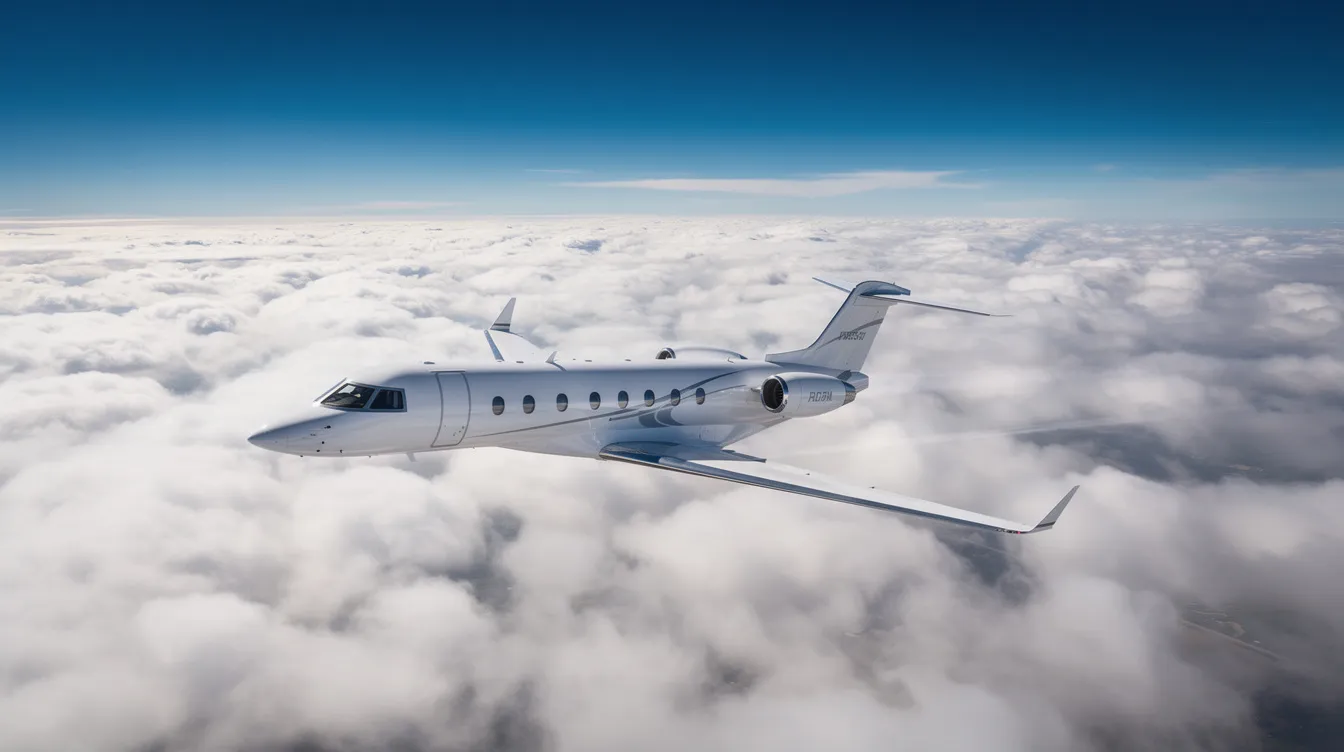
High altitude cruising: At FL430, the HondaJet cruises above most commercial airline traffic and significant weather, reducing turbulence and ATC delays.
Efficient climb: The high climb rate means the aircraft reaches efficient cruise altitudes quickly, preserving fuel efficiency and passenger comfort from the first minutes of flight.
Comparison: Against turboprops like the King Air class, the HondaJet cruises roughly two to three times faster. Against larger light jets, it trades some payload capacity for lower operating cost and access to shorter runways—a sweet spot for sub-1,500 nm business jet missions for owners considering the best cheapest single-pilot jets.
Engines, Fuel Efficiency, and Operating Economics
Engine Type and Output
Every HondaJet variant is powered by twin GE Honda HF120 turbofan engines. The HondaJet uses GE Honda HF120 turbofan engines with a thrust output of 2,050 lbf each. These efficient engines were designed from the ground up for low fuel burn and reduced emissions, contributing to the aircraft's position as one of the most economical jets in its class.
Fuel Efficiency
Fuel consumption: HondaJet consumes about 96 gallons of fuel per hour at typical cruise settings, with real-world figures varying between 90 and 110 gallons per hour depending on altitude, power settings, and payload.
Aerodynamic efficiency: The HondaJet's over-the-wing engine design reduces drag by 15-20% compared with conventional configurations, directly improving fuel efficiency and extending range for a given fuel capacity.
Operating Costs
Variable expenses: Averaging $1,200 to $1,600 per flight hour (fuel, maintenance reserves, and handling)
Annual operating costs: Range from $500,000 to $1.2 million depending on utilization
Fixed costs: Can reach $900,000 annually (hangar, crew salaries, insurance, training, and engine reserves)
Despite the HondaJet's relatively low variable expenses, owners still face substantial annual budgets, which is why many travelers analyze Jet Card pricing structures before committing to ownership. Annual operating costs for a HondaJet range from $500,000 to $1.2 million depending on utilization, and fixed costs for HondaJet ownership can reach $900,000 annually when accounting for hangar, crew salaries, insurance, training, and engine reserves—figures that often exceed the all-in Jet Card cost per hour for comparable access.
For operators and Jet Card providers, HondaJet fuel efficiency enables more competitive hourly rates compared to larger aircraft categories. This makes the type particularly attractive for regional private jet charter where per-flight hour cost sensitivity matters.
Avionics and Safety Technology
The HondaJet Elite II includes the Garmin G3000 avionics suite for enhanced cockpit automation. This system features three 14-inch high-resolution displays, dual touchscreen controllers, synthetic vision technology, weather radar, TCAS, and ADS-B Out. The intuitive design enabled single-pilot certification for the HA-420 family.
Key automated systems across the Elite variants include:
HondaJet features automated anti-ice and pressurization systems, reducing pilot workload during adverse conditions
Ground spoilers for shorter landing distance and improved deceleration
Advanced Steering Augmentation System (ASAS) for better ground handling in crosswind conditions
Stabilized-approach monitoring and runway overrun alerting in later builds
The flagship safety technology on the Elite II includes the autothrottle (an automated system that manages engine thrust for optimal performance and safety, FAA-certified October 2024), which manages thrust automatically through climb, cruise, and approach. Emergency Autoland (a system that can autonomously land the aircraft in the event of pilot incapacitation, communicating with ATC and selecting the nearest suitable runway) can autonomously land the aircraft in the event of pilot incapacitation.
These systems allow many HondaJet missions to be flown by a single pilot, though many business aviation operators prefer a two-pilot crew for redundancy. It is worth noting that the HondaJet was involved in six hull-loss accidents by August 2025, and the first fatal accident occurred on November 5, 2024. These incidents underscore why operator vetting, recurrent training, and standardized procedures matter—areas where BlackJet's safety certification process provides an additional layer of assurance beyond what individual owners typically maintain.
HondaJet Variants: HA-420, APMG, Elite, Elite S, and Elite II
Understanding the evolution of HondaJet variants helps match aircraft capability to your specific mission.
HA-420 "Classic" (2015): The original HondaJet aircraft received FAA certification and entered service with approximately 1,223 nm NBAA IFR range, cruise speed around 420 KTAS, and typical seating for four to five passengers. Maximum takeoff weight sat at roughly 10,600 lb.
HondaJet APMG: Honda announced this retrofit package in 2018, bringing increased range of approximately 100–120 nm over the baseline, take off run reduction from ~3,934 ft to ~3,491 ft, removal of wing fences, modifications to the horizontal tailplane span, and avionics improvements including takeoff and landing data computation. The APMG upgrade cost approximately $250,000.
HondaJet Elite and Elite S: These variants brought increased fuel capacity, pushing range into approximately 1,400 nm territory, quieter cabin treatments, refined avionics, and subtle aerodynamic improvements. The Elite S added better steering augmentation and processing speed. Operating cost for the Elite S runs approximately $1,750 per flight hour in variable expenses.
HondaJet Elite II: The current flagship variant with 1,547 nm maximum range, 422 KTAS cruise speed, expanded maximum takeoff weight of approximately 11,100 lb, autothrottle, ground spoilers, and a path toward Emergency Autoland integration. Takeoff distance is approximately 3,699 ft; landing distance is approximately 2,717 ft. The Elite II serves as the most capable platform in the family, enabling nonstop legs that earlier variants could not reliably complete with full passenger loads. Some operators also utilize vortex generators and other aerodynamic refinements for specific performance profiles, reflecting the broader innovation trend highlighted in the best aircraft of 2026 guide.
Each generational step expanded the mission envelope. The Classic handles domestic regional hops; the APMG and Elite extend into longer city pairs; the Elite II approaches true cross-country capability for lightly loaded missions.
HondaJet-Class Travel vs Jet Ownership: Where Jet Cards Fit
Purchase Price and Operating Costs
A new HondaJet Elite II typically costs around $6.95 million, positioning it near the middle of the 5 million jet segment once you consider pre-owned pricing and specification trade-offs. Pre-owned HondaJet purchase prices range from $2.5 million to $6 million depending on variant and condition, placing it above many 2 million private jet options but below larger-cabin aircraft budgets. Layer on $500,000 to $1.2 million in annual operating costs, and ownership demands serious commitment—both financial and logistical, especially once you factor in the full private jet price list and ownership cost structure.
Jet Card Programs
For travelers flying under roughly 150 to 200 hours per year, access solutions are typically more cost-effective, while ultra-frequent flyers may even compare these with unlimited private jet flight memberships. Jet Card programs for frequent flyers offer prepaid access to private jets, eliminating depreciation, hangar fees, crew salaries, and long-term maintenance risk. Jet Card users avoid ownership costs like maintenance and depreciation while retaining the flexibility to fly on demand, especially when they understand full Jet Card pricing and benefits.
BlackJet's Jet Card includes 24/7 digital booking tools, and members can choose between 25-hour or 50-hour Jet Cards depending on their travel frequency, or step up to the BlackJet 25+ Hour Jet Card for larger-cabin missions. Jet Card programs provide flexibility for infrequent flyers who need guaranteed access without annual fixed-cost exposure.
Example Use Cases
Consider two scenarios:
A tech founder flying 25 times per year between San Francisco and Seattle (~600 nm each way). A HondaJet-class aircraft handles this mission in about 1.5 hours, and a 25-hour Jet Card covers the full annual schedule without a single ownership obligation.
An investment team shuttling between New York, Boston, and DC on weekly rotations. They request a HondaJet or equivalent light jet category for short hops, then step up to a midsize cabin when heading to Chicago or Miami with a larger group and more baggage.
BlackJet pre-screens operators for safety and certification standards, maintains carbon-neutral flight programs aligned with advances seen in the best aircraft of 2026, and provides real-time human and digital support—services that individual HondaJet owners must assemble piecemeal on their own.
FAQs on HondaJet Specifications, Safety, and Access with BlackJet
What is the HondaJet Elite II's range and cruise speed? The Elite II achieves a maximum range of 1,547 nautical miles under NBAA IFR conditions with four passengers and a cruise speed of 422 knots (approximately 486 mph).
How many passengers can a HondaJet carry? Standard configuration seats four in executive club seating. With optional side-facing or belted lavatory seats, capacity extends to five or six passengers.
Does the HondaJet have a fully enclosed lavatory? Yes. All HondaJet variants feature an enclosed lavatory at the rear of the cabin with a solid door, providing full privacy.
How much baggage fits in a HondaJet? The Elite II offers approximately 62 to 66 cubic feet of total baggage space, enough for several suitcases, garment bags, and golf equipment for a four-passenger trip.
What routes is the HondaJet best suited for? Any mission under approximately 1,500 nm within North America or Europe: city pairs like New York–Miami, San Francisco–Denver, or Paris–Marrakesh. For longer data-intensive routes or coast-to-coast flights, a larger aircraft category may be more appropriate, especially if you are evaluating the largest private jets for sale for global missions.
How does BlackJet ensure safety on HondaJet-class flights? BlackJet vets every operator against rigorous certification standards, requires recurrent pilot training and currency checks, and monitors maintenance oversight across its fleet network. These protocols exceed what most individual owners maintain independently.
How do I access a HondaJet through BlackJet without owning one? BlackJet's Jet Card programs allow you to select a very light or light jet category that includes HondaJet-class aircraft. You book through BlackJet's digital platform or concierge team, fly when you need to, and pay only for hours used—no fixed tail number, no asset risk.
Conclusion: Why the HondaJet Remains a Premier Choice for Business Aviation
The HondaJet family, with its blend of innovative design, efficient performance, and thoughtful cabin features, continues to set a high standard in the very light jet category. For executives and discerning travelers, it offers a unique combination of speed, range, and access to regional airports that larger jets cannot match. While ownership of a HondaJet involves significant financial and operational commitments, alternatives like BlackJet's Jet Card programs provide a strategic way to enjoy HondaJet-class travel without the burdens of ownership.
By leveraging BlackJet's prepaid access, travelers gain flexibility, safety oversight, and sustainability benefits, all supported by advanced technology and real-time service. Whether flying 25 or 50 hours annually, this model transforms private jet travel from a luxury expense into a tactical asset that preserves time and enhances productivity.
Ultimately, the HondaJet and BlackJet's access solutions together represent the future of efficient, safe, and sustainable private aviation—empowering business leaders to reclaim their most valuable resource: time. Explore more about HondaJet specifications, private jet safety standards, and carbon-neutral private flights to understand how BlackJet reshapes your travel experience.


 Sign up with google
 Sign up with Apple