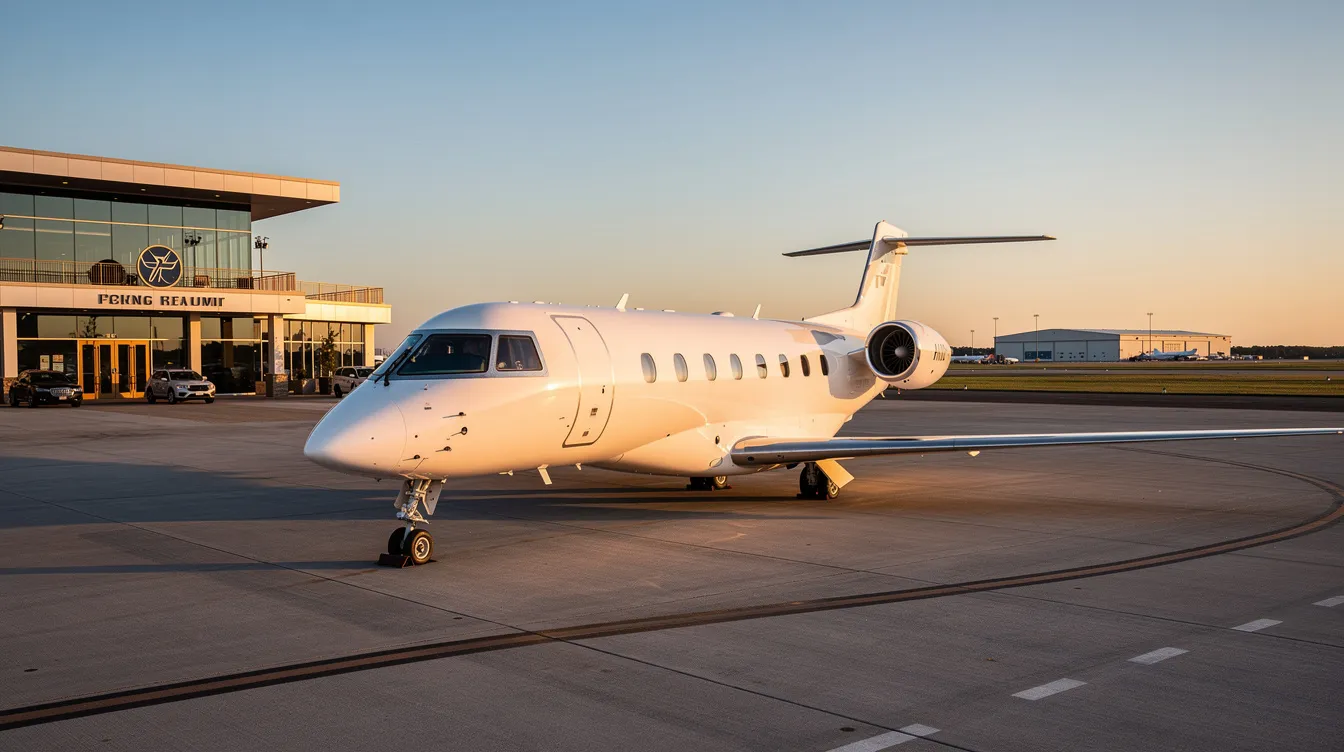
Private jet access is no longer only a symbol of luxury. For executives, founders, family offices, and discerning frequent flyers, it is a strategic advantage: time recovered, privacy protected, and schedules built around the traveler rather than scheduled airlines. This guide is intended for executives, founders, family offices, and frequent flyers considering private jet travel. This guide explains jet aircraft price in practical terms—buying, chartering, and using a jet card—so you can compare the real total cost of private aviation in 2026.
Why Jet Aircraft Prices Matter for Serious Travelers
A New York–Miami business trip can take 6–7 hours door to door on commercial first class once ground transfers, security, boarding, taxi time, and schedule gaps are included. A private jet flight from Teterboro to Opa-locka can reduce that to roughly 2.5–3 hours, saving 3–4 hours each way.
That is why jet aircraft price matters. It can mean three different numbers:
The purchase price of a private plane.
The hourly private jet charter rate.
The prepaid membership or jet card costs.
This guide is current as of May 2026 and covers landing fees, hangar fees, federal excise tax, sample routes, and the ownership math behind every private flight. BlackJet approaches private jet travel through predictable Jet Card access and premium private jet programs, carbon-neutral flights, digital booking, and safety-first operator vetting—not by asking clients to tie up capital in private jet ownership.
How Much Does a Jet Actually Cost to Buy in 2026?
Jet aircraft pricing varies significantly based on size, range, and type of aircraft. New private jets range from $2 million to over $80 million, while the price of a new private jet can range from less than $3 million to hundreds of millions of dollars,s depending on maker, size, and customization.
Very light jets can begin near $2M–$4M new, though some required-market examples place new VLJs from $3.5M to $5.7M. The Cirrus Vision Jet SF50 is often cited as one of the most affordable private jets available, with prices ranging from $1.85 million to $3.6 million depending on condition and year; current new examples are often around $3.0M.
A Cessna Citation M2 Gen2 is roughly $6M, an Embraer Phenom 300E is near $10M, a Gulfstream G600 is around $60M, and a Bombardier Global 7500 is around $78M.
Commercial airliners generally cost from $90 million to over $400 million. Airliners, the largest and most luxurious private jets, can cost upwards of $442 million for new models, while used airliners can be purchased for as little as $5 million.
Used private jets can be found for prices as low as $1 million, with many older models depreciating significantly over time.Pre-owned private jets can depreciate below $2 million, and after several years, their prices may fall under $1 million, making them an appealing choice for buyers mindful of their budget.
Many economical private jets trade between $1.5M and $8M, including the Cessna Citation Mustang, Phenom 100, older Falcon 50, and Gulfstream IVSP pre-owned models, while larger groups may instead evaluate charter plane 100 passengers cost on VIP airliners.
Since 2020, values spiked during the pandemic, tightened through the 2022–2024 supply squeeze, and normalized somewhat in 2025–2026. Still, the cheapest private jets under $2M are usually 10–30+ years old, and older jets may need avionics, engine, or compliance upgrades.
The initial purchase price is only 40–60% of a 10-year ownership period. The acquisition cost is only the baseline; ownership incurs significant ongoing operating expenses, which matter just as much as sticker price when evaluating the best and cheapest planes and other budget aircraft.
Jet Categories and Their Typical Price Ranges
Each jet category solves a different mission. Range, cabin space, runway performance, and payload drive private jet cost more than brand prestige alone.
Jet Category Definitions:
Very Light Jets (VLJs): The smallest category of private jets, typically seating between 2 and 5 passengers and designed for short regional flights.
Light Jets: Slightly larger than VLJs, accommodating up to 7 passengers and often featuring a bathroom.
Midsize Jets: Can typically fly for about five hours and offer more cabin space and storage compared to smaller jets.
Heavy Business Jets: Designed to hold at least ten passengers and include features like fully equipped kitchens.
Ultra Long-Range Heavy Jets: Can accommodate up to 17 passengers and travel distances of up to 6,500 miles, with some configurations approaching the best private jet for 20 passengers on high-capacity missions.
Turboprops: Not jets, but often the economical option for short-haul flights and a key category in any review of the best small private aircraft for different needs.
Jet Categories and Price Ranges Table: For a deeper breakdown of how these categories translate into real-world missions, see our guide to types of private jets for every traveler.
Jet Category | Typical Seats | Range (nm) | New Price Range | Used Price Range | Key Features |
|---|
Very Light Jets (VLJs) | 2–5 | 1,000–1,200 | $2M–$5.7M | $1M–$3.5M | Smallest jets, short regional flights |
Light Jets | Up to 7 | 1,200–2,000 | $5M–$10M | $1.8M–$5M | More cabin space, often with a bathroom |
Midsize & Super-Midsize | 6–9 | 2,000–3,500 | $12M–$30M | $2.1M–$12M | 5-hour flights, more storage/cabin space |
Heavy Business Jets | 10+ | 3,000–5,000 | $15M–$30M | $10M–$25M | Large cabins, full kitchens |
Ultra Long-Range Heavy Jets | Up to 17 | 5,000–6,500 | Up to $65M–$80M+ | $20M–$30M | Intercontinental, up to 17 passengers |
Turboprops | 4–8 | 800–1,500 | $4M–$9M | $1M+ | Economical, access to smaller airports |
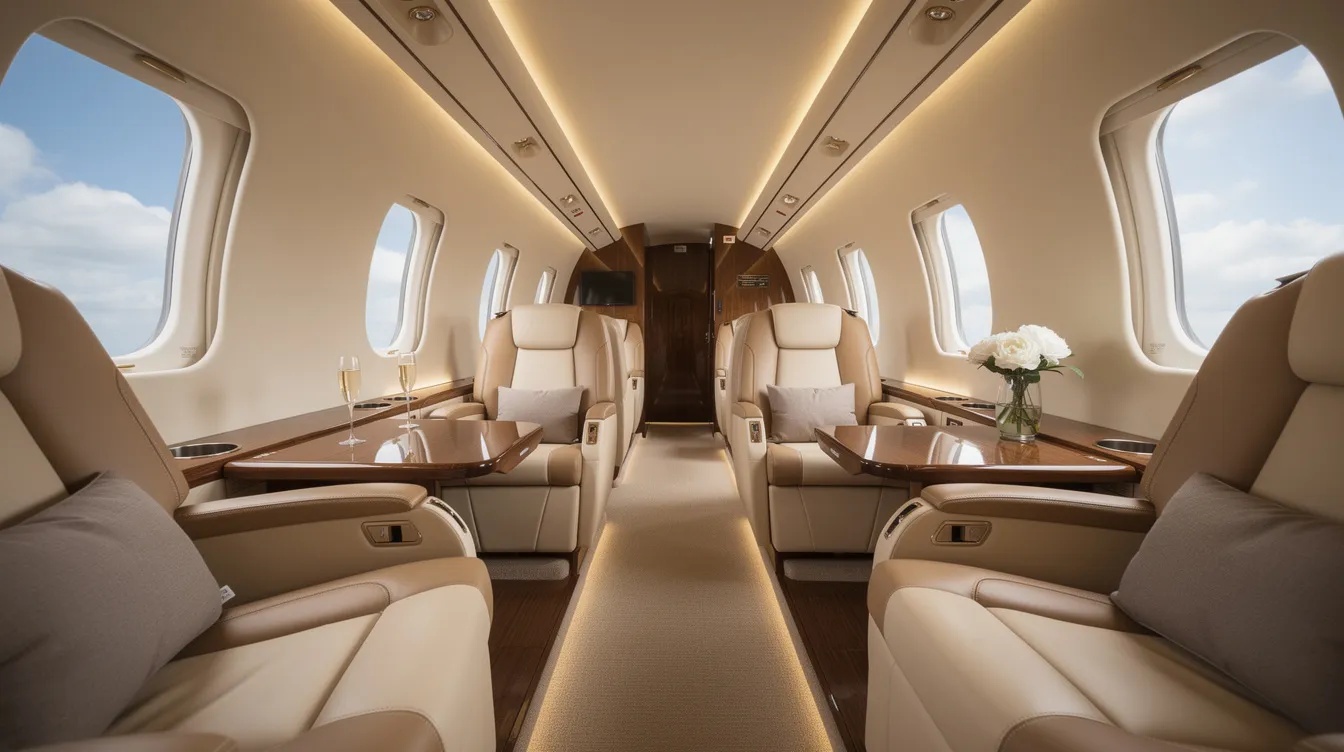
Spotlight on Popular “Affordable” Private Jets
Affordable private jets are not budget travel; they are lower price point aircraft with low fuel burn, manageable operating costs, and practical range. BlackJet clients can access many of these by the hour without becoming aircraft owners.
Popular Affordable Private Jets Table:
Aircraft Model | Typical Price (2026) | Seats | Range (nm) | Notable Features | Typical Hourly Operating Cost |
|---|
Cirrus Vision Jet SF50 | $2.8M–$3.2M | 4–5 | ~1,200 | Single-pilot, whole-aircraft parachute | $800–$1,000 |
Cessna Citation Mustang | $1.6M–$2.3M (used) | 4 | ~1,150 | Belted lav, budget-friendly | $1,000–$1,400 |
Embraer Phenom 100/100E | $2.0M–$3.5M (used) | 4–6 | 1,100–1,200 | Excellent fuel efficiency | $1,000–$1,400 |
HondaJet HA-420 / Elite | $3.5M–$5M (used) | 4–6 | ~1,200 | Over-wing engines, quiet cabin | $1,200–$1,600 |
Dassault Falcon 50 | ~$3M (used) | 9 | ~3,000 | Spacious cabin, higher annual costs | $2,500–$3,500 |
These are popular with first-time jet owners and private aviation enthusiasts, but BlackJet lets travelers access the entire aircraft without tying up $2M–$5M in one airframe, and many options feature in our overview of top affordable private planes and jets.
Beyond Purchase Price: The Real Cost to Own a Jet
Private jet ownership is a multi-million-dollar commitment over time, and it is only one line on a broader private jet price list of access options. Operating expenses include jet fuel, engine maintenance, crew salaries, and hangar storage costs.
Typical Annual Operating Costs Table:
Cost Category | Typical Range (per year or per hour) | Notes |
|---|
Fuel | $300–$700 per flight hour | Varies by jet size |
Maintenance | $50,000–$200,000 annually | Scheduled and unscheduled |
Insurance | $15,000–$60,000+ annually | Higher for larger jets |
Crew Salaries | $60,000–$220,000 per pilot | Captains: $120K–$220K; First Officers: $80K–$140K |
Hangar Fees | $1,000–$3,000 per month | Premium airports may be higher |
Variable Operating | $1,000–$8,000+ per flight hour | By jet size: VLJ/light: $1K–$2K; midsize: $3K–$5K; large: $5K–$8K+ |
Landing Fees | $150–$1,500 per landing | Major hubs higher |
Winter Hangar Fees | $500–$1,500 per day | For deicing protection |
Engine Programs | Varies (mid-six to seven figures) | JSSI, ESP Gold, RRCC for predictable reserves |
A pre-owned Mustang flown 200 flight hours per year can still cost $500K–$700K annually, before financing or depreciation, which is why many buyers look at private jets for sale under 10 million to balance acquisition price with operating costs.
What Does It Cost to Fly Private by the Hour in 2026?
Chartering a private jet removes the hassles of crowded commercial terminals and delays, offering a smoother and more convenient travel experience, especially when you understand how much it costs to charter a small plane for shorter trips. Private jet chartering allows access to a wider range of airports, with private jets able to access around 10 times more airports in the US than scheduled airlines, according to general aviation access data often discussed by the FAA.
Typical Hourly Charter Rates by Jet Type Table:
Jet Type | Hourly Charter Rate (2026) | Typical Use Case/Route Example |
|---|
Very Light Jets & Turboprops | $1,800–$3,500 | 1–4 passengers, under 800 nm |
Light Jets | $3,500–$6,000 | Citation CJ, Mustang, Phenom 300, HondaJet |
Midsize Jets | $5,000–$8,000 | NY–Dallas, LA–Chicago, London–Marrakesh |
Large & Ultra-Long-Range Jets | $8,000–$15,000+ | Gulfstream G450/G600, Global 6000/7500, Falcon 7X/8X |
Chartering a private jet typically costs between $2,000 and $14,000 per hour, depending on the size and type of aircraft, with smaller jets being more affordable—a range explored in detail in our guide on how much to rent a private jet. These rates are for the whole aircraft, not per seat, so filling 6–10 seats can compare favorably with last-minute premium tickets.
NYC–Miami may take 2.5–3 hours and cost $14K–$22K one-way on a light jet.
LA–NYC at about 5.5 hours can run $55K–$100K+ one-way on a super-midsize or heavy aircraft.
BlackJet Jet Card members receive fixed, published rates across cabin classes, helping stabilize the total cost.
Taxes and Fees That Affect Jet Aircraft Price Per Trip
The headline hourly rate is only part of the invoice. A transparent charter company should show taxes, handling, landing, and ancillary charges before departure.
Key Taxes and Fees Table:
Fee/Tax Type | Typical Amount/Rate | Notes |
|---|
Federal Excise Tax (FET) | 7.5% of charter charges + $4.50/segment | Updated periodically by the IRS |
Segment Fees & Head Taxes | $4.50/segment; $19.70 intl. head tax | $9.90 for Alaska/Hawaii |
Landing Fees | $100–$1,500 per landing | Depends on airport, weight, congestion |
Ramp/Handling/Overnight | $100–$500+ per stop; $200–$600/crew/night | FBO handling, crew overnight |
Hangar Fees (bad weather) | $500–$1,500 per night | Heated storage |
International Permits/Fees | $500–$5,000+ | Overflight, landing permits for international ops |
Surface these costs clearly before a trip is confirmed.
Hidden Costs and How to Avoid Overpaying
The difference between a headline rate and the real jet aircraft price often comes down to avoidable extras.
Common Hidden Costs:
Short leg fees: Aircraft burn heavily on takeoff and climb, so 25–40 minute sectors can carry minimums or premiums.
Aircraft positioning fees: Repositioning from a distant base can add thousands. Flexible timing or a nearby departure airport helps.
Fuel surcharges: When fuel prices move quickly, some operators add $300–$800+ per flight hour.
Deicing costs: Winter deicing may cost $1,500–$15,000, depending on aircraft size and severity.
Wi-Fi and connectivity: Some 2026 cabins still charge $2–$9/MB or several hundred dollars per leg for high-speed internet.
Cleaning and catering: Pets, heavy use, or premium menus can add $250 to $2,000+ per leg.
BlackJet’s planning team evaluates aircraft, route, and schedule options so clients can fly privately without surprise fees.
Empty Leg Flights and Other Ways to Fly Private for Less
Renting a private jet instead of buying can be a more economical choice, especially for those who fly infrequently, as it avoids the high costs associated with ownership and aligns with strategies for finding the cheapest private jet options.
Ways to Save on Private Jet Travel:
Empty leg flights: Return trips operated without passengers, providing discounts of up to 75% compared to standard charter rates.
Discounts of 30–75% are common; an LA–Las Vegas empty leg might be near $3,000 total versus $8,000+ normally.
Leg flights flexibility: Empty legs can move or cancel if the original paid trip changes, so they suit leisure weekends better than fixed board meetings.
Shared charter and per-seat products: Can price between business and first class on commercial airlines.
Jet Cards: Provide predictable “discounted” access by prepaying 25 or 50 hours, reducing repositioning exposure and peak-day premiums; many executives evaluate the 50-hour Jet Card cost and value against ownership before deciding.
Using smaller jets strategically can reduce hourly cost by 20–40% for 1–3 passengers on regional flights.
BlackJet’s technology can alert members to attractive empty legs and match each mission with the right aircraft class.
Jet Cards vs. Ownership vs. On-Demand Charter: Which Price Model Fits You?
The right model depends on annual usage, control, and tolerance for capital risk.
Comparison of Private Jet Access Models:
Full ownership: Best around 200–300+ hours per year. Private jet owners get control over configuration and branding, but absorb fixed costs, depreciation, staffing, and maintenance. Even the cheapest private jets must fly enough to justify ownership.
Fractional ownership: A 1/16 or 1/8 share provides guaranteed access, but includes capital investment and monthly management fees.
On-demand charter: Ideal under about 25–30 hours per year. It is flexible, but market-based pricing can spike.
Jet Cards like BlackJet: Best for 25–100+ hours per year. A jet card cost guide to private jet membership pricing shows how a jet card turns jet aircraft price into a known line item with fixed hourly rates, priority access, 24/7 support, and fewer surcharges.
For example, a founder flying 40–60 hours per year between San Francisco, Los Angeles, and New York may find BlackJet more predictable than on-demand and far more efficient than ownership. Safety-first standards and carbon-neutral travel are built into the rate rather than treated as extras.
Safety, Certification, and Sustainability: The Invisible Value in Jet Pricing
Not all “cheap” private jet options are equal. Serious travelers should evaluate safety, reliability, technology, and sustainability, not only the lowest sticker price.
Key Considerations:
Safety and certification: ARGUS Platinum, Wyvern Wingman, and IS-BAO standards require audits, training, and compliance. BlackJet works with vetted operators where those standards are central.
Aircraft age and maintenance: Older jets can be cheaper to buy but expensive to maintain. Strong programs such as RRCC, ESP, and JSSI reduce uncertainty.
Technology and connectivity: Modern avionics, synthetic vision, cabin Wi-Fi, and productivity tools add cost but protect business value in flight.
Sustainability: Carbon-neutral flying uses verified offsets and, where available, sustainable aviation fuel. The ICAO outlines global aviation emissions initiatives; BlackJet integrates carbon-neutral performance into its offering.
This is where cabin space, compared with safety record, maintenance status, and environmental responsibility,y becomes more important than a bare hourly quote.

Sample Trip Scenarios: What You’ll Actually Pay to Fly Private
These examples are directional, but they show how flight duration, aircraft class, and fees shape the invoice.
Scenario 1: New York (TEB) to Miami (OPF) on a light jet: 2.5–3.0 hours each way. A tightly planned round trip may estimate $18,000–$28,000 in favorable conditions, including federal excise tax, landing and handling fees, and overnight considerations; larger aircraft or peak timing can push higher.
Scenario 2: Los Angeles (VNY) to Las Vegas (LAS): 45–60 minutes each way on a very light jet or turboprop. Expect $8,000–$12,000, with short leg fees and landing charges affecting this short hop.
Scenario 3: London (LTN) to Dubai (DWC): 6.5–7 hours on a large jet. An all-in charter may range from $90,000 to $130,000 with international fees, higher fuel burn, and premium cabin crew.
Scenario 4: Founder flying 40 hours per year domestically: If ad-hoc charter averages $8,500/hour after add-ons, a BlackJet Jet Card at a fixed effective rate may save tens of thousands while improving aircraft access.
BlackJet’s booking platform surfaces aircraft choices and pricing in real time.
FAQs: Jet Aircraft Price and Smart Ways to Fly Private
What is the cheapest private jet to buy in 2026?
The Cirrus Vision Jet SF50 is among the most affordable private jets, while older VLJs such as the Eclipse 500 aircraft may fall below $1M. Trade-offs include range, payload, avionics, support network, and cabin space.
Is it cheaper to own or charter a jet?
Charter is often cheaper under 150–200 hours per year. Jet Cards are usually strongest in the 25–100-hour range, and frequent flyers can compare the best jet cards for benefits and costs to match their patterns. Ownership becomes logical only with sustained high usage and appetite for asset risk.
What is the most economical option to fly private occasionally?
On-demand charter on VLJs or turboprops, opportunistic empty leg flights, and per-seat products are usually most economical for occasional private travel.
How do landing fees and hangar fees affect my trip price?
Landing fees are based on aircraft weight and airport policy. Hangar fees appear when storage is needed, especially during winter. Both can be itemized or included in an all-in quote.
Can I really fly private for under $5,000?
Yes, but usually only for short empty leg flights, off-peak turboprop sectors, or shared cost trips. It is possible, but not the norm, for guaranteed scheduling.
How predictable is pricing with a Jet Card vs. an ad-hoc charter?
A Jet Card provides fixed rates, defined service inclusions, and fewer surprise fuel surcharges or positioning fees, and a clear view of jet card pricing, costs, and benefits helps set expectations upfront. BlackJet’s model is built for predictable private jet access.
Are empty leg flights worth it?
They can be excellent for flexible leisure travel because discounts are deep. They are less ideal when timing, airports, or cancellation risk cannot be moved.
BlackJet: A Smarter Way to Access Jet Aircraft Without Owning
BlackJet gives clients structured, carbon-neutral access to multiple cabin classes, from very light jets to midsize jets and large jets, without tying millions into one asset.
Every journey is supported by rigorous operator vetting, transparent pricing, 24/7 real-time support, and mobile booking tools. Taxes, landing fees, and ancillary charges are clarified before you fly.
BlackJet also helps choose the right aircraft for each mission, balancing jet aircraft price with comfort, productivity, range, and safety.
Discover how BlackJet’s 25+ Hour Jet Card can turn private aviation from a fixed cost into a flexible advantage—explore membership options and estimate your hourly rates today.
Conclusion: Elevate Your Travel with Informed Jet Aircraft Investment
Understanding jet aircraft price is essential for discerning travelers who seek more than luxury—they demand strategic value, safety, and sustainability in private aviation. Whether considering ownership, charter, or jet card access, the total cost picture includes acquisition, ongoing costs, taxes, and fees. The right choice depends on your travel frequency, mission profiles, and preference for control versus convenience.
BlackJet redefines private jet access by offering transparent pricing, carbon-neutral flights, and seamless booking across a range of aircraft classes. This approach empowers executives, founders, and families to leverage private aviation as a productivity tool rather than a financial burden.
Explore BlackJet’s Jet Card programs today and discover how effortless, responsible, and flexible private flight can transform your travel experience—without the complexity of ownership or surprise costs. Elevate your journey with confidence, knowing every detail is optimized for your success and peace of mind.


 Sign up with google
 Sign up with Apple