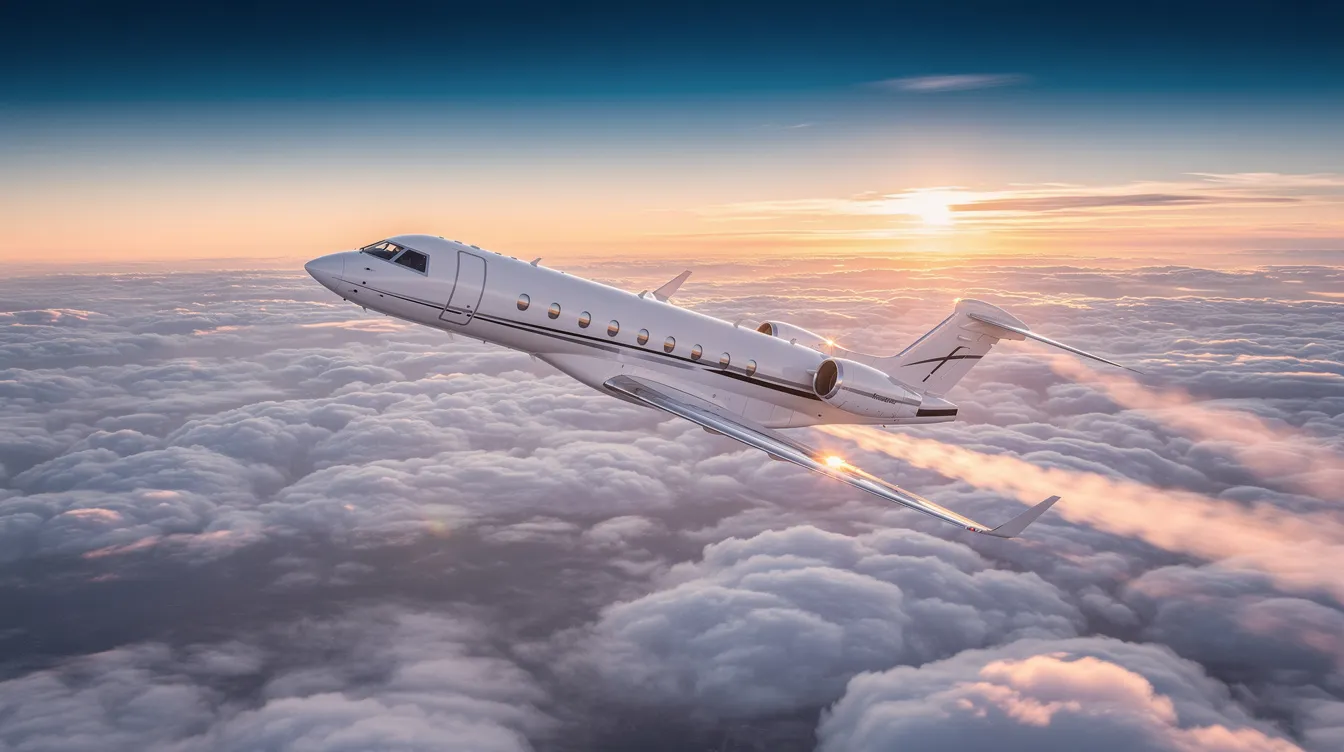
Private jet access is not just a luxury; it is a strategic advantage when time, privacy, and certainty matter, and jet propulsion is what makes that advantage possible. Jet propulsion gives a modern jet the high speed, range, and climb performance that corporate and high-net-worth travelers expect. Commercial airliners typically cruise around Mach 0.78–0.85, while many business aircraft cruise near Mach 0.80–0.90; ranges vary from roughly 1,000–1,500 nautical miles for very light jets to 6,000–8,000+ nautical miles for ultra-long-range aircraft. With BlackJet, members access turbofan-powered aircraft through premium private jet Jet Card programs, supported by safety oversight, carbon-neutral flights, digital booking, and real-time flight support. This guide explains the fundamentals of jet propulsion, its impact on private aviation, and what travelers should know when choosing a jet, making it ideal for business travelers, aviation enthusiasts, and anyone interested in private jet technology.
Why Jet Propulsion Matters for Modern Private Aviation
Jet propulsion shapes nearly every part of the private aviation experience: faster block times, quieter cabins, higher cruising altitudes, and more direct missions. A New York–Miami trip of about 1,090 nm can avoid commercial security lines and hub congestion, while London–Geneva can become a same-day business movement rather than a full travel day, though those time savings still rely on thrust being efficiently generated by the engines. Understanding the propulsion system matters because reliability, thrust, fuel burn, cabin comfort, and runway performance determine whether an airplane can operate the route you want, when you want it.
Trip | Commercial experience | Private jet experience |
|---|
New York–Miami | Flight plus airport friction | Direct airport access, faster boarding |
London–Geneva | Schedule-dependent | Flexible departure, shorter ground time |
The Physics of Jet Propulsion
Jet propulsion is the process of generating thrust by expelling mass in the opposite direction, applying Newton's third law of motion, and different types of jet engines apply this principle in distinct ways. Jet propulsion applies Newton's third law of motion: when mass is accelerated in one direction, the aircraft receives a push in the opposite direction. Air-breathing jet engines draw in and accelerate atmospheric air; jet engines accelerate a large amount of air backwards to create thrust, using air as the working fluid. Jet engines operate on the principle of intake, compression, combustion, and exhaust, and the Brayton cycle is used by air-breathing jet engines. In simple terms, jet engines convert ambient air into hot, high-pressure gas, then expand that gas through turbines and a nozzle to produce motion.
Key concepts:
Mass flow rate: how much air passes through the engine per unit of time.
Velocity: exhaust speed relative to the airplane.
Pressure and temperature: raised by compressors before combustion.
Thrust: often 3,000–9,000 lbf per engine in midsize and super-midsize business jets.
Turboprops efficiently drive a traditional propeller at lower speeds, while turbofan engines are optimized for higher altitude cruising and better efficiency.
Nature uses the same principle in surprising ways. Cephalopods like squid employ jet propulsion for rapid escape. Sea hares use jet propulsion but navigate more clumsily. Some teleost fish use jet propulsion to supplement movement from their fins. Dragonfly larvae achieve jet propulsion by expelling water through the anus. Salps are the most efficient jet-propelled organisms.
Types of Jet Engines Relevant to Private Jets
“Jet engines” is a broad category, but private jets rely almost entirely on turbofan engines today, and different types of private jets use these engines to balance range, cabin size, and operating cost. Turbofans are the most common type of jet engine in modern commercial aviation as well, because they balance range, noise, fuel efficiency, and performance.
Turbojets: early pure-jet designs used in older airliners, fighters, and missiles; fast, noisy, and fuel-hungry. Turbojets and turbofans use axial-flow compressors.
Turbofan engines: use a large fan and bypass air; the fan in a turbofan engine pulls in atmospheric air, and most of the thrust in turbofan engines comes from the bypass air.
Noise control: mixing high-speed exhaust with lower-speed bypass air reduces noise from turbofans.
Examples: Williams FJ44 engines for light jets, Pratt & Whitney Canada PW300-series engines for midsize aircraft, and Rolls-Royce BR710/725-class engines for large-cabin missions—typical powerplants found on many of the best small private aircraft used for personal and business travel.
Other mechanisms: ramjets operate only at high flight speeds; scramjets combust air at supersonic speeds for hypersonic flight; pulse jets can generate static thrust without compressors; rockets carry their own oxidizer and fuel, enabling operation in space.
Electric and plasma: electric propulsion systems use electric power to accelerate ions for thrust, while plasma thrusters accelerate plasma using electromagnetic means; these are more relevant to spacecraft exploration than private aviation today.
Factor | Turbojet | Turbofan |
|---|
Noise | High | Lower |
Fuel burn | Higher | Lower |
Private use | Mostly historical | Standard |
Comfort | Less refined | Quieter, smoother |
Inside Turbofan Engines: How Your Private Jet’s Propulsion System Works
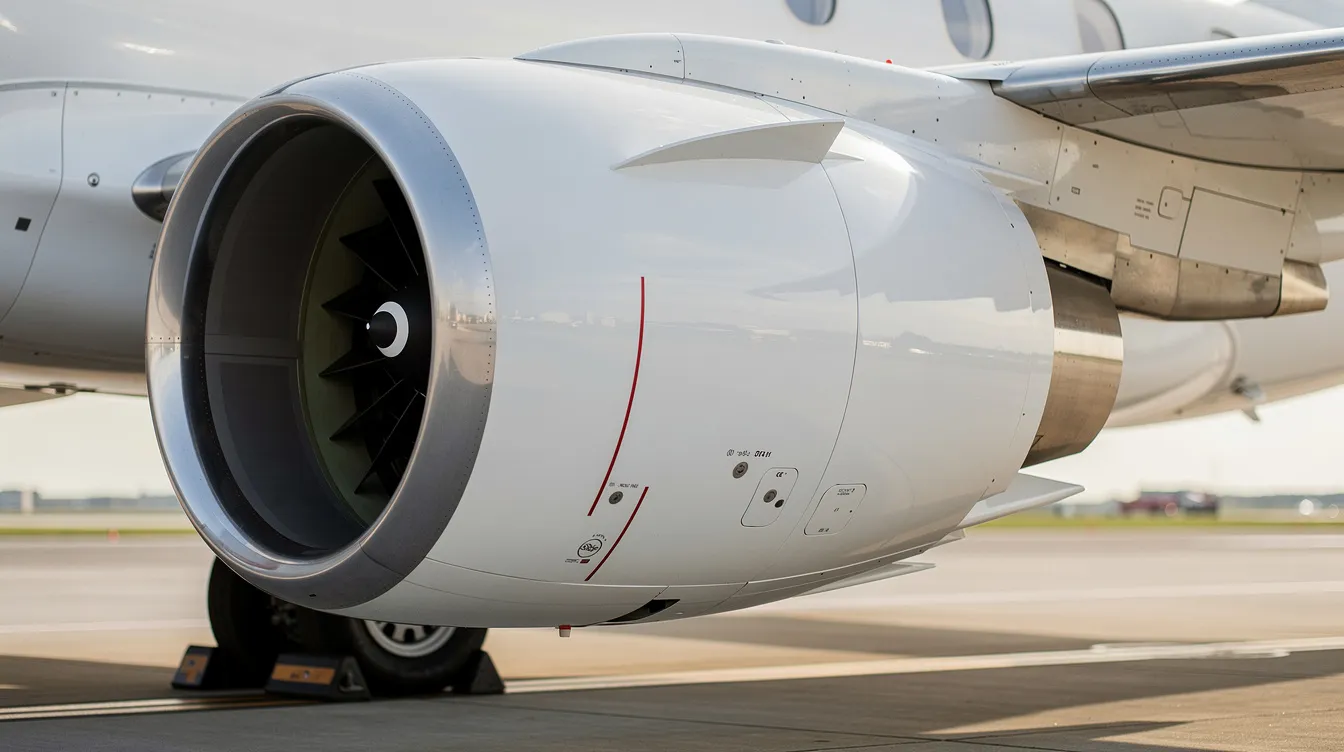
A turbofan follows a compact method: intake, compression, combustion, turbines, exhaust, plus bypass flow. The intake guides air into the fan. Compressors raise pressure. Fuel is added for combustion. The engine's turbine section extracts energy to drive the fan and compressors. Exhaust then leaves the rear, while bypass air flows around the core.
Most useful thrust in larger turbofan engines is produced by fan-driven bypass air, not only by the hot core. This improves efficiency and lowers cabin and airport noise. The result is smoother acceleration, strong climb, and cruising often between FL410 and FL470, above much weather and traffic. FADEC systems manage fuel flow, temperature limits, and engine response, while dual-engine redundancy supports safety from takeoff through landing.
Jet Propulsion and Aircraft Categories in Private Aviation
BlackJet Jet Card members choose aircraft by mission, not by guessing engine data, and understanding private jet sizes and categories helps align propulsion, range, and cabin with each trip. Typical categories include:
Light jets: twin turbofans, about 2,000–5,000 lbf each, 1,500–2,500 nm range; ideal for Los Angeles–Aspen or London–Ibiza and often among the most affordable private aircraft options for shorter missions.
Midsize and super-midsize jets: often 6,000–10,000 lbf each, Mach 0.80–0.85, 2,500–4,500 nm; suited to New York–Dallas or U.S. coast-to-coast missions and commonly featured in 50-hour Jet Card cost guides because of their versatility for frequent flyers.
Large-cabin and ultra-long-range jets: 12,000–20,000+ lbf each, 4,000–8,000+ nm; built for New York–London or longer intercontinental travel and represented prominently among the top private jets in the world for luxury and performance.
Lower weight and smaller engines can improve runway access and operating costs. Higher thrust and larger fuel capacity raise range, payload, and nonstop effectiveness, all of which feed directly into any private jet price list and cost comparison when you evaluate aircraft options.
Efficiency, Sustainability, and the Future of Jet Propulsion
Sustainable Aviation Fuel (SAF)
Since the 1970s, engine development has improved through higher bypass ratios, better materials, digital controls, and hotter turbine capability, while new platforms and access models have opened cheaper private jet options for travelers who prioritize efficiency and budget. Sustainable aviation fuel is a drop-in liquid fuel for today’s engines; depending on the pathway, SAF can reduce lifecycle CO₂ by up to about 80%, according to IATA. BlackJet keeps every journey carbon neutral through offsets, SAF where available, route optimization, and efficient fleet selection, all wrapped into predictable Jet Card membership pricing structures for frequent travelers.
Future Propulsion Technologies
Future propulsion will include ultra-high-bypass geared turbofans, hybrid-electric assist, and experimental hydrogen concepts, but widespread long-range use is more likely late 2030s or beyond—a timeline that overlaps with how 20-million-dollar private jets and their features are evolving for ultra-long-range travel. For the next two decades, refined turbofan propulsion running Jet A and growing SAF blends will remain the core of private aviation.
Safety, Certification, and Reliability of Jet Engines in Private Travel
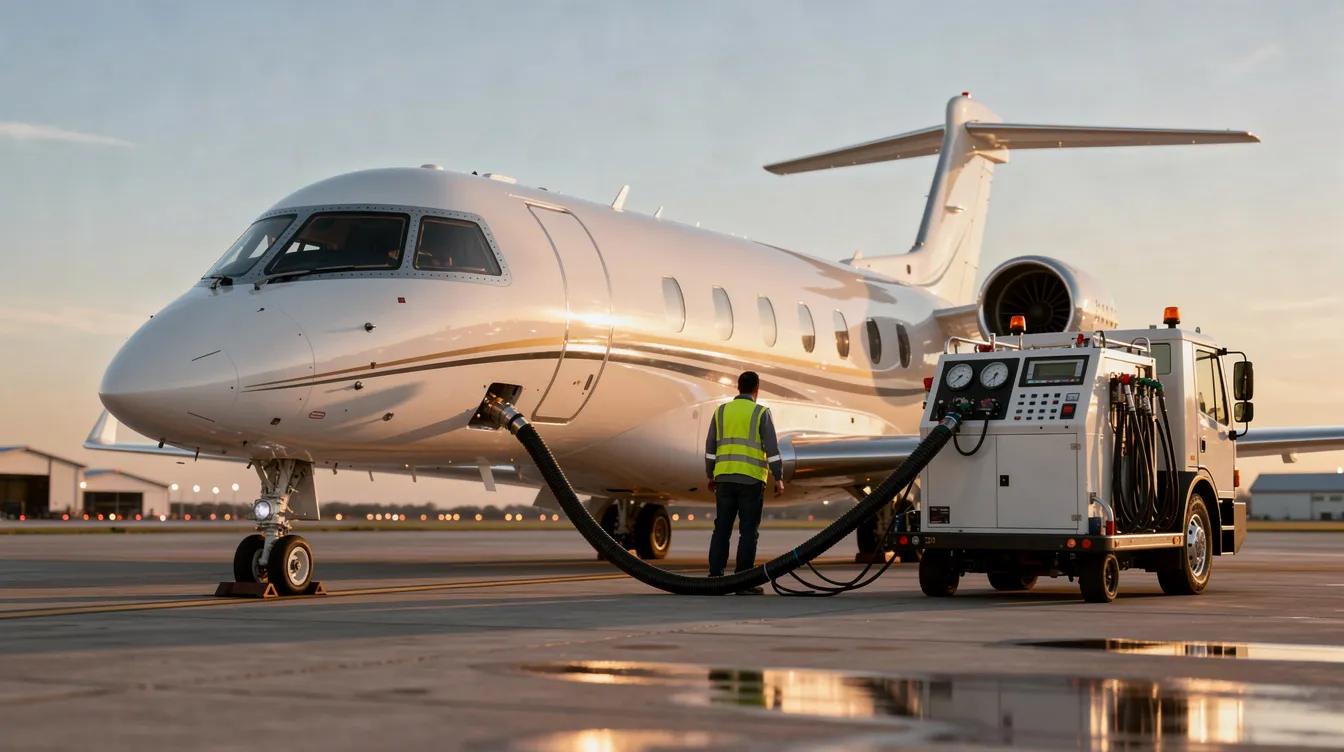
Propulsion reliability is central to security and confidence. Engines must pass certification regimes such as FAA Part 33 and EASA CS-E, covering design, endurance, materials, control systems, and operating limits. Time between overhauls, vibration analysis, exhaust gas temperature tracking, oil analysis, and borescope inspections protects engine life, just as thoughtful planning around aircraft type and mission profile informs how much it costs to rent a private jet for a given trip.
BlackJet partners with operators that meet or exceed ARGUS, Wyvern, or IS-BAO-level standards, similar to the rigorous oversight highlighted when comparing the best Jet Cards for frequent flyers across the market. We review maintenance programs, service bulletins, cycles, and diagnostics so members do not have to. A brief security analogy: just as a security service page handles security verification, verifies a user, blocks malicious bots, labels a bot, may respond ray id, and shows verification successful to protect access, aviation safety depends on layered checks, data, and documented controls.
Traveler Checklist
Ask about engine make, hours, cycles, and overhaul status.
Confirm operator audits and safety ratings.
Confirm FADEC, diagnostics, and maintenance documentation.
How Jet Propulsion Shapes the BlackJet Experience
For a C-level executive using a 25+ hour BlackJet Jet Card, New York–London becomes a controlled, nonstop mission in a large-cabin aircraft cruising near Mach 0.85 at about 45,000 ft. The route is roughly 3,500 nm, often flown in about 6.5–7 hours airborne, with privacy, schedule control, and fewer interruptions.
For a family flying from Los Angeles to Sun Valley, a light jet’s twin turbofans deliver fast climb, short-runway utility, and a quiet cabin for a weekend escape, making it one of the best small private aircraft choices and among the cheapest private aircraft solutions for short leisure trips. BlackJet’s platform evaluates range, fuel burn, takeoff performance, runway length, and weather in real time, then presents suitable aircraft options. Members see effortless travel; behind the scenes, propulsion expertise is doing complex work.
Frequently Asked Questions About Jet Propulsion and Private Jets
What is the difference between a jet engine and a turbofan engine in private jets?
A jet engine is the broad class; a turbofan is the dominant modern form used in business aviation because bypass air improves efficiency and comfort.
How do turbofan engines affect cabin noise and comfort?
Larger bypass flows reduce exhaust velocity and noise, while smoother turbines and insulation improve the cabin experience.
Do private jets use the same fuel as commercial airliners?
Yes, most use Jet A or Jet A-1, with SAF blends available at selected airports.
Can private jets run on sustainable aviation fuel?
Yes, certified SAF blends can operate in existing engines without redesign.
How does BlackJet make flights carbon-neutral if engines still burn fuel?
We use verified offsets, SAF where available, efficient routing, and carefully selected aircraft.
How often are private jet engines inspected or overhauled?
Inspections occur by calendar time, flight hours, and cycles; overhaul limits are set by the manufacturer and regulator.
Is there a propulsion difference between on-demand charter and a Jet Card?
The engines may be similar, but BlackJet adds fleet oversight, booking technology, and consistent standards, which can be compared to other providers when reviewing NetJets Jet Card cost and structure.
Elevate Your Travel with High Speed Jet-Propelled Performance
From squid in Earth’s oceans to rockets passing toward Jupiter and Saturn, the quest to produce controlled propulsion has shaped life, science, and exploration, just as selecting the best private jet for 15 passengers shapes how larger groups experience that power. At the NASA Jet Propulsion Laboratory, often called JPL, the JPL campus has advanced robotics, space missions, and spacecraft systems; an instance of that same engineering interest helps explain why private aircraft propulsion remains so precise, powerful, and refined when designing the best private jet for 20 passengers and other large-cabin aircraft.
BlackJet brings that performance mindset to private travel: premium Jet Card access, carbon-neutral operation, 24/7 support, and multiple cabin classes—from light jets to aircraft capable of serving as the best private jet for 50 passengers—powered by leading-edge propulsion systems developed for reliability across all types of private jets. Join BlackJet’s Jet Card program to experience jet propulsion at its most refined and reliable, whether you’re booking a short hop or arranging private jet charters in Karachi for complex international itineraries.


 Sign up with google
 Sign up with Apple