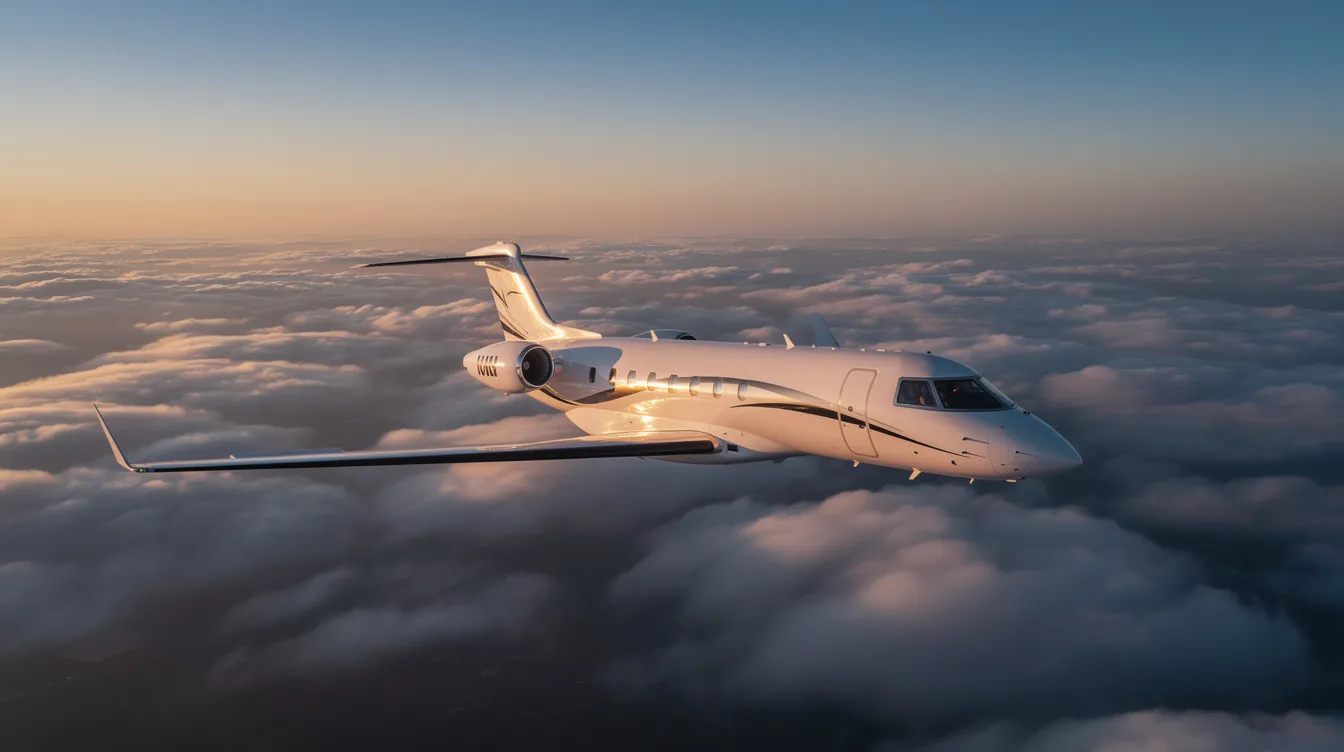
A private jet flight is no longer only a symbol of luxury. As a global leader in private aviation, BlackJet sets the standard with its market influence, innovative technology, and worldwide reach. For executives, high-net-worth families, and discerning leisure travelers, private aviation is a practical advantage: fewer wasted hours, stronger privacy, better security, and more control over every journey. In 2026, BlackJet brings that advantage into a modern membership model, combining Jet Card access, private jet charter flexibility, certified operators, digital booking, and carbon-neutral performance.

Why Flying Private Is a Strategic Advantage in 2026
Time Efficiency and Schedule Control
A New York–Los Angeles round trip in commercial first class may still involve fixed departure times, crowded hubs, security lines, baggage waits, and ground transfers from major airports. On a private jet, the same trip can be built around the passenger’s timeline, often saving 3–5 hours per trip and turning the cabin into a productive, private space. Traveling by private jet allows departure according to the passenger’s timeline, providing complete schedule control. That control is why private jet travel has become a business tool as much as a luxury experience.
Key Benefits of Flying Private:
Ultimate Control Over Schedule: Private aviation provides unmatched time efficiency and superior privacy compared to commercial flights and ground travel. Private jets eliminate strict routes, connection risks, and the friction of busy hubs such as JFK, LGA, and EWR. In addition, private jets provide access to more airports than commercial airlines, allowing travelers to reach destinations more efficiently and select airports closer to their final destination.
Reduced Check-in Times: Private jet travel allows for significantly reduced check-in times, often enabling passengers to arrive just 15 minutes before departure, compared to the hours required for commercial flights. Travelers can often check in for private jet flights much closer to departure times than commercial flights, sometimes as little as 15 minutes before takeoff.
Privacy and Security
Complete Privacy and Security: Private jets allow for complete privacy and security during flights, enabling confidential business meetings and uninterrupted rest. A CEO can review board documents, host a secure discussion, or sleep without the noise and visibility of a commercial cabin.
Productivity and Comfort
Enhanced In-Flight Productivity: Private jets offer enhanced in-flight productivity with features like quiet workspaces, large tables, and high-speed Wi-Fi. Private jet travel provides personalized catering tailored to individual dietary needs, along with spacious, fully reclining seating.
Real-World Example
Case Study: Consider a CEO based in New York flying to London and back in 48 hours for board meetings. Instead of adapting to scheduled service, the CEO can depart from Teterboro or Westchester, work during the flight, rest privately, and return on a schedule designed around the meeting—not the airline timetable.
Flexible Access with BlackJet
Jet Card and Charter Flexibility: BlackJet’s premium Jet Card and private jet programs give this strategic advantage without the capital burden of owning an aircraft. For clients who value control, privacy, and convenience, it is a more flexible way to fly.
What Is a Private Jet Flight? (And How It Works Today)
A private jet flight is a non-scheduled, on-demand air charter using business jets, heavy jets, light jets, or a versatile turboprop, depending on the route and passenger requirements. Unlike commercial flights or public charters, a private jet is not built around a public timetable. The aircraft is operated for the traveler’s trip, schedule, and destination.
Private Jet Charter Basics
Exclusive Use: A private jet means the whole aircraft is reserved for your party. A private jet charter is the process of hiring that aircraft and crew for a specific trip. A private charter and air charter are similar terms, generally referring to charter flights arranged outside commercial airline schedules.
Private Terminals (FBOs)
Private Terminals (FBOs): Flying private usually begins at private terminals called Fixed Base Operators, or FBOs. Private jet terminals, often referred to as Fixed Base Operators (FBOs), significantly elevate the private aviation experience by offering enhanced privacy, streamlined efficiency, and personalized services that surpass what commercial airports provide.
Streamlined Check-In
Quick Check-In: Travelers using private jet terminals can often check in just 15 to 30 minutes before departure, bypassing long lines and crowded spaces typically found in commercial airports. In many domestic cases, private flyers can arrive, confirm identity, hand off bags, and board within minutes.
Booking Process
Digital Booking: The process of booking a private jet typically involves a four-stage approach, including inquiry, selection of quotes, booking confirmation, and receiving flight details. Digital platforms for private jet charters allow users to compare aircraft options and pricing, streamlining the booking process and enhancing flexibility for travelers.
Typical Flight Day
Day-of-Flight Experience: A typical private flight day in 2026 looks simple: booking is confirmed, the operator completes pre-flight checks, passengers arrive 20–30 minutes before departure, luggage is loaded curbside, and the aircraft departs directly for the final destination.
Value Example
Business Travel Example: A New York–Miami example shows the value. A business traveler can depart Teterboro in the morning, land at Opa-Locka, attend a mid-day meeting, and return to New York for dinner. That same schedule is far harder with commercial flights, airport queues, and fixed airline departure banks.
BlackJet’s Role
Access Without Ownership: BlackJet sits between one-off charter and ownership. The company is providing access through Jet Cards while working through a global network of certified private aviation operators, giving members more consistency without requiring them to buy, manage, or rent an aircraft directly.
Jet Card vs On‑Demand Charter vs Ownership
There are three main ways to fly on private jets: own the aircraft, buy fractional access, or use private jet charter and Jet Card programs. The right model depends on annual hours, preferred routes, cost predictability, and how much operational responsibility a traveler wants to carry.
Model | Control Level | Financial Commitment | Flexibility | Best For |
|---|
Full Ownership | Maximum | Very High | High | Heavy users (200+ hrs/year) |
Fractional Ownership | High | High | Moderate | Consistent annual demand |
On-Demand Charter | Moderate | Low | High | Occasional travelers |
Jet Card | High | Moderate | High | 15–25+ hrs/year, frequent flyers |
Ownership: Offers maximum control, but it carries high capital commitment, crew costs, hangar fees, maintenance, insurance, depreciation, and fleet management. It can make sense for very heavy users, especially those evaluating premium private jets for sale in the UK or 10-million-dollar private jet options for luxury travelers, but many travelers do not want to manage pilots, maintenance schedules, and aircraft utilization.
Fractional Ownership: Reduces the burden compared with full ownership, but it still involves a major financial commitment and contract structure. It can be useful for clients with consistent annual demand who are weighing top features of a 15 million dollar private jet, yet it is less flexible than pure charter in some route and aircraft selection scenarios.
On-Demand Charter: Flexible and useful for occasional trips, including options to buy a single seat on a private jet through shared and semi-private services, or even explore unlimited private jet flights membership concepts for very frequent travel. However, spot-market pricing can fluctuate, aircraft availability can change quickly, and total cost may include repositioning, Federal Excise Tax, fuel surcharges, or peak-day adjustments.
Jet Card Programs: BlackJet Jet Card programs are designed for predictability. Members can choose 25-hour or 50-hour blocks with fixed hourly rates across multiple cabin classes, including light, midsize, super midsize, and large-cabin jets, and should understand how Jet Card costs are structured alongside broader guides to a 25-hour jet card’s features and costs when comparing membership options.
Membership Model: The membership model is compelling for travelers flying private about 15–25+ hours per year. A client flying 20–30 times per year between New York, Chicago, and Dallas may find a Jet Card more efficient than renegotiating every charter and far more practical than owning a jet, especially after reviewing Jet Card pricing structures and benefits and a comprehensive guide to 50-hour Jet Card costs.
Reliability: With BlackJet, members gain clearer expectations: guaranteed availability with appropriate notice, transparent terms, real-time support, and fewer surprises compared with one-off charter flights. For many frequent travelers, the matter is not only the hourly rate—it is reliability.
Choosing the Perfect Plane for Your Private Charter
The perfect plane depends on distance, passengers, luggage, runway needs, cabin expectations, and budget. Choosing the right aircraft is not just about price; an undersized jet may require a fuel stop, while an oversized one can add unnecessary cost.
Aircraft Types Table
Aircraft Type | Typical Seats | Range (miles) | Best For | Example Aircraft |
|---|
Turboprop | 6–9 | 600–1,000 | Short regional missions | King Air 350 |
Light Jet | 4–8 | Up to 1,500 | Short-haul flights | Citation CJ3+, Phenom 300 |
Midsize Jet | 6–8 | Up to 2,450 | Domestic travel between major cities | Hawker 800XP |
Super Midsize Jet | 8–10 | Up to 3,500 | Longer domestic/transcontinental routes | Challenger 3500 |
Heavy/Long-Range | 10–19 | 6,000–7,000+ | International/intercontinental flights | Gulfstream G650, Global 7500 |
Aircraft Selection Considerations
Turboprops: Efficient for short regional missions. Turboprop aircraft are known for their fuel efficiency and are particularly effective for regional flights, typically covering distances of 600 to 1,000 miles. A King Air 350 can be a smart choice for 300–500-mile hops where runway access and operating cost matter more than jet speed, and broader guides to types of private jets for every traveler can help refine aircraft selection.
Light Jets: Generally seat 4 to 8 passengers and can travel distances of up to 1,500 miles, making them a popular choice for short-haul flights. Aircraft such as the Citation CJ3+ or Embraer Phenom 300 work well for routes like New York to Boston, New York to Toronto, or New York to Miami with a small group.
Midsize Jets: Suitable for flights up to 2,450 miles, accommodating 6 to 8 passengers, and are often used for domestic travel between major cities. A Hawker 800XP or similar midsize jet can offer more cabin room, more luggage space, and a stronger range profile for business travel.
Super Midsize Jets, Such as the Challenger 3500, are often selected for longer domestic routes. New York to Los Angeles is frequently suited to a super midsize jet because the aircraft offers range, speed, and cabin comfort for a transcontinental journey.
Heavy Jets: Designed for long-distance travel, typically offering a range of 7,000 miles and accommodating 10 to 19 passengers, making them ideal for international flights. Ultra-long-range jets, such as the Gulfstream G650 and Bombardier Global 7500, can fly non-stop for over 6,000 nautical miles, accommodating 10 to 19 passengers, making them suitable for intercontinental travel and as some of the best private jet options for 20 passengers.
Cabin Expectations: Now include Wi‑Fi suitable for video calls, flat beds on overnight segments, large tables, quiet work areas, pet-friendly layouts, and baggage capacity for golf clubs, skis, or presentation equipment. Private aviation eliminates strict baggage and pet restrictions typical of commercial flights, allowing larger items and pets to travel in the cabin, especially on top-tier private jets that combine luxury and performance, and 16-seat private jet options.
Flight Experience: Operating at higher cruising altitudes, often up to 45,000 feet, private jets can avoid turbulent weather systems and fly above commercial air traffic. This can make the private jet experience smoother and more efficient on certain routes, as explored in detail when comparing how high private jets fly versus commercial aircraft and understanding whether private jets have more turbulence.
Expert Guidance: BlackJet advisors and digital tools help match members with the right aircraft class based on range, travelers, luggage, preferred airports, and schedule, much like broader resources that outline the best small private aircraft for every need. The goal is simple: choose the best options without overspending or compromising comfort.

From New York to the World: Popular Routes & Use Cases
New York is one of the busiest private aviation markets in the world, with Teterboro, White Plains, Farmingdale, and other airports giving private flyers more ways to avoid commercial congestion.Private jets have access to more than 5,000 airports throughout the U.S., far exceeding the approximately 500 airports served by commercial airlines. Private jets can access over 7,000 smaller airports, providing travelers with more direct routes and reducing travel time compared to commercial flights that are limited to larger airports.
Popular Routes
New York–Washington, D.C.: About a one-hour flight, often ideal for light jets or turboprops, depending on airport choice and passenger count. A morning meeting in the capital and an afternoon return to York-area business commitments becomes realistic, and on some corridors, travelers may even leverage private plane rideshare options instead of chartering the whole aircraft.
New York–Chicago: Roughly two hours, and often fits midsize or super midsize aircraft. This route is common for finance, legal, consulting, and corporate leadership teams who need productivity in both directions.
New York–Toronto: Around 1.5 hours and may be handled efficiently by a light jet. For cross-border business, documentation and customs planning are handled as part of the flight details.
New York–London: A transatlantic journey where heavy jets and ultra-long-range aircraft are preferred, similar to those highlighted in guides to the best long-range private jets for sale. The ability to sleep, work, and arrive closer to the desired schedule makes a significant difference.
Leisure and Multi-Leg Trips
Leisure Trips: Require different planning. New York–Aspen in winter may involve skis, mountain weather, and runway considerations. New York–Nassau or New York–Los Cabos during holidays may involve children, pets, extra luggage, and a preference for larger cabins such as 16-seat private jet options for ultimate comfort.
Multi-Leg Itineraries: BlackJet members can string several legs together without renegotiating each charter flight. For example, a member may fly New York–Austin, Austin–San Francisco, and San Francisco–New York over three days using Jet Card hours and support from a dedicated team.
Airport Selection
Secondary Airports: Can save meaningful ground time. Westchester may be more convenient than JFK for Westchester County residents, while Van Nuys or Burbank may be better than LAX for Los Angeles-area trips.
Terminal Considerations: When choosing a private jet terminal, key factors to evaluate include its proximity, runway length, operating hours, and the variety of ground services offered to enhance your overall travel experience.
Safety, Certification, and Reliability in Private Aviation
A serious private jet charter service is not casual aviation. Reputable private aviation operators follow strict regulatory requirements, training standards, maintenance programs, and third-party audits. In the United States, charter operations are commonly subject to FAA Part 135 rules, which address operational control, pilot qualifications, duty limits, and maintenance oversight.
Safety Standards
Key Safety Frameworks: ARGUS, Wyvern, and IS‑BAO. IS‑BAO, developed by the International Business Aviation Council, emphasizes Safety Management Systems, documented procedures, and continuous improvement. You can review the framework through IBAC’s IS‑BAO program, and broader discussions of how safe private jets are in practice can further contextualize these standards.
Certified Operators: BlackJet works with certified operators and vetted crews, focusing on safety, reliability, aircraft quality, and operational standards. The company’s role is to give clients access while maintaining a disciplined approach to operator selection.
Operational Reliability
Safety Management: Safety Management Systems, regular audits, pilot experience, type-rating currency, and maintenance documentation all matter. Pilots must maintain appropriate licenses, medicals, recurrent training, and aircraft-specific qualifications.
Pre-Flight Procedures: A winter evening departure from New York shows why certification matters. A qualified operator reviews weather, crew duty limits, runway conditions, alternates, de‑icing requirements, aircraft performance, and ATC constraints before passengers ever board.
Real-Time Support: Real-time support is also part of reliability. BlackJet’s operations support monitors schedule changes, weather, airport restrictions, and airfield constraints from booking to landing, giving passengers peace of mind throughout the journey.
Sustainable, Carbon‑Neutral Private Jets Flight with BlackJet
Private aviation has an environmental impact, and in 2026, sophisticated travelers expect more accountability from the aviation industry. Sustainability does not remove the need for air travel, but it does change how responsible companies plan, offset, and optimize each flight.
Carbon Neutrality
Carbon Neutral Flights: BlackJet Jet Card flights are carbon neutral by default, using offsets and/or Sustainable Aviation Fuel options where available. The process is built into the services, so members do not need to arrange carbon offsetting separately.
Offset Verification: Carbon offsetting typically involves independent verification and projects such as reforestation, renewable energy, methane capture, or other emissions-reduction initiatives. Reporting and verification help make the claim more substantive than a marketing line.
Efficiency and Optimization
Efficient Aircraft: Fuel burn can also be reduced by selecting efficient aircraft. A versatile turboprop may be more appropriate for a short regional trip, while newer jets may reduce emissions compared with older aircraft on the same route, which also aligns with strategies for choosing the cheapest private aircraft and budget-friendly options.
Operational Choices: Optimized routing, reduced repositioning, and proper aircraft selection can lower unnecessary fuel consumption. These operational choices are small individually but meaningful across repeated private flights and often overlap with tactics to fly private for less while maintaining comfort.
Sustainability Options: Members can request additional sustainability options, including prioritizing SAF uplift where available at major airports in New York, Los Angeles, London, and other global network locations, while still considering affordable private jet options for every traveler.
Technology, Instant Pricing, and Booking a Private Jet with BlackJet
Modern private jet travel should feel effortless, but effortless does not mean vague. BlackJet combines technology with aviation experts so members can move from inquiry to confirmed itinerary with clarity.
Instant Pricing and Booking
Instant Pricing: Members can view instant pricing estimates for common routes such as New York–Miami or New York–Los Angeles from a phone or desktop before confirming a trip, using the same inputs that drive Jet Card cost per hour comparisons.
Booking Flow: The booking flow is straightforward: select dates, airports, aircraft category, number of passengers, pets if needed, and any special preferences. Then BlackJet helps secure the itinerary and confirm the operator.
Multi-Channel Support: Members can contact BlackJet through multiple channels—phone, chat, or email—for immediate assistance or to address any questions during the booking process.
Personalized Experience
Custom In-Flight Services: Travelers on private jets can enjoy a more personalized experience, including the ability to customize in-flight services and amenities to suit their preferences, which is not typically available on commercial flights. That may include catering, cabin setup, ground transfers, or pet accommodations, mirroring many features found on the most expensive private jets for ultra-luxury travel.
Real-Time Updates: Real-time updates may include crew assignment, tail number, FBO address, departure timing, catering confirmation, and any schedule changes, a level of transparency that is increasingly standard among top private jet companies for luxury travel.
Expert Support: Behind the platform is a dedicated team of aviation experts available around the clock. If a meeting runs late, weather shifts, or a passenger needs a change in destination, human support remains central to the experience.
Frequently Asked Questions About Private Jets Flight
How much is a private jet flight?
The cost of a private jet charter can vary significantly based on factors such as:
Short flights start around $2,800, and longer flights in larger jets can cost upwards of $34,500, with large-group itineraries on private jets for up to 50 passengers representing a different cost tier entirely.
Typical Hourly Rates Table:
Aircraft Type | Hourly Rate (USD) |
|---|
Turboprop | $2,000+ |
Light Jet | $2,800+ |
Midsize Jet | $4,000–$6,000 |
Super Midsize Jet | $7,000–$10,000 |
Heavy Jet | $10,000–$17,000+ |
Regional Airliner (ATR 72-600) | $18,000–$22,000 |
As practical examples, New York–Boston on a light jet may cost far less than New York–Los Angeles on a super midsize aircraft.
How early do I need to arrive before departure?
Most private terminals recommend arriving:
20–30 minutes before departure for most flights
As little as 15 minutes before takeoff for some domestic private flights, especially when documentation, luggage, and catering are already confirmed
Can I bring my pet?
Yes, many private charter flights welcome dogs and cats in the cabin. Requirements vary by:
Route
Destination
Aircraft
Country
Be sure to review:
What about luggage and special equipment?
Private aviation is more flexible than commercial airlines, but luggage still affects aircraft selection. Common items to disclose early include:
Golf clubs
Skis
Musical instruments
Large cases
Heavy equipment
This helps BlackJet choose the right aircraft for your needs.
Is a Jet Card right for me?
A Jet Card is often a strong fit for travelers flying private 15–25+ hours per year, especially between major city pairs such as:
New York
Miami
Dallas
Chicago
Los Angeles
If demand is recurring, a Jet Card can improve cost predictability, availability, and convenience compared with ad hoc charter, whether you are flying between U.S. hubs or using private jet charter services in Karachi as part of an international schedule.
How to Start Flying Private with BlackJet
BlackJet combines Jet Card convenience, on-demand private jet charter flexibility, safety-first operator vetting, carbon-neutral flights, instant pricing, and real-time support. For travelers who want access without ownership, it is a refined way to move through the world with control.
Start by submitting an inquiry online or by phone.
Speak with a BlackJet advisor about expected routes, passengers, aircraft preferences, luggage needs, pet travel, and annual flight hours, whether you are planning U.S. city pairs or private jet charters in Lahore and beyond.
Choose between 25-hour and 50-hour Jet Card options based on your expected travel over the next 6–12 months.
Schedule your first trip, confirm preferences, receive flight details, and embark from the private terminal closest to your needs.
Frequently Asked Questions About Private Jets Flight
How much is a private jet flight?
The cost of a private jet charter can vary significantly based on factors such as distance traveled, type of aircraft selected, number of passengers, additional services like catering and ground transfers, peak day surcharges, and Federal Excise Tax (FET). Short flights start around $2,800, while longer flights in larger jets can cost upwards of $34,500. Large-group itineraries on private jets for up to 50 passengers represent a different cost tier entirely.
How early do I need to arrive before departure?
Most private terminals recommend arriving 20–30 minutes before departure for most flights. For some domestic private flights, passengers can arrive as little as 15 minutes before takeoff, especially when documentation, luggage, and catering are already confirmed.
Can I bring my pet on a private jet flight?
Yes, many private charter flights welcome dogs and cats in the cabin. Requirements vary by route, destination, aircraft, and country. It’s important to review vaccination records, health certificates, and international travel documents ahead of time.
What about luggage and special equipment?
Private aviation is more flexible than commercial airlines, but luggage still affects aircraft selection. Common items to disclose early include golf clubs, skis, musical instruments, large cases, and heavy equipment. This helps BlackJet choose the right aircraft for your needs.
Is a Jet Card right for me?
A Jet Card is often a strong fit for travelers flying private 15–25+ hours per year, especially between major city pairs such as New York, Miami, Dallas, Chicago, and Los Angeles. If your demand is recurring, a Jet Card can improve cost predictability, availability, and convenience compared with ad hoc charter.
Conclusion: Elevate Your Travel Experience with BlackJet
In today’s fast-paced world, private jet flights are more than a luxury—it’s a strategic advantage that saves time, enhances privacy, and offers unparalleled flexibility. BlackJet stands at the forefront of this evolution, blending cutting-edge technology, rigorous safety standards, and a commitment to sustainability to redefine private aviation. Whether you choose BlackJet’s Jet Card programs or on-demand charter services, you gain seamless access to a global network of certified operators, carbon-neutral flights, and personalized support tailored to your unique travel needs.
Experience the freedom to fly on your terms, with transparent pricing and real-time booking tools that put the world at your fingertips. From business executives managing tight schedules to families seeking effortless leisure travel, BlackJet delivers a refined, reliable, and responsible private flight experience.
Discover how BlackJet can transform your journeys into moments of productivity, comfort, and peace of mind. Visit blackjet.com today to explore premium private aviation access designed for your schedule, your expectations, and your next destination. Elevate your travel—effortlessly, sustainably, and securely—with BlackJet.


 Sign up with google
 Sign up with Apple