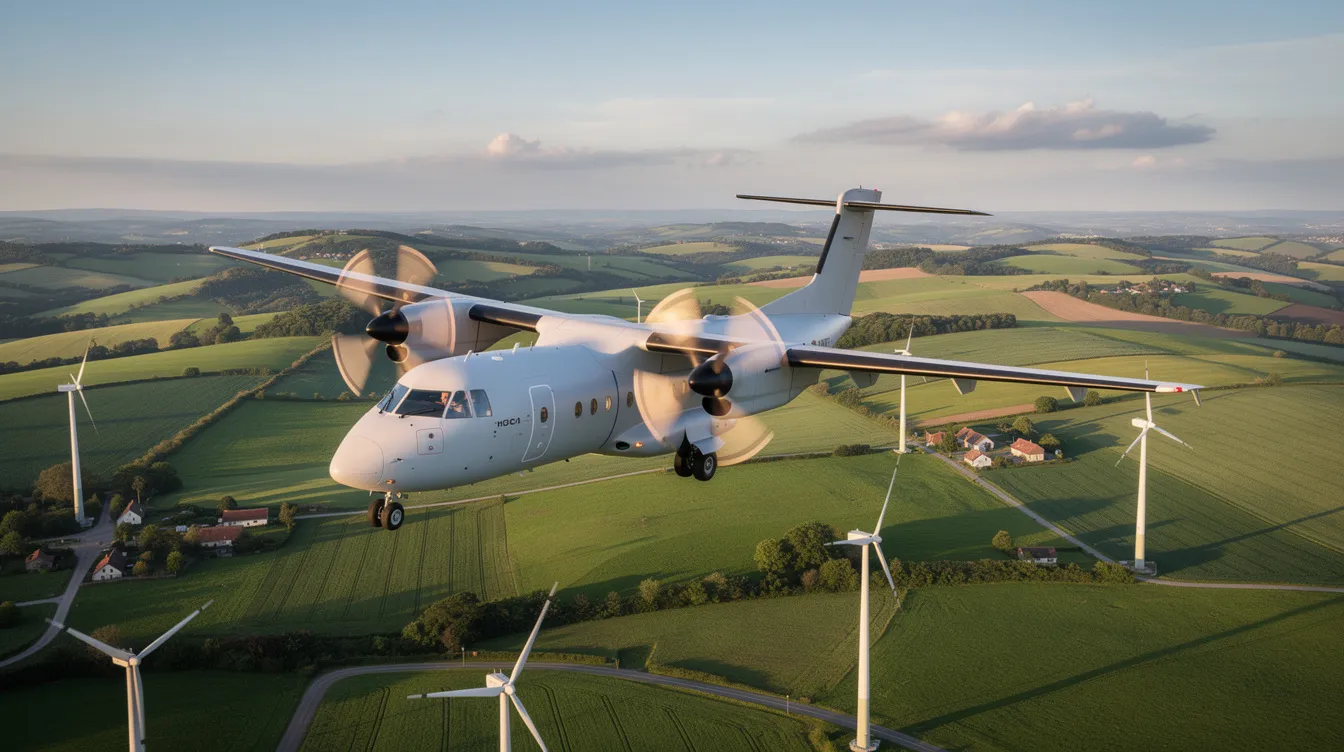
For high-net-worth individuals, luxury brands, and corporations with exacting logistics demands, small freight aircraft represent far more than a transportation option. They are a strategic advantage-one that compresses time, eliminates unnecessary handling, and delivers precision where scheduled cargo operations simply cannot.
Introduction: Why Small Freight Aircraft Matter for High-Net-Worth and Corporate Logistics
Consider a scenario most logistics planners know too well. A critical spare part needs to reach a grounded business jet in Geneva. The component sits in a London warehouse. Routing it through a major hub freighter network-ground transfer to Heathrow, consolidation, scheduled flight, customs at a congested cargo terminal, last-mile trucking-could consume 10 to 14 hours. A small cargo aircraft flying direct from a secondary London airfield to Geneva's regional airport can complete the same mission in under four hours, door to door.
This is not a marginal improvement. It is a fundamentally different logistics architecture, and it matters most when the cargo in question involves AOG parts, medical supplies, luxury fashion consignments, or bespoke automotive components where delay carries outsized financial or reputational cost.
The numbers underscore the opportunity. The global air cargo market was valued at approximately USD 172.74 billion in 2024 and is projected to reach USD 273.5 billion by 2032, growing at a compound annual growth rate of roughly 6.4%. Meanwhile, IATA reported in January 2026 that global air cargo demand rose 5.6% year over year while available capacity increased only 3.6%-a tightening that pushes critical shipments toward more agile solutions. Dedicated freighters generate about 90% of worldwide air cargo revenues and carry over half of global air freight by weight, yet it is the smaller, more nimble segment of the fleet that fills the gaps large freighters cannot reach.
At BlackJet, we see this intersection clearly. As a private aviation company offering Jet Card programs for passenger travel and comprehensive premium private jet card services, we understand that our members' logistics needs extend beyond the cabin. Integrating small freight aircraft alongside private jet service creates a unified, safety-certified, and sustainable logistics offering-one partner coordinating both people and cargo.
Defining Small Freight Aircraft in Modern Air Cargo
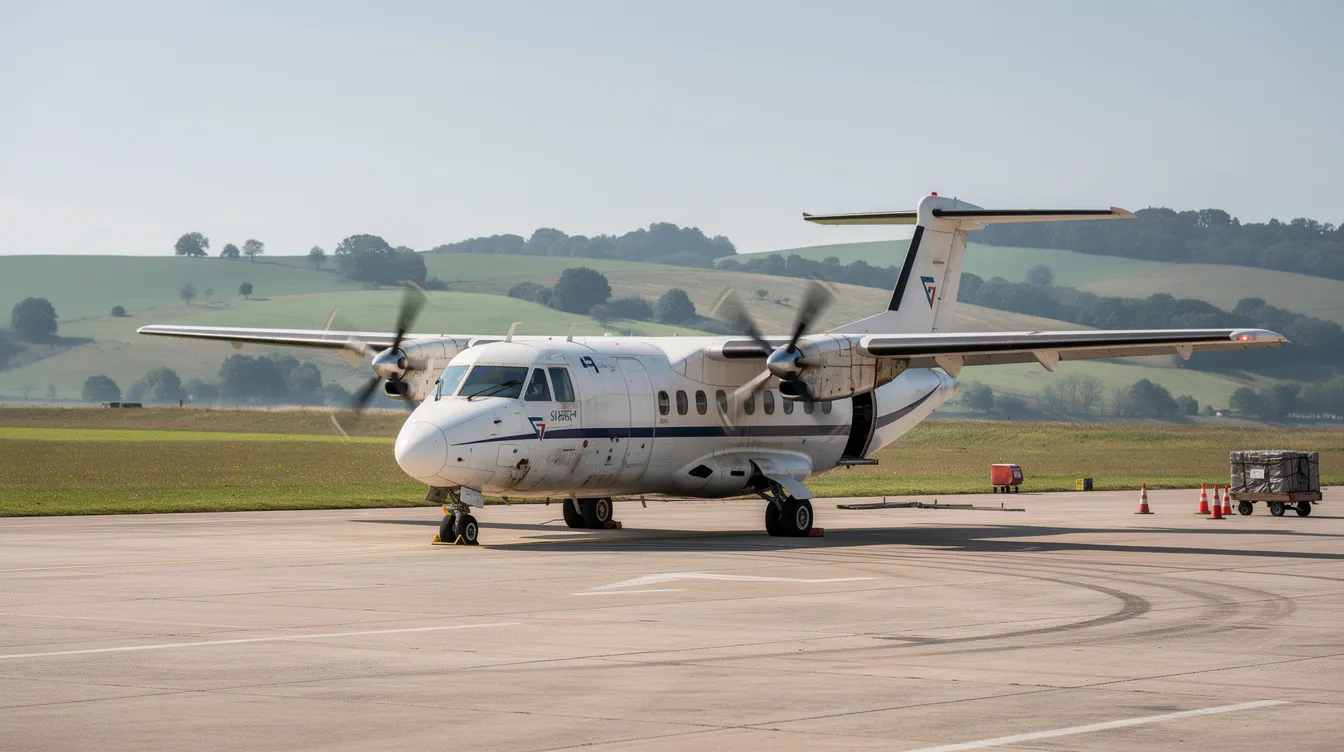
In modern air freight terminology, small freight aircraft refers to turboprops and light cargo jets with payload capacity typically under ten tonnes, used for regional, urgent, or point-to-point cargo transport rather than high-volume trunk routes. Small cargo planes typically carry payloads under 10 tonnes and operate where flexibility and speed matter more than economies of scale.
The industry draws several important distinctions:
Small cargo aircraft: Single-engine or light twin-engine turboprops carrying 1 to 5 tonnes of cargo, often converted from passenger configurations. They fly out of smaller airports and handle bespoke air charter cargo missions.
Regional freighters: Aircraft carrying 5 to 10 tonnes, serving regular short-haul routes between secondary markets-pharma distribution hubs, luxury retail nodes, high-tech manufacturing corridors.
Feeder aircraft: Small cargo planes that bring freight from secondary locations into major cargo hubs for consolidation onto larger aircraft serving intercontinental trade lanes.
Small freight aircraft connect regional and remote locations to major distribution hubs, and they maintain flexible operations suitable for regional logistics, much like the flexibility described when chartering a small private plane and understanding its cost drivers. Whether it is a luxury retailer positioning inventory for a pop-up event, a pharmaceutical company distributing temperature-sensitive vaccines, or an OEM shipping critical spare parts to a factory, these aircraft fill the operational gap between ground transport and large-scale air freight—similar to how budget-friendly private aircraft options fill the gap between commercial cabins and ultra-long-range jets for cost-conscious travelers.
Core Cargo Aircraft Types and Where Small Freighters Fit
The global cargo fleet spans three broad categories of aircraft types, each serving distinct roles in the supply chains that move goods around the world:
Wide-body freighters (e.g., Boeing 777F, Airbus A330F): Payload capacities exceeding 80 to 100 tonnes with ranges above 8,000 km. These handle trunk routes-transpacific, transatlantic, and long-haul intercontinental corridors. The Airbus A350F, the newest generation dedicated freighter aircraft, has a payload capacity of 111 tonnes and meets future emissions standards. Airbus aims for a 45% increase in dedicated freighter aircraft by 2040.
Narrow-body freighters (e.g., Boeing 737-800BCF, A321P2F): Payloads between 20 and 30 tonnes, ranges of 3,000 to 5,000 km. Medium-haul workhorses linking regional markets.
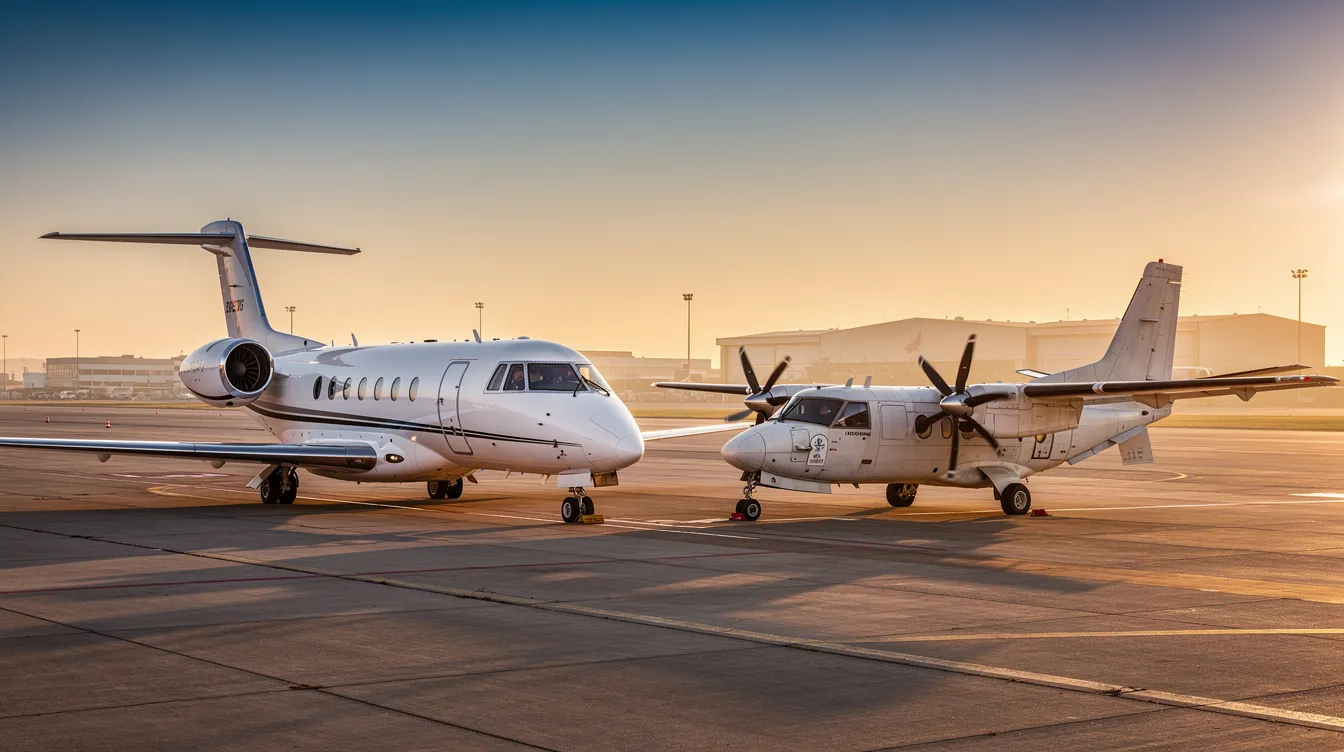
Small turboprop and light cargo aircraft: Payloads under roughly 10 tonnes, ranges typically under 2,000 km. These are the small freighters that compensate for lower volume and slower cruise speeds with schedule flexibility, minimal runway needs, and the ability to bypass congested hubs.
Dedicated cargo aircraft are designed specifically for freight transport, with reinforced floors, large cargo doors, and main deck loading systems optimized for rapid turnaround. Small freighters complement larger aircraft as feeders and gap fillers: servicing areas with limited infrastructure, bypassing capacity constraints during peak demand, and enabling point-to-point urgent shipments. The trade-off is straightforward-operating costs per kilogram are higher on small cargo planes, but when time is the constraint, the savings in warehousing, insurance, and missed-opportunity costs more than compensate, echoing the broader private jet price structures and value trade-offs seen in premium passenger aviation.
Top Small Freight Aircraft Models Used for Critical Shipments
Aircraft selection for small cargo operations depends on mission profile, cargo loads, and airfield conditions, similar to how choosing the best small private aircraft for personal travel hinges on matching performance, range, and operating cost to the mission. Here are the models most frequently deployed for time-critical shipments:
Cessna 208B Super Cargomaster: The workhorse of light cargo and feeder aircraft operations. The Cessna 208B Super Cargomaster carries up to 4,000 pounds of freight. Its rugged design handles unpaved strips, and FedEx operates hundreds in its feeder network. Ideal for regional routes under 1,000 km with moderate cargo capacity requirements.
Cessna SkyCourier (Freighter Version): A newer twin-engine turboprop designed for efficient transportation of pallets and LD-packs. Useful load approximately 3,500 kg; takeoff distance around 823 meters. FedEx has ordered 50 units for its feeder service-a testament to the aircraft's reliability as a dedicated aircraft for express freight.
Pilatus PC-12 NG (Cargo Configuration): The Pilatus PC-12 NG features a large rear cargo door (approximately 53 × 52 inches), cargo volume of roughly 330 cubic feet, and max payload around 1,410 kg depending on fuel load. Compact size and STOL performance make it a reliable choice for high-value, low-volume freight direct to regional or remote airfields.
ATR 42-300F:00F A step up in freighter capacity, the ATR 42-300F has a payload capacity of 5,700 kg. Its rectangular fuselage cross-section and large doors facilitate easy loading of oversized items. Frequently used for night freight networks and regional cargo carriers serving pharmaceutical and perishable supply chains.
Fairchild Metro is a pressurized twin turboprop with a slender fuselage suited to lighter, time-sensitive cargo loads. The Fairchild Metro III serves niche cargo operators running shorter routes where speed and frequency matter more than volume.
DHC-6 Twin Otter is famous for STOL versatility, with options for tundra tyres and floats. Payload in the 1 to 2 tonne class. Widely used for island supply missions and reaching remote areas where no other aircraft can operate.
Interior Design, Cargo Capacity and Loading Features
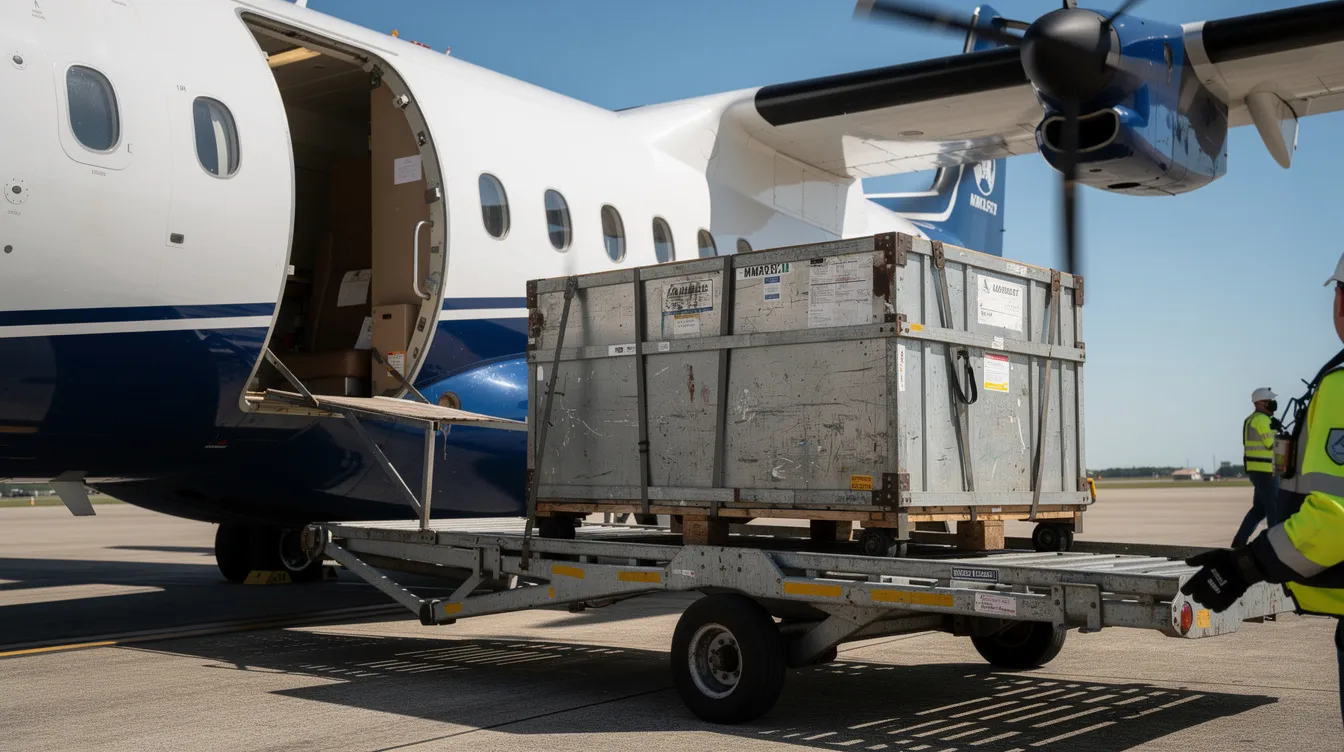
Small freight aircraft are engineered around cargo capacity, rapid loading and unloading, and safe restraint rather than passenger comfort. The cabin layout is fundamentally different from a passenger aircraft-or even from the belly hold of passenger planes.
Key features include:
Reinforced floors rated for concentrated loads, with seat rails or floor attachments for cargo restraint hardware.
Large cargo doors-side doors on most models, occasionally rear ramps on types like the Let L-410-that permit forklift or ground-level loading.
Low sill heights and optional ramps that simplify ground handling and reduce risk of damage to fragile items during loading and unloading.
Adjustable cargo handling systems that improve loading efficiency for small freight aircraft, including roller conveyors, cargo nets, and tie-down points certified against longitudinal and lateral loads.
Certified cargo restraint systems, which are required for safe loading and must comply with aviation authority standards for weight limits and load distribution.
Operators must perform careful weight and balance calculations for every mission. An improperly placed heavy item can shift the center of gravity and compromise flight safety. For dangerous goods shipments, additional constraints-isolation, placarding, fire suppression-apply. Volume versus weight trade-offs are constant: the cargo door dimensions of a PC-12, for example, govern what size crates or art pieces can physically enter the cabin, even when weight limits allow more.
Regional Reach: Short Runway, Remote Access and STOL Capabilities
The defining advantage of small turboprop cargo aircraft is their ability to go where larger aircraft cannot, paralleling the way small private jets enable flexible luxury travel into secondary airports that scheduled airlines seldom serve. Small freight aircraft are engineered to operate on short unpaved runways, and small cargo planes typically operate from runways as short as 800 meters-capabilities that open logistics corridors invisible to conventional air freight.
Consider the operational realities:
The PC-12 NGX requires approximately 758 meters for takeoff over a 50-foot obstacle and about 661 meters for landing-performance that unlocks hundreds of secondary and remote airfields.
The DHC-6 Twin Otter routinely serves Caribbean out-islands from San Juan, Scottish islands from Glasgow, and mining sites in Western Australia from Perth, using strips under 1,000 meters with unpaved or semi-prepared surfaces.
The Dornier Do228 NXT operates from gravel, grass, and short coastal strips with a payload exceeding 2,000 kg.
These aircraft can access areas with limited infrastructure because of high-mounted wings that reduce propeller debris ingestion, rugged landing gear designed for rough surfaces, and propeller clearance engineered for unimproved fields-the same kind of operational flexibility that underpins private jet charter access into regional airports such as Karachi. Small freight aircraft provide access to remote and underserved regions, and cargo aircraft are essential for ensuring rapid access to isolated areas-whether that means delivering yacht spares to a Mediterranean island, medical equipment to a remote clinic, or event infrastructure to an off-grid venue where a BlackJet member is arriving by private plane charter or a private jet charter into Lahore.

Use Cases: High-Value, Time-Critical and Dangerous Goods Shipments
When hours determine whether a production line runs, a transplant succeeds, or a gallery opening proceeds, small freight aircraft are the tool of choice, just as time-sensitive travelers often choose buying a single seat on a private jet over conventional airline schedules. Small freight aircraft are ideal for time-critical logistics like medical transport, AOG part delivery, and high-value goods movement, in the same way that well-structured jet card pricing is ideal for frequent private flyers seeking predictable, time-efficient travel.
AOG and critical spare parts: A grounded commercial or private aircraft missing a single component can cost an operator tens of thousands per hour in lost revenue. Small freight aircraft enable on-demand charter flexibility for urgent shipments-a replacement part flown direct from a warehouse to a remote airfield, bypassing hub delays entirely. Urgent shipments can be rapidly scheduled using on-demand small aircraft services.
Medical supplies and pharma: Temperature-controlled vaccines, diagnostic kits, even transplant organs require speed and minimal handling. Direct small freighter service eliminates layovers and reduces the chain of custody.
Dangerous goods: Lithium batteries, specialized chemicals, and aviation fuel additives often carry a Cargo Aircraft Only (CAO) designation, meaning they cannot travel in the belly hold of passenger aircraft. Dedicated cargo aircraft certified for such loads-with isolation compartments, proper placarding, and fire suppression-are required. Oversized industrial tooling and heavy machinery components that exceed passenger planes' belly dimensions also route through freight aircraft.
Luxury and fragile items: Art, jewelry, bespoke vehicles, and haute couture benefit from dedicated aircraft where security is tighter, handling is specialized, and the cargo never shares space with unknown consignments.
These aircraft also mitigate supply chain bottlenecks by avoiding highway congestion, and they provide alternative transport routes when traditional road networks are disrupted-whether by weather, strikes, or infrastructure failures.
Small Freight Aircraft vs Large Freighters and Belly Cargo
Choosing between small cargo planes, wide-body freighters, and belly cargo in passenger aircraft depends on mission specifics. Here is how they compare:
Factor | Small Freight Aircraft | Large Dedicated Freighters | Belly Cargo (Passenger Aircraft) |
|---|
Payload capacity | Under 10 tonnes | 80–111+ tonnes | Varies; limited by passenger load |
Ideal route length | Under 1,500 km | 4,000–10,000+ km | Matches passenger route network |
Minimum runway | 800–1,200 m | 2,500–3,500 m | 2,000–3,000 m |
Scheduling | On-demand, flexible | Scheduled or charter | Fixed passenger timetable |
Per-kg cost | Higher | Lower at scale | Lowest incremental cost |
Door-to-door speed | Fastest on regional routes | Fastest on trunk routes | Slowest (hub transfers) |
Dangerous goods | CAO-capable if certified | Full CAO capability | Restricted |
Smaller aircraft have significantly lower hourly operating costs than larger freighters-a small turboprop might run USD 1,500 to 3,500 per block hour versus USD 15,000 to 22,000 for a Boeing 777F. Dedicated cargo aircraft can reduce trip costs by 20% compared to ad hoc solutions when used strategically on the right corridors. Small freight aircraft bypass major congested hub airports utilizing smaller airfields, making them the clear choice for regional, urgent, or remote missions, just as jet card pricing models for private passengers make predictable-cost access the clear choice for frequent flyers. Larger jets and wide-body freighters dominate when transporting goods in large quantities over intercontinental distances.
The A350F freighter meets future emissions standards and represents the next generation of large freight capability, but for missions under 1,500 km involving moderate cargo loads, small freighters remain the more cost-effective and faster option.
Operational Workflow: From Booking to Delivery in Small Cargo Operations
A typical small cargo mission follows a disciplined sequence:
Enquiry and quoting: The client provides cargo dimensions, weight, commodity type, dangerous goods codes if applicable, and required delivery window. The operator or broker identifies available capacity and quotes accordingly.
Aircraft selection: Based on payload, aircraft size, route distance, and runway conditions at both ends, the operator matches the right freight aircraft to the mission.
Slot confirmation and cargo preparation: Flight slots are secured, ground handling arranged, and cargo is packed, labeled, and screened per regulatory requirements.
Loading and departure: Cargo is loaded per weight and balance calculations, restraint systems are secured, and the aircraft departs-often within hours of the initial request.
Flight and handover: The cargo arrives at the destination airfield, is unloaded, clears any customs requirements, and enters last-mile delivery-typically by hot shot trucking or direct client pickup.
Small cargo planes enable same-day or next-day deliveries on most regional routes, mirroring the responsiveness that underpins flexible jet card programs such as Flexjet’s on the passenger side of the market. Small freighters complete door-to-door delivery in 8 to 12 hours for typical missions, a level of speed comparable to what leading jet card providers like NetJets offer their members for urgent passenger itineraries. They support just-in-time logistics with turnaround times as short as 20 minutes at well-prepared airfields, much like the best jet card programs for frequent flyers support just-in-time travel with guaranteed availability and streamlined handling. The role of 24/7 dispatch teams is critical-diversions, weather changes, and slot constraints demand real-time decision-making that scheduled cargo operations cannot match.
Safety, Certification and Compliance for Small Cargo Planes
Small cargo aircraft operate under the same rigorous aviation regulations as passenger jets. Operators must hold an Air Operator Certificate for cargo flights-in the United States, this typically means Part 135 certification for charter freight operations. Cargo aircraft must comply with strict safety protocols covering airworthiness, crew qualification, and operational procedures.
Key safety elements include:
Pilot training and recurrent checks: Crews undergo type-specific training, instrument proficiency checks, and emergency procedure drills on regular cycles.
Dangerous goods certification: Handlers and flight crew must hold current IATA/ICAO dangerous goods qualifications to transport hazardous materials.
Weight and balance calculations: These are critical for small cargo aircraft, where even moderate load shifts can affect flight characteristics. Every mission requires a fresh calculation.
Certified cargo restraint systems: Nets, straps, and floor-mounted hardware must meet certification standards for expected load factors.
Security verification includes identity checks and cargo screening-X-ray inspection, explosive trace detection, and documentation review before any freight is loaded. At BlackJet, we work exclusively with audited, safety-vetted cargo operators whose standards align with the same certification rigor we require for our private jet fleet, comparable to the benchmarks used by top private jet companies known for safety and service.
Technology and Tracking: Visibility in Premium Air Freight
Technology has reshaped small cargo operations from opaque, phone-driven processes into digitally transparent logistics chains. Modern cargo operators deploy:
Digital booking platforms that allow clients to request quotes, confirm missions, and manage documentation online.
Automated load planning tools that calculate optimal cargo placement for weight and balance compliance.
Real-time tracking via GPS tags, RFID scanning, and customer portals showing shipment status and estimated arrival times.
Small freight aircraft improve supply chain visibility through easier tracking capabilities-the smaller scale of operations and direct routing mean fewer handoff points where tracking data can be lost. BlackJet coordinates with freight partners to integrate cargo tracking into the same digital environment that members use to manage their Jet Card flights, creating a unified view of both passenger and cargo movements-visibility that also supports optimizing Jet Card tax deductions and record-keeping for qualifying business travel.
For high-profile clients shipping art, jewelry, or proprietary technology, cybersecurity and data protection measures safeguard sensitive shipment details from booking through delivery.
Sustainability: Fuel Efficiency and Carbon-Neutral Small Freight Missions
Sustainability in air freight is not optional-it is an operational imperative. Small turboprop cargo aircraft offer a meaningful advantage on shorter routes: turboprop small cargo planes offer 21% fuel savings compared to comparable jet-powered aircraft on sectors under 1,500 km. This efficiency stems from propeller-driven aerodynamics optimized for lower speeds and altitudes, where fuel burn per tonne-kilometer is markedly better.
Emerging developments are accelerating progress, just as new aircraft and access models are reshaping the landscape of affordable private jet options:
More fuel-efficient turboprop engines with improved thermodynamic cycles.
Lighter composite airframe materials reducing empty weight and further improving range-payload economics.
Trials of sustainable aviation fuel in regional cargo fleets-carbon-neutral practices include sustainable aviation fuel contributions alongside verified carbon offsetting programs.
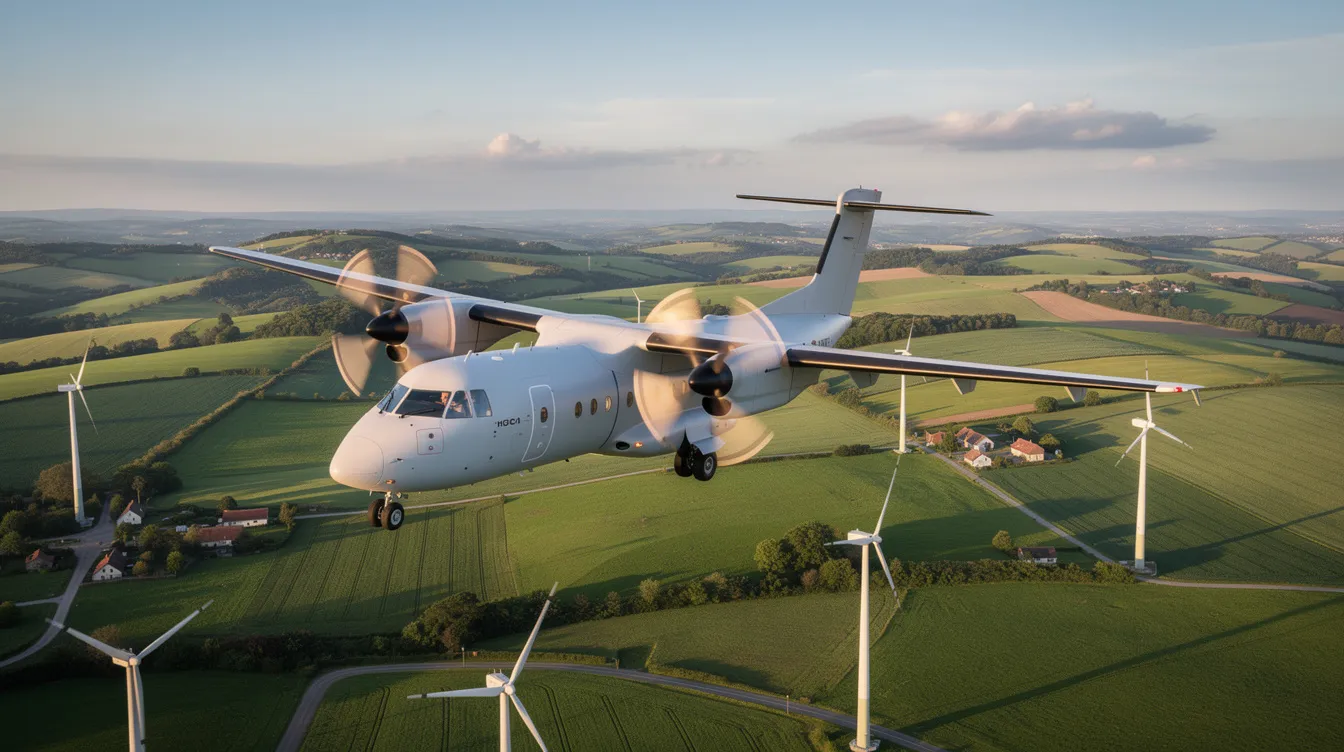
At BlackJet, our carbon-neutral philosophy extends beyond passenger flights. Cargo missions can be integrated into a client's overall emissions strategy, with verified offsets and SAF procurement where available. On many regional corridors, the emissions per kilogram of freight moved by small freighters compare favorably to trucking when ground distances, congestion delays, and multi-modal transfers are factored in.
How Small Freight Aircraft Complement BlackJet Jet Card Travel
The most compelling use of small freight aircraft emerges when they operate in concert with private jet travel, whether that is a light jet for two executives or a large private jet configured for 20 passengers carrying an entire project team. Consider these scenarios:
A BlackJet member flies from New York to Miami for a gallery opening. Three crated artworks travel separately on a Cessna Caravan, timed to arrive at a nearby regional airfield two hours before the event.
A racing team charters a 25-hour Jet Card flight to a European circuit while critical engine components ship on an ATR 42F, both coordinated to land within the same window.
A corporate executive's meeting location shifts from Zurich to Geneva on 12 hours' notice. Both the private jet and the small freighter carrying presentation equipment and product samples are rescheduled simultaneously-something fixed commercial cargo timetables cannot accommodate, and a capability that scales up to private jet options for 30-passenger groups when entire teams need to move with their equipment.
Our Jet Card programs provide predictable passenger travel through prepaid 25- or 50-hour blocks, while vetted partner cargo aircraft handle associated freight on synchronized schedules-a framework that can extend even to large private jets accommodating up to 50 passengers for major corporate or event movements. The result is a single point of contact for both people and freight journeys-no fleet ownership, no need to manage cargo certificates directly, and no coordination gaps between separate providers.
Choosing the Right Aircraft Type for Your Air Charter Cargo Mission
Aircraft selection is a decision that balances multiple variables simultaneously. Here is a practical framework:
Decision Factor | What to Assess |
|---|
Payload weight and dimensions | Does the cargo fit the aircraft's cargo door and cabin volume? Are weight limits exceeded? |
Route distance | Is the sector within the aircraft's range with required fuel reserves? |
Runway conditions | What is the runway length, surface type, and elevation at both origin and destination? |
Dangerous goods | Does the shipment carry CAO restrictions requiring a dedicated freighter? |
Time sensitivity | Is same-day delivery required? Does schedule flexibility matter? |
Cost effectiveness | Does the mission justify a small freighter, or would consolidation on a larger aircraft save money? |
For a 1,200 kg pharmaceutical shipment traveling 800 km to a secondary airport with a 900-meter runway, a Pilatus PC-12 or Cessna SkyCourier is the logical match. For 5,000 kg of heavy loads destined for a well-equipped regional hub 1,500 km away, an ATR 42F provides the necessary freighter capacity. For intercontinental movement of large cargo in large quantities, scaling to a 737-800BCF or 777F is appropriate.
BlackJet and our partners perform aircraft matching to ensure safe, efficient transportation for eachmission, factoringg in all of the above plus insurance, customs, and ground handling requirements.
Frequently Asked Questions About Small Freight Aircraft and Premium Air Cargo
What is the typical cargo capacity of small freight aircraft? Small cargo aircraft generally carry payloads under ten tonnes. At the lighter end, aircraft like the Cessna 208B handle up to 4,000 pounds (~1,800 kg). Mid-range models like the ATR 42-300F carry up to 5,700 kg. Payload varies with fuel load and route distance.
Can small freighters carry dangerous goods? Yes, provided the aircraft and operator hold the appropriate certifications. Many dangerous goods-lithium batteries, chemicals, certain industrial compounds-require Cargo Aircraft Only designation and cannot travel on passenger planes. Certified small freighters with proper compartments and trained crew can handle these shipments.
How much notice is needed for an urgent air charter cargo flight? Lead times can be as short as 2 to 4 hours for operators with aircraft positioned nearby. Small freight aircraft enable on-demand charter flexibility-same-day dispatch is routine for experienced cargo operators with available capacity.
How are high-value items insured during transport? Insurance is arranged on a per-mission basis, with coverage tailored to declared cargo value. Policies typically cover damage, loss, and delay. BlackJet ensures partner operators carry comprehensive aviation cargo liability insurance.
Can BlackJet coordinate my cargo and passenger flights? Absolutely. Our Jet Card membership provides a single point of coordination for both private jet travel and small freight aircraft missions, ensuring synchronized schedules and consistent safety standards.
Is cargo tracking included in my Jet Card services? Yes. We integrate partner cargo tracking into our digital platform, providing real-time visibility on shipment status alongside your flight itinerary.
Are small cargo operations carbon neutral as well? BlackJet extends its carbon-neutral commitment to cargo missions through verified offsets and sustainable aviation fuel contributions where available, aligning freight logistics with your broader sustainability goals.
Conclusion and Call to Action: Integrating Small Freight Aircraft Into Your Travel Strategy
Small freight aircraft deliver what no other mode of cargo transport can match on regional corridors: speed, direct access to remote locations, certified safety standards, technology-enabled tracking, and meaningful sustainability through fuel-efficient aircraft and verified offsets. When combined with private jet access through a Jet Card program, they transform fragmented logistics into a seamless, coordinated operation managed by a single trusted partner.
For high-net-worth individuals and corporations whose time, assets, and reputation demand precision, this integration is not a luxury-it is a strategic necessity.
Elevate your logistics-effortlessly. With BlackJet, premium cargo transport and private flight converge under one roof. Our Jet Card programs deliver rigorous safety, carbon-neutral performance, and the flexibility to move both people and freight on your schedule. Explore our Jet Card membership and discover how integrated small freight aircraft solutions can reshape the way you travel and ship.


 Sign up with google
 Sign up with Apple