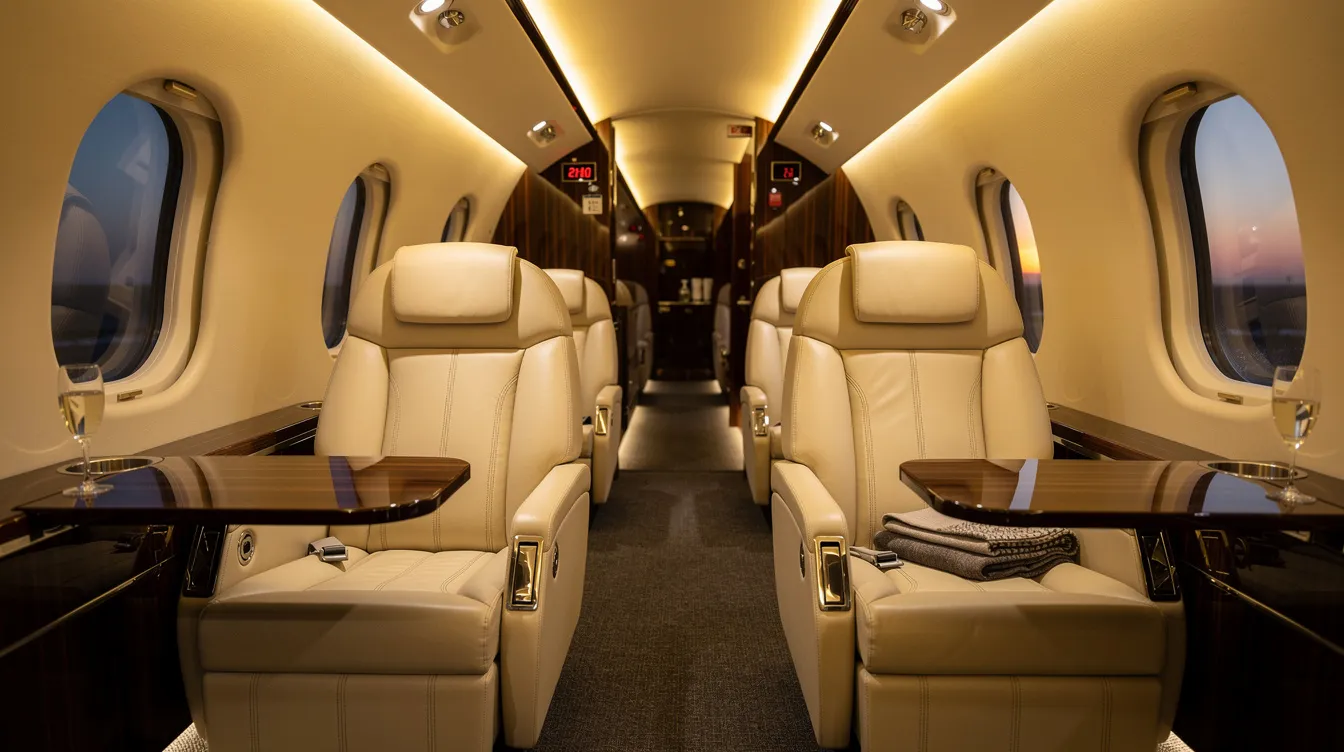
Private jet travel is no longer reserved for billionaires and Fortune 100 CEOs. With approximately 24,270 private jets in operation worldwide, the market for affordable private jets has matured enough to offer genuine options for entrepreneurs, executives, and high-net-worth families who value their time above all else.
Consider a typical New York–Miami trip. A commercial flight takes roughly 3 hours in the air, but factor in the drive to a major hub, security screening, boarding delays, and ground transportation on the other end, and you're looking at 6–8 hours door-to-door. On a private jet, that same trip shrinks to under 4 hours total - a savings of 3–5 hours you can spend closing deals or with your family. That time advantage is the real currency of private aviation.
When we talk about the cheapest private jet, we're measuring two things: the initial purchase price (new or pre-owned) and the hourly operating costs that follow. In the 2025–2026 market, brand-new very light jets range from $2.5 to $3.5 million, while pre-owned very light jets often sell for $650,000 to $2 million. At BlackJet, we help clients navigate these economics not by selling aircraft, but by offering jet cards, on-demand charter, and curated empty leg flights that unlock private flight access without the capital commitment.
This article walks through the top 10 most budget-friendly jets you can realistically fly in 2026, dives into hidden ownership costs most buyers overlook, and shows you exactly where the breakeven sits between owning, chartering, and using a Jet Card. For a broader overview of aircraft categories and costs, see our guide to the private jet price list.
The 10 Cheapest Private Jets on the Market Today
The models below were selected based on three criteria: wide availability on the pre-owned market, realistic acquisition prices backed by mid-2025 broker data and recent transaction reports, and proven suitability for private or business use. These picks sit within the broader landscape of the cheapest private aircraft and budget-friendly options that make private flying more accessible. Very light jets (VLJs) are the most affordable private jets available, so they dominate the top of this list, but we've included budget-friendly light, midsize, and large cabin aircraft as well - plus a couple of turboprop planes that deliver a comparable private jet experience at even lower cost. Travelers evaluating pistons, turboprops, VLJs, and light jets side by side can dive deeper into our guide to the best small private aircraft.
# | Aircraft | Category | Typical Pre-Owned Price (2025–2026) | Range (nm) | Charter Rate (per hr) |
|---|
1 | Eclipse 500 | VLJ | $1.0M–$1.5M | 1,100–1,200 | $2,000–$2,800 |
2 | Cirrus Vision Jet SF50 | VLJ | $2.1M–$2.9M | 1,200 | $2,200–$3,000 |
3 | Cessna Citation Mustang | VLJ | $1.5M–$2.5M | 1,000–1,150 | $2,700–$3,500 |
4 | Embraer Phenom 100 | Light | $1.75M–$2.5M | 1,178 | $2,300–$3,000 |
5 | HondaJet HA-420 | Light | $3.0M–$4.0M | 1,200–1,400 | $3,000–$3,800 |
6 | Cessna Citation CJ3+ | Light | $5.0M–$7.0M (older CJ3) | 2,000+ | $3,200–$4,200 |
7 | Learjet 60 | Midsize | $1.0M–$4.0M | 2,200+ | $4,000–$5,000 |
8 | Dassault Falcon 50 | Large | $1.0M–$1.5M (1980s) | 3,000+ | $4,500–$6,000 |
9 | Pilatus PC-12 / King Air B100 | Turboprop | $400K–$6.0M | 1,800–2,000 | $1,800–$3,000 |
10 | Cessna Citation XLS+ | Midsize | $6.0M–$8.0M (older XLS) | 2,100 | $4,000–$5,500 |
Prices fluctuate by model year, total flight hours, engine program enrollment, and maintenance history. The sections below break down each aircraft, from entry-level VLJs like the Eclipse 500 to depreciated large jets like the
Dassault Falcon 50.
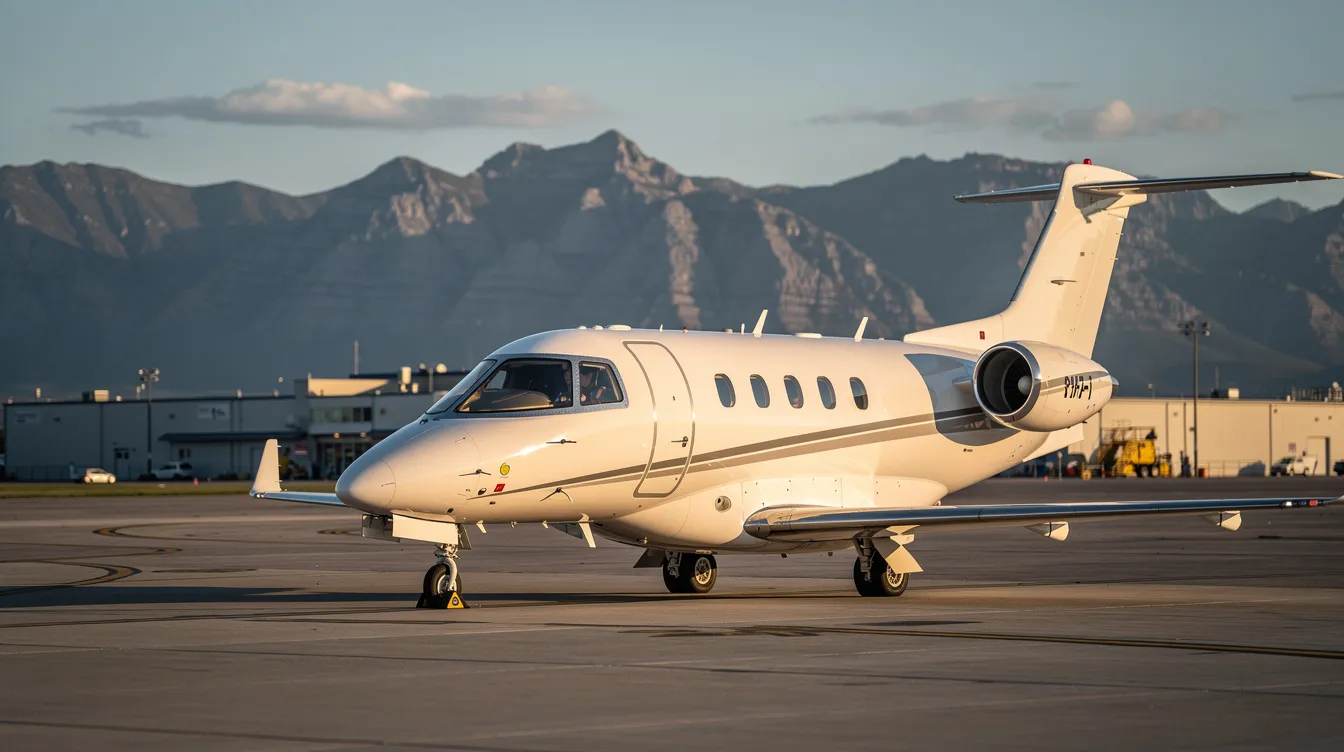
1. Eclipse 500 – The Absolute Cheapest Private Jet to Own
The Eclipse 500 holds the distinction of being the cheapest private jet you can own in 2026. The Eclipse 500 can be acquired for $1 million to $1.5 million for well-maintained 2008–2011 airframes, with some earlier examples occasionally dipping below $1M.
As a very light jet in the very light jet category, it delivers a typical range of about 1,100–1,200 nautical miles, a cruise speed around 370–380 knots, and seats 4–5 passengers in a compact cabin. Direct operating costs run roughly $800–$1,200 per hour - significantly lower fuel burn than larger light aircraft.
Best for: Owner-operators or regional executives flying short regional flights like Dallas–Denver or Milan–Paris who prioritize low acquisition cost over cabin space compared to bigger jets. The trade-offs are real: limited baggage capacity, a tight cabin, and a shrinking fleet that can complicate parts sourcing. For most travelers, chartering or using a Jet Card to access similar VLJs is a smarter path than outright private jet ownership.
2. Cirrus Vision Jet SF50 – Cheapest Brand-New Capable Private Jet
The Cirrus Vision Jet is the most affordable truly modern, single-engine private jet on the market - and one of the most searched "cheapest private jet" models online. The Cirrus Vision Jet costs around $2 million new for earlier variants, while the 2024 G2+ lists at nearly $3.24 million and the recently announced G3 starts at approximately $3.68 million. Buyers working with a similar budget can explore the best 2 million dollar private jet options available today to compare alternatives. Pre-owned 2017–2020 models trade between $2.1M and $2.9M.
The Cirrus Vision Jet has a range of 1,200 nautical miles, cruises around 300 knots, and seats up to 5 adults plus 2 children. Its single Williams FJ33 turbofan delivers excellent fuel efficiency, while the whole-aircraft parachute system (CAPS) and advanced avionics give it a strong safety profile for families and first-time jet owners.
Best for: Regional routes like LA–Aspen or London–Nice where low fuel burn and simplified systems keep ongoing costs manageable. Buying a Vision Jet makes sense for high-usage owner-pilots logging 200+ hours annually. For everyone else, BlackJet members can access equivalent VLJ capacity via Jet Cards without tying up $3M+ in a depreciating asset.
3. Cessna Citation Mustang – The Budget Workhorse VLJ
The Cessna Citation Mustang remains one of the most popular affordable private jets for both charter operators and individual owners, and it’s a prime example of how small private jets for luxury travel can deliver efficiency and comfort without super-midsize pricing. Pre-owned Cessna Citation Mustang prices range from $1.5 million to $2.5 million for 2008–2016 models, depending on hours, avionics upgrades, and engine program status.
Light jets like the Cessna Citation Mustang seat up to four passengers in a standard club layout, offer a range of approximately 1,000–1,150 nautical miles, and cruise at about 340 knots. It's certified for single-pilot operation, which reduces pilot and crew salaries for owner-operators. Operating costs for a Cessna Citation Mustang are $1,000 to $1,200 per hour direct, making it one of the most cost-effective jets on the market.
Typical mission: New York–Chicago or London–Berlin with 3–4 passengers and carry-on baggage. BlackJet frequently utilizes Mustang-class VLJs for Jet Card clients needing short hops at the lowest private jet rental costs in the light jet category.
4. Embraer Phenom 100 – Affordable Private Jet with Big-Cabin Feel
The Embraer Phenom 100 represents a step up from basic VLJs while remaining among the most affordable aircraft in the light jet category, fitting squarely into the broader set of cheapest private jet options for every traveler. The 2009–2014 models generally trade between $1.75M and $2.5M in the current pre-owned market.
The Embraer Phenom 100 is known for luxury finishes and reliability, featuring a taller, wider cabin than many VLJs - a noticeable difference in passenger comfort. With twin Pratt & Whitney PW617F engines, it delivers a range of about 1,178 nautical miles, cruises near 390 knots at a service ceiling of 41,000 feet, and the Embraer Phenom 100 can transport up to seven passengers with optional configurations. Hourly operating costs land in the $1,200–$1,600 range, and the Prodigy flight deck offers modern avionics.
Use case: A tech founder flying San Francisco–Seattle twice a month who wants a spacious cabin and speed without midsize jet pricing. Phenom 100s are widely available in the charter market, and BlackJet members can often secure them at fixed Jet Card rates rather than variable spot pricing.
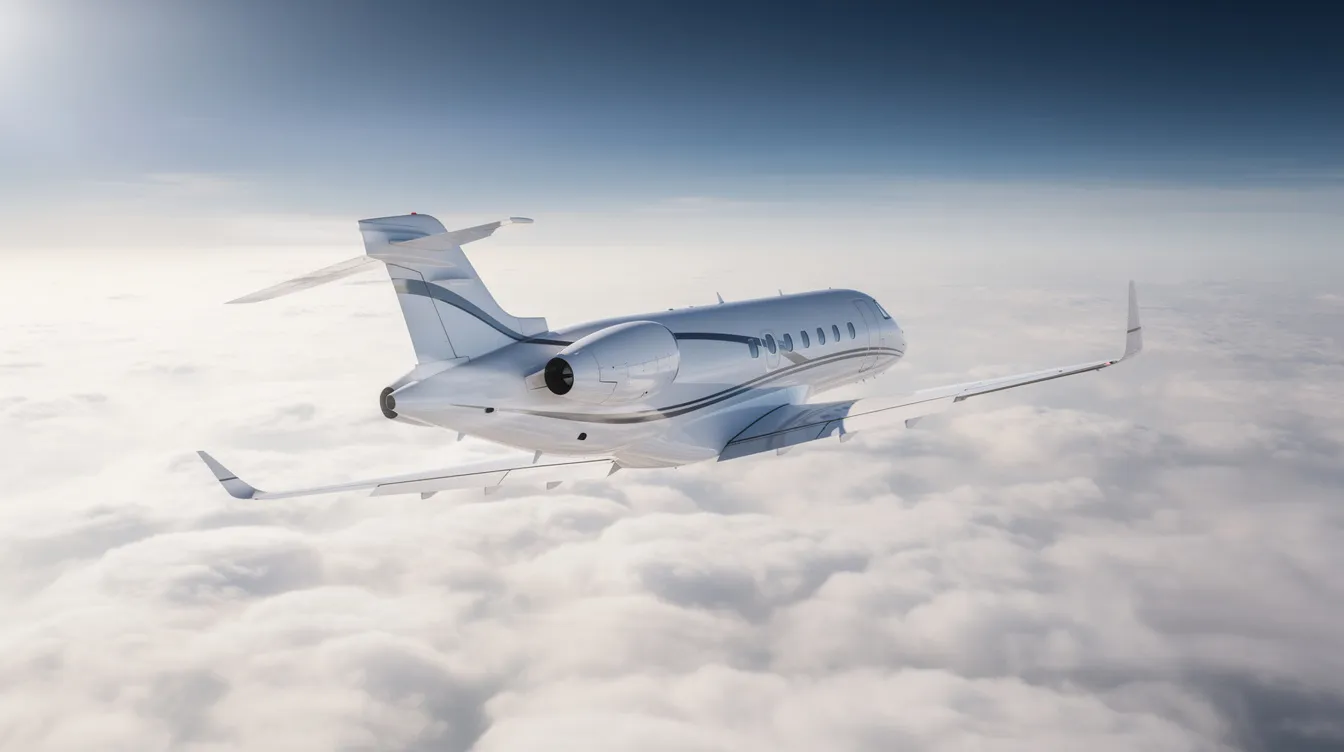
5. HondaJet HA-420 – Innovative, Efficient, and Still Relatively Cheap
The Honda Aircraft Company created something genuinely different with the HondaJet HA-420. HondaJet features over-the-wing engine mount and innovative technology, a design choice that reduces cabin noise and vibration while freeing up interior space - a rare feat in the light jet category.
Older HA-420 models typically trade between $3.0M and $4.0M, with newer Elite S variants commanding more, putting them in line with many top private jets for sale under 10 million that appeal to buyers seeking affordable luxury. Still, these remain affordable private jets compared with larger cabin classes. Performance is impressive: roughly 1,200–1,400 nautical miles of range, a cruise speed near 420 knots (among the fastest in its class), and seating for 4–5 passengers in a very quiet cabin. Low fuel burn and reasonable maintenance costs make it attractive for small corporate teams on medium-range flights.
Some operators grounded fleets briefly in 2023–2024 following runway excursion investigations, but the aircraft have since seen renewed confidence under updated procedures. BlackJet clients may see HondaJets offered on certain regional pairings where fuel efficiency and shorter runway performance are priorities.
6. Cessna Citation CJ3+ – Cheap to Run, Not Cheap to Experience
The CJ3+ won't win on purchase price alone - a new CJ3+ runs $10M–$11M - but older CJ3 models (pre-2014) can be found for about $5M–$7M as of 2025–2026, and the per-seat-mile economics are where this efficient aircraft shines in the light jet category. Buyers exploring this price point will find it comparable to many 10 million dollar private jet options for luxury travelers that balance performance, comfort, and cost.
Key specs:
Range: 2,000+ nautical miles
Cruise: ~416 knots
Passenger capacity: 6–8 passengers
Certification: Single-pilot operation approved
Runway: Strong short-field performance for access to regional airports
Hourly operating costs run lower than some competitors like early Phenom 300s, which is why charter operators love it. Within BlackJet's network, the CJ3/CJ3+ is a core "light jet" solution for Jet Card holders who need more cabin space without jumping to a mid-size jet budget.
7. Learjet 60 – Mid-Size Performance at Depreciated Prices
The Learjet 60 is a classic midsize jet that has become surprisingly affordable on the pre-owned market - a reminder that older small jets like Learjet 55 and its successors typically have lower acquisition costs as they age.
Price bands:
Early 1990s models: sometimes under $1M
Early 2000s models: $1.5M–$2.5M
Late-production aircraft: up to ~$4M–$6M
With a range around 2,200+ nautical miles, cruise near 450 knots, and seating for 7–8 passengers, the Learjet 60 delivers midsize jet performance that newer VLJs simply can't match, illustrating why understanding private jet sizes and the right fit for your journey is crucial when comparing aircraft. The trade-off: higher maintenance and fuel burn, plus potentially expensive 12-year inspections and avionics compliance upgrades.
Use case: Regional executives wanting midsize cabin comfort for flights like Chicago–Los Angeles at a fraction of new-midsize pre-owned prices. Many BlackJet clients opt to charter or use Jet Card access to Learjet 60-class aircraft when they need more range and a spacious cabin for an important trip - without the burden of ownership.
8. Dassault Falcon 50 (Older Models) – Affordable Entry into Large Jets
The Falcon 50 is a tri-engine, large-cabin aircraft that has become one of the cheapest ways to access "big jet" capability. Older Falcon 50 jets can be found for as low as $1 million for certain 1980s-era airframes, with most listing between $1.0M and $1.5M depending on avionics, engine program enrollment, and interior condition.
Performance is genuinely impressive: roughly 3,000+ nautical miles of range, seating for 8–10 passengers, and capability for transcontinental and some transatlantic missions. Large jets like the Gulfstream G200 offer intercontinental range, but the Falcon 50 gets you into that league at a fraction of the purchase price. Travelers considering newer, longer-range aircraft can compare these to 20 million dollar private jet features and options that dominate the ultra-long-haul category.
The cons are proportional to the savings. Hourly operating costs are significantly higher, maintenance is more complex, and bringing older avionics into compliance with current standards can cost six figures. For most private aviation enthusiasts, Falcon 50 ownership suits serious operators with high utilization. BlackJet clients who need a heavy jet or large cabin aircraft for occasional long-haul travel will find that chartering is far more cost-effective than purchasing.
9. Pilatus PC-12 & King Air B100 – Turboprops that Beat Many Jets on Price
The absolute cheapest private plane experience often comes from high-performance turboprop planes rather than true jets, and many buyers ultimately compare these options against the economics of renting a private jet and its costs instead of purchasing. Turboprops can offer lower fuel consumption compared to jets, and their ability to operate from shorter runways opens up hundreds of regional airports that jets on the market simply can't reach.
Pilatus PC-12:
Pre-owned prices: $4M–$6M for well-maintained models
Range: ~1,800–2,000 nautical miles
Seating: 6–9 passengers in a generous cabin
Single-engine turboprop with low fuel burn and exceptional versatility
Beechcraft King Air B100/90 series:
Pre-owned prices: high $400K–$650K for B100 models
Used turboprop planes can sell for as low as $50,000 for older 1970s–1980s King Air 90s in working condition
Excellent runway performance and access to remote fields
Sample scenario: Flying Aspen–Salt Lake City or Geneva–Corsica, where runway length and low operating costs make these turboprops ideal. BlackJet frequently uses turboprops as a cost-effective alternative for members who prioritize budget over pure jet speed on shorter segments.
10. Cessna Citation XLS+ – Mid-Size Comfort, Reasonable Cost
The Citation XLS+ is one of the bestselling midsize jets in aviation history, and depreciation has brought early models into reach for cost-conscious buyers. Many of those buyers ultimately discover that BlackJet’s premium private jet cards and programs can unlock XLS-class access without tying up millions in capital. Older XLS airframes trade around $6M–$8M, while newer XLS+ examples sit closer to $10M–$13M.
Range: ~2,100 nautical miles
Cruise: ~430 knots
Seating: 7–9 passengers with a comfortable stand-up cabin
Runway: Strong short-field performance
Use case: A CFO flying New York–Houston monthly with a team, wanting a midsize cabin without stepping into super midsize jets or heavy jet pricing. BlackJet often recommends XLS-class aircraft for members who need more cabin space and baggage capacity than a light jet can comfortably offer - the sweet spot between economical private jets and full-size luxury.
Hidden Costs: Why "Cheapest Private Jet" Is More Than the Sticker Price
The purchase price of any private plane is only the opening chapter. Over a 5–10-year ownership period, ongoing costs can easily exceed the acquisition price itself. Operating costs for private jets can range from $400,000 to $800,000 per year, depending on aircraft size and utilization, and annual ownership costs of entry-level jets can exceed $200,000 even with modest flying.
Typical annual ownership costs include hangar, insurance, maintenance, and pilot salaries:
Hangar fees: $1,000 to $3,000 per month, depending on the airport and region
Insurance: $15,000 to $30,000 annually for most light and midsize jets
Annual maintenance: $50,000 to $200,000 depending on aircraft age and inspection cycles
Fuel costs: $300 to $700 per hour of billable flight time
Crew: Pilot and crew salaries add $80,000–$200,000+ annually for two-pilot aircraft
Landing fees, fuel surcharges, and federal excise tax on certain transactions
Chartering can cost between $2,000 and $14,000 per hour depending on aircraft category, but chartering a private jet eliminates ownership costs entirely, as detailed in our guide on how much it costs to rent a private jet. For frequent flyers logging fewer than 150–200 flight hours per year, charter access or a Jet Card program is often significantly more cost-effective than ownership, and a detailed guide to jet card cost and membership pricing can clarify when these programs beat outright ownership. Consult an aviation accountant before assuming that buying the cheapest private jet is the smartest financial move.
Ownership vs Charter vs Jet Card: The Smart Way to Fly Private
There are three primary ways to experience private aviation: ownership, on-demand charter, and jet cards. For travelers flying regularly, understanding the best jet cards for frequent flyers helps align benefits and costs with actual usage. Each suits a different travel profile and financial strategy.
Ownership begins to make economic sense at roughly 200+ flight hours per year, but comes with capital lock-up, depreciation risk, management complexity, and all the fixed costs outlined above. Fractional ownership reduces some of these burdens but introduces scheduling constraints and shared asset risk.
On-demand private jet charter offers maximum flexibility - chartering provides flexible scheduling and destinations, plus chartering offers access to a variety of aircraft types from VLJs to heavy jets. When comparing it to membership models, it’s worth understanding the jet card cost per hour to see how locked-in rates stack up against variable charter pricing. The downside: variable pricing, peak-day premiums, and limited rate certainty on busy routes.
Jet cards split the difference, and a solid grasp of jet card pricing, costs, and benefits is essential before committing significant capital to any single provider. Jet cards allow for prepaid blocks of flight hours with predictable pricing, locking in hourly rates across cabin categories with guaranteed availability. Membership programs can provide significant cost reductions for private travel, especially for travelers flying 50–100 hours annually, and comparing options like NetJets jet card costs and structure can clarify where each program delivers value. Shared private charters can enable travelers to book individual seats on an aircraft, further reducing per-person costs on popular routes.
Scenario: A CEO flying 60–80 hours annually across North America uses a BlackJet Jet Card to access VLJs and light jets for short trips and midsize or large jets for occasional long-haul travel - all without managing a single maintenance invoice or hangar lease.
Empty Leg Flights: The Cheapest Way to Fly Private Today
Empty leg flights are repositioning or return flights sold at steep discounts because the aircraft would otherwise fly empty. They represent the cheapest private jet rental option available to flexible travelers.
Empty leg flights can offer discounts up to 75% off standard charter rates. On select VLJ or light jet routes, some short sectors drop to $1,000–$2,000 for the entire aircraft. A midweek Las Vegas–Los Angeles empty leg on a Phenom 100 might list at roughly 60% below the standard rate - a genuine opportunity for private aviation enthusiasts who can adapt their schedule.
The limitations are real: routes and times are fixed, last-minute schedule changes are common, and round-trip planning is difficult. Empty leg flights are not a reliable strategy for business-critical trips, but they are perfect for opportunistic leisure or last-minute escapes.
BlackJet tracks and curates empty-leg flights and last-minute deals for members via a mobile platform, turning repositioning flights into an ultra-affordable way to fly private.
Safety, Certification, and Sustainability – Even When You're Flying "Cheap"
In private aviation, "cheapest" should never mean compromising on safety. Whether you're boarding a $900K Eclipse 500 or a $12M Citation XLS+, the safety expectations are non-negotiable: ARGUS- or Wyvern-rated operators, experienced crews, robust maintenance programs, and audited safety management systems.
BlackJet vets all partner operators for safety certifications and operational history, ensuring that even the most cost-effective private flight meets premium safety benchmarks. Every aircraft in our network undergoes verification regardless of cabin class or price tier.
Sustainability matters as well, even at the very top of the market where billionaire private jet price trends and ultra-long-range aircraft still increasingly incorporate efficiency and carbon-offset considerations. BlackJet commits to carbon-neutral flights through verified carbon offsets and sustainable aviation fuel (SAF) initiatives where available - at no additional cost to members. Newer single-engine jets like the Vision Jet and efficient aircraft like the PC-12 already deliver low fuel burn per passenger-mile, and the industry continues to push toward cleaner operations.
A strategic traveler weighs total impact - time, total cost, safety, and environmental footprint - not just the sticker price or hourly rate, whether they’re eyeing the most affordable VLJs or the most expensive private jet options for luxury travel.

Choosing the Right Cheapest Private Jet Option for Your Needs
Selecting the right affordable aircraft comes down to five variables: trip length, passenger count, baggage requirements, preferred airports, and expected annual flight hours. VLJs like the Eclipse 500, Cirrus Vision Jet, Mustang, and Phenom 100 suit 1–4 passengers on sub-1,200 nm routes. For medium-range flights with more passengers or baggage, midsize jets and large jets like the Learjet 60, Falcon 50, or Citation XLS+ become cost-effective on a per-seat basis.
Before buying, consider the thresholds. If you're flying fewer than 150 hours per year, charter, empty leg flights, or a BlackJet Jet Card will almost certainly deliver better economics than purchasing even the most affordable private jets.
Frequently Asked Questions
Can I own a private jet under $2M? Yes. The Eclipse 500, older Citation Mustangs, and depreciated Learjet 60s all fall within that range on the pre-owned market. Annual operating costs will add substantially to the total cost, though.
What's the cheapest way to fly private once a month? For occasional travelers, empty leg flights or a pay-per-seat option on shared charters offer the lowest private jet rental costs. A Jet Card with a small hourly block is the next step up.
Is a Jet Card cheaper than charter for my profile? For travelers flying 25–100 hours annually, jet cards typically lock in rates 10–20% below spot charter pricing while eliminating fuel surcharges and repositioning fees on covered flights.
Conclusion: Smart, Accessible Private Jet Travel in 2026
Affordable private jet travel is no longer a distant dream reserved for the ultra-wealthy. With options ranging from pre-owned models like the Eclipse 500 and Cessna Citation Mustang to innovative new jets such as the Cirrus Vision Jet, travelers can access private aviation tailored to their budget and lifestyle. Understanding the full cost picture—including fuel prices, maintenance, and operational expenses—is essential to making a strategic choice between ownership, charter, or jet card programs.
BlackJet offers a seamless way to experience private flight without the complexities of ownership, combining safety, sustainability, and technology to deliver premier access to the world’s most cost-effective private jets. Whether your priority is saving time on regional hops or enjoying luxury on longer journeys, the right aircraft and access model can transform your travel experience.
Discover how BlackJet’s curated jet card programs and exclusive empty leg deals can unlock private aviation’s time-saving advantages—without compromising on safety or environmental responsibility. Join us and elevate your travel with effortless, carbon-neutral private jet access designed for discerning travelers who demand both value and excellence.


 Sign up with google
 Sign up with Apple