Introduction: Why "United Private Jets" Searches Are Really About Smart Private Jet Access
If you have ever typed "united private jets" into a search engine, you probably were not looking for a 200-seat Boeing to fly your family to Palm Beach. You were looking for something faster, more flexible, and more private than anything a commercial carrier can realistically offer an individual traveler. That distinction matters, and it shapes everything in this article.
Consider a same-day New York to Chicago round trip. A traditional business class seat on United Airlines means arriving at Newark or O'Hare roughly two hours early, clearing long security lines, navigating crowded terminals, and accepting a fixed departure schedule. Door-to-door, you could lose six to eight hours on what should be a four-hour flying day. A private jet from Teterboro to Midway can cut that total by 30 to 50 percent—returning you to Manhattan in time for dinner, with complete privacy and zero connecting traffic along the way.
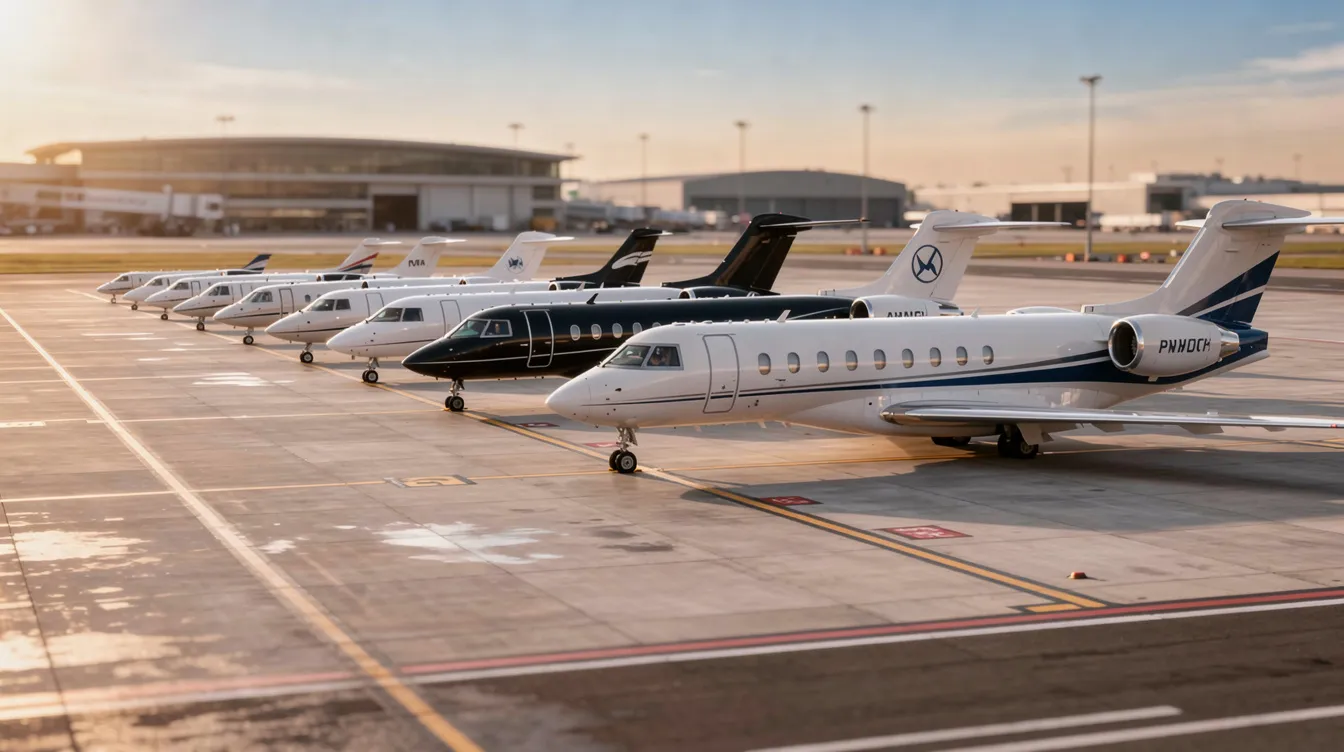
Private jets include turboprops, light jets, and heavy jets, and they can accommodate 2 to 18 passengers typically. BlackJet is a carbon-neutral Jet Card and on-demand private charter provider that serves frequent business and luxury travel clients across the United States and internationally. Rather than chartering an entire plane built for hundreds, BlackJet matches you with the right premium aircraft for your mission—whether that is a light jet for a weekend escape or a large-cabin flagship for long-haul international routes.
United Airlines plays a significant role in commercial and charter aviation, and we will explain exactly what that looks like in a moment. But for clients seeking exclusive travel that bends around their own schedule, dedicated private aviation with BlackJet delivers what a scheduled airline structurally cannot: departure on your terms, from exclusive airports, with a serene cabin environment that functions as a personal sanctuary at 40,000 feet.
Here is what this article covers:
What "United private jets" actually refers to—United Charters and United Express
How BlackJet's private jet access differs from airline charters
Aircraft categories, key routes, safety certification, and sustainability
How Jet Card programs and on-demand charter work in practice
Cost comparisons, booking workflows, and frequently asked questions
What "United Private Jets" Usually Refers To: United Charters and United Express
When people reference United Airlines in the context of private-style flying, they are typically talking about two things: United Charters and the United Express regional airline network.
United Charters is one of United’s charter services, providing access to over 1,200 planes for charter—but these are mainline aircraft like Boeing 777s and 787s, not the six-to-fourteen-seat private aircraft most travelers envision. Airline charters typically seat 100 to 300 passengers and serve sports teams, corporate groups, and university athletic programs. United Charters operates under Part 121 commercial airline regulations, the same framework governing scheduled airline flights, which means full compliance with extensive dispatch, crew-rest, and security protocols. United's fleet includes over 930 aircraft, ensuring reliability for these large-scale missions.
United Express, meanwhile, extends United's extensive domestic and international route network into smaller cities through regional partners. These are still scheduled commercial flights—not private flights—with standard economy and business class cabin classes, fixed itineraries, and shared cabins.
Here is a practical illustration: imagine an NFL team chartering a United 777 from New York to Denver. That requires weeks of advance coordination, departure from a Part 139-certified commercial airport, standard TSA screening for all passengers, and a schedule negotiated well before kickoff. Large-group charters can accommodate 50 to 300-plus passengers, which is ideal for sports teams but entirely mismatched with what a founder, a family, or a six-person deal team actually needs.
Commercial group charters generally require substantial advance notice for booking—often weeks or months. That process is the opposite of the flexibility that drives most people to search for "united private jets" in the first place.
BlackJet vs. Airline Charters: Two Very Different Kinds of "Private"
The word "charter" covers a remarkably wide spectrum. Understanding where airline charters end and true private jet travel begins is essential for making the right choice, and developing a clear understanding of charter flights' meaning helps frame thetrade-offss between mass-transport airline charters and bespoke private missions.
Private aviation companies often differ in service types and flexibility compared to traditional airlines. Here is how the two models diverge:
Passenger count: BlackJet's private jet fleet ranges from 2 to 18 passengers per aircraft. United-style airline charters fill a full plane of 100 or more.
Airport access: Private aviation unlocks access to over 5,000 smaller airports across the U.S. and internationally, including private terminals where travelers bypass long security lines entirely. Airline charters are restricted to major commercial airports at United's main hubs.
Booking speed: BlackJet clients can confirm flights within hours. Airline charters require weeks of lead time and layers of contractual negotiation.
Scheduling: Private jet services can offer customized itineraries to match group needs—depart when you want, route where you want. United Charters locks you into a pre-set schedule.
Traditional private jet brokers focus on flexibility for small teams or families, and BlackJet refines that further with its safety-vetted operator network and fixed-rate premium private Jet Card programs.
Consider a film production team needing to move eight people and equipment from Los Angeles to Aspen on a tight shooting schedule. A United charter into Denver still leaves a three-hour drive through the mountains. A BlackJet super-midsize jet flies directly into Aspen-Pitkin County Airport, landing the crew minutes from the location with their gear in the hold. That is the difference between a charter service designed for mass transport and one designed for precision.
From Business Class to True Private: Where United Polaris Ends and Private Jets Begin
United Polaris is United Airlines' flagship business class product on long haul international routes, featuring fully flat seats with direct aisle access, Polaris lounges, amenity kits, noise-reducing headphones, and even facial spray for overnight flights. Polaris passengers receive attentive service from dedicated flight attendants, and the Polaris cabin is a genuine step above standard economy. For individual travelers on high-traffic international corridors, it is a strong commercial product.
But structural limits persist. United operates on fixed schedules with hub-and-spoke routing, which means your itinerary bends around the airline's connecting traffic patterns, not your own. You still pass through crowded terminals, still share a cabin with dozens of strangers, and still depend on the airline's timetable.
Private jet access can reduce travel time by 30 to 50 percent. A founder flying New York to San Francisco on Polaris departs from Newark or JFK on United's schedule, arrives at SFO, and takes ground transportation into the city—a five-to-six-hour door-to-door experience on a good day. The same founder using a BlackJet light jet departs from Teterboro on their own schedule, lands at Oakland or San Carlos, and is in downtown San Francisco in under five hours total, with complete privacy for calls, strategy sessions, or simply rest.
The cost positioning differs too. Polaris is sold per seat; when you are buying six seats for a team, the math shifts. A midsize private jet carrying six passengers may approach or match the per-person cost of last-minute Polaris fares while delivering in-flight amenities tailored to your preferences, a personalized service model, and zero time wasted in airport queues—especially when you analyze whether chartering a private jet is worth it in terms of time savings and productivity.
Why Private Jet Access Is a Strategic Advantage, Not Just an Upgrade
Framing private jet access as merely a luxury travel upgrade misses the point. For executives, it is a scheduling tool that changes how entire weeks are structured.
Time Savings and Productivity
Quantify the difference: with a private jet, a CEO can visit New York, Boston, and Toronto in a single day—three meetings, three cities, zero hotel nights, zero unproductive hours in airline lounges. That kind of itinerary is impossible on commercial flights without overnight stays and early-morning connections.
Privacy and Security
Privacy is equally strategic. Discussing a pending acquisition, a fundraising round, or a confidential product launch in a shared airline cabin—even in traditional business class—carries real risk. A private aircraft provides a secure environment for sensitive conversations, significantly enhancing travel security in a way no shared cabin can.
Family and Lifestyle Benefits
For high-net-worth families, the calculus is personal. Weekend flights from San Francisco to Jackson Hole or New York to Nantucket become frictionless when you depart from a quiet FBO terminal instead of a congested commercial hub. No free checked bags drama, no gate changes, no boarding groups.
A practical example: a six-person executive team purchases a 25-hour BlackJet Jet Card and uses it to complete a regional investor roadshow—New York, Chicago, Atlanta, Miami—in two days instead of four. They set their own itineraries, hold prep meetings in the air, and arrive fresh at each stop. The time recovered is not a perk; it is a competitive advantage, especially when you understand Jet Card cost and membership pricing in the context of recovered executive hours.
Inside BlackJet's Jet Card Programs: Predictable, Prepaid Private Jet Time
Jet card programs offer prepaid access to private jets, and BlackJet's model is built specifically for travelers who want the flexibility they imagine when searching "united private jets" but in a format designed for individuals and small groups.
Programs typically include options like 25-hour or 50-hour plans. Each tier locks in a fixed hourly rate for a specific aircraft category—light, midsize, super-midsize, or large cabin—so you avoid the price volatility of ad-hoc one-off charters. If you compare Jet Card cost per hour across programs, these fixed rates become even more compelling. Jet Card users can book flights with 24/7 digital tools, and rates are all-inclusive pricing: fuel, crew, landing fees, and operational costs are bundled into the hourly rate.
Key Benefits of the Jet Card Model
Guaranteed availability with defined notice periods on popular routes
Transparent, predictable costs with no surprise surcharges
No need to negotiate individual private charter contracts for each trip
Jet card programs allow customization of itineraries and aircraft types
Here is how deployment looks in practice: a client purchases a 50-hour card and allocates roughly 15 hours to New York to Miami runs (weekend getaways and client meetings), 20 hours to New York to Chicago (board meetings and Willis Tower-adjacent office visits), and the remaining hours to New York to Toronto trips over 12 months. Each flight is booked through BlackJet's platform, debited at the locked-in rate, and supported by a dedicated flight support team.
For travelers exploring whether a Jet Card or fractional ownership suits them better, the Jet Card eliminates aircraft management, crew employment, and hangar costs—providing access without the burdens of ownership; a detailed look at Jet Card pricing structures clarifies how those advantages translate into predictable budgets.
On-Demand Private Charter with BlackJet: When You Don't Want to Commit to a Card
Not every traveler needs a multi-flight commitment. BlackJet's on-demand private charter option serves those who fly less frequently or want to experience the service before purchasing a Jet Card.
Travelers can book private jets within 24 to 72 hours on busy routes like New York to Palm Beach or Los Angeles to San Francisco. Mobile apps enable instant booking of private flights, and digital booking tools streamline the private jet reservation process from inquiry to confirmation. Mobile booking platforms enhance flexibility for travelers who need to move quickly, while a clear grasp of how much it costs to rent a private jet helps set realistic expectations before you book.
The Booking Journey Works Like This
Submit a request via BlackJet's app or web platform, specifying route, dates, and passenger count
Receive curated aircraft options across light, midsize, super-midsize, and large cabin categories
Review all-inclusive pricing with no hidden fees
Confirm and receive your final itinerary, including FBO details and ground logistics
Complementary services make the process straightforward:
Ground transportation coordination
In-flight catering aligned with dietary preferences
Pet-friendly cabin arrangements for travelers who bring companions
Mobile platforms provide access to over 20,000 aircraft worldwide through broker networks like Jettly, which offers access to over 20,000 aircraft worldwide, though BlackJet curates its own vetted operator pool for quality assurance.
Aircraft Categories Explained: From Light Jets to Long-Range Flagships
Choosing the right aircraft type is as important as choosing the right route. BlackJet's advisors help clients match passenger count, baggage requirements, and mission distance to the ideal aircraft category, drawing on the same principles outlined in guides to understanding private jet sizes.
Below is a quick comparison of the main aircraft categories:
Jet Type | Passenger Capacity | Typical Range (nautical miles) | Example Models |
|---|
Light Jets | Up to 7 | 1,149–1,800 | Citation CJ4, Phenom 300E, Learjet 70 |
Midsize Jets | 6–8 | 2,100–2,500 | Hawker 800XP, Learjet 60XR, Praetor 500 |
Super-Midsize Jets | 8–10 | 3,200–3,950 | Challenger 350, Gulfstream G280, Citation Longitude |
Large Cabin/Long-Range | Up to 16 | 4,500–6,500+ | Gulfstream G450, G550, Global 6000 |
Light Jets
Seats up to seven passengers
Range: 1,149–1,800 nautical miles nonstop
Speed: 430–460 mph
Ideal for regional hops like New York to Miami or Chicago to Nashville
Example models: Citation CJ4, Phenom 300E, Learjet 70
Midsize Jets
Seats six to eight passengers
Range: 2,100–2,500 nautical miles
Enclosed lavatories, galley amenities, and more cargo capacity
Perfect for coast-to-coast missions with room for luggage, golf clubs, skis, or production equipment
Example models: Hawker 800XP, Learjet 60XR, Praetor 500
Super-Midsize Jets
Seats eight to ten passengers
Range: 3,200–3,950 nautical miles
Speed: Around 555 mph
Handles high-elevation airports with ease
Ideal for executives flying New York to San Francisco or Latin America routes
Example models: Challenger 350, Gulfstream G280, Citation Longitude
Large Cabin and Long-Range Jets
Seats up to 16 passengers
Range: 4,500–6,500+ nautical miles
Stand-up cabins, multiple zones, and full galleys
Enables transatlantic flights and connections across six continents
Example models: Gulfstream G450, G550, Global 6000
These are meticulously maintained flagships for international missions where the aircraft becomes a mobile office for hours at a time, while specialized platforms highlighted in resources on the top private jet for 30 passengers serve even larger travel parties.
Key Routes and Use Cases: New York, San Francisco, and Beyond
Private jet travel comes alive through specific routes. Here are the corridors BlackJet clients fly most frequently.
New York to Chicago: Departing from Teterboro instead of JFK or Newark eliminates the congestion of United's main hubs. A light jet covers the distance in under two hours. Same-day round trips become routine rather than aspirational.
New York to San Francisco: Super-midsize jets handle this nonstop from Teterboro to Oakland or San Carlos, cutting door-to-door time to roughly five hours. Commercial alternatives through United's hub routing often push past seven hours with connections and ground transfers.
San Francisco to Jackson Hole: A lifestyle corridor for Bay Area executives. Landing at Jackson Hole Airport—minutes from the slopes—instead of connecting through Salt Lake City or Denver transforms a weekend trip from a logistical chore into a seamless escape.

New York to London: Large cabin jets handle this transatlantic route nonstop, departing from Teterboro and arriving at Farnborough or Luton—avoiding the complexity of Heathrow entirely. For executives with meetings in the City of London, this saves hours compared to commercial connections. United extends its global network through the Star Alliance, of which it was a founding member, but private aviation offers a fundamentally different experience on the same corridors.
Miami to St. Barts: Commercial connections to St. Barts require island-hopping through St. Maarten. A private jet flies direct, landing on the famously short runway with aircraft specifically rated for the approach. For very large groups on similar lifestyle routes, you might instead evaluate the best private jet for 50 passengers to keep everyone on a single aircraft.
Safety, Certification, and Operational Standards in Private Aviation
Safety and oversight vary among private aviation providers, impacting decision-making for discerning travelers. Understanding the regulatory framework is essential.
Unlike United Airlines' Part 121 airline operations, BlackJet works exclusively with audited Part 135 and international equivalent operators. The Federal Aviation Administration requires Part 135 certificate holders to meet rigorous standards for pilot qualifications, maintenance programs, crew duty-time limits, and operational control. The US Department of Transportation mandates safety standards for private charters that ensure every specific plane in service meets defined airworthiness criteria.
BlackJet's safety pillars include:
Independent third-party audits aligned with ARGUS and Wyvern benchmarks
Minimum pilot flight-hour requirements exceeding FAA minimums
Pre-flight risk assessments covering weather, runway performance, and weight-and-balance calculations
Crew duty-time management to prevent fatigue-related incidents
Thorough screening of every operator in the BlackJet Certified network
Private terminals enhance travel security with thorough screening in a controlled environment, significantly different from the mass-processing approach at commercial airports. United's private aircraft fleet meets high safety standards under Part 121, but aviation experts recognize that well-run Part 135 operations deliver safety rigor specifically tailored to the operating profiles of smaller aircraft and on-demand missions.
Sustainable and Carbon-Neutral Private Jet Travel with BlackJet
Private aviation has a higher carbon footprint than commercial flights on a per-passenger basis. That is an honest starting point, and BlackJet addresses it directly.
Every BlackJet flight is carbon neutral by default. Emissions are calculated per flight and offset through verified carbon offset projects and sustainable aviation fuel initiatives—at no extra cost to the client. For a New York to Los Angeles round trip on a super-midsize jet, the carbon output is estimated, matched with verified offsets, and retired before you land back home.
The broader industry is moving, but slowly. Global SAF production reached approximately 2.4 million tonnes in 2026, covering roughly 0.8 percent of total jet fuel demand. United Airlines has been a notable leader: United became the first airline to fly on commercial-scale sustainable fuels in 2016 and invested $30 million in Fulcrum BioEnergy for alternative fuels. United's sustainable aviation fuel reduces lifecycle carbon emissions by over 60 percent, and United used approximately 27.7 million gallons of SAF in 2025—about 0.7 percent of its roughly 4.1 billion gallons of total fuel usage. United plans to use sustainable fuel at major airports by 2024, a goal it has been scaling toward, just as private flyers explore the cheapest private jet options that balance cost with environmental responsibility.
BlackJet encourages environmentally conscious travelers to ask detailed questions about offset project verification standards, SAF blends, and lifecycle accounting. Transparency is the only antidote to greenwashing, and genuine sustainability programs welcome scrutiny.
Technology and Service: How BlackJet Makes Private Jet Access Effortless
BlackJet's digital booking tools allow members to request flights, view real-time availability, and confirm trips without lengthy email chains or phone tag. The platform provides instant pricing estimates by aircraft category, digital contracts, and live itinerary updates that can be shared with executive assistants and family members.
Behind the technology sits always-on human support: 24/7 flight support specialists who handle re-routing during weather disruptions, manage last-minute changes, and coordinate ground logistics. This is a level of personalized service that United's standard call centers or apps cannot replicate for private missions.
Transparency is built into the workflow: you see what you are paying, for which aircraft, on which route, before you confirm. No hidden repositioning charges, no fuel surcharge surprises, and a pricing model consistent with best practices for understanding private jet charter pricing.
A practical example: an executive assistant in New York needs a next-day jet from San Francisco to New York for her CEO. She opens BlackJet's platform, selects the route, reviews three aircraft options with all-inclusive pricing, and confirms—total time from inquiry to locked itinerary: under 15 minutes. Wi fi availability, catering preferences, and ground transportation are captured during the same booking flow.
Comparing Costs: United Polaris vs. Private Jet vs. BlackJet Jet Cards
Cost structures differ fundamentally across these three options.
United Polaris Pricing
Private Jet Charter Pricing
Ad-hoc private jet charter is priced per aircraft per hour. XO provides access to more than 2,000 aircraft and prices each trip dynamically based on availability, repositioning, and demand, fitting into the broader framework of a typical private jet price list and cost ranges.
BlackJet Jet Card Pricing
Cost Drivers
Key cost drivers across all private options apply globally—whether you are flying in dollars or evaluating private jet prices in rupees for missions within India:
Aircraft category: larger cabin equals higher hourly rate, more fuel burn
Route length: New York to San Francisco costs more flight hours than New York to Boston
Peak vs. off-peak: holiday weekends and high-demand corridors carry premium positioning costs
Repositioning: if the aircraft must fly empty to reach your departure airport, that dead-head time may affect pricing
An illustrative comparison: six executives need to fly New York to Chicago for a same-day board meeting. Six last-minute Polaris tickets might total $9,000 to $15,000 with no flexibility on timing. A midsize BlackJet charter covers the entire group in one aircraft, departs on their schedule, lands at a convenient airport, and the total cost—while higher in absolute terms—includes the value of four to five recovered productive hours per person, zero hotel costs, and the privacy to prepare together in flight. For understanding detailed private plane rates, BlackJet provides transparent breakdowns by category that align with broader benchmarks on how much it costs to rent a private jet.
How the Booking Process Works with BlackJet: From Idea to Wheels Up
The end-to-end BlackJet booking experience is designed to make the process straightforward and fast:
Initial inquiry: Submit your route, dates, passenger count, and any special requirements through BlackJet's app or website.
Aircraft recommendation: A BlackJet advisor presents curated options matched to your mission—appropriate cabin class, range, and airport compatibility.
Safety vetting confirmation: Every recommended operator holds current Part 135 certification and meets BlackJet Certified standards. This is confirmed before any itinerary is finalized.
Contract and confirmation: Digital contracts are reviewed and signed electronically. Catering, ground transfers, and special requests are documented.
Final itinerary delivery: You receive a complete trip brief—FBO address, crew details, tail number, and timeline—typically within hours for common routes.
Most popular corridors like New York to Miami or Los Angeles to San Francisco can be confirmed within hours once details are agreed. Compare that with the weeks-long lead time and layers of approval required for United Charters or large-group airline arrangements. Continental Airlines, now merged into United, once operated its own charter division with similar large-scale logistics—the complexity has always been inherent to mainline fleet operations, which is why many travelers look instead to top private jet charter companies in the USA that specialize in on-demand missions.
Frequently Asked Questions About "United Private Jets" and BlackJet
Is "United Private Jet" the same as booking a small private jet? No. United Charters uses mainline aircraft from United's fleet—typically 100-plus seats—for group missions. A private jet through BlackJet means a dedicated 2-to-18-seat aircraft operating under Part 135 for your party alone.
How far in advance do I need to book with BlackJet?Common routes can be confirmed within 24 to 72 hours. Peak travel periods—holidays, major events—benefit from longer lead times.
Can I fly private from New York or San Francisco on short notice ? Yes. These are core markets with strong aircraft availability. BlackJet's operations team manages crew and airport coordination to enable rapid departures.
How safe is a BlackJet private jet compared to United Airlines? Both operate under rigorous FAA oversight—Part 135 for BlackJet's operators, Part 121 for United. BlackJet adds its own certification layer with third-party audits, pilot hour minimums, and maintenance standards. The Air Line Pilots Association advocates for high training standards across both regulatory frameworks, and many of the top private jet companies follow similar best-in-class safety practices.
Are BlackJet flights really carbon-neutral? Yes. Emissions are calculated per flight and offset through verified projects. BlackJet also supports SAF adoption where supply allows.
What are the baggage limits on private jets? Limits vary by aircraft type. Light jets accommodate standard luggage for up to seven passengers; larger aircraft handle skis, golf bags, and production equipment with ease.
Can I bring pets onboard?Yes. Private jets are pet-friendly, and your animal travels in the cabin with you—no cargo hold.
Is wi fi available on private jets? Most midsize, super-midsize, and large cabin jets in BlackJet's Certified fleet offer high-speed wi fi. Availability is confirmed during the booking process.
How are Jet Card hours debited for repositioning flights? Policies vary by program tier. BlackJet advisors clarify repositioning terms before card purchase so there are no surprises, particularly for members considering the BlackJet 25+ Hour Jet Card and its fixed-rate inclusions.
For tailored answers on your specific routes and travel patterns, contact BlackJet directly—or explore region-specific solutions such as private jet charters in Karachi if your missions frequently originate in South Asia.
Conclusion: Choosing the Right Kind of "Private" for Your Next Journey
The search for "united private jets" almost always starts with an airline and ends with a need that airlines are not designed to fill. United Airlines excels at moving millions of passengers across its global network—it is a founding member of the Star Alliance, operates across six continents, and its mainline fleet serves an extraordinary range of destinations. But for the traveler who values time as a non-renewable resource, who requires complete privacy for sensitive work, and who refuses to build a schedule around an airline's timetable, the answer lies elsewhere.
BlackJet exists at that intersection: rigorous safety and certification standards, carbon-neutral operations by default, and a technology-enabled service model built for high-net-worth and executive travelers. Whether you choose a 25-hour Jet Card for predictable, prepaid private jet time or an on-demand charter for a single critical trip, the experience is designed to be seamless from first inquiry to wheels up.
Explore how a BlackJet Jet Card membership or on-demand charter can reshape the way you travel. Your next journey should move at your pace—not an airline's. Learn more about private jet safety and certification, and discover our commitment to carbon-neutral private jet travel.


 Sign up with google
 Sign up with Apple