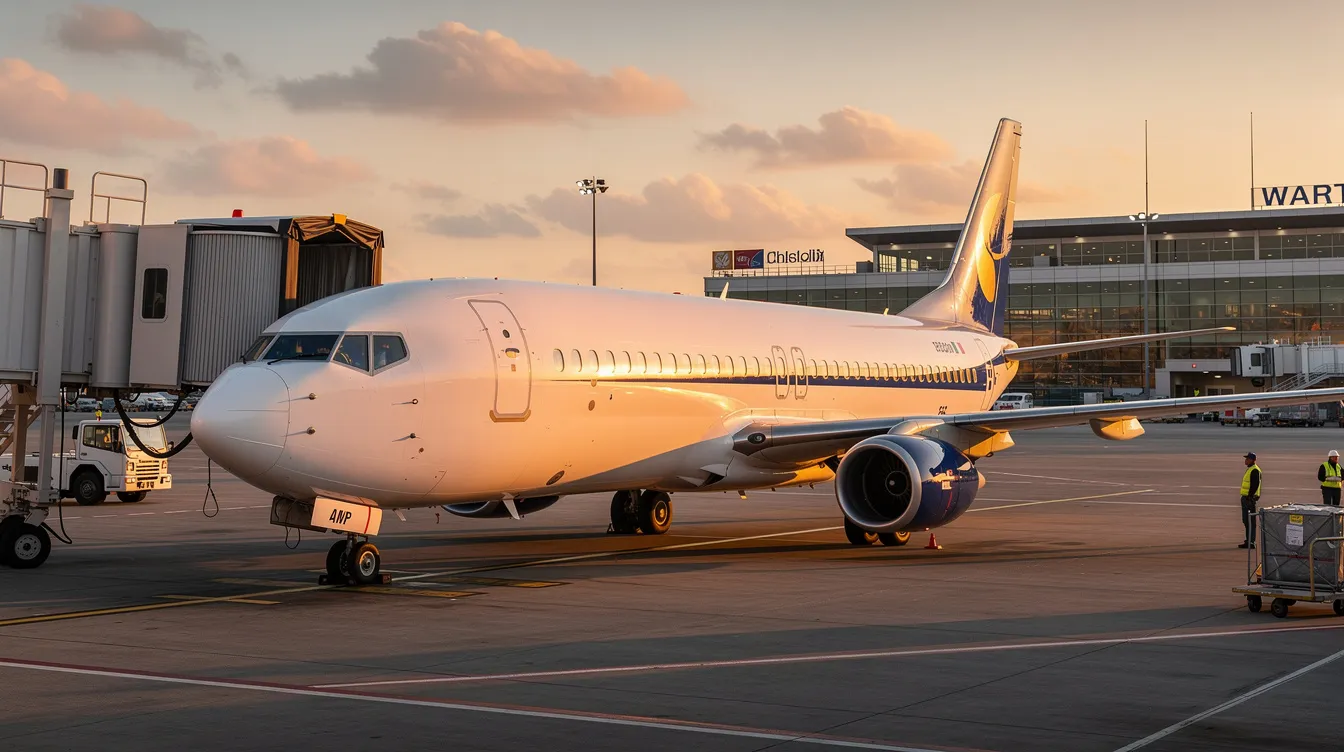
The Boeing 737-700 remains one of the most recognized narrow-body airliners in the world, yet its price varies dramatically depending on whether you are buying new, sourcing pre-owned, chartering for a single trip, or evaluating it against modern alternatives. This guide breaks down every dimension of the 737-700 price equation - from historical list prices and current secondary market values to charter rates, operating costs, and the strategic case for choosing a Jet Card over aircraft ownership.
Quick Answer: What Does A Boeing 737-700 Cost Today?
The average purchase price of a new Boeing 737-700 is $89.1 million, based on Boeing's last published catalog pricing from the late 2010s. However, list prices are not reliable indicators of actual purchase costs. Boeing stopped publishing commercial aircraft list prices around 2019–2020, shifting toward negotiated, customer-specific agreements.
On the used market in 2024–2025, airline-configured 737-700s typically trade in the $12 million to $28 million range, depending on build year, total flight cycles, maintenance status, and interior condition. A used Boeing 737-700 typically trades for roughly $10 million to $25 million on the lower end of the spectrum, while younger, well-maintained Boeing 737-700s can command prices above $20 million.
VIP and Boeing Business Jet (BBJ1) variants - based on the 737-700 fuselage with auxiliary fuel tanks, bespoke cabins, and secure communications - can exceed $60–80 million once interior completion is factored in. Meanwhile, airlines and governments rarely pay the full list price. Transaction prices can be 40–60% below the list price, especially in large multi-aircraft orders negotiated during favorable market conditions.
For most private clients, purchasing a 737-700 represents an over-commitment of capital and operational complexity. Many high-net-worth travelers find that accessing large-cabin aircraft through BlackJet's Jet Card programs and understanding the broader private jet price list, costs, and access models delivers the same mission capability at a fraction of the total cost, without the burden of ownership, depreciation, or crew management.
Overview: Where The Boeing 737-700 Fits In The 737 Family
The Boeing 737-700 is part of the Next Generation (NG) family, a line of single-aisle aircraft that Boeing developed through the late 1990s to replace the older 737 Classic series (-300, -400, -500). It sits between the smaller 737-600 and the larger 737-800, making it a mid-capacity workhorse for domestic and regional international routes.
Key specifications include:
Seat capacity: typically 126–149 passengers in a two-class airline layout; up to approximately 149 in high-density single-class configurations
Range: approximately 3,400–3,800 nautical miles depending on payload and fuel load, capable of missions like New York to Denver or London to Marrakesh
Engines: twin CFM56-7B powerplants, offering improved fuel consumption and reliability compared with the Classic generation
Wing design: redesigned wing with aerodynamic improvements and optional blended winglets for better efficiency
The BBJ1 is the VIP variant of the 737-700 airframe, equipped with auxiliary tanks for extended range (often exceeding 6,000 nautical miles at full fuel capacity) and highly customized interiors for head-of-state and corporate missions.
The 737-700 made its first flight in February 1997 and entered service with Southwest Airlines in 1998, while the original 737 first flew in April 1967 and was FAA-certified in January 1968. While the 737 MAX family - Boeing's newest single-aisle offering - now dominates new orders, the NG series continues to fly with hundreds of operators worldwide and forms the backbone of the pre-owned market. When aircraft compared on price alone, the 737-700 offers substantially lower acquisition costs than a 737-800 or MAX 8, though it carries fewer passengers and burns more fuel per seat-mile.
Historic Boeing 737-700 List Price Versus Real-World Transaction Prices
Understanding the Boeing 737-700 price requires separating the manufacturer's catalog figure from what buyers actually pay. Boeing historically published annual list prices for its commercial aircraft, and in its 2018 catalog, the 737-700 carried a list price of approximately $89.1 million before options and custom work.
But airlines ordering fleets of 737 NG aircraft - including carriers like United Airlines, american airlines, and international operators such as malindo air - rarely paid anywhere near that figure. Transaction prices for the Boeing 737-700 can be 40–60% below list price, meaning a nominal $89.1 million aircraft might change hands for $40–55 million in a large fleet deal. The depth of these discounts depends on order size, production timing, financing terms, and competitive pressure from rival manufacturers like Airbus.
Boeing no longer publishes list prices for new aircraft, a policy shift implemented around 2019–2020. The manufacturer now emphasizes total cost of ownership and negotiated pricing rather than fixed catalogs.
For private VIP buyers of the BBJ1, the economics differ. Because these customers typically purchase one or two bespoke units rather than dozens, they pay closer to - or even above - the published list price once custom interior completion, extended-range modifications, and advanced avionics are included.
Current Market Values: New vs Used Boeing 737-700 In 2024–2025
The Boeing 737-700 is out of production and trades exclusively on the secondary market. New production slots shifted to the 737 MAX series years ago, so anyone acquiring a 737-700 today is sourcing a used airframe - either from airline retirements, lessor portfolios, or government fleet transitions — and should approach the process with a structured guide to buying a Boeing 737 for private or operational use.
Current approximate market values based on Acumen Valuation data:
2009 build: approximately $12.7 million
2011 build: approximately $14–15.5 million
2013 build: approximately $15.8–17.5 million
2015–2016 builds: approximately $18–22 million, depending on cycles and condition
Aircraft age significantly influences market value for the Boeing 737-700. Units with fresh heavy checks (C or D inspections), recently overhauled engines, refreshed interiors, and updated avionics command a premium that can push values into the mid-$20 million range. Conversely, airframes approaching major maintenance events or carrying high cycle counts may slide below $10 million.
BBJ1 and VIP-configured 737-700s follow a different valuation trajectory entirely. Pre-owned Boeing 737-700s in VIP configuration typically range from $40 to $60 million, reflecting their bespoke interiors, auxiliary fuel systems, and typically lower utilization. At the top end, well-maintained BBJ1s with modern cabins can hold value above that band.
Market volatility - driven by interest rates, fuel prices, and demand for narrow-body capacity - can shift these values by several million dollars year to year, making timing a significant factor in any acquisition.
Breakdown Of Total Cost: Acquisition, Completion, And Operation
The total cost of a Boeing 737-700 extends far beyond the purchase price. For any buyer - airline, government, or private operator—the full financial picture includes acquisition, completion, and a decade or more of operating expenses.
Acquisition: airline-configured used 737-700s at roughly $12–28 million; green BBJ1 / VIP platforms historically $35–50 million before interior work
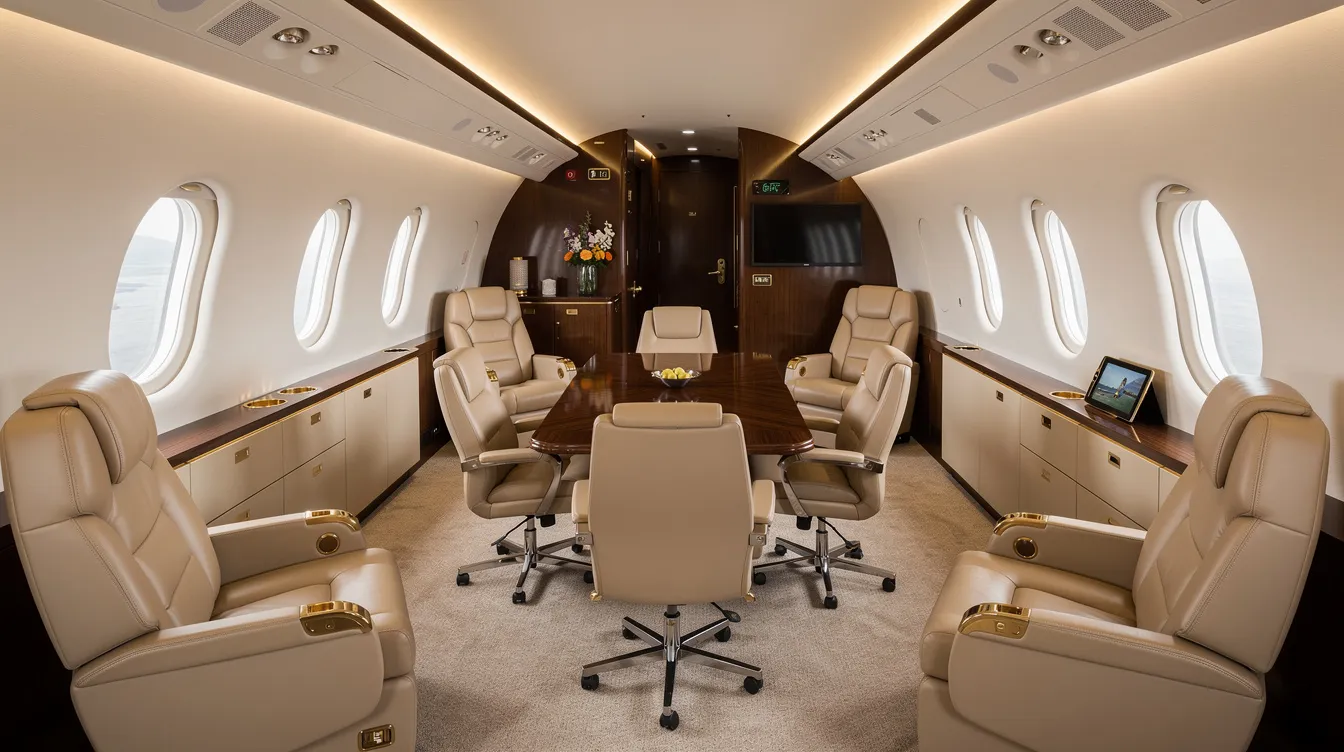
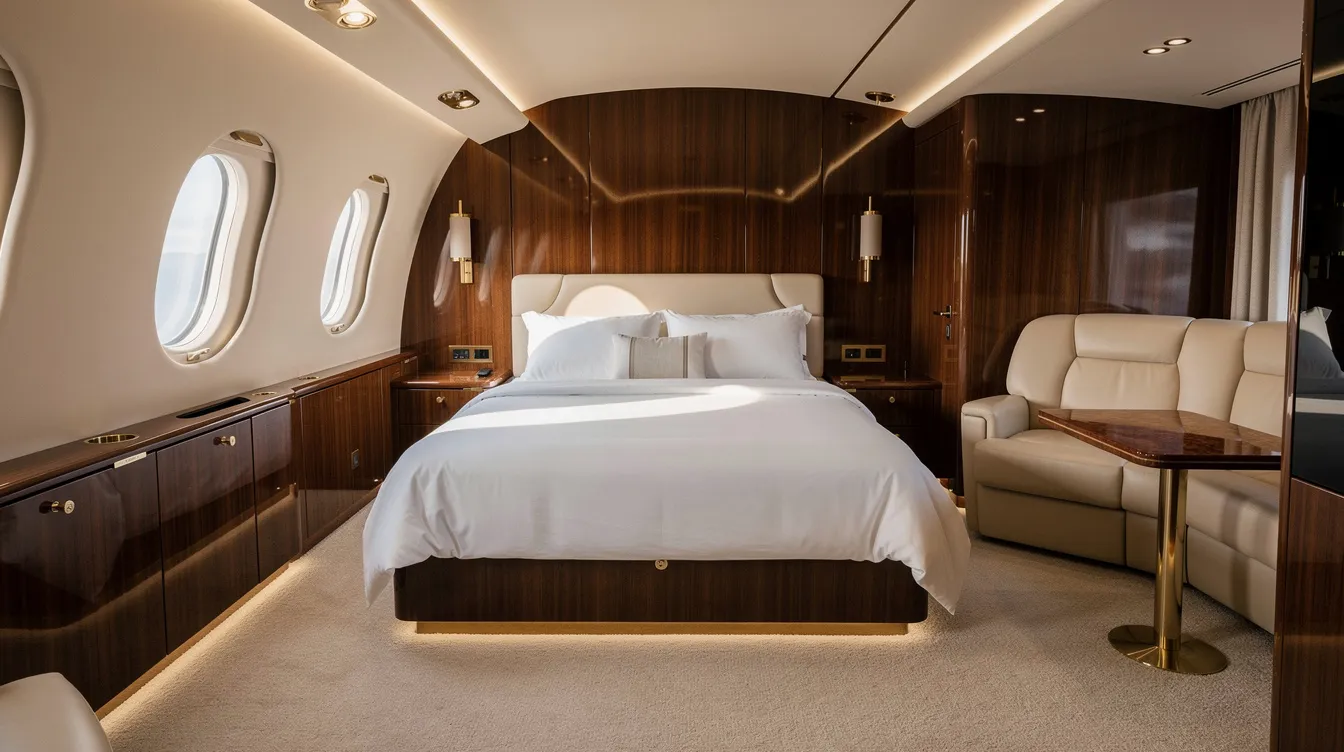
Interior completion: for a BBJ1, luxury cabin buildout - bedrooms, offices, conference suites, secure communications, in-flight connectivity - typically adds $20–40 million and requires 12–24 months of completion time
Annual operating costs: a privately operated 737-700 or BBJ1 flying approximately 400–600 hours per year incurs roughly $4–7 million annually in fuel, crew salaries, insurance, hangar fees, maintenance reserves, and navigation charges
Depreciation: structured over 10–20 year horizons, with the steepest value loss occurring in the first 5–7 years (often 40–50% of the transaction price), then flattening into mid-life
Transaction prices for the Boeing 737-700 depend on a distinct set of lifecycle and market dynamics, meaning the same model year can vary by millions depending on when and how it was maintained.
For most private travelers, this math makes ownership difficult to justify. A BlackJet Jet Card, framed within a clear understanding of jet card pricing structures, costs, and benefits eliminates acquisition capital, depreciation risk, and the operational overhead of managing a large aircraft — delivering comparable travel outcomes at a fraction of the commitment.
How Technology And Configuration Influence Boeing 737-700 Pricing
Technology and cabin layout are among the strongest drivers of a 737-700's price, both at original sale and on the resale market.
The condition and history of the CFM56-7B engines affect the Boeing 737-700's valuation directly. These powerplants, powered by CFM International (a joint venture between GE Aviation and Safran - not Rolls-Royce, which powers competing airframes), offered a generational leap over the Classic series in fuel efficiency, reliability, and noise performance. That advanced technology, combined with redesigned wing geometry and modern avionics, justified the 737-700's original list price premium over predecessors and continues to support residual values today.
Major option packages that influence pricing include:
Advanced avionics suites (RNP/RNAV capability, head-up displays)
Blended winglets for improved aerodynamic performance
Long-range auxiliary tanks (standard on BBJ1 variants)
Cabin configuration: high-density airline layouts (140+ seats) vs premium two-class arrangements vs full VIP interiors for 19–50 passengers
Connectivity systems, satcom installations, and in-flight entertainment upgrades — especially in BBJ cabins - can add $1–5 million depending on capability and redundancy. The resale value of a Boeing 737-700 is also affected by its passenger configuration and cabin condition, with well-appointed interiors commanding significant premiums.
By contrast, the 737 MAX family's LEAP-1B engines and further aerodynamic improvements represent the next technological step, which is why MAX variants still command higher list and transaction prices despite the 737-700's proven track record.
Boeing 737-700 vs Boeing 737 MAX 7 And 737 MAX 8: Price & Economics
The Boeing 737 MAX series consists of four primary variants: MAX 7, MAX 8, MAX 9, and MAX 10. These represent Boeing's current-generation single-aisle family, positioned as direct successors to the NG line.
Historically, Boeing's catalog listed the MAX 7 at approximately $99.7 million and the MAX 8 at approximately $121.6 million - the list price for a Boeing 737 MAX 8. With standard fleet discounts, Boeing 737 MAX market values range from $55 to $75 million for the MAX 8 in large orders. At full catalog valuation, the Boeing 737 MAX has a market value of around $110 to $120 million for recent-delivery aircraft.
The key economic distinction is fuel burn. The MAX family delivers approximately 15–20% lower fuel consumption versus NG models in typical operation, thanks to LEAP-1B engines and refined aerodynamics. Over a 10–15-year lifecycle at high airline utilization, those savings can offset a substantial portion of the higher acquisition cost.
For private or government operators flying fewer annual hours (under 400), the fuel-burn advantage narrows in financial terms, making a well-maintained 737-700 a compelling value play - particularly when acquisition costs are a fraction of a new Boeing aircraft.
The MAX program experienced significant disruption following two fatal crashes in 2018 and 2019 (Lion Air and Ethiopian Airlines), leading to a worldwide grounding and subsequent FAA recertification process. Those events temporarily pressured MAX prices and delivery schedules but did not fundamentally eliminate the type's long-term efficiency edge. The aircraft has since been certified to return to service by major regulatory authorities worldwide. Airlines' transitions to newer aircraft like the 737 MAX influence the supply of the Boeing 737-700 on the secondary market, as retiring operators release NG airframes.
Charter Rates: Boeing 737-700 As A Private Charter Aircraft
Most private clients interact with the Boeing 737-700 through charter rather than ownership. The typical use cases - sports teams, entertainment tours, corporate roadshows, and large investor events - call for dedicated airliner-class capacity on a temporary basis, making it important to understand when chartering a private jet is worth it and how costs compare.
Typical hourly charter pricing for a 737-700 as of 2024–2025, especially when evaluated against the broader charter cost framework for 100-passenger private flights:
Standard executive/high-density configuration: approximately $14,000–$18,000 per flight hour, with some brokers quoting averages around $21,050 per hour depending on region and availability
VIP / semi-private cabin layouts: rates can climb above $25,000–$30,000 per hour due to reduced seat count, luxury interiors, and premium service levels
Additional charges: minimum flight time requirements (typically 2–3 hours per leg), repositioning fees for ferrying the aircraft to the departure point, and peak-day premiums during holidays or major events
For groups of 8–14 passengers — the most common private aviation mission profile — chartering a 737-700 is financial overkill. Large-cabin private jets accessed through a BlackJet Jet Card deliver comparable range and comfort at significantly lower hourly costs, without the logistical complexity of operating an airliner at commercial airports, and options among the best private jets for around 15 passengers often provide a better fit.
Operating Costs Of Owning A Boeing 737-700 Privately
The acquisition price is just the starting line. Over a 737-700's operational life, cumulative operating costs will typically exceed the original purchase price several times over.
Major cost categories for a privately operated 737-700 or BBJ1 include:
Fuel: approximately 2,500–3,000 kg of Jet A per flight hour, translating to tens of thousands of dollars daily during active operation at 2025 fuel prices. Published variable cost data from Conklin & De Decker puts BBJ1 variable costs at roughly $4,553 per hour
Crew: pilots, flight attendants, and training programs - including recurrent simulator training and type-rating currency - represent a significant fixed annual expense
Maintenance and engine reserves: scheduled heavy checks (C and D inspections) cost multiple millions each and require weeks of downtime; engine overhauls add further seven-figure expenses
Insurance, hangar, and administration: fixed costs that persist whether the aircraft flies or not
A private 737-700 or BBJ operator flying 400–600 hours per year can expect annual operating costs in the $4–7 million range, with fuel prices and maintenance timing creating substantial year-to-year variability.
Because of these costs, many individuals and corporations find that a BlackJet Jet Card or on-demand charter strategy yields similar mission capability for far less capital risk and ongoing expense, especially when missions can be flown efficiently on small charter planes with lower hourly costs.
Depreciation And Residual Value Trends For 737-700s
The Boeing 737-700 follows a depreciation pattern common across single aisle aircraft, though several factors unique to its market position accelerate the curve.
In the first 5–7 years after delivery, a 737-700 typically loses 40–50% of its initial transaction value. After that steep initial decline, values flatten into a slower mid-life curve where maintenance condition and cycle count become the dominant pricing variables.
The Boeing 737-700 is considered a "sunset asset" in the aviation market. Its residual values have been influenced by the rapid growth of the 737-800 (which offers more seats) and the 737 MAX 8 (which offers substantially better fuel economics), both putting downward pressure on the smaller NG variant. Secondary market demand for the Boeing 737-700 is influenced by its passenger utility and niche roles - including cargo conversion, government transport, and VIP operation - but the overall trajectory favors newer types, driving some buyers to explore the cheapest private jet options and alternative access models instead.
High demand for narrowbody jets helps stabilize residual values of the Boeing 737-700 to some extent, particularly when MAX delivery delays push operators to retain or acquire NG aircraft as interim capacity solutions.
BBJ1 and government variants often retain value better than airline-configured 737-700s, thanks to lower utilization, specialized missions, and premium interiors that serve a distinct buyer pool. However, the secondary market for ultra-luxury VIP airframes is narrow, and finding the right buyer can take time.
Macro factors - interest rates, the leasing market environment, and broader single-aisle demand trends - act as external drivers that can move 737-700 residual values by several million dollars in a short period. The valuation of the Boeing 737-700 is affected by the leasing environment and financing conditions prevailing at any given time.
Factors That Move Boeing 737-700 Prices Up Or Down
When evaluating a 737-700 purchase, several variables determine whether you are looking at a $10 million aircraft or a $25 million one:
Airframe age and total cycles: older, high-cycle aircraft carry lower prices due to structural fatigue limits and heavier maintenance requirements. Aircraft age significantly influences market value
Maintenance status: completion of recent C or D checks, engine overhauls, landing gear overhauls, and avionics upgrades can add several million dollars to value. Maintenance status and proximity to major overhauls heavily sway the Boeing 737-700's price
Configuration and role: standard airline cabin vs BBJ / VIP interior, cargo door or combi capabilities, and extended-range modifications all affect demand. A high-density layout may suit a charter operator; a VIP interior appeals to a completely different buyer
Regulatory and noise compliance: Stage III and Stage IV noise certification, emissions compliance, and compatibility with sustainable aviation fuel (SAF) are emerging influences on desirability, particularly in Europe and noise-sensitive regions
Market sentiment and competitive landscape: perceptions of Boeing aircraft overall, competitive dynamics with airbus and emerging manufacturers like COMAC, and geopolitical issues can quickly shift buyer interest and price levels
Boeing 737-700 In VIP And Government Configuration (BBJ1)
The BBJ1 is the Boeing Business Jet variant built on the 737-700 airframe, designed for customers who need the cabin volume of a narrow-body airliner with the range and privacy of a long-range business jet.
Key BBJ1 characteristics:
Range: over 6,000 nautical miles with auxiliary tanks, capable of nonstop flights like New York to Moscow or Los Angeles to London
Cabin: typically configured for 19–50 passengers with private suites, conference rooms, lounges, and full-size lavatories, rather than the 130+ airline seats
Payload flexibility: the larger fuselage allows carrying significant baggage, equipment, and even secure communications installations
BBJ1 pricing follows a two-stage model: green aircraft cost (historically $35–50 million) plus bespoke interior completion and systems integration (commonly $20–40 million or more), leading to total project budgets in the $60–90 million range. The first delivery of a BBJ1 occurred in 1998, and the variant has served heads of state, royal families, and multinational corporations as flying offices and secure command centers ever since, sitting alongside other private jet solutions for up to 50 passengers in the large-group segment.
Pre-owned BBJ1s can hold value above $40–50 million depending on age, specification, and interior condition — significantly outperforming airline-configured 737-700s on the secondary market.
For travelers who desire VIP-level comfort without the capital and complexity of a BBJ1 program, BlackJet's large-cabin fleet - including Gulfstream, Bombardier Global, and Dassault Falcon aircraft - offers a more flexible, lower-risk path to the same caliber of experience.
Leasing A Boeing 737-700: Monthly Costs And Structures
Many airlines and some governments prefer leasing 737-700s from specialized lessors rather than purchasing outright. Leasing has become the preferred option for airlines since the 1970s, and by the end of 2023, leasing accounted for 58% of the total fleet across the global commercial aviation industry.
Indicative monthly lease rates for a mid-life 737-700 operating lease range loosely from $120,000 to $220,000 or more per month, depending on airframe age, maintenance status, term length, and regional market conditions. For comparison, leasing a new Boeing 737 MAX 8 averages around $400,000 per month - reflecting the newer type's higher acquisition cost and superior economics.
The typical first lease term for a Boeing 737 is 12 years, during which the lessee operates the aircraft while the lessor retains residual value risk (in an operating lease) or the lessee bears more capital exposure (in a finance lease). Each structure carries different accounting, tax, and risk implications.
Interest rates, expected residual values, and single-aisle demand all influence lease payments and the relative attractiveness of leasing versus buying. Leasing spreads capital commitments over time but still requires substantial utilization - often 3,000+ flight hours annually - to make economic sense for an airline.
For private clients, the calculus is different entirely. Through BlackJet's Jet Card model, travelers access aircraft capacity without taking on long-term lease obligations, residual value risk, or the operational burden of managing a narrow-body airliner.
Boeing 737-700 Safety, Certification, And Market Perception
Safety reputation and faa certification history directly affect Boeing aircraft values, financing terms, and insurance costs. The 737-700 benefits from belonging to the NG family, which has accumulated a long, generally strong safety record across thousands of aircraft operating worldwide since the late 1990s.
It is important to distinguish the 737 NG from the 737 MAX series. The MAX series experienced two fatal crashes—Lion Air Flight 610 in October 2018 and Ethiopian Airlines Flight 302 in March 2019—which resulted in a global grounding and an extensive FAA recertification process. The NG models, including the 737-700, were not subject to those groundings and have continued to operate safely under FAA, EASA, and other regulatory authorities throughout.
Robust safety performance typically supports better residual values and easier access to financing. Conversely, high-profile incidents - even on related variants - can temporarily depress demand and pricing across the broader Boeing brand.
BlackJet addresses safety at the operator level by partnering exclusively with safety-certified operators meeting standards such as ARGUS and Wyvern ratings. Corporate and VIP operators of BBJ-class 737-700s often exceed regulatory minimums in pilot training, maintenance oversight, and operational protocols, making these some of the most safely operated aircraft in the world when properly managed.
Sustainability And The 737-700: Fuel Burn, Noise, And SAF
Environmental performance increasingly influences both the price and the practical operating cost of any commercial or private aircraft.
The 737-700's CFM56-7B engines and blended winglets improved fuel burn and noise levels meaningfully versus older 737 Classic models, supporting the type's value in noise-sensitive and emissions-conscious markets. However, the 737 MAX family has further improved fuel efficiency by roughly 15–20% and reduced noise footprint by approximately 40–50% compared with the NG generation — a gap that grows more financially significant the more hours you fly.
Compatibility with sustainable aviation fuel is a key factor for future value. The 737-700's engines are certified for SAF blends up to permitted thresholds, and both airlines and VIP operators are increasingly integrating SAF to meet corporate ESG goals and tightening environmental regulations.
Airport noise charges and emissions-linked landing fees - particularly prevalent in Europe - can increase the practical cost of operating older jets relative to newer, quieter types.
BlackJet offers carbon-neutral flights as standard through verified offsets and SAF participation where possible, allowing clients to maintain a smaller environmental footprint than outright ownership of a 737-class aircraft used only sporadically.
Boeing 737-700 For Group Travel: When A Narrow-Body Airliner Makes Sense
Consider a scenario: a professional sports franchise needs to move 90 players, coaches, and staff from Miami to Phoenix on a dedicated schedule, with equipment and luggage, and no commercial connections. This is where chartering a Boeing 737-700 makes genuine economic sense.
Use cases where a narrow-body airliner charter outperforms smaller alternatives, or where you might instead consider private jet options optimized for about 20 passengers:
Professional sports teams traveling a full roster across a season, where private jets for around 30 passengers or airliner-class charters become operationally attractive
Entertainment and music tours carrying crew, instruments, and production equipment
Political campaigns requiring rapid multi-city mobilization
Large investor trips and multinational leadership summits
Corporate roadshows moving 70–120 people on tight schedules
The 737-700's capacity, baggage volume, and range make it well-suited for continent-wide itineraries - a multi-city U.S. tour, a European capital circuit, or Middle Eastern government travel. However, these aircraft require adequate runway length and commercial-grade ground handling, meaning they cannot access the smallest private airports that super-midsize and large-cabin jets routinely use.
For organizations needing to move both executives and larger groups, BlackJet can coordinate a layered approach: Jet Card access for senior leadership on large-cabin or super-midsize aircraft, combined with group charter of an airliner-class aircraft for the main party, drawing on the same economics outlined in the 100-passenger charter cost framework to optimize cost, privacy, and scheduling flexibility across the entire operation.
BlackJet Jet Cards vs Owning Or Chartering A Boeing 737-700
Three models exist for accessing 737-class capacity: outright ownership, ad-hoc charter, and flexible Jet Card access.
Ownership of a 737-700 or BBJ1 requires tens of millions in upfront capital plus multi-million-dollar annual operating costs. It is best suited to governments and large corporations with constant, high-volume travel needs — entities that can justify the carrying cost and operational complexity year-round.
Charter offers episodic access for special events but comes with variable pricing, availability risk during peak demand periods, and significant per-hour cost premiums. You pay only when you fly, but you sacrifice scheduling control and cost predictability, which is why many travelers compare this route with the cost of a 12-seater private jet across ownership and charter options.
BlackJet's Jet Card programs - available in formats such as 25-hour and 50-hour blocks - provide prepaid access to a curated fleet across light, midsize, super-midsize, and large-cabin jets, and can be scaled up to solutions like a 100-hour jet card with clearly defined costs and benefits. Transparent hourly rates, no residual-value risk, safety-certified operators, carbon-neutral flights, and digital booking with real-time support are all standard.
For 2–14 passengers on frequent high-value trips, a Jet Card with BlackJet is almost always a more strategic and flexible solution than tying up capital in a boeing 737-class aircraft. The launch of new aircraft types and expanding fleet options only strengthens this proposition over time.
Sample Scenario: Comparing Costs For A Year Of Travel
Imagine a multinational executive team flying 10 international trips per year - New York to London, Los Angeles to São Paulo, Dubai to Singapore — plus regional European and U.S. hops, totaling approximately 250–300 flight hours annually.
Owning a 737-700 / BBJ1: Upfront acquisition of $65–80 million, plus annual operating costs of $4–7 million (fuel, crew, maintenance, insurance, hangar). Including capital cost allocation and depreciation, the all-in annual figure could reach $10–12 million or more. The aircraft sits idle most of the year.
Ad-hoc chartering a 737-700: At $20,000–$30,000 per hour for VIP-configured charters, 300 hours of flying could cost $6–9 million annually, before repositioning fees, peak premiums, and availability uncertainty. You have no asset on the balance sheet, but you also have no scheduling guarantees.
BlackJet Jet Card strategy: Using large-cabin jets (Gulfstream G650, Global 7500, Falcon 8X class) for most international and regional legs, with occasional supplemental charter only for legs requiring full airliner capacity. A plausible total annual cost falls in the mid-seven-figure range - substantially below ownership - while delivering superior flexibility, no residual value risk, and the ability to match aircraft size to each specific mission.
These figures are illustrative, but the strategic logic is consistent: unless you are flying an aircraft hundreds of hours per year with consistently large groups, ownership of a 737-class aircraft is difficult to justify financially; frequent flyers are often better served by evaluating the best jet cards for cost-effective, guaranteed access.
Frequently Asked Questions About Boeing 737-700 Price
What was the original Boeing 737-700 list price?
The average purchase price of a new Boeing 737-700 is $89.1 million, based on Boeing's last published catalog figures from the 2017–2018 era. However, Boeing no longer publishes list prices for new boeing aircraft, having shifted to negotiated agreements around 2019–2020.
How much is a used 737-700 in 2025?
Used Boeing 737-700s in airline configuration typically trade between $10 million and $25 million, depending on build year, cycles, and maintenance status. Later builds (2013–2016) in good condition can trade in the upper teens to mid-$20 million range, while older or heavily cycled airframes may fall below $10 million. BBJ1 and VIP variants command substantially higher values.
What is the price difference between a 737-700 and a 737 MAX 8?
The list price for a Boeing 737 MAX 8 is approximately $121.6 million. With fleet discounts applied, MAX 8 transaction prices often land in the $55–75 million range. By contrast, used 737-700s trade in the $10–25 million band for airline variants. The MAX 8 costs more upfront but delivers 15–20% better fuel efficiency over the lifecycle.
How much does it cost per hour to charter a Boeing 737-700?
Standard charter rates run approximately $14,000–$18,000 per flight hour, with VIP configurations climbing to $25,000–$30,000 or more. Repositioning, minimum-hour charges, and seasonal demand further influence the effective cost.
Is it worth buying a 737-700 for private or corporate use, or should I consider a jet card instead?
Ownership only makes financial sense for operators flying 300–400 or more hours annually with consistently large passenger counts. For most corporate and private customers, a Jet Card provides the flexibility, safety certification, and prestige of private aviation without the capital commitment, depreciation exposure, or operational burden of managing a narrow-body airliner.
What are typical annual operating costs for a privately-owned Boeing 737-700 or BBJ1?
For usage of approximately 400–600 hours per year, expect total annual costs (fixed and variable) in the $4–7 million range, encompassing fuel, crew, insurance, maintenance reserves, hangar, and administration.
How does BlackJet ensure safety and carbon-neutral travel compared with owning a large Boeing aircraft?
BlackJet partners exclusively with operators holding high safety credentials (ARGUS, Wyvern, IS-BAO where applicable), conducts regular audits, and maintains standards that often exceed commercial airline requirements. Carbon-neutral flights are delivered through verified offset programs and SAF participation - at no additional cost to the client - allowing travelers to fly safely and sustainably without the environmental footprint of owning a 737-class aircraft used sporadically.
How To Evaluate If A Boeing 737-700 Is Right For Your Strategy
Before committing capital to a 737-700 — or any airliner-class aircraft - the right starting point is a clear-eyed assessment of your actual travel profile, not aspirational assumptions about how much you might fly.
Key questions to address:
Group size: How many passengers do you typically carry per trip? If consistently fewer than 20, a large-cabin jet is almost certainly more efficient
Route structure: What is your required range? Do you need intercontinental capability, or are most flights regional?
Frequency: How many trips per year, and how many total flight hours? Ownership economics only begin to make sense at high utilization
Financial appetite: Can you absorb tens of millions in acquisition capital plus multi-million-dollar annual fixed costs, even in years when travel demand drops?
Operational complexity: Are you prepared to manage crew recruitment, training, safety management systems, maintenance oversight, and regulatory compliance for an airliner-class operation?
Compare the full lifecycle cost of 737-700 ownership or dedicated charter against a Jet Card model. For many high-net-worth and corporate clients, the answer is clear: maximum flexibility, minimum complexity, and zero depreciation risk through prepaid jet access such as the BlackJet 25+ Hour Jet Card program.
Boeing's 737 family - from the original models that followed the merger with McDonnell Douglas, through the NG generation, to the current MAX line - has shaped modern aviation for decades. But owning one of these aircraft is a fundamentally different proposition from flying on one. The world of private aviation offers more elegant solutions for most travelers, including the cheapest private aircraft options and alternative access strategies.
Explore premium jet access with BlackJet — or speak with our team about tailoring a Jet Card to your travel profile. If you are comparing providers, you may also wish to understand NetJets jet card costs and program structure and how Flexjet jet card pricing and benefits differ, or even how to buy a seat on a private jet through shared and semi-private options. For buyers still considering ownership alongside these models, BlackJet can also assist with premium private jets for sale in the UK and beyond. The most strategic move may not be buying an aircraft at all, but ensuring you always have the right one waiting when you need it.


 Sign up with google
 Sign up with Apple