Introduction: Why "Affordable Private Jet" Access Matters in 2026
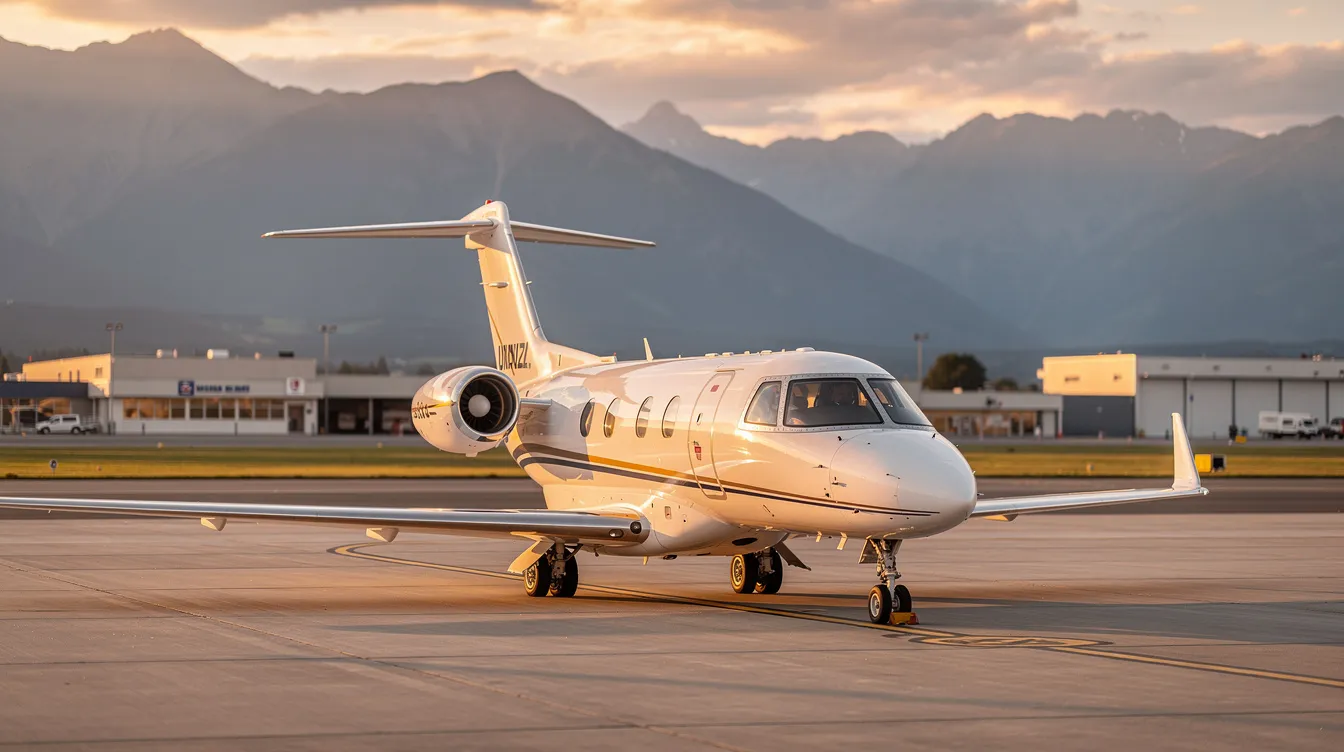
Private jet travel is no longer defined by writing a check for a multimillion-dollar aircraft and absorbing six figures in annual overhead. In 2026, the conversation around affordable private jets has shifted decisively from ownership to access. Jet Card programs, on-demand charter, and empty leg flights now let frequent travelers experience private aviation at a fraction of traditional charter prices - without signing a single maintenance invoice.
The strategic advantage is measurable. A New York–to–Miami trip by private midsize jet, using regional airports like Teterboro or Westchester, takes roughly three hours and forty-nine minutes door-to-door. The same route on commercial airlines - factoring in security lines, connections, delays, and hub-airport friction at JFK or LaGuardia - averages six hours and thirty-seven minutes. That is nearly three hours saved each way, and two-thirds of business jet passengers report increased productivity when flying private. Multiply that across monthly business trips, and the ROI becomes self-evident.
The market behind this shift is substantial. As of mid-2025, approximately 24,442 business jets were in operation worldwide, with the United States accounting for over 63 percent of the global fleet. Demand for economical private jets and smaller aircraft categories continues to climb through 2026, driven by travelers who value time, privacy, and flexibility but have no interest in becoming private jet owners.
BlackJet sits squarely at this intersection. As a carbon-neutral private aviation company, BlackJet offers Jet Card programs across multiple cabin classes - from turboprops through large jets - giving members predictable, all-in hourly rates, non-expiring flight hours, and rigorous safety standards. No hangar fees. No pilot and crew salaries. No depreciation risk. Just private flight, on your terms. The question is no longer whether you can afford to fly private. It is whether you can afford not to.
What "Affordable Private" Really Means (Ownership vs Access)
The cheapest private jet you can buy is not necessarily the most affordable private jet you can fly, especially when you look at private jet options available for around $2 million. Consider the Eclipse 500, one of the most budget-friendly jets on the pre-owned market: acquisition runs between one million dollars and $1.5 million. Attractive on paper. But private aircraft ownership brings fixed annual operating costs of roughly $307,800 - covering insurance, hangar fees, crew salaries, and scheduled maintenance - before you burn a single gallon of fuel. Add variable costs of approximately $1,700 per flight hour, and the true cost of ownership at 150 flight hours per year climbs above $560,000 annually. Operating costs for private jets can reach $500,000 to $1 million annually once fuel, storage costs, ongoing costs, and annual maintenance - which alone ranges from $50,000 to $200,000 - are tallied. Over five to ten years, depreciation, avionics upgrades, and engine overhauls can consume more than half the aircraft's original purchase price.
Affordable private jet travel in 2026 means something different. It means paying per hour through a Jet Card or charter, locking in rates, and leaving the operational expenses to someone else via premium private jet card programs. Chartering a private jet eliminates ownership costs. A Jet Card, meanwhile, gives you prepaid blocks of hours at fixed rates and guaranteed availability without tying up $2 million to $10 million in a depreciating asset.
Consider a traveler flying 60 hours per year. Owning a Cirrus Vision Jet - roughly $2 million new, with fixed and variable costs exceeding $400,000 annually - yields a per-hour cost north of $6,500 before depreciation. That same traveler using BlackJet's 25-hour or 50-hour Jet Card in the light jet category pays a predictable hourly rate with zero fixed overhead, zero capital risk, and zero surprise invoices. For anyone flying under 150 to 200 hours per year, access is not just more convenient than private jet ownership - it is more economical.
Aircraft Categories: Where the Most Economical Private Jets Sit
Understanding aircraft categories and the full range of types of private jets for every traveler is essential for any private aviation enthusiast trying to match budget to mission. The most affordable aircraft sit in the very light jet category, light jet category, and turboprop segment. These smaller jets deliver the lowest hourly rates and the best per-seat economics for regional travel.
Very light jets like the Cirrus Vision Jet and Eclipse 500 seat four to six passengers and excel on short regional flights under 1,200 nautical miles, and they frequently top lists of the best small private aircraft for flexible missions. Light jets - the Cessna Citation CJ3+, Embraer Phenom 300, and Cessna Citation Mustang - step up to six to eight passengers with ranges around 1,500 to 2,000 nautical miles. Turboprops like the Pilatus PC-12 and King Air B100 sacrifice cruise speed for dramatically low fuel burn and the ability to access smaller airports with short runways. At the other end, midsize jets and large jets such as the Dassault Falcon 50 offer spacious cabin interiors and intercontinental range, but at significantly higher hourly costs.
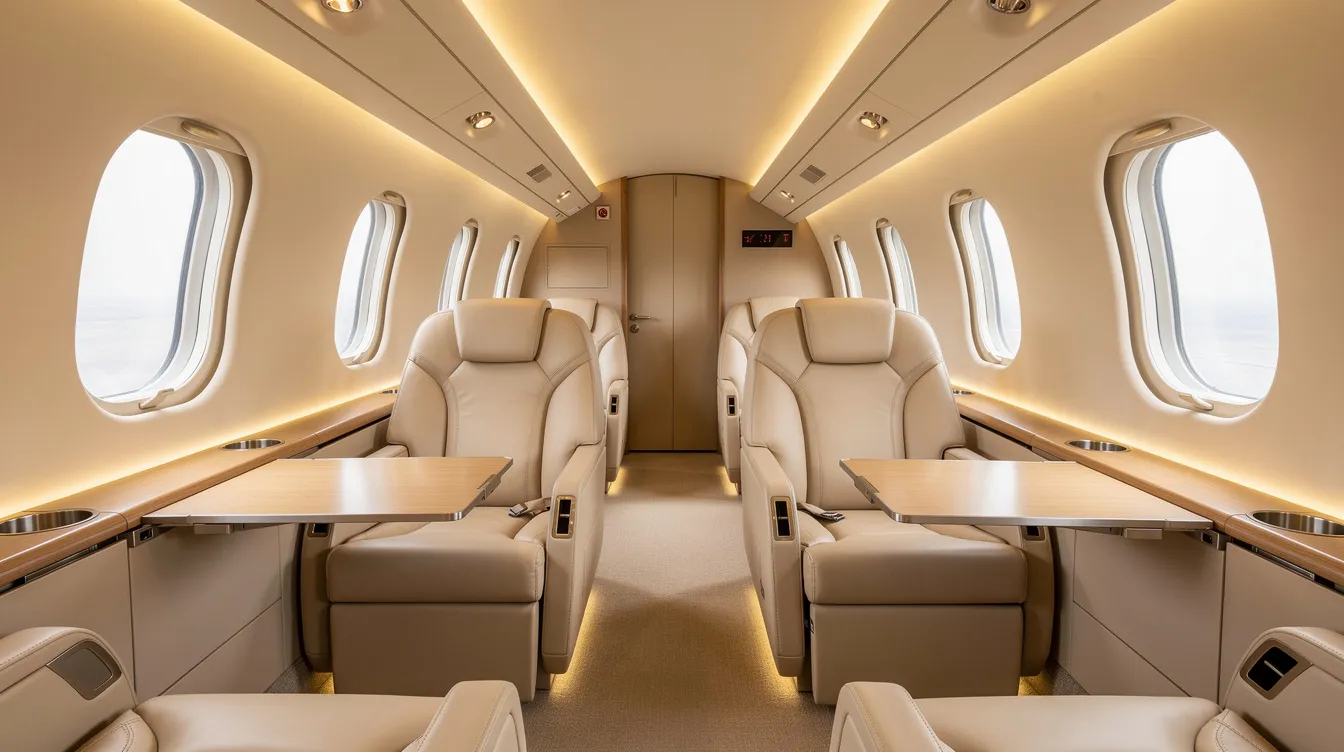
BlackJet maps its Jet Card cabin classes - light, midsize, super-midsize, and large - directly to these aircraft categories, echoing how broader types of private jets group aircraft by mission and cabin size. That means you choose the right aircraft for your passenger count, route distance, and luggage needs, and pay accordingly. Choosing very light jets or turboprops can significantly lower operating costs compared to larger jets, while still delivering the core benefit of private travel: time saved, privacy maintained, and schedules entirely under your control.
Very Light Jets (VLJs): The Entry-Level Affordable Private Jet
Very light jets are the most affordable private jets available today. Defined by four to six seats, ranges of roughly 1,000 to 1,200 nautical miles, and often single-pilot operation capability, VLJs strip private aviation down to its essentials: getting a small group between two points quickly and efficiently, with low operating costs.
The economics work because VLJs burn less fuel, use simplified systems, and can operate from short runways at regional airports that heavy jets and even some light jets cannot reach. Private jets access around 10 times more airports than airlines, and VLJs push that advantage further by fitting into strips as short as 3,000 feet. Using smaller regional airports can reduce landing fees for private flights significantly compared to major hubs.
The models BlackJet clients encounter most frequently include the Eclipse 500, the Cirrus Vision Jet SF50, the Cessna Citation Mustang, and the Embraer Phenom 100, many of which are highlighted among top affordable private planes for budding aviators. The Cirrus Vision Jet has a range of 1,200 nautical miles, features modern avionics, and is the only single-engine aircraft in its class with a whole-airframe parachute system, making it a compelling option for first-time jet owners and charter fleets alike. The Embraer Phenom 100 has a range of 1,178 nautical miles and typically costs between $1.75 million and $2.5 million on the pre-owned market. The purchase price for a new Embraer Phenom 100 is around $4.5 million.
These aircraft are purpose-built for missions like Los Angeles to Aspen, Dallas to Denver, or Geneva to Nice - one to two-hour flights with one to four passengers and economics that align closely with the cheapest private aircraft and other budget-friendly options. They are the definition of affordable private for travelers who want to fly private without excess cabin space compared to their actual needs.
Light Jets: Balancing Performance, Comfort, and Cost
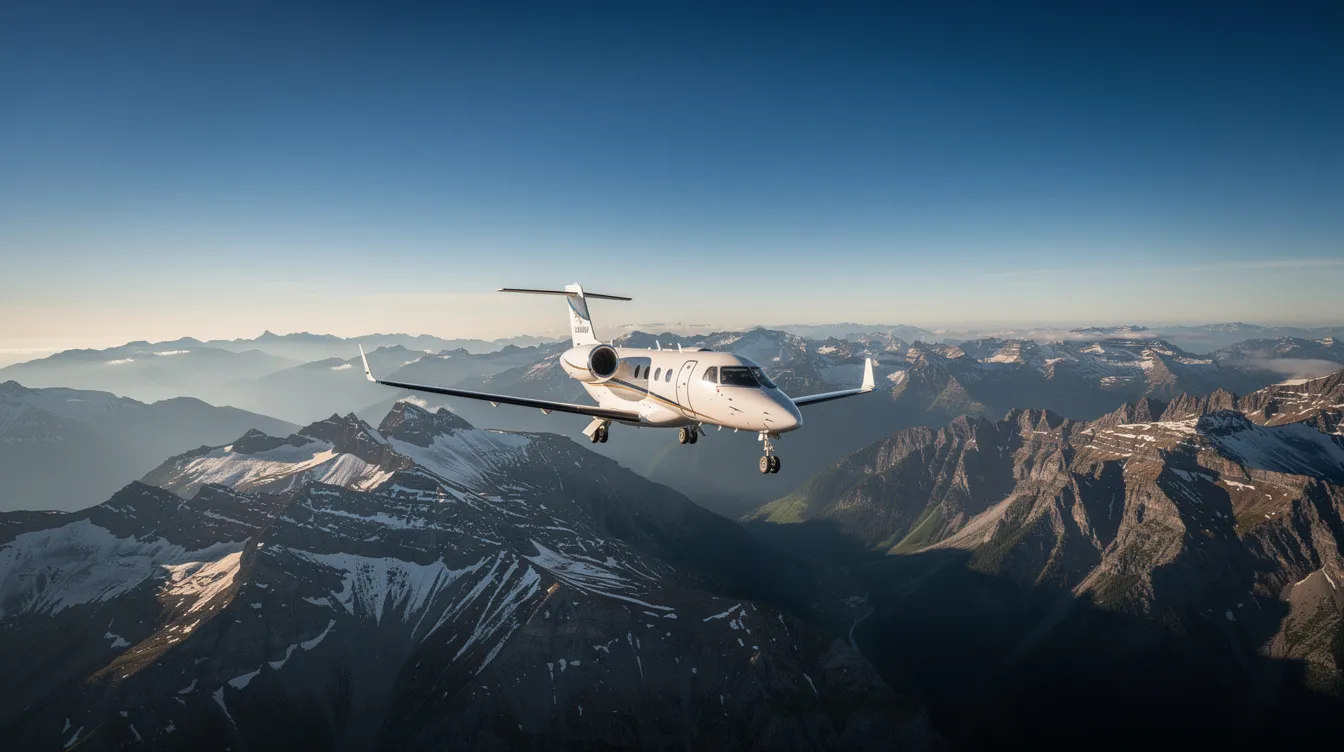
Light jets represent the sweet spot for travelers who need more than a VLJ but want to stay within the realm of economical private jets, sitting alongside VLJs and turboprops as top affordable private plane options. Light jets can carry six to eight passengers comfortably, offer enhanced baggage capacity, and deliver ranges around 1,500 to 2,000 nautical miles - enough for medium-range flights like New York to Miami, Los Angeles to Denver, or London to Geneva.
The Cessna Citation Mustang sits at the border between the very light jet category and the light jet category, with pre-owned prices ranging from $1.5 million to $2.5 million and charter rates typically between $2,000 and $3,000 per hour, making it a prime example when asking what's the cheapest private jet for practical travel. The Cessna Citation CJ3+ commands $5 million to $7 million pre-owned, with charter rates in the $3,000 to $4,000 per hour range. The HondaJet HA-420, increasingly popular in charter and Jet Card fleets, prices range from $3 million to $4 million on the pre-owned market, delivering excellent fuel efficiency and a spacious cabin for its class.
Consider a BlackJet member flying a four-person team from New York to Chicago monthly on a light jet. Commercially, that trip burns half a day per person once you factor in airport transit, security, boarding, and baggage claim. On a light jet departing Teterboro, the team is airborne in minutes, lands at a private terminal near downtown Chicago, and is in a meeting within two hours of leaving Manhattan. When four passengers share the cost of that private plane charter, the per-seat economics can rival - and sometimes undercut - premium business class on scheduled airlines, just as large groups weigh similar math when analyzing charter plane 100-passenger cost scenarios.
Case Studies: Cirrus Vision Jet, Cessna Citation Mustang, and Dassault Falcon 50
These three aircraft illustrate the full spectrum of affordable private jets on the market - from entry-level VLJ to older large jet - and each tells a different story about where value actually lives, especially when viewed against a broader private jet price list of costs and options.
The Cirrus Vision Jet costs around $2 million new, making it one of the cheapest brand-new private jets available and a headline model in many rundowns of 2 million dollar private jet options. With a range of 1,200 nautical miles, modern avionics, and a whole-aircraft parachute, it is ideal for two to four passengers on regional trips. As a single-engine aircraft, its low fuel burn and simplified maintenance keep operational expenses well below those of twin-engine competitors. For private aviation enthusiasts who value safety innovation and cost control, the Vision Jet has redefined what entry-level means.
The Cessna Citation Mustang is the budget workhorse of the light jet world. Seating four passengers with a range of roughly 1,000 to 1,150 nautical miles, pre-owned models are available between $1.5 million and $2.5 million depending on year and airframe hours. Operating costs hover around $1,000 to $1,200 per hour variable, making it a favorite among owner-operators and affordable private jet charter fleets. Its cabin space compared to very light jets offers a meaningful upgrade in comfort without a dramatic leap in cost.
Older Dassault Falcon 50 jets can be found for as low as $1 million on the pre-owned market - a remarkable initial purchase price for a large-cabin, tri-engine jet with intercontinental range of roughly 3,000 nautical miles and a useful comparison point to newer 20 million private jet platforms. But that low acquisition cost conceals high fuel consumption across three engines, expensive maintenance cycles, and mandatory avionics upgrades on older jets from the 1980s and 1990s. Annual operating costs on a Falcon 50 can easily exceed what a newer light jet costs to run. For travelers flying under 200 flight hours per year, chartering a Dassault Falcon through a provider like BlackJet - or accessing one via a Jet Card - is almost always more sensible than owning.
The Cheapest Private Jet Options: Ownership vs Just Booking the Flight
The genuinely cheapest private jets on the market today include the pre-owned Eclipse 500 at $1 million to $1.5 million, older Cessna Citation Mustang units in the $1.5 million range, and certain King Air 90/100 turboprops that appeal to budget-conscious buyers looking for low fuel burn and access to short runways, closely mirroring the landscape of cheapest private aircraft and other budget-friendly flyers. Pre-owned private jets can depreciate to below $2 million, making some jets on the market appear deceptively affordable, including many featured in curated UK private jets for sale listings.
But sticker price and lifetime cost are different animals, a distinction that becomes especially clear when evaluating 2 million dollar private jet ownership versus access. That $1 million Eclipse 500, flown 150 hours per year, generates roughly $307,800 in fixed costs annually - hangar fees, insurance, pilot and crew salaries, scheduled inspections - plus approximately $255,000 in variable costs. Total: over $560,000 per year before depreciation. Annual maintenance costs for private jets range from $50,000 to $200,000 depending on aircraft age and type. Over five years at 100 flight hours annually, an owner might spend $2.5 million or more in total operating and ownership costs.
Contrast that with a non-owner approach, where a detailed 50-hour jet card pricing overview helps clarify true all-in costs. A BlackJet 50-hour Jet Card for light jets yields an effective hourly rate of approximately $6,500 to $7,500, all-in, with no fixed overhead, comparable in structure to a 100-hour jet card cost framework but at a smaller commitment level. At 100 hours per year over five years, total spend is roughly $3.25 million to $3.75 million - but with zero depreciation risk, zero maintenance surprises, zero storage costs, and no capital locked in a depreciating asset. For most individuals flying under 150 to 200 hours per year, the most affordable private path leads not to a bill of sale but to a Jet Card membership, particularly when you compare detailed 50 hour jet card cost and value guides against full ownership math.
Affordable Private Travel Models: Charter, Jet Cards, and Empty Legs
On-demand charter is the simplest entry point: you book a specific aircraft for a specific trip, pay only when you fly, and walk away, making it a cornerstone strategy for those looking to fly private cheap with flexible options. Chartering provides flexible scheduling and access to various aircraft types. Prices for full aircraft charters can vary significantly based on aircraft type and travel route, with chartering a private jet typically costing between $2,000 and $14,000 per hour. The trade-off is pricing volatility - peak dates, repositioning fees, and last-minute bookings can inflate costs substantially. Shared charter models allow multiple passengers to split the cost of a flight, further reducing per-seat expense.
Jet Card programs offer a more structured alternative and, for frequent travelers, some of the best jet cards for flexibility and cost transparency combine guaranteed availability with predictable pricing. BlackJet's Jet Card programs come in 25-hour and 50-hour increments across all cabin classes. Jet card programs offer prepaid blocks of flight hours at fixed hourly rates, guaranteed availability, and predictable budgeting. Members can access various aircraft types through jet cards without any ownership costs or responsibilities. Jet card programs eliminate ownership costs and responsibilities. Jet cards are ideal for travelers flying 50 to 100 hours annually, though BlackJet's non-expiring hours make them viable for lower-frequency travelers who want rate certainty.
Empty leg flights represent the absolute cheapest way to fly private and are a key tactic in most strategies for affordable luxury private travel. These repositioning flights occur when an aircraft needs to return to base or move to its next charter pickup, and empty leg flights can offer discounts up to 75 percent off standard rates. A midsize jet repositioning New York to Miami might list for $8,000 to $12,000 - a fraction of the standard rate. The constraint is flexibility: routes, dates, and times are dictated by the fleet's schedule, not yours. Low-cost jets offer flexibility for customized travel schedules through charter and Jet Cards, while empty legs reward those who can adapt.
Private aviation includes various models such as empty-leg flights, shared charters, and membership programs. The right model depends on your usage pattern: under 20 hours per year, lean toward ad hoc charter and empty legs; between 25 and 100 hours, a Jet Card becomes more economical; beyond 200 hours annually, fractional ownership or full ownership starts to compete - though even then, the risks of capital commitment and depreciation remain.
Cost Breakdown: What Really Drives Private Jet Pricing
The main cost drivers in private jet travel are aircraft size and category, flight time and distance, airport fees, repositioning (deadhead) costs, crew expenses, and peak versus off-peak demand, all of which show up clearly in any detailed private jet price list explaining core cost factors. Each variable can move a quote meaningfully, which is why two seemingly similar trips can carry very different price tags.
Typical 2026 charter rate bands for U.S. domestic flights illustrate the range: light jets run approximately $2,500 to $4,000 per hour, midsize jets $4,000 to $6,000 per hour, and large jets $6,000 to $10,000 or more per hour, while large group missions may follow a very different charter plane 100 passengers cost structure. Industry-wide Jet Card median rates trend slightly higher - light jets around $8,500 per hour, midsize near $9,000 to $10,000, super-midsize around $11,900 - but these figures include fuel, FET, and many ancillary fees that on-demand charter quotes often exclude, reflecting the bundled-cost logic explained in depth in this guide to jet card pricing and benefits. Membership programs for private jet access can provide discounted hourly rates without large upfront commitments compared to ownership.
To ground this in a real mission: a Los Angeles to Aspen round trip on a light jet involves roughly three hours of flight time, plus landing and handling fees at Aspen's high-altitude airport, potential deicing charges in winter, and overnight crew costs if you stay multiple days. On a variable charter quote, those extras might add $3,000 to $5,000 beyond base flight time. A BlackJet Jet Card wraps most of those fees into the hourly rate, flattening the surprise factor and making budgeting straightforward for the financially literate traveler.
Flying Private Safely and Sustainably - Even on a Budget
Affordable must never mean cutting corners on safety. Industry benchmarks such as ARGUS, Wyvern, and IS-BAO ratings exist precisely to differentiate operators who invest in pilot training, maintenance rigor, and operational transparency from those who do not. BlackJet's proprietary safety certification process sets minimum pilot hours, mandates ongoing training standards, and continuously monitors maintenance and safety records across every aircraft category in its network.
On sustainability, BlackJet delivers carbon-neutral flights by default through verified carbon offsets and growing integration of Sustainable Aviation Fuel where available - at no extra cost to members, aligning with broader trends in the global private jet fleet and its move toward greener operations. SAF adoption in business aviation remains early, representing roughly 0.6 to 0.8 percent of global jet fuel consumption in 2025-2026, but the trajectory is upward. Newer economical private jets like the Cirrus Vision Jet, Pilatus PC-12, and Embraer Phenom 100 inherently reduce emissions through lower fuel consumption, aligning affordability with environmental responsibility. Safety and sustainability are not premium extras - they are foundational to BlackJet's value proposition.
Technology and Convenience: Making Affordable Private Travel Effortless
BlackJet's digital platform transforms how members book and manage private flights, acting as the front door to its premium private jet cards and Jet Card programs. Mobile and web tools deliver real-time pricing, aircraft selection across cabin classes, and instant trip confirmations - replacing the friction of calling multiple brokers, collecting quotes, and negotiating positioning fees. Digital charter marketplaces streamline the bidding process for private jet travel, and private jet travel has become more accessible due to digital broker platforms that connect travelers with available aircraft in seconds.
Technology also drives down cost behind the scenes. Efficient aircraft matching algorithms reduce repositioning distances, optimized routing minimizes fuel waste, and dynamic empty-leg alerts surface discount opportunities that would otherwise go unnoticed. On-trip, members receive 24/7 flight concierge support, live tracking, ground transportation coordination, and real-time updates for weather or schedule changes.
Imagine booking a next-day light jet from London to Zurich via the BlackJet app: select your cabin class, review the all-in rate, confirm the trip, and receive your itinerary - all in under five minutes, using many of the same aircraft that appear on lists of top affordable private planes for efficient regional travel. Compare that to the traditional broker experience of emails, callbacks, and hours of uncertainty. The technology does not replace the luxury; it amplifies it.

Choosing the Right Affordable Private Jet Option for Your Needs
The right aircraft and access model depend on a handful of practical factors: your typical route lengths, number of travelers, luggage volume, preferred airports, timing flexibility, and expected annual flight hours. Getting these right is the difference between overpaying and genuinely finding affordable private travel.
For short hops with two to four passengers - think an entrepreneur flying monthly from Los Angeles to San Francisco - a very light jet or turboprop via Jet Card delivers the lowest cost per trip, mirroring the recommendations in many guides to the best small private aircraft by mission. The ability to use smaller regional airports and avoid hub congestion adds further time and cost savings. For four to six passengers on routes exceeding 1,000 nautical miles - a family doing seasonal New York to Palm Beach trips, for instance - a light jet offers the ideal balance of cabin space, range, and economy. And for a European executive team running frequent London-Frankfurt-Zurich circuits, a midsize or super-midsize jet optimizes per-seat cost when the aircraft is fully utilized.
When the mission demands a spacious cabin and ultra-long-range aircraft capability - say, transatlantic or cross-continental - large cabin options like the Dassault Falcon 50 or similar become cost-effective at scale, especially via a Jet Card that eliminates the punishing fixed costs of owning such a private plane, even when you are evaluating 20 million-dollar private jet features and tradeoffs. BlackJet advisors specialize in matching your specific travel profile to the right cabin class and access model, ensuring you never pay for more aircraft than your mission requires, even if your benchmarks come from billionaire private jet price trends and flagship aircraft.
FAQs: Economical Private Jets and Jet Card Travel
What is the most affordable private jet I can realistically fly on in 2026?
Very Light Jets are the most affordable private jets available. On the pre-owned market, the Eclipse 500 starts at roughly $1 million to $1.5 million, with pre-owned Cessna Citation Mustang units between $1.5 million and $2.5 million, and the Cirrus Vision Jet costs nearly $2 million. For access without ownership, VLJ charter rates start around $2,000 per hour, which aligns with broader analyses of the cheapest private jet options for every traveler.
Is it cheaper to fly private once a month with a Jet Card or to own a very light jet?
For most travelers flying under 150 flight hours per year, a Jet Card is significantly less expensive once you factor in hangar fees, insurance, pilot and crew salaries, maintenance, and depreciation. Ownership only becomes competitive above roughly 200 hours annually with consistent mission needs.
How do Jet Card rates compare to on-demand charter for 50 to 100 hours per year?
Jet card programs provide fixed hourly rates for flights that are often lower and more predictable than on-demand charter, which can spike during peak periods or for last-minute bookings; a detailed guide to jet card pricing and structures can help quantify those differences. At 50 to 100 hours, a Jet Card locks in pricing and eliminates most surcharges that variable charter quotes carry.
Can affordable private travel still be carbon neutral and safe?
Absolutely. BlackJet includes verified carbon offsets on every flight at no additional cost, uses SAF where available, and maintains rigorous operator vetting aligned with ARGUS, Wyvern, and IS-BAO standards. Affordable does not require compromise on safety or sustainability.
Which aircraft categories usually deliver the lowest hourly rates?
VLJs, light jets, and turboprops consistently offer the lowest hourly rates and best per-seat economics, especially on short regional flights. Smaller jets with low fuel burn and the ability to access smaller airports provide the foundation for truly economical private jet experiences.
What are key advantages of a Jet Card over fractional ownership?
Jet cards eliminate ownership costs and responsibilities, require no capital commitment in a depreciating asset, and offer access to multiple aircraft types across cabin classes, making many of the best jet cards for frequent flyers compelling alternatives to shared ownership. Fractional ownership still carries management fees, maintenance exposure, and scheduling constraints that Jet Cards avoid entirely, something that becomes clearer when you compare programs like the NetJets jet card cost structure and inclusions to on-demand models.
How do empty legs make private jet travel more accessible?
Private jets can save up to 75 percent on empty leg flights, making them the most budget-friendly entry into private aviation and a cornerstone of most fly private cheap strategy guides. The trade-off is schedule flexibility - you must adapt to available routes and times - but for travelers who can, the savings are substantial.
Conclusion: Fly Private, Smarter - With BlackJet
In 2026, affordable private jet access is defined by choosing the right aircraft category and the right access model - not by chasing the cheapest private jet to put your name on. Aircraft like the Cirrus Vision Jet, the Cessna Citation Mustang, and modern turboprops enable economical private jet experiences for both business trips and leisure travel. But the real value unlock comes from separating the act of flying from the burden of owning.
BlackJet brings this principle to life through fixed-rate Jet Card programs, rigorously vetted operators, carbon-neutral flights by default, 24/7 digital booking, and transparent pricing that never surprises. Whether you are a first-time explorer of private aviation or a seasoned traveler rethinking ownership, the path forward is clear.
Elevate your travel - effortlessly. Explore BlackJet's Jet Card programs and discover how refined, sustainable, and genuinely affordable private flight becomes your new standard.


 Sign up with google
 Sign up with Apple