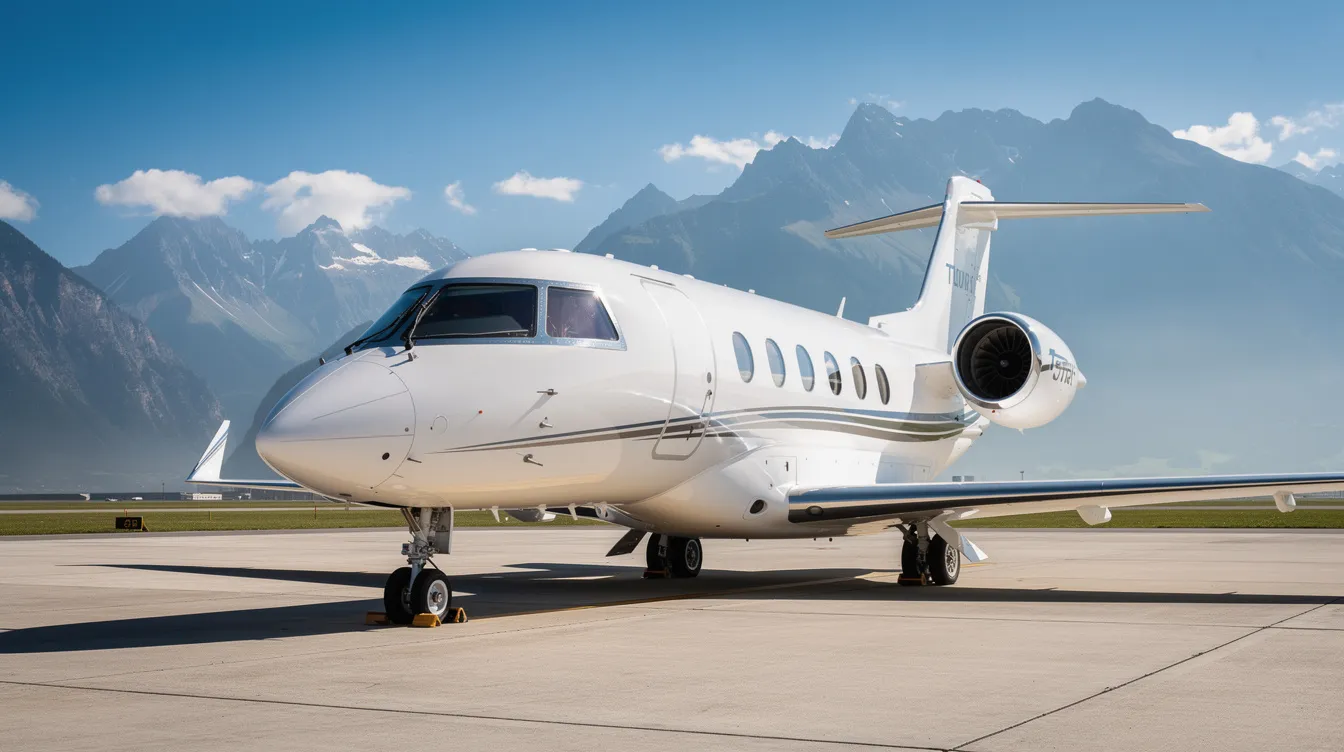
Private aircraft financing is one of the most consequential financial decisions a high-net-worth individual or corporate leader can make. This guide breaks down how jet financing works, what aviation lenders expect, and when a Jet Card delivers the same strategic advantage - without tying up millions in a depreciating asset.
Private Plane Access vs. Ownership: Strategic Choices for Elite Travelers
Consider a four-hour New York–Miami flight on commercial airlines. Add two hours for security, boarding, and ground transit on each end, and a half-day disappears. On a private jet, you arrive at a fixed-base operator minutes before departure, board immediately, and land closer to your destination - reclaiming hours for meetings, family, or rest.
That time advantage is why private aviation has become a strategic tool for executives, not merely a luxury. But accessing it doesn't require purchasing an aircraft outright. An aircraft loan is one path. Alternatives - Jet Cards, on-demand charter, fractional ownership - deliver many of the same benefits with significantly less capital and complexity.
Take a CEO flying 150 hours per year on predictable routes. Financing a midsize jet means deploying $15M–$25M in purchase price plus closing fees, crew salaries, hangar costs, insurance, and maintenance. A Jet Card program offers prepaid hours across multiple cabin sizes with zero asset risk, no crew management, and predictable per-hour costs.
This article is written for high-net-worth individuals, family offices, and corporate leaders flying 50–300+ hours per year - anyone weighing whether to work with aviation lenders, pursue fractional ownership, or use Jet Cards like BlackJet's premium private jet card programs.
Does It Make Sense to Own (and Finance) a Plane at All?
A practical framework based on annual flight hours:
Under ~150 hours/year: Jet Cards or charter typically win on cost-efficiency. Fixed ownership costs are spread across too few hours.
150–250 hours/year: The gray zone. Aircraft financing, fractional ownership, and Jet Cards all compete depending on routes, aircraft type, and capital priorities.
Above 250–300 hours/year: Full ownership - financed or purchased outright - becomes economically compelling, especially on consistent routes.
Full ownership is usually the most expensive option when you account for the total picture: capital commitment, depreciation risk, crew salaries, hangarage, regulatory compliance, and both scheduled and unscheduled maintenance. Operating costs can exceed the initial purchase price over a typical ownership period.
Ownership delivers unmatched control - custom interiors, a dedicated crew, total privacy. But fractional ownership allows shared access to aircraft without full management overhead, and Jet Cards eliminate asset risk. A company running a weekly executive shuttle between Los Angeles and San Jose may justify a financed aircraft over seven to ten years; a founder flying sixty hours globally may not.
How Private Aircraft Financing Works: Core Structures
For a broader overview of options and strategies, see our essential guide to financing an airplane alongside the aircraft-specific considerations below.
Private aircraft include jets, turboprops, and helicopters. Financing a private plane involves specialized structures different from auto or home loans. Aircraft loans and leases are credit facilities secured by the aircraft itself, typically arranged through dedicated aviation lenders rather than standard retail banking branches. Private aircraft include jets, turboprops, and helicopters - each with different financing profiles.
Common borrowers include individuals (often purchasing through LLCs or trusts for liability protection), corporations leveraging business credit, and family offices blending personal and business use for tax benefits and confidentiality. Financing options for an aircraft purchase include loans, leases, and cash purchases - and each borrower type approaches them differently, especially when evaluating comprehensive private jet leasing structures and providers.
The life cycle of an aircraft financing deal follows a clear sequence:
Pre-qualification - examining credit history, net worth, liquidity, and intended use
Selecting the right aircraft - evaluating age, maintenance history, cabin size, and resale value
Structuring the aircraft loan or lease - setting repayment structure, payment terms, interest type, covenants
Closing - title work, escrow, registration, insurance, inspections
Ongoing compliance - insurance renewals, maintenance tracking, financial reporting
Private aircraft loans typically range from three to ten years. For large-cabin jets, amortization can extend up to twenty years, though the actual loan term is often shorter with a balloon payment at maturity. Aircraft age plus loan duration usually cannot exceed twenty years for most financing structures. Cash purchases eliminate interest costs and financing fees entirely, unlike traditional loans, but require significant upfront capital deployment.
Primary Aircraft Financing Options: Loans, Leases, and Asset-Based Structures
Three dominant structures exist for private aircraft financing: traditional aircraft loans, asset-based loans, and aircraft leasing. Each can be layered with ownership vehicles like LLCs and trusts. The best fit often depends on choosing the right lender for the borrower and aircraft profile and understanding the broader private jet price list and access models.
Traditional aircraft loans are best for those wanting ownership and equity buildup. Private aircraft loans typically require a 15% to 20% down payment, and the loan amount is usually tied to the purchase price as well as borrower strength, with typical interest rates ranging from 6.0% to 9.0% depending on aircraft age, borrower strength, and market conditions. Loans may carry fixed or floating rate structures; floating rate loans can include options to purchase a swap to hedge against rate increases.
Asset-based loans use other liquid assets or collateral rather than just the aircraft, placing more emphasis on the value of the aircraft than on borrower cash flow documentation. Asset-based loans may not require personal financial disclosures, making them attractive for ultra-high-net-worth private buyers and corporate treasuries seeking privacy.
Aircraft leasing offers a third path. Aircraft leases can be tax or non-tax leases: tax leases allow the lessor to claim the tax depreciation benefits, while non-tax leases let the lessee claim the depreciation benefits during the lease term. Leasing allows you to try before you buy and to terminate the contract without depreciation loss. Sub-leasing structures allow aircraft owners to offset monthly costs through commercial chartering, and sub-leasing can help owners recoup operating costs that would otherwise sit idle.
Commercial use of aircraft often alters the risk profile and required down payment - lenders demand stricter maintenance programs and higher equity for Part 135 operations compared to Part 91 personal or business use. These dynamics vary further across categories, from turboprops to light jets, as outlined in our guide to the best small private aircraft for different missions.

The Role of Specialized Aviation Lenders and Your Deal Team
Aircraft transactions belong with many lenders who specialize in aviation - not generic consumer bankers. FAA registration requirements, international collateral rules, title searches, and large loan amounts demand niche expertise that a private bank team at a general institution rarely possesses. Companies like Airfleet Capital and member FDIC institutions with aviation desks routinely use a dedicated team to handle these aviation-specific complexities.
A typical deal team includes aviation attorneys for title and registration, a tax advisor for accounting advice and structuring, a technical inspector reviewing maintenance history and logbooks, an escrow or title agent, and sometimes a finance broker offering advisory services across multiple lenders, often with ties to groups like the National Aircraft Finance Association.
Lenders evaluate operating mission, liquidity, and aviation experience for aircraft financing. They assess aircraft value and condition based on age, maintenance history, and marketability. Engine programs are often required for turbine aircraft financing. Lenders also consider previous aircraft ownership history and assess intended aircraft use for financing decisions. Lenders assess credit history, income, and aircraft value - and it's important to understand that approval is different from a proposal in financing applications. A credit approval letter carries binding weight; a proposal is preliminary.
Key questions for prospective lenders: What are the closing fees and origination costs? Are there prepayment penalties? What covenants govern usage, maintenance, and reporting? What flexibility exists if your financial situation changes?
Eligibility, Documentation, and Approval: What Aviation Lenders Expect
A personal credit score of 700+ is typically required for aircraft financing. Lenders often require liquidity reserves equivalent to eighteen months of loan payments, substantial net worth, and demonstrated credit quality.
Documentation requirements include:
Two to three years of personal and business tax returns
Bank statements and brokerage statements
Details of existing debt and financial information
Proof of aircraft insurance coverage
Loan documents and legal counsel review
For commercial use or heavy utilization, lenders request projected flight hours, charter management agreements, and operator safety records. Lenders prefer financing newer aircraft due to better value retention - aircraft can typically be financed if they are up to fifteen years old, with older aircraft demanding shorter terms, higher down payments, and more frequent inspections. Financing options exist for new and pre-owned aircraft, including light aircraft and helicopters. Lenders may require a 15% to 20% down payment depending on many factors, including aircraft category and borrower profile.
Approvals are often subject to credit approval, satisfactory pre-purchase inspection reports, clear title searches, and compliance with export and import rules for cross-border aircraft purchases in certain jurisdictions.
Structuring Your Aircraft Loan Around Tax, Privacy, and Governance
Note: Readers should consult their own legal counsel and tax advisors. The following provides general context, not advice.
Ownership structures - LLCs, trusts, holding companies - can support asset protection, privacy, and more efficient, tailored financing. Aircraft registration and financing structures affect tax implications and deductions, making the choice of entity critical. For example, a buyer considering a 5 million dollar private jet and its ongoing costs will often pair the aircraft with a carefully designed ownership entity. Private aircraft owners in their home country may use trust registries to limit public association through FAA records, though lenders and the Federal Aviation Administration still require full transparency.
Common tax themes include tracking business versus personal use meticulously, potential depreciation strategies under existing tax law, and understanding how charter revenue changes the financial picture. Sub-leasing structures allow aircraft owners to offset monthly costs through commercial chartering, but this triggers different tax treatment and regulatory requirements. FAA regulations must be adhered to for aircraft compliance regardless of structure, even when exploring the cheapest private aircraft and budget-friendly ownership options.
The governance burden for existing aircraft owners is significant: record-keeping, covenant compliance, insurance renewals, crew management, and past performance documentation for refinancing. Contrast this with the low-administration model of BlackJet's Jet Card, where operational complexity is absorbed entirely by the provider.
When Financing a Plane Makes Sense - and When a Jet Card Is Better
The decision depends on flight hours, capital philosophy, and tolerance for operational complexity. Here are three scenarios:
Scenario 1 - Founder, 60–80 hours/year globally. A financed aircraft sits idle most of the year. The purchase price, crew, and maintenance create a punishing cost-per-hour. A Jet Card is the clear winner: prepaid hours, access to multiple aircraft categories, no asset depreciation risk,k and a transparent jet card cost structure.
Scenario 2 - Family office, 180 hours/year (New York, Miami, Aspen). An aircraft loan on a super-midsize jet starts becoming competitive at this level. However, the family office still benefits from supplementing with a Jet Card for trips requiring different cabin sizes or during maintenance downtime, especially when they understand the best jet cards for frequent flyers.
Scenario 3 - Corporation, 250+ hours/year on fixed routes. Ownership financing is likely optimal. Loan approval for a well-capitalized company on a newer aircraft means competitive rates, strong tax benefits through depreciation, and full control. Even here, many aircraft owners maintain Jet Card memberships for backup lift and surge capacity, often comparing offerings from top private jet companies for luxury travel.
For those who don't want to deploy $10M–$70M in capital plus ongoing operating costs, BlackJet's Jet Card programs offer prepaid hours with safety-vetted operators, carbon-neutral flights, and access across light jets to ultra-long-range cabins, all under a clearly defined jet card pricing model.
Safety, Sustainability, and Technology Across Financing and Jet Card Models
Whether an aircraft is financed, leased, or accessed via a Jet Card, safety standards and operator certification should be non-negotiable. The Air Charter Safety Foundation's 2026 mid-year review logged 760 safety reports across 432 events - a reminder that operational vigilance remains essential across the National Business Aviation Association community.
BlackJet ensures every journey meets rigorous safety certification standards and delivers carbon-neutral flights at no extra cost to members. The company's mobile booking platform enables real-time flight support and usage analytics - a managing director booking a last-minute London–Geneva trip can confirm aircraft, crew, and carbon offset within minutes, compared to the rigid scheduling of an owned aircraft tied to a specific base, while still applying strategies to fly private more affordably.
Market developments point toward hybrid models: Jet Card plus fractional mix, subscription-based control programs, and technology-driven cost optimization that benefits both private aircraft buyers and Jet Card members, alongside emerging concepts like unlimited private jet flight memberships.
Frequently Asked Questions About Private Plane Financing
What is the typical financing process for a private plane?
The financing process usually begins with pre-qualification, where lenders assess your credit history, net worth, liquidity, and intended aircraft use. After selecting the right aircraft, the loan or lease structure is set, including repayment terms and interest rates. The process concludes with closing activities such as title work, registration, and insurance.
What repayment terms are common for private aircraft loans?
Private aircraft loans typically have repayment terms ranging from three to ten years. Some large-cabin jets may have amortization schedules extending up to twenty years, often with a balloon payment at the end of the term.
What credit products are available for private plane financing?
Common credit products include traditional aircraft loans, asset-based loans, and leasing options. Loans may have fixed or floating interest rates, and asset-based loans focus on collateral other than the aircraft itself. Leasing can be either tax or non-tax leases, offering flexibility and potential tax benefits.
How much down payment is usually required?
Lenders generally require a down payment of 15% to 20% of the aircraft purchase price, though this can vary based on the borrower's credit profile, aircraft age, and intended use.
Can I finance older aircraft?
Yes, aircraft up to 15 years old are typically eligible for financing. However, older aircraft may require higher down payments, shorter loan terms, and more frequent maintenance inspections to satisfy lender requirements.
What documentation do lenders require?
Lenders typically request two to three years of personal and business tax returns, bank and brokerage statements, details of existing debts, proof of aircraft insurance, and sometimes projected flight hours or charter agreements for commercial use.
How do commercial use and Part 135 operations affect financing?
Commercial use often increases risk for lenders, leading to stricter maintenance requirements and higher equity demands. Some lenders specialize in non-commercial (Part 91) operators, so it's important to disclose intended aircraft use.
What are the benefits of leasing versus buying?
Leasing allows you to access aircraft without ownership, offering flexibility to terminate contracts without depreciation loss. Tax leases enable lessors to claim depreciation, while non-tax leases let lessees claim it. Leasing is ideal for those who want to try private aviation without long-term commitment.
How do Jet Cards compare to financing a private plane?
Jet Cards provide prepaid access to private jets without the capital commitment, operational complexity, or asset risk associated with ownership. They offer flexibility across multiple aircraft categories and are cost-effective for those flying fewer than 150 hours per year.
Who should consider private plane financing?
Financing is typically suited for individuals or corporations flying more than 150–250 hours annually who want full control, equity buildup, and potential tax benefits from ownership. High-net-worth individuals, family offices, and corporate flight departments often explore financing options.
How does BlackJet support private aviation access?
BlackJet offers premium Jet Card programs that deliver safety-vetted, carbon-neutral private jet access across various cabin classes with transparent pricing and no asset risk, making private aviation accessible without the financial and operational burdens of ownership.
Next Steps: Choosing Your Path to Private Aviation with BlackJet
Private plane financing is capital-intensive and operationally complex - but it rewards heavy users who value total control. For many travelers, a Jet Card delivers the same freedom with far fewer financial instruments to manage and zero asset risk, especially when comparing options like 100-hourur jet card cost structure.
Before making financial decisions, map your annual flight hours, preferred routes, and capital preferences. Speak with both your financial advisor and a private aviation specialist. Explore BlackJet's 25-hour and 50-hour Jet Card options, including our detailed guides to 25-hour jet card features and costs and 50-hour jet card pricing and value, as an alternative or complement to aircraft ownership - with rigorous safety, carbon-neutral performance, and on-demand access to products and services across every cabin class at competitive rates.
Future results in private aviation belong to those who match their access model to their actual travel patterns - not to those who over-capitalize on an asset they'll underuse. That might mean learning how to buy a seat on a private jet, exploring innovative private plane rideshare options, or understanding the most affordable private jet options on the market.
Elevate your travel - effortlessly. Discover how BlackJet can deliver the benefits of private aviation without the burden of financing and managing an entire aircraft. Join BlackJet's Jet Card program for seamless, premium private travel - safety, sustainability, and flexibility built in.


 Sign up with google
 Sign up with Apple