If you are considering earning a recreational pilot permit in Canada, this guide is for aspiring pilots, aviation enthusiasts, and anyone interested in taking the first step into the world of Canadian aviation. Understanding the requirements and limitations of the recreational pilot permit helps you make informed decisions about your aviation journey. The recreational pilot permit is an entry-level certificate for hobbyist pilots, providing a direct and accessible path to the cockpit. Whether you dream of flying from a grassy airstrip on a clear summer morning or simply want to experience the thrill of flight, this guide breaks down every requirement, cost, and limitation you need to know before you start training and shows how the RPP compares to a full private pilot license.
Recreational Pilot Permit at a Glance (Answer First)
A recreational pilot permit is Canada's entry-level pilot certificate for aeroplane flying, designed for hobbyist pilots. Issued by Transport Canada, it allows you to act as pilot-in-command of a single-engine aircraft that is non-high-performance, has up to four seats, and carries only one passenger—never more than one passenger at any time. You are limited to daylight hours, visual flight rules (VFR), and Canadian airspace. Flights are restricted to within approximately 50 miles of your home airport unless you receive additional endorsements. Recreational pilots cannot fly into controlled airspace without additional training. The recreational pilot permit may not allow flights beyond national borders for private use.
The U.S. recreational pilot certificate is an entry-level FAA license for hobbyist pilots, which is different from Canada's recreational pilot permit. The American recreational pilot certificate is governed by different regulations, with its own set of restrictions (for example, recreational pilots must be at least 17 years old in the U.S.). In Canada, you must be at least 16 years old to be issued a recreational pilot permit. The recreational pilot license requires fewer flight hours than a private pilot license in Canada—25 versus 45 minimum—which translates to a lower cost and less time in training, but with more limitations on where, when, and with whom you can fly.
A recreational pilot certificate is ideal for local daytime flying without the full license costs. If your goal is weekend flying near your home airport, visiting a cottage strip, or simply experiencing the fun of aviation at a grassroots level, the RPP delivers exactly that. Transport Canada requires candidates to be at least 16 years old, hold a Category 1, 3, or 4 medical certificate, complete a minimum of 25 flight training hours (though most students require at least 30 hours), and pass both a written exam and a flight test.
At BlackJet, we see the RPP as the first rung of the aviation ladder. For travelers whose primary need is efficient, long-range private aviation—business trips, family vacations, multi-city itineraries—our premium jet card programs and strategies to fly private more affordably provide the benefits of private flight without piloting the aircraft yourself.
Why the Recreational Pilot Permit Matters in Modern Aviation
The recreational permit occupies a unique point in today's aviation ecosystem. At airports like Boundary Bay (CZBB) in British Columbia or small strips across Ontario, student pilot programs and aero clubs continue to introduce hundreds of Canadians to the cockpit each year. The RPP is the credential that turns a curious enthusiast into a licensed recreational pilot, capable of taking a friend aloft on a sunny Saturday in a Cessna 150 or Piper Cherokee.
A Recreational Pilot Permit costs between $6,000 and $7,000 in most Canadian markets—a fraction of what it costs to charter a turboprop for a single round trip, explore how much it costs to charter a small plane, access the cheapest private jet options, or maintain annual ownership of even the simplest aircraft. Compare that to the hourly rate of private jet charter pricing or structured jet card pricing models, and the RPP emerges as a remarkably accessible way to experience flight on your own terms.
Many RPP holders never pursue commercial aviation, content to fly locally in good weather for the sheer joy of it, even as the broader global private jet fleet continues to grow. Others discover a deeper passion and transition toward private pilot license training, instrument ratings, or even professional pathways. Either way, Transport Canada's standardized flight test guide, medical oversight, and instructor endorsement system ensure that the discipline learned at the RPP stage underpins lifelong safe flying.
Transitioning from understanding the value of the RPP, let's explore exactly what the recreational pilot permit is and how it works in Canada.
What Is a Recreational Pilot Permit in Canada?
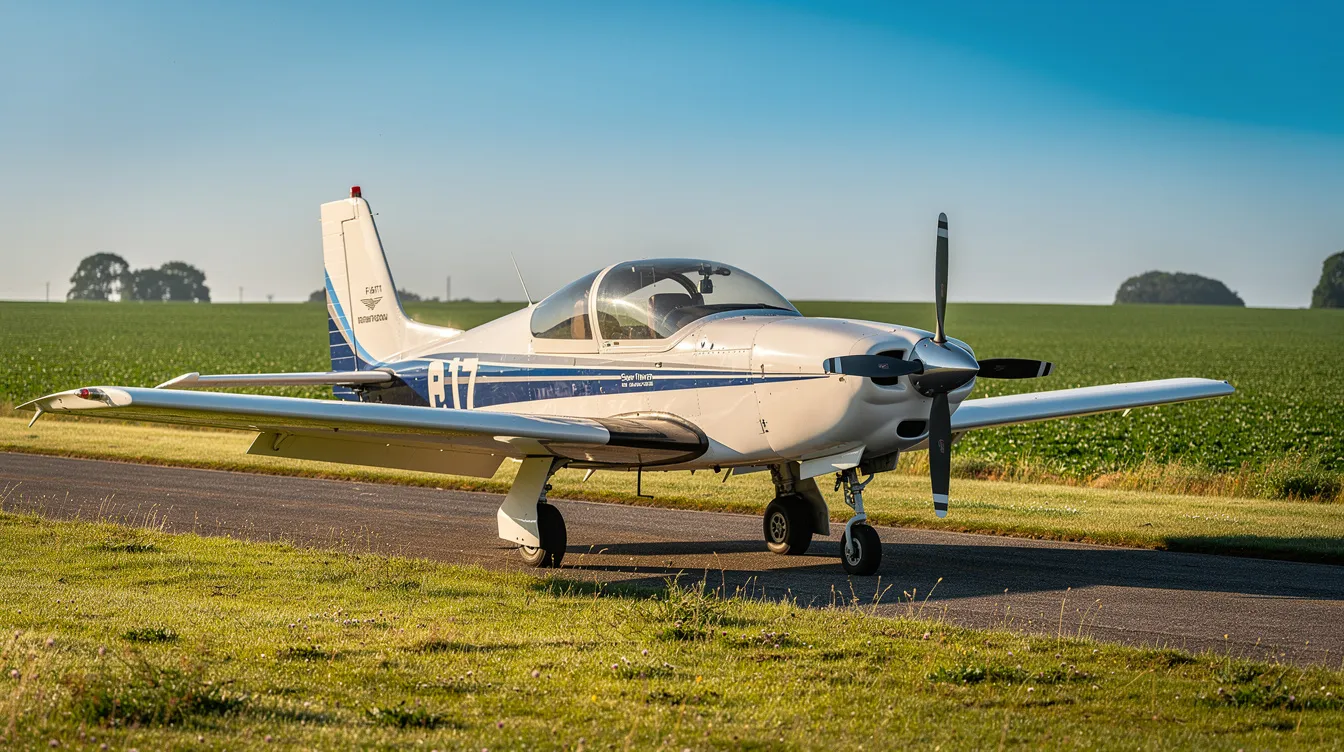
Under Canadian Aviation Regulations (CAR) Section 401.22, the Recreational Pilot Permit – Aeroplane grants pilot-in-command privileges on a non-high-performance, single-engine airplane with up to four seats. A recreational pilot is restricted to flying single-engine aircraft with up to four seats, and the permit holder may carry one passenger—never more than one passenger at any time.
Terminology can be confusing. In casual conversation, people use "recreational pilot permit," "recreational pilot license," and "recreational certificate" interchangeably, but Transport Canada's formal designation is "permit." The U.S. recreational pilot certificate is different from Canada's recreational pilot permit in both regulatory framework and operational scope.
To maintain simplicity, the recreational pilot license has specific operational limitations:
No night flying—operations are restricted to daylight hours only
No instrument flight rules (IFR)
No multi-engine or high-performance aircraft
No paid flying, commercial work, or flying for hire
A recreational pilot permit does not allow night flying under any circumstances
Flights are limited to within approximately 50 miles from the home airport without additional endorsements
Recreational pilots cannot fly into controlled airspace without additional training
The RPP is not ICAO-compliant the way a full private pilot license is, but it still demands passing the Transport Canada RPPAE written exam and a formal flight test per the RPP Flight Test Guide. Consider this scenario: a pilot based at Ottawa/Rockcliffe (CYRO) uses an RPP to fly a friend to a nearby grass strip for lunch on a summer afternoon, staying in good weather conditions and daylight. That is the RPP in its purest, most enjoyable form.
Now that you know what the RPP allows and restricts, let's look at who is eligible and what you need to get started.
Eligibility, Age, and Medical Certificate Requirements
You must be at least 16 years old to be issued the recreational pilot permit by Transport Canada. Training can begin earlier—many flight schools accept students around age 14 or 15 on a student pilot permit—and solo flight may be permitted at 14 with appropriate endorsements. In the United States, by contrast, recreational pilots must be at least 17 years old to hold the equivalent certificate.
Language proficiency matters: candidates must demonstrate the ability to read, speak, write, and understand the English language or French at a level sufficient to complete exams and conduct flight operations. Transport Canada does not require a separate formal test beyond what the exam and training interactions verify.
The medical certificate is a critical early step. You need a Category 1, 3, or 4 medical certificate. The Category 4 medical—a self-declaration form (26-0297) signed by your family physician—is the simplest option and is specific to the recreational permit. Medical requirements for a recreational pilot are stricter than for a sport pilot license holder, but far less onerous than the Category 1 medical required for commercial pilots. If any flagged conditions appear on Part B of the form, you will need assessment by a Civil Aviation Medical Examiner (CAME).
A practical tip: confirm medical eligibility with a physician or CAME before investing heavily in flight training, especially if you have cardiac, neurological, or mental health concerns. Category 4 validity is generous—60 months if you are under 40, and 24 months if you are 40 or over—which means renewals are infrequent if your health remains stable. Upgrading to a Category 3 medical later supports the transition from a recreational permit to a private pilot license.
Once you meet these eligibility and medical requirements, you can begin ground school and prepare for the written exam.
Ground School and Written Exam: Building Your Knowledge Base
Formal ground school is not strictly mandatory for the recreational pilot permit under Transport Canada regulations, but most reputable Canadian flight schools strongly recommend it or provide tailored RPP ground briefings. The knowledge you build here forms the foundation for every decision you make in the cockpit.
Key subject areas covered include:
Air Law – Canadian Aviation Regulations, airspace classification, pilot responsibilities
Navigation and Radio Aids – chart reading, VOR, GPS fundamentals
Meteorology – weather patterns, METARs, TAFs, and how to determine if conditions are suitable for VFR flight
Aeronautics and General Knowledge – basic aerodynamics, aircraft systems, flight instruments, human factors
The RPPAE written exam is administered by Transport Canada in a multiple-choice format. It consists of approximately 80 questions with a time limit of three hours. You must pass a written examination with at least 60% overall and achieve 60% in each individual subject area. The exam fee is approximately CAD $35. If you fail one subject but pass overall, supplementary exams are available for the failed section.
For study guidance, use Transport Canada's Study and Reference Guide (TP-12467E), commercial prep books, and online courses. Some students choose to complete the PPAER (private pilot) exam instead to facilitate a later upgrade—a smart strategy if you are even slightly interested in expanding your privileges down the route. Many students aim to write the exam after 10–15 hours of dual flight training, once fundamental concepts have been introduced in the air and on the ground.
After building your knowledge base, the next step is to complete the required flight training hours and prepare for the flight test.
Flight Training Requirements and Typical Schedule
Minimum Flight Hours
Transport Canada's minimum flight training for a recreational pilot permit is 25 hours of total flight time in aeroplanes. However, most students require at least 30 hours of flight time to reach proficiency due to weather delays, proficiency standards, and the complexity of airspace near major centers like Toronto or Vancouver.
Component | Minimum Hours |
|---|
Dual instruction (with a certified flight instructor) | 15 hours (including 2 hours dual cross-country) |
Solo flight | 5 hours |
Completion/review / additional training | 5 hours |
Total | 25 hours |
A minimum of 15 hours must be dual instruction time, and candidates need 25 hours of flight training before the test can be attempted. In practice, recreational pilot training requires a minimum of 30 hours of flight time for most students.
Typical Training Progression
A typical week for a part-time student might include one or two dual lessons plus ground briefings, with solo circuits added once the flight instructor signs off on readiness. Lesson types progress logically:
Upper air work (stalls, slow flight)
Circuits and landings
Emergency procedures
Basic navigation
Short cross-country flights beyond 25 NM from the home airport to help you build the ability to fly cross-country safely
Instructor Roles
The role of a certified flight instructor cannot be overstated. In Canada, instructors hold Class 1 through Class 4 ratings, and your instructor maintains a detailed training record that prepares you for the flight test as outlined in Transport Canada's Flight Training Manual and Flight Instructor Guide. If your instructor holds a Class 4 rating, a co-signing supervisor's endorsement is required for your flight test recommendation.
With your training hours and skills in place, the next milestone is the official flight test.
The Recreational Pilot Flight Test: What to Expect
The official Flight Test Guide – Recreational Pilot Permit – Aeroplane (TP-12475E) is the document examiners follow closely. Understanding its structure before test day removes much of the uncertainty.
Admission requirements include:
A valid medical certificate
Proof of age (government photo ID)
A recommendation letter from a qualified flight instructor dated within 30 days
Evidence of having passed the RPPAE or PPAER written exam
Proof of liability insurance for the aircraft
Current aeronautical charts and the Canada Flight Supplement
The test begins on the ground. Before you start the engine, the examiner will assess your:
Oral questioning covers:
Airspace rules
Aircraft documentation
Regulations
In the air, you can expect to demonstrate proficiency in the following maneuvers:
Normal and crosswind takeoffs and landings
Steep turns at a specified altitude
Stalls (power-on and power-off)
Emergency approach and landing procedures
A navigation leg with a diversion exercise
General airmanship: lookout, checklist discipline, radio communication
Candidates must complete a flight test to obtain the permit—there is no alternative path. The examiner uses a 4-point marking scale, and the minimum pass mark for the flight test is 42 out of 100. Partial tests, complete re-tests, and provisions for incomplete tests caused by weather or technical issues are all governed by the flight test guide. After the assessment, the examiner must file the applicable flight test report or related paperwork. Note that flight test time with the examiner does not count toward your 15 hours of dual instruction. While the term FAA examiner applies to U.S. testing, in Canada, designated pilot examiners or Transport Canada inspectors conduct the assessment.
After passing your flight test, it's important to understand the costs, timeline, and budgeting strategies for your training.
Costs, Timeline, and Practical Budgeting for a Recreational Permit
Cost Breakdown
Here is a realistic cost breakdown for RPP training in current Canadian dollars, which you can then contrast with a broader private jet price list overview:
Cost Component | Approximate Range (CAD) |
|---|
Aircraft rental (wet rate, ~30 hrs) | $4,000 – $5,500 |
Instructor fees (~20 hrs dual + ground) | $1,200 – $1,800 |
Ground school/study materials | $200 – $400 |
Written exam fee | $35 |
Flight test/examiner fee | $300 – $500 |
Medical certificate processing | $50 – $150 |
Total estimate | $6,000 – $9,000 |
A Recreational Pilot Permit costs between $6,000 and $7,000 at many schools, though totals can climb in high-cost regions. Costs vary based on training location and instructor rates. Flight time, books, and examination fees all contribute to costs.
Training Timeline
A full-time student flying several times per week might complete training in 2–3 months in good weather, while a working professional on a weekend schedule might take 6–12 months. Seasonal conditions in Canada—particularly winter in Ontario or the Prairies—can extend the timeline considerably.
Budgeting Tips
Cost-management tips include:
Block booking discounts
Joining an aero club for reduced aircraft rates
Studying thoroughly to minimize repeated lessons
Using approved simulators to build procedural familiarity before spending money in the air
These strategies help you operate within budget while still achieving a high level of readiness.
For travelers whose primary objective is time-efficient multi-city travel—say, Toronto to Calgary to Vancouver in 48 hours—understanding jet card cost per hour and the full cost of hiring private jet pilots and crews helps clarify why a BlackJet jet card program offers a fundamentally different value proposition than personally flying a light single at lower cost per trip but with limited range and flexibility.
With a clear understanding of costs and timelines, you can now compare the RPP to the Private Pilot License to determine which path best fits your goals.
Recreational Pilot Permit vs. Private Pilot License
The decision between RPP and PPL comes down to what you want to do with your pilot certificate. Here is how the two compare:
Factor | Recreational Pilot Permit | Private Pilot Licence (PPL) |
|---|
Minimum training hours | 25 hours | 45 hours |
Typical hours to completion | 30–35 | 55–70 |
Passengers allowed | One passenger | Multiple (aircraft-dependent) |
Night flying | Not permitted | Permitted (with night rating) |
IFR capability | No | Yes (with instrument rating) |
Cross-border flights | No | Yes |
Aircraft types | Non-high-performance single-engine only | Broader, including advanced training aircraft |
Approximate cost | $6,000 – $9,000 | $12,000 – $18,000+ |
Private pilots enjoy access to controlled airspace, the ability to fly cross-country over long distances, night ratings, and endorsements for different types of aircraft, including seaplanes and multi-engine aircraft, as well as more flexibility in eventually stepping into affordable entry-level personal aircraft. The PPL is also ICAO-recognized, which matters if you plan to fly internationally.
When does the RPP make strategic sense? If your flying will be limited to local area sightseeing, occasional flights to a cottage airport in good weather, and you have no plans for night or IFR operations, the RPP saves you significant time and money. When does starting directly with the PPL make more sense? If you are interested in an airline career, complex cross-country travel, or flying to the United States, the PPL is the more efficient choice from day one—and it also lays groundwork if you ever plan to employ professional private jet pilots and crews.
Hours logged during RPP training and after permit issuance can usually be credited toward PPL requirements, making the recreational permit a legitimate stepping stone. Consider a pilot beginning with an RPP at Waterloo (CYKF), then upgrading to PPL after a year when they decide to pursue instrument training and cross-border trips. The transition is seamless because the foundational skills transfer completely.
With the differences between RPP and PPL clear, let's see how recreational pilots can complement their flying with private jet access for longer or more complex trips.

From Cockpit to Cabin: How Recreational Pilots Use Private Jet Access
Many recreational pilots still rely on private jet providers or more capable private aircraft options, including small private jets for flexible luxury travel, for trips that exceed their permit's envelope. Flying a Cessna 172 from London, Ontario (CYXU) to a nearby lake strip is deeply satisfying, but it is not the right tool for a Toronto–Miami family vacation or a Calgary–Los Angeles business meeting, where small private jets designed for longer legs or larger cabins are more appropriate.
This is where BlackJet's jet card model, including the BlackJet 25+ Hour Jet Card, complements the RPP holder's life by matching specific private jet sizes to each mission. A recreational pilot might schedule a weekend flight to a local area strip, then book a BlackJet mid-size or large-cabin jet for a cross-continental trip the following week. The strategic advantages are clear: IFR capability, two-pilot professional crews, de-icing infrastructure, and the ability to work or rest in a quiet cabin while certified professionals handle complex airspace and weather.
BlackJet's safety certifications, vetted operator network, insights into private jet safety and risk, carbon-neutral flights, expertise with the largest private jets for sale and charter, and digital booking tools appeal to aviators who appreciate operational rigor from the other side of the cockpit door. Night arrivals into mountainous airports, oceanic crossings, and IFR routes through weather systems are all missions where an RPP is simply unsuitable—and where private jet access delivers security and comfort that no recreational permit can match.
With private jet access complementing your recreational flying, whether through occasional small plane charter for regional hops or larger jets for intercontinental trips, it's essential to always prioritize safety and regulatory compliance.
Safety, Airmanship, and Regulatory Compliance
The RPP structure is designed around safety from the ground up. Daylight-only operations, VFR weather minima, a single passenger limit, and the prohibition on flying in complex scenarios without proper licensing all serve to keep recreational pilots within a manageable risk envelope.
Transport Canada's flight test emphasizes flight management and airmanship above rote maneuvers. Examiners evaluate situational awareness, communication with ATC, checklist discipline, stabilized approaches, and conservative decision-making. A go-around initiated from an unstable approach below 200 feet AGL, for example, demonstrates exactly the judgment that separates a safe pilot from a dangerous one.
Basic airmanship expectations for a recreational pilot include:
Continuous lookout for other aircraft
Proper circuit joining procedures at uncontrolled aerodromes
Noise-abatement compliance near populated areas
Disciplined fuel management
Recreational pilots cannot fly into controlled airspace without additional training, a restriction that reinforces the permit's conservative design philosophy.
This safety mindset mirrors BlackJet's own culture: pre-flight risk assessments, strict maintenance oversight, and crew training standards that exceed minimum regulatory requirements, whether you are booking on-demand charter or exploring private jet leasing options for longer-term access. Whether you are conducting a pre-flight walkaround on a Cessna 152 or stepping into a professionally crewed jet cabin, the underlying principle is identical—discipline prevents incidents.
Liability and insurance also matter. Examiners require proof of insurance before a flight test, and RPP holders should understand personal liability when they act as pilot-in-command with a passenger on board.
Once you have mastered the basics of safe recreational flying, you may want to explore future pathways and upgrade your permit.
Future Pathways: Upgrading Your Permit and Expanding Your Aviation Life
An RPP can evolve into broader aviation opportunities, including experimenting with innovative access models like affordable private plane rideshare options or simply buying a single seat on a private jet. The most common next step is upgrading to a private pilot license, which unlocks night flying, more passengers (more than one passenger), cross-border operations, and the foundation for adding advanced training ratings like instrument, multi-engine, or seaplane endorsements.
The administrative side of upgrading involves additional flight training hours beyond the RPP minimums, expanded ground school if needed, passing the PPAER written exam (if not already completed), undertaking a full PPL flight test, and preparing to file the required licensing paperwork and test results as you move from the RPP toward a PPL. For someone who already holds an RPP, the incremental investment is smaller than starting from zero, especially if you later consider small private aircraft options or other affordable entry-level planes that align with your typical missions.
Beyond the PPL, non-professional avenues abound: joining local flying clubs, participating in fly-ins at COPA events, exploring budget-friendly private aircraft options and other cheapest small planes for new owners, volunteering with organizations like Hope Air once appropriately licensed, and integrating aviation into family travel. The schedule flexibility of recreational flying fits naturally into an active lifestyle.
Consider a high-net-worth individual who earns their RPP for weekend flights to a lakeside cottage near Muskoka (CYQA), while also understanding jet card cost per hour, how much it costs to rent a private jet, and how a 100-hour jet card program might fit their broader travel pattern. During the week, they rely on BlackJet's jet card programs or a 50-hour jet card option for intercontinental business trips. The cockpit hobby and luxury cabin travel coexist without conflict—each serves a distinct purpose, especially when paired thoughtfully with the best jet card programs for frequent flyers and smart strategies to fly private at lower cost. Think strategically about your long-term aviation plan: balance training costs and time commitments against the convenience of on-demand private jet access or unlimited private jet membership models for missions that sit beyond the RPP's envelope.

Frequently Asked Questions About the Recreational Pilot Permit
How long does it really take to earn a Recreational Pilot Permit in Canada?
The Transport Canada minimum is 25 hours of flight training, but most students need 30–35 hours to reach proficiency. Full-time students in good weather can finish in 2–3 months; part-time students typically take 6–12 months.
Can I fly to the United States with an RPP?
No. The recreational pilot permit restricts operations to Canadian airspace. A recreational pilot permit may not allow flights beyond national borders. If cross-border travel is your goal, you need a private pilot certificate (PPL), which is ICAO-compliant.
Do my RPP hours count if I later pursue a private pilot license?
Yes. Flight time logged during RPP training and after permit issuance generally counts toward PPL requirements, making the RPP a cost-effective stepping stone rather than a dead end.
Is ground school mandatory for the recreational permit?
Not technically required by regulation, but strongly recommended. The RPPAE written exam covers air law, navigation, meteorology, and aeronautics—topics that are difficult to self-study without structured guidance.
Can I start training before I'm 16?
You can begin flight training on a student pilot permit before turning 16, but you must be at least 16 years old to be issued the Recreational Pilot Permit itself.
What if I can't qualify for a Category 3 medical?
You do not need one. The RPP requires only a Category 4 medical declaration, which is simpler. However, if a listed medical condition is present, formal assessment by a Civil Aviation Medical Examiner is required. Medical requirements for a recreational pilot are stricter than for a sport pilot but less demanding than higher categories.
How often do I need to renew my medical certificate?
Category 4 validity is 60 months (5 years) if you are under 40, and 24 months (2 years) if you are 40 or older.
If I already travel by private jet, why would I still consider an RPP?
Piloting is a passion; private jet travel is a strategic mobility tool. An RPP gives you hands-on mastery of flight on local, low-altitude missions in good weather conditions, while a jet card handles the complex, time-critical, long-range trips where professional crews, IFR capability, and cabin comfort are essential.
Conclusion: Choosing the Right Aviation Path for You
The recreational pilot permit is a cost-effective, tightly scoped gateway into Canadian aviation. It lets you build hands-on skills, experience the pure satisfaction of flight, and enjoy local flying under forgiving weather and daylight conditions—all at a fraction of what a full private pilot license demands.
Your decision between RPP and PPL hinges on flying goals, budget, time commitment, and whether you need night flying, cross-country complexity, or international capability. For many, the RPP is the complete answer. For others, it is the logical first chapter in a longer aviation story.
If your primary need is efficient regional or international travel, BlackJet's jet card programs and broader jet card membership pricing provide seamless, carbon-neutral private aviation without the constraints of any pilot certificate, while still allowing you to buy single seats on private jets when that better fits the trip profile. The two paths are not mutually exclusive—they are complementary. Speak with a flight school about beginning your RPP journey, and explore BlackJet's jet card programs if you are ready to elevate how you move between major cities and resorts.
From GPS-equipped trainers at rural Canadian airstrips to carbon-neutral private jet flights crossing continents through providers like NetJets jet card programs, guidance on private jet sizes and cabin classes, top-tier long-range private jets, and leading private jet companies, both recreational flying and luxury air travel are becoming more accessible, more responsible, and more rewarding than ever.


 Sign up with google
 Sign up with Apple


