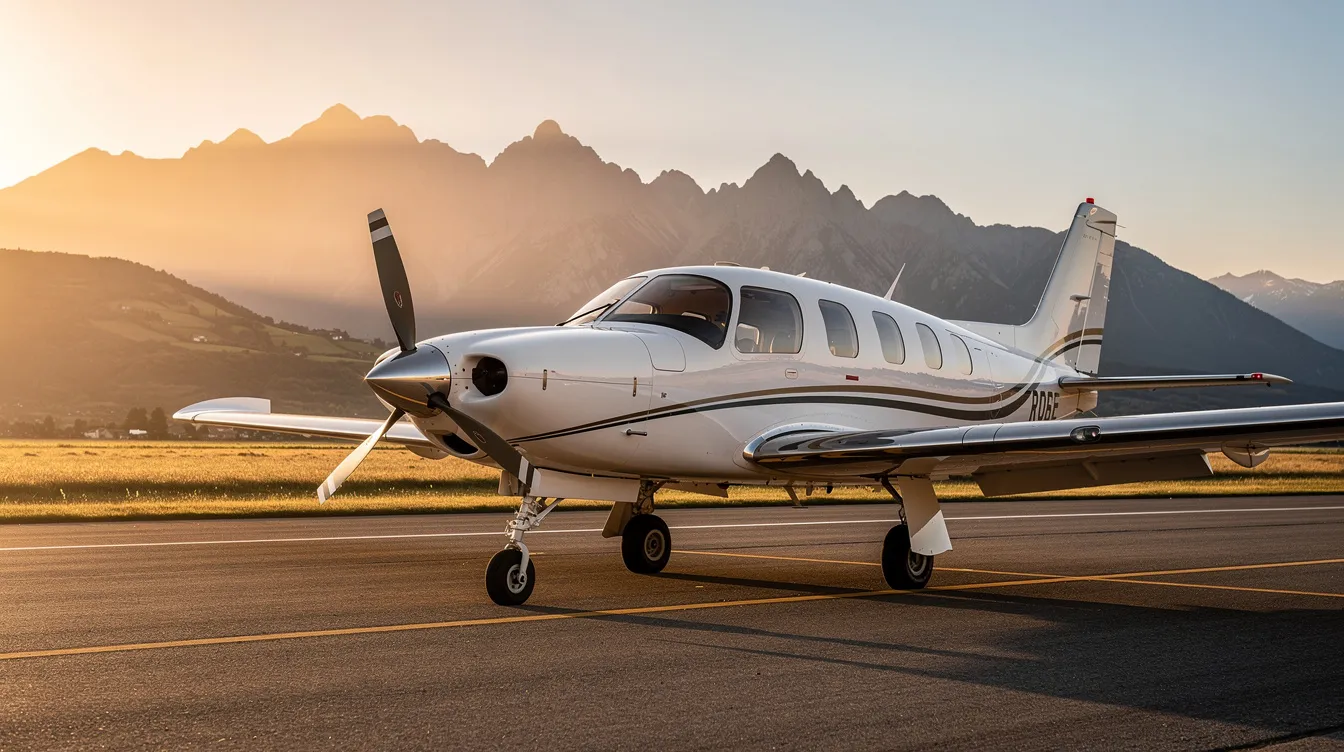
Access to private jets is not merely a symbol of luxury—it is a strategic advantage for high-net-worth individuals, corporate executives, and discerning travelers who prioritize time, convenience, and customization when choosing among top private jet companies. Compared to commercial aviation, private aviation offers significant time savings, with access to thousands more airports worldwide, eliminating long security lines and rigid schedules. Small plane manufacturers play a core role in this ecosystem by producing the light sport and general aviation aircraft that serve as foundational training platforms and regional travel solutions. Over many years, these manufacturers have advanced safety protocols, embraced technology, and integrated sustainability practices that influence the entire private aviation industry. Understanding the landscape of leading small plane manufacturers provides insight into the broader value proposition of private jet access, including how jet card programs like BlackJet’s deliver seamless, carbon-neutral, and certified private travel experiences. This article explores the key players, innovations, and use cases shaping modern private aviation from the ground up.
Key Takeaways
Small plane manufacturers like Cirrus, Piper Aircraft, Cessna, Beechcraft, and Mooney form the foundation of general aviation, producing aircraft essential for flight training, regional business travel, and personal flying.
Light aircraft and single-engine aircraft serve as stepping stones into private jet networks, with many pilots building foundational skills before transitioning to jet card programs like BlackJet’s.
The majority of small piston single and twin-engine aircraft used for personal flying, flight instruction, and corporate travel come from a few manufacturers—understanding their safety records and aircraft roles helps travelers choose the perfect plane for each mission and compare them against budget-friendly private aircraft options.
BlackJet leverages this manufacturer landscape by sourcing from rigorously vetted operators, delivering carbon-neutral, safety-led private travel across multiple cabin categories, including large-cabin solutions when clients need private jets for around 20 passengers or are evaluating the best private jet for 50 passengers.
This article compares leading brands, outlines use cases, and shows how the best small private aircraft for different needs complement or differ from flying via a private jet card membership.
Why Small Plane Manufacturers Matter in Modern Private Aviation
General aviation aircraft access over 19,000 global airports versus commercial airlines’ 4,000, enabling 40-60% time savings on regional routes. An executive flying from Chicago to Aspen reaches their destination in 2.5 hours door-to-door via light aircraft versus 7+ hours commercial with connections.
Small plane manufacturers build the backbone of this ecosystem. Leading manufacturers of small planes produce a range of aircraft, including single-engine pistons, twin-engines, turboprops, and light jets—each serving distinct roles from training to business hops. Pilots who train on a Piper or Cessna often progress to business jets, eventually accessing Jet Card memberships for time-critical travel.
While BlackJet focuses on private jet access, understanding the aircraft ecosystem beneath—trainers, piston aircraft, turboprops—empowers informed, safety-conscious travelers. Private flying, whether in a light aircraft or midsize jet, represents a strategic advantage for time-poor executives and discerning leisure travelers, some of whom evaluate premium UK private jets for sale when considering ownership.
Overview of the Light Aircraft and General Aviation Segment
Light aircraft typically weigh under 12,500 lb (5,670 kg), seating 2-6 passengers at speeds of 120-250 knots
The “Big Three” small plane manufacturers—Cessna, Piper, and Beechcraft—historically dominated general aviation, producing aircraft across multiple categories
Main categories include single-engine pistons (Piper Archer, Cessna 172), high-performance pistons (Cirrus SR22), light twins (Beechcraft Baron), and entry-level turboprops that often appeal to those seeking the cheapest private aircraft options or exploring what's the cheapest private jet for practical private flying
Typical roles span flight training, private ownership, air taxi, medical flights, and corporate shuttles between secondary cities
Fixed-gear models are generally simpler and cheaper to insure than retractable gear models, which add mechanical complexity
Manufacturers design these airplanes with safety, predictable handling qualities, and maintainability—factors that later influence standards for larger business jets
Comparison Table of Leading Small Plane Manufacturers
Manufacturer | Founded | Location | Notable Models | Key Strengths | Aircraft Types | Global Presence |
|---|
Cirrus Aircraft | 1988 | Duluth, Minnesota | SR20, SR22/SR22T, SF50 Vision Jet | High-performance pistons, safety innovations (CAPS) | Single-engine piston, light jet | Over 17,000 delivered, 1,000+ employees |
Piper Aircraft | 1927 | Vero Beach, Florida | J-3 Cub, PA-28 Archer, PA-46 Malibu | Flight training workhorse, versatile light aircraft | Single and twin-engine piston, turboprops | 144,000+ aircraft produced globally |
Cessna Aircraft | 1927 | Wichita, Kansas | 172 Skyhawk, Citation series | Reliability, versatility, and low maintenance | Single-engine piston, jets | Largest GA fleet worldwide |
Beechcraft | 1932 | Wichita, Kansas | Model 17, Bonanza, King Air | Twin-engine turboprops, corporate shuttles | Single and twin-engine piston, turboprops | Subsidiary of Textron Aviation |
Mooney | 1929 | Kerrville, Texas | M20 series | Speed-focused, efficient cruise performance | Single-engine piston | Niche market with loyal owners |
Tecnam | 1986 | Italy | P2002 Sierra, P2010 | Diverse models, metal and composite, dealer network | Light sport, piston, turboprops | 7,500+ aircraft flying worldwide, 65+ countries |
Cirrus Aircraft: High-Performance Single-Engine Leaders
Cirrus Aircraft is an American manufacturer of general aviation aircraft, located in Duluth, Minnesota, founded in 1988 by Alan and Dale Klapmeier. The name ‘Cirrus’ is derived from the Latin word for ‘curl or wisp of cloud’, reflecting the company’s association with aviation.
The first product of Cirrus Aircraft, the VK-30, was created in 1985 and was a two-seat, single-engine aircraft. Cirrus released the Cirrus SR20 in 1991, which was the first aircraft ready to fly right out of the box. Cirrus has delivered over 17,000 aircraft since its inception and employs over 1,000 people.
Key models include the SR22/SR22T, which dominate high-performance single-engine aircraft categories, and the SF50 Vision Jet, bridging light aircraft and entry-level jets. Safety innovation drives Cirrus’s reputation—the Cirrus Airframe Parachute System (CAPS) has saved 231 lives across 127 deployments.
Pilots and owners who start in Cirrus aircraft often later prefer the seamless access and larger-cabin comfort of jet card programs for longer business itineraries, making Cirrus an ideal stepping stone into BlackJet’s network.
Piper Aircraft: Training Workhorses and Versatile Light Aircraft
Piper Aircraft has been producing planes since 1927 and has manufactured over 144,000 aircraft across more than 160 models. Now based in Florida (Vero Beach), Piper remains synonymous with flight training worldwide.

The first Piper aircraft was the J-3, a two-seater plane that became popular among private plane owners and was used for training by the U.S. Army Air Corps. This legend established Piper’s reputation as the “classroom of the skies.”
Modern mainstays include:
PA-28 series (Archer, Warrior) for primary training
PA-44 Seminole for multi-engine ratings
PA-46 family (Malibu/Mirage/Meridian) for business travel
Piper’s bestseller is the Archer, a two-seat plane known for its cost-effectiveness and efficiency, selling for around $140,000. The handling qualities, wide support network, and reliable production continue making Piper aircraft essential for structured flight training paths.
A BlackJet customer might first encounter Piper aircraft through initial training, yet eventually switch to jet card flying when regional travel volume and time sensitivity increase—realizing the efficiency gains of prepaid jet access.
Cessna and Beechcraft Under Textron Aviation
Textron Aviation now owns both Cessna and Beechcraft, forming one of the most comprehensive portfolios in general aviation. The Cessna Aircraft Company is known for manufacturing some of the most popular general aviation aircraft in the world.
Cessna highlights:
The Cessna 172 Skyhawk has been a high-volume trainer since the 1950s, with over 45,000 delivered
Cessna’s aircraft are recognized for their reliability, versatility, and low maintenance costs
Cessna has focused on producing aircraft that meet commercial airline standards while maintaining simplicity and ease of use
Beechcraft background:
Beechcraft was founded as Beech Aircraft Corporation in Wichita, Kansas, in 1932
The first aircraft produced by Beechcraft was the Model 17, a single-engine aircraft
During World War II, the Beechcraft Model 18 was primarily utilized by United States military pilots for training and transport purposes
Established manufacturers like Cessna, Piper, and Pilatus are renowned for retaining value due to a strong support network. BlackJet clients may fly on Cessna Citation jets or Beechcraft King Air turboprops when booking specific categories through partner operators, as well as some of the best private jets in the world across multiple types of private jets for every traveler when missions demand higher performance and comfort.
Mooney and Other Specialty Light Aircraft Brands
Mooney International Corporation has been manufacturing light aircraft since its inception in 1929. The most popular models produced by Mooney International include the M20, M20J, M20C, M20R, and M20S—all designed for speed-focused owner-pilots valuing efficiency and cruise performance.
Mooney International was purchased by Meijing Group in 2013 and later acquired by an American group of Mooney aircraft owners in 2020, demonstrating the brand’s enduring community support despite its turbulent corporate history.
Other notable manufacturers include:
Tecnam offers a diverse range of aircraft models, including two-seat, four-seat, and up to 11-seat configurations, utilizing both metal and composite materials. Over 7,500 Tecnam aircraft are currently flying worldwide. Tecnam has established a network of dealers and service centers in more than 65 countries.
Diamond focuses on diesel engines and composite construction
American Legend produces tailwheel trainers for adventure-focused pilots
These specialty brands push innovation forward—from LSA categories to Mosaic rule compliance—with next-generation features that enhance the broader industry and expand the range of small private jets luxury travel options available to discerning flyers.
How Small Plane Manufacturers Support Flight Training and Safety
Most pilots begin their journey in light single-engine aircraft from Cessna, Piper, Cirrus, Diamond, or Tecnam at local flight schools worldwide. Flight training stages—discovery flight, solo, cross-country training, instrument rating—use versatile aircraft like the Cessna 172 or Piper Archer.
Manufacturer design features support safety and learning:
Forgiving handling and stable approach characteristics
Robust landing gear for reliable landings
Modern glass cockpit displays improve situational awareness and safety in small planes
Standardized checklists and efficient systems
Time Between Overhaul (TBO) is a crucial consideration, as engines require an overhaul after a recommended number of flight hours—a factor pilots learn to track from their earliest training.
BlackJet evaluates partner operators and pilots, many of whom built foundational skills in these small planes, by examining hours flown, type ratings, and safety certifications beyond regulatory minimums, including how they manage higher private jet cruising altitudes safely and efficiently for everything from light jets to large private jets for up to 50 passengers.
From Light Aircraft to Private Jets: Where BlackJet Fits In
Consider an executive who trained in a Piper, now running a regional business and needing faster, more comfortable travel for multi-city trips each month. Light aircraft remain ideal for learning, hobby flying, and short hops, while long-range private jets in larger private jet sizes become logical for time-critical, longer-range itineraries.

Manufacturers design small planes for specific “missions,” including short recreational flights and long-distance business trips. Evaluating small planes involves considering range, payload, cruise speed, fuel burn, takeoff and landing performance, and service ceiling.
BlackJet’s Jet Card model offers prepaid blocks of flight time, providing members with predictable costs, priority access, and cabin class flexibility without owning or maintaining a plane—an approach that aligns with core jet card cost and pricing considerations and broader jet card pricing structures. While BlackJet doesn’t manufacture aircraft, it curates fleets from top-tier operators flying models often produced by the same manufacturers discussed—combining reliability with refined services.
Technology, Sustainability, and Safety Across the Manufacturer Landscape
Technology from light aircraft—glass cockpits, synthetic vision, envelope protection—has influenced modern business jets. Advanced safety innovations in small planes include systems like Electronic Stability and Protection (ESP) and emergency autoland systems, pushing the industry forward and reinforcing how private jets maintain strong safety records across the global private jet fleet.
Sustainability efforts among manufacturers include:
More efficient engines and lighter composite airframes
Early electric and hybrid concepts in production
Certified platforms meeting evolving environmental standards
BlackJet complements these innovations with carbon-neutral flights on every trip by funding verified carbon offset projects and supporting more efficient models, such as private plane rideshare options and smart strategies to fly private cheaply. Safety pillars—rigorous maintenance, third-party auditing, pilot currency—derive from the same regulatory framework governing general aviation aircraft. Manufacturers with a large service network typically have better parts availability and more mechanics familiar with their aircraft, ensuring continued reliability.
Choosing the Right Aircraft Type for Your Mission
Mission Type | Recommended Aircraft Type | Typical Use Case | Benefits |
|---|
Short regional hop (<300 mi) | Light single-engine piston (e.g., Cirrus, Piper Archer) | Owner-pilot local flights, quick regional hops | Cost-effective, easy to operate, and access to many airports |
Multi-stop day trip | Light jet or turboprop | Corporate team travel, air taxi | Speed, cabin comfort, and multiple legs capability |
Family vacation (long-range) | Midsize or large-cabin jets | Longer trips with multiple passengers | Space, luggage capacity, enhanced amenities |
Practical decision factors include distance, passenger count, baggage, runway length, weather, and time sensitivity, all of which shape the broader private jet price list and cost structure and inform how much it costs to rent a private jet. BlackJet’s aviation specialists translate these technical considerations into simple cabin category recommendations.
How BlackJet Elevates the Experience Beyond the Airframe
While small plane manufacturers engineer the aircraft, BlackJet engineers the experience: digital booking ready in minutes, real-time support, vetted crews, and consistent service standards across fleets.
Jet Card programs (25-hour and 50-hour options) allow frequent travelers to prepay for flight hours across multiple cabin categories, backed by curated operators meeting or exceeding baseline certification requirements and aligned with detailed 50-hour jet card cost benchmarks and best jet card program comparisons. Every flight includes automatic carbon offsets—providing strategic advantages of private aviation with reduced environmental footprint.
Elevate your travel—effortlessly. Explore how BlackJet can complement your existing relationship with aviation, whether you’re a pilot, owner, or passenger seeking the perfect plane for every mission.
Frequently Asked Questions
How do light aircraft from manufacturers like Piper or Cessna relate to the jets I fly on with a Jet Card?
Many business jets and turboprops share heritage with the same brands producing training aircraft—Textron Aviation (Cessna and Beechcraft) being the clearest example. Pilots typically build skills in small planes before transitioning to type-rated jets used in Jet Card fleets, creating a continuum that strengthens safety standards across private aviation.
Are small single-engine aircraft safe compared to larger private jets?
Both single-engine aircraft and jets are certified under strict aviation regulations, serving different missions in different environments. Safety depends on aircraft maintenance, pilot training, weather decisions, and operational culture—not just size or engine count. BlackJet focuses on multi-engine turboprops and jets flown by professional crews with rigorous standards, whether on popular U.S. routes or specialized corridors such as private jet charters in Karachi or private jet charters in Lahore.
What if I already own a small plane—does a Jet Card still make sense?
Many owner-pilots with a Cirrus or Piper use their aircraft for local flights but need jets for longer trips, winter weather, or multi-city business travel, and may also explore buying a seat on a private jet or even leasing a private jet for occasional missions. A Jet Card complements ownership by covering missions where speed, range, cabin size, or scheduling complexity exceed what a personal light aircraft can comfortably handle—maximizing flexibility and time savings.
How does BlackJet ensure environmental responsibility?
BlackJet funds carbon offset projects to make every flight carbon neutral and continuously monitors developments in sustainable aviation fuel and efficiency improvements. Innovations from small plane manufacturers—lighter structures, efficient engines, and early electric technologies—are part of the broader industry push toward more sustainable flying that BlackJet actively supports.
Conclusion: The Strategic Advantage of Small Plane Manufacturers in Private Aviation
Small plane manufacturers like Cirrus, Piper, Cessna, Beechcraft, and Mooney form the essential foundation of modern private aviation, delivering versatile, safe, and technologically advanced aircraft that serve a wide range of missions—from initial flight training to regional business travel. Their innovations in safety, sustainability, and design directly influence the broader private jet ecosystem, enabling seamless transitions for pilots and travelers alike. For discerning travelers and executives, understanding this landscape enhances appreciation of how private jet access, especially through flexible Jet Card programs, offers unparalleled convenience and efficiency.
BlackJet uniquely bridges this continuum by providing curated, carbon-neutral private jet access powered by rigorous safety standards and cutting-edge technology through its flagship BlackJet 25+ Hour Jet Card. With BlackJet’s Jet Card programs, travelers gain effortless entry to a premium fleet across multiple cabin categories, including access to the most expensive private jet options for ultimate luxury, supported by real-time digital booking and expert aviation specialists. This approach transforms private aviation from a luxury into a strategic asset—one that elevates every journey with reliability, sustainability, and personalized service.
Discover how BlackJet can reshape your travel experience. Explore premium private jet access today and elevate your journeys with safety, sustainability, and seamless flexibility at your fingertips. Visit blackjet.com to learn more and join the future of refined private aviation.


 Sign up with google
 Sign up with Apple