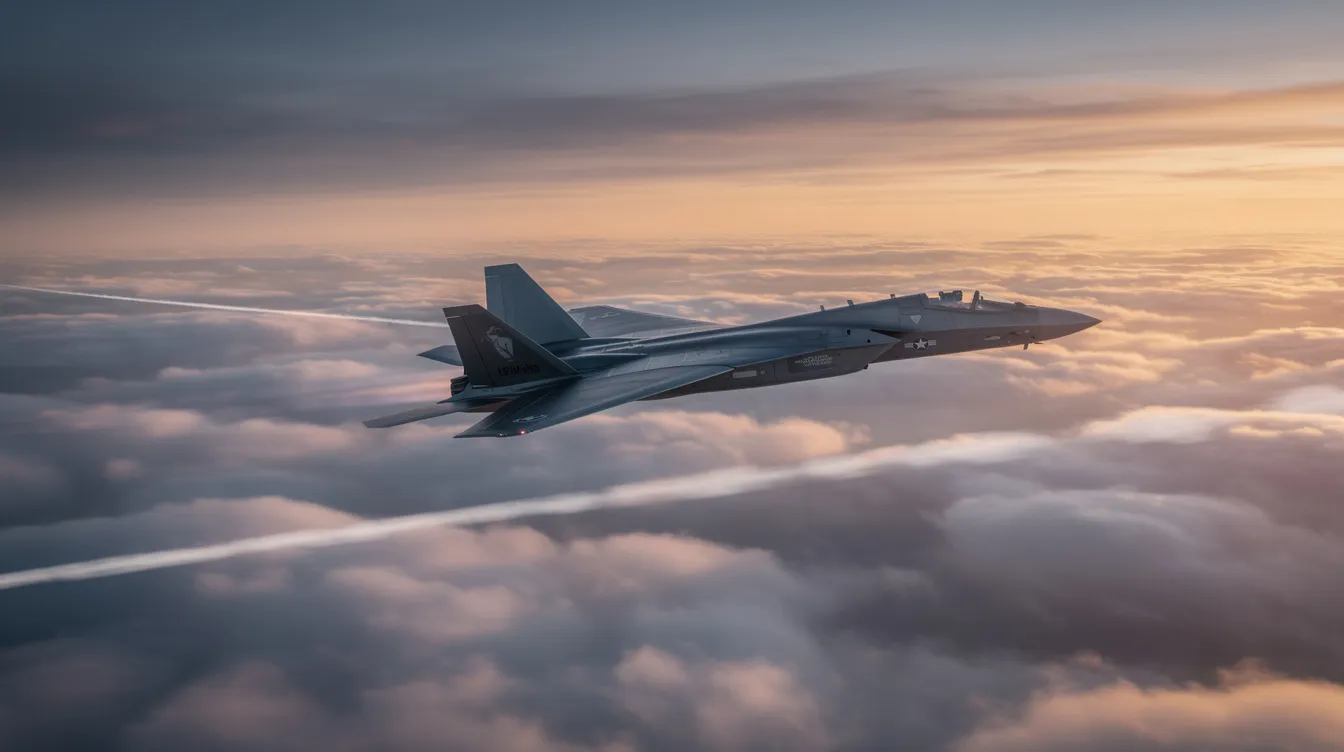
Introduction: Speed as a Strategic Advantage in the Sky
The top 10 fastest airplanes in the world, ranked by verified top speed, range from the North American X-15 at Mach 6.7 to today's quickest business jets, including the Cessna Citation X+ at Mach 0.935. Airspeed has defined aviation's ambitions since humanity first broke the sound barrier in 1947, and the fastest aircraft records span experimental hypersonic programs, crewed rocket planes, operational military reconnaissance and interceptors, and modern business aviation.
For aviation enthusiasts and for frequent business or high-net-worth leisure travelers comparing private jet options, including those weighing 10 million-dollar private jet choices, this ranking shows how speed has evolved historically and what it means in practice today. It highlights the aircraft behind those benchmarks, the criteria used to rank them, which private jets are fastest now, and why higher cruise speeds matter when you want to cut travel time without giving up privacy, flexibility, or safety—especially when comparing features of 20 million-dollar private jets and other long-range aircraft. BlackJet connects members with those high-speed business jets through jet card programs built on four pillars: safety certification, carbon-neutral flights, digital booking, and access to the fastest cabin available for every mission. The complete top 10 list starts below.
Ranking Criteria: What Counts as the "Fastest Airplane"?
This ranking covers crewed, powered aircraft with documented top speeds. Key criteria:
Manned flight only; no drones or satellites.
Air-breathing or rocket-powered engines with verified performance data. High-speed aircraft often use scramjets, which are air-breathing engines that function at supersonic speeds.
Sustained or course-verified speed in level flight, not short dives.
Experimental hypersonic vehicles operate under radically different engineering constraints compared to conventional jets; the fastest airplane on record reaches a speed of approximately 7,000 mph at Mach 9.6, though that figure belongs to unmanned scramjet testbeds, not piloted aircraft.
Each entry includes peak speed, first flight date, role, and one takeaway.
For context, the Douglas XB-43 Jetmaster first flew in 1946 and reached speeds of 515 mph (320 km/h), a benchmark that every aircraft below has left far behind, even many affordable private planes for budding aviators. Some speeds remain partially declassified estimates; that is noted where relevant.
Top 10 Fastest Airplanes in the World (Complete List)
Here is the core answer people search for: ten aircraft ranked from #10 to #1 by verified or best-available top speed, spanning business jets, bombers, interceptors, and research craft—models that sit at the performance edge served by top private jet companies.
Fastest Civilian Jets
#10 Cessna Citation X+ ; Mach 0.935 (~617 mph). First flight: 1996 (X variant); X+ certified 2014. Role: super-midsize business jet, USA. The fastest civilian production jet in history, it cruises roughly 10% faster than a typical airliner at Mach 0.85. Its speed limits are set by FAA certification rather than engine capability.
Fastest Military and Experimental Aircraft
#9 Convair B-58 Hustler; Mach 2 (~1,319 mph). First flight: 1956. Role: strategic bomber, USA. The B-58 Hustler was the first bomber capable of sustained Mach 2 flight, more than doubling airliner cruise speed. The XF-84H, a contemporary propeller experiment, had propeller tips that broke the sound barrier, causing extreme noise; the Hustler proved jet propulsion was the viable path.
#8 Convair F-106 Delta Dart ; Mach 2.30 (~1,525 mph). First flight: 1956; service entry 1959. Role: all-weather interceptor, USA. Its area-ruled fuselage reduced transonic drag, a design principle now standard in business jet aerodynamics. The Avro Arrow could hit Mach 2 speeds (1,534 mph) and fly above 50,000 feet during the same era, though Canada cancelled it in 1959.
#7 McDonnell Douglas F-15 Eagle ; Mach 2.5+ (~1,875 mph). First flight: 1972. Role: air superiority fighter, USA. Still in active service after five decades. Fast modern fighters like the F-22 prioritize stealth and supercruise over raw top speed, making the F-15's Mach 2.5 ceiling a relic of a design philosophy focused on pure acceleration.
#6 MiG-31 Foxhound ; Mach 2.83 (~1,865 mph). First flight: 1975. Role: long-range interceptor, USSR/Russia. At high Mach numbers, materials must withstand extreme temperatures generated by aerodynamic heating; the MiG-31 uses nickel-steel and titanium to handle sustained high-speed patrols.
#5 MiG-25 Foxbat Mach 2.83 (~1,860 mph), with reports of Mach 3.2 at engine risk. First flight: 1964. Role: reconnaissance and interceptor, USSR. The MiG-25 Foxbat is one of the fastest serially produced combat aircraft, though pushing past Mach 2.83 risked turbine damage.
#4 XB-70 Valkyrie ; Mach 3 (~2,301 mph). First flight: 1964. Role: experimental bomber, USA. The XB-70 Valkyrie was designed to cruise at Mach 3 and 70,000 feet, compressing air beneath its wingtips for additional lift. Only two were built.
#3 Lockheed YF-12A ; Mach 3.2 (~2,070 mph). The Lockheed YF-12 set speed records of 2,070 mph (3,331 km/h) on May 1, 1965, during NASA test flights. Role: interceptor prototype, USA. It carried radar-guided missiles at altitudes above 80,000 feet.
#2 Lockheed SR-71 Blackbird ; Mach 3.3+ (~2,193 mph). The Lockheed SR-71 Blackbird has a top speed of over Mach 3.2 and flew at altitudes over 85,000 feet during operational reconnaissance missions from 1966 to 1998. Friction generated at high speeds can lead to significant thermal heating of aircraft materials; the SR-71's titanium skin expanded several inches in flight to compensate.
#1 North American X-15 ; Mach 6.7 (~4,520 mph). First flight: 1959. Rocket-powered, piloted by USAF and NASA crews. Achieving hypersonic speeds requires overcoming immense aerodynamic, thermal, and mechanical hurdles; the X-15's heat-resistant nickel alloy skin endured temperatures above 1,200 °F. Its research seeded materials and flight-control data into both the space program and every high-performance aircraft that followed.
Fastest Commercial and Experimental Aircraft: Summary
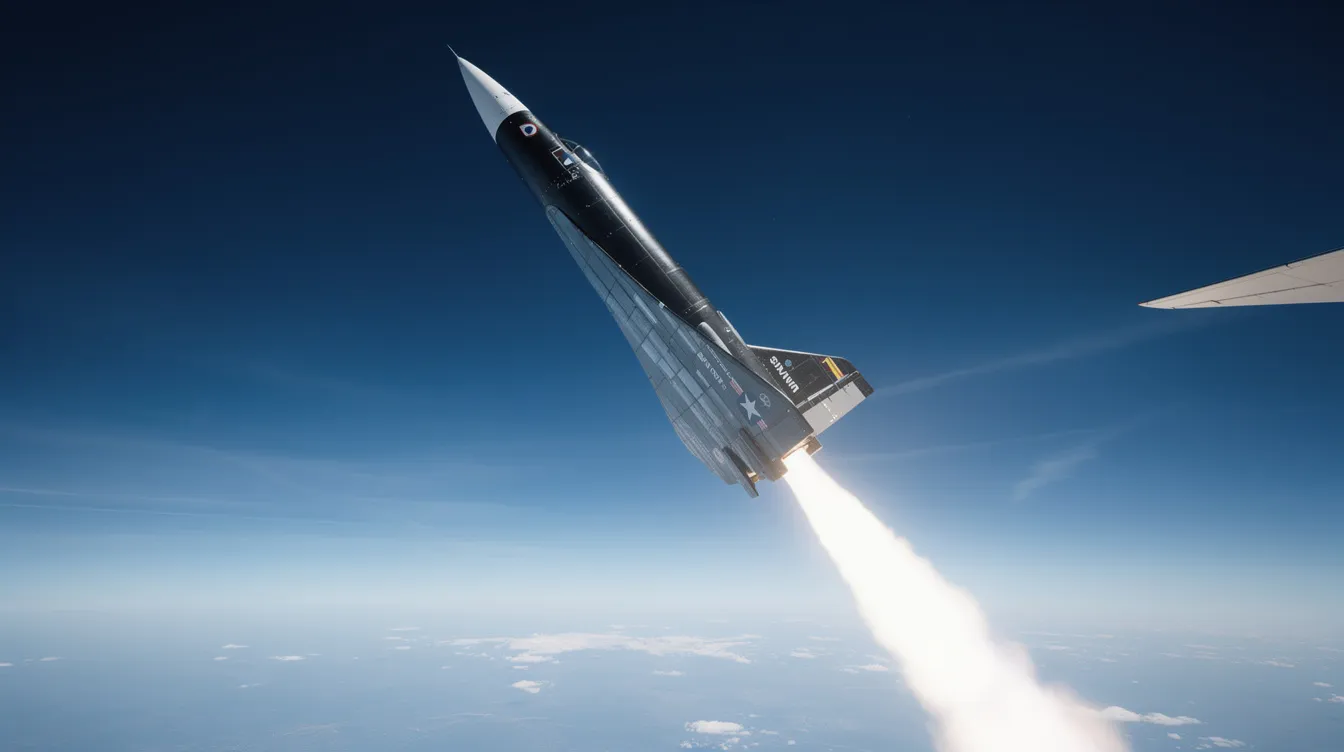
While most record-holders are military or research platforms, the Tupolev Tu-144 holds the title of fastest commercial passenger airliner, and modern business jets now cruise faster than the top fighters of the 1960s, particularly among the largest private jets with intercontinental range. The Dornier Do 31, with ten engines producing 66,200 pounds of thrust, and the Rockwell XFV-12, which failed to generate enough lift during testing, are reminders that speed without practical engineering yields no comment from the history books—unlike today’s refined large-cabin jets that can comfortably carry around 20 private jet passengers.
Fastest Private Jets Today: From Records to Real-World Travel
Mach 3 captures headlines, but BlackJet members care about the fastest jets they can book. To understand how business aviation has evolved, consider these types of private jets and a range of small private aircraft options:
Bombardier Global 8000: Mach 0.95, range ~8,000 nm, large cabin. New York to Singapore nonstop.
Gulfstream G700: Mach 0.935, range ~7,750 nm at Mach 0.85. New York to Tokyo in ~13 hours.
Cessna Citation X+: Mach 0.935, range ~3,460 nm, super-midsize. LA to New York under 5 hours.
Gulfstream G650ER: Mach 0.925, popular for transatlantic routes.
BlackJet's 25+ Hour jet card model lets members request the fastest appropriate aircraft for each leg, starting from a simple mobile booking flow. All operators in the network hold ARG/US or equivalent safety ratings, and every flight is carbon-neutral through verified offsets and efficient routing.
How Speed Translates into Time Saved for BlackJet Members
Raw Mach number is only part of the equation; door-to-door time is what matters, especially for large groups booking private jets for up to 50 passengers.
New York to London (commercial): arrive 2+ hours early, security, 7-hour flight, immigration. Total: ~11 hours. BlackJet (G700 at Mach 0.90): arrive 15 minutes before departure, ~6.5-hour flight, private terminal clearance. Total: ~7.5 hours.
LA to Chicago (commercial): ~4 hours airborne plus ground logistics. Total: ~7 hours. BlackJet (midsize jet, Mach 0.85): ~3.5 hours airborne, minimal ground time. Total: ~4.5 hours.
BlackJet's 24/7 digital platform confirms aircraft and ground transport in a single request, similar in simplicity to modern options that let travelers buy a seat on a private jet rather than chartering whole aircraft. Members arrive rested because pressurized, quiet cabins at 45,000-51,000 feet reduce turbulence and noise exposure. Carbon-neutral operations apply across the fleet regardless of speed or route.
Future of Fast Flight: Supersonic Business Jets and Sustainable Speed
Civilian supersonic travel is inching back. NASA's X-59 QueSST is testing low-boom supersonic flight at Mach 1.4, collecting data that could reshape FAA overland regulations. Boom Supersonic's Overture concept targets Mach 2.0 for commercial service by the early 2030s. The challenge remains fuel efficiency; supersonic flight burns far more fuel per mile, and noise certification adds regulatory layers.
BlackJet's flexible jet card structure is designed to absorb new aircraft types as they reach certification. Sustainable aviation fuel, advanced flight planning, and high-quality carbon offsets, along with emerging private plane rideshare options, bridge the gap between today's high-subsonic fleet and whatever comes next. Speed is one variable in a broader equation that includes safety, comfort, and environmental responsibility.
FAQs and How to Access High-Speed Private Jets with BlackJet
What is the fastest airplane ever built? The North American X-15, at Mach 6.7 (~4,520 mph). For air-breathing aircraft, the SR-71 Blackbird's Mach 3.3 remains the operational record.
What is the fastest private jet I can fly on today? The Bombardier Global 8000 at Mach 0.95. The Gulfstream G700 and Citation X+ follow at Mach 0.935, while those needing more space may look at the largest private jets for sale and charter.
How do BlackJet jet cards differ from charter or ownership? Prepaid hours across multiple cabin classes, no ownership overhead, 24/7 digital booking, and safety-certified operators on every leg.
Are faster jets less safe? No. High-Mach business jets undergo the same FAA/EASA certification as any commercial aircraft, with additional pilot training for high-altitude operations, and their safety profile is evaluated alongside cost in any thorough private jet price list and options guide.
How does BlackJet make flights carbon-neutral? Through verified carbon offsets included in every flight, efficient routing that reduces fuel burn, and SAF integration where available, even on more affordable private jet options aimed at cost-conscious travelers.
Explore more posts on the BlackJet blog about aircraft options, the best jet card programs, top jet cards for frequent flyers, and sustainable private aviation. To discover how BlackJet can reshape your travel, inquire about joining a jet card program or explore premium private jet card solutions for access to the fastest business jets flying today.
Conclusion: The Strategic Value of Speed in Private Aviation
Speed remains a defining factor in aviation, symbolizing both technological achievement and practical advantage. From the hypersonic records of the North American X-15 to the fastest private jets available today like the Bombardier Global 8000, faster aircraft translate directly into saved time, increased flexibility, and elevated travel experiences for discerning travelers. For BlackJet members, access to these high-speed jets through certified, carbon-neutral jet card programs means unlocking not just luxury, but strategic efficiency.
As private aviation continues to evolve, integrating sustainability and cutting-edge technology with unparalleled safety standards, the future promises even faster, more efficient, and environmentally responsible options. Whether flying transcontinental or intercontinental routes, choosing the fastest appropriate aircraft through a trusted provider like BlackJet offers a seamless blend of performance, comfort, and peace of mind.
Explore how BlackJet’s premium jet card programs can elevate your travel by providing exclusive access to the fastest private jets available, backed by safety certification and sustainable practices. Discover the true advantage of speed combined with luxury and responsibility—because in private aviation, every minute saved is a moment gained.


 Sign up with google
 Sign up with Apple