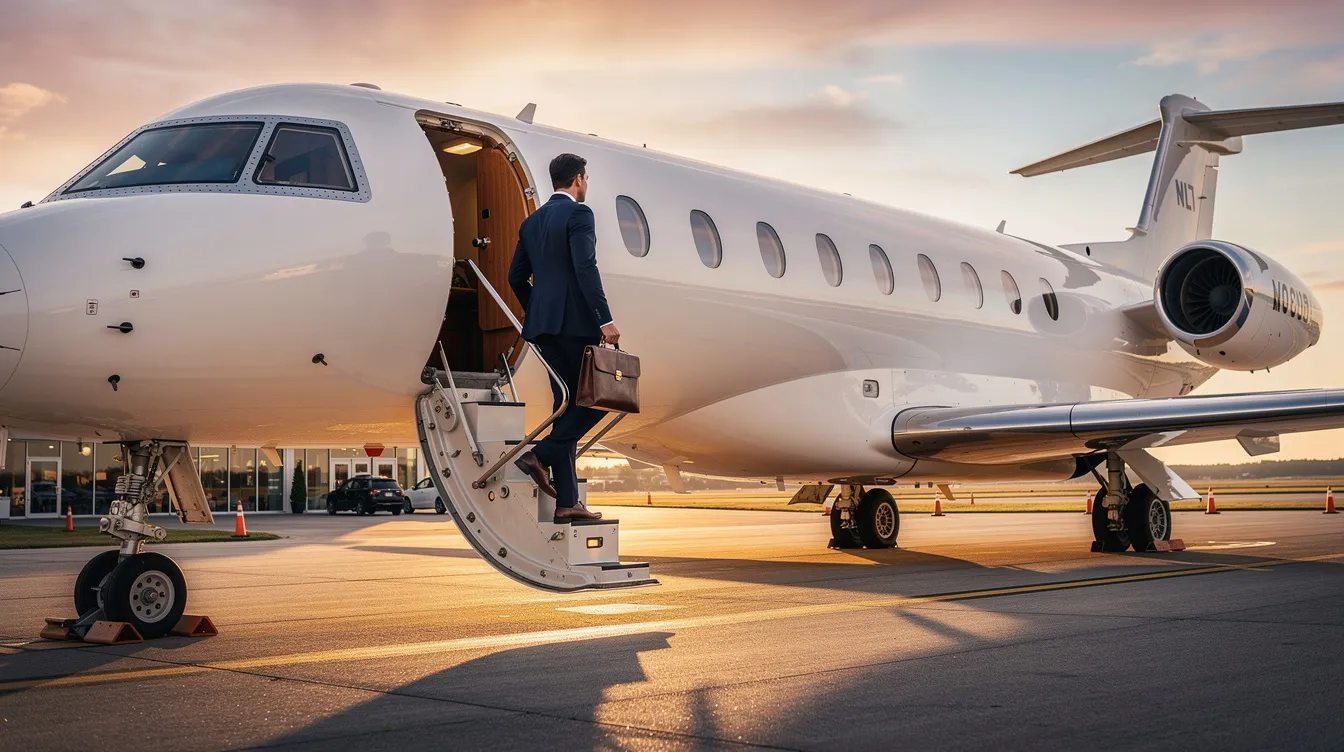
Commercial air travel consumes time in ways most travelers accept as inevitable. A typical three-hour flight between major business hubs often translates to seven or eight hours door-to-door once you factor in arriving 90 minutes early, clearing security, boarding delays, taxi times, and baggage claim. The same route on a private jet remains roughly 3–3.5 hours total, from arriving at a private terminal to stepping off at your destination.
Aircraft charter offers a premium, flexible alternative to commercial flights, allowing travelers to customize their private jet experience to their specific needs, from cabin configuration to personalized menus and service.
Consider a 2025 scenario: a CEO based in Los Angeles needs to attend two board meetings in Dallas, one in the morning and one late afternoon, then return home the same evening. On a midsize jet like a Citation Latitude, covering the 1,200 miles each way takes under three hours airborne. Add 30 minutes of ground time at each FBO, and the entire round-trip fits comfortably within a single business day. No hotel. No overnight. No commercial connection through DFW adds three or more hours of friction.
The strategic advantages break down clearly:
Time recovery: Private jet travelers bypass long lines and crowded terminals, saving hours on every trip. The security process is much faster, and passengers can carry larger quantities of liquids compared to commercial flights.
Flexibility: Choose your own schedule, route, and even the type of aircraft. Private charter provides a customizable solution for both business and leisure travel, adapting to your itinerary and group size.
Control and privacy: Travel with only your invited guests, hold confidential meetings in flight, and enjoy a more personalized service with dedicated flight crews catering to your preferences.
Productivity: Work uninterrupted in a quiet, comfortable cabin with Wi-Fi and power outlets. Private jets offer customizable cabin configurations and personalized menus to enhance your in-flight experience.
Private jets offer more space and comfort than commercial flights, with extra legroom, reclining options, and the ability to carry more baggage or personal items. These benefits become especially clear when you compare whether chartering a private jet is worth it versus commercial flying.
Private jets can access secondary airports closer to your final destination, reducing ground transfer times. In fact, private jets can land at more airports than commercial airlines, providing greater flexibility in travel routes and allowing you to reach remote or less-congested destinations efficiently.
Key Takeaways
A same-day New York–Chicago–New York business trip on a private jet saves 4–6 hours door-to-door compared to commercial flights, eliminating layovers, long security lines, and boarding delays.
Flying in a private jet is a strategic tool for executives, entrepreneurs, and UHNW travelers who treat time, privacy, and control as non-negotiable assets.
BlackJet’s Jet Card model (25-hour and 50-hour programs) offers the most efficient way to fly in a private jet frequently without the capital burden of aircraft ownership, featuring guaranteed availability and fixed hourly rates.
Every BlackJet flight is carbon-neutral by default, with operators vetted against rigorous safety standards like ARGUS Platinum and IS-BAO, plus 24/7 real-time support from a dedicated operations team.
Getting started is fast: join a BlackJet Jet Card, book via mobile or web in a few taps, and be wheels up in as little as 4–6 hours on many routes.
The strategic advantages break down clearly:
Time recovery: Arrive 15–30 minutes before departure, not 90. Skip the security queue. Board directly from the private terminal. Depart the moment the crew completes their brief.
Control and privacy: Select departure times that match your schedule, not an airline’s. Choose secondary airports like Teterboro instead of JFK or Van Nuys instead of LAX to avoid congestion. Conduct confidential discussions on the board without strangers in adjacent seats.
Productivity: Treat the cabin as an airborne office. Wi-Fi is available on 70–80% of modern jets when requested during booking. Club seating configures naturally for meetings. Noise levels run 10–15 decibels quieter than commercial cabins.
For travelers who value their flight hour as an extension of their workday rather than dead time, private aviation offers a fundamentally different equation.
Business Travel: Fly in a Private Jet to Protect Your Time
Frequent business travelers gain the most when they fly in a private jet, especially on multi-city days or routes plagued by poor commercial connections. The ability to compress what would be two or three overnight trips into a single day of productive travel reshapes how deals get done.
Imagine a London-based executive who needs face-to-face meetings in Geneva at 10 a.m., Milan at 3 p.m., and must return to London for a dinner commitment. On a super midsize jet accommodating 4–8 passengers, the 500-mile Geneva leg and the 150-mile Geneva-Milan hop take under an hour each. Depart Farnborough at 7 a.m., complete both meetings, and return by 8 p.m.—without a single hotel room or missed connection.
For business travelers, a charter flight offers an on-demand, flexible solution that enables customized itineraries and access to remote or congested airports, saving valuable time compared to commercial options.
How BlackJet supports business travelers:
Guaranteed availability: Jet Card members confirm aircraft on both peak and non-peak days, often with 24 hours’ notice for popular routes.
Aircraft class matching: Choose light jets for short regional flights under 1,200 miles, midsize jets for coast-to-coast runs, or heavy jets for international flights spanning 3,000+ miles. BlackJet advisors recommend the right aircraft based on trip length, passenger count, and baggage needs.
Onboard experience: Club seating accommodates meetings for four to nine passengers. Power outlets and Wi-Fi (when requested) keep laptops running. The cabin becomes a quiet workspace the moment you board.
Discretion and safety: Operators are vetted against ARGUS Gold/Platinum and Wyvern Wingman standards. Pilots typically log 5,000–10,000+ hours. Private terminals feature controlled access, badge checks, and minimal public exposure—critical for high-profile executives.
Reputable charter company: Choosing a reputable charter company is essential for ensuring high safety standards, compliance, and quality of service throughout your private jet experience, especially when you’re evaluating the best small private aircraft for your needs.
The process of booking a private jet typically begins by contacting a charter company and discussing your travel needs with a dedicated account manager. After your inquiry, you will be assigned a personal charter specialist who will provide quotes and assist with the booking process.
Charter companies have their own rigorous methods for vetting staff and crew to ensure clients receive the best service. For safety and compliance, travelers should always verify a company's Part 135 status by requesting their FAA Air Carrier Certificate.
When you fly in a private jet, you can expect a more personalized service experience, including tailored itineraries and dedicated staff focused on your specific needs.
The private aviation market exists precisely because commercial airlines cannot offer this level of schedule control, privacy, or route flexibility.
Leisure Travel: Fly in a Private Jet for Effortless Escapes
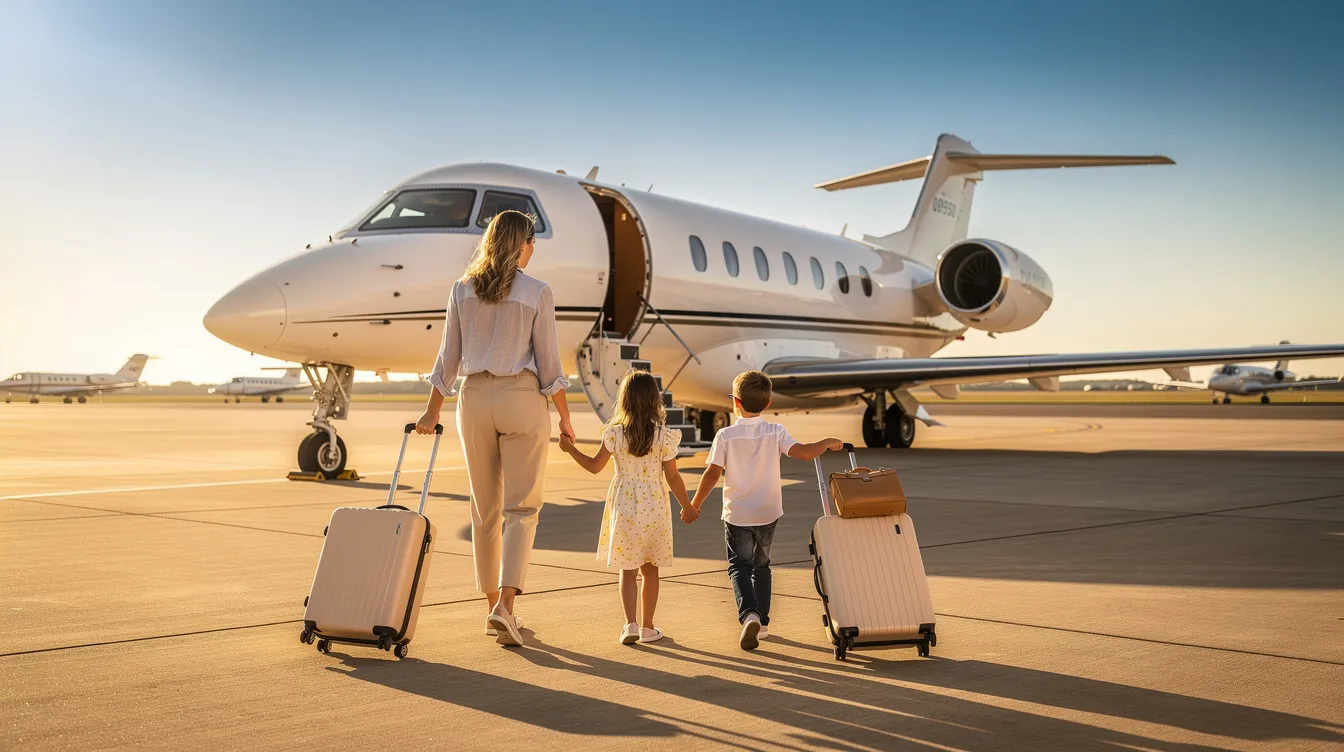
Picture a family trip: four adults and two children flying from Westchester, New York, to Turks and Caicos for a long weekend. On commercial airlines, this means driving to JFK, navigating crowds, entertaining kids through a layover at Miami or Charlotte, and arriving frazzled.
On a midsize private plane departing from a regional field 20 minutes from home, the family boards directly, relaxes in a spacious cabin, and lands in Providenciales refreshed.
Core leisure benefits when flying private:
Direct access: Fly into smaller airports near resort destinations—Jackson Hole for ski season, Aspen via nearby fields, St. Barts connections avoiding major hub chaos.
Flexible schedules: Depart when it suits the family, not when an airline schedules a flight. Add an hour at breakfast before heading to the FBO.
Pets and gear: Bring the family dog (vaccinated and microchipped), ski equipment for a Colorado January, golf clubs for Scottsdale, strollers, and multiple bags. Commercial baggage restrictions and pet cargo policies rarely apply.
Bespoke catering: Request restaurant deliveries from your home city. Accommodate dietary preferences without navigating airline meal limitations.
BlackJet’s Jet Card hours work seamlessly for both business and leisure travel, allowing members to combine boardroom trips and family vacations under one program.
For smaller parties, luxury travel options on small private jets make it easy to match cabin size, comfort, and budget, and a deeper look at the cost to charter a small private plane can help align those choices with your travel budget. A multi-generational trip—grandparents, parents, and kids sharing a cabin—departs from a smaller regional airport closer to home rather than requiring everyone to converge on a congested hub.
The experience of leisure travel changes fundamentally when the journey itself becomes part of the relaxation.
What Is a Jet Card and Why It’s the Smart Way to Fly in a Private Jet
Three main paths to private jet travel exist: one-off charter, full aircraft ownership, and jet cards. Each serves different profiles, but for travelers flying 25–100+ hours per year, jet card programs represent the smart middle ground.
Definitions: Jet Card, Fractional Ownership, and Charter
Jet Card: Jet cards provide prepaid access to private jets across multiple cabin types, allowing for flexibility without ownership. You purchase a block of flight hours (such as 25 or 50 hours) at a fixed hourly rate, and draw down hours as you fly. This model offers guaranteed availability and eliminates the volatility of spot-market charter pricing.
Fractional Ownership: Fractional ownership allows multiple owners to share the costs and usage of a private jet, making it a more economical option for frequent travelers. Each owner purchases a share (for example, 1/16th) of an aircraft, entitling them to a proportional number of flight hours per year. This approach reduces the capital outlay and ongoing expenses compared to full ownership, while still providing access to a specific aircraft type. For some businesses, the tax benefits of fractional jet ownership are a key part of the economic calculation.
Charter: Chartering a private jet allows for flexible scheduling and access to a wide range of aircraft. You pay per trip, selecting the aircraft and route that best fit your needs, without any long-term commitment or ownership responsibilities. Charter is ideal for occasional flyers or those with highly variable travel patterns.
A jet card defined: Prepaid blocks of flight time—BlackJet offers 25-hour and 50-hour programs—with fixed hourly rates and guaranteed availability across select aircraft categories. You deposit funds, draw down hours as you fly, and avoid the volatility of spot-market charter pricing.
Jet Card vs. Owning a Jet
Acquisition cost: $5–60 million for full ownership; none for jet card.
Annual crew, hangar, and maintenance costs: $1–2 million for full ownership; included in hourly rate for jet card.
Resale risk: Significant for full ownership; none for jet card.
Operational management: The owner’s responsibility for full ownership; the provider handles everything for the jet card.
Ownership makes sense for those flying 400+ hours annually with specific aircraft preferences. For most frequent flyers, it’s capital-intensive overkill, and evaluating the best jet cards can reveal more flexible, cost-effective options. A deeper look at jet card pricing, costs, and benefits helps clarify total value across different membership structures.
Jet Card vs. On-Demand Charter
Charter rates fluctuate with seasonal demand, fuel surcharges, and peak-day premiums. A light jet might cost $4,000 per flight hour one week and $6,000 the next.
Jet cards lock in rates, reducing exposure to spikes around holidays and major events.
Chartering ad hoc requires repeatedly negotiating with brokers. Jet cards consolidate into a single membership with priority access.
Choose your cabin class: Light, midsize, super midsize, or heavy jet.
Deposit funds: For a defined number of hours (25 or 50).
Book via the mobile app or concierge team.
Draw down hours as you fly: With clear tracking of your balance.
Key policy details include minimum booking notice (typically 24–72 hours), peak-day rules around holidays, cancellation windows, and treatment of unused hours—all spelled out in straightforward membership terms. No hidden costs, no surprises.
How Flying with BlackJet Works: From Inquiry to Takeoff
Understanding exactly what happens when you decide to fly in a private jet with BlackJet removes any uncertainty from the process. Here’s the journey from first conversation to wheels up.
Private Travel Consultation
A BlackJet specialist reviews your typical routes, preferred cabin class, and estimated annual flight hours. Whether you’re flying from New York to Miami weekly or from London to Geneva quarterly, this conversation shapes a tailored Jet Card recommendation.
Choose Your Jet Card
Select between 25-hour and 50-hour cards and confirm your cabin type. Discuss any bespoke requirements—guaranteed Wi-Fi on every flight, specific operator tiers, or recurring routes that benefit from advance positioning.
Book Your Flight Digitally
The mobile app and web platform let members choose date, time, route, passenger list, and preferred airports. Flying Teterboro to Van Nuys? The system surfaces available aircraft, estimated flight duration, and any relevant operational notes, making it easy to compare jet card cost per hour across aircraft types as you fine-tune your mission profile.
Day-of-Flight Experience
Arrive at the FBO 15–30 minutes before departure. Meet the crew, complete a brief security check without queues, and board directly onto the aircraft. The plane departs as soon as everyone is seated and the crew completes their pre-flight procedures.
Real-Time Support
BlackJet’s 24/7 operations team monitors weather systems, slot restrictions, and NOTAMs (Notices to Airmen). If conditions change—thunderstorms developing along your route, for instance—the team proactively suggests rerouting, alternate airports, or adjusted departure times. You’re never left guessing.
Choosing the Right Private Jet: Aircraft Categories and Cabin Classes
BlackJet provides access to multiple aircraft classes, ensuring each trip uses the optimal jet rather than forcing a one-size-fits-all approach. Understanding the different private jet sizes helps you make informed requests.
Light jets and turboprops
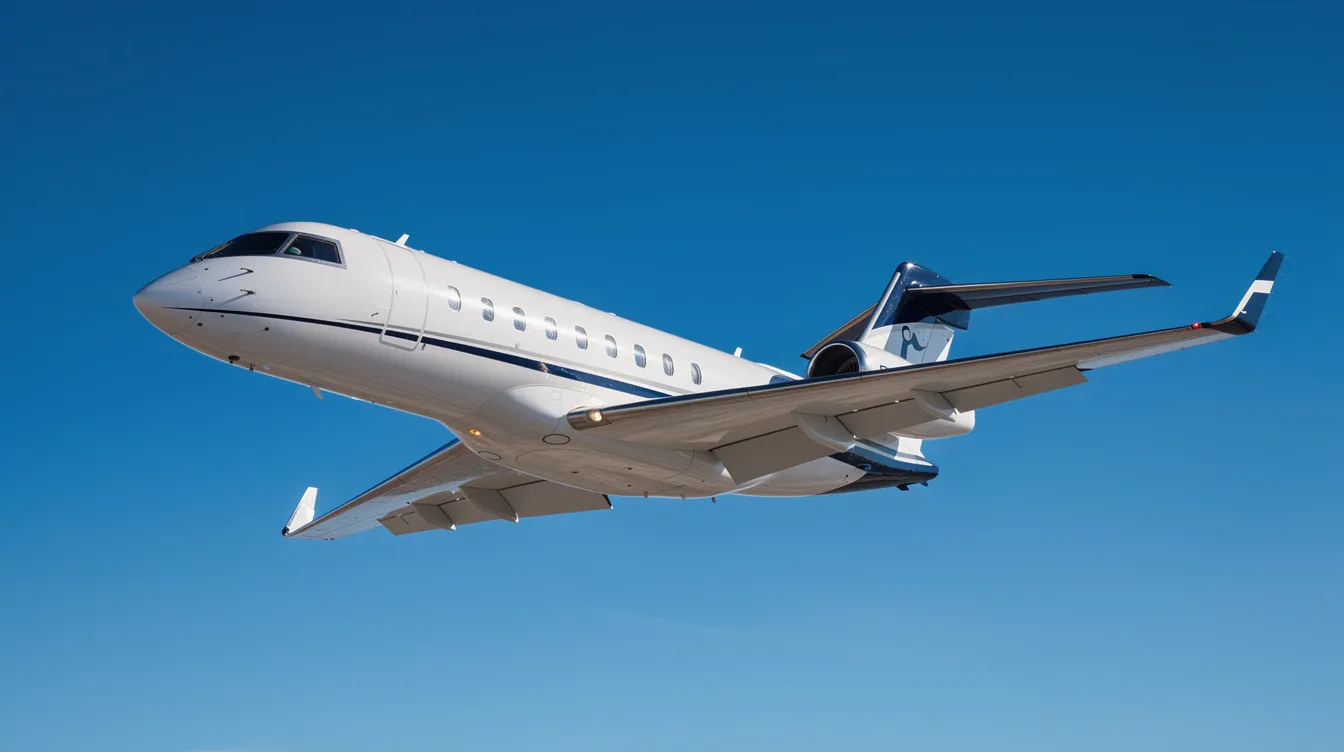
Ideal for 2–6 passengers on flights up to 1,200–1,500 miles
Routes like Dallas–Miami (950 miles, ~2.5 hours) or Paris–Milan (500 miles)
Compact but efficient cabins, often Wi-Fi equipped
Cost-effective solution for short regional flights at $3,500–$5,500 per flight hour
Light jets are suitable for short regional flights and typically seat four to seven passengers.
Midsize and super midsize jets — a key segment within the broader types of private jets available to travelers
Handle 4–9 passengers over 2,000–2,500 miles
Midsize jets can accommodate six to nine passengers and are capable of longer flights, typically priced higher than light jets.
Typical hourly costs for midsize jets range from $6,000 to $8,000, while larger aircraft can have higher hourly rates due to their capabilities and onboard experience.
Examples: New York–Denver, London–Athens, Chicago–Las Vegas
Stand-up cabins (5’8”–6’ height), lavatories, 20–30 cubic feet of baggage space
The workhorses of private aviation for longer distances without transcontinental needs
Heavy and ultra-long-range jets
Built for transcontinental and transatlantic routes and long-haul flights: New York–London (3,000+ miles), Los Angeles–Honolulu, Dubai–Geneva
Heavy jets are designed for long-haul flights and can carry more passengers and baggage, making them ideal for international travel.
Lie-flat beds, multiple cabin zones, full galleys, 100+ cubic feet of luggage capacity
Hourly rates of $12,000–$18,000 reflect the capability and comfort
Choosing the right aircraft:
Consider distance, passenger count, baggage needs (ski gear versus carry-ons), preferred standing cabin height, and whether overnight rest is required. BlackJet’s advisors can recommend specific aircraft types—Gulfstream, Global, Challenger, Citation—based on your mission profile and real-time availability.
The goal is to match the airplane to the journey, not to pay for more capability than you need or cram into less space than the trip demands.
Private jets typically cruise at 41,000 to 51,000 feet, well above commercial traffic, allowing for smoother flights. Understanding how high private jets fly compared to commercial aircraft highlights why these routes are often faster and less turbulent.
Charter Flights and Destinations: Where Can You Go with BlackJet?
BlackJet opens up a world of possibilities with private jet charter access to over 5,000 airports worldwide, far surpassing the reach of commercial airlines.
Whether your travel plans call for a quick business meeting in a neighboring city, a weekend escape to Las Vegas, a long-haul international flight, or even large-group private jet travel for up to 50 passengers, BlackJet’s diverse fleet—including light jets, midsize jets, and heavy jets—ensures the right aircraft for every journey.
With BlackJet, you’re not limited to fixed routes or congested commercial hubs. Private aviation allows you to fly directly to smaller, more convenient airports closer to your final destination, saving hours and eliminating long security lines.
From private jet charters in Karachi and other major cities to short regional flights for last-minute business trips or transatlantic journeys for global meetings, BlackJet’s jet charter services are designed to be a cost-effective solution for both frequent flyers and those seeking a one-time luxury experience.
No matter where you need to go—iconic cities, remote resorts, or exclusive events like those served by private jet charters in Lahore—BlackJet’s global network and flexible charter options provide seamless private jet travel tailored to your schedule. Enjoy the freedom to fly on your terms, with the comfort, privacy, and efficiency that only private aviation can deliver.
Safety and Security When You Fly in a Private Jet
Safety is non-negotiable and forms the true foundation of any premium private aviation experience—more important than cabin finishes or catering quality.
BlackJet partners exclusively with private aviation operators that meet rigorous third-party standards. Certifications such as ARGUS Gold and ARGUS Platinum, Wyvern Wingman, and IS-BAO audit operators against 100+ metrics covering pilot qualifications, dispatch procedures, and maintenance practices. Understanding how safe private jets are in practice can further contextualize these requirements.
Key safety components:
Experienced crews: Two-pilot operations on jets, with captains typically logging 5,000–10,000+ flight hours, often drawn from military or commercial airline backgrounds.
Maintenance standards: Aircraft maintained under FAA, EASA, or equivalent national aviation authority requirements, with many operators exceeding minimum mandates.
Flight risk assessments: Proactive dispatch analysis evaluating weather conditions, route complexity, and crew readiness before every departure.
Security at private terminals:
Controlled access at FBOs with badge verification
Discreet check-in without the crowds of commercial terminals
Luggage and pet screening handled efficiently, avoiding mass queues
Option for ground transfers coordinated directly to the aircraft door for high-profile travelers
Regulatory requirements—seat belts, emergency equipment, crew safety procedures—apply on private jets just as on commercial airlines. The difference lies in discretion, a controlled environment, and personalized attention to each passenger’s security needs.
Sustainable, Carbon-Neutral Private Jet Travel with BlackJet
Flying in a private jet carries an environmental footprint. BlackJet addresses this directly rather than ignoring it, integrating sustainability into every flight by default.
Every BlackJet flight is carbon-neutral, with no additional administrative burden for the member. This happens through verified carbon offset projects calculated on a per-flight-hour basis—funding reforestation initiatives, renewable energy development, and certified clean-cookstove programs that reduce emissions in developing regions.
How offsets work:
A midsize jet generates approximately 5–7 tons of CO₂ per flight hour. BlackJet calculates each trip’s emissions and purchases offsets from verified programs meeting international standards. The math happens behind the scenes; members simply fly knowing their journey’s carbon impact has been neutralized.
Sustainable Aviation Fuel (SAF):
Where available, BlackJet prioritizes operators using SAF blends that reduce lifecycle CO₂ emissions by 50–80% compared to conventional jet fuel. While SAF availability remains limited (roughly 10–20% of US operations by 2025), adoption is growing rapidly.
ESG reporting:
Members can receive documentation of their estimated annual carbon footprint and the offsets applied—useful for corporate sustainability disclosures and personal environmental commitments.
Private jet access can coexist with thoughtful environmental choices through better technology and verified climate action.
Technology and Real-Time Support: The Modern Way to Fly in a Private Jet
The days of phone-only booking and hoping for availability are over. BlackJet combines modern digital tools with human expertise, delivering fast, app-based control without sacrificing personalized support.
Mobile and web platform capabilities:
Request flights with departure/arrival airports, dates, and times
View available aircraft options and estimated flight duration
Manage passenger profiles and store frequent routes
Track Jet Card balance and flight history
24/7 operations monitoring:
A dedicated team tracks weather systems, airspace restrictions, and NOTAMs around the clock. If a storm system develops along your route or slot constraints affect your departure airport, the team suggests alternatives—earlier departure windows, alternate airports, or routing adjustments.
Proactive communication:
Updates arrive via app notifications, SMS, or direct phone calls when conditions change. You’re never left checking weather apps yourself and wondering if your flight is affected. A human concierge remains available at any hour.
Data-driven optimization:
Historical data and global network access inform recommendations. Winter flights into Aspen or Chambéry, for instance, benefit from BlackJet’s experience with de-icing requirements, positioning flights, and the specific aircraft types best suited for mountain operations.
Technology exists to serve the journey, not complicate it.
Exclusive Services: VIP Touches and Concierge Experiences
At BlackJet, every journey is elevated by a suite of exclusive services designed to make your private jet travel truly exceptional.
From the moment you book, our dedicated aviation experts handle every flight detail, ensuring a seamless experience from ground to sky. Enjoy instant boarding through private terminals, bypassing crowds and queues for a stress-free start to your trip.
Our concierge team is available around the clock to personalize your journey—whether that means arranging gourmet in-flight dining, coordinating ground transportation, or curating bespoke experiences at your destination.
Flexible schedules allow you to depart when it suits you, while spacious cabins provide the perfect environment for relaxation, productivity, or celebration.
Whether you’re planning a romantic getaway, a family adventure, or a high-stakes business retreat, BlackJet’s VIP touches ensure your private aviation experience is as unique as you are. Trust our team to deliver the highest level of service, so every flight feels effortless and every journey unforgettable.
Cost Considerations: What It Really Costs to Fly in a Private Jet
Costs for private jet charter vary significantly based on aircraft type, route length, notice period, and seasonal demand. If you’re comparing access models, it helps to understand how much it costs to rent a private jet for typical routes. Jet cards provide predictable, fixed hourly rates that simplify budgeting, and understanding 25-hour jet card features and costs is often the first step for travelers testing whether membership fits their pattern.
Hourly Rate Ranges
Example hourly rate ranges (2025 dollars): If you’re mapping out an annual travel budget, an overview of private jet price lists, costs, and access options can provide useful context alongside these benchmarks.
Light jet: $4,000–$6,000 per hour
Midsize jets: $7,000–$10,000 per hour
Super midsize jets: $9,000–$12,000 per hour
Heavy jet: $12,000–$18,000 per hour
Private jet charter rates typically range from $1,200 to $20,000+ per billable flight hour, and charter costs can vary widely depending on aircraft type and route. The total trip cost for private jet charter often includes fuel surcharges, federal excise tax, landing and handling fees, crew expenses, and in-flight services.
Rates cover aircraft, crew, fuel, and standard services. Extras like de-icing ($2,000–$5,000 in winter operations), special catering, or Sustainable Aviation Fuel uplift may add incremental costs.
Trip Examples
Concrete trip examples:
40-minute light jet hop (e.g., Boston–Nantucket): $2,800–$4,000
Boston–Toronto round-trip on a light jet: $8,000–$12,000
New York–Miami round-trip on a midsize jet: $20,000–$25,000
New York–London one way on a heavy jet: $80,000–$100,000
When planning your trip, booking a return journey (round-trip) versus a one-way flight can affect both pricing and scheduling flexibility. Round-trip bookings may offer better rates and guaranteed aircraft availability, while one-way flights provide more flexibility for changing plans.
Jet Card Pricing vs. Charter
Jet Card pricing vs. ad-hoc charter: For higher-utilization flyers, comparing a standard membership with a 100-hour jet card cost structure clarifies when scaling up delivers better effective hourly rates.
Jet cards lock in rates, providing access to flights without exposure to spot-market volatility. Frequent flyers who log 25+ hours annually often realize 10–20% savings compared to booking charter flights individually, while gaining priority access and simplified booking.
The economic logic: Whether you’re comparing in-house ownership, on-demand charter, or third-party providers like NetJets jet card programs and costs, the core question is how each option aligns with your annual flight hours, preferred aircraft class, and balance sheet priorities.
For those flying 25–100 hours annually, jet cards typically make more sense than fractional ownership ($500K+ upfront for a 1/16th share) or full ownership, which requires a multi-million-dollar capital outlay. Cost efficiency emerges when you factor in all the benefits: time saved, fewer hotel nights, fewer missed opportunities, and the ability to bring teams or family.
Cost-Saving Strategies
Cost-saving strategies: For travelers considering larger memberships, understanding the 50-hour jet card cost and value can help benchmark whether a larger block of time delivers better effective hourly rates than ad-hoc charter.
Travelers can optimize costs by being flexible with travel dates, using smaller airports, and exploring options like empty-leg flights. Empty legs are discount private jet flights that occur when an aircraft is repositioned without passengers. These flights are available on fixed routes and schedules, and can offer significant savings—often 50–90% off standard charter prices—for flexible travelers willing to adjust their plans.
Booking months ahead is another way to secure better options and pricing, especially during peak travel seasons when aircraft availability is limited.
Think total value, not just hourly rates.
BlackJet’s Commitment: Our Promise to Private Flyers
BlackJet is dedicated to redefining private jet travel by delivering all the benefits of private aviation with an unwavering commitment to safety, transparency, and flexibility.
Our promise to private flyers starts with access to a global network of aircraft, including ARGUS Platinum-rated operators, ensuring that every charter meets the industry's highest safety standards.
We believe in transparent charter costs—no hidden costs, no surprises—so you can plan with confidence. Our jet card programs are designed to fit your travel needs, offering cost-effective solutions for frequent flyers and one-time travelers alike.
Take advantage of empty leg flights, one-way flights, and repositioning flights to maximize value and flexibility, whether you’re flying for business or leisure, and explore top private jet options for 30 passengers when your itinerary calls for full-team travel or large family events.
With a wholly owned fleet and trusted partners worldwide, BlackJet provides access to the right aircraft for every mission—from agile light jets to top 16-seat private jet options for larger groups—backed by a team dedicated to exceeding your expectations.
Whether you need a light jet for a quick hop, the best private jet for 20 passengers for larger groups, or the best private jet for 15 passengers for executive teams and extended families, options are tailored to match your trip profile.
From your first inquiry to your final landing, we’re committed to making every flight seamless, safe, and memorable. Choose BlackJet and experience private jet charter as it should be—personalized, efficient, and truly world-class.
How to Start Flying Private with BlackJet
Making private aviation your new standard begins with a straightforward process designed around your preferences, not bureaucratic complexity.
Schedule a consultation: Share your typical annual travel patterns—routes flown, frequency, passenger counts, and any specific requirements, such as pet travel or recurring business destinations. A BlackJet specialist uses this to recommend the optimal Jet Card structure.
Choose and fund your Jet Card: Select from 25-hour or 50-hour programs in your preferred cabin class. Complete simple membership documentation. Fund the card and receive immediate access to the booking platform and concierge team.
Plan your first flight: Perhaps it’s Chicago to Palm Beach for a long weekend or San Francisco to Aspen for ski season. Enter flight details via the app: date, time, passenger names, and preferred airports. The concierge coordinates ground transportation if needed.
Experience the difference: Arrive at the FBO 15 minutes before departure. Board directly. Depart when everyone is ready.
Elevate your travel — effortlessly. With BlackJet, flying in a private jet isn’t reserved for a select few—it’s accessible on your terms through Jet Card programs built around rigorous safety standards, carbon-neutral performance, and unmatched flexibility. Discover how refined, purposeful travel becomes your new standard.
Join BlackJet’s Jet Card program for seamless, premium private travel — safety, sustainability, and flexibility built in.
FAQ: Flying in a Private Jet with BlackJet
How much notice do I need to give to book a private jet with BlackJet?
Most Jet Card members confirm flights with 24–72 hours’ notice on non-peak days. During major holidays, global events, or high seasonal demand periods, a slightly longer notice is recommended to guarantee preferred aircraft and departure times.
In many cases, same-day or next-day departures remain possible on popular routes, especially for light and midsize jets, depending on aircraft positioning and airport slot availability. BlackJet’s concierge team advises on the earliest realistic departure time, taking into account crew duty limits (regulated under FAR 117), aircraft positioning, and operational safety procedures.
Can I bring my pet when I fly in a private jet?
Pets are welcome on most BlackJet flights, provided they meet local and international regulations. This typically includes current vaccinations, microchipping, and pet passports for destinations requiring them.
Declare pets during booking so the appropriate aircraft and post-flight cleaning protocols can be arranged. Some country-specific rules—such as UK and EU arrivals—require additional documentation that BlackJet’s team helps navigate. Large dogs may face size limitations on smaller aircraft, and soft crates or harnesses are generally requested during taxi, takeoff, and landing for safety.
Do I still need a passport or visa when I fly privately internationally?
Immigration requirements remain unchanged regardless of how you travel. Valid passports and, where applicable, visas are mandatory for all international flights on private jets.
BlackJet coordinates with handling agents and border authorities to process immigration and customs quickly at private terminals—often in 15–30 minutes, compared with the extended waits common at commercial airports. Share passport details in advance through your member profile and verify visa requirements early, particularly for destinations with stricter entry policies or those outside common visa-waiver agreements.
What can I do on board a private jet — can I use my laptop and phone freely?
Passengers use laptops, tablets, and phones throughout the flight, subject to standard safety instructions during takeoff and landing. Many aircraft offer Wi-Fi suitable for email, browsing, and video conferencing at speeds of 10–50 Mbps.
Request Wi-Fi capability when booking to guarantee an equipped airplane. Treat the cabin as an extension of your office: hold meetings with colleagues, review documents for upcoming presentations, conduct video calls, or simply rest strategically between high-stakes events. The quiet environment—10–15 decibels lower than commercial cabins—supports focused work or genuine relaxation.
What happens if the weather disrupts my private jet flight?
Safety always takes precedence. If weather conditions at your origin, destination, or en route create unsafe flying conditions, BlackJet’s operations team recommends delays, reroutes, or alternate airports.
The 24/7 flight support monitors forecasts and NOTAMs continuously, proactively communicating options—often proposing earlier or later departure windows to avoid storms, ice, or congestion. Private aviation’s inherent flexibility enables adjustments that rigid commercial airline schedules cannot match.
The team might suggest departing two hours earlier to beat a weather system or landing at a secondary airport 30 miles from your original destination to avoid turbulence. The goal is to protect both safety and schedule, using the full flexibility of repositioning flights and alternate routing that private aviation offers.
Private Aviation Solutions: Tailored Approaches for Every Flyer
Private aviation is all about customization—delivering a travel experience that adapts to your unique needs, rather than forcing you to adapt to the limitations of commercial flights. With private jet charter, you’re not bound by fixed routes or rigid airline schedules. Instead, you have the freedom to design your own travel plans, choosing departure times, destinations, and even the right aircraft for each journey.
Whether you’re a business executive needing a light jet for short regional flights or a family planning leisure travel across longer distances in a midsize jet, private aviation offers a solution tailored to your requirements. The flexibility to select the ideal jet charter for each trip means you can optimize for speed, comfort, or cost—whatever matters most for your mission.
Private jet travel also means you can access more airports than commercial airlines, allowing you to land closer to your final destination and avoid unnecessary ground transfers. This level of personalization is what sets private aviation apart, making it the preferred choice for those who value efficiency, privacy, and comfort.
From spontaneous weekend getaways to complex multi-city business itineraries, private aviation offers a range of aircraft and services designed to fit every flyer. Enthusiasts focused on performance and comfort can explore the top private jets in the world for luxury and range as inspiration for their preferred cabin class. By working with experienced charter companies, you can ensure that every aspect of your journey—from aircraft selection to in-flight amenities—is crafted around your specific needs, making private jet travel a truly bespoke experience.
Travel Tips and Advice: Maximizing Your Private Jet Experience
To get the most out of your private jet travel, it pays to be strategic—both in planning and in choosing the right partners. Start by considering the type of aircraft that best matches your journey. For shorter flights, a light jet or midsize jet may offer the perfect balance of speed and cost efficiency, while super midsize or heavy jets are ideal for longer distances or larger groups.
Understanding the nuances of the private aviation market can help you avoid hidden costs and make informed decisions about charter costs and jet card programs. Comparing leading private jet companies and their service models can also clarify which partners best match your expectations for safety, service, and flexibility. For example, booking during periods of high seasonal demand can affect both availability and pricing, so planning your flights months in advance or being flexible with your travel dates can yield significant savings.
Take advantage of empty leg flights—these repositioning flights are often available at a fraction of the standard charter rate, providing a cost-effective solution for flexible travelers and one of the most accessible ways to experience the cheapest private jet options for entry-level flyers. Working with reputable private aviation operators and a trusted charter company ensures you benefit from the highest safety standards, transparent pricing, and expert guidance on everything from cabin classes to safety procedures.
Don’t overlook the importance of flight duration, weather conditions, and aircraft types when planning your journey. Each factor can influence not only the comfort and safety of your trip but also the overall cost. Jet card programs can offer predictable rates and priority access, making them a smart choice for frequent flyers looking to maximize value.
By staying informed and partnering with experienced aviation experts, you can navigate the private aviation market with confidence—enjoying all the benefits of private jet travel while ensuring every journey is safe, seamless, and tailored to your needs.
Conclusion: Experience the Future of Private Jet Travel with BlackJet
Flying in a private jet is no longer an exclusive luxury but a strategic advantage that saves time, enhances productivity, and offers unparalleled flexibility and privacy.
BlackJet stands at the forefront of this evolution, providing seamless access to a global network of meticulously vetted aircraft through innovative Jet Card programs and a user-friendly digital platform. With a commitment to safety, sustainability, and exceptional service, BlackJet ensures every journey is carbon-neutral and tailored to your unique needs.
Whether for business or leisure, BlackJet empowers you to fly on your terms—book in minutes, enjoy personalized amenities, and benefit from real-time support every step of the way.
Discover how BlackJet transforms private aviation into an accessible, efficient, and truly world-class experience by visiting www.blackjet.com. Elevate your travel and make private jet flights your new standard with BlackJet.


 Sign up with google
 Sign up with Apple