Introduction: Why JSX Aircraft Matter to High-End Travelers
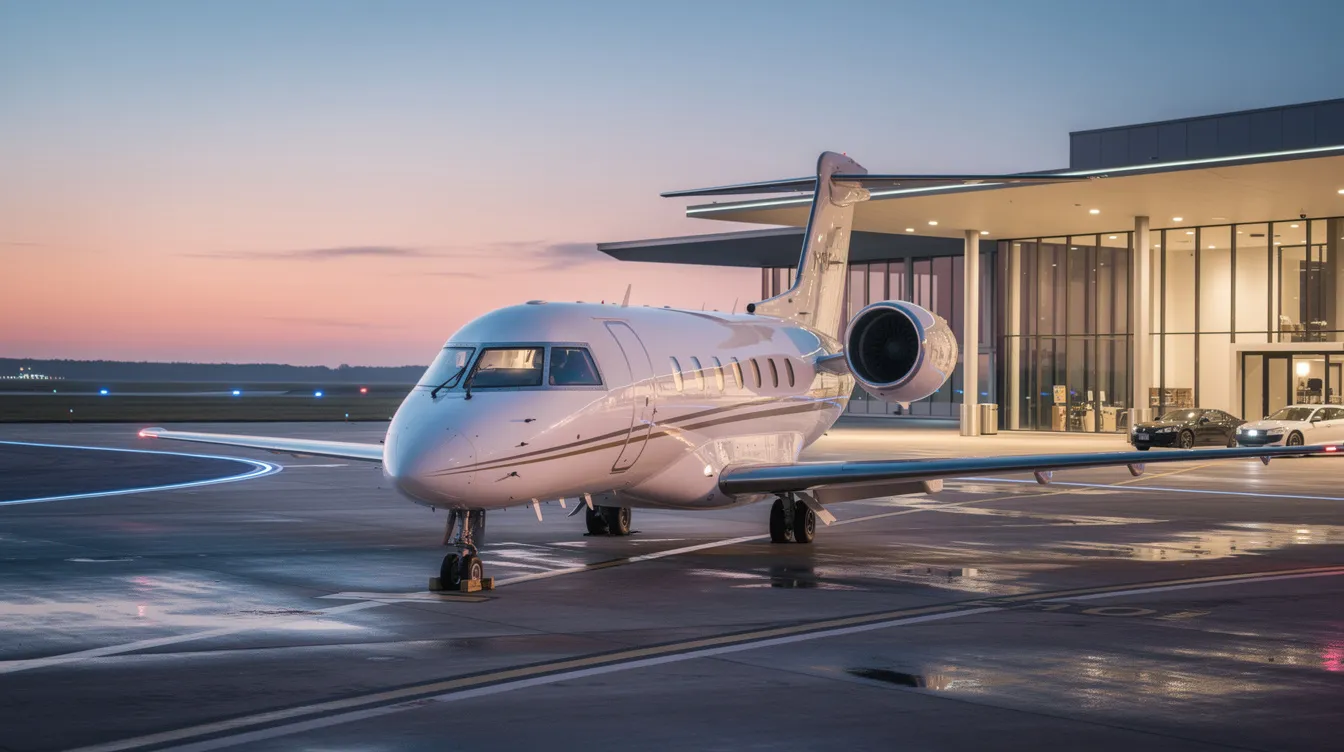
JSX aircraft are Embraer regional jets reconfigured from their original capacity down to just 30 seats, operating from private-style terminals across the United States and marketed as a semi-private alternative to commercial airlines. JSX operates Embraer ERJ-135 and ERJ-145 aircraft. The experience sits in a deliberate gap between cramped economy cabins and the full exclusivity of flying private, offering travelers something that feels closer to a private jet without commanding private jet pricing. For business travelers and frequent flyers evaluating their options, JSX raises a practical question: is this semi-private model enough, or does genuine private jet access through programs like BlackJet's Jet Card deliver a fundamentally different return on time, privacy, and predictability?
Many travelers discover JSX while searching for alternatives to business class and first class on major airlines. This article clarifies how JSX operates, what its aircraft and cabin experience actually deliver, and where the model falls short for those who need total schedule control, cabin exclusivity, or broader route flexibility. We will cover JSX aircraft types, cabin layout, routes including Las Vegas and California markets, checked bag policies, in-flight service, and how the entire experience compares to BlackJet's private aviation programs—covering multiple cabin classes, transparent pricing, and carbon-neutral flights on every segment.
What Is JSX and How Does JSX Operate as a Semi-Private Air Carrier?
JSX is a US air carrier branded as a "hop-on jet service." It uses Embraer regional aircraft reconfigured for 30 passengers to deliver a flying experience that feels closer to private aviation than anything offered by commercial airlines. JSX is classified as a public charter operator, operating under Part 380/135-style rules that separate ticket sales (handled by Delux Public Charter, LLC) from flight operations. Limiting capacity to 30 seats helps JSX comply with public charter regulations and avoid many requirements imposed on traditional scheduled carriers.
The main difference between JSX and a conventional commercial flight is where JSX flights depart: from private terminals and Fixed Base Operators rather than crowded main terminals. JSX passengers arrive just 20 minutes before departure, bypass TSA lines entirely, and walk directly to the airplane. JSX eliminates traditional airport hassles such as long lines and delays that define most airport experiences.
However, JSX operates scheduled flights where passengers buy individual seats—meaning you share the cabin with up to 29 other travelers on a fixed timetable. With BlackJet's private jet access, clients control the schedule, choose the aircraft type, and determine who boards. JSX flights can earn miles through certain airline partners like United MileagePlus, while BlackJet focuses on direct value: guaranteed availability, safety certification, and personalized service rather than airline-style loyalty programs.
JSX Aircraft Types and Cabin Configuration
JSX operates Embraer ERJ-135 and ERJ-145 aircraft as its primary fleet, with ATR 42-600 turboprops joining the lineup on selected routes. All aircraft are limited to 30 seats by design—a deliberate reconfiguration that removes rows and creates the semi-private atmosphere JSX is known for.
The ERJ-145 originally carried 50 passengers in standard airline configuration but now carries 30 under JSX's layout. The ERJ-135 was designed for 37 passengers and is similarly reduced to 30. This reconfiguration creates wider spacing between rows and a more open cabin feel that distinguishes the plane from anything you would board at LAX or Dallas on a commercial flight.
JSX's aircraft have a 1-2 seat configuration for spaciousness—one seat on the port side and two seats on the starboard side. Some Texas-based ERJ-145s feature an even more exclusive 1-1 arrangement: one seat on each side of the aisle, delivering a business class atmosphere with no neighbor on either side. The ATR 42-600, which began service on routes like Santa Monica to Las Vegas in late 2025, offers a slightly larger cabin and initially retained overhead bins, though JSX announced plans to remove those bins for consistency across the fleet.
By contrast, BlackJet clients select from multiple aircraft categories—light, midsize, super-midsize, and large cabin—reflecting the full range of types of private jets for every traveler, with true business jet interiors, club seating, divans, and conference layouts that no JSX aircraft configuration can replicate.
Cabin Layout, Overhead Bins, and Seat Experience on JSX
Spacious Layout and Seat Configuration
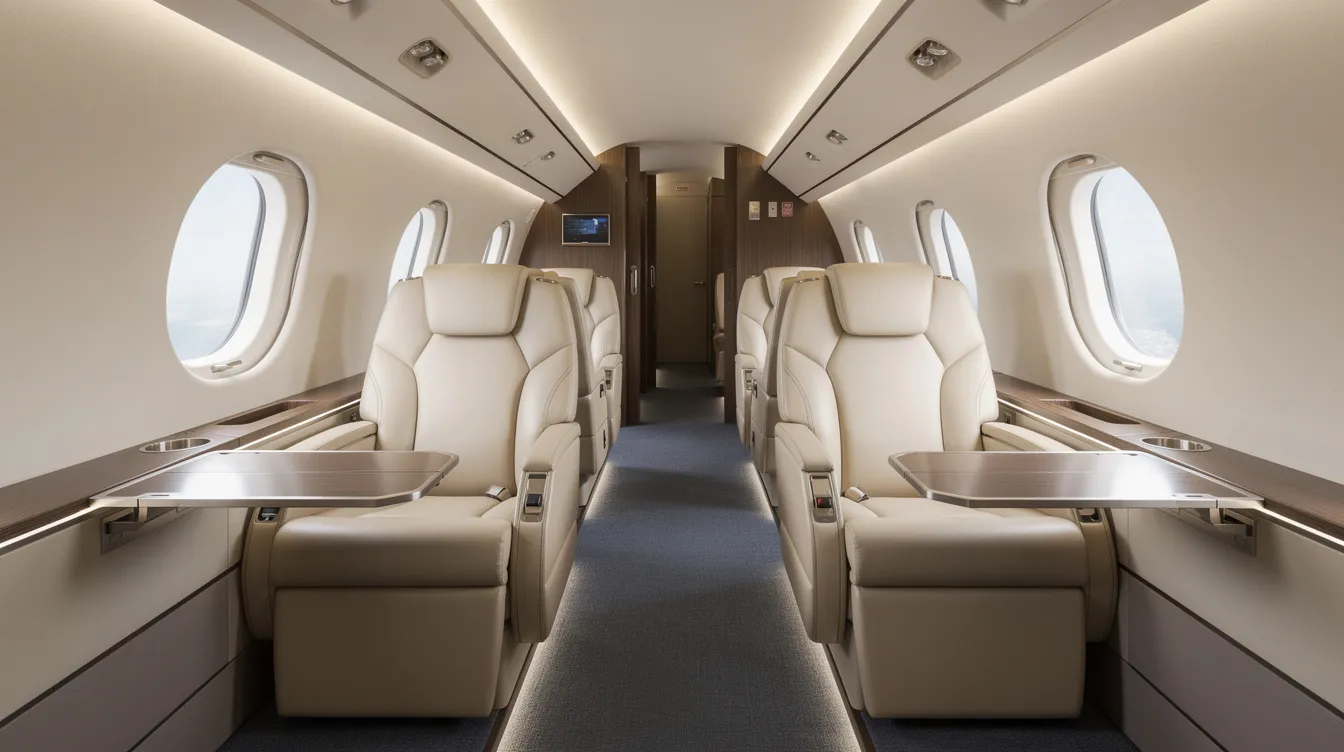
JSX aircraft feature spacious layouts with no middle seats and a 1-2 seat configuration for spacious seating. Walking into a JSX cabin, you immediately notice the difference from a commercial airplane: 30 leather seats spread across roughly 10 rows, bright lighting, and a quieter environment. JSX aircraft feature spacious layouts with no middle seats, which alone sets the experience apart from economy.
Overhead Bin Policy
Overhead bins have been removed on most JSX planes. Bags are stored under seats where possible, with larger items gate-checked before boarding. This creates a feeling of openness but limits carry-on flexibility—travelers accustomed to rolling a full-size bag onboard will need to adjust.
Seat Features
JSX's seats offer up to 37 inches of pitch, comparable to many domestic business class products and well beyond the 28–32 inches found in standard economy. Every row in JSX features business-class legroom and power outlets, including three-prong AC and USB ports. Seats recline and include a tray table, with some positions offering integrated cocktail tables and cupholders. A window seat on the one-seat side of the cabin provides genuine solitude during the entire flight.
However, seats are not lie-flat. For routes under three hours—Los Angeles to Las Vegas, Dallas to Phoenix, Burbank to Orange County—this is perfectly adequate. For longer missions, or for travelers who expect to work, sleep, or hold confidential conversations in flight, BlackJet's aircraft categories offer stand-up cabins, fully adjustable seating, and complete cabin control, with options spanning many of the best small private aircraft for specific mission profiles and other top affordable private planes that make private aviation more accessible.
Lounge and Terminal Experience: From Check-In to Boarding
Check-In and Lounge Experience
Picture arriving at a private hangar near Las Vegas. You walk directly to the JSX terminal desk, show your ID, and have your luggage weighed and tagged. Within minutes, you are sitting in a quiet lounge with a coffee in hand—no boarding pass shuffle, no wait in a security queue stretching around the corner.
JSX offers a streamlined security and check-in process inside private lounges at each of its terminals. These spaces are compact and functional: comfortable seating, complimentary coffee and soft drinks, light snacks, Wi-Fi, and large windows overlooking the ramp. They are designed for brief 20–30 minute stays, not extended layovers. JSX allows check-in just 20 minutes before departure, and security screening involves noninvasive measures—baggage swabs, Secure Flight vetting, and thermal detection—rather than standard TSA queues.
Boarding Process
Boarding typically begins 15 minutes before departure. Passengers either walk across the tarmac to the aircraft or take a short shuttle ride from the FBO, guided by JSX staff. There are no jetways, no crowded gate areas, and minimal walking distance.
BlackJet clients experience a similar departure flow—arriving at premium FBOs, walking directly from lounge to aircraft—but with one critical distinction: you board with your party only, on your schedule, without waiting for other passengers or adhering to a published timetable.
In-Flight Service, Flight Attendants, and Amenities on JSX
Every JSX flight is staffed by a single dedicated flight attendant serving up to 30 passengers. This ratio enables more personal interaction than typical commercial flights, where cabin crews manage hundreds of travelers across multiple aisles.
The flight attendant performs safety demonstrations, manages the cabin, assists with pets or special requests, and serves complimentary drinks and snacks throughout the entire flight. Passengers enjoy complimentary drinks and snacks on JSX flights—including wine, beer, cocktails, and a rotating selection of curated snack options from chips and cookies to charcuterie boxes and specialty items depending on the route.
JSX provides free Wi-Fi on all flights since May 2023, powered by Starlink's high-speed satellite network. The connection is strong enough for streaming video, attending video calls, or working through email during shorter flights. There are no seatback screens; passengers use their own devices, with fast Wi-Fi compensating for the lack of built-in entertainment.
On a BlackJet-arranged private flight, cabin service is configured entirely to the client's needs. From quiet, work-focused flights with minimal disruption to full-service catering experiences with custom menus, the service adapts to you—not the other way around, reflecting the broader benefits of BlackJet premium private jet cards and programs.
Baggage Policies: Free Checked Bags and Travel Practicalities
JSX's generous baggage model is a genuine selling point when comparing to commercial airlines and even some first class products, but travelers focused on aircraft performance often prioritize rigorous private jet safety standards and operational control over luggage allowances alone.
JSX offers two fare types: "Hop On" and "All In." Both include free checked bags:
Hop On includes two checked bags (up to 50 lbs each) plus a personal item
All In allows three checked bags at the same weight limit, plus a personal item
Carry-ons are limited by the lack of overhead bins. Most roll-aboard suitcases must be gate-checked, so passengers should plan accordingly—bringing a laptop bag, small backpack, or pet carrier as their under-seat item.
JSX generally accommodates skis, golf bags, and oversized luggage within weight and size limits, though advance confirmation is wise from smaller regional airports. Commercial first class and business class on major airlines may still charge checked bag fees or impose restrictive weight limits, making JSX competitive on pure luggage value.
With BlackJet, baggage is effectively managed within aircraft weight and balance limits. Clients coordinate with the operations team ahead of time so everything—from business equipment to sports gear—is pre-planned and loaded before boarding, matched to private jet sizes that fit each journey.
Routes, Schedules, and Key Markets (Including Las Vegas)
JSX connects regional short-haul city pairs focusing on ease of travel, with a route network spanning approximately 29 airports across the US and Mexico. The carrier focuses on California, Texas, the American Southwest, and select East Coast destinations.
Key markets include:
California: Burbank, Orange County, Oakland, Santa Monica
Southwest: Las Vegas, Phoenix, Scottsdale
Texas: Dallas Love Field, Austin, Houston
East Coast: Miami (Opa-Locka), Westchester County
Mexico: Cabo San Lucas and other Baja California Sur destinations
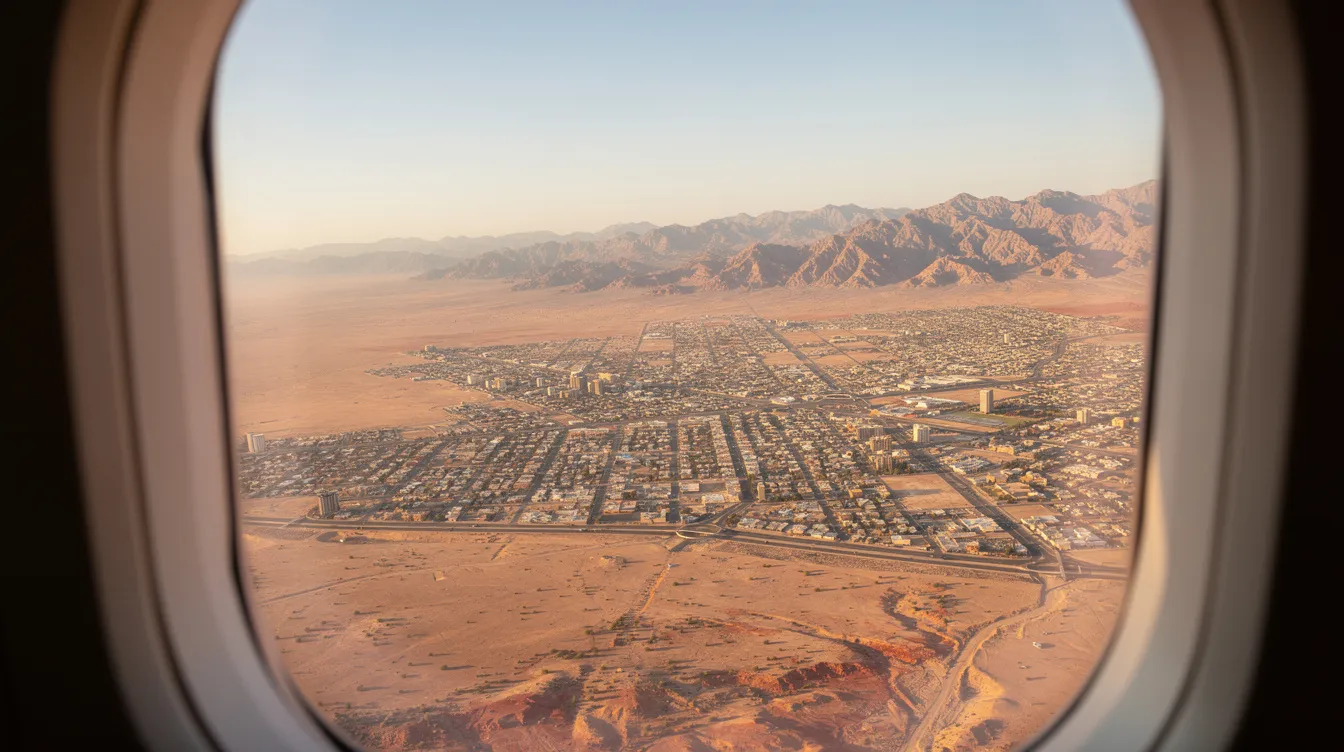
Las Vegas is a flagship JSX market. A flight from Los Angeles to Las Vegas might cost $109–$300 one-way depending on demand, with total door-to-door time cutting hours off the equivalent commercial flight when you factor in the JSX terminal advantage. JSX operates approximately 750 flights per week, but the schedule remains more limited than major airlines, and some routes require self-connecting through intermediate cities with separate tickets.
BlackJet's private plane charter model removes these constraints entirely, while emerging private plane rideshare options and a clear understanding of how much it costs to rent a private jet offer another shared-solution step beyond JSX for certain routes. Clients fly directly between almost any two suitable airports—including smaller regional airports that JSX does not serve—on their own timetable, with no same-route limitations or schedule dependencies.
Fares, Fees, and How JSX Compares to Business Class and First Class
JSX pricing occupies a deliberate middle ground between commercial and private aviation fares.
Hop On fares can start at $109 each way on shorter routes. Changes carry a $50 change fee, and seat selection for Hop On costs $10 to $30. To avoid forfeiting the fare or applicable benefits, changes and cancellations must be made at least an hour before departure.
All In fares can reach up to $499 each way. This tier includes no change fees, cancellation fees, or seat selection charges, and refunds go back to the original payment method.
Both fare types include:
JSX can sometimes match or undercut business class ticket pricing on the same routes, especially when factoring in time saved and ancillary savings. However, commercial first class on longer routes still offers lie-flat seats that JSX cannot replicate—though those cabins come with traditional airport hassles intact, which pushes many travelers to explore how to buy a seat on a private jet or semi-private alternatives instead.
BlackJet's Jet Card pricing operates on transparent, all-inclusive hourly rates, and comparing the jet card cost per hour across providers or evaluating a dedicated 100 hour jet card cost guide, alongside a broader guide to jet card pricing, clarifies when upgrading from JSX to full private access makes financial sense. The cost is higher per trip, but the value equation shifts for travelers who need full aircraft control, privacy, and the ability to fly when and where they choose.
Pets, Policies, and Special Considerations When Flying JSX
JSX is considered one of the more pet-friendly semi-private options in the US. JSX allows small pets for a $100 fee each way. JSX pet policies include:
Small dogs or cats must fit in a carrier under the seat in front
A maximum of five pets are permitted per flight
For medium-to-large dogs, owners may be able to purchase two seats (an extra seat alongside their own) for animals up to approximately 79 pounds, kept leashed and on the floor
Service animals are permitted on JSX flights without the extra seat purchase
Emotional support animals are not allowed on JSX flights
Practical advice:
With BlackJet, pet owners gain even more flexibility. The entire aircraft is reserved for your party—no in-cabin pet caps, no strangers sharing the cabin, and no size restrictions beyond what the aircraft accommodates. For travelers with large dogs or multiple pets, flying private is the clearer choice.
JSX vs. True Private Jet Access with BlackJet
The main difference between flying JSX and booking private jets through BlackJet comes down to control. JSX is a semi-private air carrier offering shared scheduled flights at fixed times, on fixed routes, in a fixed 30-seat layout. BlackJet delivers fully private, on-demand access with exclusive aircraft, multiple cabin classes, and routing to nearly any suitable airport.
When JSX makes sense:
When BlackJet clearly wins:
Last-minute executive travel with confidential meetings
Multi-city roadshows
Family ski trips requiring remote airports and heavy luggage
International flights to destinations like Mexico and beyond where commercial and semi-private options are fragmented
BlackJet's model is built on pillars that go beyond what any semi-private carrier can offer: proprietary safety standards with third-party audits (ARGUS Platinum, Wyvern Wingman), carbon-neutral flights via verified 300% offsets on every segment, and a digital booking platform with 24/7 human support, all of which extend from small-jet missions up to the best private jet options for 50 passengers and top 16-seat private jet options for ultimate comfort. JSX is a useful stepping stone for travelers moving up from business class. BlackJet is the natural next level.
FAQs About JSX Aircraft and Private Jet Access
What types of aircraft does JSX operate?
JSX operates Embraer ERJ-135 and ERJ-145 regional jets, both reconfigured to seat 30 passengers in a spacious 1-2 or 1-1 seat layout. They also operate ATR 42-600 turboprops on select routes.
How does JSX differ from a traditional commercial airline?
JSX operates as a public charter service flying from private terminals, allowing passengers to bypass TSA lines, arrive just 20 minutes before departure, and enjoy a semi-private cabin with only 30 seats.
What are the baggage policies on JSX flights?
JSX offers two fare types: "Hop On" includes two checked bags and a $50 change fee; "All In" includes three checked bags with no change fees. Carry-ons are limited due to overhead bin removal.
Can I bring pets on JSX flights?
Yes, small pets are allowed for a $100 fee each way, must fit under the seat in a carrier, with a maximum of five pets per flight. Service animals are permitted; emotional support animals are not.
How does JSX's in-flight experience compare to flying private with BlackJet?
JSX offers complimentary snacks, drinks, and Wi-Fi with a single flight attendant serving up to 30 passengers. BlackJet private flights provide full cabin exclusivity, tailored service, multiple aircraft options, and carbon-neutral operations.
When should I choose JSX over a private jet?
Choose JSX for short-haul trips within its route network when you desire convenience and cost savings without full private jet pricing or scheduling flexibility.
What advantages does BlackJet offer over JSX?
BlackJet provides on-demand private jet access with full schedule control, multiple cabin classes, guaranteed availability, rigorous safety certification, and sustainable carbon-neutral flights.
How early do I need to arrive for a JSX flight?
JSX recommends arriving just 20 minutes before departure, thanks to streamlined check-in and private terminal access.
Can I earn airline miles flying JSX?
JSX partners with certain airline loyalty programs like United MileagePlus, allowing passengers to earn miles on flights.
Are there seat selection fees on JSX?
Seat selection is free for "All In" fares. "Hop On" passengers pay between $10 and $30 to select seats in advance.
How to Decide: Is Flying JSX Enough, or Is It Time for a Jet Card?
High-net-worth individuals and frequent executives have three practical tiers, and many ultimately evaluate the best jet cards for frequent flyers to understand where they fit:
Choose JSX when you:
Travel domestically a few times a year within the JSX route network
Have flexible departure times and can work around JSX's fixed schedule
Want to avoid the worst airport hassles without committing to private jet pricing
Primarily fly short-haul flights under three hours
Choose a BlackJet Jet Card when you:
Fly 10+ times per year or need to access smaller regional airports not in JSX's network, where a 25-hour jet card guide can help benchmark commitment levels
Require total privacy for negotiations, family travel, or sensitive itineraries
Value reliability—no oversold flights, minimal disruptions, guaranteed availability, even when evaluating regional markets like those covered in a private jet price in rupees guide
Need multiple aircraft types for varying mission profiles, from light jets to large cabin aircraft capable of serving as the best private jet for 20 passengers
A blended approach also works: use JSX aircraft on straightforward city pairs like Las Vegas to Los Angeles, and reserve BlackJet Jet Card hours for time-critical, complex, or international missions—especially when you start comparing how much a 12-seater private jet really costs against repeated semi-private trips.
For travelers who are outgrowing the compromises of semi-private air travel—fixed schedules, shared cabins, limited destinations—BlackJet's Jet Card and charter solutions offer a path forward, whether you're exploring the cheapest private jet options, budget-friendly private aircraft, or even the largest private jets for sale. Understanding how competitors structure programs, such as outlined in a NetJets jet card cost guide, or how to approach buying a premium UK private jet, helps put BlackJet's value in context. Explore how genuine private jet access, with transparent pricing, rigorous safety standards, and carbon-neutral operations, can reshape your travel strategy for the year ahead.


 Sign up with google
 Sign up with Apple