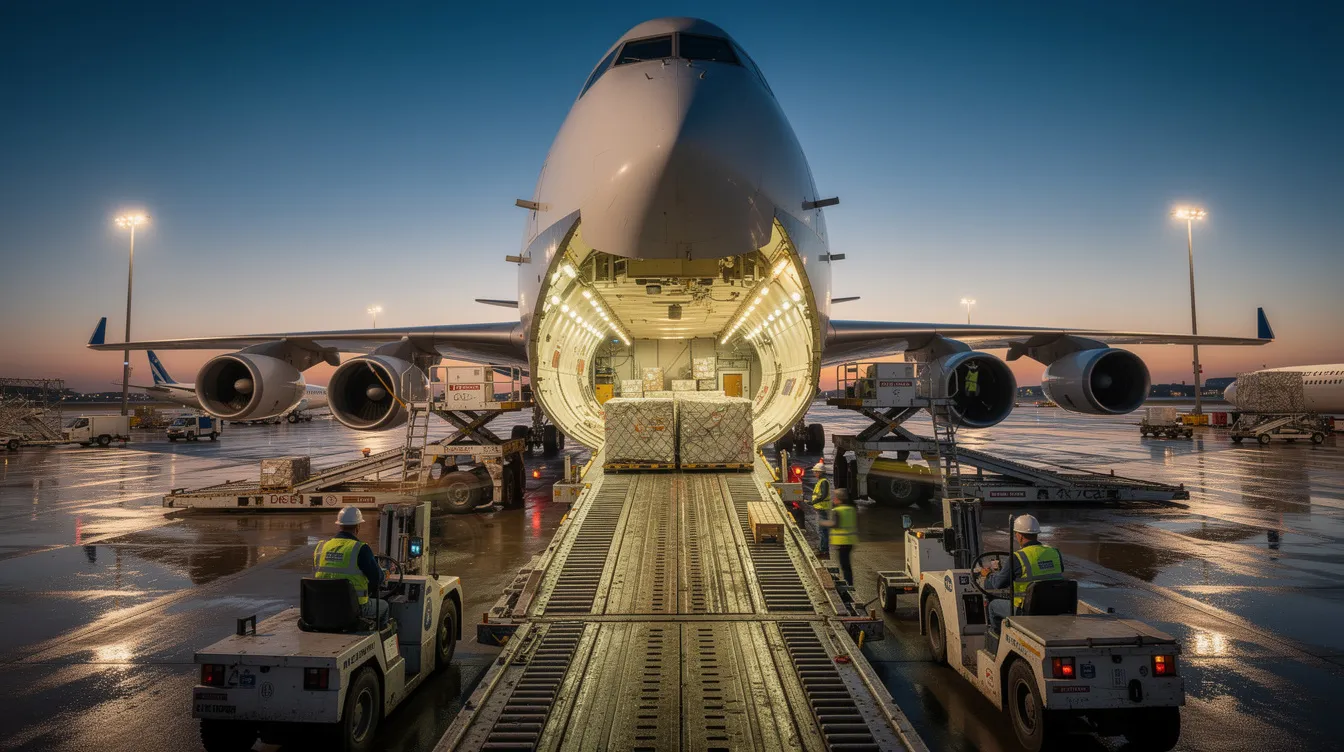
When it comes to the longest aeroplane in the world, the answer depends on what you measure. By wingspan, the Stratolaunch Roc dominates at 385 feet (117.35 meters). By fuselage length among heavier-than-air planes, the Antonov An-225 Mriya held the crown at 84 meters before its destruction in 2022. And for the world's largest passenger aircraft currently flying, the Airbus A380-800 leads among commercial airliners in service at 73 meters in length and 79.8 meters in wingspan.
If we include lighter-than-air craft, the LZ 129 Hindenburg remains the longest aircraft ever built at 803 feet (245 meters), while the Airlander 10 is currently the longest aircraft in operation at 92 meters. This article, however, focuses on powered fixed-wing aeroplanes—the giant aircraft that define modern aviation.
These record-breakers matter because they push the limits of cargo logistics, space launch support, and long-haul passenger connectivity. For BlackJet's clientele—executives and high-net-worth travelers who value time, privacy, and flexibility-understanding these mega-jets clarifies why right-sized types of private jets often deliver more practical value than sheer scale.
How We Chose the Longest Aeroplanes in the World
Our ranking uses fuselage length as the primary metric, with wingspan highlighted where it sets a world record. Only aircraft that have completed at least one flight are included—no paper projects or unbuilt concepts.
Key Evaluation Criteria
Length and wingspan: Core ranking by overall length; wingspan noted where it holds a record. These dimensions determine runway use, gate requirements, and ground handling at major airports.
Role and mission profile: Passenger airliners, military heavy lifters, special-mission craft, and experimental launch platforms each drive different design trade-offs between fuselage volume and wing area.
Operational status and era: Each entry is marked as active, retired, or destroyed, with key dates showing how engineering evolved from Cold War cargo giants to modern composite widebodies.
Capacity and range: Passenger capacity for airliners and payload for cargo aircraft contextualize why these planes are so long. Range capabilities matter for long-haul routes connecting global destinations.
Technological significance: Record-setting innovations—composite structures, folding wingtips, advanced avionics—introduced by each giant eventually filter down to smaller aircraft classes, including the business jets BlackJet members fly.
The 7 Longest Aeroplanes in the World
These seven aircraft represent distinct missions—cargo, passenger, space launch, military-and hold clear records for length or span. Each profile covers dimensions, operational history, and what their size means in practice.
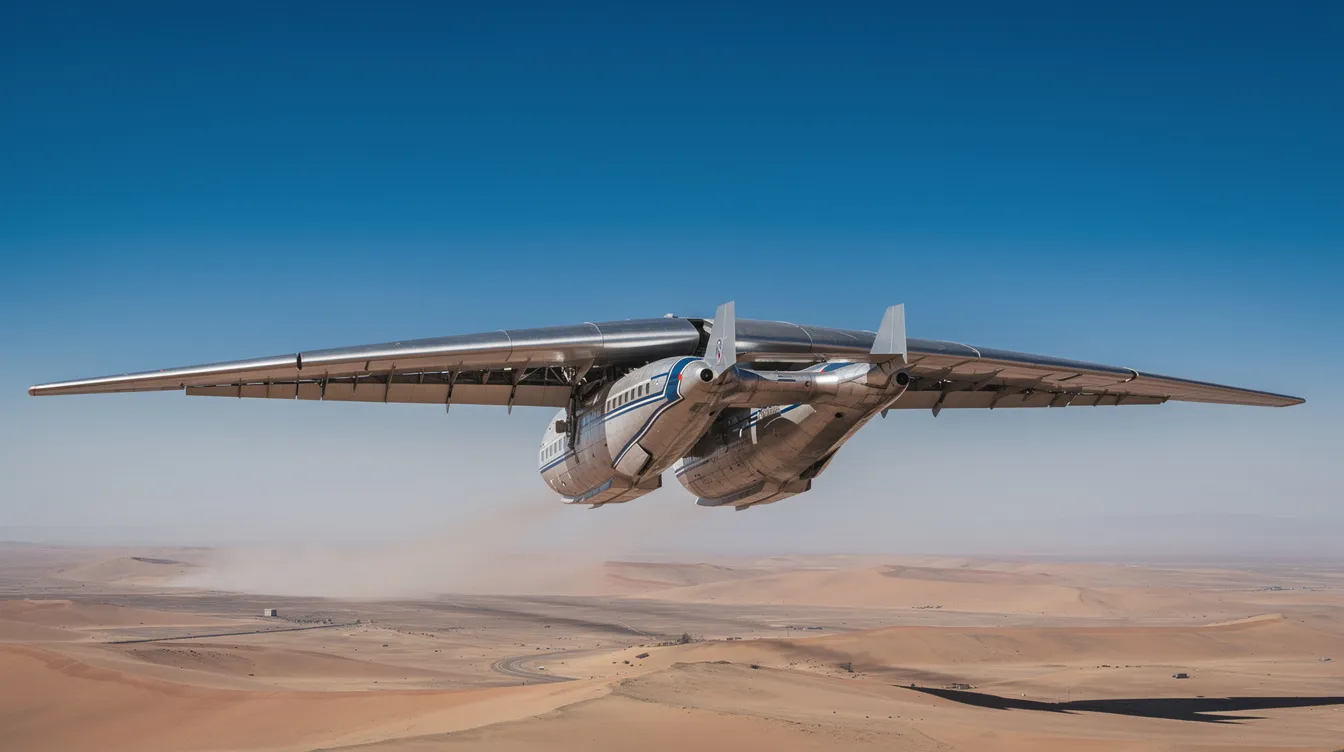
1. Stratolaunch Roc – Longest Wingspan Ever Flown
The Stratolaunch Roc is a twin-fuselage launch platform developed to air-launch rockets into orbit. Its wingspan of 385 feet (117.35 meters) is the largest of any aircraft ever flown, with a fuselage length of approximately 73 meters. Its first flight took place on April 13, 2019, from Mojave Air and Space Port, lasting 149 minutes.
Why it stands out: The twin-fuselage configuration and record wingspan enable it to carry medium-size rockets beneath its central wing section, providing flexible orbital access from high altitude. It is powered by six Pratt & Whitney turbofan engines, with many components borrowed from Boeing 747-400 airframes to reduce development risk.
Best for: Aerospace companies needing responsive, weather-flexible launches rather than passengers or standard cargo. It plays a growing role in the emerging commercial space economy, intended to support hypersonic vehicle testing.
Key strengths: Record-breaking wingspan and lift capability; air-launch flexibility vs. fixed ground launch sites; proven 747 components lower risk.
Limitations: Only one airframe exists; highly specialized use case; requires long runways and favorable weather.
2. Antonov An-225 Mriya – Longest and Heaviest Cargo Aircraft
The Antonov An-225 is the largest cargo aircraft ever built, a Ukrainian-designed heavy-lift plane originally developed to transport the Soviet Buran space shuttle. It measures 84 meters in length and 88 meters in wingspan, with a maximum takeoff weight of 640,000 kg and a maximum payload of 250 tons. Its first flight was in 1988. The An-225 was destroyed during the 2022 conflict in Ukraine at Hostomel Airport near Kyiv.
Why it stands out: It held records for heaviest aircraft, largest cargo plane wingspan among operational freighters, and highest payload. It carried oversized cargo including generators, wind turbine blades, and humanitarian relief supplies across continents.
Best for: Ultra-oversized, one-off global cargo missions where charter clients paid a premium to move the impossible in a single lift. Governments and industrial giants used it rather than commercial travelers.
Key strengths: Unmatched cargo bay volume; front-loading nose door enabling roll-on, roll-off loading; long-range intercontinental capability at high loads.
Limitations: Single operational airframe meant scarce availability and high charter cost; restricted to airports with adequate runway length and pavement strength.
3. Airbus A380-800 – Longest In-Service Passenger Superjumbo
The Airbus A380-800 is the world's largest passenger aircraft in service, operated by Emirates, Singapore Airlines, Qantas, and British Airways among others. It measures 73 meters in length with a wingspan of 79.8 meters and a maximum takeoff weight of 575,000 kg. The A380 entered service on October 25, 2007, and features a double-deck design for passenger comfort.
The A380 can carry up to 853 passengers in an all-economy configuration, though airlines typically seat 500–600 in multi-class layouts with wider seats and premium suites. Over 300 million passengers have flown on the A380, and over 800,000 flights have been completed. Its maximum range of 14,800 kilometers covers long-haul flights on trunk routes like Dubai–London, Singapore–Sydney, and Sydney–Perth via connecting hubs.
Why it stands out: The full-length double deck creates unrivalled cabin space. Its fuel consumption of about 3.1 liters per 100 passenger-kilometers makes it remarkably efficient per seat on dense routes, demonstrating low fuel consumption relative to passenger capacity.
Best for: High-demand long-haul hub-to-hub routes where airlines can consistently fill 500+ seats. For private aviation clients, the contrast is clear—the A380 maximizes capacity, while BlackJet Jet Card members prioritize flight time efficiency, privacy, and flexibility over seat count, a reminder that understanding overall jet card cost and value matters more than flying on the absolute largest aircraft.
Key strengths: Unrivalled passenger space; efficient per-seat fuel burn; advanced safety and redundancy through fly-by-wire technology; the total area of its wing covers roughly three tennis courts.
Limitations: Requires specially equipped airports with runway length, taxiway strength, and dual-deck gates. Production ended in 2021; fleet sustainability relies on airline maintenance rather than new builds.
4. Boeing 777-9 – Longest Commercial Airliner by Fuselage
The Boeing 777-9, part of the 777X family, is a passenger airplane that measures 251 feet 9 inches (76.7 meters) long-set to become the longest commercial airliner by fuselage once fully certified. Its extended wingspan reaches approximately 71.8 meters, with innovative folding wingtips reducing ground wingspan to about 64.8 meters for airport compatibility. The 777-9 had its first flight in 2020 and has a cruising speed of about Mach 0.84.
Why it stands out: The record-breaking fuselage length accommodates 400+ passengers in typical layouts. Its advanced composite wing and new-generation GE9X engines deliver significantly lower fuel burn per seat than older four-engine widebodies.
Best for: Long-haul routes where airlines want A380-like capacity with twin-engine economics. Emirates has placed firm orders. For private travelers, the 777-9 represents airline efficiency at scale; BlackJet's 25-hour Jet Card represents flexibility and tailored scheduling for smaller groups, much like a structured 50 hour jet card cost program can balance predictable pricing with frequent travel needs.
Key strengths: Innovative folding wingtips; very long range with high passenger capacity; lower emissions per seat.
Limitations: Still undergoing certification with adjusted delivery timelines; limited to major airports with long runways.
5. Boeing 747-8 – Iconic Stretch of the Original Jumbo
The Boeing 747-8 is currently the longest operational aircraft at 76.25 meters, the final evolution of Boeing's iconic jumbo jet. Available as the 747-8I for passengers and 747-8F for cargo, it features improved engines, a raked wingtip design, and a wingspan of 68.4 meters. Its first flight was in 2010, and special-use derivatives include the VC-25B intended as the next U.S. presidential aircraft.
Why it stands out: It combines a long fuselage with the iconic upper-deck hump and nose-door loading capability in the freighter variant, making it capable of carrying outsized cargo components on intercontinental routes.
Key strengths: Voluminous fuselage; proven systems; advanced wing with quieter, more efficient engines vs. earlier 747 generations.
Limitations: Four engines increase fuel and maintenance costs vs. modern twin-jets. Production ended in 2023; the fleet will gradually transition to newer designs.
6. Lockheed C-5 Galaxy – Giant Strategic Military Transport
The C-5M Super Galaxy is one of the largest military transport aircraft, operated by the U.S. Air Force since the late 1960s. It measures approximately 75.3 meters in length with a wingspan of 67.9 meters and can carry a payload of roughly 127,460 kg. The modernized C-5M variant features upgraded CF6 engines, improved avionics, and reduced noise emissions.
Why it stands out: It can carry main battle tanks, helicopters, and oversized military equipment intercontinentally. Distinctive nose-and-tail loading allows drive-through cargo operations, and the pilot crew can operate scheduled missions with in-flight refueling to extend range further.
Key strengths: Immense internal cargo volume; in-flight refueling capability; modernized engines and avionics.
Limitations: Military-only platform, not available for civil charter; requires robust infrastructure and specialized maintenance, limiting usable airfields.
7. Antonov An-124 Ruslan – Heavy-Lift Workhorse
The Antonov An-124 is a slightly smaller cousin to the An-225, but built in greater numbers and still actively flying heavy cargo missions worldwide. It measures approximately 69.1 meters in length with a wingspan of 73.3 meters. Its first flight was in 1982, and it remains one of the primary outsized cargo aircraft in global charter markets.
Why it stands out: Typical payloads include locomotives, industrial machinery, helicopters, and humanitarian relief supplies. On-board cranes and kneeling nose gear simplify loading at remote airfields, making it capable of operating from destinations with limited ground infrastructure.
Key strengths: High payload with good range; proven global charter track record; self-contained loading equipment.
Limitations: Relatively aging fleet with complex geopolitics influencing availability; high operating cost compared to smaller freighters.
Quick Comparison of the Longest Aeroplanes
Stratolaunch Roc – Longest wingspan ever flown (117.35 m); best for air-launching rockets into orbit.
Antonov An-225 Mriya – Longest and heaviest cargo aircraft built (84 m length); best for ultra-oversized industrial payloads. Now destroyed, historically significant.
Airbus A380-800 – World's largest passenger aircraft in service (73 m length); best for high-demand long haul hub-to-hub routes.
Boeing 777-9 – Longest commercial airliner by fuselage (76.7 m); best for fuel-efficient, high-capacity twin-engine operations.
Boeing 747-8 – Longest operational aircraft (76.25 m); best for combining long range with nose-loading cargo flexibility.
Lockheed C-5 Galaxy – Massive military transport (75.3 m); best for strategic airlift of heavy military and relief equipment.
Antonov An-124 Ruslan – Heavy-lift charter backbone (69.1 m); best for outsize commercial cargo across continents.
How to Think About "Biggest" vs "Best" Aircraft
Being the longest doesn't automatically mean best. Decision-makers in the aviation industry balance size against cost, flexibility, airport access, and sustainability.
Choose Based on Mission and Payload
Industrial shippers decide between aircraft like the An-124 and smaller freighters based on volume, weight, and route. Airlines choose A380 vs. 777-9 depending on demand density and hub structure. For private jet users, right-sized cabin categories—light, midsize, large-cabin—booked via a Jet Card program usually beat the largest possible aircraft.
Choose Based on Range, Airports, and Routing
The biggest aircraft operate from a limited number of airports with long, strong runways and specialized gates. Consider: a commercial A380 flight from London to Sydney via Dubai uses three major airports. A BlackJet private jet flight uses secondary airports closer to city centers, cutting ground effect on total travel time by eliminating long security lines and distant terminals, especially when leveraging budget-friendly private aircraft options. Private jets trade raw size for point-to-point convenience.
Choose Based on Cost, Efficiency, and Sustainability
Large aircraft can be cost-efficient per seat when full but very expensive when under-filled. Modern twin-engine long-haul jets like the 777-9 are favored over older four-engine giants for lower fuel burn. BlackJet takes this further: every Jet Card flight is carbon neutral, with offsets built in at no extra cost—matching or exceeding the per-passenger sustainability efforts of major airlines on many routes, and integrated into its broader premium private jet card programs.
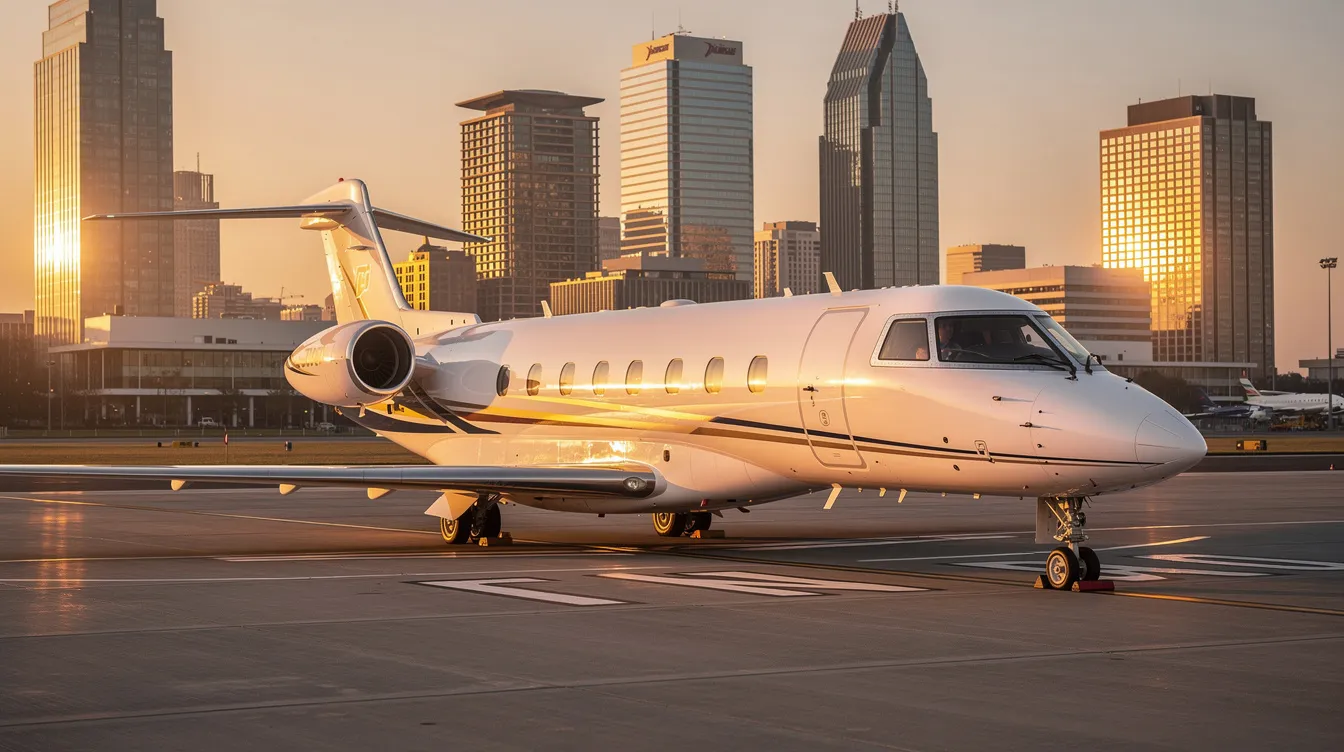
What the Longest Aeroplanes Teach Private Jet Travelers
Technologies pioneered on these giant aircraft-composites, advanced avionics, noise reduction, efficient high-bypass engines—now appear in long-range business jets like the Gulfstream G650 and other top private jets in the world. The development cycle of large aircraft accelerates innovation across the entire industry.
The contrast in passenger counts tells its own story: 4–14 passengers in a small private jet cabin vs. 500+ on an A380, underscoring why understanding private jet sizes and categories is just as important as knowing which airliners top the length charts. That difference translates directly into privacy, productivity, and security. The titan of luxury passenger air travel now belongs to private jet membership companies that deliver tailored experiences on the largest private jets rather than volume.
Consider a concrete scenario: a CEO flying from New York to London on a commercial superjumbo faces check-in queues, fixed scheduled departures, and landing at Heathrow among thousands of other passengers, just as travelers in Asia might instead leverage private jet charters in Karachi to bypass congestion entirely. Using a BlackJet Jet Card, the same executive departs from a quieter FBO, arrives closer to central London, and controls the schedule entirely-with safety certification standards and 24/7 real-time support backing every flight, similar to how you might buy a seat on a private jet for shared or semi-private options.
Which Giant Aircraft Is "Best" for You to Fly On?
Most readers will never charter a Roc or C-5, but you may fly on A380s or 777s for commercial trips while using private jets for premium missions, including 50-passenger private jet charters or other 30-passenger private jet options for major corporate or leisure groups.
Choose an A380 if you are flying between two major hubs and want a spacious, quiet cabin in commercial business class or first class-or even explore the possibility of a private jet Airbus A380 or other examples of the most expensive private jets for ultra-VIP travel.
Choose a 777-9 or modern twin-aisle once available if you prioritize newer cabins, improved fuel efficiency, and a broad route network, or compare them with the newest private jets and best long range private jets for sale that bring similar innovations to business aviation.
Choose a BlackJet private jet when flight time control, privacy, and door-to-door convenience matter more than flying on the largest airframe—especially for frequent business travel or multi-stop itineraries where the best small private aircraft are often the most efficient choice and a clear private jet price list helps you compare options.
Final Thoughts
The longest aeroplane in the world depends on the metric: Stratolaunch Roc for wingspan, An-225 historically for overall mass and length, and the A380 and Boeing 777-9 for commercial passengers. But bigger is not always better in practical travel—it is about matching aircraft to mission.
For travelers who value time, privacy, and sustainability over seat count, right-sized private aviation delivers what no superjumbo can, especially when exploring the cheapest private jet options or private jets for sale under 10 million that still meet safety and comfort standards. Every innovation that makes a 76-meter airliner safer and more efficient eventually reaches the cabin of a well-equipped business jet, whether you access it via charter, Jet Card, or outright ownership through premium private jets for sale, including curated 10 million dollar private jet options and even more capable 20 million dollar private jet aircraft.
Explore BlackJet's Jet Card programs and get familiar with 100 hour jet card cost considerations and broader jet card pricing structures to experience high-performance aviation on a scale tailored to your lifestyle-where the best aircraft is always the one that fits your mission perfectly.


 Sign up with google
 Sign up with Apple