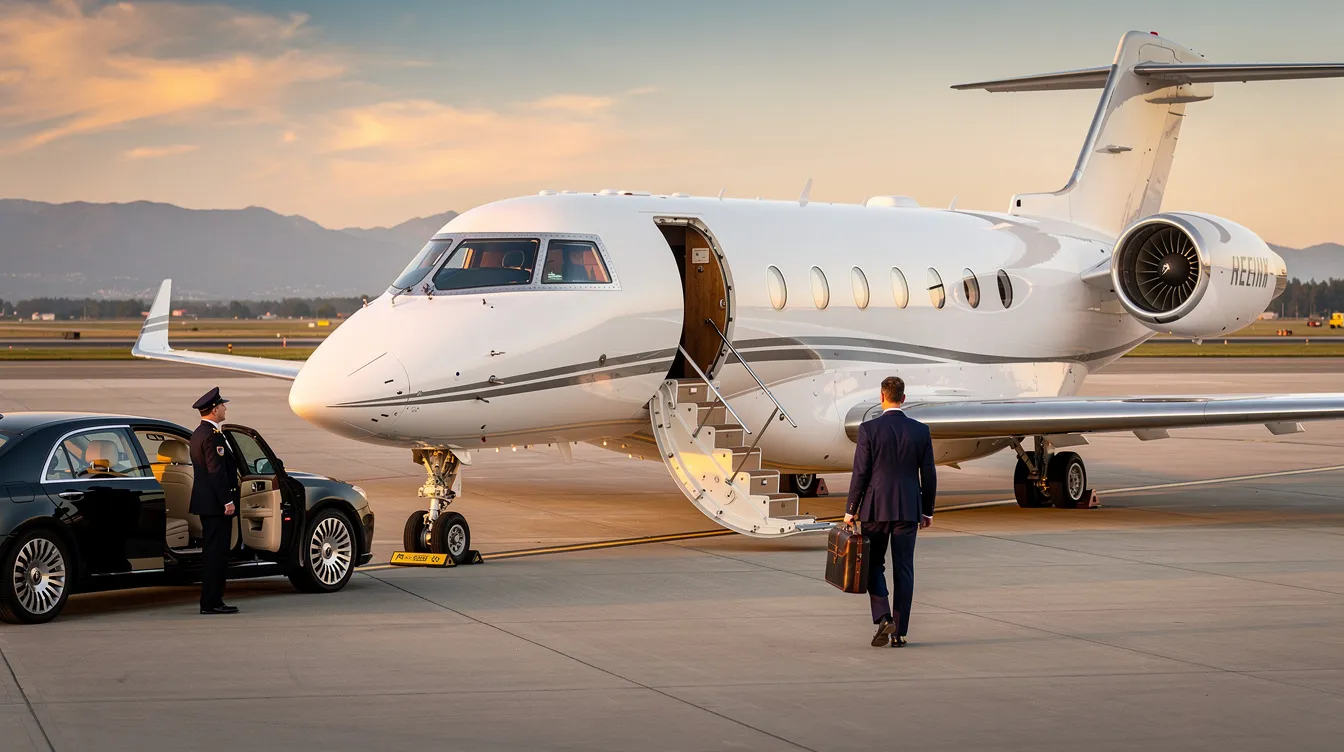
Renting a plane for a week offers unmatched flexibility and efficiency for business leaders, families, and frequent travelers. This guide covers weekly rental costs, aircraft options, rental requirements, and how BlackJet’s Jet Card program streamlines the process. Whether you’re planning a multi-city itinerary or seeking a premium travel experience, you’ll find everything you need to make an informed decision.
Consider a typical four-city commercial week: multiple security lines, tight connections at hub airports, weather delays cascading through your schedule, and hours lost waiting in terminals. Now compare that to a private jet week—direct routing between secondary airports, no queues, same-day departures adjusted to your meetings, and the ability to work or rest in a quiet cabin between stops.
A CEO based in New York flying to Chicago, Dallas, and San Francisco over five to seven days in June 2026 might save 15+ hours versus commercial routing. That time compression allows three trips to be combined into one focused week. This is not merely about luxury—it is an operational tool for leadership teams, investor groups, and families coordinating complex schedules across time zones. BlackJet’s Jet Card model turns that week of segments into prepaid, guaranteed access without negotiating each leg separately. Multi-city itineraries and on-demand aircraft availability become the standard rather than the exception.
Key Takeaways
Weekly aircraft rental costs range from approximately $12,000 for single-engine piston aircraft to $150,000+ for large-cabin jets, depending on total flight hours and aircraft category.
BlackJet specializes in crewed private jet access through Jet Card programs rather than self-fly rentals, delivering safety, service, and strategic flexibility for executives and families.
A week-long rental excels for multi-city itineraries—such as New York–Miami–Houston–Los Angeles—where commercial connections would waste 15–25+ hours in layovers and delays.
Total rental prices depend on aircraft type, flight time, crew fees, airport charges, and positioning costs, but Jet Cards convert these variables into predictable hourly rates.
BlackJet provides carbon-neutral flights, rigorous safety oversight through vetted operators, and a digital booking platform designed for complex week-long travel.
This guide explains how to rent a plane for a week, including costs, requirements, and the advantages of weekly rentals for business and leisure travelers.
How Much Does It Cost to Rent a Plane for a Week?
How much does it cost to rent a plane for a week?
Typical weekly rental costs: $1,500–$10,000, depending on the size and type of aircraft, distance traveled, and provider.
Hourly rates: $100–$500 per hour for single or twin-engine aircraft, with a minimum of 2–3 hours of flight time paid per day (even if the plane is parked overnight).
Daily minimums: Most providers require you to pay a minimum number of flight hours per day when flying overnight.
Additional fees: Fuel surcharges, landing fees, crew expenses, insurance, and hangar or tie-down costs at destination airports may apply.
Booking tips: Book well in advance to secure availability and discounted rates. Many companies offer package deals, loyalty programs, and longer-term leasing solutions for added savings.
Summary: How much does it cost to rent a plane for a week?
Typical weekly rental costs range from $1,500 to $10,000, depending on the size and type of aircraft, distance traveled, and provider.
Hourly rates for single or twin-engine aircraft are generally $100–$500 per hour, with a minimum of 2–3 hours of flight time paid per day (even if the plane is parked overnight).
Additional fees may apply, such as fuel surcharges, landing fees, crew expenses, insurance, and hangar or tie-down costs at destination airports.
Booking well in advance can help secure availability and discounted rates; many companies offer package deals and loyalty programs for added savings.
Rental providers offer a range of options, from ad hoc charters to longer-term private jet leasing solutions.
Weekly rental costs are typically calculated based on total flight hours over seven days rather than on a flat calendar lease. Renting a plane for a week typically costs between $100 and $500 per hour for single or twin-engine aircraft, with a minimum of three flight hours required per day. Assuming 10–20 flight hours during the week, here are realistic ranges, but keep in mind that overall private jet rental costs and the broader private jet price list across aircraft types can shift significantly with routing, seasonality, and aircraft availability:
Single-engine piston: roughly $1,500–$2,500 per day, or $10,000–$18,000 per week. Hourly rental rates for single-engine planes like the Cessna 172 generally range from $150 to $250.
Turboprop (Pilatus PC-12, King Air 350): approximately $3,000–$5,000 per day, or $20,000–$35,000 per week.
Light jet (Citation CJ3, Phenom 300): around $4,000–$7,000 per day, or $30,000–$55,000 per week.
Midsize/super-midsize jet (Citation XLS+, Challenger 350): roughly $45,000–$90,000 per week.
Large/long-range jets (Gulfstream G500, Global 6000): $120,000–$200,000+ for transatlantic weeks.
Helicopter rentals typically range from $500 to $1,500 per hour, offering vertical takeoff and landing capabilities ideal for reaching destinations with limited space, while travelers focused on entry-level access often compare affordable private planes and light jet options to balance budget with capability.
Rental costs can vary widely depending on factors such as location, airport fees, demand, and regional taxes. Additional charges might include fuel surcharges, landing fees, crew expenses, insurance, handling services, taxes, and hangar fees. Additional fees may include fuel surcharges, landing fees, crew expenses, insurance, handling services, taxes, and hangar fees. Some rental agreements include fuel in the hourly rate, while others require a separate payment. It is crucial to clarify what is included in the rental agreement to avoid unexpected costs.
Many flight schools or Fixed Base Operators (FBOs) require a minimum of 2–3 hours of flight time paid per day, even if the plane is parked overnight. These daily minimums compensate the owner for the aircraft being unavailable to others during your rental period.
Security deposits are typically required to secure your rental and protect the provider against potential damage; the amount varies by aircraft and rental duration.
Aircraft Options for a Week-Long Rental
When renting a plane for a week, you can choose from several main categories of aircraft, each suited to different travel needs and budgets. The primary options include single-engine planes (ideal for short flights and small groups), multi-engine planes (offering more power and reliability for longer distances and larger groups), turboprops (efficient for regional trips), helicopters (perfect for destinations with limited space due to their vertical takeoff and landing capabilities), and private jets (providing speed, range, and premium amenities for those seeking efficiency and exclusive service). Rental providers typically offer a range of solutions, from ad hoc charters to longer-term private jet leasing, allowing you to match the aircraft to your specific itinerary and preferences.
Weekly rentals span practical turboprops to intercontinental jets. Matching the specific aircraft to your mission profile—distance, passenger count, runway requirements—is essential, and understanding the different types of private jets for every traveler helps align capacity and range with your itinerary. BlackJet primarily arranges professionally crewed turboprops and private jets, while single-engine plane rentals for licensed pilots are typically handled by local flight schools or flying clubs; travelers comparing these options often evaluate jet card pricing structures and benefits to lock in predictable hourly costs.
Single-Engine and Multi-Engine Planes
Single-engine planes are ideal for short flights and smaller passenger groups, typically seating up to four passengers. They are generally more affordable to rent, with hourly rates ranging from $100 to $200. However, single-engine planes may have limitations in range and speed, making them better suited for regional or short trips, and many renters use a guide to the best small private aircraft to map these capabilities against their mission profile.
Multi-engine planes offer more power, reliability, and cabin space, making them suitable for longer distances and larger passenger groups. Rental costs for multi-engine planes generally range from $300 to $500 per hour. These aircraft can accommodate more passengers and luggage and often require specific endorsements or type ratings due to their complexity, and many travelers weigh them against more broadly understanding private jet sizes and categories, more affordable private jet and turboprop options, and other budget-friendly private aircraft choices when optimizing budget.
Turboprops, Helicopters, and Private Jets
Turboprops like the Pilatus PC-12 and King Air 350 excel for regional trips covering 300–1,500-mile legs. They cruise at 250–300 knots, seat six to eight passengers, and operate from shorter runways.
Helicopters provide vertical takeoff and landing capabilities, making them ideal for reaching destinations with limited space, such as city centers or rugged terrain.
Private jets cater to passengers seeking efficiency, speed, and exclusive service. They offer faster cruise speeds and longer range compared to smaller aircraft, making them ideal for longer distances and complex itineraries. For many itineraries, small private jets and light aircraft options balance cost, access to smaller airports, and comfort. These jets often feature luxurious interiors and premium amenities, providing a level of comfort and luxury unmatched by commercial airlines, even when you’re simply buying a seat on a private jet rather than chartering the whole aircraft.
For longer trips, consider renting modern planes equipped with glass cockpits, which offer easier navigation and higher safety standards, especially if you are also comparing longer-term private jet leasing options for recurring travel.
Rental Process and Requirements
Renting a plane requires supplying a valid pilot certificate, a current medical certificate, a current flight review, and renters' insurance coverage that meets the rental company's standards. A proficiency check with a Certified Flight Instructor (CFI) is mandatory prior to renting an aircraft. Most rental companies also require a checkout flight or orientation to familiarize you with the specific aircraft, and many prospective renters review private jet safety standards and oversight to understand how risks are managed.
Maintenance requirements include ensuring the aircraft has a current annual inspection and adheres to Federal Aviation Administration (FAA) regulations. It is important to check the safety records, confirm regulatory compliance, and ensure proper aircraft maintenance when renting.
You are responsible for any fees incurred at destination airports, including hangar or tie-down costs. Discuss all possible fees with your rental service to ensure there are no unexpected charges.
Cost-Saving Strategies and Planning Tips
Booking a week-long rental well in advance is advisable to ensure aircraft availability and secure discounted rates. Scheduling your flight during off-peak times can also reduce rental costs, and some travelers further lower their spend by booking private flights, such as on empty-leg or shared-charter flights.
Exploring package deals that bundle multiple services, such as flight time, fuel, pilot services, and insurance, can further reduce your rental costs. Many aviation companies offer membership or loyalty programs that reward frequent flyers with discounted rates or priority booking privileges, including structured jet card membership programs that trade upfront commitment for predictable pricing, whether you’re flying domestically or analyzing private jet prices in rupees for Indian routes.
Popular regional travel destinations include mountain and coastal areas, which benefit from the flexibility that private aviation offers for local trips, and some travelers eventually explore purchasing a private jet for long-term flexibility or evaluate 12-seater private jet costs and considerations once their usage reaches an ownership-friendly threshold.
Advantages of Private Aviation for Week-Long Rentals
Private aviation enhances travel efficiency by enabling flexible scheduling and route planning, eliminating the stress of commercial air travel, including long security lines and crowded terminals. It also enables access to remote or underserved locations that commercial flights may not reach.
Private jets offer faster cruise speeds, reducing total travel time compared to commercial flights. They also provide a level of comfort and luxury often unmatched by commercial airlines, and increasingly include cost-conscious light jets and turboprops that broaden access beyond ultra-wealthy fliers as well as spacious 16-seat private jet options for group travel or large private jets for 15 passengers, all within a framework of clearly defined private jet size categories.
Multi-city itineraries are much easier to coordinate with private aviation, allowing seamless travel across multiple destinations within a week. Larger groups can leverage the best private jets for 20 passengers or even 30-passenger options to keep teams or families together on a single aircraft.
How BlackJet’s Jet Cards Simplify Renting a Plane for a Week
A Jet Card provides pre-purchased hours on specific cabin classes with guaranteed availability, fixed hourly rental rates, and priority pilot services. Unlike ad hoc weekly charters that require leg-by-leg negotiation, Jet Cards eliminate worries about peak-day premiums, possibly a booking deposit surprise, and hidden positioning costs; understanding how jet card pricing works helps you evaluate this against traditional charter.
Clients can purchase a 25-hour or 50-hour BlackJet Jet Card and use most of the hours in a single week, preserving the remainder for future trips; many start by reviewing a complete guide to the 25-hour jet card, its features, and costs. For frequent flyers, analyzing the full cost and value of the 50-hour jet card is key to planning annual travel budgets, especially when comparing it with large private jet solutions for up to 50 passengers for major events or corporate movements. The rental process becomes streamlined with 24/7 digital booking, real-time flight support, carbon-neutral coverage, and flexibility to switch cabin sizes across the year.
Digital Booking and Real-Time Support
BlackJet’s digital platform allows login via app or web to select departure airports, destinations, dates across a seven-day window, and preferred cabin sizes. Multi-leg itineraries can be built within the platform, showing estimated hours deducted and indicative costs for additional services.
Flight operations teams remain available 24/7 by phone or chat to re-time short flights, add legs, or respond to last-minute changes—moving a Thursday meeting from Houston to Austin, for example. During live travel weeks, BlackJet proactively informs clients of weather disruptions, slot delays, or better departure options through real-time notifications.
Membership, Pricing Transparency, and Inclusions
Jet Card holders benefit from transparent, published rates by cabin category with clear rules for peak days, de-icing, crew overnights, and international surcharges. Typical inclusions cover aircraft, crew, standard catering, carbon offsets, and basic Wi-Fi across many fleet options, and many travelers compare these offerings with NetJets jet card costs and programs, as well as the world's top private jets, when surveying the market.
Surcharges—extra ground transport, premium catering, special handling at events like Monaco Grand Prix or Art Basel Miami—are disclosed in advance. Using a Jet Card for week-long itineraries simplifies accounting with a single monthly statement rather than fragmented invoices. Loyalty programs and package deals reward frequent flyers with additional benefits. Many companies offer discounted rates for members who bundle multiple services or commit to higher hour volumes, whether through short-term cards, detailed 100-hour jet card cost structures, or more extensive private jet lease arrangements that lock in access over several years, often benchmarked against leading private jet companies and their membership models.
Conclusion: Experience the Future of Private Aviation with BlackJet
Renting a plane for a week through BlackJet offers more than just exceptional customer service and premium amenities—it provides a strategic, efficient, and sustainable way to travel. Whether you require multi-city itineraries, access to a variety of aircraft categories, or seamless digital booking and real-time support, BlackJet’s Jet Card programs deliver unparalleled flexibility and peace of mind. Their commitment to safety features, proper aircraft maintenance, and carbon-neutral flights ensures that every journey is not only comfortable and convenient but also responsible.
Explore how BlackJet can transform your week-long travel experience by visiting www.blackjet.com. Discover the benefits of prepaid private jet access, transparent pricing, and exclusive membership perks tailored to frequent flyers and executives alike. Embrace the freedom to rent a plane for a week with confidence, knowing you are supported by industry-leading expertise and innovation.


 Sign up with google
 Sign up with Apple