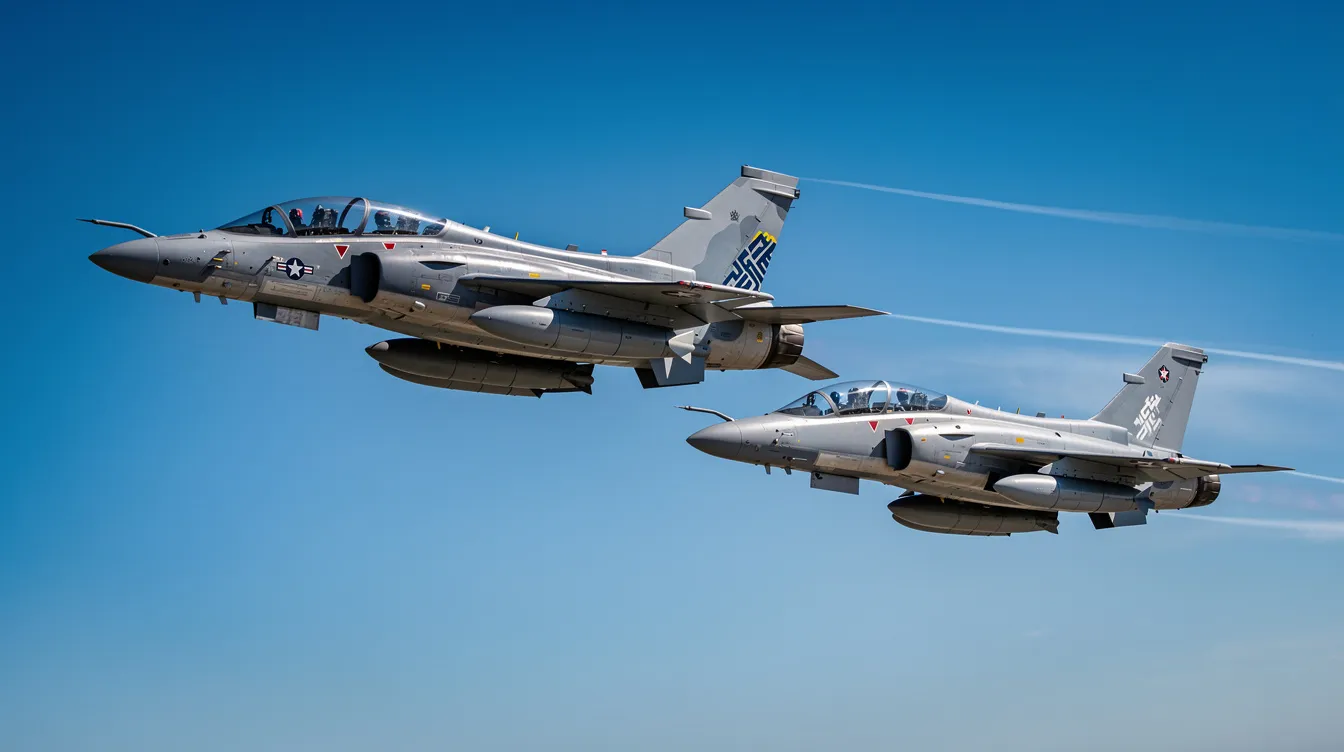
The Dassault-Dornier Alpha Jet stands among the most successful military jet trainers ever produced—a twin-engine aircraft born from Cold War necessity that went on to shape how air forces and, ultimately, private aviation think about performance, safety, and mission flexibility. This article is intended for private aviation enthusiasts, frequent business travelers, and BlackJet clients interested in the history and influence of military jet trainers on modern private jet standards.
Alpha Jet at a Glance
The Dassault/Dornier Alpha Jet is a Franco-German twin-engine light attack jet and advanced trainer aircraft, jointly developed by France and West Germany in the early 1970s. The Alpha Jet is a light attack jet and advanced trainer aircraft (Fact: 1). It features a twin-engine design to enhance reliability during training (Fact: 2) and a tandem two-seater configuration (Fact: 3). Built around a tandem two-seat cockpit, subsonic agility, and strong safety through engine redundancy and rugged simplicity, it became one of NATO's defining training and tactical support platforms and helped shape the performance, reliability, and operational standards that still influence modern private aviation.
The Alpha Jet first flew on October 26, 1973, from Istres, France, with test pilot Jean Marie Saget at the controls. The Alpha Jet E entered service with the French Air Force on January 30, 1979, and a total of 512 Alpha Jets were produced for roughly ten air forces worldwide. Core characteristics include a maximum speed of approximately 1,000 km/h (around Mach 0.86), a pressurized tandem cockpit, and multi-role flexibility spanning advanced pilot training to light strike missions.
For frequent business travelers, high-net-worth leisure flyers, and BlackJet clients comparing private aviation options or even exploring how to buy a seat on a private jet, that background is more than military history. Understanding how the Alpha Jet was engineered for safety, performance, and mission flexibility provides useful context for how experienced private jet travelers evaluate aircraft and operators today, especially when decoding a comprehensive private jet price list and options. This article connects the Alpha Jet's history, design, variants, combat and operational use, and safety record with practical insights for choosing mission-appropriate private aircraft through BlackJet's jet card and charter programs, whether that means efficient light jets, long-range private jets for sale, or the largest private jets for intercontinental travel.
Origins: A Franco‑German Answer to Cold War Training Needs
By the late 1960s, NATO air forces needed a successor to aging jet trainers like the French Fouga Magister and American Lockheed T-33. A 1969 cooperation agreement between two nations—France and West Germany—set the stage for a shared aircraft that would replace those legacy types and serve both as an advanced training aircraft and a tactical support platform.
The industrial partnership divided the development workload: Dassault Breguet handled the forward fuselage, while Dornier built the wings and rear fuselage. Early proposals had also involved VFW Fokker on the German side, but Dornier ultimately secured the role. Final assembly lines were established in both countries, with Belgian firm SABCA contributing key components for certain production batches.
The program produced four prototypes. Prototype 01 made its maiden flight at Istres on 26 October 1973; subsequent prototypes included one fitted with German aircraft attack avionics. Flight-test evaluations confirmed good maneuverability and stable transonic performance. Initial orders split into two versions: France focused on the Alpha Jet E for trainer duties, while the German government ordered the Alpha Jet A for the ground attack role—setting the foundation for a versatile family of aircraft.
This cross-border collaboration and common-airframe approach mirrors how modern OEMs build business-jet families with multiple range and cabin configurations on one core platform—an important concept for BlackJet clients comparing aircraft classes within a jet card fleet, evaluating the best jet cards for frequent flyers, or exploring the flexible benefits of the BlackJet 25+ Hour Jet Card.
Design and Performance: Two Engines, One Versatile Training Aircraft Airframe
Airframe Features
The Dornier Alpha Jet features a high-mounted swept wing, lateral air intakes, a conventional tailplane, and a pressurized tandem cockpit equipped with Martin-Baker ejection seats. The aircraft operates from short or rough runways thanks to its robust landing gear and straightforward airframe design—a feature that made it suited for smaller or budget-constrained air forces operating from semi-prepared strips.
Engine and Performance
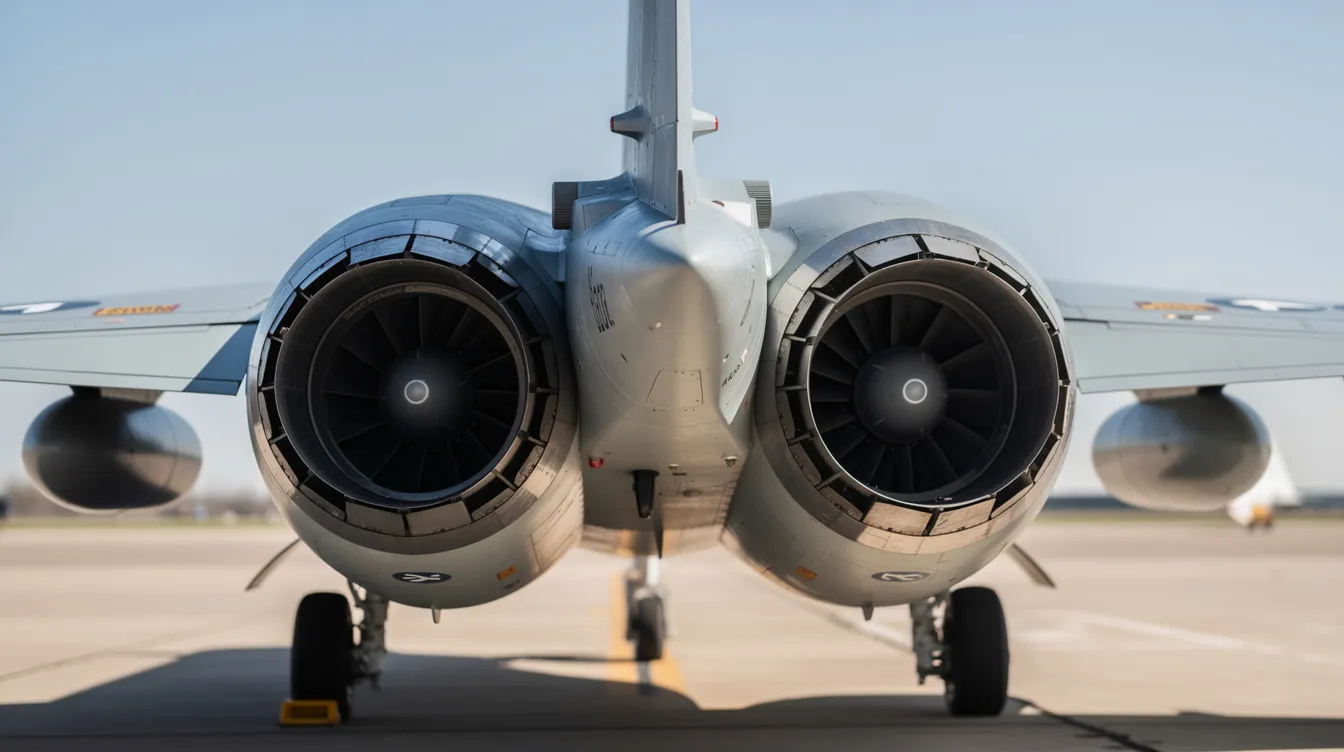
The Alpha Jet is powered by two SNECMA-Turbomeca Larzac 04 engines, each producing approximately 13 kN (2,900 lbf) of thrust. The decision to use twin engines was deliberate: it enhanced reliability during training, provided a safety net for engine-out scenarios, and freed export customers from U.S. ITAR constraints on American powerplants. The aircraft features a twin-engine design that allows pilots to continue flight training on a single engine in emergency situations—a capability that has saved lives over the platform's five-decade career. Fuel efficiency, while modest by today's standards, was acceptable for high-sortie training fleets.
In terms of performance, the Alpha Jet can reach high subsonic speeds of approximately Mach 0.95 in certain configurations, with a typical maximum speed around 1,000 km/h at altitude. Service ceiling exceeds 13,000 meters, and the aircraft's liquid oxygen system offers a ten-hour endurance. Rate of climb and turn performance are suited to aerobatics and low-level attack training alike.
Cockpit and Avionics
Early cockpit avionics systems were analog—basic navigation instruments, a gunsight, and limited situational awareness tools. Later variants introduced updated avionics including SAGEM ULISS 81 INS, Thomson-CSF VE-110 HUD, and evolving multi-function displays. The Alpha Jet provides rugged and easy maintenance, with straightforward access panels and single-point refueling enabling rapid turnaround, a very different philosophy from the cutting-edge technology in the newest generation of private jets.
For BlackJet, similar design priorities—engine redundancy, efficient performance, and maintainability—are central criteria when evaluating which aircraft are offered at each jet card tier and how overall jet card costs and structures, including detailed jet card cost per hour and broader jet card pricing models, are aligned with client expectations.
Variants: Trainer, Strike, and Export Versions
The Alpha Jet family split into two main branches—trainer-centric and attack-centric—with several upgrade programs extending its relevance across decades.
French Alpha Jet E: Featured a rounded nose profile, avionics optimized for pilot instruction, and served as the standard advanced trainer for the Armée de l'Air. It was also the platform adopted by the Patrouille de France aerobatic team in 1981.
Alpha Jet A (Germany): Featured a pointed nose housing more sophisticated navigation and attack avionics systems. It could carry a 27 mm Mauser centreline pod, unguided rockets, and bombs—and later Sidewinder air-to-air missiles. Overall, the Alpha Jet can carry nearly 5,000 lb of munitions across its hardpoints, making it a credible light attack jet. Germany used the Alpha Jet primarily for light attack missions and low-level close air support, while France deployed it to train pilots for fast-jet progression.
Export customers received tailored configurations, including:
Egypt (ordered 30 Alpha Jets in 1973, assembling 26 locally at its Helwan facility; operates upgraded Alpha Jet variants for ground attack roles, designated MS1 and MS2)
Belgium (operated 33 Alpha Jets from 1978 to 1980, later upgrading to the 1B+ standard with laser-gyro INS and GPS)
Ivory Coast
Morocco
Nigeria
Qatar
Togo
Others adapted the airframe for their specific needs
Proposed upgrade paths included:
Alpha Jet 2 (NGEA) with more powerful Larzac 04-C20 engines and Matra Magic AAM compatibility
Alpha Jet 3 "Lancier" with a glass cockpit
Alpha Jet Maritime 3 (navalized version that never entered series production)
This modular variant approach parallels modern business aviation, where the same core platform supports training, medevac, or executive transport missions and a wide spectrum of small private aircraft options for different travel needs, from affordable private planes for budding aviators to the cheapest private jet options for new travelers.
Operational History: European Service and Global Reach
French Service
The French Air Force introduced the Alpha Jet in May 1979, building on the formal service entry that began on 30 January. Production of the Alpha Jet began in 1977, and France ultimately received around 176 aircraft by the mid-1980s—fewer than the initially planned 200—to replace legacy trainers like the Fouga Magister. The French aircraft served as the backbone of advanced flight training for a generation of military pilots.
German Service
Germany received 175 Alpha Jet A aircraft by 1983. The Luftwaffe employed them for low-level close air support and battlefield interdiction within NATO's Central European defense framework. After the Cold War, German Alpha Jets were declared surplus; many were sold to Portugal, Thailand, the United Arab Emirates, and private adversary training companies. Portugal and Britain's QinetiQ ultimately retired their fleets by around 2018.
Export Operators
Other notable operators included:
The Alpha Jet is recognized for its versatility as both a trainer and combat application—a dual identity that the Alpha Jet led many European air forces to adopt as standard procurement philosophy.
The total fleet hours logged across these operators inform how BlackJet evaluates the training pedigree and safety culture of its partner operators' crews.
Alpha Jet in Combat: Nigerian Air Force, Morocco, and Real‑World Missions
Unlike front-line fighters, the Alpha Jet served primarily in limited-intensity conflicts as a light attack aircraft, particularly in African theaters. The Alpha Jet has a proven combat record in West Africa that demonstrates both its strengths and limitations.
The Nigerian Air Force acquired its Dassault-Dornier Alpha Jets in the 1980s. During ECOMOG interventions in Liberia and Sierra Leone in the 1990s, Nigerian Alpha Jets flew approximately 3,000 combat missions in Liberia—striking rebel positions, interdicting supply convoys, and providing close air support. Later, the fleet was employed in counter-insurgency missions in Borno State against Boko Haram. A Nigerian Alpha Jet going missing during a combat support mission raised questions about survivability and the challenges of low-altitude operations over hostile terrain.
The Moroccan air force used its fleet for both training and the ground attack role during the Western Sahara conflict, losing at least one aircraft to hostile fire in December 1985. The Alpha Jet supports light attack and close air support missions in exactly these kinds of contested environments—where its relatively simple systems, twin engines, and ability to use austere airstrips made it appealing to countries needing reliable, lower-cost strike capability, much as chartered aircraft can provide tailored, secure lift for groups of around 100 passengers in the private sector.
For private aviation decision-making, this track record underscores a parallel: high-net-worth travelers seek aircraft and operators that can handle complex routing, remote destinations, and tight schedules—all of which BlackJet coordinates through its vetted operator network when travelers evaluate whether chartering a private jet is worth it and seek to understand what charter flights really mean and the nuances of private jet charter pricing.
Patrouille de France and Airshow Legacy
The Patrouille de France—France's prestigious precision aerobatic demonstration team—is one of the most visible ambassadors of the Alpha Jet. It has been used by the Patrouille de France aerobatic team since 1981, when the team transitioned from the aging Fouga Magister. The Alpha Jet's power, reliability, and agility made it ideal for complex formation aerobatics, and its relatively forgiving handling qualities allowed pilots to fly with the razor-thin margins that precision display flying demands.
The program has not been without risk. Alpha Jet accidents during rehearsals and displays have occurred over the decades, including a mid-air collision during a March 25, 2025 rehearsal near Saint-Dizier, where both pilots and a rear-seat occupant ejected safely with no fatalities.
Airshow footage—from Patrouille de France displays to civilian flying bulls demonstrations—has cemented the Alpha Jet's public image as a nimble, graceful, yet potent machine. The platform's long-term role with France's display team continued even as the air force gradually wound down its use as a primary training aircraft, underscoring the Alpha Jet's aerobatic suitability.
For BlackJet, precision flying and formation management mirror the discipline demanded of pilots flying clients on complex itineraries—a direct reflection of the brand's focus on top-tier crews and safety culture and its benchmarking against leading private jet companies worldwide.
Safety, Incidents, and Lessons for Modern Aviation
Common Accident Types
The Alpha Jet has a generally solid safety record, but decades of operations across many air forces inevitably produced incidents that offer valuable lessons for both military and civilian aviation.
Common accident types include:
Notable Incidents
In one notable incident, a French Air Force Alpha Jet experienced a cockpit explosion after a birdstrike and diverted for an emergency landing near La Rochelle. Nigerian operations saw combat losses including aircraft potentially shot down during counterinsurgency missions over Borno and Zamfara states.
Safety Features and Evolution
The aircraft's twin-engine configuration provided a critical safety net. In many scenarios, pilots were able to fly on a single engine after losing one powerplant—making the Alpha Jet particularly valuable as a training aircraft where engine-out procedures could be practiced under controlled conditions. The evolution of safety enhancements over time—improved ejection seats, more reliable avionics, better simulation tools, and refined training syllabi—reduced the need for especially risky maneuvers in the actual aircraft.
These lessons translate directly into private aviation standards. BlackJet insists on third-party safety ratings, recurrent training for partner crews, and modern avionics on all aircraft in its network. Redundancy—both mechanical and operational, including backup routing and 24/7 support—is built into BlackJet's service model. Safety is the non-negotiable core of luxury travel, just as it sustained the Alpha Jet through half a century of military service.
From Front Line to Civilian Warbird and Contractor
After front-line retirement in Europe, the Alpha Jet found a compelling second life. Many ex-Luftwaffe and ex-Belgian aircraft were sold to other air forces and private companies throughout the 1990s and 2000s, feeding a growing civilian market and contractor ecosystem.
Contractor aggressor and training firms like Top Aces now operate former Alpha Jets in support of NATO air forces, simulating enemy attack aircraft and providing realistic adversary training for frontline pilots. It serves as an adversary training aircraft for military pilots under realistic scenarios—a role that keeps the platform operationally relevant well beyond its original design life.
Among civilian operators, the flying bulls in Europe maintain four demilitarized Alpha Jets for airshow displays, much as modern buyers in markets like the UK evaluate premium private jets for sale and other private jets for sale under 10 million dollars to align passion for aviation with practical travel needs. A handful of U.S. and Canadian private owners have acquired examples for personal flight, and modified Alpha Jets have been employed by NASA for high-altitude research—illustrating the contrast between exotic warbirds and more budget-friendly private aircraft options. Non-combat support roles include:
However, these aircraft are not typically available for casual charter. Regulatory limitations, insurance costs, and ejection-seat safety considerations make privately owned military jets a niche proposition. For most executives and high-net-worth individuals, programs like BlackJet's jet cards offer the performance and exclusivity they want without the complexity of ex-military jet ownership or the variable cost to charter a small private plane, especially once you understand how much it costs to rent a private jet and the key drivers behind private jet charter pricing. The comparison between a jet card and charter approach consistently favors structured access over the unpredictability of warbird logistics.
How the Alpha Jet Influenced Modern Private Jet Expectations
While the Alpha Jet is not a business jet, the expectations it set for performance, reliability, and pilot training have shaped how both air forces and private travelers think about jet aircraft. Its development taught the aviation industry that a well-designed airframe, equipped with the right engines and avionics, can serve multiple missions across decades.
The Alpha Jet's twin-engine redundancy, robust systems, and all-weather capabilities inform today's safety-driven criteria for aircraft selection in private aviation, including when clients need the best private jet solution for 20 passengers. BlackJet prioritizes types that have similarly strong safety and support records—aircraft where components are well-documented, maintenance intervals are rigorously observed, and operational histories demonstrate resilience, whether you compare bespoke memberships like a NetJets jet card and its costs or BlackJet's own programs using guides to jet card cost per hour and overall jet card pricing.
Pilot training pedigree matters enormously. Alpha Jet experience has been part of many European military pilots' careers, helping them train pilots who eventually transition into airline and business aviation. These aviators bring a disciplined, tactical mindset that benefits BlackJet passengers—the same procedural rigor that allowed the Alpha Jet to continue flight training safely in harsh conditions transfers directly into how private flights are planned and executed. BlackJet's pilot qualification standards reflect this heritage.
Sustainability provides a final contrast. The Alpha Jet's 1970s-era fuel burn and emissions are significant by modern standards—older engines consume more fuel per flight hour, and emissions are higher than today's high-bypass turbofans, even on the most affordable private jet platforms. BlackJet ensures carbon-neutral flights at no extra cost, turning historical performance benchmarks into present-day sustainability commitments while still offering affordable private planes and entry-level options for newer flyers. The result is an inheritor of aerospace best practices—channeling performance and training excellence into a seamless, tech-enabled, safety-first private travel experience.
Alpha Jet FAQs—and What They Mean for BlackJet Travelers
The Alpha Jet is a Franco-German, two-seat, twin-engine training and light attack aircraft—not a commercial product. The Alpha Jet was developed jointly by France and Germany to replace aging jet trainers and serve dual roles in flight training and tactical support. A total of 512 Alpha Jets were produced for roughly ten air forces worldwide, a limited production run compared with the broader fleet of business aircraft now traded globally, including high-value jets that some buyers even acquire via cryptocurrency private jet purchases. It is designed for operation in different roles, including training and light attack.
Typical performance includes a top speed around 1,000 km/h, with roles spanning advanced trainer, light attack, and close air support—far removed from the cabin-focused priorities that drive demand for 16-seat private jet options or the economics of owning or chartering a 12-seater private jet. Current operator status: retired from French student training in March 2023, still active in limited numbers with countries like Nigeria, Morocco, and Egypt, as well as private aggressor operators. It has served various air forces across Africa, the Middle East, and Asia over its operational life.
Can the public fly in one? Rarely. Ex-military warbird owners occasionally offer media or demonstration flights, but regulatory restrictions, insurance costs, and ejection-seat safety requirements make these experiences uncommon and expensive. These aircraft are not available through standard private jet charter channels.
For BlackJet readers, the Alpha Jet's story offers practical insights: twin-engine redundancy tells you what to look for when choosing aircraft, military-grade pilot training reveals why crew qualifications matter, and understanding aircraft mission profiles helps you decide between light, midsize, and large-cabin jets within BlackJet's jet card offerings, especially when viewed alongside a comprehensive private jet price list and category breakdown.
If you are intrigued by high-performance aircraft like the Alpha Jet, speak with a BlackJet advisor about matching that performance ethos to the right business jet solution or exploring the top private jets in the world, from the newest ultra-advanced private jets to proven long-range private jets for sale that blend performance with cabin luxury.
Conclusion: High‑Performance Heritage, Modern Private Jet Advantage
The Dassault-Dornier Alpha Jet evolved from a 1970s Franco-German trainer into a global workhorse, serving air forces from West Germany and France to Nigeria and Egypt, just as today's market spans everything from 10 million dollar private jet options to the ultra-capable 20 million dollar private jets that define modern luxury travel. Across more than five decades, it demonstrated the enduring value of twin-engine safety, rugged design, and versatile mission capability. It remains a landmark in how two nations collaborated to produce an aircraft that could both train pilots and fly combat sorties with equal credibility, much as modern charter flight models balance flexibility and specialized missions in private aviation today.
The Alpha Jet's story is ultimately about intelligent access to performance: the right aircraft, for the right mission, backed by serious training and safety culture—exactly the principles BlackJet applies when curating its private jet network. Modern business aircraft offer what ex-military platforms cannot: quieter cabins, pressurized comfort at altitude, long-range capability, advanced avionics, and integrated sustainability measures including BlackJet's carbon-neutral commitment.
If you appreciate the engineering excellence behind aircraft like the Alpha Jet, explore how BlackJet can translate that appreciation into practical, strategic private jet access—an efficient, safe, and tailored way to travel for business or leisure, without the burden of ownership or needing to decode every detail of how much it costs to rent a private jet. Discover premier jet access at BlackJet.


 Sign up with google
 Sign up with Apple