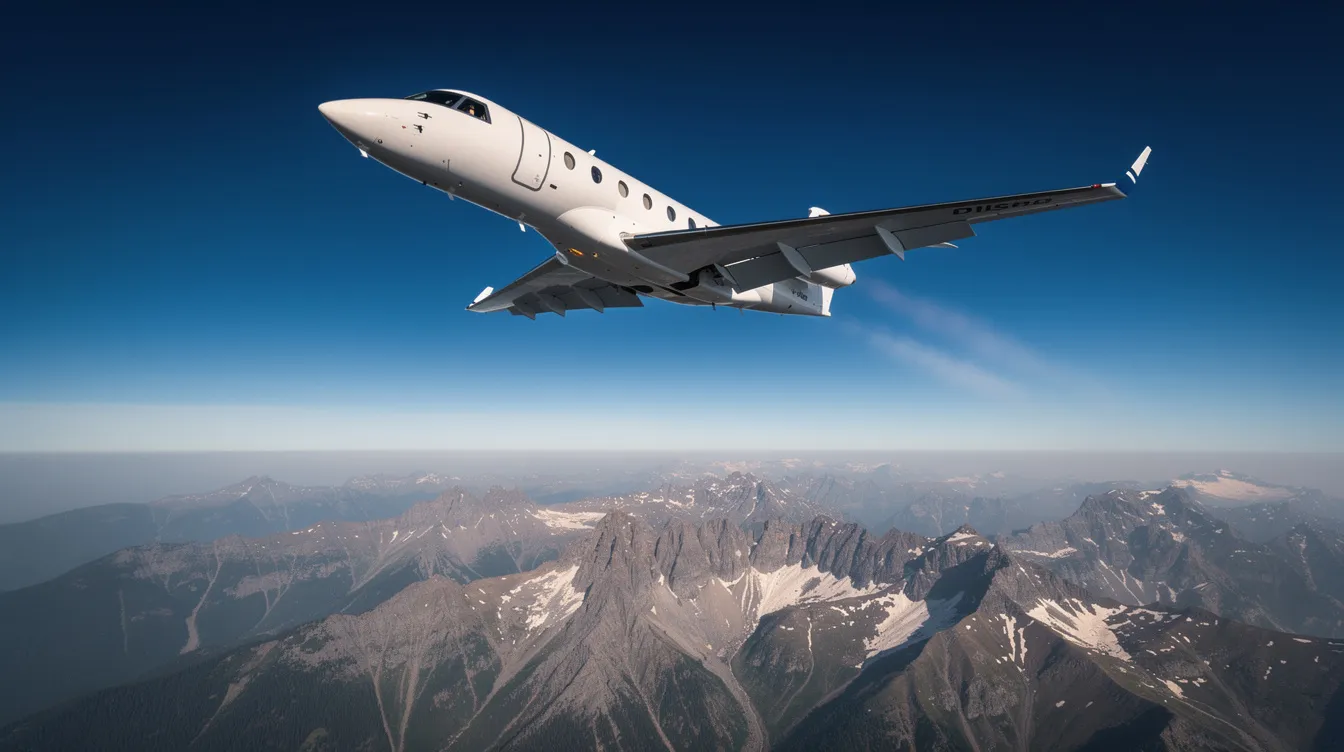
Civilian jet planes are at the heart of modern strategic travel, offering executives, high-net-worth travelers, and aviation enthusiasts a unique blend of flexibility, efficiency, and control. Whether you’re seeking to maximize productivity, bypass commercial airline hassles, or simply enjoy the prestige and comfort of private aviation, understanding the landscape of civilian jet planes is essential. This article is designed for those who want to make informed decisions about their travel—whether for business, leisure, or a passion for aviation technology.
Understanding civilian jet planes matters because these aircraft are more than just symbols of status; they are powerful tools that enable time savings, direct access to thousands of airports, and tailored travel experiences that commercial airlines cannot match. By grasping the distinctions between different categories and access models, travelers can optimize their journeys for speed, comfort, and value.
Civilian jet planes fall into three main categories:
Commercial Jets: Built for scheduled passenger service, typically carrying 50–500+ passengers, operating on fixed routes and schedules.
Private Jets: Designed for exclusive use by individuals, corporations, or groups, offering flexible scheduling, privacy, and access to smaller airports.
Cargo Jets: Optimized for transporting goods and freight, with specialized interiors and loading systems, serving global logistics needs.
Category | Primary Use | Typical Capacity | Key Features |
|---|
Commercial Jets | Scheduled passenger travel | 50–500+ | Fixed routes, high density, regulated operations |
Private Jets | Exclusive private travel | 4–19 | Flexible schedules, luxury cabins, privacy |
Cargo Jets | Freight transport | N/A (cargo only) | Large cargo holds, global logistics, no passengers |
The scope of this article spans every civilian jet category: single-engine personal jets, light jets, midsize and super-midsize jets, and large-cabin business jets used across general aviation and corporate travel.
Strategic Edge of Civilian Jet Travel vs. Airlines
Consider a routine New York–Chicago flight. On a commercial airline, you contend with hub connections, TSA queues, rigid departure windows, and ground transit to and from major terminals. On a private jet departing from a secondary airfield, you bypass nearly all of it. Fast civilian jets can save an average of 127 minutes per trip compared with commercial first class on comparable routes—time that compounds across dozens of annual journeys.
Private civilian jets can access smaller community or executive airfields, giving travelers roughly 10 times more airport access than airlines offer. With roughly 24,000 private jets in operation worldwide, this infrastructure is mature and well-supported.
BlackJet's premium Jet Card model gives members on-demand access to multiple aircraft categories without the capital burden of private jet ownership—prepaid hours, locked-in rates, and guaranteed availability across cabin classes.

To better understand what qualifies as a civilian jet plane, let's define the term and its main categories.
What Counts as a Civilian Jet Plane?
Civilian jet planes fall into three main categories: commercial jets, private jets, and cargo jets.
A civilian jet plane is any turbine-powered, fixed-wing aircraft operated for civil (non-military) purposes. This includes business jets, private jets, very light jets, and certain single-engine jets in general aviation. These are distinct from military aircraft, which serve defense roles.
Civilian jet planes fall into three main categories when contrasted with other civil aircraft types:
Piston aircraft like the Piper M350 Malibu Mirage: propeller-driven, lower cruise speeds (~250 knots), limited altitude capability.
Turboprop aircraft like the Pilatus PC-12 or King Air 350: turbine-powered propellers, better altitude than pistons but slower than jets.
Jet-powered aircraft like the Cessna Citation CJ3+: high cruise altitudes (30,000–51,000 ft), speeds typically between Mach 0.70 and 0.95, and pressurized cabins optimized for frequent business travel.
Commercial jets are built to carry hundreds of passengers. They maximize passenger density with limited legroom and operate under strict public transport regulations. Business jets are designed for private and corporate travel, while private jets are built to carry small groups on flexible schedules.
Civil jet operations span personal owners, corporate flight departments, charter operators, and Jet Card programs like BlackJet. In the U.S., private flights fall under FAA Part 91, while charter flights carrying fare-paying passengers require FAA Part 135 certification—a distinction central to safety standards discussed later.
As we move forward, let's explore how these categories break down into specific types of civilian jets and their ideal use cases.
Key Categories of Civilian Jets
Civilian jet planes fall into three main categories: commercial jets, private jets, and cargo jets. Within the private jet segment, aircraft are grouped by size, range, and cabin capacity. Resources outlining the main types of private jets for different travelers mirror how the civilian aviation industry organizes them:
Very Light Jets (VLJs): Very light jets seat up to 4 passengers for short trips. Example: Cirrus Vision Jet SF50 (~300 KTAS, ~1,200 nm range). Ideal for regional hops and airport access at smaller fields.
Light Jets: Light jets typically seat five to nine passengers with ranges of 1,500–2,500 nm. Examples: Cessna Citation CJ3+, Embraer Phenom 300E. Best for 2–3 hour regional or transcontinental segments.
Midsize & Super-Midsize Jets: Super-midsize jets offer increased range for longer nonstop flights—typically 2,500–4,000 nm with stand-up cabins. For groups approaching 15-passenger private jet missions, operators often step up to the largest super-midsize or small large-cabin aircraft. Examples: Bombardier Challenger 350, Citation Latitude, Praetor 600.
Large-Cabin & Ultra-Long-Range Jets: Large jets support higher passenger counts and intercontinental flights. For many corporate teams and families, 16-seat private jet configurations deliver the right balance of capacity and comfort. Ultra-long-range jets can cover distances over 8,000 nautical miles nonstop. Examples: Bombardier Global 7500, Dassault Falcon 8X, Gulfstream G650ER.
For context, commercial jets need long runways and extensive terminal infrastructure. Commercial jets typically have a higher passenger capacity than private jets. Regional jets are designed to connect smaller cities to major hubs and usually carry between 50 and 100 passengers. Narrow-body jets are used for short-to-medium-range domestic scheduled passenger routes. Wide-body jets are designed for long-haul international passenger travel and can fly intercontinental journeys. Cargo jets are optimized for transporting goods rather than passengers and are used for global freight transport. Private jets provide exclusive travel for a single party.
BlackJet's Jet Card programs map directly to these classes—light, midsize, super-mid, and large—so members select the cabin that fits each mission rather than paying for more aircraft than they need, using a framework similar to broader guides on private jet sizes and ideal use cases.
Next, let's look at specific aircraft examples within each jet class to see how they serve different travel needs.
From Light Jets to Flagship Business Jets: Aircraft Examples
Light Jets
The Cessna Citation XLS+ and Citation CJ4 carry 7–9 seats and cruise at 430–450 knots—ideal for routes like New York–Miami or London–Ibiza. Their popularity in charter fleets reflects a balance of speed, runway length flexibility, and lower operating costs. Light jets cruise between 420 and 515 miles per hour, making them remarkably efficient for regional business travel. The Cessna Citation X+ has a top speed of Mach 0.935, with engine thrust helping drive that performance and keep coast-to-coast travel under four hours.
The Embraer Phenom 300E and HondaJet Elite S represent modern, efficient light jet benchmarks. The Phenom 300E remains among the most-delivered light jets globally, equipped with advanced avionics and cabin features that punch above its class. Most jets range from $5 million to $30 million depending on class and configuration, and a dedicated overview of 5 million private jet features and costs helps set realistic expectations for this segment.
Midsize & Super-Midsize
The Citation Latitude delivers strong US coast-to-coast performance with a stand-up cabin seat layout for up to nine passengers. The Bombardier Challenger 3500 brings cabin upgrades, a maximum range of ~3,400 nm, and advanced production quality favored by corporate flight departments.
Large-Cabin & Ultra-Long-Range
The Bombardier Global 7500 offers range up to 7,700 nm, Mach 0.90+ cruise, and a four-zone cabin. The Bombardier Global 8000 flies at Mach 0.95, pushing the envelope of what civilian aircraft can achieve. Private jets can reach speeds over 700 miles per hour in this class. Ultra-long-range jets cruise near Mach 0.90 to 0.95, and guides to the best long-range private jets for sale illustrate how these aircraft enable nonstop global missions.
The Dassault Falcon 7X and 8X use a tri-jet design for high performance at hot and high airfields. The Gulfstream G700 achieves a maximum speed of Mach 0.935 and low cabin altitude for reduced fatigue, and its first flight marked a key development milestone—it costs $80 million as of 2024 and sits among the newest flagship private jets. BlackJet members can request these aircraft classes through its Jet Card and on-demand charter solutions, even if specific tail numbers vary by day.

With these examples in mind, let's examine how single-engine and light jets bridge the gap between personal flying and full-scale business aviation.
Single-Engine and Light Jets in General Aviation
High-performance single-engine and light jet aircraft form the bridge between personal flying and full-scale business aviation.
The Cirrus Vision Jet SF50 is a certified single-engine VLJ with a whole-airframe parachute—formally known as the Cirrus Airframe Parachute System—seating 5–7 passengers with a range of ~1,200 nm. Often owner-operated, it sometimes appears with boutique charter operators for short-notice missions.
Among single-engine piston aircraft, the Piper M350 "Malibu Mirage" and M600/M700 deliver pressurized cabins, glass cockpit avionics, and a "private jet-like" experience for families and owner-pilots. The Diamond DA50 RG and Mooney Acclaim Ultra serve as high-speed piston singles used in advanced general aviation. When evaluating piston singles or single-engine planes on the used aircraft market, buyers should always verify damage history and airframe condition through trusted inspection services. Premium marketplaces for private jets for sale in the UK and other regions often pair curated listings with expert guidance, while resources on the cheapest private aircraft options show how budget-conscious buyers can enter private aviation with smaller jets and single-engine planes. The general aviation manufacturers association tracks production and delivery data across these segments, providing transparency to the aircraft market.
Very light jets and smaller Cessna Citation models (e.g., Citation Mustang) frequently appear on on-demand charter platforms—ideal when a cabin seat refurbished to modern standards meets the mission and cost-effective access matters more than cabin size.
Limitations to note: payload restrictions can reduce useful range significantly. Weather flexibility and runway length requirements are more constraining than with larger jets, and fuel burn per passenger-mile is less favorable on longer routes.
Now that we've covered the aircraft themselves, let's see how manufacturers design business jets around specific travel missions.
How Civilian Business Jets Are Designed Around the Mission
Manufacturers like Bombardier, Dassault, Cessna, Embraer, and Gulfstream design each business jet around specific mission requirements rather than a one-size-fits-all model. Business jets often feature pressurized cabins for comfort at altitude, where thinner air demands careful engineering.
Key Mission Factors
Key mission factors include:
Route length: 500 nm regional vs. 3,500 nm transcontinental vs. 6,000 nm intercontinental
Airport access and runway performance: short or high-altitude airports like Aspen or Lugano demand specific wing and engine configurations
Passenger count and cargo: 4-person executive team vs. 12-person board with luggage and golf bags
Cabin configuration: club seating, conference tables, divans, or rest zones for overnight operations
A light jet like a Cessna Citation CJ3+ suits a same-day out-and-back Boston–Detroit client visit. A Dassault Falcon 7X or Bombardier Global 6000 handles a non-stop New York–Dubai or London–Los Angeles roadshow where speed, range, and cabin comfort define the outcome.
BlackJet's Jet Card model connects members with real-time support teams who match each trip's mission with the most efficient category—so you fly the right aircraft, not simply the largest one. Guides to the best Jet Cards for frequent flyers highlight how this approach saves time and keeps operations aligned with your actual needs.
With mission-driven design in mind, let's compare the main access models for civilian jet planes.
Private Jet Ownership vs. Jet Cards vs. On‑Demand Charter
Three primary pathways provide access to civilian jet planes. Each carries distinct cost structures, flexibility, and trade-offs.
Full Private Jet Ownership
Ownership Costs
Purchase prices range from ~$4–10 million for light jets to $55–80 million+ for large-cabin jets like the Gulfstream G650ER or Bombardier Global 7500. For a broader view of how these numbers compare across aircraft categories and access models, many travelers consult a detailed private jet price list and cost guide or provider-specific resources such as a NetJets Jet Card cost overview. Private jet owners face recurring annual costs—crew salaries, hangar, insurance, engine programs, and maintenance—that often run $1–5 million per year depending on the single aircraft class. Ownership typically becomes cost-competitive only when flying 200–400 hours annually. Below that threshold, the economics favor alternatives, especially for travelers evaluating 10 million dollar private jet options where acquisition and operating costs are significant strategic commitments.
On-Demand Charter
Charter offers pay-per-trip flexibility with no long-term obligation, and detailed comparisons of whether chartering a private jet is worth it help clarify when this model beats both ownership and memberships. As outlined in comprehensive guides on how much it costs to rent a private jet, hourly rates run roughly $4,500–$7,000 for light jets and $15,000–$25,000+ for ultra-long-range jets; detailed analyses of Jet Card cost per hour help compare these charter prices with membership models. Downsides include variable pricing during peak periods, repositioning surcharges, and inconsistent cabin experience across charter fleets.
Jet Cards (BlackJet)
Jet Cards provide prepaid blocks of flight time—typically 25 or 50 hours—across multiple cabin classes, and in-depth analyses of 50-hour Jet Card cost and value show how pricing scales for frequent flyers. A detailed guide to Jet Card cost and structure and broader resources on Jet Card pricing and fees show how benefits like locked-in hourly rates, guaranteed availability windows, no asset risk, and predictable budgeting compare with other access models, alongside provider-specific breakdowns such as Flexjet Jet Card cost and options.
Scenario: A CEO flying New York–London four times per year plus ten US domestic round trips. Ownership of a large-cabin jet would cost $3–5 million annually whether utilized or idle. For even higher utilization, travelers may evaluate a 100-hour Jet Card cost guide alongside other options, especially in regional markets such as India where a detailed look at private jet prices in rupees helps align budgets with flight hours. A 25+ Hour Jet Card solution balances flexibility with cost control: large-cabin hours for transatlantic legs, light jet hours for domestic segments, all under one membership with no hangar fees or crew payroll, and resources detailing private jet pilot and crew costs underscore how significant these expenses can be for owners versus cardholders.
With access models clarified, let's turn to what passengers experience inside the cabin across different jet classes.
Cabin Experience: From Light Jets to Bombardier Global and Dassault Falcon
For discerning travelers, the interior of a civilian jet plane can matter as much as speed and range—particularly on overnight or intercontinental flights. Private civilian jets feature luxury seating and amenities engineered for productivity and rest.
Light Jet Cabins
Typical 4-to-7 seat layouts with club seating, compact galleys, and enclosed or sliding-door lavatories. Flights up to 2–3 hours where efficiency and speed outweigh spaciousness.
Midsize & Super-Midsize
Stand-up cabins, enhanced sound insulation, and conference-style layouts for in-flight meetings. Fast civilian planes feature advanced noise insulation for comfort at these cabin sizes. Cabins of private jets often have lie-flat seating options for longer segments.
Large-Cabin Business Jets
The Bombardier Global 7500, Dassault Falcon 8X, and Gulfstream G700 offer multiple living zones—lounge, conference area, and private stateroom. Articles profiling the largest private jets for long-haul luxury travel underscore how these cabins can include private bedrooms and full galleys. Modern jets maintain cabin altitude below 3,000 feet to reduce jet lag, even at cruising altitudes above 40,000 feet. Advanced lighting systems sync with circadian rhythms, and near-home-office connectivity keeps executives productive.
BlackJet helps members select the appropriate cabin class for each mission—a Bombardier Global for an overnight New York–Tel Aviv crossing, or a light jet for a 90-minute regional hop, drawing on deep knowledge of the best private jets in the world by performance and comfort as well as benchmarks from the most expensive private jets in operation.
With comfort and productivity addressed, safety and sustainability are the next priorities for modern jet travelers.
Safety, Certification, and Maintenance Standards in Private Aviation
Civilian jet operations are governed by stringent safety standards. High-end operators and Jet Card providers typically exceed minimum regulatory baselines.
Regulatory oversight: U.S. charter operators require FAA Part 135 air carrier certification. Pilots hold ATP licenses with type ratings for specific aircraft families (e.g., Bombardier Global, Dassault Falcon) and complete recurrent simulator training every 6–12 months.
Maintenance programs: Engine and APU programs such as Rolls-Royce CorporateCare and JSSI ensure scheduled inspections by calendar time and flight hours. Digital maintenance tracking systems like CAMP monitor component life and airframe reliability in real time.
Operator vetting: BlackJet applies proprietary safety audits alongside third-party ratings from ARGUS and Wyvern. Preference goes to newer airframes and operators with robust Safety Management Systems. Redundancy in modern avionics—synthetic vision, fly-by-wire controls, multi-engine fail-safes—ensures that speed and luxury do not compromise safety on aircraft like the Global 7500 or Falcon 7X.
As safety is assured, sustainability and technology are shaping the future of civilian jet travel, and comparisons of the top private jet companies for luxury travel highlight how leading providers differentiate on these dimensions.
Sustainability and Carbon‑Neutral Civilian Jet Flights
Private jets carry higher per-passenger emissions than airliners on a seat-kilometer basis. Responsible providers address this directly.
Sustainable Aviation Fuel (SAF): Aircraft from the Bombardier Global and Dassault Falcon families are certified for SAF blends that can reduce lifecycle CO₂ emissions significantly compared with conventional Jet-A. Supply is expanding but remains limited at many airports.
Carbon offset programs: BlackJet commits to carbon-neutral flights as a default feature—not an add-on. Verified carbon credits offset each flight's emissions, calculated by distance, fuel burn, and aircraft type.
Operational efficiency: Modern, fuel-efficient aircraft like the Embraer Phenom 300E and Gulfstream G600 reduce fuel consumption per nautical mile. Optimized flight planning and routing further improve efficiency across operations. When evaluating civilian jet solutions, ask providers about SAF usage, emission reporting, and offset standards, and consider how the cheapest private jet options balance lower acquisition or charter costs with modern efficiency and sustainability features.
With sustainability in mind, let's see how technology and digital platforms are enhancing the civilian jet experience.
Technology, Avionics, and BlackJet's Digital Experience
Modern avionics suites have transformed how pilots and passengers experience civilian jet planes. Flight decks like the Garmin G5000 (found in some Cessna Citation and light jets) and Bombardier's Vision Flight Deck on Global-series aircraft deliver synthetic vision, advanced autopilots, and real-time weather and traffic displays.
For passengers, this translates into smoother flights through precise navigation and performance management. High-speed Wi-Fi, VPN-compatible connectivity, and cabin management systems for lighting, entertainment, and temperature are standard in most jets above the VLJ class.
BlackJet's own technology layer adds a digital concierge dimension: a 24/7 mobile and web booking platform where members request a light jet, midsize, or Bombardier Global-class aircraft in minutes. Real-time flight support handles dynamic rerouting, weather delays, and instant updates pushed directly to travelers and executive assistants—creating a seamless experience from app-based quote to car-to-aircraft transfer at private terminals.

Now, let's bring it all together with practical scenarios for choosing the right civilian jet plane for your mission, whether you're chartering an entire aircraft or simply buying a seat on a private jet through shared and semi-private models.
FAQs: Civilian Jet Planes and Private Jet Travel
What defines a civilian jet plane?
A civilian jet plane is a turbine-powered, fixed-wing aircraft operated for non-military purposes, including commercial passenger service, private and business aviation, and cargo transport. These jets range from very light jets seating 4 passengers to ultra-long-range business jets capable of intercontinental flights.
How do private jets differ from commercial jets?
Private jets offer exclusive use, flexible scheduling, and access to thousands of smaller airports that commercial jets cannot serve. They typically carry fewer passengers (4–19) with luxury cabins, while commercial jets focus on high passenger density and fixed routes.
What are the main categories of private jets?
Private jets are grouped by size and range: Very Light Jets (up to 4 passengers, short range), Light Jets (5–9 passengers, regional to transcontinental), Midsize and Super-Midsize Jets (longer range, stand-up cabins), and Large-Cabin Ultra-Long-Range Jets (intercontinental flights with enhanced amenities).
How does a Jet Card work compared to owning a private jet?
Jet Cards provide prepaid flight hours across multiple aircraft categories without ownership costs. They offer predictable pricing, guaranteed availability, and flexibility, making them ideal for travelers flying 25–100+ hours annually, while ownership suits those flying 200+ hours per year.
Are private jets safe compared to commercial airlines?
Yes. Private jet operators must meet stringent FAA Part 135 certification standards, with highly trained pilots, rigorous maintenance programs, and advanced safety systems. Many private jets feature redundant avionics and undergo frequent inspections to ensure safety.
How is sustainability addressed in private jet travel?
Leading providers use Sustainable Aviation Fuel (SAF) certified for many business jets, combined with verified carbon offset programs to achieve carbon-neutral flights. Modern aircraft designs and optimized operations also reduce fuel consumption and emissions per flight.
Can I book specific aircraft models with BlackJet?
BlackJet offers access to a broad fleet across cabin classes, allowing members to select the aircraft category that fits their mission. While specific tail numbers depend on availability, members often have options among top models like the Citation XLS+, Bombardier Challenger, Global 7500, or Gulfstream G700.
What is the typical range of a private jet?
Ranges vary widely: Very Light Jets cover around 1,200 nautical miles, Light Jets 1,500–2,500 nm, Midsize jets 2,500–4,000 nm, and Ultra-Long-Range jets exceed 7,500 nm, enabling nonstop intercontinental flights.
How much time can private jets save compared to commercial flights?
Private jets save an average of 127 minutes per trip by accessing smaller airports, avoiding layovers, and offering flexible scheduling. This time savings is especially valuable on frequent or multi-leg itineraries.
What cabin amenities can I expect on private jets?
Cabins range from ergonomic seating and compact galleys in light jets to multiple living zones, lie-flat seats, private bedrooms, full galleys, and advanced connectivity in large-cabin jets. Low cabin altitude and noise insulation enhance comfort and reduce jet lag.
Choosing the Right Civilian Jet Plane for Your Mission
The right aircraft depends on your destination, party size, and how you intend to use the flight time. Here are three scenarios:
European Entrepreneur, London–Zurich–Milan in One Day: Two short legs, 1–3 people. A light jet or VLJ maximizes airport access and eliminates connection delays that commercial business class cannot avoid.
US Executive Team of Six, New York–Dallas Monthly: Midsize or super-midsize jets like the Citation Latitude or Challenger 350 provide stand-up cabins and conference layouts. A 25-hour Jet Card covers 4–5 round trips with predictable budgeting, and for larger groups or evolving needs, analyses of 12-seater private jet costs and options and 50-hour Jet Card pricing can inform longer-term strategy.
Family of Four, Los Angeles–Honolulu Plus Annual LA–Tokyo: Large jets for the transpacific leg (~5,500 nm), light jets for mainland regional flights—all coordinated under one flexible membership. For comparison, corporate and group travelers weighing heavy jets and VIP airliners can review guides on charter plane costs for 100 passengers, the best private jets for 20 passengers, and large private jets for up to 50 passengers to understand how cabin size impacts pricing and flexibility.
Selection factors to weigh:
Runway length at destination
Weather seasonality and altitude capability
Luggage and sports equipment
Cabin privacy
Whether in-flight work sessions are expected
The right civilian jet strategy begins with understanding your mission—then matching it to the aircraft and access model that serves it best. Explore BlackJet's Jet Card and charter solutions to design a personalized approach that fits your travel pattern, your values, and your ambitions.


 Sign up with google
 Sign up with Apple