Few aircraft capture the imagination quite like the Cri Cri jet plane—a feat of engineering miniaturization that pushed the boundaries of what two engines could achieve in the smallest possible airframe. What began as a French hobbyist’s dream in 1973 evolved into the world’s smallest twin-engined aircraft, and eventually, the smallest twin-engine jet ever to take flight.
For those who appreciate aviation innovation, the story of this remarkable aircraft offers lessons in efficiency, creativity, and the relentless pursuit of optimization. Yet for business travelers who need to cover serious distances with reliability, comfort, and safety, the contrast with modern private jets couldn’t be starker.
Key Takeaways
The Colomban Cri Cri, designed by aeronautical engineer Michel Colomban, made its first flight on July 19, 1973, establishing itself as the world’s smallest twin-engined aircraft with an empty weight under 200 lb.
The MC-15J jet variant achieved its maiden flight on July 31, 1997, at Rennes–Saint-Jacques airport, creating the smallest twin-engine jet in aviation history with top speeds exceeding 200 km/h.
Later developments included electric variants showcased in June 2010 at the Green Aviation Show, featuring four electric motors capable of 30-minute flights.
The aircraft holds the world speed record for airplanes in its weight class at 149 mph, achieved during a 1983 demonstration by a French airshow team.
While the Cri-Cri represents remarkable engineering for hobbyists and aviation enthusiasts, it remains a single-seat experimental aircraft unsuitable for business travel, making certified Jet Card programs like BlackJet’s the practical choice for executives requiring range, comfort, and safety.
Origins of the Colomban Cri-Cri
Design Goals and Construction
The story of aviation’s smallest twin begins with Michel Colomban, a former Sud Aviation engineer who had worked on projects as substantial as the Caravelle jetliner. In 1970, Colomban set out to create something entirely different: a twin-engine plane that could be built for under $1,000 (approximately $7,500 in today’s dollars), assembled in roughly 1,500 man-hours, and stored in a standard garage.
The prototype of the Cri-Cri made its first flight on July 19, 1973, from Villiers-le-Mahieu airfield, demonstrating its ease of flight and aerobatic capabilities shortly thereafter. The aircraft was initially equipped with two Rowena 6507J single-cylinder two-stroke engines, each delivering 6.7 kW (9.0 hp) and weighing a mere 6.5 kg (14.3 lb). Subsequent versions upgraded to JPX PUL 212 engines, providing 11 kW (15 hp) per unit. Some builders have modified the engine rear or crankshaft to facilitate easier starting, such as by attaching an electric drill for engine ignition.
Its fundamental design features include a cantilever low-wing layout, a single-seat enclosed cockpit beneath a bubble canopy, fixed tricycle landing gear, and twin engines mounted on pylons in a tractor configuration. The two engines sat remarkably close together—just 1.25 meters apart—minimizing asymmetric thrust concerns should one engine fail during flight. The engine mounting system is a crucial aspect of the Cri-Cri’s design, ensuring both safety and optimal performance.
Construction relied on aluminum sheet glued to Klegecell foam, with overall dimensions of approximately 3.95 meters (12 ft 11 in) in length and a wingspan measuring 4.9 m (16.1 ft) with an area of 3.1 m² (33 sq ft). The design aims to combine lightweight construction with ease of building, allowing hobbyists to construct it at home. Early builds achieved an empty weight as low as 79 kg (175 lb), with a maximum takeoff weight near 170 kg (375 lb).
Steps for Building a Cri-Cri
Obtain original plans from Michel Colomban or authorized distributors.
Gather required materials: aluminum sheets, Klegecell foam, engine components, landing gear, and canopy.
Cut and shape aluminum and foam components according to plans.
Assemble the fuselage, wings, and tail surfaces, ensuring precise alignment and riveting.
Install engines and the engine mounting system.
Fit the cockpit canopy and landing gear.
Complete wiring, controls, and instrumentation.
Conduct ground tests and inspections.
Perform initial flight testing under experimental category regulations.
Naming and Early Reception
The name cri cri came from Colomban’s daughters—specifically, a nickname for his daughter Christine. The French term evokes the sound of a cricket’s chirp, a fitting moniker for an aircraft that could produce quite a sound of its own. The double meaning resonated with the aviation community, and the tiny plane rapidly gained fame at European fly-ins. This informal name became synonymous with the world’s smallest twin. Some international builders spelled cricri as a single word, though the original design maintained the hyphenated version.
Design and Aerobatic Capabilities

Aerobatic Performance
Colomban designed the MC-15 for both efficiency and pure flying enjoyment. The aircraft is capable of aerobatics within the limitations of twin-engined aircraft, being stressed to +10g and -5g—remarkable figures for such a diminutive airframe.
Assembly and Storage
Major design features include full-span Junkers-style flaperons that combine flap and aileron functions for superior lift and drag modulation. The simple fixed landing gear uses rubber-banded bungees for shock absorption, while the wings can be quickly detached for trailering.
Assembly/Disassembly Process:
Flight Characteristics
The fuselage and cockpit canopy shape deliberately channel airflow over the tail surfaces, maintaining control authority even during single-engine operations. The aircraft’s design allows for controlled flight even with one engine inoperative, enhancing safety despite the unconventional powerplant arrangement. With the propeller configuration pulling rather than pushing air, pilots benefit from immediate throttle response.
The Cri-Cri holds the world speed record for airplanes in its weight class at 149 mph, achieved during a demonstration by a French airshow team in 1983. Typical cruise speed settles around 120 mph (approximately 190 km/h), while the aircraft is capable of climbing at a rate of approximately 1000 feet per minute under optimal conditions.
The Cri-Cri is known for its quick aileron response, making it feel like the control stick and wing are a single unit, although the actual roll rate may be slower than it seems. Pilots report roll rates approaching 100-180 degrees per second through direct stick-flaperon linkage, with controls described as supremely light and responsive. However, the tight cockpit dimensions (roughly 0.6 x 1.2 meters) and extreme noise levels demand discipline. Flying the Cri-Cri can be a loud experience, with noise levels comparable to being inside a metal garbage can, making ear protection essential for pilots.
From Propeller to Jet: Evolution of the MC-15J Cri-Cri Jet
Jet Engine Development
The transition from propeller to jet engines addressed a persistent challenge with two-stroke piston powerplants: unreliability. Carburetor icing and other issues plagued early builds, prompting engineers to explore alternative propulsion. In particular, engine failures—such as those involving the left engine—require careful troubleshooting and maintenance, as performance or mounting problems can significantly impact flight safety and aircraft handling.
Some Cri-Cri variants are powered by jet engines, such as the PBS TJ20A turbojets. The MC-15J concept retained the original airframe while swapping the piston engines for miniature turbines. Early French efforts in the 1990s tested JPX T240 units producing approximately 20 kg of thrust, but the limited power-to-weight ratio proved inadequate for practical flight. Development shifted toward dedicated micro-turbines from manufacturers like KingTech and Jet-Cobra, initially running on propane fuel before transitioning to conventional jet fuel.
First Jet-Powered Flight
The first jet-powered Cri-Cri, known as the “Crystallin jet,” was converted in 1997. The key milestone came on July 31, 1997, when an MC-15J prototype made its maiden flight at Rennes–Saint-Jacques airport in France, piloted by Yves Duval. This established the aircraft’s claim as the smallest twin-engine jet in aviation history.
Modern Jet Variants
Subsequent builders expanded on Duval’s work. Dominique Bonnaire achieved the first French jet flight on May 5, 2011, using twin JetCat P60 engines. South African engineers Sakkie Van Heerden and Davies Botes completed a Perth-based build that first flew on September 22, 2015, powered by PBS TJ-20A engines producing 210 N (47 lbf) of thrust each.
The jet variants presented unique challenges. Thrust-to-weight ratios around 0.5:1 demanded precise power management, with pilots limited to approximately five minutes at full throttle before reducing to 80% continuous rpm. Fuel capacity remained modest at 33 liters, enabling flights of 45-60 minutes depending on power settings. Total fuel burn at cruise settled around 10 L/h, maintaining the aircraft’s efficiency-focused heritage while pushing speeds beyond 200 km/h.
Notable Jet Cri-Cri Projects and Records
The Cri-Cri has historically been associated with experimental propulsion options, including electric and jet configurations. Several notable projects pushed the boundaries of what this tiny airframe could achieve.
Yves Duval’s 1997 Rennes Prototype: The original MC-15J featured twin propane-fed Cobra turbines capable of speeds above 200 km/h. Duval’s aircraft appeared at Paris Air Shows and established the template for subsequent jet conversions. The aircraft demonstrated that micro-turbines could power practical, if limited, flight operations.
Electric Four-Motor Variant (2010): In June 2010, a modified electric-powered version of the Cri-Cri was showcased at the Green Aviation Show, featuring four electric motors and capable of flying for 30 minutes at approximately 110 km/h. This briefly made it one of the world’s smallest four-engine aircraft, demonstrating the potential for electric propulsion in ultra-light aviation.
Electravia Speed Record: A lithium-polymer powered variant achieved 262 km/h (163 mph), with streamlined electric nacelles reducing total drag by nearly 46% compared to piston installations. The elimination of cooling requirements and vibration from reciprocating engines created a remarkably efficient package.
2015 English Channel Crossing: An electric Cri-Cri completed a Channel crossing in 2011, though it required air-launch rather than self-takeoff due to battery weight constraints. This milestone highlighted both the promise and limitations of electric propulsion at the ultra-light scale.
Cri-Cri in Practice: Homebuilding, Handling, and “Upside Down” Flight
The Cri-Cri is popular among homebuilders, with plans initially sold by the designer. Building one requires approximately 1,500 hours of precise metalwork, with every joint and rivet demanding attention to detail.
Building Process
Obtain plans and materials.
Cut and shape components.
Assemble fuselage, wings, and tail.
Install engines and systems.
Complete cockpit and controls.
Conduct ground and flight testing.
The experience of constructing and flying a Cri-Cri carries both rewards and risks. Some US “Cricket” derivatives deviated significantly from the original design, incorporating altered spars and flexible flaperon torque tubes. These modifications led to serious safety incidents in the 1980s, resulting in litigation that temporarily halted plans distribution in the United States. The EAA withdrew endorsements for affected kits, underscoring the importance of adhering to Colomban’s specifications.
Pilots have reported that the Cri-Cri can experience engine failures frequently, averaging one engine failure every third flight, which can significantly impact the flying experience. The two-stroke engines require meticulous carburetor adjustment and can foul spark plugs hourly in some conditions. Single-engine climb performance proves marginal in hot-and-high scenarios, particularly for heavier pilots approaching the 85 kg limit.
Despite these challenges, pilots describe flying the aircraft as an almost magical experience. The transparent bubble canopy creates what some call a “Peter Pan” sensation—the feeling of flying in the air without visible barriers. The aircraft can fly upside down during inverted passes at airshows, typically at 50 feet AGL, though incidents involving canopy failures and seat-belt issues have emphasized the need for redundant restraints.
Inverted Flight and Safety Considerations
The pull of the controls during aggressive maneuvering, combined with the push required during inverted flight, demands constant attention.
Brakes provide minimal ground steering authority.
Idle rpm must be carefully managed to prevent fouling.
Pilots must monitor wind conditions carefully, as the lightweight design makes the aircraft susceptible to gusts during landing and ground operations.
Specifications of the Colomban Cri-Cri and MC-15J Jet
Understanding the technical details helps illustrate why this aircraft remains an engineering curiosity rather than a practical transport solution.
Specification | MC-15 Piston Version | MC-15J Jet Variant |
|---|
Wingspan | 4.9 m (16 ft 1 in) | Similar to the piston version |
Length | 3.95 m (12 ft 11 in) | Similar to the piston version |
Height | 1.52 m (5 ft) | Similar to the piston version |
Empty Weight | 79-90 kg (175-200 lb) | 85-95 kg plus engine weight |
Maximum Takeoff Weight | 170 kg (375 lb) | Similar to the piston version |
Wing Area | 3.1 m² (33 sq ft) | Similar to the piston version |
Engines | Twin JPX PUL 212, 11 kW (15 hp) each | PBS TJ-20A (210 N each) or JetCat P60 (160-180 N each) |
Fuel Tank Capacity | 25-33 liters | 33 liters (jet fuel or GPL) |
Cruise Speed | 190 km/h (120 mph) | 170-200 km/h at 80% power |
Maximum Speed | 240 km/h (149 mph) | >200 km/h |
Rate of Climb | 300 m/min (1,000 ft/min) | 150-250 m/min |
Fuel Consumption | N/A | Approx. 10 L/h total |
Takeoff Roll | N/A | 300-400 m |
Range | 300-400 km | Limited by fuel capacity |
Aerobic Stress Limits | +10g / -5g | Similar to the piston version |
All specifications represent approximate figures that vary between individual homebuilt aircraft. The log of any specific aircraft should be consulted for exact performance data.
Cri-Cri vs. Practical Private Jets for Business Travel
While the Cri-Cri represents a remarkable engineering achievement, the contrast with aircraft designed for business travel reveals why this smallest twin remains an enthusiast’s plane rather than a corporate tool. For travelers evaluating more capable options, understanding the best small private aircraft for different missions helps frame what truly works for personal and business use.
The fundamental limitations are stark. The Cri-Cri offers a single seat with no passenger capacity, a fuel tank supporting perhaps 60 minutes of flight, and a range under 200 nautical miles. There is no pressurization, no climate control, and instrumentation remains basic. A typical business trip—New York to Miami at 1,000 nautical miles with four passengers and luggage—falls completely outside its capabilities. Trips like this require aircraft that fit within a broader private jet price list of categories and costs, balancing range, payload, and budget.
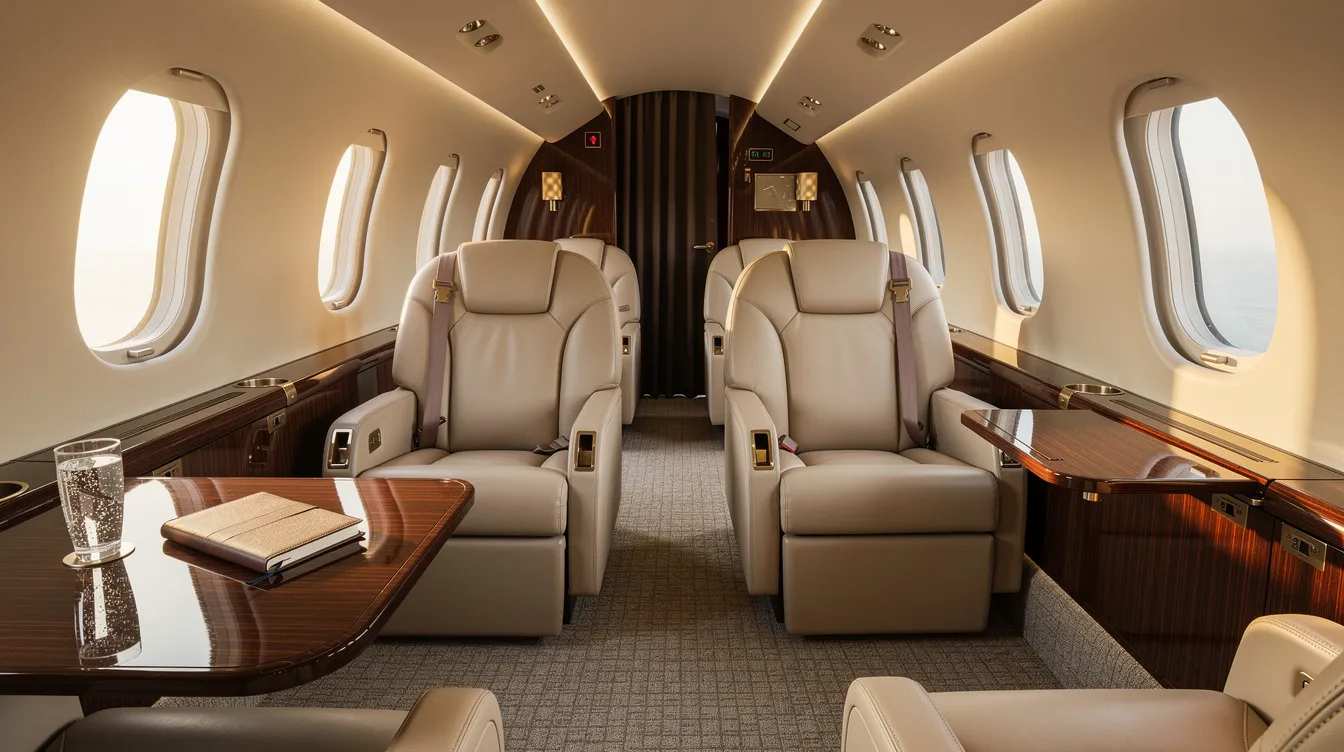
BlackJet’s light jet and midsize cabin offerings present an entirely different proposition for executives who value predictable Jet Card membership pricing and structure, supported by a clear understanding of Jet Card cost per hour and key pricing factors. A Citation M2 offers 1,550 nautical miles of range, four comfortable seats, G1000 glass cockpit avionics, and cabin noise levels around 45 dB at FL400—a stark contrast to the Cri-Cri’s 100+ dB cockpit requiring helmet-grade ear protection. The seat environment features lie-flat options on larger cabins, integrated WiFi, and climate control for productive work or rest.
Safety distinctions prove equally significant. Cri-Cri homebuilts depend entirely on individual builder quality, pilot maintenance discipline, and single-pilot operations without formal type ratings. BlackJet sources aircraft exclusively from ARGUS Platinum-rated or Wyvern-certified operators employing multi-pilot crews with 10,000+ flight hours, turbine powerplant redundancy, and rigorous maintenance programs, aligning with the realities outlined in independent analyses of private jet safety standards and risk profiles.
The Cri-Cri illuminates what passionate engineers can achieve at aviation’s smallest scale. For those who need to maintain altitude across continents while closing deals, reviewing documents, or simply arriving refreshed, certified business jets represent the practical path forward.
Safety, Certification, and Experimental Aircraft Considerations
Experimental and homebuilt aircraft like the Colomban Cri-Cri operate under fundamentally different regulatory frameworks than commercially operated business jets. Understanding these distinctions helps clarify why the company BlackJet partners with certified operators rather than experimental category aircraft.
The Cri-Cri typically flies under national experimental or microlight rules—FAA 14 CFR 21.191 in the United States, or French DGAC microlight regulations in Europe. These frameworks place primary responsibility on the builder and pilot, with limited ongoing oversight compared to commercial operations. Phase I testing requires 25 hours before carrying passengers (though the single-seat Cri-Cri rarely does), and annual inspections remain the pilot’s responsibility.
Historical safety lessons from the Cri-Cri program underscore the importance of design adherence. Unapproved modifications to US “Cricket” kits—including alternate spars and flexible flaperon torque tubes—caused structural failures and crashes in the 1980s. The resulting litigation briefly halted kits and plans' availability in the United States, demonstrating how deviation from proven designs can have fatal consequences.
BlackJet’s approach inverts this model entirely. Partner operators maintain Part 135 or 91K certification, implement formal Safety Management Systems, and undergo independent auditing through organizations like ARGUS and Wyvern, positioning them alongside top private jet companies known for safety and service across all types of private jets tailored to different travelers. Multi-crew cockpit procedures ensure redundancy, while turbine engines provide reliability rates orders of magnitude better than two-stroke piston installations.
For an executive managing a company or critical responsibilities, the peace of mind from professionally crewed, fully certified aircraft represents essential value rather than luxury. The spare parts availability, standardized maintenance programs, and predictable dispatch reliability of certified business aviation create an entirely different risk profile than experimental homebuilts.
Innovation, Sustainability, and What BlackJet Learns from the Smallest Twin
The Cri-Cri’s focus on minimal drag, low weight, and efficient fuel burns anticipated sustainability trends now reshaping commercial aviation, in parallel with the efficiency and technology advances seen in the newest generation of private jets. Electric and hybrid experiments in the 2010s—including the four-motor variant at Le Bourget—demonstrated that alternative propulsion could work even at the smallest scales.
These same principles inform BlackJet’s approach to carbon-neutral private flight and its emphasis on transparent Jet Card pricing, costs, and benefits. Rather than operating aircraft like the glider-efficient Cri-Cri, BlackJet ensures every Jet Card flight hour includes verified carbon offsets through Gold Standard projects such as reforestation initiatives. A typical light jet produces approximately one ton of CO2 per hour of flight; automatic offsetting neutralizes this impact without additional cost to members.
The “no wasted mass” philosophy that drove Colomban’s design thinking finds expression in BlackJet’s fleet selection and route optimization. Right-sizing aircraft to mission requirements—selecting a light jet for a 300-mile regional hop rather than a half-empty large cabin—reduces fuel consumption by 20% or more while maintaining comfort and safety, and often aligns with budget-friendly private aircraft choices, whether you’re pricing in dollars or using guides to private jet prices in rupees for the Indian market. This mirrors the Cri-Cri’s ethos of using exactly what’s needed and nothing more.
BlackJet respects pioneering designs like the Colomban Cri-Cri while channeling that innovative spirit into scalable, safe private jet solutions, including access to some of the best private jets in the world for buyers comparing 10 million dollar private jet options and their capabilities. Where the Cri-Cri proved concepts at the micro level, BlackJet applies efficiency principles at the scale serious travelers require—aircraft like Cessna Citations or comparable light jets that can actually serve business needs.

How BlackJet Jet Cards Deliver Practical Private Jet Access
For aviation enthusiasts who appreciate the Cri-Cri’s engineering but need actual utility, Jet Card programs for frequent flyers offer the solution. Rather than investing thousands of hours building an experimental aircraft with limited capability, members gain immediate access to certified jets across multiple cabin classes.
BlackJet’s Jet Card tiers—including the 25+ Hour Jet Card and larger programs and other 25-hour Jet Card options with detailed features and costs—allow clients to prepay for flight time across light, midsize, super-midsize, and large-cabin aircraft. A business executive might use light jets for quick regional hops, then access larger cabins for transcontinental flights with team members, or even consider long-range private jet options for global missions, all from the same account, or evaluate unlimited private jet flight memberships for frequent travel when their flying volume justifies it.
The digital experience eliminates the unpredictability of an ad-hoc charter. Mobile and web booking provides 24/7 access with real-time pricing, while support teams handle changes and disruptions as they occur. Unlike the Cri-Cri builder, who must sell their aircraft to recoup investment, Jet Card hours deliver consistent value without ownership burdens while complementing affordable private jet options for cost-conscious travelers and flexible private jet leasing arrangements covering costs and customization.
Integrated carbon-neutrality ensures every flight hour automatically offsets through vetted environmental projects, dovetailing with emerging models like private plane rideshare and shared-seat options, and informed decisions based on how much it costs to rent a private jet for specific trips. Members enjoy private aviation’s freedoms—flexible scheduling, direct routing to 5,000+ airports, productive cabin environments—while minimizing environmental impact, whether they’re using light jets or chartering the largest private jets for maximum capacity and range or even exploring the most expensive private jet experiences in 2025 for ultra-luxury travel.
Elevate your travel—effortlessly. With BlackJet, private flight isn’t reserved for a few—it’s accessible on your terms through our Jet Card programs, complete with rigorous safety, carbon-neutral performance, and unmatched flexibility. Explore our Jet Card programs and discover how refined, strategic travel becomes your new standard.
FAQ
Is the Colomban Cri-Cri or MC-15J Cri-Cri Jet available through BlackJet?
BlackJet does not offer the Colomban Cri-Cri or MC-15J jet variants in its charter or Jet Card fleets. These are single-seat experimental or ultralight aircraft rather than certified business jets, a sharp contrast to options for buying a seat on a private jet through shared and semi-private services or selecting from small private jets designed for efficient luxury travel. BlackJet focuses exclusively on turbine-powered private jets—light, midsize, super-midsize, and large cabin—operated by certified commercial operators meeting strict safety and maintenance standards.
Can I use a Cri-Cri Jet for business or commuter travel?
The Cri-Cri and Cri-Cri Jet are not practical for business travel. They are single-seat aircraft with limited range (under 200 nm), no payload capacity for passengers or luggage, no pressurization, and typically operate under experimental rules restricting commercial use. Executives and frequent travelers requiring reliable, multi-passenger, all-weather capability should consider Jet Card programs like BlackJet’s that provide professional crews and certified aircraft, evaluating them alongside NetJets jet card costs and alternatives, and detailed breakdowns of Flexjet Jet Card cost, pricing, and options.
Is the Colomban Cri-Cri still buildable and legal to fly in the USA?
Original Michel Colomban plans (excluding problematic US “Cricket” modifications) are generally acceptable to the FAA under the experimental-amateur built category, subject to current regulations and inspector approval. Plan availability has varied over time due to past litigation. Prospective builders should consult current sources, EAA chapters, and aviation authorities before committing to a project, just as prospective buyers of certified aircraft in markets like the UK should review premium private jets for sale and ownership options and evaluate private jets for sale under 10 million as affordable luxury choices.
How does safety in a homebuilt Cri-Cri compare to a BlackJet flight?
Safety in any homebuilt, including the Cri-Cri, depends heavily on builder skill, adherence to original plans, maintenance discipline, and pilot proficiency, with limited formal oversight. BlackJet flights use professionally maintained aircraft, trained multi-pilot crews, and independent safety auditing through organizations like ARGUS and Wyvern, providing a significantly higher and more consistent safety margin even for larger-group missions that may call for private jets accommodating up to 50 passengers or 30-passenger private jet solutions for corporate and event travel.
What aircraft should I choose if I admire the “smallest twin” concept but need real utility?
Clients who appreciate the ingenuity of the smallest twin-engine aircraft might enjoy flying on modern very light jets (VLJs) or light jets. These offer compact cabins, efficient operations, and true multi-passenger capability with full certification, while larger groups may require private jets configured for around 20 passengers or even 16-seat private jet options for ultimate comfort and convenience. BlackJet advisors can recommend the right cabin class—light, midsize, or larger—based on typical trip length, passenger count, and baggage requirements, combining the Cri-Cri’s efficiency ethos with the comfort and safety business travelers require.
Conclusion: From Ingenious Miniature to Practical Private Aviation
The Colomban Cri-Cri jet plane stands as a testament to innovative aeronautical engineering—a marvel of miniaturization and efficiency that continues to inspire aviation enthusiasts worldwide. Yet, while its pioneering spirit and experimental designs captivate, the Cri-Cri’s limitations underscore why modern business travelers rely on certified, safe, and comfortable private jets.
BlackJet bridges this gap by offering Jet Card programs that deliver immediate access to a diverse fleet of professionally operated private jets, blending safety, sustainability, and flexibility. Unlike building and flying an experimental aircraft like the Cri-Cri, BlackJet’s solutions provide seamless, reliable travel designed for executives who demand performance without compromise.
Explore how BlackJet can elevate your travel experience with carbon-neutral flights, rigorous safety standards, and unmatched convenience. Visit blackjet.com to discover premium private jet access tailored to your strategic needs—whether you’re flying regionally with private jet charters in Karachi and similar markets or globally, where innovation meets practicality in the skies.


 Sign up with google
 Sign up with Apple