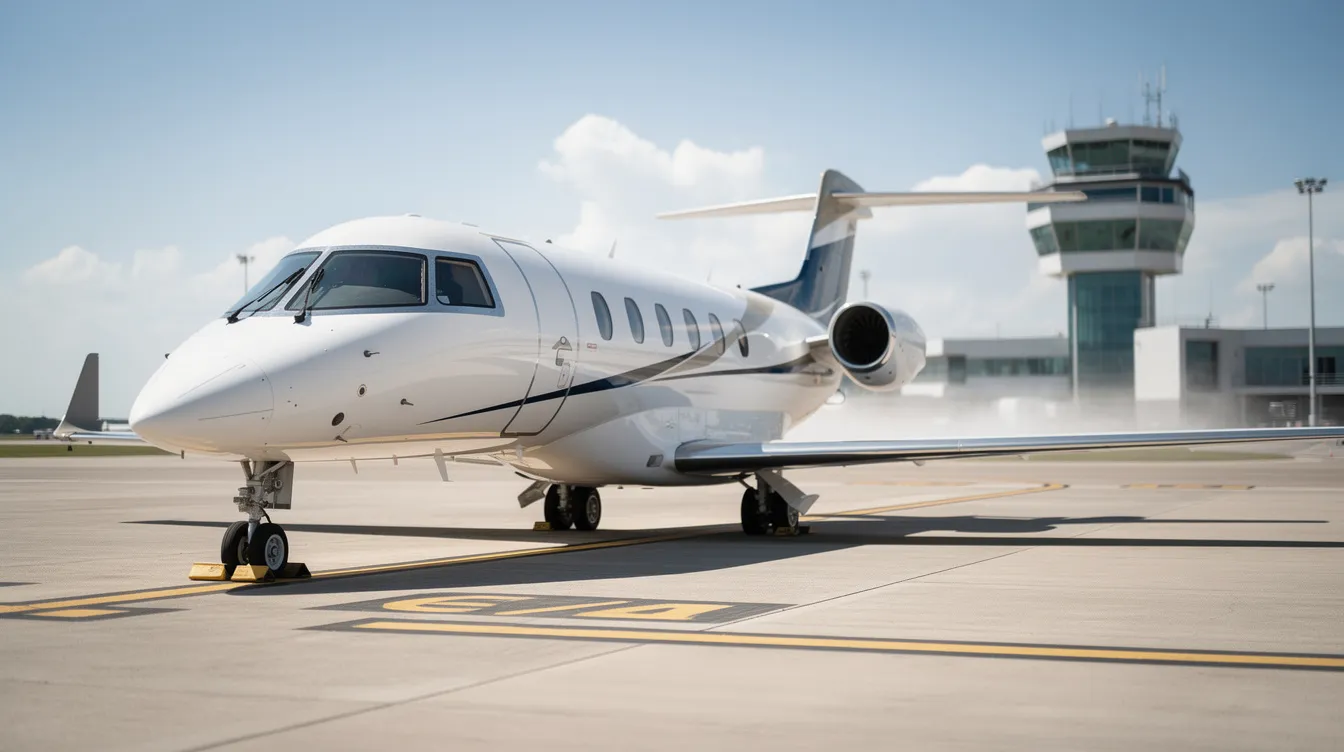
Private aviation is evolving rapidly, and the new HondaJet refers to Honda Aircraft Company’s latest models: the HondaJet Elite II, already in service with advanced performance and safety upgrades, and the larger HondaJet Echelon, now in development for travelers who want more range and cabin capability. For frequent private jet travelers—especially executives and high-net-worth leisure flyers who take multiple trips a year and want access to cutting-edge aircraft without owning one—these aircraft are worth watching closely.
This article looks at how the Elite II and Echelon compare, what they add to regional and transcontinental travel, and why they matter in a Jet Card context. You’ll see how new HondaJet models fit into BlackJet access, where their speed, efficiency, safety innovation, and sustainability efforts such as carbon-neutral flights can improve the way you fly, and why Jet Card access can deliver those benefits without the cost and complexity of aircraft ownership. Understanding these new HondaJet models is crucial for private jet card flyers seeking the latest in performance, safety, and value.
Why the New HondaJet Matters for Jet Card Travelers
Every hour spent navigating a commercial hub-clearing security, waiting at gates, circling for connections-is an hour that could have been spent in a meeting, with family, or simply arriving. Very light and light business jet aircraft like the HondaJet Elite II and the upcoming HondaJet Echelon exist to eliminate that friction entirely, turning regional and transcontinental travel into a strategic advantage rather than a logistical headache-a core theme in analyses of whether chartering a private jet is worth it.
Honda Aircraft Company, headquartered in Greensboro, North Carolina, has been building toward this moment for nearly two decades. Since the original HondaJet received FAA certification in 2015, Honda has delivered over 250 HondaJets across three variants, establishing a track record of success in modern business aviation and securing its place among top affordable private planes for budding aviators. The company's passion for engineering excellence-rooted in Honda's broader history of innovation across automotive and aerospace-has produced some of the most aerodynamically efficient planes in the sky.
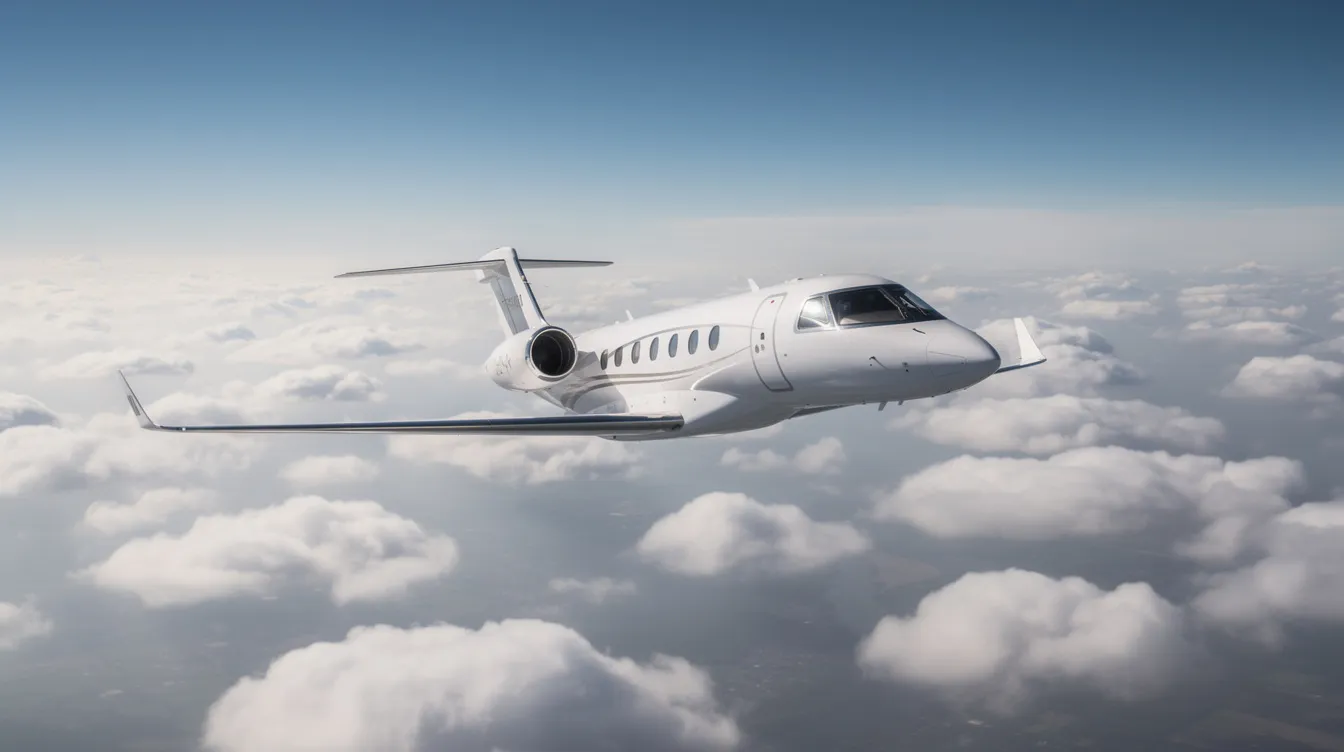
For BlackJet Jet Card members-high-net-worth executives and discerning leisure travelers who fly multiple times per year-the relevant question isn't just "what's the new plane?" but rather "how does this new jet reshape the fleet I can access?" The answer in 2026 centers on two aircraft: the certified HondaJet Elite II, in production since late 2022, and the larger HA-480 HondaJet Echelon, now progressing toward its first flight.
Here's why Jet Card access matters more than ownership for most travelers considering these models, especially when you compare it with the capital and ongoing expenses tied up in a typical $5 million private jet or even when evaluating private jet options available for around $2 million:
Capital commitment: A new HondaJet Elite II lists at roughly $6.95 million. Choosing a premium private Jet Card program with BlackJet eliminates that outlay entirely.
Fixed overhead: Ownership means hangar fees, crew salaries, insurance, and maintenance whether you fly or not-including the substantial ongoing cost of a private jet pilot and flight crew. A Jet Card consolidates those costs into predictable hourly rates.
Fleet variety: Owning one aircraft locks you into its category. Jet Card holders can match each trip to the right aircraft-a very light jet for a short hop, a larger aircraft for a coast-to-coast mission.
Residual value risk: Aircraft depreciate. Jet Card users sidestep market risk completely.
Flexibility: No scheduling around your own aircraft's maintenance windows. Jet Card programs mean ready access when you need it.
The HondaJet Elite II: Performance, Comfort, and Safety in a Very Light Jet
The HondaJet Elite II is Honda Aircraft Company's current flagship-the fastest, highest-flying, and farthest-reaching very light business jet in its class. Revealed on October 17, 2022, it builds on the foundation of the original HondaJet Elite with meaningful upgrades to performance, technology, and safety, positioning it prominently among the best small private aircraft for a range of missions.
Performance & Efficiency
The numbers tell a compelling story. The HondaJet Elite II has a range of 1,547 nautical miles with four passengers and NBAA IFR reserves-enough for nonstop flights from New York to Miami or Dallas to Denver, placing it among the more efficient options when you consider the cheapest private jet alternatives for similar missions. Its maximum cruise speed sits at approximately 422 knots true airspeed at FL300, with a service ceiling of 43,000 feet that allows it to fly above most weather and commercial traffic.
Powering the Elite II are twin GE Honda HF120 turbofan engines. HondaJet models utilize HF120 turbofan engines for efficiency that outpaces many legacy very light jets by a significant margin. Combined with Honda's patented Over-the-Wing Engine Mount (OTWEM), which places the engines above the wings for improved aerodynamics, and a natural laminar flow wing and composite fuselage, the result is fuel efficiency that translates directly into lower operating costs and reduced emissions per nautical mile. Where a typical commercial regional jet burns considerably more fuel per passenger on small-group missions, the Elite II delivers a leaner, faster alternative with increased fuel capacity relative to its predecessors-while still competing favorably with budget-friendly private aircraft options for cost-conscious flyers and other small private jets designed for luxury travel.
Spec | HondaJet Elite II | Typical Entry-Level Light Jet |
|---|
Range (4 pax, NBAA IFR) | ~1,547 nm | ~1,300–1,500 nm |
Max Cruise Speed | ~422 KTAS | ~400–420 KTAS |
Service Ceiling | 43,000 ft | 41,000–43,000 ft |
Typical Seating | 4–6 executive | 4–7 |
Acquisition Cost | ~$6.95M | $4M–$11M (varies widely) |
Cabin & Comfort
Inside, the Elite II offers an executive club layout with contoured leather seats that swivel and articulate, accommodating a typical configuration of four to six passengers in genuine comfort. The cabin measures approximately 17.8 feet in length, 5.0 feet in width, and 4.83 feet in height-spacious for its category. An aft lavatory, roughly 62 cubic feet of baggage space, and a quiet interior environment (a direct benefit of the OTWEM keeping engines away from the fuselage) make it well-suited for short-haul business trips and high-end leisure flights.

Technology & Safety
The HondaJet Elite II includes Garmin G3000 avionics technology-a glass flight deck with touchscreen controllers and an intuitive human-machine interface that automates anti-ice, lighting, and pressurization systems. Automatic ground spoilers enhance field performance on landing.
What sets the Elite II apart in its category is its safety technology. The HondaJet Elite II features an advanced steering augmentation system (ASAS) for improved ground handling, stabilized approach monitoring, and autothrottle to reduce pilot workload during critical flight phases. Most notably, the HondaJet Elite II holds the distinction of being the first twin-turbine very light business jet certified by the FAA to feature Emergency Autoland. In situations where the pilot becomes incapacitated, this system can autonomously send distress signals and safely guide the aircraft to a landing. In the event of pilot incapacitation, the system can autonomously transmit distress signals and guide the aircraft to a safe landing. These features support single pilot operations while exceeding typical safety expectations for the category.
How It Fits a Jet Card Lifestyle
For BlackJet members, Elite II–class aircraft are ideal for one-to-four passenger regional missions, but travelers who only need a single seat can also benefit from buying an individual seat on a private jet through shared and semi-private services. Consider a typical day: a Boston-based executive books a morning flight to Philadelphia for a 9 a.m. meeting, then continues to Washington, D.C., for an afternoon session, returning home to Boston by evening. Each leg takes roughly 60–90 minutes gate to gate, with no security lines, no connections, no wasted hours. With BlackJet's carbon-neutral flight offsets included at no extra cost, every leg is covered from a sustainability standpoint as well.
The HondaJet Echelon (HA-480): Honda's New Light Jet for Longer Missions
The HondaJet 2600 concept, first shown in the early 2020s, has matured into something real: the HondaJet Echelon, designated HA-480. This new jet scales Honda's proven OTWEM aerodynamics and engineering philosophy into a larger, longer-range light jet that redefines what's possible with light-jet economics.
Development Timeline
Honda Aircraft confirmed the Echelon name in October 2023, introducing the market to its vision for a next-generation aircraft capable of transcontinental missions. Since then, development has accelerated. The first test aircraft for HA-480 is expected to begin assembly in 2025 at the company's Greensboro production facility, with wing structure construction and advanced systems integration testing already underway; additionally, the certification process began after the program's 2023 confirmation. First flight is targeting 2026, and the current target date for FAA certification and entry into service remains 2028 for the HondaJet HA-480 Echelon. The certification process for HA-480 involves significant design changes relative to the HA-420 family, though Honda Aircraft is pursuing an amended type certificate that would enable a common type rating with the Elite II-a meaningful efficiency gain for operators and users who fly both aircraft.
Over 350 letters of intent have already been received, signaling strong market demand well ahead of deliveries and underscoring how the Echelon slots into the broader private jet price spectrum across categories.
Performance & Size
The Echelon's numbers push it into territory that blurs the boundaries between the light jet and midsize business jet categories:
Range: The HondaJet Echelon has a range of 2,625 nautical miles-sufficient for nonstop New York to Los Angeles flights, even against westbound headwinds, putting it toward the upper end of light jet capabilities in most guides to understanding private jet sizes and categories.
Speed: The Echelon will have a maximum cruise speed of 450 knots, making it one of the fastest in its class.
Altitude: The HondaJet Echelon can fly high in the skies at altitudes up to 47,000 feet, well above most commercial traffic and weather, enabling smoother flights at higher altitudes.
Seating: The HondaJet Echelon can accommodate up to 11 passengers depending on configuration, with options for executive, dual-club, and divan layouts-placing it close to the segment covered in guides on how much a 12-seater private jet costs to own or charter and bordering the category of top 16-seat private jet options for larger groups.
Baggage: Approximately 120 cubic feet of storage space-nearly double the Elite II.
Fuel efficiency: The HondaJet Echelon is expected to deliver 40% better fuel efficiency than some midsize business jets, a figure that directly impacts operating economics and illustrates why strategies to fly private cheap with smarter access models increasingly focus on efficient light jets.
Field performance: Takeoff at approximately 3,300 feet and landing at roughly 2,550 feet, keeping smaller airports accessible and supporting competitive economics when you compare how much it costs to rent a private jet by the hour.
Cabin & Configuration
The Echelon's carbon-fiber fuselage is taller, wider, and longer than the Elite II's-with an interior stretching 25.38 feet in length, 5.08 feet in width, and 5.21 feet in height. A class-leading cabin altitude of about 6,363 feet at cruise altitude means passengers arrive with less fatigue on flights of three to six hours. Multiple seating layouts offer a variety of configurations targeting different mission profiles, from corporate shuttle to executive comfort, while larger groups may look instead to private jets configured for up to 50 passengers or reference charter plane options and costs for 100 passengers for similar charter-style flexibility.
Flight Deck & Automation
The Echelon features a Garmin G3000 avionics suite for enhanced operations, maintaining cockpit commonality with the Elite II family. The HondaJet Echelon includes autothrottle and autobrake features, along with Emergency Autoland, Runway Overrun Awareness and Alerting System (ROAAS), and ASAS. This level of automation is designed to simplify operations and reduce pilot workload considerably.
The HondaJet Echelon is designed for single-pilot operation-a critical factor for light jet charter operators seeking to keep crew costs competitive and for those comparing the cheapest single-pilot jets for budget-conscious buyers. The common type rating with the HA-420 family means pilots already certified on the Elite II can transition to the Echelon with minimal additional training, a detail that directly benefits Jet Card operators managing fleet flexibility.
What Echelon-Class Access Means for Jet Card Flyers
Once certified, the Echelon could become the aircraft of choice for longer BlackJet missions. Consider the comparison: a New York–to–Los Angeles trip on a connecting commercial flight takes 8–10 hours door to door, factoring in layovers, security, and ground transfers. An Echelon-class nonstop covers the same distance in roughly five hours, with privacy, productivity, and comfort throughout. For Caribbean charter flights or missions to destinations like Chicago–San José del Cabo, the range eliminates fuel stops entirely while keeping hourly costs closer to light-jet economics than midsize-a dynamic similar to what you see when analyzing how much it costs to charter a small plane.
Quick Spec Comparison: Echelon vs. Elite II vs. Typical Light Jet
Specification | HondaJet Elite II | HondaJet Echelon | Typical Light Jet |
|---|
Range (nm) | ~1,547 | ~2,625 | ~1,300–1,800 |
Max Cruise Speed (KTAS) | ~422 | ~450 | ~400–440 |
Service Ceiling (ft) | 43,000 | 47,000 | 41,000–45,000 |
Seating | 4–6 | up to 11 | 6–8 |
Baggage (cu ft) | ~62 | ~120 | 50–80 |
The Echelon doesn't just compete within the light jet market-it pushes into midsize territory on range and cabin size while retaining the operating economics that have defined Honda's approach to aviation.
How BlackJet Integrates HondaJet-Class Aircraft into Seamless, Sustainable Jet Card Access
The question worth asking isn't "Should I buy a HondaJet Elite II or wait for the Echelon?" It's "How do I access aircraft in this category-and every other category I might need-without tying up millions in capital or taking on the complexity of ownership?"
The Jet Card Model
BlackJet's 25-hour and 50-hour Jet Card programs provide prepaid access to multiple aircraft categories-from very light jets like the Elite II to larger cabin options-with fixed or capped hourly rates and 24/7 digital booking, following the same principles outlined in comprehensive guides to Jet Card pricing structures and benefits. Here's how that stacks up against ownership, especially when you understand the broader Jet Card cost landscape across providers:
Factor | Owning a HondaJet | BlackJet Jet Card |
|---|
Capital outlay | ~$6.95M+ | Prepaid hours only |
Annual fixed costs (crew, hangar, insurance) | $300K–$500K+ | Included in hourly rate |
Maintenance scheduling | Your responsibility | Operator-managed |
Aircraft availability during maintenance | Grounded | Alternative aircraft assigned |
Residual value risk | Full exposure | None |
Access to multiple aircraft types | One aircraft | Entire fleet |
Fleet Matching for Every Mission
BlackJet's operations team matches each trip to the optimal aircraft, mirroring best practices highlighted in overviews of the best Jet Cards for frequent flyers. A client who flies 30 regional legs per year plus a few transcontinental trips doesn't need to own a single aircraft in any one size. They need ready access to an Elite II–class jet for the short hops and an Echelon-class aircraft for the longer missions-exactly the kind of flexibility a Jet Card program provides, especially once you understand how Jet Card cost per hour is structured and compared and how different types of private jets suit different traveler profiles.
Safety Beyond the Aircraft
The latest avionics-Garmin G3000, Emergency Autoland, autothrottle-enhance safety at the aircraft level, features that also appear on platforms covered in analyses of Flexjet Jet Card pricing and fleet options. BlackJet layers on proprietary safety vetting, third-party certification requirements, and a mandate for highly experienced pilots, even on aircraft that are certified for single pilot operations. Technology and human expertise work together, not as substitutes.
Carbon-Neutral by Default
BlackJet offsets 100% of Jet Card flight emissions at no additional cost to the member, a meaningful benefit for frequent travelers who might otherwise look at unlimited private jet membership models to maximize their flying or explore affordable private plane rideshare options for select routes. When combined with the HondaJet family's inherently efficient aerodynamics and engines, every flight starts from a lower emissions baseline. Where sustainable aviation fuel is available, members can opt for SAF to further reduce their environmental footprint, an important consideration when evaluating whether a 100-hour Jet Card cost structure aligns with your long-term flying plans and sustainability goals.

The evolution of Honda Aircraft-from the original HondaJet to the Elite II and now the Echelon-represents a broader shift in what's achievable within light jet economics, particularly for flyers comparing traditional ownership with the value outlined in 50-hour Jet Card cost guides. For travelers who value performance, safety, and flexibility, a Jet Card means accessing that evolution without the obligations of ownership, whether through BlackJet or competitors analyzed in resources on NetJets Jet Card pricing and programs.
Frequently Asked Questions About the New HondaJet Models and Jet Card Access
Q1: What is the range of the new HondaJet Elite II?
The HondaJet Elite II offers a range of approximately 1,547 nautical miles with four passengers and NBAA IFR reserves, making it well-suited for nonstop regional flights such as New York to Miami.
Q2: When is the HondaJet Echelon expected to enter service?
The HondaJet Echelon is targeting FAA certification and entry into service by 2028, with first test flights anticipated to begin in 2026.
Q3: How many passengers can the HondaJet Echelon accommodate?
The Echelon can seat up to 11 passengers depending on configuration, offering flexible layouts including executive and dual-club arrangements.
Q4: What safety features distinguish the HondaJet Elite II?
The Elite II is the first twin-turbine very light jet certified by the FAA to include Emergency Autoland, which can autonomously land the aircraft in case of pilot incapacitation, alongside advanced avionics and automated flight systems.
Q5: How does BlackJet’s Jet Card program benefit travelers interested in HondaJet models?
BlackJet’s Jet Card offers prepaid access to HondaJet aircraft without the capital outlay or ongoing costs of ownership, providing flexibility to choose the right jet for each mission with guaranteed safety standards and carbon-neutral flights included.
Q6: Can pilots transition easily between the Elite II and the Echelon?
Yes, both aircraft share a common type rating and Garmin G3000 avionics suite, enabling pilots certified on the Elite II to transition to the Echelon with minimal additional training.
Q7: How does the HondaJet Echelon improve on fuel efficiency compared to other midsize jets?
The Echelon is expected to deliver about 40% better fuel efficiency than some midsize business jets, thanks to aerodynamic design and efficient HF120 turbofan engines.
Q8: Is the HondaJet Echelon certified for single-pilot operation?
Yes, the Echelon is designed for single-pilot operation, which helps reduce crew costs and supports operational flexibility for charter services.
Conclusion: Elevate Your Travel with the New HondaJet Models and BlackJet Jet Card Access
The new HondaJet Elite II and the upcoming HondaJet Echelon mark significant milestones in private aviation, blending advanced technology, superior performance, and enhanced safety features. For Jet Card travelers, these aircraft represent more than just machines—they embody the strategic advantage of seamless, efficient, and sustainable travel. By choosing BlackJet’s Jet Card programs, flyers gain flexible access to this evolving fleet without the burdens of ownership, ensuring every journey is tailored to mission needs, whether regional or transcontinental.
With the Elite II’s proven efficiency and Emergency Autoland capability, alongside the Echelon’s expanded range, passenger capacity, and cutting-edge avionics, these jets set new standards in their classes. BlackJet’s commitment to safety certification, carbon-neutral flights, and real-time support integrates these innovations into a premium, responsible travel experience.
Discover how the new HondaJet lineup, combined with BlackJet’s Jet Card model, can reshape your travel—delivering unmatched convenience, luxury, and peace of mind. Explore premium jet access today and elevate your journey to new heights.


 Sign up with google
 Sign up with Apple